Claire Bennett
Wine Editor13 min read
Wine Regions of the World: A Plain-English Guide
Old World vs New World, the major regions in each, how climate shapes style, and where to start drinking. The pillar guide for curious wine drinkers.
Wine Regions of the World: A Plain-English Guide
Every wine in the world comes from one of two camps. Old World means Europe: wines labelled by region, built for food, leaning savoury, earthy, and lower in alcohol. New World means everywhere else: wines labelled by grape, leaning fruit-forward, riper, and higher in alcohol. Same grapes, different climates, very different glasses. That split is the single most useful framework in wine for reading an unfamiliar label, and this guide builds it from the ground up.
By the end of this page you’ll know:
- The single climate fact that explains why a Bordeaux and a Napa Cabernet taste like different wines from the same grape
- Why French wines almost never tell you the grape on the front label (and how to crack the code anyway)
- The country that produces the most wine in the world (and why nobody outside the trade talks about it)
- The two New World regions that genuinely beat France at France’s own game
- The exact region a curious drinker should start with if they want fast wins and consistent bottles under $20
Old World vs New World: What the Labels Actually Mean
“Old World” means Europe. France, Italy, Spain, Germany, Portugal, Austria, Greece, plus a handful of others. These countries have been making wine for thousands of years, and their wines are almost always labelled by region. A bottle of Chablis tells you it’s from Chablis. The grape (Chardonnay) is implied, because the local rules require it.
“New World” means everywhere else that started making serious wine in the last few hundred years. The USA, Australia, New Zealand, Argentina, Chile, South Africa, Canada, and a growing list of others. These wines are labelled by grape. The front of the bottle says “Cabernet Sauvignon” or “Pinot Noir,” and the region sits in smaller type below.
The split matters because the wines themselves taste different. Old World wines tend toward savoury notes: earth, herbs, leather, mineral, dried fruit, lower alcohol, higher acidity. New World wines lean toward riper fruit, vanilla and oak, fuller body, higher alcohol. Same grape, different climate, different winemaking philosophy.
That gap is shrinking. Cool-climate New Zealand Pinot Noir tastes more like Burgundy than it does like Napa. Plenty of modern Australian winemakers chase European restraint. The categories are rough shorthand. Useful at a wine list, fuzzy at the bench.
The Major European Wine Regions
Five countries do most of the heavy lifting in Europe. If you understand these, you can read 90% of the European bottles you’ll ever see.
France
The benchmark. The full France wine guide covers it in detail, but here’s the snapshot. Bordeaux makes blended reds (Cabernet Sauvignon, Merlot, Cabernet Franc) that age for decades and set the global price ceiling. Burgundy makes single-grape reds (Pinot Noir) and whites (Chardonnay) on tiny plots where the village name on the label changes the price by tenfold. The Rhône Valley brings Syrah-led reds and warm-climate Grenache blends.
The Loire Valley is France’s white wine playground. Sancerre Sauvignon Blanc, Vouvray Chenin Blanc, plus crisp coastal Muscadet for oysters. Champagne is the original sparkling region and still the best in the world. Alsace makes aromatic whites (Riesling, Gewürztraminer) that taste closer to German wine than French.
Languedoc-Roussillon and Provence handle the volume and value end. Provence rosé is the global standard. Languedoc is where you find $15 French bottles that actually taste like something.
Italy
The Italy wine guide goes deep, but here’s the overview. Italy produces more wine than any other country, by volume and by sheer variety of grapes. Tuscany is the headliner: Chianti and Brunello di Montalcino are both Sangiovese, but they drink completely differently. Brunello is the prestige bottle, age-worthy and serious. Chianti Classico is the weeknight version with a gallo nero (black rooster) on the neck.
Piedmont in the north is Nebbiolo country. Barolo and Barbaresco are the two big names. They smell of roses, tar, and cherries, and they need food. Veneto brings Prosecco (the Italian sparkling answer to Champagne, much cheaper, much simpler), Soave (white), and Amarone (a rich red made from dried grapes).
Sicily has quietly become one of the most exciting regions in Europe. Etna Rosso, made from Nerello Mascalese on the slopes of an active volcano, drinks like Burgundy for half the money.
Spain
Spain has more land under vine than any country in the world, even if Italy and France out-produce it by volume. Rioja is the famous one: Tempranillo-led reds aged in American oak, with bottles labelled Crianza, Reserva, and Gran Reserva to tell you how long they’ve been aged before release.
Ribera del Duero, north of Madrid, makes denser, more powerful Tempranillo. Priorat (Catalonia) is the cult region: ancient vines on slate soils producing intense, age-worthy reds that command Bordeaux prices. Cava is Spain’s answer to Champagne and one of the best value sparkling wines on the planet.
For whites, look at Rías Baixas (Albariño, the perfect seafood wine) and Rueda (Verdejo, a citrusy alternative to Sauvignon Blanc).
Germany
Riesling country. German Riesling runs from bone-dry to dessert-sweet, and the label tells you which if you know the code. Trocken means dry. Kabinett, Spätlese, and Auslese describe ripeness levels at harvest, with sweetness usually climbing as you go up the scale.
The Mosel region produces the most delicate, low-alcohol Rieslings in the world (often 8–10% ABV), with razor acidity and slate-driven minerality. The Rheingau makes a richer, slightly fuller version. Pfalz is sunnier and produces some of Germany’s best dry Rieslings plus surprising reds (Spätburgunder, which is German Pinot Noir).
Portugal
Best known for Port, the fortified red from the Douro Valley. The same Douro region also produces some of Europe’s most exciting unfortified reds: dense, dark wines from Touriga Nacional and a handful of native grapes you’ll never see anywhere else. Vinho Verde from the north is the cheap, slightly fizzy white that pairs with seafood.
The Alentejo and Dão regions deliver serious red wine value. Portuguese reds at $15 to $20 routinely punch well above their weight, partly because the country flies under most drinkers’ radar. That’s the opportunity.
The Major New World Wine Regions
Six countries dominate the New World. The styles are different country by country, but the labelling habit is the same: grape variety on the front, region in smaller type below.
United States
California makes the bulk of American wine. Napa Valley is Cabernet Sauvignon territory and the most expensive wine real estate in the country. Sonoma County, just over the hill, makes both Cabernet and a much wider range of varieties, including some of the best Pinot Noir in the country (Sonoma Coast, Russian River Valley).
Oregon’s Willamette Valley is the American answer to Burgundy. Cool climate, Pinot Noir focused, and bottles that often beat Burgundy at twice the price. Washington State produces serious Cabernet and Syrah, particularly from Walla Walla and the Columbia Valley, at prices well below Napa.
The Finger Lakes in New York make some of the best Riesling in the world outside Germany. Most drinkers don’t know that yet.
Australia
Australia goes well past Yellow Tail and Penfolds. The Barossa Valley in South Australia is Shiraz country, producing the dense, jammy, high-alcohol style that defined Australian red wine for decades. McLaren Vale and Clare Valley, also in South Australia, make leaner Shiraz and standout Riesling respectively.
Margaret River in Western Australia produces Chardonnay and Cabernet Sauvignon that compete with Burgundy and Bordeaux on quality. Yarra Valley and Mornington Peninsula in Victoria are cool-climate Pinot Noir and Chardonnay zones, making elegant, restrained wines. Tasmania is the country’s coolest region and the source of most of its serious sparkling wine.
New Zealand
Marlborough Sauvignon Blanc reset the global expectation for the grape in the early 2000s. Bright, pungent, gooseberry and grass and grapefruit. It’s still the country’s biggest export, and still the easiest white to hand a friend who wants something crisp under $20.
Central Otago, in the South Island, makes Pinot Noir that can stand next to Burgundy. Hawke’s Bay on the North Island grows Bordeaux varieties (Cabernet, Merlot, Syrah) and produces some of the best red wine in the country.
Argentina
Mendoza is Malbec country. The grape arrived from France in the 1850s, found high-altitude vineyards in the foothills of the Andes, and became the national variety. Modern Argentine Malbec is plush, dark-fruited, soft-tannined, and made for steak. Quality bottles start around $15 and the ceiling is high.
Salta in the far north produces Malbec from some of the highest-altitude vineyards on earth (over 3,000 metres). Patagonia in the south is cool-climate Pinot Noir country, just starting to get attention internationally.
Chile
Chile makes more wine than Argentina and talks about it less. The Maipo Valley, near Santiago, is the country’s Cabernet heartland. Casablanca and San Antonio, both cool coastal valleys, produce Sauvignon Blanc and Pinot Noir. The Colchagua Valley is the source of Chile’s best Carmenère, a Bordeaux grape that effectively went extinct in France and was rediscovered thriving in Chilean vineyards in the 1990s.
Chilean wine is the New World value play. Reliable, well-made bottles in the $10 to $20 range that consistently outperform their price.
South Africa
South Africa’s wine regions cluster around Cape Town in the Western Cape. Stellenbosch is the prestige zone for Bordeaux varieties, particularly Cabernet Sauvignon and Pinotage (a local crossing of Pinot Noir and Cinsault that’s an acquired taste). Swartland has become the cult region in the last 15 years, with a generation of young winemakers producing low-intervention Chenin Blanc and Rhône-style reds.
Hemel-en-Aarde is the cool-climate Pinot Noir and Chardonnay region. South African wine is currently one of the best value bets in the world.
How Climate Shapes Wine Style
Climate decides almost everything. That’s the single most useful thing to understand about regions. Cool regions ripen grapes slowly, holding acidity, producing leaner wines with lower alcohol. Warm regions ripen fast, building sugar (which becomes alcohol) and softening acidity, producing fuller, riper, higher-alcohol wines.
That’s why Bordeaux Cabernet (cool, maritime) tastes savoury and structured, while Napa Cabernet (warm, sunny) tastes ripe and plush. Same grape, different climate, completely different wine. Burgundy Pinot Noir (cool) is delicate and earthy. Central Otago Pinot Noir (cool but at altitude) shares more DNA with Burgundy than with anywhere warmer.
Altitude works the same way as latitude. Mendoza (Argentina) sits at 1,000 metres and beyond, which keeps the climate cool enough to make balanced wine despite being well outside the traditional 30–50° latitude band that most wine regions occupy. Etna in Sicily does the same trick on volcanic slopes.
Soil matters too, less than people pretend. Climate is the headline. Soil is the footnote. If a wine writer leads with “the limestone soils of Chablis,” they’re skipping the more important fact: Chablis is the coolest part of Burgundy.
How to Read a Region on a Label
Old World labels are coded. The front almost never tells you the grape. You’re expected to know that Sancerre is Sauvignon Blanc, Chablis is Chardonnay, Chianti is Sangiovese, Rioja is Tempranillo. It’s a small cheat sheet to memorise, and after a dozen bottles it sticks.
New World labels are simple. The grape is on the front, often the biggest text on the bottle. The region is below it. The producer is somewhere on the label, usually at the top. If you can read English, you can read a New World label.
The other thing labels tell you is quality tier. Bordeaux uses a classification system (Grand Cru Classé, Cru Bourgeois, etc.). Burgundy uses Village, Premier Cru, and Grand Cru. Italy has DOCG (top), DOC (middle), and IGT (broader). Spain shows Crianza, Reserva, Gran Reserva based on aging. New World wines use producer reputation more than formal tiers, with single-vineyard bottlings sitting at the top.
A practical shortcut: if you find a producer in any region whose entry-level bottle you like, try their next tier up. Producer consistency across price points is one of the most reliable signals in wine.
Where to Start
Want a feel for the major regions without burning $500 in a month? Here’s the cheap route. Buy six bottles, all under $25, all from different countries. A Spanish Rioja Crianza, an Italian Chianti Classico, a French Côtes du Rhône, an Australian Shiraz from the Barossa, an Argentine Malbec from Mendoza, and a Chilean Cabernet from Maipo.
Drink them over a fortnight and jot a quick note on each. You’ll feel the Old World/New World split in your mouth instead of just on paper. Old World wines read more savoury, with herbs and earth in the background. New World wines lean rounder, fruitier, more obvious.
For whites, do the same with a Marlborough Sauvignon Blanc, a Sancerre, a Mosel Riesling, a Margaret River Chardonnay, a Chablis, and a Rías Baixas Albariño. Six bottles, six countries, the entire white wine map in two weeks.
Spanish Rioja is the easiest single region to recommend to a beginner. Quality is consistent, prices are fair, and the wines are made to drink with food. If you want fast wins under $20, start there.
Frequently Asked Questions
What’s the difference between Old World and New World wine?
Old World means Europe (France, Italy, Spain, Germany, Portugal). Wines are labelled by region, lean savoury and earthy, and run lower in alcohol. New World means the Americas, Australia, New Zealand, and South Africa. Wines are labelled by grape variety, lean fruitier and riper, and run higher in alcohol. The categories are useful shorthand, less useful as strict rules.
Which country produces the most wine?
Italy and France swap the top spot most years, with Spain in third by volume despite having more vineyard land than either. The USA is fourth, then Australia, Argentina, Chile, and South Africa. Italy alone produces around 50 million hectolitres in a typical year, which works out to roughly 7 billion bottles.
Are New World wines cheaper than Old World wines?
On average, yes. Argentine Malbec, Chilean Cabernet, Australian Shiraz, and South African Chenin Blanc all deliver more flavour per dollar at the $10 to $20 tier than most equivalent European bottles. The exceptions are Languedoc, Portugal, and southern Italy, where Old World value still competes hard. At the top end, prestige Old World regions (Bordeaux, Burgundy, Champagne) still set the ceiling.
What does terroir mean?
Terroir is a French word for the combination of climate, soil, slope, altitude, and local tradition that gives a wine its sense of place. A Pinot Noir from Burgundy and one from Oregon are the same grape grown by different terroirs, and they taste different because of it. Old World wine culture treats terroir as the most important fact about any bottle. New World culture historically focused more on the grape and the producer, though that’s shifting fast.
Which wine region is best for beginners?
Spanish Rioja is the safest pick. Quality is consistent across producers, prices are reasonable ($12 to $25 covers most of the good stuff), and the Crianza/Reserva system on the label tells you exactly how much aging the wine has had. After Rioja, try Argentine Malbec for an easy New World red, Marlborough Sauvignon Blanc for a crisp white, and Italian Chianti Classico for a food-friendly red.
Why don’t French labels show the grape variety?
French wine law historically tied wines to their place rather than their grape. A Burgundy is a Burgundy because it comes from Burgundy, and the grape (Pinot Noir for reds, Chardonnay for whites) is dictated by regional rules rather than by the bottle’s marketing. The system rewards reading a few key region-to-grape pairings: Bordeaux (Cabernet/Merlot blends), Burgundy (Pinot Noir or Chardonnay), Sancerre (Sauvignon Blanc), Châteauneuf-du-Pape (Grenache-led blend). After a dozen bottles it becomes second nature.
Ready to put one of these regions on the table tonight? Spanish Rioja and Argentine Malbec both sit at the top of the under-$20 value pile, and we’ve ranked the best options worth your money.
Keep Reading
France Wine Guide: Regions, Grapes, Where to Start
A plain-English tour of French wine. Bordeaux, Burgundy, Champagne, Rhone, Loire, Provence: what each region tastes like and how to pick a bottle.
Italy Wine Guide: Regions, Grapes, and Where to Start
Italian wine made simple. The 20 regions, the grapes worth knowing, what DOCG means, and how to pick a bottle without overthinking it.
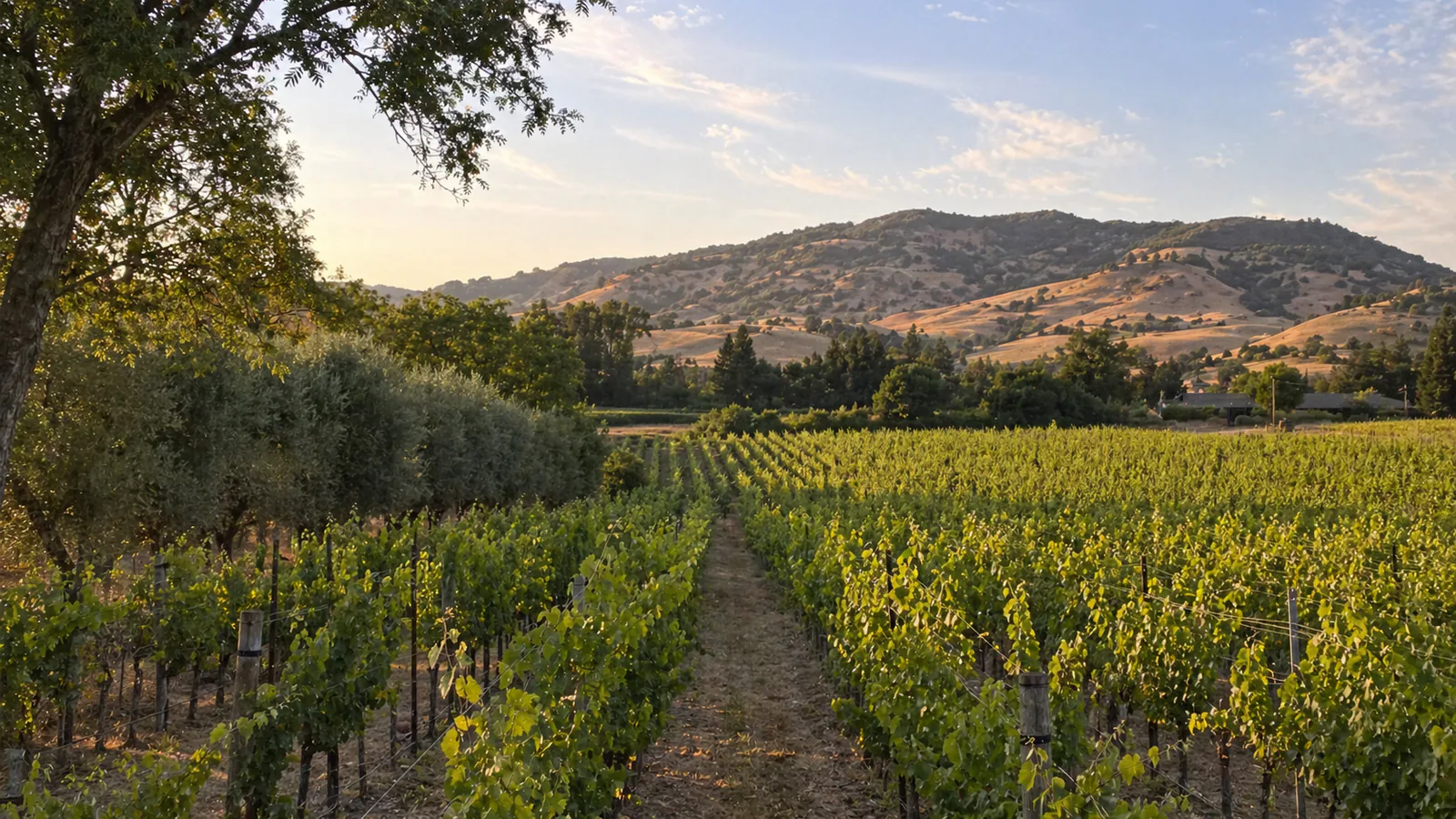
Napa Valley Wine: Cabernet, AVAs, and What to Spend
What Napa Valley wine actually is, why its Cabernet rules the world, the AVAs worth knowing, and where the value hides. Plain English, no fluff.