
Claire Bennett
Wine Editor12 min read
Burgundy Wine: The Plain-English Guide
What Burgundy wine actually is, the difference between red and white Burgundy, the classification system, and how to drink it without remortgaging.
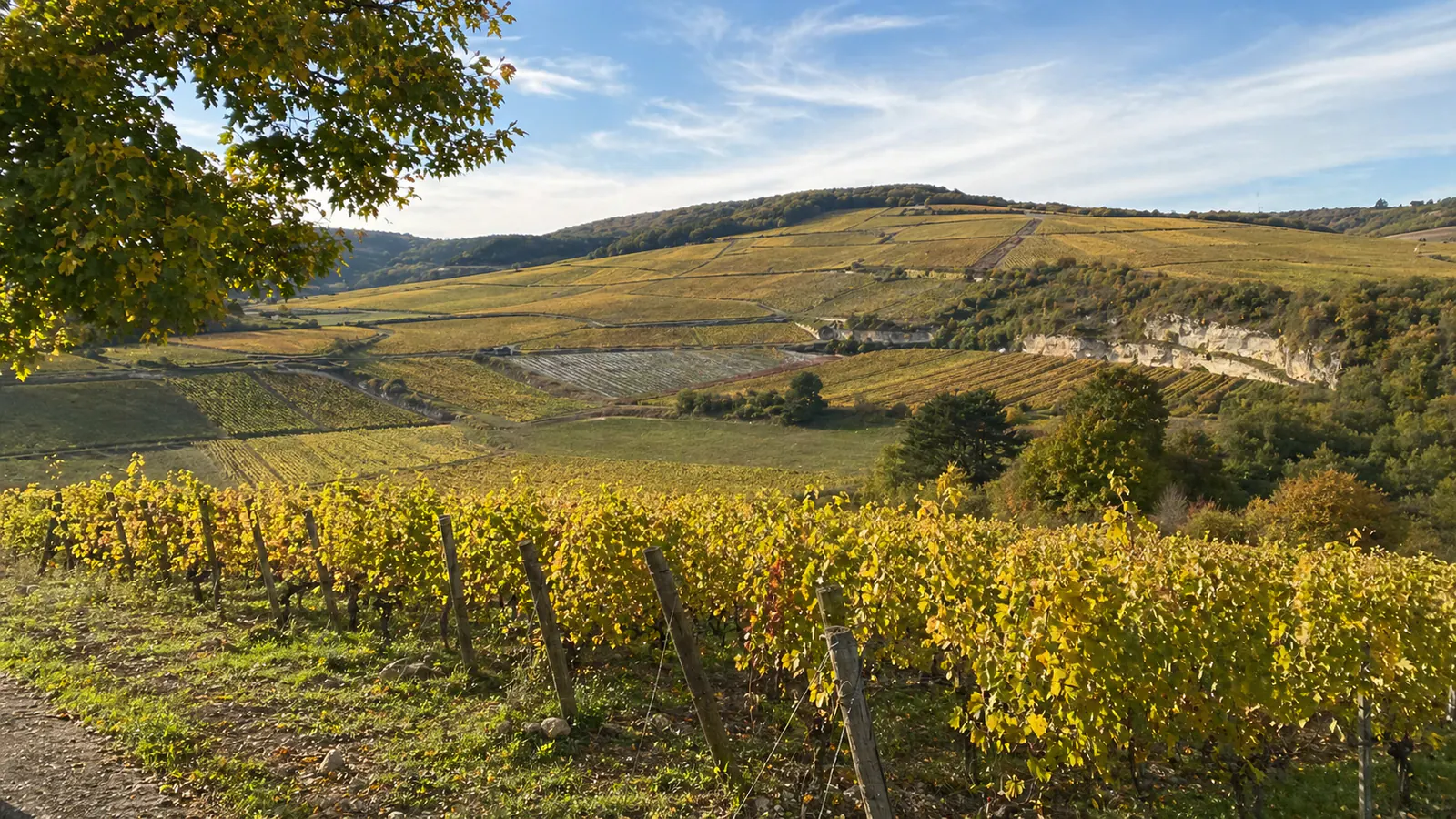
Burgundy Wine: The Plain-English Guide
Every wine snob you know talks about Burgundy in hushed tones. They drop names like Meursault and Vosne-Romanée and say things like “the terroir really sings here.” You nod, take a sip of your house red, and quietly wonder what the actual fuss is about.
Burgundy is the most romanticised, most expensive, and most confusing wine region on earth. The gap between what it actually is and how people talk about it is the entire problem.
By the end of this page you’ll know:
- The two grapes that make up basically everything Burgundy produces (and why one tiny strip of dirt grows them better than anywhere else)
- The difference between a $20 Burgundy and a $2,000 Burgundy, and where the line of “actually worth it” sits
- Why the same vineyard can have 80 different owners (and what that means for the bottle in your hand)
- The Burgundian sub-region that most wine drinkers don’t realise is Burgundy at all
- The single trick to drinking great Burgundy without spending rent money on a bottle
What Is Burgundy Wine?
Burgundy sits in eastern France, roughly between Dijon and Lyon. It’s a long, narrow strip of vineyards, only a couple of kilometres wide in places, hugging a low limestone ridge. For a region this famous, it’s surprisingly small. Burgundy produces about a third of the wine Bordeaux does.
The wines are made almost entirely from two grapes. Pinot Noir for the reds. Chardonnay for the whites. There are tiny amounts of Gamay and Aligoté kicking around, but if someone hands you a glass of Burgundy, it’s overwhelmingly likely to be one of those two grapes.
What makes Burgundy different from almost every other wine region is the obsession with place. Bordeaux is about the producer (the château, the brand). Burgundy is about the patch of dirt the grapes came from. Two vineyards a hundred metres apart in the same village can sell for $40 and $400 a bottle. Burgundians believe subtle differences in soil, slope, and sun add up to dramatically different wines. After 1,000 years of monks tasting the difference, they’ve mapped the whole region accordingly.
That’s why a Burgundy label often looks confusing. Instead of “producer + grape,” you get “producer + village + vineyard + classification tier.” Once you know what the labels are telling you, the system actually becomes useful.
What Grapes Does Burgundy Use?
Burgundy makes its reds from Pinot Noir. Full stop. No blending, no Cabernet, no Syrah. One grape, on its own, expressing whatever the soil and weather of a given year handed it.
Pinot Noir in Burgundy tastes nothing like the cheap, jammy supermarket Pinot a lot of people have had. Good red Burgundy is pale ruby in the glass, often translucent, smelling of wild strawberry, sour cherry, mushroom, damp forest floor, and old leather. It’s silky, savoury, and lower in alcohol than most New World reds.
The first sip is usually quieter than people expect. By the third sip, the wine has unfolded into something that genuinely changes minds about what red wine can be.
The whites are made from Chardonnay, again with no blending. Burgundian Chardonnay is the original template for the grape, and it covers a wider stylistic range than any other white wine on earth. From the lean, citrussy, oyster-shell whites of Chablis in the north, to the rich, nutty, almost tropical whites of Meursault in the centre, all from the same grape, in the same region.
Every Burgundian vineyard has been studied, mapped, and tasted for centuries. There are hundreds of named vineyards (called climats) across the region, each with its own personality. That’s the joy of Burgundy and also why it’s so hard to get a handle on.
Why Does Everyone Talk About the Côte d’Or?
If Burgundy has a beating heart, it’s the Côte d’Or. The name translates to “slope of gold,” and it’s the 50-kilometre stretch of hillside that produces almost all of Burgundy’s most famous and most expensive wines. The Côte d’Or splits cleanly into two halves, each known for one of the two grapes.
Côte de Nuits (the red half)
The northern half of the Côte d’Or, running south from Dijon. This is where the world’s greatest Pinot Noir is made. The villages here are the ones wine collectors whisper about: Gevrey-Chambertin, Morey-Saint-Denis, Chambolle-Musigny, Vougeot, Vosne-Romanée, Nuits-Saint-Georges. Almost every Grand Cru red Burgundy comes from this strip.
The reds here are deeper, more structured, and more age-worthy than reds from anywhere else in Burgundy. Vosne-Romanée is home to Domaine de la Romanée-Conti, whose wines regularly sell for over $20,000 a bottle at auction. Yes, that’s a real number. No, you don’t need to drink one of those to enjoy Burgundy.
Côte de Beaune (the white half)
The southern half, running south from the city of Beaune. This is the home of great white Burgundy: Meursault, Puligny-Montrachet, Chassagne-Montrachet, Corton-Charlemagne. If your dream white wine is rich, complex, layered, and tastes of hazelnut and lemon curd, this is the postcode it lives at. The New World mirror is the best buttery Chardonnay lineup, mostly from Napa.
The Côte de Beaune also makes red wine (notably Pommard and Volnay), but the global reputation rests on the Chardonnay. The white Burgundies from this stretch are the most copied wine style on earth. Every premium Chardonnay producer in California, Oregon, and Australia is, in some way, trying to make a wine that drinks like a great Meursault.
Which Other Burgundy Sub-Regions Are Worth Knowing?
The Côte d’Or gets the spotlight, but Burgundy has four other sub-regions, and three of them are where most of the actually-affordable Burgundy comes from.
Chablis sits 100 kilometres north of the Côte d’Or, almost halfway to Paris. It’s all white wine, all Chardonnay, and it tastes nothing like the rich Chardonnays from further south. Chablis is steely, mineral, citrussy, with a flinty character that comes from the chalky limestone soil (which used to be a seabed full of fossils). A village-level Chablis runs $25 to $40 and is one of the great white wine values in the world.
Côte Chalonnaise sits just south of the Côte de Beaune. Same grapes, similar soils, lower prices. Villages like Mercurey, Givry, and Rully produce credible reds and whites at $20 to $40. It’s where Burgundy lovers shop when they don’t want to spend $80 on a Tuesday.
Mâconnais is the southernmost part of Burgundy proper. It’s almost all Chardonnay, and the headline wine is Pouilly-Fuissé, with St-Véran and Mâcon-Villages offering similar quality at a discount. The style is rounder and riper than Chablis, friendlier than Meursault, and at $20 to $45 it’s the smartest entry point to Burgundian Chardonnay.
Beaujolais technically sits at the southern tip of Burgundy and is sometimes counted as part of the region, sometimes not. It’s made from Gamay, not Pinot Noir, and produces light, juicy, fruity reds. Quality Beaujolais (the ten Cru villages like Morgon, Fleurie, and Moulin-à-Vent) is one of the great underrated wine values, with bottles at $20 to $35 that drink like much pricier Pinot.
How Does the Burgundy Classification System Work?
Burgundy wines are sorted into four quality tiers, based entirely on which vineyard the grapes came from. The hierarchy looks like this:
Regional (basic Bourgogne) sits at the bottom. The label just says “Bourgogne,” sometimes with “Rouge” or “Blanc” attached. The grapes can come from anywhere in Burgundy, and these wines are the entry point. Expect $15 to $25. Quality varies wildly by producer, so the maker’s name matters more than the vineyard.
Village wines come from a specific named village. The label will say something like “Gevrey-Chambertin” or “Meursault,” with no specific vineyard listed. These are a clear step up: more character, more depth, more reflective of place. Expect $35 to $80.
Premier Cru (1er Cru) is the second-highest tier. The label names a specific vineyard within a village, like “Gevrey-Chambertin 1er Cru Les Cazetiers.” There are around 600 Premier Cru vineyards across Burgundy, and quality varies even within the tier. Expect $60 to $250.
Grand Cru sits at the top. There are only 33 Grand Cru vineyards in all of Burgundy (mostly in the Côte d’Or, plus a handful in Chablis), and the wines from them carry the village name as part of the vineyard. The label often just says the vineyard, like “Corton-Charlemagne” or “Le Montrachet.” Expect $200 to several thousand. Some are genuinely transcendent. Many are bought purely as collectibles.
The trick to Burgundy: a great producer’s Village wine often drinks better than a mediocre producer’s Premier Cru. Producer matters as much as classification.
What Does Burgundy Wine Taste Like?
Red Burgundy at its best is a quiet, savoury wine. The fruit is tart and red (think wild strawberry, raspberry, sour cherry) rather than jammy or sweet. There’s almost always an earthy, woodsy note running through it: damp leaves, mushroom, forest floor, sometimes a faintly meaty quality. The texture is silky, alcohol is moderate (12.5% to 13.5% is normal), and tannins are usually softer than a Bordeaux or a Cabernet.
White Burgundy depends entirely on where in Burgundy it came from. Chablis is bright, lean, and mineral, with flavours of green apple, lemon, and oyster shell. Mâconnais and Côte Chalonnaise whites are riper and rounder, with stone fruit and a touch of oak. Côte de Beaune whites are the rich end: hazelnut, brioche, lemon curd, vanilla, with serious texture and length.
What ties all good Burgundy together is restraint. These wines don’t shout. They reveal themselves slowly, often changing as they sit in the glass and warm up. If you’re used to bold, fruit-forward New World wines, the first sip of a good Burgundy can taste underwhelming. Stay with it. By glass two, the conversion has usually happened.
Why Is Burgundy So Expensive (and How Do You Drink It Without Remortgaging)?
Burgundy prices have climbed faster than almost any other wine region in the last 20 years. Three reasons. Supply is small (the region is tiny, the best vineyards are already planted). Demand is global and growing (China, the US, and a wealthy collector class all want the same bottles). And vineyard ownership is fragmented (a single Grand Cru vineyard can have 80 different owners, each making tiny amounts).
The result: top Burgundies are scarce, hyped, and often priced more like fine art than wine. A bottle of Domaine de la Romanée-Conti Romanée-Conti routinely sells for more than a used car.
The good news: most of Burgundy isn’t that. The vast majority of bottles produced in the region sell for under $50, and a real chunk of them are excellent. Three rules for drinking great Burgundy on a normal budget:
Buy producer first, vineyard second. A Village-level wine from a great producer (Lafarge, Pavelot, Chavy, Boillot) will drink better than a Premier Cru from a mediocre one. Trust the maker.
Look outside the Côte d’Or. Mâconnais Chardonnay, Côte Chalonnaise Pinot Noir, and Beaujolais Cru reds offer the Burgundian style at half (or a quarter) of the price. Pouilly-Fuissé from a good producer is a $30 bottle that drinks like a $70 wine.
Try Chablis before Meursault. A village Chablis at $30 will tell you more about what makes Burgundy special than a $15 supermarket Bourgogne. Start there, then trade up when you want to.
Frequently Asked Questions
What’s the difference between Bordeaux and Burgundy?
Both are French wine regions, both make world-class wine, and both have been doing it for centuries. Stylistically they’re opposites. Bordeaux makes mostly red blends from Cabernet Sauvignon and Merlot, with bold, structured, tannic wines. Burgundy makes single-grape wines from Pinot Noir (red) and Chardonnay (white), with lighter, silkier, more savoury reds. Bordeaux is the producer’s name; Burgundy is the vineyard’s. If you like big bold reds, start with Bordeaux. If you prefer elegance and texture over power, start with Burgundy.
Why is Burgundy so expensive?
Small supply, global demand, and fragmented vineyard ownership. The region is tiny, the best vineyards are already planted, demand has exploded over the last two decades, and a single famous vineyard can have dozens of owners each making only a few hundred bottles. Scarcity, hype, and collectability have pushed top Burgundy into territory that has more in common with luxury watches than with everyday wine. Most Burgundy you can actually buy isn’t that expensive, though. Look at Mâconnais, Chablis, Côte Chalonnaise, and Beaujolais Cru for genuine quality at $20 to $40.
What’s the difference between Premier Cru and Grand Cru?
Both are top-tier Burgundy classifications based on vineyard quality. Grand Cru is the higher tier, with only 33 vineyards in the entire region. Premier Cru sits one rung below, with around 600 vineyards. Grand Cru wines are theoretically the best (and certainly the priciest), but a great producer’s Premier Cru regularly outperforms a mediocre producer’s Grand Cru, so the maker matters as much as the tier. The label tells you which is which: Grand Cru wines often just name the vineyard (“Le Montrachet”), while Premier Cru wines name the village plus the vineyard (“Puligny-Montrachet 1er Cru Les Pucelles”).
Is Chablis Burgundy?
Yes. Chablis sits 100 kilometres north of the rest of Burgundy, halfway to Paris, and a lot of drinkers don’t realise it’s the same region. It’s made entirely from Chardonnay, almost always unoaked, and tastes radically different from the richer whites of the Côte de Beaune. The connection makes more sense once you taste a Côte de Beaune white next to a Chablis: same grape, same classification system, opposite ends of the stylistic spectrum.
What’s a good entry-point Burgundy?
For red Burgundy, look for a Village-level Pinot Noir from the Côte Chalonnaise (Mercurey or Givry) or a Cru-level Beaujolais (Morgon, Fleurie, Moulin-à-Vent). Both deliver the savoury, silky, food-friendly Burgundian style at $20 to $35. For white Burgundy, start with a village Chablis or a Pouilly-Fuissé from a respected producer. Both will run $25 to $40 and show you what makes Burgundian Chardonnay different from the Australian or Californian versions you’ve probably had.
How long does Burgundy age?
It depends on the tier. Regional Bourgogne and most Village wines are best within three to five years. Premier Cru reds typically peak between 8 and 15 years. Grand Cru reds can age 20 to 40 years from a great vintage. Whites age more variably: top Côte de Beaune whites hold for 10 to 20 years, while basic Bourgogne Blanc and most Chablis are best within five. If you’re not actively cellaring wine, drink younger and don’t worry about it.
Ready to taste what makes Pinot Noir from Burgundy so different from everywhere else? Start with the grape itself, and how it changes from region to region.
Read the Pinot Noir guide, or zoom out to the full France wine guide.
Keep Reading
Pinot Noir: Taste, Best Regions, Food Pairings
What Pinot Noir tastes like, where the best bottles come from, what to pair with it, and how much to spend on the heartbreak grape.
Chardonnay: Taste, Best Regions, Food Pairings
What Chardonnay tastes like, why Chablis and California versions feel like different wines, the best food pairings, and how much to spend.
France Wine Guide: Regions, Grapes, Where to Start
A plain-English tour of French wine. Bordeaux, Burgundy, Champagne, Rhone, Loire, Provence: what each region tastes like and how to pick a bottle.