
Claire Bennett
Wine Editor11 min read
Napa Valley Wine: Cabernet, AVAs, and What to Spend
What Napa Valley wine actually is, why its Cabernet rules the world, the AVAs worth knowing, and where the value hides. Plain English, no fluff.
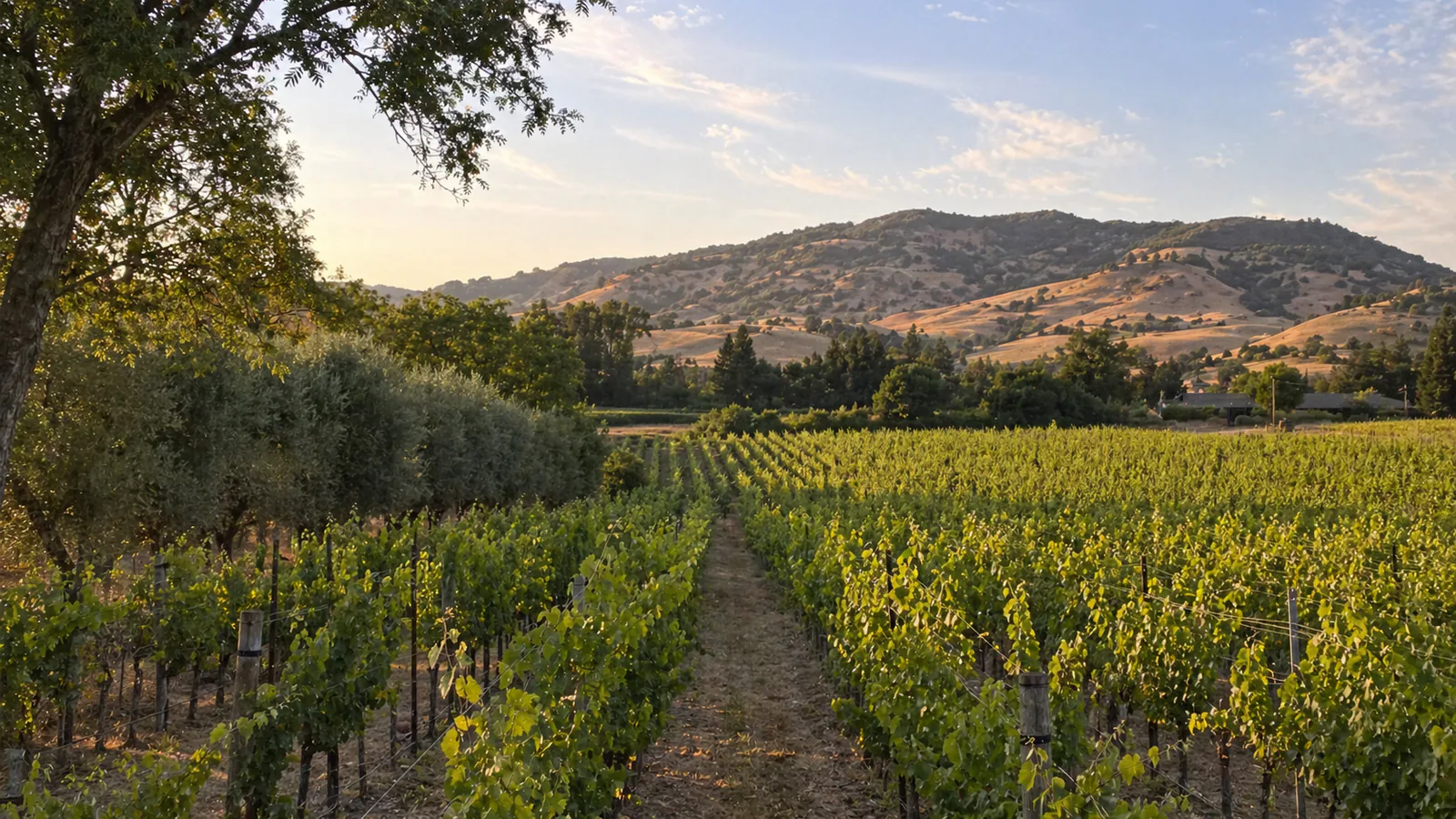
Napa Valley Wine: Cabernet, AVAs, and What to Spend
Napa Valley is 30 miles long and 5 miles wide. The whole region is smaller than greater Sydney. Yet a wine from the right sub-region can cost ten times more than one from two miles down the road, and both bottles say ‘Napa Valley’ on the label. That price gap is the question most people bring to a wine list and never get answered. This guide explains why it exists, which sub-regions justify it, and where the genuine value sits inside the valley.
By the end of this page you’ll know:
- The single tasting in 1976 that turned a sleepy farming valley into the most famous wine address on the planet
- Why two Cabernets from neighbouring vineyards can taste like completely different wines (and how to use that to your advantage)
- The Napa AVA most sommeliers quietly rate above the famous ones
- Where the real $25-to-$40 Napa value sits, and which big-name labels to walk past
- The one practical difference between Napa and Sonoma that actually matters when you’re picking a bottle
What Is Napa Valley Wine?
Napa Valley is a wine region in northern California, about an hour’s drive northeast of San Francisco. It runs roughly 30 miles long and 5 miles wide, sandwiched between the Mayacamas Mountains on the west and the Vaca Range on the east. The whole place is smaller than greater Sydney, and it produces about 4% of California’s wine.
Two things make the valley special: climate and dirt. Cool morning fog rolls in from San Pablo Bay and burns off by midday, giving grapes long warm afternoons and cool nights. That swing builds intense fruit flavour while keeping acidity intact. The soils shift dramatically over short distances too. Gravelly riverbed, volcanic ash, marine sediment, mountain rock. Two vineyards a mile apart can taste nothing alike.
There are roughly 400 wineries inside the valley and around 700 individual grape growers. Most of the Napa-branded bottles you’ve seen on supermarket shelves either come from here or pretend to. The official Napa Valley AVA was established in 1981, the first AVA recognised in California.
The region produces about 30 different grape varieties, but Cabernet Sauvignon dominates. It’s planted on around 55% of the valley’s vineyard acreage and accounts for roughly 70% of total production value. When people say “Napa wine,” they almost always mean Cabernet.
Why Is Napa Cabernet Sauvignon So Famous?
Cabernet Sauvignon is a fussy grape. It needs warm days, cool nights, and well-drained soil to ripen properly without losing structure. Napa’s climate hits that target almost perfectly, year after year.
The result is a Cabernet style that’s distinctly Napa. Ripe blackcurrant, blackberry, dark cherry, and plum up front, layered with cocoa, tobacco, vanilla, and toasted oak. The wines are full-bodied with firm but polished tannins. Alcohol typically runs 14% to 15.5%, and most are aged in French oak for 18 to 24 months before release.
Compared to Bordeaux Cabernet, Napa Cabernet is riper, rounder, and more approachable young. A Bordeaux from a serious producer often needs 10 to 15 years to come into its own. A good Napa Cab is drinking well at 5 to 8 years, sometimes sooner. That accessibility is part of why American collectors went so hard on Napa in the 1990s and 2000s.
The grape’s success in Napa has also pushed prices into the stratosphere. Cult Cabernets from producers like Screaming Eagle, Harlan Estate, and Scarecrow trade for $1,000-plus a bottle on release, and multiples of that on the secondary market. You won’t bump into them in a bottle shop. They sell out via mailing list before the vintage is even bottled.
What Was the Judgment of Paris?
In May 1976, a British wine merchant named Steven Spurrier organised a tasting in Paris. He set up a blind comparison between top French wines and a handful of California bottles he’d quietly carted across the Atlantic. The judges were nine French wine professionals: sommeliers, critics, restaurant owners. The kind of people who’d never admit a Californian could outperform a First Growth.
The Cabernet flight pitted Napa wines against Bordeaux’s biggest names. Château Mouton-Rothschild, Château Haut-Brion, Château Montrose. The Chardonnay flight matched Napa whites against Burgundy’s top producers. The judges tasted blind, scored, and the results were tallied.
Stag’s Leap Wine Cellars 1973 Cabernet Sauvignon won the red flight. Chateau Montelena 1973 Chardonnay won the white flight. Both were Napa wines. The French judges had handed top spots to California in their own backyard.
A single Time magazine reporter, George Taber, was the only journalist in the room. His write-up went global. The result reshaped wine almost overnight. French dominance was no longer assumed. Napa land prices exploded. Capital poured into the valley, and within 15 years California had built itself into a world-class wine region. The two winning bottles are now in the Smithsonian.
Which Napa AVAs Should You Know?
Napa Valley contains 16 sub-regions called AVAs (American Viticultural Areas), each with its own soils, climate, and house style. You don’t need to memorise all 16. Eight matter most for Cabernet drinkers.
Oakville. The middle of the valley, home to To Kalon Vineyard, one of the most legendary vineyards in California. Oakville Cabernet is dense, structured, and built to age. Robert Mondavi, Opus One, and Screaming Eagle all sit here.
Rutherford. Just north of Oakville, famous for what locals call “Rutherford dust,” a savoury, dusty quality on the tannins that’s distinctive even in blind tastings. Inglenook and Caymus built their reputations on Rutherford fruit.
Stags Leap District. Home of the Cabernet that won the Judgment of Paris. Wines here lean toward elegance over power, with softer tannins and more red fruit character. Think silky rather than muscular.
Howell Mountain. A high-elevation AVA on the eastern side of the valley, above the fog line. The wines are bigger, darker, more tannic, and built for long aging. If you like brooding, structured Cabernet, look here first.
Spring Mountain. The mountain side opposite Howell, west of St Helena. Cooler, slower-ripening, and a cult favourite among sommeliers. The wines are tightly wound and reward patience in the cellar.
Mount Veeder. Higher and cooler still, with rocky volcanic soils. Mount Veeder Cabernet has a wild, herbal, almost European character that stands out from the warmer valley floor.
Calistoga. The northern end of the valley, hotter, more rugged, with volcanic soils. Wines lean rich and powerful. Chateau Montelena (the Judgment of Paris Chardonnay winner) is here.
Yountville. The southern AVA, cooler thanks to the bay fog, producing more aromatic, lifted Cabernets with bright acidity. Dominus Estate is the marquee name.
If you want a quick rule: valley floor AVAs (Oakville, Rutherford, Stags Leap, Yountville) make rounder, fruitier wines. Mountain AVAs (Howell, Spring, Veeder) make tighter, more tannic, longer-lived wines.
What Else Does Napa Valley Grow?
Cabernet hogs the spotlight, but Napa makes excellent wine from several other grapes. If you’ve written the valley off as “just full-bodied reds,” you’re missing some of its best value.
Chardonnay. Napa Chardonnay tends toward the riper, oakier end of the spectrum, with ripe yellow apple, peach, vanilla, and butter. If that’s the style you’re chasing, our roundup of the best buttery Chardonnay is mostly Napa fruit. The cooler southern AVAs (Carneros, parts of Yountville) produce more restrained, food-friendly versions. Chateau Montelena, Stony Hill, and Far Niente are reference points.
Merlot. Napa Merlot was huge in the 1990s, took a beating after the movie Sideways in 2004, and has quietly come back as a serious wine. Duckhorn made the style famous: plummy, soft, generous, with the same valley richness as the Cabernet but more approachable young.
Sauvignon Blanc. Napa Sauvignon Blanc is rounder and riper than the New Zealand style, often barrel-fermented and labelled “Fumé Blanc” in older bottlings. Spottswoode and Robert Mondavi make benchmark versions. Think tropical fruit and grapefruit rather than passionfruit and grass.
Cabernet Franc. Mostly used for blending into Cabernet Sauvignon, but a small handful of producers bottle it as a single-variety wine. Floral, herbal, lifted, with a beautiful pencil-shaving aroma. A great way to drink “Napa Cabernet” for less money.
What Does Napa Valley Wine Taste Like?
Napa wine has a recognisable house style across grapes: ripe fruit, generous body, soft acidity, polished texture. Warm days build sugar (and therefore alcohol). Cool nights preserve enough acid to stop the wine from feeling flabby.
For Cabernet specifically, expect blackcurrant and dark cherry up front, then layers of cocoa, tobacco, cedar, vanilla, and sometimes mint or eucalyptus. The tannins are firm but rounded, the finish long, and the texture often described as “plush” or “cashmere.” It’s the opposite of a thin, lean European red.
The wines are designed to taste good young. Pull the cork on a $50 Napa Cab the night you buy it and you’ll have a great experience. That’s a deliberate stylistic choice. Most Napa drinkers want immediate gratification, not 15 years of cellar time.
If you’ve only ever had cheap Napa Cabernet, you’ve experienced a watered-down version of this profile. The character that makes the valley famous shows up properly around the $35 mark and gets richer from there.
Why Is Napa Wine So Expensive, and Where Does the Value Hide?
Napa wine is expensive because Napa land is expensive. A vineyard acre in a top AVA like Oakville sells for $500,000 to over $1 million. Compare that to $40,000 to $80,000 in much of Sonoma, or $20,000 to $30,000 in southern France. Every bottle you buy has to carry that land cost.
Add the cost of farming meticulously (lots of hand work, low yields), aging in expensive French oak for 18 to 24 months, and the labour rates of Northern California, and the floor for a properly made Napa Cabernet is around $40 to $50 a bottle. Anything cheaper than that is either using grapes from outside the AVA, cutting corners on oak, or both.
Real value in Napa hides in three places:
The first is the $25 to $40 zone, where producers like Honig, Frog’s Leap, Trefethen, Heitz, and Hendry deliver legitimate Napa character without the cult markup. These are the bottles to bring to a dinner party where someone wants “a nice Napa Cab.”
The second is non-Cabernet bottles. A $30 Napa Sauvignon Blanc or Merlot from a serious producer often outperforms a $30 Cabernet from a corporate label, because the price isn’t being driven up by Cabernet demand.
The third is second labels from cult producers. Many top wineries make a “second wine” using younger vines or declassified barrels at half or a third of the flagship price. They’re rarely advertised, but they’re a quiet way to drink top Napa fruit without remortgaging.
What to walk past: anything labelled “California” rather than “Napa Valley” at the $20 mark, even from Napa-named producers. The legal rules let producers source grapes from anywhere in the state for those bottlings, and the wine in the glass usually shows it.
Frequently Asked Questions
What’s the difference between Napa and Sonoma?
Napa is smaller, hotter, and built around Cabernet Sauvignon. Sonoma is larger, cooler in many parts, and produces a wider range of grapes including world-class Pinot Noir and Chardonnay. Napa wines tend to be richer and more expensive. Sonoma wines tend to be more varied in style and offer better value at the $20 to $40 mark. If you want full-bodied Cabernet, go Napa. If you want Pinot Noir, Chardonnay, or a wider range of styles, go Sonoma. A classic steak pairing is the moment Napa Cab really earns its reputation.
Why is Napa Cabernet so expensive?
Land cost is the main driver. A top Napa vineyard acre sells for over half a million dollars, sometimes a million, and that cost gets baked into every bottle. Add meticulous farming, low yields, and 18 to 24 months in expensive French oak, and the realistic floor for a properly made Napa Cabernet is around $40 to $50. The cult bottles ($500-plus) layer on scarcity and prestige pricing.
What’s a Napa AVA?
AVA stands for American Viticultural Area, which is the US system for officially recognising wine regions with distinct climate or geography. Napa Valley is itself an AVA, and contains 16 smaller sub-AVAs like Oakville, Rutherford, Stags Leap District, and Howell Mountain. Each sub-AVA has its own house style based on elevation, soil, and exposure. A bottle labelled with a specific AVA must source at least 85% of its grapes from that area.
What was the Judgment of Paris?
A blind tasting held in Paris in May 1976 where French wine experts compared top Bordeaux and Burgundy bottles against California challengers. Napa wines won both the red and white categories: Stag’s Leap Wine Cellars 1973 Cabernet for the reds, Chateau Montelena 1973 Chardonnay for the whites. The result was reported globally and reshaped the wine industry, breaking the assumption that France was untouchable and putting California on the world wine map.
What’s a good cheap Napa wine?
Honest answer: under $25, you’re rarely getting a true Napa experience. Look at the $25 to $40 range from producers like Honig, Frog’s Leap, Trefethen, and Heitz for legitimate value. If you’re set on a sub-$20 bottle, Hess Select Cabernet (around $18) and Bogle Essential Red ($15) are reliable everyday options sourced from California broadly, including some Napa fruit. For genuine Napa Valley AVA wines on a budget, Hendry and Honig Sauvignon Blanc both run around $20 to $25.
How long does Napa Cabernet age?
A serious Napa Cabernet from a top vintage will drink well for 10 to 20 years, peaking somewhere between years 8 and 15. Mountain AVA wines (Howell, Spring, Veeder) tend to age longer thanks to their tighter tannin structure. Valley floor wines (Oakville, Stags Leap) usually peak earlier. Below the $40 mark, most Napa Cabernet is built to drink in the first 3 to 5 years and won’t improve much past that.
Ready to put this into practice? The single best move for a newcomer is finding a real Napa Cabernet under $30 that drinks like the $80 versions. Here are bottles that prove it can be done.
Keep Reading
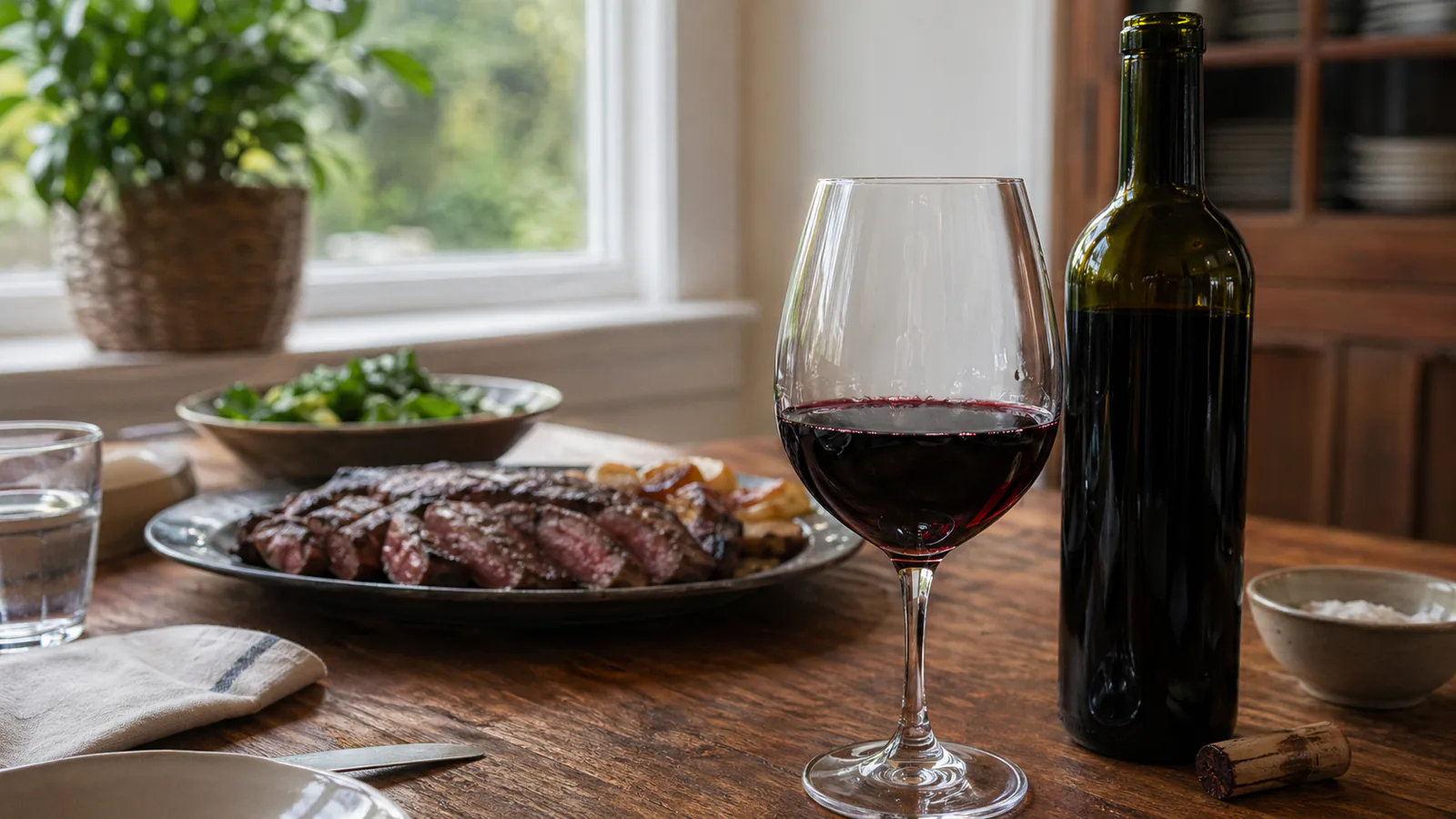
Cabernet Sauvignon: Taste, Regions, Pairings
What Cabernet Sauvignon tastes like, where the best bottles come from, what to pair it with, and how much to spend. The plain-English guide.
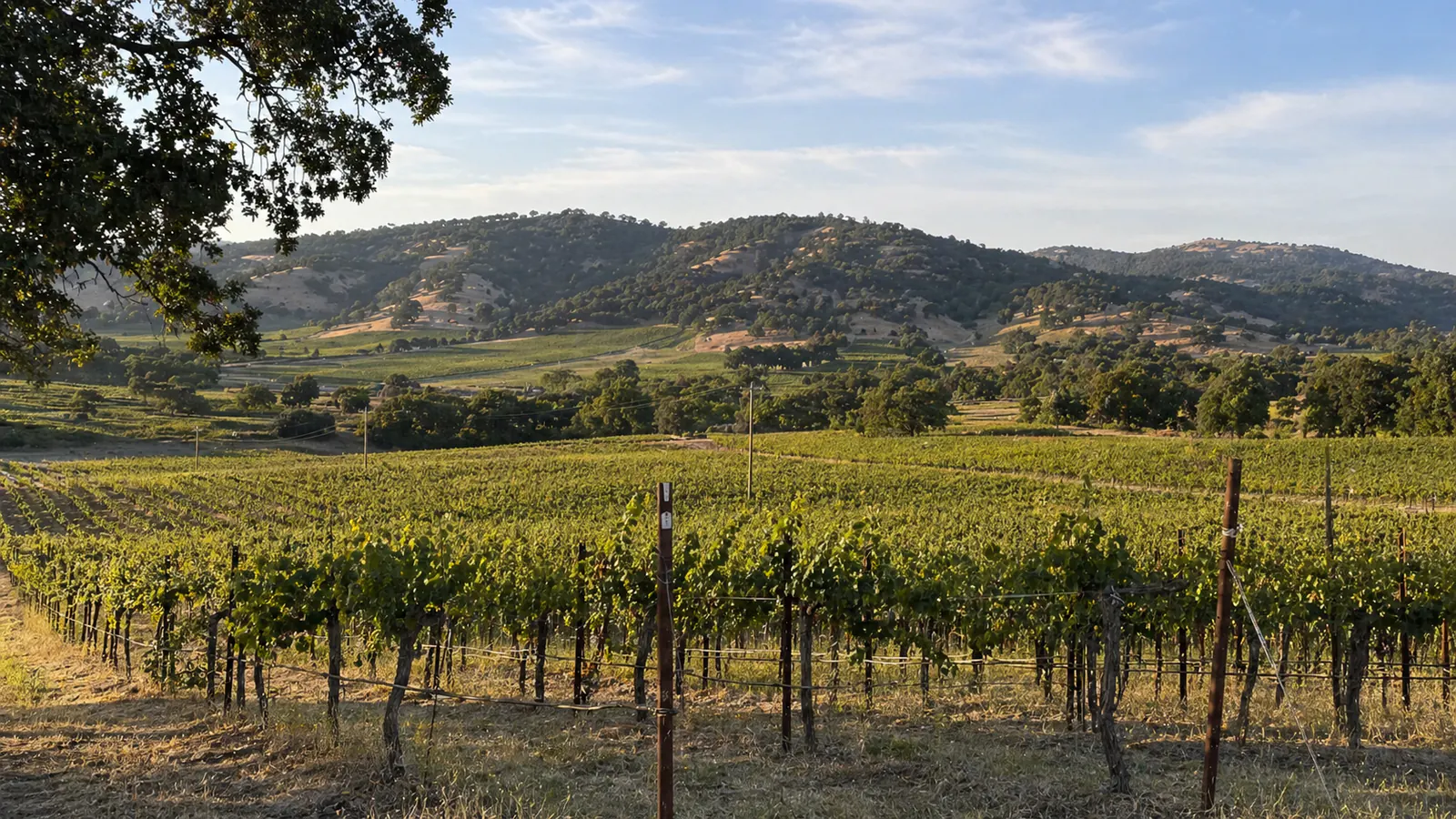
Sonoma Wine: Regions, Grapes, and What to Buy
Sonoma wine explained: cool coastal Pinot and Chardonnay, inland Zinfandel and Cab, how it differs from Napa, and how much to spend.

Best Buttery Chardonnay: 8 Bottles Worth Every Sip
Eight buttery Chardonnays that deliver creaminess, oak, and tropical richness. From under $15 to the premium tier, all California, all worth it.