Claire Bennett
Wine Editor12 min read
Sonoma Wine: Regions, Grapes, and What to Buy
Sonoma wine explained: cool coastal Pinot and Chardonnay, inland Zinfandel and Cab, how it differs from Napa, and how much to spend.
Sonoma Wine: Regions, Grapes, and What to Buy
People argue Sonoma vs Napa like it’s Coke vs Pepsi. Loud about it, very confident, usually based on one trip to one tasting room a decade ago. Meanwhile you’re staring at a wine list with both regions on it and you’ve never figured out which one is actually “you”.
They’re not the same drink. Once you know what Sonoma does well, picking from that list gets a lot easier.
By the end of this page you’ll know:
- The single climate quirk that makes Sonoma’s best Pinot Noir possible (and why Napa can’t replicate it)
- The Sonoma sub-region that produces Chardonnay good enough to embarrass $100 Burgundy bottles
- Why old-vine Zinfandel from Dry Creek has nothing to do with the cheap Zin you wrote off in college
- The price band where Sonoma offers the best value in California wine right now
- The exact difference between Sonoma Coast and Russian River Valley Pinot, in one sip
What Is Sonoma Wine?
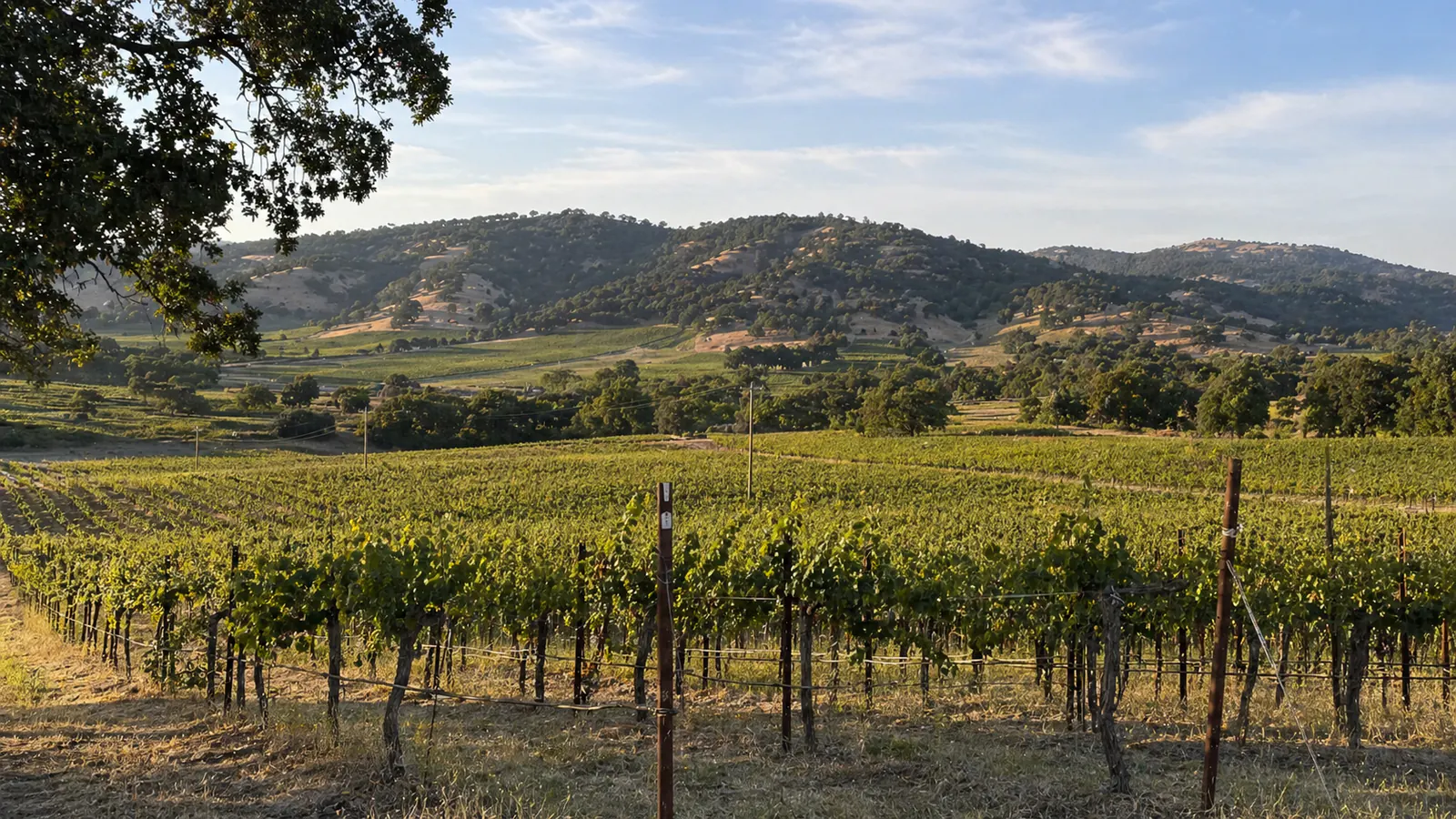
Sonoma County is a wine region on the northern California coast, about an hour north of San Francisco. It covers around a million acres total with roughly 60,000 planted to vineyards, spread across 19 official sub-regions (AVAs). That makes it three times the size of Napa Valley with a fraction of the marketing budget.
The defining feature is geography. Sonoma touches the Pacific on its western edge, so cold ocean air and morning fog roll inland through gaps in the coastal mountains every day. Cool zones near the coast and the bay get genuinely cold growing seasons. Inland valleys protected by hills get hot, dry, classic California sun. One county, two completely different climates, two different wine styles.
The result is a region that produces world-class Pinot Noir and Chardonnay from its cool zones and serious Zinfandel and Cabernet Sauvignon from its warm zones. Few wine regions on earth do that range well. Burgundy can’t grow Cab. Bordeaux can’t grow Pinot. Sonoma does both, often at a better quality-to-price ratio than the famous regions overseas.
You’ll see “Sonoma County” on cheaper bottles, which means the grapes can come from anywhere in the county. Better bottles list a specific AVA like Russian River Valley, Sonoma Coast, or Dry Creek Valley. The AVA is where the real information lives. It tells you the climate, which tells you the style.
How Does Sonoma Differ from Napa?
Napa is famous for one thing: powerful, expensive Cabernet Sauvignon. The valley is small, hot, sheltered, and almost entirely focused on producing big red wines that age and command high prices. The average bottle of Napa Cab now sits north of $80 retail. Tasting fees at top wineries run $100 to $400.
Sonoma is bigger, cooler in parts, and more varied. It does Pinot Noir, Chardonnay, Zinfandel, Cabernet, Sauvignon Blanc, and sparkling wine, all at a serious level. Average bottle prices are lower across the board. Tasting rooms feel less corporate. Producers tend to be smaller and family-owned. The vibe is jeans-and-boots where Napa is white tablecloth.
Practical takeaway: if you want a powerful, structured Cabernet to drink with steak, Napa earns its reputation. If you want elegant Pinot Noir, expressive Chardonnay, or characterful Zinfandel without paying Napa prices, Sonoma is where to look. Sonoma also makes excellent Cabernet (especially from Alexander Valley and Knights Valley), often for half what Napa charges at the same quality.
The bottle test: a $40 Sonoma Pinot Noir from Russian River Valley will outdrink most $40 Napa Cabs on a Tuesday night. A $60 Napa Cab will outdrink most $60 Sonoma Cabs at a steakhouse. Buy the right region for the moment.
What Wines Come from Cool Coastal Sonoma?
The cool zones are where Sonoma builds its reputation for elegance. Cold air from the Pacific keeps growing-season temperatures down, which extends the ripening period and produces wines with bright acidity, lower alcohol, and more aromatic complexity than typical California reds and whites. Three sub-regions matter most.
Sonoma Coast
The largest of the cool AVAs and the closest to the ocean. The “true Sonoma Coast” (sometimes called the West Sonoma Coast) sits within sight of the Pacific, where vineyards battle fog, wind, and lean rocky soils. Pinot Noir from here tastes of wild red berry, forest floor, savory herbs, and a saline whisper that comes from the maritime climate. Chardonnay shows citrus, white flower, and stone, leaner and more Burgundian than typical California Chard.
Producers worth knowing: Hirsch, Peay, Failla, Flowers, Marcassin. Good Sonoma Coast bottles start around $35 and climb past $100 for cult names.
Russian River Valley
The most famous Pinot Noir AVA in California. The Russian River cuts a path inland from the coast, and morning fog follows the river upstream, cooling the valley floor. The fog typically burns off by late morning, so the grapes get warm afternoons followed by cold nights. That diurnal swing is the climate quirk that makes Russian River Pinot what it is.
The style sits between Sonoma Coast and Napa Carneros: riper red and dark fruit, baking spice, a soft cola note, fuller body, plush texture. It’s the Pinot people fall in love with first because it’s generous and approachable. Chardonnay from Russian River runs ripe and round, often with subtle oak. The classic California style done with restraint. Producers: Williams Selyem, Kosta Browne, Rochioli, Merry Edwards, Dehlinger. Bottles start at $40.
Carneros
A flat, windswept AVA straddling the southern tips of both Sonoma and Napa, cooled by San Pablo Bay. Carneros built its name on Pinot Noir and Chardonnay, and is also the historical heart of California sparkling wine (Domaine Carneros, Gloria Ferrer, Schramsberg’s reserve fruit). The style is bright and crisp with cherry and citrus notes, slightly more austere than Russian River. Sparkling fans should taste Carneros bubbles next to Champagne. They hold up better than people expect, at half the price.
What Wines Come from Inland Sonoma?
Drive 20 minutes inland from Russian River Valley and the climate shifts dramatically. The fog doesn’t reach. Afternoons get hot. The vineyards pivot from Pinot to thicker-skinned grapes that need real heat to ripen. This is where Sonoma’s other half lives.
Dry Creek Valley
Famous for Zinfandel, especially old-vine Zinfandel from gnarled vineyards planted between the 1880s and 1920s. Old vines produce tiny crops of intensely concentrated grapes, and Dry Creek Zin tastes like nothing else: brambleberry, black pepper, dried herbs, a cocoa edge, and a finish that feels alive on the tongue. Forget the cheap “white Zin” that defined the grape’s reputation in the 1990s. Real Dry Creek Zin is a serious red wine.
Producers: Ridge (Lytton Springs and Geyserville bottlings), Bedrock, Carlisle, Quivira, Seghesio. Expect $30 to $70 for the good stuff. Dry Creek also produces excellent Sauvignon Blanc and increasingly good Cabernet from its warmer hillside sites.
Alexander Valley
The largest inland AVA and the heart of Sonoma’s Cabernet Sauvignon scene. Warmer than Dry Creek, with deeper soils, the valley produces Cab with ripe black fruit, dusty cocoa, and softer tannins than Napa Cabernet. The wines drink earlier and cost less. A $40 Alexander Valley Cab will often satisfy where a $40 Napa Cab disappoints.
Producers: Silver Oak, Jordan, Stonestreet, Ferrari-Carano. Alexander Valley also grows Chardonnay, Merlot, and Zinfandel, but Cabernet is the headliner.
Knights Valley
A small, warm pocket between Alexander Valley and Napa, planted heavily to Cabernet Sauvignon and the other Bordeaux red varieties. Peter Michael, Beringer, and a handful of others source Cab here. The style sits between Alexander Valley elegance and Napa power, often at Napa quality for less money. Worth seeking out if you like big Cabernet but want value.
What Is the Sonoma Valley AVA?
Sonoma Valley is the historic heart of the county, the place where California winemaking arguably started in the 1800s. It runs north from the town of Sonoma toward Glen Ellen and Kenwood, sheltered on both sides by mountain ranges. Cooler at the southern end (closer to the bay), warmer at the northern end. The variety reflects the climate range: Cabernet, Chardonnay, Zinfandel, and Merlot all do well here.
The best-known sub-region within Sonoma Valley is Moon Mountain District, a high-elevation AVA on the western slopes of the Mayacamas. Mountain-grown Cab and Zin from Moon Mountain show more structure, more tannin, and longer aging potential than valley-floor versions. Producers like Hanzell, Repris, and Kunde are worth tasting.
Sonoma Valley is also where you’ll find some of the oldest continuously operating wineries in California, including Buena Vista (1857) and Gundlach Bundschu (1858). For the curious drinker, the historical context adds a layer the newer regions simply can’t match.
What Other Grapes Does Sonoma Grow?
Beyond the four headline varieties, Sonoma grows a wider range than most California regions.
- Sauvignon Blanc: Dry Creek and Russian River produce crisp, citrus-driven Sauv Blanc with more weight than New Zealand styles. $25 to $40 for the serious bottles.
- Sparkling Wine: Carneros and the Sonoma Coast both make traditional-method sparkling that competes seriously with Champagne. Iron Horse, Roederer Estate (technically Anderson Valley but adjacent), and Schramsberg lead the category.
- Syrah and Rhône varieties: A small but quality-driven scene exists in the cool coastal zones. Pax, Arnot-Roberts, and a handful of producers make cool-climate Syrah that drinks more like the Northern Rhône than Australia.
- Petite Sirah: Sonoma’s Italian-immigrant heritage left a legacy of Petite Sirah plantings, especially in Dry Creek. Inky, peppery, full-bodied, age-worthy.
- Pinot Gris and Riesling: A handful of producers make excellent versions. Niche but interesting.
If a Sonoma producer makes one famous wine, it’s often worth trying their secondary bottlings too. The same vineyard discipline tends to apply across their range.
What Does Sonoma Wine Taste Like?
There’s no single Sonoma flavour profile, which is the point. The region is too varied for that. Each of the major styles has its own recognisable signature though.
Russian River Pinot Noir: ripe red cherry, plum, baking spice, a touch of cola, soft tannins, plush texture. The friendliest California Pinot.
Sonoma Coast Pinot Noir: wild berry, forest floor, savory herbs, a saline note. Leaner, more structured, more like Burgundy.
Sonoma Chardonnay: ripe yellow apple, white peach, citrus, often with subtle oak and a creamy texture from malolactic fermentation. Less buttery than typical Napa Chard, more fruit-driven than Burgundy.
Dry Creek Zinfandel: brambleberry, blackberry, black pepper, dried herbs, cocoa, sometimes a noticeable warmth from higher alcohol. Bold, generous, food-friendly.
Alexander Valley Cabernet: ripe black fruit, cocoa, cedar, soft tannins, an approachable drinking window earlier than Napa Cab.
If you’ve only had one Sonoma wine and decided you knew the region, you probably tasted one of these five. Try the others before judging.
How Much Should You Spend on Sonoma Wine?
Sonoma covers a wide price range, with quality genuinely scaling with price across most tiers. Three bands worth knowing.
$15 to $25 entry tier. Big-volume producers like Kendall-Jackson, La Crema, Rodney Strong, and Bogle dominate this band. Drinkable, broad-appeal wines, usually sourced from across “Sonoma County” rather than a specific AVA. Fine for a Tuesday, rarely memorable. The exceptions are some Zinfandels and Sauvignon Blancs that punch above their price.
$30 to $60 sweet spot. Where Sonoma earns its reputation. Single-AVA Pinot Noir, Chardonnay, Zinfandel, and Cab from quality producers. Russian River Pinot from Dehlinger or Merry Edwards, Dry Creek Zin from Ridge or Carlisle, Alexander Valley Cab from Stonestreet, Sonoma Coast Chard from Failla. Genuinely impressive bottles, often at half what comparable Napa or Burgundy costs.
$80 and up. Single-vineyard Pinot from Williams Selyem, Kosta Browne, or Hirsch. Reserve Cab from Silver Oak. Cult Chardonnay from Aubert or Marcassin. Layered, age-worthy, and competitive with anything California or Burgundy produces. Above $200 you’re paying largely for scarcity and mailing-list pedigree.
Honest truth: the biggest quality jump in Sonoma sits between the $20 zone and the $35 zone. Spending an extra $15 to move from a county-blend bottle to a single-AVA bottle from a serious producer usually delivers more than the next $40 on top.
Frequently Asked Questions
What’s the difference between Sonoma and Napa?
Napa is smaller, hotter, and almost entirely focused on premium Cabernet Sauvignon. Sonoma is three times bigger, much more varied in climate, and produces excellent Pinot Noir, Chardonnay, Zinfandel, and Cabernet across its different sub-regions. Sonoma bottles tend to cost less than equivalent Napa bottles, especially in Cabernet, where Alexander Valley offers Napa-adjacent quality for half the price.
What’s Sonoma Coast Pinot Noir famous for?
Cool-climate elegance. The Sonoma Coast AVA sits close to the Pacific, where ocean fog and cold winds slow ripening and produce Pinot with bright acidity, savory herb notes, and a saline whisper that’s distinctive to the region. Top producers like Hirsch, Peay, and Flowers make Pinot that reads more like village-level Burgundy than typical California Pinot.
Is Sonoma cheaper than Napa?
Generally yes. Average bottle prices are lower across every grape variety. Tasting fees at Sonoma wineries typically run $25 to $50, where Napa fees climb past $100 at top names. The biggest savings show up in Cabernet, where a $40 Alexander Valley bottle often delivers what a $70 Napa bottle promises.
What’s old-vine Zinfandel?
Zinfandel grown on vines that are typically 50 years old or older, sometimes well over 100. Old vines produce smaller crops of more concentrated grapes, which makes for richer, more layered wine. Dry Creek Valley has one of the highest concentrations of old-vine Zin vineyards in California, with some plantings dating back to the 1880s. Look for bottlings labeled “old vine” or specific vineyard names like Lytton Springs, Geyserville, or Bedrock.
What’s the best Sonoma sub-region for Pinot Noir?
Depends on the style you want. Russian River Valley produces ripe, plush, approachable Pinot that’s the easiest entry point. Sonoma Coast (especially the West Sonoma Coast) produces leaner, more savory, more Burgundy-like Pinot. Carneros sits between the two with bright acidity and a cooler profile. Try one bottle from each AVA before deciding which speaks to you.
Is Sonoma Chardonnay buttery?
Some yes, some no. Sonoma covers the full Chardonnay spectrum. Russian River and Carneros versions tend to be ripe and round, sometimes with subtle oak and malolactic creaminess. Sonoma Coast Chardonnay leans crisper and more mineral, closer to Chablis. The label rarely tells you which style you’re getting, so check the producer notes or ask before buying.
Ready to put this to the test? If you’re new to California Pinot, start with a Russian River Valley bottle in the $35 to $50 zone. If you’ve never had a serious Zinfandel, grab a Dry Creek bottling from Ridge or Carlisle. You’ll taste the difference between Sonoma and the bargain-bin California wines that gave the state a reputation problem in the first place.
Explore more on Pinot Noir or see how Napa Valley compares.
Keep Reading
Pinot Noir: Taste, Best Regions, Food Pairings
What Pinot Noir tastes like, where the best bottles come from, what to pair with it, and how much to spend on the heartbreak grape.
Zinfandel Wine: Taste, Regions, Pairings, Price Guide
What Zinfandel actually tastes like, why it's bigger than most reds, the difference from White Zin, and the food it pairs with. A plain-English Zin guide.
Napa Valley Wine: Cabernet, AVAs, and What to Spend
What Napa Valley wine actually is, why its Cabernet rules the world, the AVAs worth knowing, and where the value hides. Plain English, no fluff.