Claire Bennett
Wine Editor9 min read
Loire Valley Wine: Regions, Grapes, and What to Buy
Loire Valley wine explained: Sancerre, Vouvray, Muscadet, and Chinon broken down by sub-region, grape, and taste so you stop guessing in the aisle.
Loire Valley Wine: Regions, Grapes, and What to Buy
You ordered a Sancerre because someone said it was good, you liked it, and now you’re wondering if every Loire wine tastes like that. It doesn’t. The Loire is the most stylistically scattered region in France. One bottle tastes like seawater. The next one tastes like quince and honey. The one after that tastes like raspberry leaves and pencil shavings. The trick is knowing which corner of the river makes which kind of bottle.
By the end of this page you’ll know:
- The four sub-regions every Loire bottle comes from, and what each one specialises in
- Why Sancerre and Sauvignon Blanc are the same grape but feel like cousins, not twins
- The single Loire wine that swings from bone-dry to dessert sweet on the same shelf (and how to tell which version you’re buying)
- The light red that’s quietly the best summer wine in France, often under $25
- Why Loire wine pairs with goat cheese in a way no other region quite manages
What Is Loire Valley Wine?
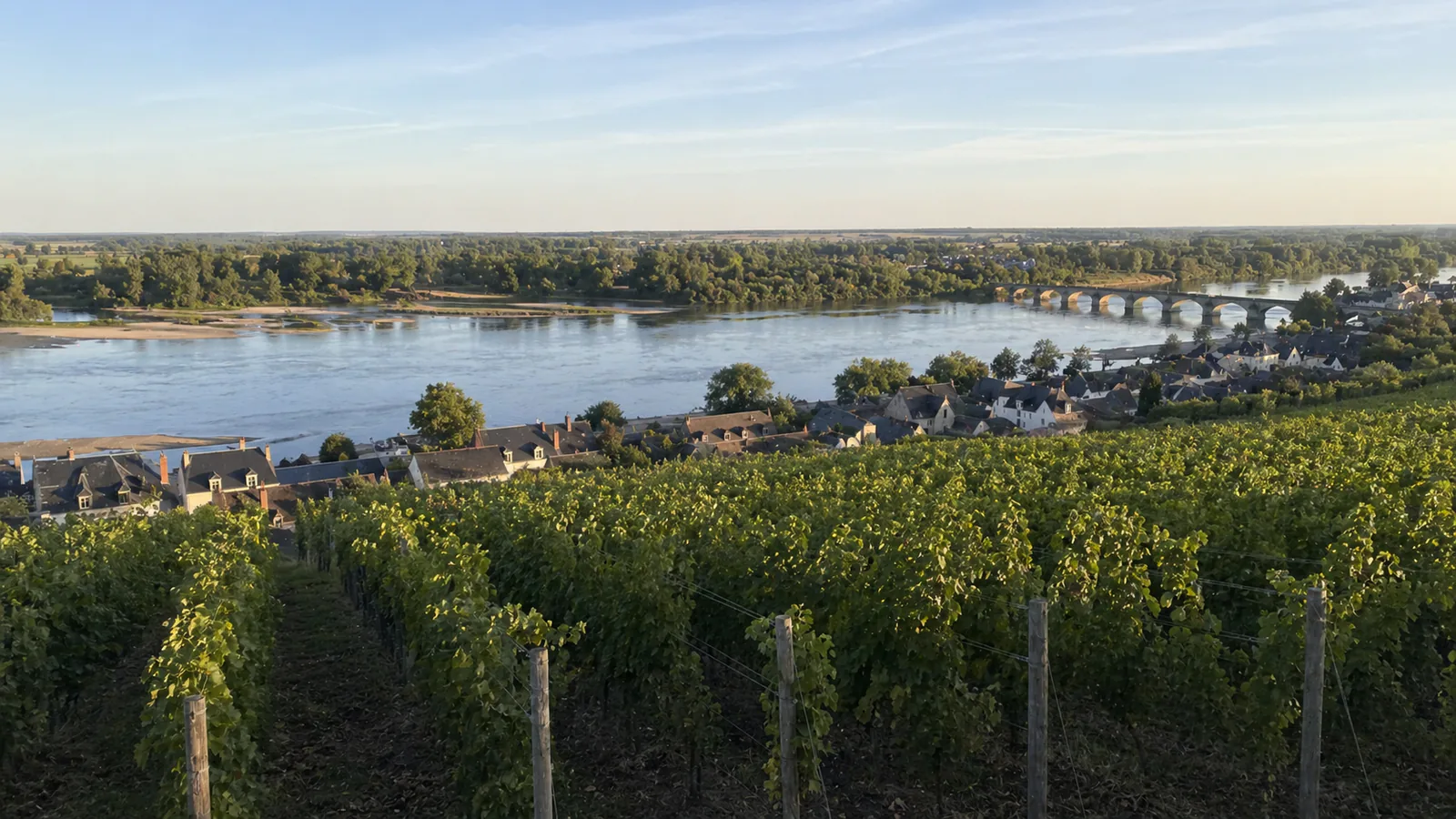
The Loire Valley follows France’s longest river for roughly 600 miles, from the Atlantic near Nantes inland to the centre of the country. Vineyards stretch the whole corridor, which is why the wines vary so wildly. Coastal vineyards make briny whites built for oysters. Inland vineyards near Sancerre sit on chalk and flint and make tense, mineral whites. In between, Touraine and Anjou turn out everything from sparkling Chenin to peppery Cabernet Franc reds.
The climate is cool. That’s the through-line. Cool climates make wines with high acidity, lower alcohol, and bright fruit, and that style runs through the Loire regardless of grape or sub-region. You’ll rarely find a Loire wine that tastes hot, jammy, or heavy. They’re built for the table.
Roughly 70% of Loire production is white. The reds are mostly Cabernet Franc, with smaller amounts of Pinot Noir and Gamay. Rosé is a serious category here too, especially around Anjou. And the Loire is the second-biggest sparkling wine region in France after Champagne, mostly under the Crémant de Loire label.
What Are the Loire Valley’s Four Sub-Regions?
The Loire is too long for one map to be useful. Think of it as four distinct zones, each with its own grape obsessions and house style.
Pays Nantais (Muscadet country)
The coastal end. Pays Nantais sits at the mouth of the Loire and grows almost exclusively one grape: Melon de Bourgogne, which goes into Muscadet. The wine is bone-dry, low in alcohol, and tastes like lemon, green apple, and a salty sea breeze. It’s what locals drink with a plate of oysters, and nothing else in France does that job better.
The label to look for is Muscadet Sèvre et Maine sur lie. “Sur lie” means the wine aged on its dead yeast cells, which adds a creamy, slightly bready texture to the otherwise lean profile. Most bottles run $14 to $22. Few regions on earth deliver this much wine for that money.
Anjou-Saumur (Chenin Blanc and Cabernet Franc)
Move inland and you hit Anjou, then Saumur. This is Chenin Blanc territory, with serious Cabernet Franc and rosé alongside. Chenin is the chameleon grape of France. In Anjou alone it shows up as bone-dry Savennières, off-dry Anjou Blanc, sweet Coteaux du Layon, and bracing sparkling Saumur Brut. Same grape, four very different bottles.
Saumur-Champigny is the red to know here. It’s Cabernet Franc grown on chalky tuffeau soil and bottled young. Light body, red fruit, a faint herbaceous note that locals describe as “leafy”. Drinks beautifully slightly chilled in summer and runs $20 to $35.
Touraine (Vouvray, Chinon, Bourgueil)
Touraine sits in the middle of the valley and it’s where the Loire’s most famous still wines come from. Vouvray is the headline Chenin Blanc, made in styles from sec (dry) through demi-sec (off-dry) to moelleux (sweet). The label tells you which one, but you have to actually read it. Same producer, same vineyard, same bottle shape, very different wine inside.
Chinon and Bourgueil are the red flagships, both Cabernet Franc. Chinon tends to be a touch fruitier and more approachable young; Bourgueil leans more structured and ages better. Both deliver raspberry, graphite, and a subtle herbal lift that pairs with almost any savoury food. Expect $20 to $40 for serious bottles.
Central Loire (Sancerre and Pouilly-Fumé)
The inland end of the valley, sitting on chalk and flint, growing Sauvignon Blanc almost exclusively. Sancerre is the famous one. Pouilly-Fumé sits directly across the river and uses the same grape. The two feel like cousins. Sancerre is brighter and more citrusy. Pouilly-Fumé is smokier and a touch more textured, partly thanks to the flint.
This is also where Loire Pinot Noir lives. Sancerre Rouge and Sancerre Rosé are made from Pinot, in small quantities, and they’re some of the best-value Pinot Noir in France. Most Sancerre Blanc bottles run $25 to $40. Pouilly-Fumé sits in the same range. Top single-vineyard cuvées climb past $80.
What Grapes Does the Loire Valley Use?
Four grapes do most of the work in the Loire. Knowing them shortcuts almost every label decision.
Sauvignon Blanc is the headline white in Sancerre and Pouilly-Fumé. Loire-grown Sauvignon is leaner, more mineral, and less tropical than New Zealand Sauvignon. Think gooseberry, citrus zest, and wet stone rather than passionfruit and grass.
Chenin Blanc is the Loire’s most versatile grape. Vouvray, Savennières, Coteaux du Layon, and most Crémant de Loire all come from Chenin. The grape’s signature is a quince-honey-apple flavour combined with the highest natural acidity of any French white grape. That’s why Chenin can handle being made dry, off-dry, sweet, or sparkling without losing its identity.
Melon de Bourgogne is the Muscadet grape. Neutral, lean, low-alcohol, and built to taste of the sea. It rarely shows up outside the Pays Nantais.
Cabernet Franc is the red. It’s a parent of Cabernet Sauvignon but drinks completely differently: lighter body, lower tannin, brighter red fruit, and a green herbal lift that’s a feature here, not a flaw. If you’ve only had it as a blender in Bordeaux, Loire Cabernet Franc will surprise you.
What Does Loire Valley Wine Taste Like?
There’s a house style across the entire region, even with all that variety. Loire wines taste fresh. They have high acidity, lower alcohol than most of France (often 11% to 12.5%), and an almost universal mineral or saline streak. Oak is rare on the whites and used lightly on the reds. Fruit reads as red and green, not black and ripe.
For the whites, the spectrum runs from Muscadet’s seawater leanness to Vouvray’s honeyed plushness. In between sit Sancerre’s flint and citrus, Savennières’s dry Chenin power, and the off-dry Vouvrays that taste like polished apple cider. None of them are big or jammy. All of them want food on the table next to them.
For the reds, expect light to medium body, raspberry and red cherry fruit, soft tannins, and a herbaceous note that ranges from “fresh leaf” to “green pepper” depending on vintage and ripeness. Loire reds are the closest French equivalent to good Pinot Noir at half the price.
Sweet wines deserve their own paragraph. Coteaux du Layon, Quarts de Chaume, and Bonnezeaux are botrytised Chenin dessert wines, and they’re some of the best sweet whites on earth. They taste of dried apricot, honey, and saffron, with acid bright enough to stop them feeling syrupy. Half-bottles sit around $30 to $60 and outclass most Sauternes at the price.
How Do You Buy Loire Wine Without Getting Lost?
The Loire confuses people because the labels name places, not grapes. Once you’ve matched a place to a grape (the cheat sheet above), the labels become readable. A few rules of thumb that solve 90% of bottle-shop decisions:
Want a crisp aperitif white for under $25? Grab a Muscadet Sèvre et Maine sur lie or a basic Sancerre. Want something more interesting at $25 to $40? Look for Pouilly-Fumé, Savennières, or a single-vineyard Sancerre. Buying a Vouvray? Look for “sec” on the label for dry, “demi-sec” for off-dry, or “moelleux” for sweet. The producer’s name on the front isn’t enough information here. Read the small print.
For reds, a young Chinon or Bourgueil ($22 to $35) is the safest entry point. Ask for one from a recent warm vintage if you want it riper and softer. A few names worth trusting: Domaine Vacheron and Henri Bourgeois in Sancerre; Domaine Huet and François Chidaine in Vouvray; Bernard Baudry and Charles Joguet in Chinon; Nicolas Joly and Domaine du Closel in Savennières.
One last tip: serving temperature matters more with Loire wine than almost any other region. The whites are at their best around 10 to 12°C, slightly warmer than fridge-cold. Loire reds prefer 14 to 16°C, cooler than most reds. Pull the white out of the fridge 15 minutes before pouring, and put the red in for 20 minutes before opening.
Frequently Asked Questions
What’s the difference between Sancerre and Sauvignon Blanc?
Sancerre is Sauvignon Blanc grown in a specific corner of the Loire Valley, on chalk and flint soils. The name comes from the village of Sancerre. New Zealand Sauvignon Blanc tends to taste of passionfruit, lime, and cut grass. Sancerre tastes of citrus, gooseberry, wet stone, and sometimes a little smoky flint. Same grape, different soil, different wine.
Is Vouvray sweet or dry?
It depends on the bottle. Vouvray is made in four styles: sec (dry), demi-sec (off-dry), moelleux (sweet), and a sparkling version called Vouvray Mousseux or Pétillant. The label tells you which one. If it just says “Vouvray” with no style listed, it’s usually dry, but not always. Always read the small print before assuming.
What is Muscadet?
Muscadet is a dry white wine from Pays Nantais at the Atlantic end of the Loire. It’s made from a grape called Melon de Bourgogne, low in alcohol, high in acidity, and tastes faintly salty. It’s one of the best-value oyster wines in the world and usually costs $14 to $22. Look for “Muscadet Sèvre et Maine sur lie” for the best quality at the price.
What’s a good Loire red wine?
The two safest picks are Chinon and Bourgueil, both made from Cabernet Franc in the Touraine sub-region. Saumur-Champigny from Anjou-Saumur is a third strong option. All three deliver light to medium body, raspberry and red cherry fruit, soft tannins, and a fresh herbal note. Expect $22 to $40 for a serious bottle. Drink them slightly chilled in summer.
How does the Loire compare to Burgundy or Bordeaux?
Loire wines are lighter, fresher, lower in alcohol, and almost always cheaper than Burgundy or Bordeaux. Burgundy is mostly Pinot Noir and Chardonnay; Bordeaux is mostly Cabernet Sauvignon and Merlot blends. The Loire is built around different grapes (Sauvignon Blanc, Chenin Blanc, Cabernet Franc, Melon de Bourgogne) and a much cooler climate. You drink Loire wine for freshness and food versatility, not for power or aging potential.
Can Loire wine age?
Some of it ages beautifully. Top Vouvray, Savennières, and the sweet Chenin wines of Coteaux du Layon and Quarts de Chaume can age for decades. Premier-tier Sancerre and Pouilly-Fumé reward five to ten years of bottle age. The reds (Chinon, Bourgueil) from a serious producer can age 10 to 20 years. Most everyday Loire wine, though, is built to drink within three years of release.
Ready to put this into practice? Start with a Sancerre from Henri Bourgeois or a Chinon from Bernard Baudry, both under $35 and both perfect first dates with the region.
Browse more French regions in our France wine guide for the wider context.
Keep Reading
Sauvignon Blanc: Taste, Regions, and Food Pairing
Sauvignon Blanc is the loud, zesty white that smells like cut grass and tropical fruit. How it tastes, where it grows, what to eat with it.
Chenin Blanc: The Most Versatile White Wine Grape
Chenin Blanc makes everything from bone-dry Vouvray to honeyed dessert wine. Here's how it tastes, where it grows, and the bottle to start with.
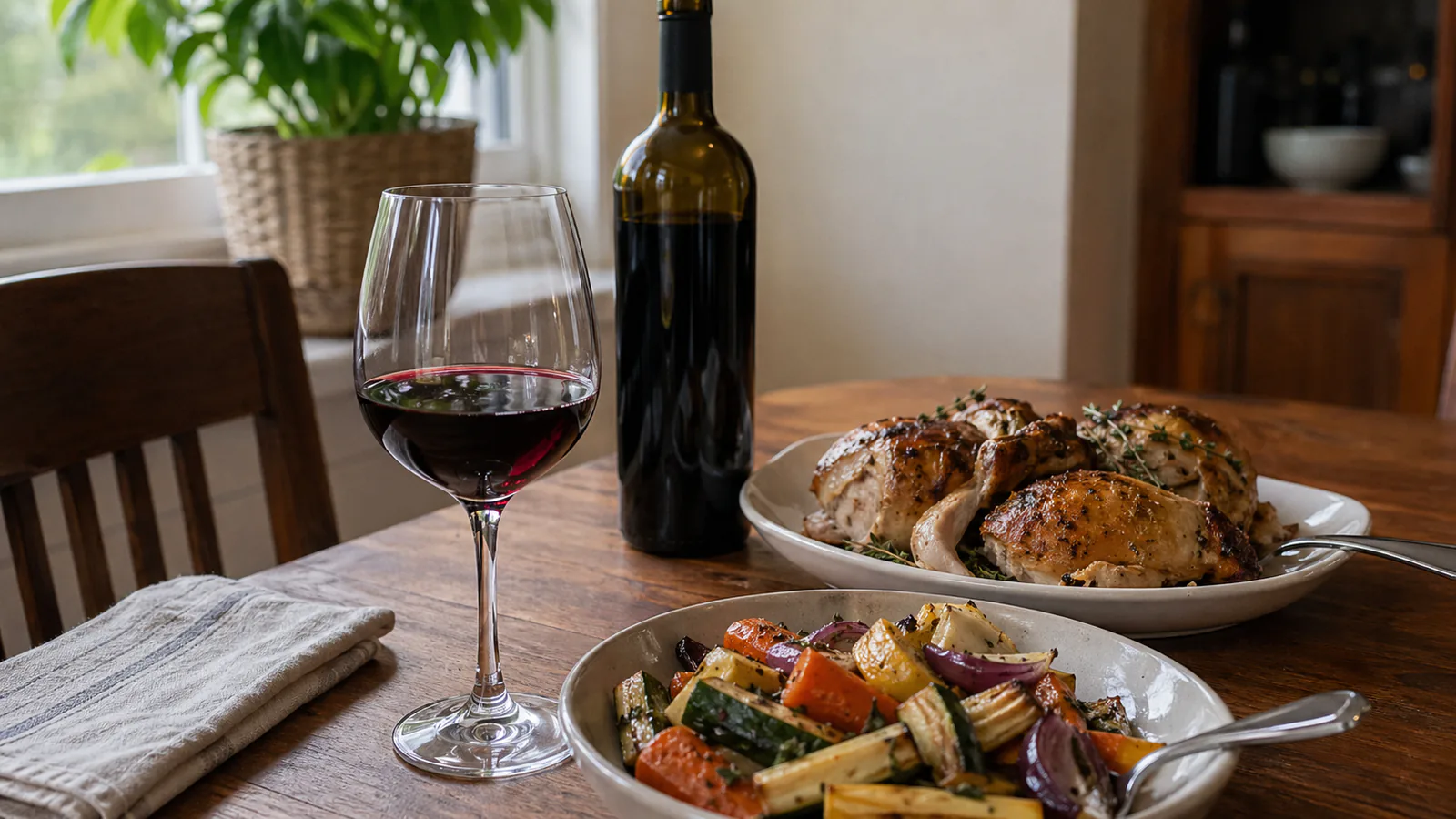
Cabernet Franc: The Parent Grape You Should Know
Cabernet Franc is the parent of Cabernet Sauvignon and Merlot, the soul of Chinon, and one of the smartest red picks for food. Here's the full story.