Claire Bennett
Wine Editor14 min read
France Wine Guide: Regions, Grapes, Where to Start
A plain-English tour of French wine. Bordeaux, Burgundy, Champagne, Rhone, Loire, Provence: what each region tastes like and how to pick a bottle.
France Wine Guide: Regions, Grapes, Where to Start
French wine is labelled by region, not grape. That one rule, locked in by law centuries ago, is why a French wine list reads like a geography exam while an Australian list reads like a shopping receipt. A Sancerre and a New Zealand Sauvignon Blanc contain the same variety. The French bottle never mentions it. Once that rule clicks, every French label stops feeling like a code.
By the end of this page you’ll know:
- The single rule that explains why French labels never tell you the grape (and how to decode them in five seconds)
- The two regions that produce 80% of the wines you’ll see on restaurant lists, and which one is right for which mood
- Why a $25 bottle from one French region tastes like a $60 bottle from another (it’s not snobbery, it’s geology)
- The under-the-radar region that gives you Pinot Noir for half the Burgundy price
- The exact French bottle to order when you have no idea what you want and just need it to be good
Why Does French Wine Matter?
France didn’t invent wine. It did write the rulebook every other wine country quietly studies. The grape varieties most of the world is obsessed with (Cabernet Sauvignon, Chardonnay, Pinot Noir, Syrah, Sauvignon Blanc) all started here. So did “terroir”: the belief that the place a wine comes from matters more than the grape it’s made from.
That belief shapes everything. Napa makes Cabernet because Bordeaux did it first. New Zealand makes Sauvignon Blanc because the Loire showed how. Champagne is so dominant that the word itself is legally protected, and every other sparkling wine in the world has to call itself something else. Roughly 11% of all wine consumed globally is French. A much higher share of what you’d consider “fine wine” is.
For a curious drinker, France is the reference point. Try a great Sancerre, and every Sauvignon Blanc you drink afterwards has a benchmark. Try a real Burgundy, and you understand why Pinot Noir obsesses people. You don’t need to drink only French wine. You do need to drink some, because it teaches your palate what the grapes are capable of at their best.
Why Don’t French Wine Labels Show the Grape?
Here’s the rule that unlocks every French wine label: French wines are named after where they come from, not what they’re made from. A bottle of “Sancerre” is Sauvignon Blanc, but the label says Sancerre. A bottle of “Chablis” is Chardonnay, but the label says Chablis. A bottle of “Chateauneuf-du-Pape” is mostly Grenache and Syrah, but you’d never know from the front.
The logic. French winemakers believe place shapes wine more than the grape does. A Chardonnay from cool, chalky Chablis tastes of crisp green apple and oyster shell. A Chardonnay from sunny, oaky Meursault tastes of butter and toasted nuts. Same grape, completely different drinks. Naming the grape tells you almost nothing useful, so they name the place instead.
This is also where the appellation system comes in. An appellation (the AOC or AOP letters you’ll see on the label) is a legally defined zone with strict rules about which grapes can be grown, how they’re farmed, and how the wine is made. When you see “Appellation Sancerre Controlee” on a bottle, it means a French regulator has signed off that the wine actually came from Sancerre and was made the Sancerre way.
The catch for newcomers is obvious. You’re expected to already know that Sancerre means Sauvignon Blanc and Chablis means Chardonnay. The cheat sheet below fixes that.
What Are France’s Six Most Important Wine Regions?
These are the six regions worth memorising. Together they account for the majority of bottles you’ll encounter on wine lists, in shops, and at parties.
Bordeaux
The most famous wine region on earth, sitting on France’s Atlantic coast. Bordeaux makes blended red wines built around Cabernet Sauvignon and Merlot, with smaller amounts of Cabernet Franc and Petit Verdot in the mix. The reds are structured, age-worthy, and built for food. Think roast lamb, steak, hard cheese.
There are two halves you should know. The Left Bank (Medoc, Pauillac, Margaux, Saint-Estephe) makes Cabernet-dominant wines that are firmer and more tannic. The Right Bank (Saint-Emilion, Pomerol) makes Merlot-dominant wines that are softer and rounder. Bordeaux also produces sweet white wine (Sauternes) and dry white blends, but the reds are the headline.
- Signature grapes: Cabernet Sauvignon, Merlot
- Signature style: structured, savoury red blend
- Where to start price-wise: $25 to $40 gets you a real Bordeaux. Below $20, expect generic supermarket bottles that don’t show the region well.
Burgundy
The most romanticised wine region on earth, two hours southeast of Paris. Burgundy is famous for two grapes and almost nothing else: Pinot Noir for the reds, Chardonnay for the whites. What makes it dizzying is the patchwork. Tiny villages, sometimes single vineyards a few rows wide, can sell their wine for ten times the price of the village next door because of the soil underneath.
Reds run from light, perfumed, cherry-driven wines (Volnay, Chambolle-Musigny) to richer, more savoury wines (Gevrey-Chambertin, Pommard). Whites range from steely and citrusy (Chablis) to rich, oaky, and golden (Meursault, Puligny-Montrachet). For value, look at the southern sub-regions: the Maconnais and the Cote Chalonnaise make legitimate Burgundy at a fraction of the headline prices.
- Signature grapes: Pinot Noir, Chardonnay
- Signature style: elegant, terroir-driven
- Where to start price-wise: $30 to $50 for a serious village-level bottle. Cheaper Burgundy exists but rarely impresses.
Champagne
The only place on earth allowed to call its sparkling wine Champagne. Located 90 minutes east of Paris, with chalky soils that sit under almost every great sparkling wine region in the world. The grapes are mostly Chardonnay, Pinot Noir, and Pinot Meunier, and the wine is made by a labour-intensive process called the traditional method, which involves a second fermentation inside the bottle.
Most Champagne is non-vintage, blended from multiple years to keep the house style consistent. Vintage Champagne (only made in great years) and grower Champagne (made by the family that farmed the grapes, not a big house) are where the most exciting bottles live. Pink Champagne is the real deal too. It’s some of the best food-pairing sparkling wine you’ll find.
- Signature grapes: Chardonnay, Pinot Noir, Pinot Meunier
- Signature style: dry, fine-bubbled, mineral
- Where to start price-wise: $50 to $70 for a quality non-vintage. Below $40, you’re better off with a Cremant from another French region.
Rhone
A long valley running south from Lyon to Provence, splitting into two distinct halves. The Northern Rhone makes some of the world’s best Syrah (Cote-Rotie, Hermitage, Cornas) along with two unusual whites (Viognier and a Marsanne-Roussanne blend). The Southern Rhone makes Grenache-led blends, including the famous Chateauneuf-du-Pape, where up to 13 grape varieties are legally permitted in one wine.
Learn this region if you like big, warm, savoury reds. Northern Rhone Syrah tastes of black pepper, smoked meat, and dark fruit. Southern Rhone blends taste of strawberry, herbs, and sun-baked stone. The basic Cotes du Rhone appellation is the everyday workhorse. Huge volumes, mostly under $20, often genuinely good.
- Signature grapes: Syrah (north), Grenache (south)
- Signature style: warm, savoury, food-friendly
- Where to start price-wise: $15 to $20 for Cotes du Rhone, $40 plus for Chateauneuf-du-Pape or Northern Rhone Syrah.
Loire
The Loire Valley is a 600-mile river valley running from central France to the Atlantic, producing more white wine styles than any other French region. The eastern end (Sancerre, Pouilly-Fume) makes some of the world’s best Sauvignon Blanc: dry, crisp, mineral, with that grapefruit-and-grass character every other Sauvignon Blanc region tries to copy. The middle (Vouvray, Saumur) makes Chenin Blanc in every style from bone dry to dessert sweet.
The western end (Muscadet) makes one wine: Melon de Bourgogne, a salty, lemony, oyster-friendly white that’s one of wine’s great bargains under $20. The Loire also makes underrated reds from Cabernet Franc (Chinon, Bourgueil), which taste of red fruit and pencil shavings and pair brilliantly with anything you’d order at a French bistro.
- Signature grapes: Sauvignon Blanc, Chenin Blanc, Cabernet Franc
- Signature style: crisp, mineral, bistro-friendly
- Where to start price-wise: $20 to $30 for a real Sancerre. Muscadet gives you serious wine for $15.
Provence
The southeast corner of France, between the Rhone and the Italian border. Provence makes more rose than any other region on earth, and its style (pale pink, dry, citrusy, herbaceous) is the template most New World rose imitates. The grapes are usually a blend of Grenache, Cinsault, and Syrah, picked early to keep acidity high.
Provence makes red and white wine too, but rose is roughly 90% of production and the reason the region is famous. The best examples come from Cotes de Provence, Bandol (which also makes serious age-worthy Mourvedre reds), and the smaller appellations around them. A good Provence rose is one of the most food-flexible bottles in wine. It works with almost everything you’d put on a summer table.
- Signature grapes: Grenache, Cinsault, Syrah (rose); Mourvedre (red)
- Signature style: pale, dry, citrusy rose
- Where to start price-wise: $20 to $30 for a quality Provence rose. Bandol reds start around $35.
Which Other French Regions Are Worth Knowing?
These don’t make the headlines as often, but each one is worth a spot in your rotation.
Alsace. A narrow strip on the German border, making the most floral, aromatic white wines in France. This is the one French region where labels actually do show the grape, partly because of German cultural influence. Look for Riesling (drier and more mineral than the German style), Gewurztraminer (lychee, rose petals, big flavour), and Pinot Gris (richer and rounder than Italian Pinot Grigio). Almost all Alsace wine comes in tall, slender green bottles that look German.
Languedoc. The huge southern region that runs along the Mediterranean coast. Languedoc used to be France’s bulk wine factory. Over the last 20 years it’s quietly become the country’s best-value zone. You can buy genuinely impressive Syrah, Grenache, and Carignan blends here for $15 to $20, and quality keeps climbing. If your budget is tight, Languedoc is where smart drinkers shop.
Beaujolais. Just south of Burgundy, making light, fruity reds from a grape called Gamay. Most people only know Beaujolais Nouveau, the gimmicky wine released every November, which saddles the region with a worse reputation than it deserves. The serious bottles come from the ten “Cru” villages (Morgon, Fleurie, Moulin-a-Vent), and they drink like soft, accessible Pinot Noir at half the price. Slight chill, savoury food, and you’re sorted.
How Do You Read a French Wine Label?
Once you know the system, French labels become readable in about 30 seconds. Here’s what to look for, in order.
The biggest text on the label is usually the appellation, not the producer. That’s the place name, and it tells you the grape and style. Sancerre means Sauvignon Blanc. Chablis means Chardonnay. Saint-Emilion means Merlot-led red. If you don’t recognise the place, look it up before you buy.
“Appellation [name] Controlee” or “AOP” confirms the regulated origin. If you see those letters, the wine has been certified as coming from where it claims, made the way the region requires. The next tier down is “IGP” (a broader regional designation, less strict). Below that is “Vin de France” (basic, no regional pedigree).
The producer’s name is usually smaller than the appellation. Look for words like “Domaine” (an estate that grows its own grapes), “Chateau” (a Bordeaux-style estate), or “Maison” / “Negociant” (a producer who buys grapes or finished wine and bottles it under their own label). Domaine and Chateau wines are usually a step up.
Vintage matters more in France than in most New World countries. Climate is variable, especially up north (Burgundy, Loire, Champagne), so the year on the bottle tells you something real. Check a vintage chart before splashing out on expensive bottles. It’s 30 seconds well spent.
Where Should You Start If You’re New to French Wine?
If French wine still feels too big, here’s a four-bottle starter pack that covers the major styles for under $150 total. Drink them across a month and you’ll know more than 90% of casual wine drinkers.
Start with a Cotes du Rhone red ($15 to $20). Easiest French red to like. Warm, fruity, savoury, food-friendly. Look for any producer with the basic “Cotes du Rhone” or “Cotes du Rhone Villages” appellation. This is your weeknight bottle.
Move to a Sancerre or Pouilly-Fume ($25 to $35). Crisp, dry Sauvignon Blanc with more depth than any New Zealand version you’ve had. Drink it cold with goats cheese, oysters, or grilled white fish. This is the bottle that teaches you what Sauvignon Blanc is supposed to taste like.
Try a basic Bourgogne Rouge or village-level Pinot Noir ($30 to $45). Skip the famous names. A wine labelled simply “Bourgogne” from a producer you trust will introduce you to Burgundian Pinot Noir without bankrupting you. Pair with roast chicken or duck, and pay attention to how different it feels from a California Pinot.
Finish with a non-vintage Champagne or Cremant ($25 to $60). A Cremant (sparkling wine made the Champagne way, but from another French region) gives you 85% of the experience for half the price. A real Champagne gives you the full thing. Either way, drink it with something fried.
That’s the curriculum. Four bottles, four regions, four signature styles. Once you’ve drunk them, the wine list at any French restaurant becomes navigable.
Frequently Asked Questions
Why don’t French labels show the grape?
Because French winemakers believe the place matters more than the grape. A Chardonnay from Chablis tastes nothing like a Chardonnay from Meursault, even though they’re 100 miles apart. Naming both wines “Chardonnay” would tell you almost nothing useful. Naming them after their villages tells you the climate, the soil, the style, and the rules the wine was made under. The system assumes you know that Sancerre means Sauvignon Blanc and Chablis means Chardonnay. Once you do, the labels become genuinely informative.
What’s an appellation?
An appellation is a legally defined wine region with strict rules about which grapes can be grown, where the vines can be planted, how the wine is made, and what it can be called. The French system is called AOC (Appellation d’Origine Controlee) or AOP under newer European law. When you see those letters on a label, it means a regulator has signed off that the wine genuinely comes from that place and was made the way that place requires. It’s a quality guarantee, not a marketing term.
Is French wine more expensive than wine from other countries?
At the top end, yes. The most famous Bordeaux and Burgundy bottles run into the thousands. At the everyday level, though, French wine is competitive and often cheaper than equivalent quality from California or Australia. A $20 Cotes du Rhone outperforms most $20 Californian reds. Languedoc, Loire, Beaujolais, and southern Rhone all deliver genuine value. The expensive reputation comes from the prestige bottles most drinkers never buy.
Bordeaux vs Burgundy: which is for me?
If you like full-bodied, structured red wines that pair with steak and aged cheese, start with Bordeaux. The blends are firmer, more tannic, and built for hearty food. If you like lighter, more aromatic reds that pair with roast chicken and mushroom dishes, start with Burgundy. Pinot Noir is silkier and more perfumed than Cabernet. Most drinkers eventually love both, but they’re different moods. Bordeaux is a steakhouse on a winter night. Burgundy is a long bistro lunch in spring.
What’s a good cheap French wine?
Cotes du Rhone is the safest bet under $20. Almost impossible to find a bad one, and the best examples taste twice the price. Muscadet is the white equivalent for seafood and oysters. Beaujolais Cru bottles (Morgon, Fleurie) deliver light, drinkable Pinot-like reds for $20 to $25. The Languedoc is full of $15 Syrah and Grenache blends that punch above their weight. Skip cheap Bordeaux and cheap Burgundy. The lower tiers of those regions are where bad value lives.
Do I need to age French wine?
Most French wine is made to drink within two to five years, just like wine anywhere else. Serious red Bordeaux, top Burgundy, vintage Champagne, and Northern Rhone Syrah can age for decades and reward the patience. Everyday Cotes du Rhone, basic Bourgogne, Sancerre, Muscadet, and Provence rose should be drunk within a couple of years of release. The rule of thumb: if the bottle costs under $40, drink it now.
Ready to put this into practice? Bordeaux is the most useful region to know in detail, because it shows up on more wine lists than any other. Here’s the full breakdown of what to look for, what to avoid, and what to actually order.
Read the Bordeaux region guide, or zoom out to the wine regions of the world for the global map.
Keep Reading
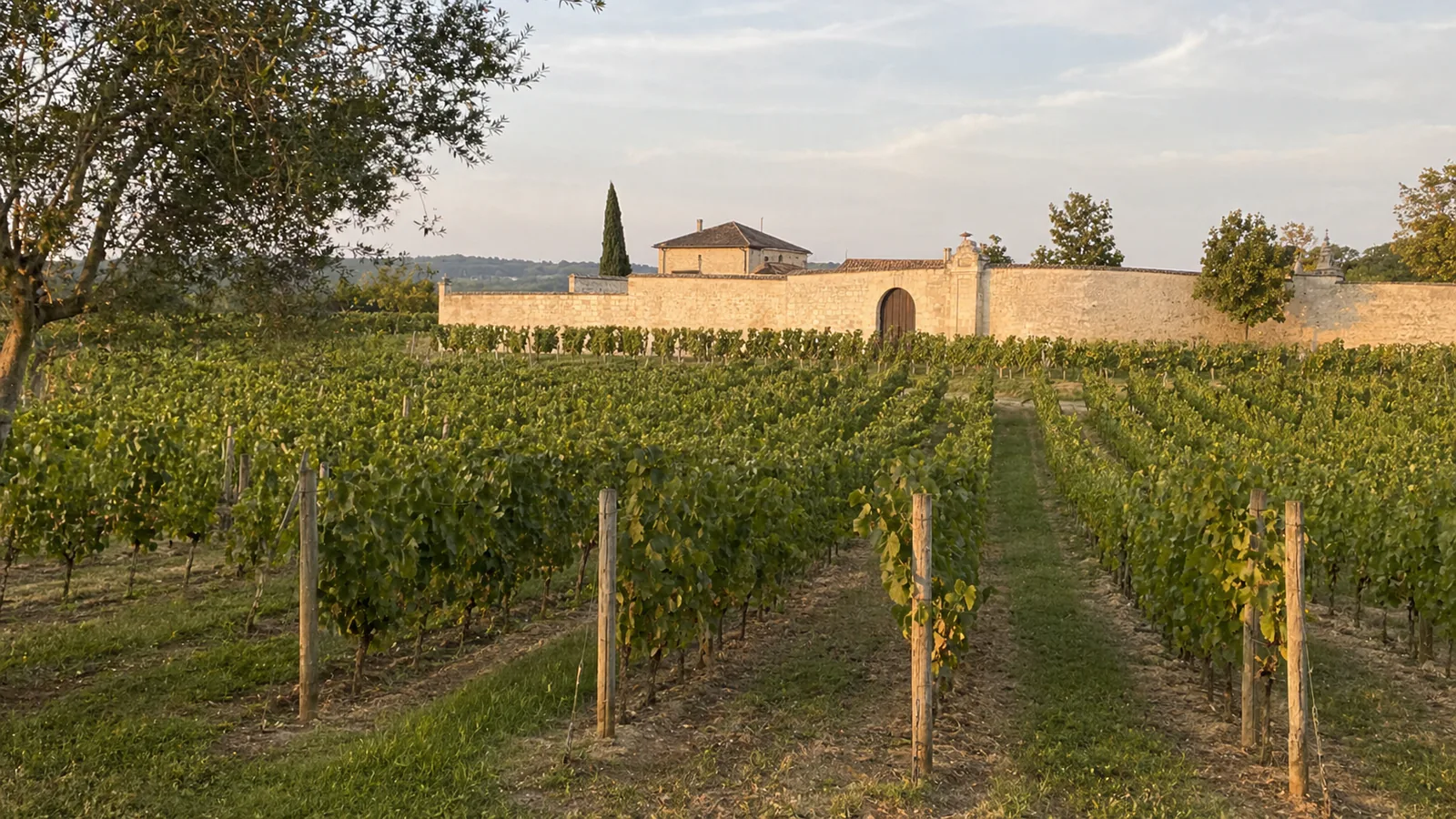
Bordeaux Wine: A Plain-English Guide
What Bordeaux wine actually is, Left Bank vs Right Bank, the grapes, the labels, and how much to spend. The plain-English guide for everyday drinkers.
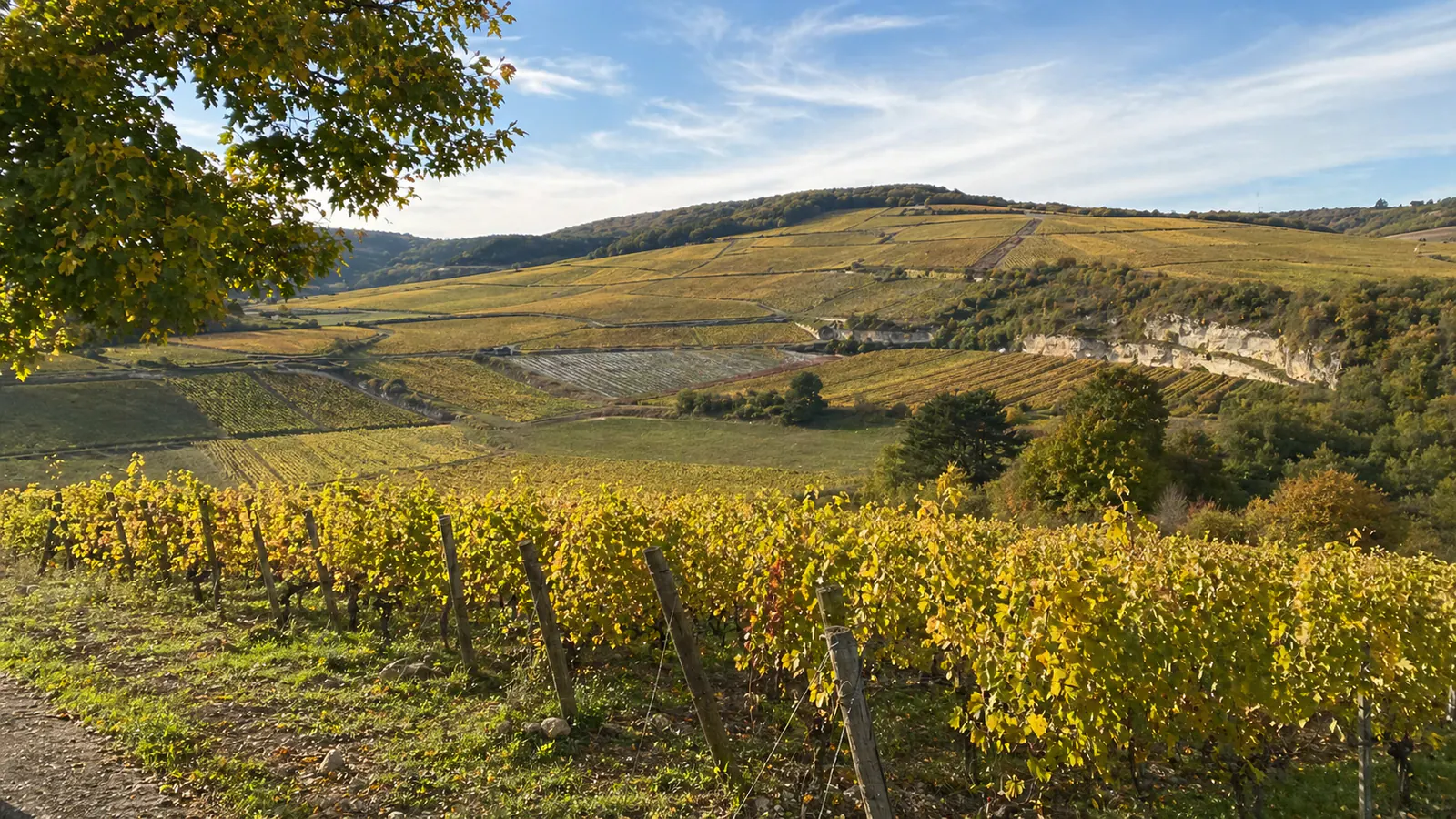
Burgundy Wine: The Plain-English Guide
What Burgundy wine actually is, the difference between red and white Burgundy, the classification system, and how to drink it without remortgaging.
Champagne Region: Grapes, Styles, and How to Buy
What Champagne actually is, the grapes, houses vs growers, sub-regions, styles like Blanc de Blancs, and how much to spend. Plain-English guide.