Claire Bennett
Wine Editor13 min read
Italy Wine Guide: Regions, Grapes, and Where to Start
Italian wine made simple. The 20 regions, the grapes worth knowing, what DOCG means, and how to pick a bottle without overthinking it.
Italy Wine Guide: Regions, Grapes, and Where to Start
Italy produces wine in all 20 of its regions and recognises over 350 grape varieties. That’s why a wine list full of Italian names looks impossible. Ninety percent of what you’ll actually see at a restaurant comes from three regions and two grapes: Tuscany with Sangiovese, Piedmont with Nebbiolo, and Veneto with Corvina. Once you know those, Chianti, Barolo, Brunello, Amarone, and most Super Tuscans on the list collapse into a map you can read.
By the end of this page you’ll know:
- The three regions that produce 90% of the Italian wines you’ll see on a restaurant list (and what each one does best)
- The grape that’s behind both a $15 Tuesday-night red and a $300 cellar bottle (same vine, wildly different homes)
- What “Super Tuscan” actually means, and why a wine made by breaking the rules is now the most expensive thing on the list
- The single classification letter on the label that tells you whether a producer was held to real quality standards
- The southern region quietly making the best value Italian reds in the country right now
Why Does Italian Wine Feel So Confusing?
Italian wine looks impossible from the outside because the country names its wines four different ways at once. Some are named after a place (Chianti, Barolo, Soave). Some after a grape (Sangiovese, Nebbiolo, Pinot Grigio). Some after a place AND a grape (Brunello di Montalcino means “the Sangiovese clone called Brunello, from the town of Montalcino”). Some after a style (Amarone, which translates to “the bitter one”). No other wine country layers this many systems on top of each other.
The cheat code is to learn one grape at a time, not one wine at a time. Once you know Sangiovese is the grape behind Chianti, Brunello, Vino Nobile, and most Super Tuscans, four “different” wines collapse into one mental shelf. Same with Nebbiolo (Barolo, Barbaresco, Gattinara, all the same grape). Same with Corvina (Valpolicella, Amarone, Ripasso, all related).
The other thing worth knowing upfront: Italy makes wine in every one of its 20 regions. Every single one. France has a handful of serious wine regions with a lot of nothing in between. Italy is wall-to-wall vineyard, from the Alps down to Sicily and Sardinia. That’s why the grape count sits over 350.
Most of what you’ll actually see on a wine list comes from three regions: Tuscany, Piedmont, and Veneto. Get those three right and you’ve covered most of the territory.
How Is Italian Wine Classified?
Italy uses a four-tier classification system. Each tier is printed somewhere on the label, usually as initials. It tells you how strict the quality rules were that the wine had to follow.
DOCG (Denominazione di Origine Controllata e Garantita). The top tier. Strict rules on grape variety, yields, alcohol, aging, and a blind tasting before bottles can carry the label. There are around 77 DOCG zones in Italy, including Barolo, Brunello di Montalcino, Chianti Classico, and Amarone della Valpolicella. If you see “DOCG” on a label, the wine has been held to real standards.
DOC (Denominazione di Origine Controllata). The second tier. Same idea as DOCG (specific region, specific rules), without the blind tasting and with slightly looser yields. There are around 330 DOC zones. Most everyday Italian wines on a bottle shop shelf sit here.
IGT (Indicazione Geografica Tipica). A broader, looser tier created in 1992 specifically for high-quality wines that didn’t fit the DOC/DOCG rules. This is where you’ll find most Super Tuscans, because using Cabernet Sauvignon in Tuscany was illegal under Chianti rules but produced extraordinary wine. IGT lets a region signal the wine is from somewhere specific without forcing it into a traditional grape recipe. Some of the most expensive wines in Italy carry this label.
VdT (Vino da Tavola). Table wine. No regional rules. Mostly cheap, occasionally a renegade bottle from a producer who refuses to play the classification game.
The shortcut: DOCG is the safest bet for traditional regional styles. IGT is where the rule-breakers live (and that’s a good thing). DOC covers most of the middle ground.
What Wines Come from Northern Italy?
The north is where Italy makes its most powerful, age-worthy reds and most of its serious whites. Cooler climate, alpine influence, long growing seasons.
Piedmont
Piedmont is home to Barolo and Barbaresco, both made from Nebbiolo. These are Italy’s longest-lived reds, with bracing tannin, high acidity, and aromas of rose, tar, cherry, and truffle. Barolo is the bigger, more structured one. Barbaresco is slightly lighter and earlier-drinking. Expect $40 to $60 for entry-level village Barolo, and well into the hundreds for top producers.
Piedmont also makes Barbera (juicy, acidic, food-friendly red that’s the everyday drinker around Turin) and Dolcetto (softer, fruitier, even more casual). Both deliver real character at $15 to $25. For whites and bubbles, Asti and Moscato d’Asti are the famous low-alcohol sweet sparkling wines from the same region.
Veneto
The biggest production region by volume, and arguably the most commercially important. Veneto gives you Prosecco (the world’s biggest-selling sparkling wine, made from the Glera grape near Treviso), Soave (a crisp, almond-tinged white from the Garganega grape), and the Valpolicella family of reds.
The Valpolicella family is worth understanding. Regular Valpolicella is light, fresh, cherry-driven, $15 to $20 territory. Amarone is the same grape blend dried for months on straw mats before fermentation, producing a massive, raisiny, 15%-alcohol red that drinks like a wine and a port had a baby.
Ripasso sits in the middle: regular Valpolicella refermented on the leftover Amarone skins, picking up depth without the price tag. Often the smartest order on a Veneto-heavy list.
Friuli-Venezia Giulia
Italy’s serious white wine region. Pinot Grigio with actual depth, plus native varieties like Friulano and Ribolla Gialla. If you’ve only had the bland supermarket Pinot Grigio, a $25 bottle from Friuli will reset what you think the grape is capable of.
Trentino-Alto Adige
Alpine wine country. Cool-climate Pinot Grigio, Pinot Bianco, Gewürztraminer, and increasingly serious Pinot Nero. Bottles tend to be precise, mineral, and food-friendly. The German-Italian dual labelling on many bottles reflects the region’s Austrian heritage.
Lombardy
Home of Franciacorta, Italy’s answer to Champagne. Same traditional method, same grape mix (Chardonnay, Pinot Noir, Pinot Bianco), often blind-tasting comparable to mid-tier Champagne at lower prices. Also produces Valtellina, an alpine Nebbiolo that drinks lighter and earlier than Barolo.
What Wines Come from Central Italy?
Central Italy is Sangiovese country. If you’re drinking a Tuscan red, you’re drinking Sangiovese in some form.
Tuscany
Tuscany is the headline region of Italian wine for most international drinkers. Three tiers worth knowing.
Chianti and Chianti Classico are the everyday-to-serious end of the Sangiovese spectrum. Chianti Classico (the original heartland zone, marked with a black rooster on the label) consistently outperforms basic Chianti at $20 to $40. Bright cherry, dried herbs, leather, savoury finish. Pairs with almost anything Italian on a plate.
Brunello di Montalcino is Sangiovese taken to its serious extreme. 100% Sangiovese (specifically a clone called Brunello), from a single town, aged for years before release. Powerful, tannic, built to last decades. Expect $50 to $100 for entry-level bottles, and well past $300 for top producers.
Super Tuscans are the rule-breakers from the 1970s onward. Tuscan producers who wanted to blend Cabernet Sauvignon, Merlot, and Syrah with their Sangiovese were forced into the lowly Vino da Tavola category by old laws. They did it anyway and made some of the best wines in Italian history: Sassicaia, Tignanello, Ornellaia, Solaia.
The market response forced the creation of the IGT category in 1992. Today most Super Tuscans carry the IGT Toscana label and command serious prices.
Umbria
Sagrantino di Montefalco is Umbria’s contribution to the world’s most tannic reds. Massive, age-worthy, structured. Orvieto delivers crisp, citrus-driven white in the value zone. Worth exploring once you’ve covered Tuscany.
Marche
Verdicchio is the white worth knowing here. Lemon, almond, salt, the kind of wine that drinks like the Mediterranean smells. Often under $20 and outperforms its price.
Lazio
The region around Rome. Frascati is the everyday white of Roman trattorias, and quality has improved sharply over the last decade. Cesanese is the local red, peppery and food-friendly.
Abruzzo
Montepulciano d’Abruzzo (the grape, not the Tuscan town of the same name) is one of the best value Italian reds you can buy. Plummy, soft, easy to love, often $12 to $18 for genuinely good bottles. The Abruzzo coastline is also producing increasingly serious Trebbiano-based whites.
What Wines Come from Southern Italy and the Islands?
The south is where Italian wine offers the best value right now. Warm climate, native grapes, producers who haven’t yet built international name recognition.
Campania
The region around Naples is one of the most exciting in the country. Aglianico (the grape behind Taurasi, sometimes called the “Barolo of the south”) delivers serious, structured red at much lower prices than Piedmont. Fiano and Greco di Tufo are two of Italy’s most distinctive whites. Mineral, complex, ageable.
Puglia
The heel of the boot. Primitivo (the same grape as American Zinfandel) and Negroamaro produce ripe, rich, low-tannin reds that drink easily and pair with almost anything. $12 to $20 buys you genuinely satisfying wine here.
Sicily
The most dynamic wine region in Italy in 2026. Nero d’Avola is the workhorse red (juicy, plummy, friendly). Etna Rosso and Etna Bianco, made from Nerello Mascalese and Carricante grown on the volcanic slopes of Mount Etna, are among the most fashionable wines in the world right now. Think Pinot Noir’s elegance with a smoky, mineral backbone. They earn the hype.
Sardinia
Cannonau (genetically identical to Grenache) and Vermentino dominate. The reds are warm, herby, Mediterranean. The whites are saline and fresh. Sardinians are some of the longest-lived people on earth, and they’ll happily tell you the daily glass is part of the reason.
Which Italian Grapes Are Worth Knowing?
Memorise these nine and you’ve covered most of the Italian wine you’ll ever encounter.
Sangiovese. The backbone of Tuscany. Chianti, Brunello, Vino Nobile, most Super Tuscans. Bright cherry, dried herbs, savoury finish, high acidity, food-friendly tannin.
Nebbiolo. The grape behind Barolo and Barbaresco. Light in colour, heavy in tannin, with rose, tar, cherry, and truffle notes. Demands aging or a serious meal.
Barbera. Piedmont’s everyday red. Juicy, acidic, low-tannin, drinks happily with pasta and pizza without overthinking it.
Montepulciano. The grape (not the Tuscan town). Plummy, soft, generous, the best-value red in Italy at the $15 mark.
Primitivo. Puglian red. Same grape as American Zinfandel. Ripe, rich, friendly. Easy entry point if you usually drink New World wine.
Nero d’Avola. Sicilian red. Cherry, plum, soft tannin, often $15 to $25, rarely disappoints.
Pinot Grigio. The white you already know. Italian Pinot Grigio at the supermarket is forgettable. Pinot Grigio from Friuli or Alto Adige is a different drink entirely.
Glera. The grape behind Prosecco. Light, fresh, off-dry, the bottle that always works for a Saturday afternoon.
Vermentino. A Mediterranean white from Sardinia and the Tuscan coast. Saline, citrus, bracing acidity. Food wine in the truest sense.
Where Should You Start with Italian Wine?
If you’re just beginning with Italian wine, here are the first bottles worth chasing.
For an everyday red under $20: a Chianti Classico from a known producer (look for the black rooster), or a Montepulciano d’Abruzzo. Both punch above their price and pair with almost any tomato-based dish.
For a special-occasion red without spending Barolo money: a Brunello di Montalcino from a non-cult producer ($50 to $80 zone), or a Ripasso della Valpolicella ($25 to $40) for something rich and warming.
For a white that resets your understanding of Italian whites: a Verdicchio from Marche, a Vermentino from Sardinia, or a Pinot Grigio from Friuli. All under $25, all genuinely interesting.
For sparkling: a quality Prosecco DOCG (the “Superiore di Conegliano Valdobbiadene” label, around $20), or a Franciacorta from Lombardy if you want serious Champagne-method bubbles at lower-than-Champagne prices.
The most expensive bottle on the list is rarely the smartest call. In Italy, the producer name matters more than the price tier. Once you’ve got two or three producers you trust across regions, the wine list stops feeling intimidating.
Frequently Asked Questions
What’s the difference between Chianti and Barolo?
Different grape, different region, different wine. Chianti is made from Sangiovese in Tuscany. It’s bright, cherry-driven, food-friendly, and ranges from $12 to $50 for serious bottles. Barolo is made from Nebbiolo in Piedmont. It’s tannic, structured, age-worthy, with rose and tar notes, and starts at $40 for entry-level bottles. Chianti is a Tuesday-night red. Barolo is something you open for a special meal or cellar for a decade.
What’s a Super Tuscan?
A Tuscan red that breaks the traditional Chianti rules by blending in international grapes like Cabernet Sauvignon, Merlot, or Syrah. The category started in the 1970s when producers like Antinori (Tignanello) and Tenuta San Guido (Sassicaia) decided strict Chianti laws were holding back quality. The wines were initially classified as lowly table wine, despite costing more than most DOCG bottles. The IGT category was created in 1992 specifically to give them a proper home. Most Super Tuscans now carry the “IGT Toscana” label and run from $40 to several hundred dollars.
What does DOCG mean?
DOCG stands for Denominazione di Origine Controllata e Garantita, Italy’s top wine classification. It means the wine comes from a specific region, follows strict rules on grape variety, yields, alcohol, and aging, and has passed a blind tasting before bottling. There are around 77 DOCG zones, including Barolo, Brunello di Montalcino, Chianti Classico, and Amarone della Valpolicella. Seeing DOCG on a label is a strong signal of regional authenticity and quality control.
Is Pinot Grigio Italian?
Yes, although the grape originated in France (where it’s called Pinot Gris). Italy is the largest producer of Pinot Grigio in the world. The catch: most cheap supermarket Pinot Grigio is mass-produced from high-yield vineyards on the Veneto plains, and it tastes thin and forgettable. Pinot Grigio from Friuli, Alto Adige, or Trentino is a much more serious wine, with real texture, citrus, white peach, and minerality. Spend $20 to $25 once and you’ll see why people who say they hate Pinot Grigio often love it.
What’s the best cheap Italian wine?
Montepulciano d’Abruzzo is the consistent winner at the $12 to $18 mark. Soft, plummy, low-tannin red that drinks well with almost anything. For whites at the same price, look for Verdicchio from Marche or Vermentino from Sardinia. For something fancier-looking under $20, a Chianti Classico from a known producer at the lower end of the price range still delivers real Sangiovese character. Avoid the very cheap Chianti in straw-covered fiasco bottles, which is usually a tourist trap.
Should I cellar Italian wine?
Some of it. Most of it, no. Barolo, Brunello, Amarone, top Super Tuscans, and serious Aglianico can age for 15 to 30 years and reward the patience. Most other Italian reds (Chianti, Valpolicella, Montepulciano, Nero d’Avola, Primitivo) are built to drink within five years of release. Italian whites usually drink best within two to four years, with rare exceptions for serious Friulano, Verdicchio, and Etna Bianco. When in doubt, drink it rather than wait.
Ready to put a bottle on the table this week? The Tuscany region guide breaks down Chianti, Brunello, and Super Tuscans in real detail, and our Piedmont guide does the same for Barolo and Barbaresco.
Explore Tuscany wines · Explore Piedmont wines · or zoom out to the wine regions of the world.
Keep Reading
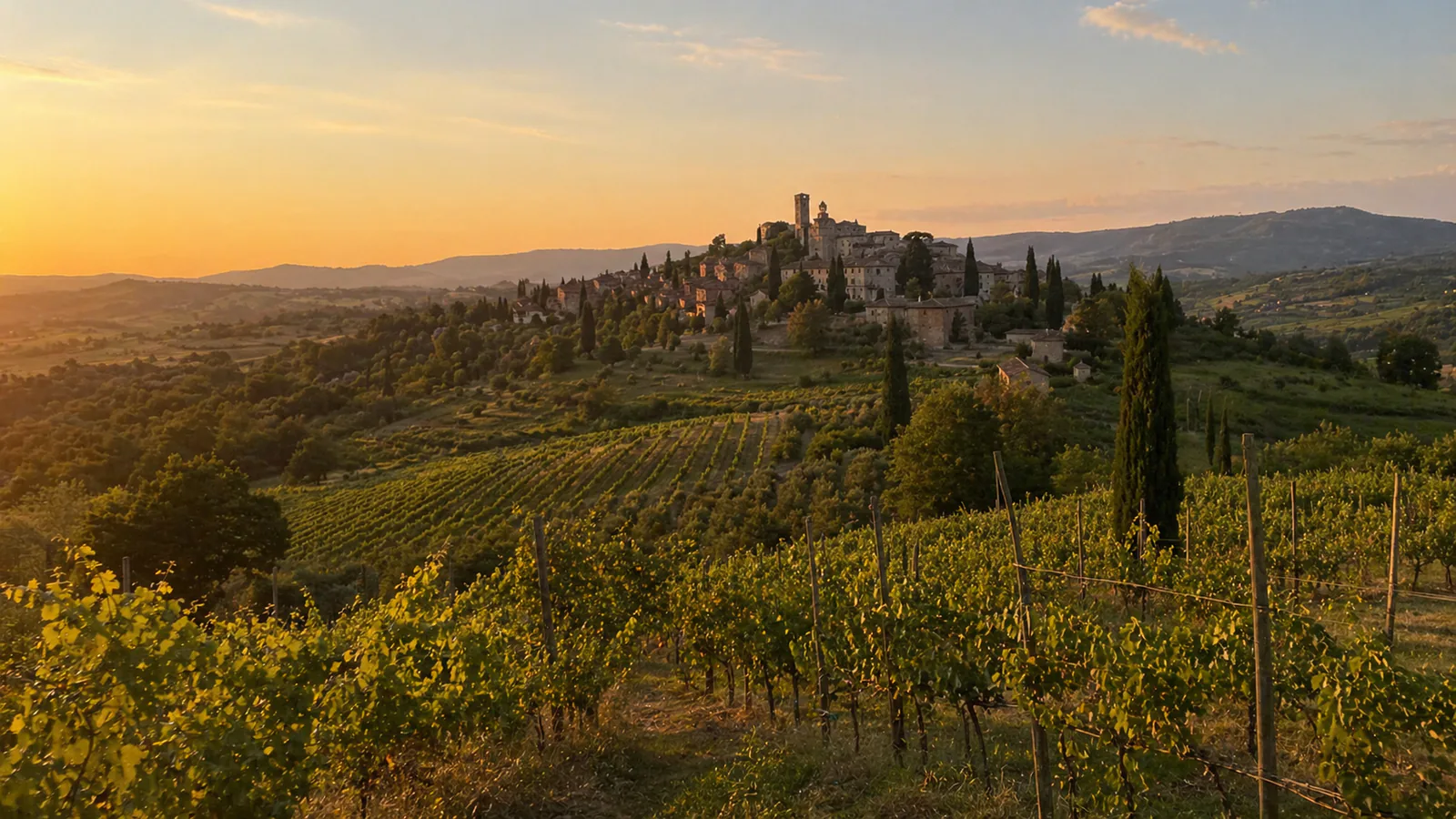
Tuscany Wine: Chianti, Brunello & Super Tuscans
What Tuscan wine actually is, the difference between Chianti and Brunello, what makes a Super Tuscan, and how much to spend. Plain English.
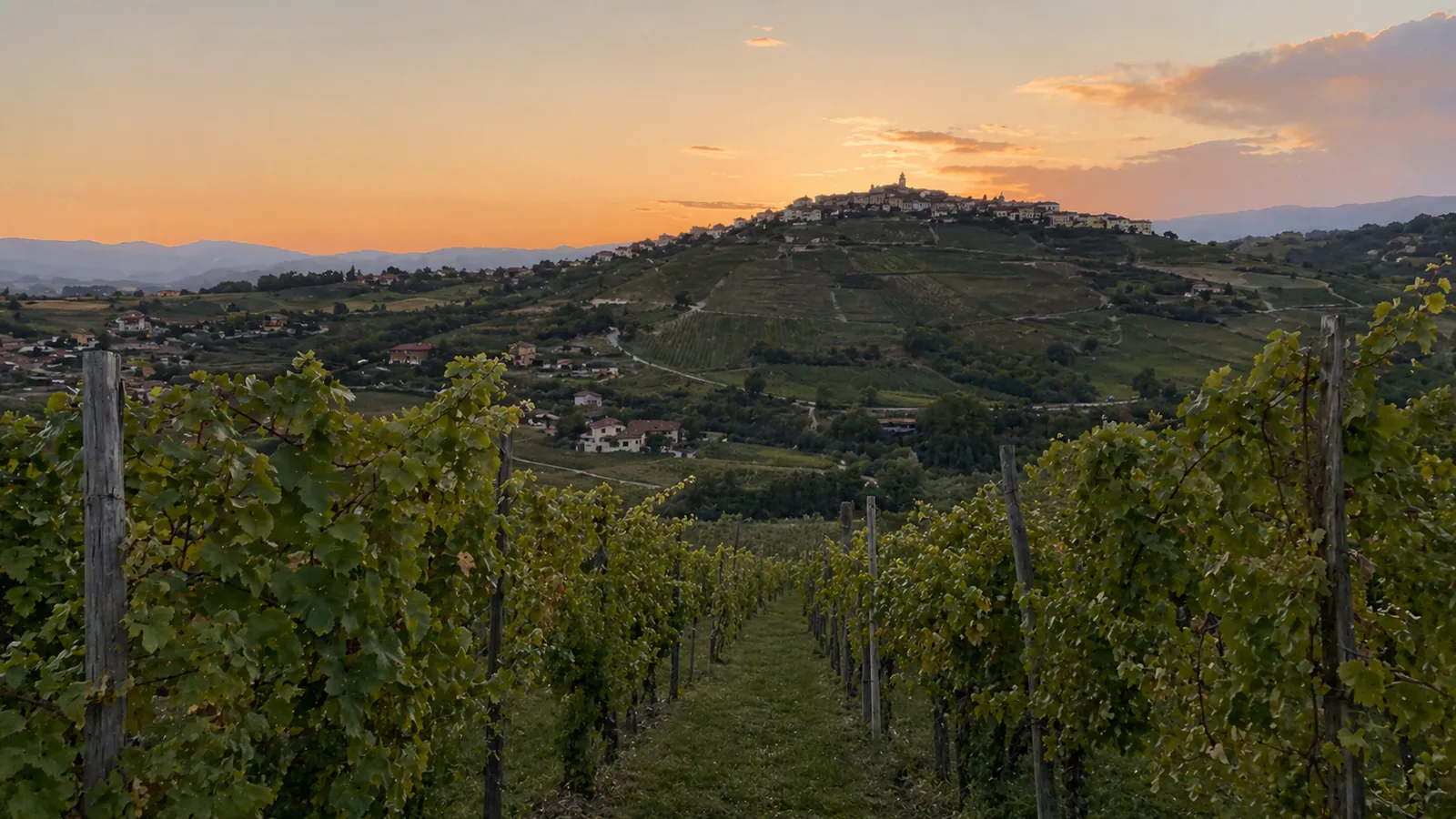
Piedmont Wine: Barolo, Barbaresco, Nebbiolo Guide
Piedmont wine explained: Barolo vs Barbaresco, Nebbiolo, Barbera, Dolcetto, Moscato d'Asti. What it tastes like and how much to spend.
Wine Regions of the World: A Plain-English Guide
Old World vs New World, the major regions in each, how climate shapes style, and where to start drinking. The pillar guide for curious wine drinkers.