Claire Bennett
Wine Editor10 min read
Wine Pairing Chart: What To Pour With Dinner
A practical wine pairing chart for steak, chicken, seafood, pasta, pizza, cheese, chocolate, spicy food, and holiday dinners.
You know the moment. Dinner is almost ready, someone asks what wine you opened, and suddenly the bottle feels like a small public exam. The good news is that wine pairing is much more forgiving than it looks.
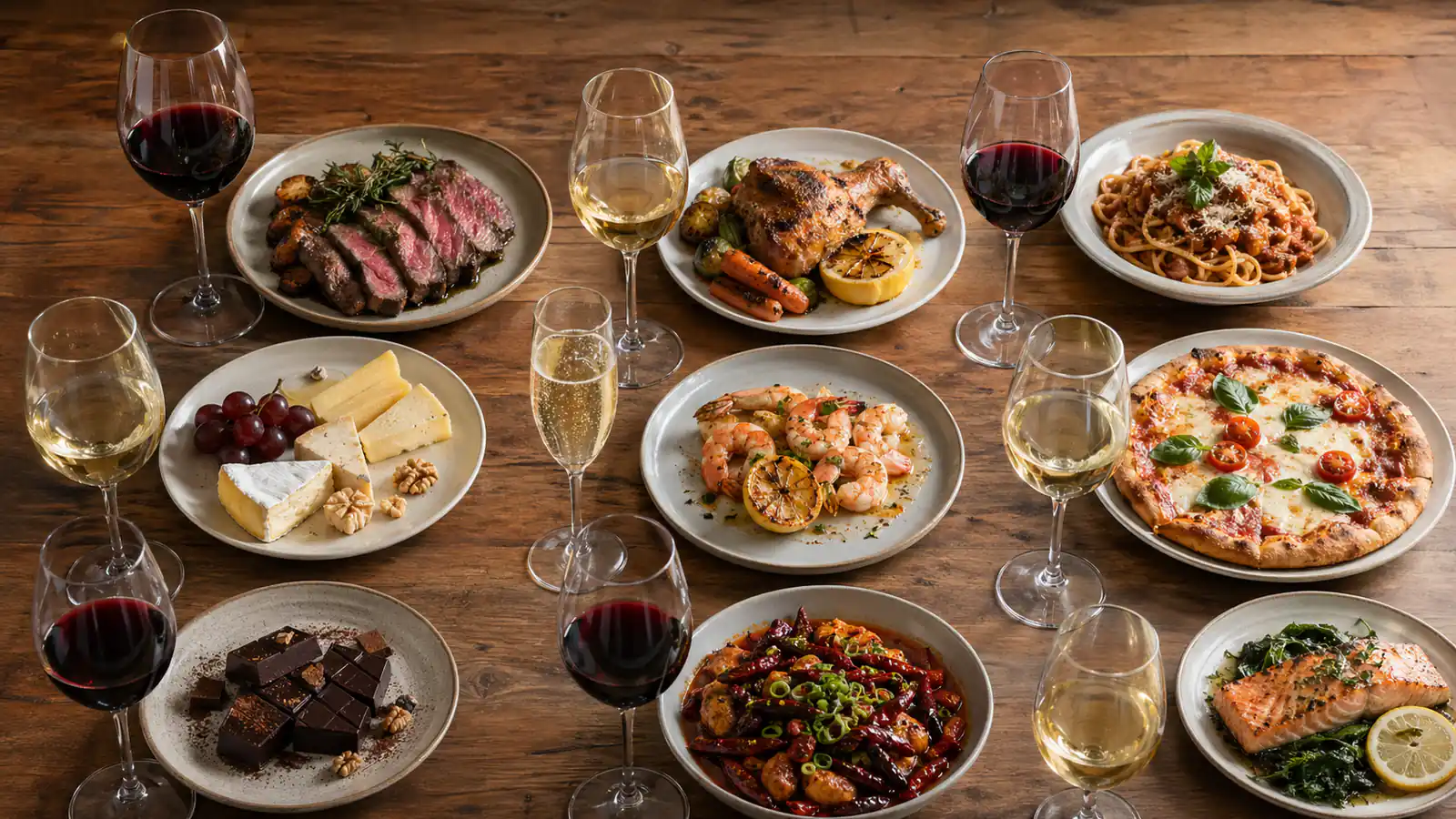
Most dinners only need one of four moves: cut richness with acidity, soften spice with sweetness, match red meat with structure, or choose a flexible bottle that makes everyone happy. Use this chart first, then read the notes when you want to understand why the pairing works.
By the end of this page you’ll know:
- The one bottle style that saves fried chicken, salty snacks, and last-minute appetizers
- Why Cabernet belongs with ribeye but can ruin salmon in three sips
- The Thai takeout pairing where a little sweetness does the heavy lifting
- The pasta sauce test that tells you whether to pour Sangiovese, Chardonnay, or Pinot Grigio
- How to cover a dinner party with two bottles without turning the table into a tasting flight
- The chocolate pairing mistake that makes dry red wine taste bitter
What Is the Quickest Wine Pairing Chart for Dinner?
Start here when you need the answer fast. The chart gives you the safest pour for each food, plus a fallback if the first bottle is unavailable.
| Wine | Food |
|---|---|
| Cabernet Sauvignon | Ribeye, lamb chops, burgers, short ribs |
| Pinot Noir | Roast chicken, salmon, duck, mushroom pasta |
| Sauvignon Blanc | Goat cheese, salads, green herbs, ceviche |
| Chardonnay | Roast chicken, lobster, creamy pasta, corn |
| Riesling | Thai curry, Indian food, glazed ham, spicy noodles |
| Sparkling wine | Fried chicken, potato chips, oysters, Brie |
| Sangiovese | Pizza, tomato pasta, lasagna, meatballs |
| Malbec | Grilled steak, barbecue beef, empanadas |
| Grenache | BBQ pork, sausages, roasted vegetables |
| Port | Blue cheese, dark chocolate, chocolate cake |
How Do I Pair Wine With Steak and Red Meat?
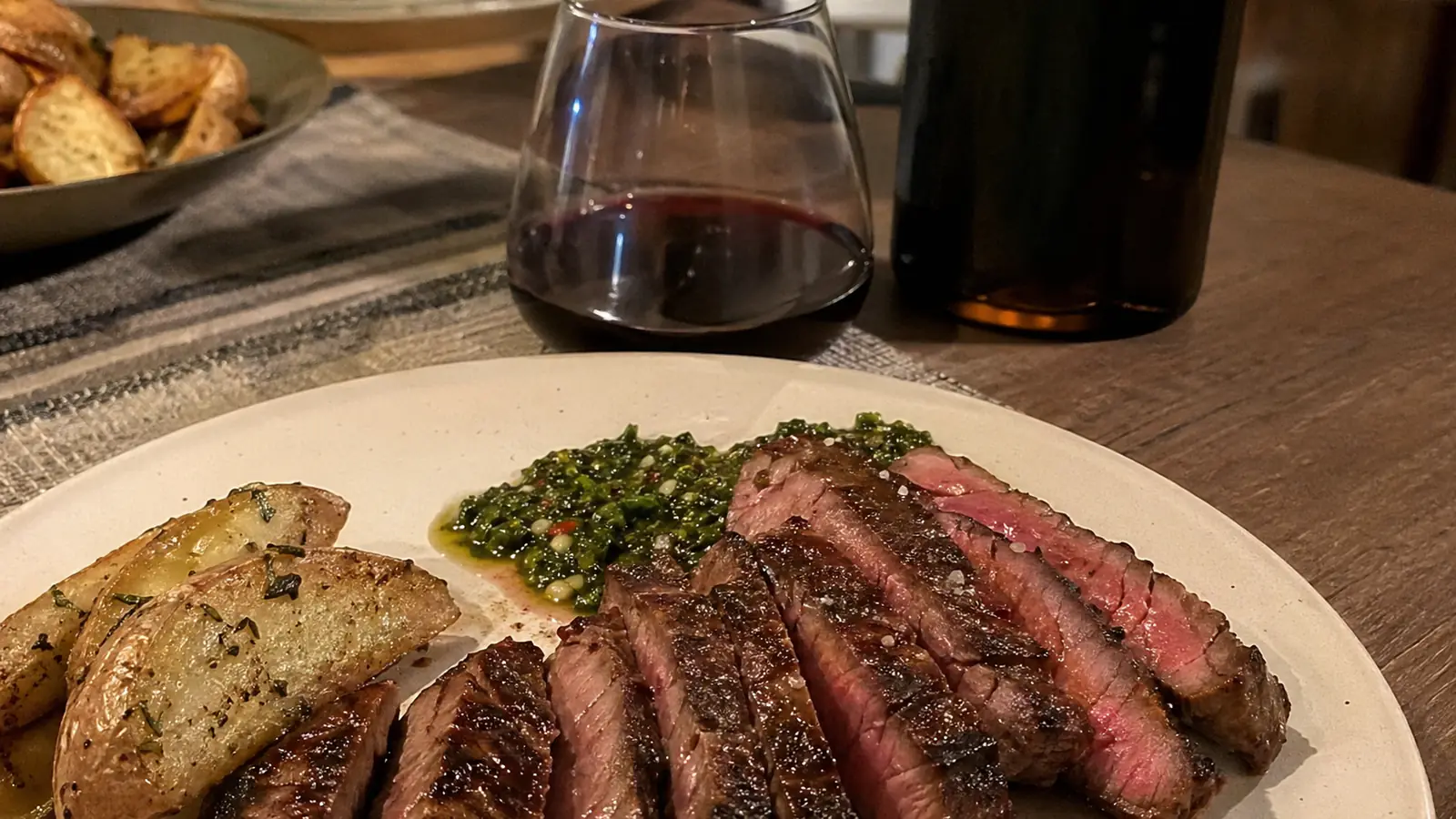
Steak wants red wine with structure. Fat softens tannin, char likes dark fruit, and salt makes the wine taste rounder. That’s why Cabernet Sauvignon with ribeye feels so obvious once you taste it side by side. If you need a refresher on the styles in play, the red wine guide covers what each grape brings to the plate.
For a leaner cut like filet mignon, choose Merlot, Cabernet Franc, or a softer Bordeaux blend. You still get dark fruit and structure, but the wine will not overpower the meat. For lamb, Syrah and Rioja are usually better than Cabernet because they bring savory, peppery notes that sit beautifully with rosemary, garlic, and roasted vegetables. The deeper breakdown lives in the steak wine pairing guide, including cut-by-cut and sauce-by-sauce moves.
| Wine | Food |
|---|---|
| Cabernet Sauvignon | Ribeye, New York strip, grilled burgers |
| Malbec | Flank steak, skirt steak, steak tacos |
| Syrah / Shiraz | Lamb, pepper steak, smoked beef |
| Rioja | Lamb chops, roast lamb, chorizo |
What Wine Goes Best With Chicken?
Chicken is all about preparation. Plain roast chicken is one of the most flexible foods on the table: Pinot Noir, Chardonnay, Chenin Blanc, and dry rose all work. Once you add sauce, the pairing changes.
Lemon chicken wants a crisp white like Sauvignon Blanc, Vermentino, or Pinot Grigio. Creamy chicken wants Chardonnay or white Burgundy. Barbecue chicken wants Zinfandel, Grenache, or a juicy Cotes du Rhone because the sauce brings sweetness and smoke. For preparation-by-preparation detail, head to the chicken wine pairing guide.
What Wine Should I Pair With Seafood?
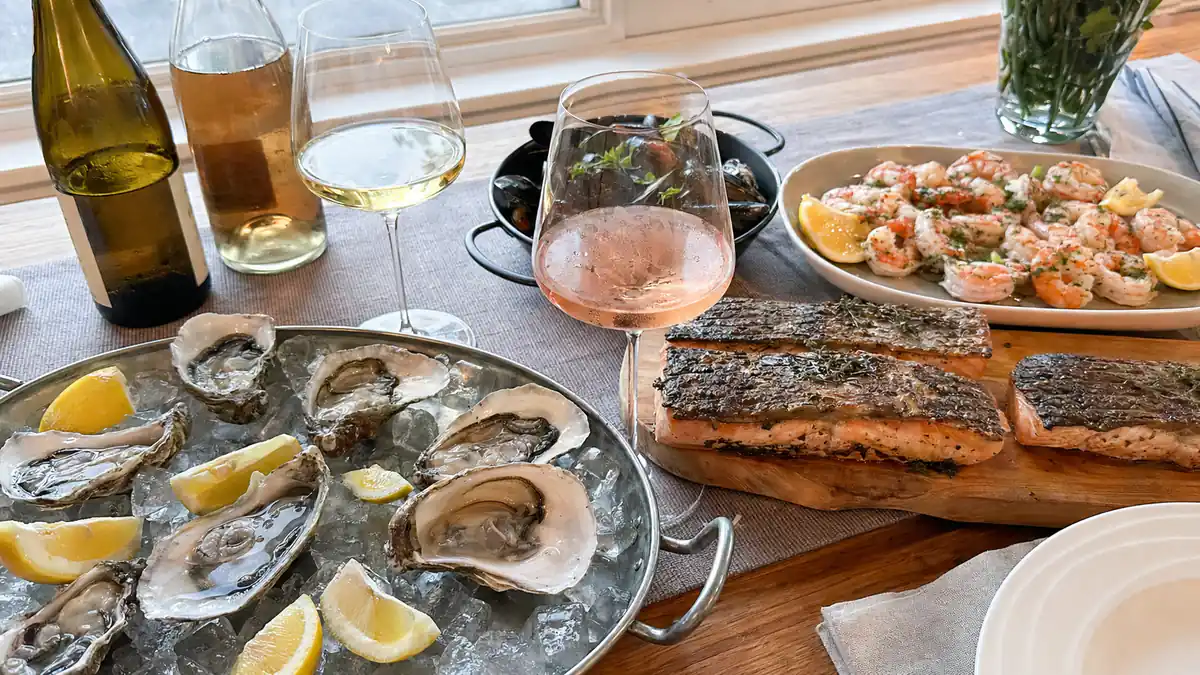
Seafood usually wants freshness, but the exact wine depends on richness. Oysters and raw shellfish love sparkling wine, Muscadet, or Chablis. White fish works with Pinot Grigio, Albarino, Vermentino, or Sauvignon Blanc.
Salmon is the exception that makes people nervous. It has enough oil and flavor for Pinot Noir, especially if it is grilled or served with mushrooms. If the salmon is poached, citrusy, or served with herbs, choose Chardonnay, dry rose, or a richer Sauvignon Blanc instead. The full breakdown lives in the seafood wine pairing guide, and sushi gets its own playbook in sushi wine pairing.
| Wine | Food |
|---|---|
| Muscadet | Oysters, clams, mussels |
| Chablis | Crab, scallops, white fish |
| Albarino | Grilled prawns, fish tacos, ceviche |
| Pinot Noir | Salmon, tuna, mushroom-topped fish |
What Wine Works With Pasta and Pizza?
Look at the sauce. Tomato sauce wants acidity, which is why Sangiovese, Chianti, Barbera, and Nero d’Avola are so reliable with pizza, lasagna, and spaghetti. The wine has enough brightness to meet the tomato instead of tasting flat beside it. For sauce-by-sauce moves, see the pasta wine pairing guide and the pizza wine pairing guide.
Cream sauce wants Chardonnay, Soave, or a richer Pinot Grigio. Pesto wants Sauvignon Blanc, Vermentino, or a dry white with green-herb energy. The full style map sits in the white wine guide. Mushroom pasta wants Pinot Noir because earthy food and earthy red wine are doing the same quiet thing.
Pizza is even easier. Margherita wants Chianti or Barbera. Pepperoni wants Zinfandel, Grenache, or a chilled Lambrusco.
Mushroom pizza wants Pinot Noir. White pizza wants Chardonnay or sparkling wine.
How Do I Pair Wine With Spicy Food?
Spicy food needs refreshment. Alcohol makes heat feel hotter, so huge reds are rarely your friend with Thai curry, Indian food, Sichuan dishes, or spicy Mexican food. Choose lower alcohol, bright acidity, and a touch of sweetness.
Off-dry Riesling is the house champion here. It cools heat, handles ginger and chili, and still tastes alive after a mouthful of curry. Gewurztraminer works with fragrant Thai dishes, while sparkling wine handles fried and salty spice beautifully. For deeper cuisine-specific picks, see the Thai food wine pairing guide, the Indian food wine pairing guide, and the Mexican food wine pairing guide.
What Wine Goes With Cheese and Chocolate?
Cheese is friendlier to white wine than most people expect. High-acid whites and sparkling wines cut through fat and salt, so Champagne, Sauvignon Blanc, Chablis, and dry Riesling are the safest choices for a mixed board. Big tannic reds are best saved for aged hard cheeses like Cheddar, Manchego, and Parmigiano-Reggiano.
Chocolate is where dry red wine often stumbles. Dark chocolate makes many dry reds taste bitter, especially Cabernet Sauvignon and Syrah. Port, Banyuls, Madeira, and late-harvest Zinfandel are better because the wine has enough sweetness to stand up to the dessert. The dessert breakdown lives in the chocolate wine pairing guide.
For a deeper cheese breakdown, use the full wine and cheese pairing guide. It covers Brie, Cheddar, goat cheese, blue cheese, washed-rind cheese, and the two-bottle cheese board setup.
What Wine Should I Serve at a Dinner Party?
For most dinner parties, open one crisp white and one flexible red. Sauvignon Blanc or dry Riesling covers appetizers, salads, seafood, and spicy dishes. Pinot Noir or Grenache covers chicken, salmon, mushrooms, pork, and anyone who simply wants red.
If the main course is steak or lamb, swap the flexible red for Cabernet Sauvignon, Syrah, Malbec, or Rioja. If the food is mixed and people are grazing, sparkling wine is the best first bottle because it handles salt, fat, fried food, cheese, and appetizers without needing a detailed plan.
What Are the Most Common Wine Pairing Mistakes?
Pairing only by color. White meat with white wine and red meat with red wine is a start, but sauce matters more. Chicken in cream sauce and chicken in salsa verde need different bottles.
Forgetting acidity. Rich food needs lift. Fried chicken, creamy pasta, and cheese all taste better when the wine has enough acidity to reset your palate.
Pouring dry red with dessert. The dessert should usually be less sweet than the wine. If the food is sweeter than the wine, the wine tastes thin, bitter, or sour.
Using Cabernet for everything. Cabernet is brilliant with steak and aged hard cheese. It is rough with delicate fish, spicy food, and many soft cheeses.
Ignoring temperature. A slightly chilled red can save a casual meal. Pinot Noir, Beaujolais, Grenache, and Lambrusco often taste better with 20 minutes in the fridge.
Frequently Asked Questions
What is the best all-purpose wine for food pairing?
Sparkling wine is the safest all-purpose bottle because acidity and bubbles work with salt, fat, fried food, cheese, and seafood. If you want still wine, choose Pinot Noir for red or Sauvignon Blanc for white. Those three bottles cover more dinners than people give them credit for.
What wine goes with almost everything?
Pinot Noir comes closest for red wine. It has enough flavor for chicken, salmon, pork, mushrooms, and cheese while avoiding the heavy tannin problem that makes bigger reds clash with lighter food. For white wine, dry Riesling is the quiet overachiever.
Should wine be sweeter than the food?
With dessert, yes. The wine should usually be as sweet as the dessert or sweeter. That’s why Port works with chocolate cake and Sauternes works with fruit tarts, while dry Cabernet can taste bitter next to the same plate.
What wine should I pair with vegetarian food?
Pair by the dominant flavor. Mushrooms love Pinot Noir, tomato-based dishes love Sangiovese, roasted vegetables love Grenache, and green vegetables love Sauvignon Blanc or Gruner Veltliner. If the dish is creamy, reach for Chardonnay or Chenin Blanc.
What wine pairs with salty snacks?
Sparkling wine. Champagne, Cava, Cremant, and dry Prosecco all work with potato chips, fries, popcorn, olives, and fried appetizers. Salt makes the wine taste fruitier, and bubbles keep your palate from getting tired.
What is the easiest two-bottle setup for dinner?
Open Sauvignon Blanc and Pinot Noir if you do not know the menu. The white covers fresh, tangy, spicy, and seafood dishes. The red covers chicken, pork, salmon, mushrooms, and casual meat dishes. If the meal is steak-centered, replace Pinot Noir with Cabernet Sauvignon or Malbec.
Use the chart as your first move, then trust your own glass. If the food is richer than expected, choose more acidity. If the dish is spicy, choose lower alcohol and a little sweetness. If the plate is smoky, grilled, or fatty, give the wine more body and structure.
Next, put the chart to work on a board that trips people up all the time: wine and cheese pairing.
Keep Reading
Steak Wine Pairing: What To Pour With Every Cut
The best wines with steak by cut, sauce, seasoning, and doneness, from Cabernet with ribeye to Malbec with chimichurri.
Seafood Wine Pairing: What To Pour With Fish
The best wines with seafood by style, from oysters and Muscadet to lobster and Chardonnay, salmon and Pinot Noir, and spicy shrimp.
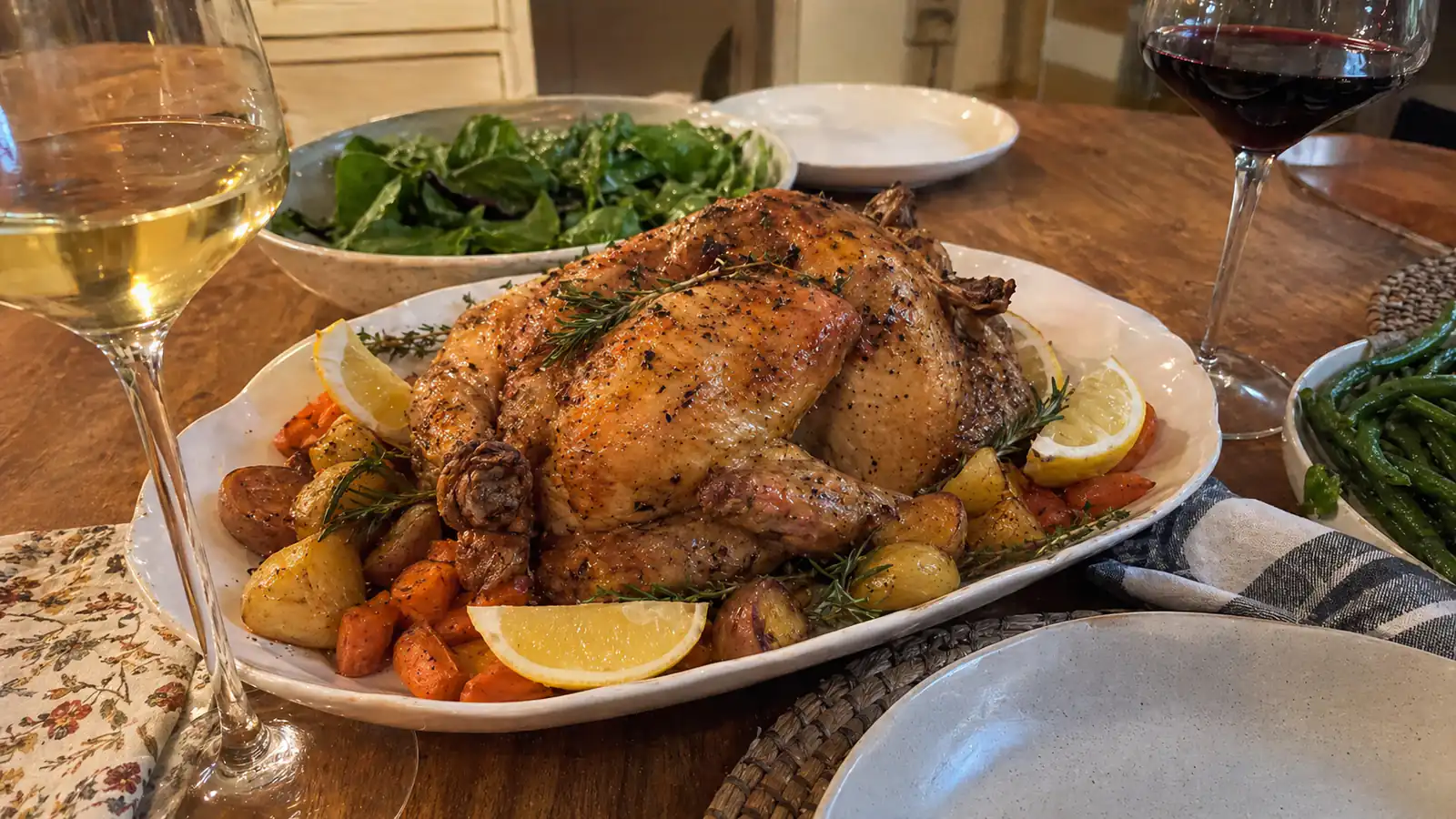
Chicken Wine Pairing: What To Pour With Dinner
The best wines with chicken by cooking method and sauce, from roast chicken and Chardonnay to fried chicken and bubbles.