
Claire Bennett
Wine Editor13 min read
Sushi Wine Pairing: What to Pour With Every Roll
The best wine with sushi by style, from sashimi and salmon rolls to spicy tuna and tempura, plus the cheat-code bottle for a mixed order.
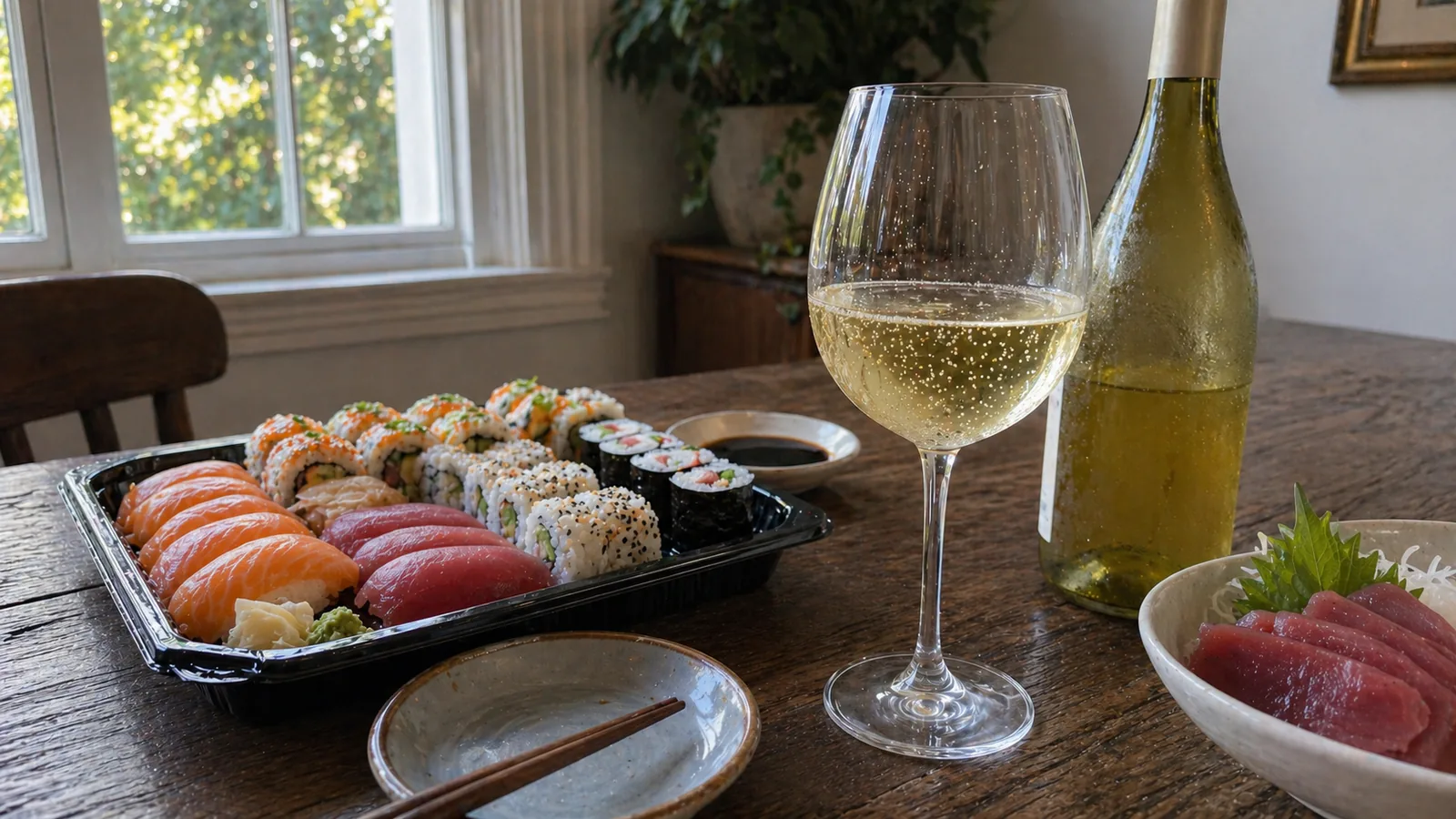
Sushi night arrives. The salmon rolls land first, then a plate of sashimi, then someone orders the spicy tuna and the shrimp tempura at the same time, and somebody at the table reaches for a glass of Cabernet because “red wine goes with everything.” It does not. With sushi it makes the fish taste like a coin. The fix is simple once you know what to grab.
By the end of this page you’ll know:
- The cheat-code bottle that handles a mixed sushi order without picking favorites
- Why one classic French white turns sashimi into the sharpest, cleanest bite of the night
- The roll where Pinot Noir actually earns a place at the table (and the rolls where it ruins everything)
- How wasabi and soy sauce quietly rewrite the pairing rules before the wine even arrives
- The off-dry white that calms a spicy tuna roll the way nothing dry can
- The two-bottle move that covers sashimi, salmon, tempura, and spicy rolls without opening a third
What Wine Goes Best With Sushi?
The safest answer for sushi is a crisp, dry white wine with bright acidity. Albarino, Gruner Veltliner, dry Riesling, Sauvignon Blanc, Chablis, and Vinho Verde all work because they keep the fish tasting clean and refresh your palate between bites.
Sparkling wine is the strongest single bottle for a mixed sushi order. Champagne, Cava, Cremant, dry Prosecco, and sparkling rose all pair beautifully with raw fish, fried tempura, and salty soy sauce. Bubbles cut richness, acidity lifts the rice, and the wine tastes sharp again on the next mouthful.
Red wine is a smaller lane. Light, low-tannin reds like Pinot Noir, Gamay, and chilled Grenache can work with salmon, tuna, eel, and rolls with sweet glaze. Heavier reds like Cabernet Sauvignon, Syrah, and Malbec usually clash with the fish and make the wine taste bitter.
The biggest mistake is treating “sushi” like one dish. Sashimi, California rolls, spicy tuna, dragon rolls, and shrimp tempura all want different bottles. Match the wine to the dominant flavor on the plate, not the word on the menu.
| Wine | Food |
|---|---|
| Champagne | Mixed sushi orders, sashimi, tempura, fried rolls |
| Chablis | Sashimi, white-fish nigiri, scallop, lemony rolls |
| Albarino | Shrimp nigiri, California rolls, tuna rolls |
| Gruner Veltliner | Cucumber rolls, avocado rolls, eel, dragon rolls |
| Dry Riesling | Salmon nigiri, shrimp, soy-heavy rolls |
| Off-dry Riesling | Spicy tuna, spicy salmon, wasabi-heavy rolls |
| Dry rose | Salmon rolls, tuna rolls, mixed sushi |
| Pinot Noir | Tuna nigiri, salmon, eel, smoked-fish rolls |
What Wine Goes With Sashimi and Nigiri?
Sashimi is the purest test. There is no rice, no seaweed, no sauce hiding behind the fish, just a slice of something raw with maybe a wisp of wasabi. The wine has to be clean, cold, and acidic, otherwise it walks all over the seafood.
Chablis is the standout. Lean, mineral, unoaked Chardonnay with a chalky edge that flatters white fish and shellfish without adding weight. It works on hamachi, snapper, fluke, and scallop sashimi the way Muscadet works on oysters.
Champagne is the more flexible choice across a sashimi platter. The bubbles scrub the palate, the acidity cuts through any richness on tuna belly or salmon, and a non-vintage brut handles the entire board without breaking stride. Cava and Cremant do the same job for less money.
For nigiri, the rice tilts the pairing slightly toward more aromatic whites. Albarino, Gruner Veltliner, and dry Riesling have enough citrus and stone fruit to play with the vinegared rice. A subtle off-dry Riesling can also work when the nigiri is brushed with sweet eel sauce or nikiri.
What Wine Pairs With Salmon Rolls?
Salmon is the sushi fish that breaks the white-wine rule. It has enough oil and flavor to stand up to dry rose, chilled Pinot Noir, and richer whites without disappearing under them. That makes salmon rolls one of the friendliest pairings on the menu.
Dry rose is the most flexible salmon-roll wine. Provence rose, Bandol rose, and any crisp Pinot Noir rose handle Philadelphia rolls, salmon nigiri, and salmon avocado rolls because they bring red-fruit flavor with white-wine freshness. They also play nicely with cream cheese, which is harder than it looks.
Pinot Noir works when the salmon is smoked, seared, or paired with mushrooms or a sweet glaze. Keep the wine light, fresh, and slightly chilled. Burgundy, Oregon, and cooler-climate New Zealand Pinot Noir all sit in the sweet spot. Skip anything jammy or heavily oaked.
For raw salmon nigiri or simple salmon rolls, dry Riesling is excellent. The acidity handles the fish’s oil, the citrus notes lift the rice, and the wine never overpowers the fish. A Mosel Kabinett or a dry Australian Riesling will do the trick.
What Wine Pairs With Tuna Rolls and Spicy Tuna?
Tuna is the sushi fish that takes red wine the most seriously. Lean tuna, spicy tuna, tuna nigiri, and tuna tataki all have enough flavor and texture to handle a low-tannin red, especially when soy sauce, sesame, or chili is in the mix.
Pinot Noir is the cleanest answer for plain tuna nigiri and tuna rolls. The wine’s cherry fruit and earthy notes complement the fish without clashing, as long as the tannin stays low and the bottle has not seen too much oak. Gamay and chilled Grenache do similar work for less money.
Spicy tuna is a different problem. The chili mayo and sriracha need a wine with brightness and a touch of sweetness, not weight. Off-dry Riesling is the cleanest match because the residual sugar calms the heat while the acidity keeps the rice tasting fresh. Sparkling rose works too.
Tuna tataki and seared tuna with ponzu or soy can take more aromatic options. Dry rose, a chilled lighter Merlot, or even a soft Cabernet Franc can land if the dish has sesame, scallion, and char. Avoid anything heavily tannic. Big Cabernet and tuna leave a metallic edge you will taste immediately.
What Wine Goes With Tempura and Fried Sushi?
Fried sushi wants bubbles. Tempura rolls, shrimp tempura, soft-shell crab rolls, agedashi-style preparations, and crispy spicy tuna all taste better with a sparkling wine in the glass. The carbonation lifts the oil, and the acidity keeps the batter from coating your palate.
Champagne is the easy answer when the budget allows. The toasty, biscuity character of a non-vintage brut mirrors the fried batter while the bubbles do the cleaning. Cava and Cremant give you the same structure at half the price, which matters when sushi is already an expensive night. The full style breakdown lives in the sparkling wine guide.
Dry Prosecco and sparkling rose are also strong choices, especially for shrimp tempura rolls and spider rolls with eel sauce. The slight fruit from the rose plays well with the sweet glaze that often shows up on these rolls.
If still wine is what you have, reach for Albarino, Gruner Veltliner, or a crisp Vinho Verde. Vinho Verde even has a faint spritz of its own, which makes it a quiet stand-in for Champagne when the bigger bottle is not available.
What Wine Pairs With Spicy Rolls and Wasabi?
Spicy sushi rewrites the pairing math. Sriracha, chili mayo, kimchi crunch, and a heavy hand of wasabi all push the dish toward fragrant, slightly sweet, lower-alcohol wines. Bone-dry whites can taste sharp and harsh next to chili, and big reds make the heat worse.
Off-dry Riesling is the reliable answer. A Mosel Kabinett or Spatlese has acidity for the rice, sweetness for the chili, and floral notes that make spicy tuna, spicy salmon, and dynamite rolls actually pleasant to drink with. The wine should taste fresh, not sugary.
Gewurztraminer is the other Alsatian move. Lychee, rose petal, and a touch of residual sugar make it a brilliant partner for wasabi-heavy rolls and rolls with a sweet chili glaze. It also handles eel sauce better than most dry whites.
Sparkling rose and a fruit-forward dry rose can both work when you want something with a little weight. They have enough fruit to soften the heat without going full off-dry. Skip the high-alcohol reds. Alcohol amplifies chili, and you will feel it on the second roll.
How Do Soy Sauce and Wasabi Change the Pairing?
Soy sauce is the silent pairing partner. Even a light dip changes the dish’s salinity, umami, and weight, which means the wine needs more acidity than you would think. Champagne, dry Riesling, and Albarino all have the structure to handle a soy-heavy bite without turning flat.
Wasabi is the heat variable. A dab is fine with most crisp whites. A heavy hand pushes the pairing toward off-dry Riesling, Gewurztraminer, or sparkling rose because the residual sugar buffers the burn. Bone-dry, high-alcohol wines tend to amplify wasabi rather than calm it.
Pickled ginger is mostly a palate cleanser, but it can clash with very oaky whites and very tannic reds. If ginger is on every plate, lean toward unoaked whites and lighter reds. The ginger’s brightness will line up with the wine instead of fighting it.
What’s the Cheat-Code Wine for a Mixed Sushi Order?
If you only open one bottle, open Champagne. Or any quality dry sparkling wine. The acidity handles raw fish, the bubbles scrub the fried tempura, the bottle survives soy sauce, and the wine keeps tasting fresh from the first piece to the last. Cava, Cremant, and dry English sparkling all do the same job.
For a two-bottle setup, pour Champagne plus a dry rose. The sparkling covers sashimi, white fish, tempura, and shellfish, and the rose covers salmon, tuna, eel, and the spicier rolls. That combination handles a four-person sushi order without anyone asking for a different bottle.
If sparkling is not available, the safest still bet is a dry Riesling from the Mosel, Clare Valley, or Eden Valley. Bright acidity, low alcohol, and a faint citrus snap make it one of the most flexible sushi wines on the rack. Pour it cold but not ice cold, around 10 degrees Celsius.
For a red drinker who refuses to budge, a chilled Pinot Noir from Burgundy, Oregon, or Martinborough is the answer. Light tannin, bright acidity, and red-fruit lift make it the only red that consistently earns its place at a sushi dinner. Keep the bottle on ice between pours.
| Wine | Food |
|---|---|
| Champagne | Mixed sushi, sashimi, tempura |
| Chablis | Sashimi, white-fish nigiri |
| Albarino | California rolls, shrimp, lighter rolls |
| Gruner Veltliner | Vegetable rolls, eel, dragon rolls |
| Dry Riesling | Salmon nigiri, soy-heavy rolls |
| Off-dry Riesling | Spicy tuna, spicy salmon, wasabi rolls |
| Dry rose | Salmon rolls, tuna rolls, mixed orders |
| Pinot Noir | Tuna nigiri, salmon, eel, smoked-fish rolls |
What Are the Most Common Sushi Wine Pairing Mistakes?
Pouring big tannic reds with raw fish. Cabernet Sauvignon, Syrah, Malbec, and Barolo all create a metallic edge on raw tuna and salmon. If you want red, choose Pinot Noir, Gamay, or a chilled lighter Grenache.
Treating sushi like one dish. Sashimi, spicy tuna, tempura, and dragon rolls want different bottles. Match the wine to the dominant flavor on the plate, not the word on the menu.
Ignoring soy sauce and wasabi. Both quietly raise the salinity and heat of every bite. A dry Riesling, Champagne, or Albarino handles soy. Off-dry Riesling and Gewurztraminer handle wasabi.
Pouring oaky Chardonnay across the board. Big buttery Chardonnay can flatten sashimi and clash with vinegared rice. Reach for Chablis or unoaked Chardonnay if you want a Chardonnay on the table.
Serving the wine ice cold. Very cold wine tastes flat next to sushi. Pull whites out of the fridge a few minutes before pouring, and chill any red wine for 20 minutes rather than serving it at room temperature.
Frequently Asked Questions
What is the best wine to drink with sushi?
The best all-purpose wine with sushi is Champagne or a dry sparkling wine like Cava or Cremant. The bubbles cut soy and oil, the acidity flatters raw fish, and the bottle handles a mixed sushi order without favoring one roll over another. Dry Riesling, Albarino, Chablis, and Gruner Veltliner are excellent still-wine choices.
Does red wine go with sushi?
Light, low-tannin red wines pair well with sushi when the fish is salmon, tuna, eel, or smoked. Pinot Noir is the safest red because it has bright acidity and minimal tannin. Gamay and chilled Grenache are good alternatives. Big tannic reds like Cabernet Sauvignon and Syrah usually clash with raw fish and create a metallic taste.
What wine pairs with spicy sushi?
Off-dry Riesling pairs best with spicy sushi rolls because its acidity handles the rice while a touch of residual sugar calms the chili heat. Gewurztraminer from Alsace is another strong choice for wasabi-heavy rolls and sweet chili glazes. Sparkling rose works when you want something dry with enough fruit to round off the heat.
Is Sauvignon Blanc good with sushi?
Sauvignon Blanc works well with sushi that has citrus, herbs, or a clean preparation. It is excellent with white-fish sashimi, ceviche-style rolls, and California rolls. Skip it for spicy rolls or sweet-glazed dishes because the bright acidity can amplify chili and clash with sweet sauces.
What wine goes with sashimi?
Sashimi pairs best with the leanest, most mineral white wines. Chablis, Champagne, Muscadet, and bone-dry Riesling all work because they refresh the palate without adding weight or fighting the fish. Avoid oak, high alcohol, and heavy fruit, which can make raw fish taste smaller.
Can you drink Pinot Noir with sushi?
Yes, Pinot Noir is the one red wine that consistently works with sushi. It pairs especially well with tuna, salmon, eel, and rolls with sweet glaze or smoked fish. Choose lighter Burgundy, Oregon, or cooler-climate Pinot Noir, keep the tannin low, and chill the bottle for 20 minutes before pouring.
What wine pairs with tempura rolls?
Sparkling wine is the best pairing for tempura rolls because the bubbles cut through the fried batter and the acidity keeps the wine tasting fresh. Champagne, Cava, Cremant, and dry Prosecco all work. If still wine is preferred, Albarino, Vinho Verde, and Gruner Veltliner do similar work.
Sushi pairing gets simple once you stop hunting for one universal bottle. Match the wine to the dominant flavor on the plate, respect the soy and wasabi, and keep acidity in the glass. For the bigger picture across steak, chicken, pasta, pizza, cheese, and more, use the full wine pairing chart.
Keep Reading
Seafood Wine Pairing: What To Pour With Fish
The best wines with seafood by style, from oysters and Muscadet to lobster and Chardonnay, salmon and Pinot Noir, and spicy shrimp.
Wine Pairing Chart: What To Pour With Dinner
A practical wine pairing chart for steak, chicken, seafood, pasta, pizza, cheese, chocolate, spicy food, and holiday dinners.
Wine and Cheese Pairing: 9 Matches That Never Miss
The classic wine and cheese pairings that actually work, the ones that clash, and how to handle a six-cheese board with two bottles.