
Claire Bennett
Wine Editor15 min read
Steak Wine Pairing: What To Pour With Every Cut
The best wines with steak by cut, sauce, seasoning, and doneness, from Cabernet with ribeye to Malbec with chimichurri.
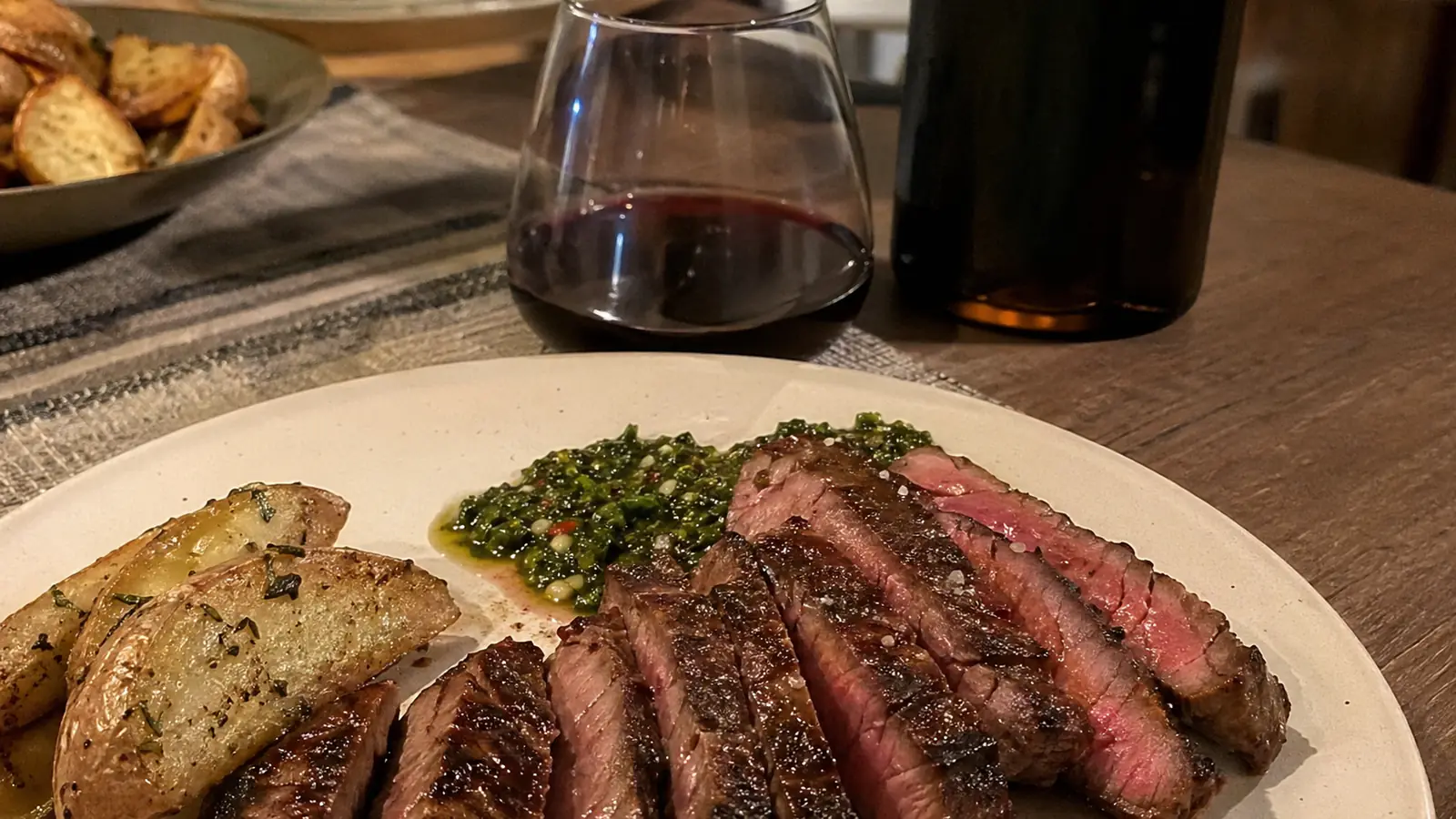
Steak night has a way of making wine feel weirdly high stakes. You can cook the ribeye perfectly, nail the crust, rest it properly, and still pause in front of the wine rack wondering whether the Cabernet is obvious or actually correct.
The answer depends on the cut, the fat, the seasoning, and whatever sauce you are spooning over the top. Once you know what each part of the plate does to the wine, steak wine pairing becomes much easier than people make it.
By the end of this page you’ll know:
- The one steak cut where Cabernet Sauvignon earns its reputation in about two bites
- Why filet mignon often tastes better with Merlot than with the biggest red in the room
- The sauce test that tells you when to skip Cabernet and open Malbec, Syrah, or Cabernet Franc
- What to pour with steak tacos, chimichurri, peppercorn sauce, and blue cheese butter
- The red-wine temperature mistake that makes even good steak pairings taste heavy
- When a white wine can work with steak without feeling like a dare
What Is the Best Wine With Steak?
The best wine with steak is usually a structured red with enough tannin, body, and savory depth to handle the meat. Cabernet Sauvignon is the classic because steak gives tannin something useful to do. The protein and fat soften that dry, grippy feeling, while salt and char make the wine taste darker, rounder, and more generous.
That does not mean every steak needs the biggest bottle you own. A ribeye and a filet mignon ask for different wines. Ribeye is fatty, loud, and char-friendly, so it can take Napa Cabernet, Bordeaux, or a serious Australian Cabernet without flinching. Filet is lean and delicate, so the same wine can feel like it is shouting over the plate.
Think of steak pairing as a weight match first. Big steak, big wine. Lean steak, softer wine.
Smoky steak, darker fruit and spice. Herb sauce, fresher red. Cream or butter sauce, more acidity than you think.
The fastest answer is simple: Cabernet Sauvignon with ribeye, Merlot with filet mignon, Malbec with flank or skirt steak, Syrah with peppery or smoked steak, Rioja with lamb-like savoriness and roasted garlic, and Pinot Noir with mushroom-topped steak. Those six moves cover most steak nights without turning dinner into a theory lesson.
| Wine | Food |
|---|---|
| Cabernet Sauvignon | Ribeye, New York strip, porterhouse |
| Merlot | Filet mignon, tenderloin, lean sirloin |
| Malbec | Flank steak, skirt steak, steak tacos |
| Syrah / Shiraz | Pepper steak, smoked steak, steak au poivre |
| Rioja / Tempranillo | Sirloin, grilled steak, garlic-heavy sides |
| Pinot Noir | Filet with mushrooms, steak salad, lighter steak dishes |
Why Does Red Wine Work So Well With Steak?
Red wine works with steak because tannin needs fat and protein. Tannin is the drying, mouth-coating structure you feel in many red wines, especially Cabernet Sauvignon, Nebbiolo, Syrah, and young Bordeaux. On its own, tannin can taste hard. With steak, it suddenly has a job.
Take a bite of ribeye, then sip Cabernet. The fat softens the tannin. The salt brightens the fruit.
The browned crust pulls forward the wine’s oak, cedar, smoke, cocoa, and black-fruit notes. It feels classic because the chemistry is doing useful work.
Char matters too. A hard sear adds bitterness, smoke, and roasted flavor, which lets the wine go darker and more structured. A thick grilled steak can take more Cabernet than a pan-seared tenderloin because the crust gives the wine something to match.
Sauce changes the deal. A bare salted steak wants a different bottle from steak with chimichurri, peppercorn cream, blue cheese butter, or sweet barbecue glaze. The meat sets the weight. The sauce fine-tunes the bottle.
Which Wine Should I Pair With Ribeye?
Ribeye is the reason Cabernet Sauvignon became the steakhouse default. It has generous marbling, a beefy center, and enough fat to make tannic wine taste polished instead of harsh. If you are opening one special steak bottle, ribeye is the cut that can carry it.
Napa Cabernet is the bold choice: blackcurrant, cassis, oak, vanilla, cedar, and enough body for a thick grilled steak. Bordeaux gives you a more savory version, especially if the blend includes Merlot and Cabernet Franc. Coonawarra Cabernet from Australia brings black fruit and minty lift, which is excellent with rosemary potatoes or grilled vegetables.
If you want something slightly less formal, Malbec works beautifully. It has plush dark fruit, softer tannin, and a smoky edge that suits grilled ribeye without feeling as weighty as Cabernet. Argentine Malbec with a salt-crusted ribeye and chimichurri is one of the most useful steak pairings you can keep in your back pocket.
Syrah is the move when pepper, smoke, or barbecue enters the picture. Northern Rhone Syrah brings black pepper, olive, meatiness, and restraint. Australian Shiraz brings more fruit, more body, and more comfort-food energy. Both can work, but match the bottle to the mood of the meal.
What Wine Goes With Filet Mignon?
Filet mignon is tender, lean, and relatively mild, which makes it easier to overpower than ribeye. A huge Cabernet can make filet taste smaller than it is. You still want red wine, but you want polish more than brute force.
Merlot is the most reliable choice. A good Merlot gives you plum, black cherry, cocoa, and soft tannin, so the wine feels plush without drying out the steak. Right-bank Bordeaux does the same job with a little more earth and structure.
Cabernet Franc is even better if the filet comes with herbs, mushrooms, or a pan sauce. It has red and black fruit, a leafy edge, and enough freshness to keep the plate from feeling heavy. With a mushroom demi-glace, Cabernet Franc can make filet feel like the clever order at the table.
Pinot Noir works when the preparation is gentler: filet with mushrooms, roasted shallots, or a lighter jus. Choose a fuller Pinot from California, Oregon, Central Otago, or Burgundy’s richer villages. Very delicate Pinot can taste a little thin next to steak, but a serious bottle with earthy depth can be gorgeous.
What Wine Goes With New York Strip, Sirloin, and Porterhouse?
New York strip sits between ribeye and filet. It has enough fat and chew for Cabernet, but it is cleaner and firmer than ribeye. Cabernet Sauvignon is still a strong choice, especially with a hard sear, but Bordeaux blends, Super Tuscan reds, Rioja, and Syrah all have room to shine.
Porterhouse gives you two steaks at once: strip on one side, tenderloin on the other. That makes medium-bodied Bordeaux blends especially useful. You get Cabernet structure for the strip and Merlot softness for the tenderloin. If the steak is grilled, a Tuscan Cabernet-Sangiovese blend also works because the Sangiovese acidity keeps the pairing lively.
Sirloin is leaner and more affordable, which makes it a weeknight steak more often than a trophy cut. Malbec, Tempranillo, Cotes du Rhone, and Zinfandel are your friends here. They bring enough fruit and spice to make sirloin feel generous without demanding steakhouse-level richness.
If the sirloin is sliced over salad, change direction. Cabernet can feel too heavy against greens and vinaigrette. Cabernet Franc, Cru Beaujolais, lighter Rioja, or dry rose will handle the steak while still playing nicely with arugula, tomatoes, onions, and vinaigrette.
What Wine Should I Pour With Flank Steak, Skirt Steak, and Steak Tacos?
Flank and skirt steak are built for big flavor. They are often marinated, grilled hot, sliced across the grain, and served with lime, herbs, salsa, peppers, onions, or tortillas. That makes them friendlier to juicy, spicy reds than to expensive Cabernet.
Malbec is the easiest win. It has enough body for grilled beef, but its tannins are usually softer than Cabernet’s. That matters with marinades, lime, and chimichurri because too much tannin can turn bitter against sharp green flavors.
Zinfandel works when the steak leans smoky, sweet, or barbecue-adjacent. Think steak tacos with charred salsa, grilled onions, or a spice rub with paprika and brown sugar. Choose a Zinfandel with freshness rather than the highest alcohol bottle on the shelf, especially if there is chili heat on the plate.
Grenache and Cotes du Rhone are excellent for casual steak dinners. They bring red fruit, pepper, and warmth without the heavy grip of Cabernet. Give them 20 minutes in the fridge if the food is spicy or the weather is warm.
For steak tacos, keep the wine flexible. Malbec, Grenache, Zinfandel, chilled Rioja, and dry rose all make sense. If the tacos are heavy on lime, salsa verde, cilantro, or pickled onion, Cabernet Franc or rose will often beat a bigger red.
How Should I Pair Wine With Steak Sauce?
Pair the wine with the sauce when the sauce is the loudest thing on the plate. A simply salted steak can follow the cut. A sauced steak follows the sauce.
Peppercorn sauce loves Syrah. The wine already tastes like black pepper, smoked meat, violets, and dark fruit, so it picks up the pepper in the sauce without fighting the cream. Cabernet Franc and Rioja are also strong if you want less weight.
Chimichurri loves Malbec for a reason. The sauce is sharp, green, garlicky, and vinegary, and Malbec has enough fruit to absorb that edge. Cabernet Franc works too, especially if the chimichurri is heavy on parsley and oregano.
Blue cheese butter wants a bold red with structure. Cabernet Sauvignon, Syrah, and aged Bordeaux all work because the salt and fat in the blue cheese soften tannin. If the blue cheese is very sharp, a small pour of Tawny Port at the end can be brilliant.
Mushroom sauce wants earthy wine. Pinot Noir, Nebbiolo, Rioja, and Cabernet Franc all pull the mushrooms forward. If there is cream in the sauce, choose a wine with freshness, not only weight.
Sweet barbecue sauce changes everything. Sugar makes dry tannic reds taste harder, so choose fruitier reds: Zinfandel, Shiraz, Grenache, Primitivo, or Malbec. The wine needs enough fruit to meet the sweetness without turning sour.
| Wine | Food |
|---|---|
| Syrah / Shiraz | Peppercorn sauce, smoked steak, black pepper rub |
| Malbec | Chimichurri, garlic-herb marinades |
| Cabernet Sauvignon | Blue cheese butter, bone marrow, steakhouse sauce |
| Pinot Noir | Mushroom sauce, shallot sauce, steak with truffle fries |
| Zinfandel | Sweet barbecue sauce, smoky spice rubs |
| Cabernet Franc | Herb sauces, steak salad, green peppercorn sauce |
Does Doneness Change the Best Wine With Steak?
Doneness matters because it changes texture, juiciness, and how much browned crust you taste. Rare steak is softer and more iron-rich, so it can make very tannic wines feel sharper. Medium-rare is the easiest pairing zone because you get tenderness, juice, fat, and crust in balance.
Well-done steak needs extra care. It has less juice and can make tannic wine feel dry. Choose softer, fruitier reds like Merlot, Malbec, Grenache, Zinfandel, or Rioja rather than a young, muscular Cabernet.
A hard sear makes bigger wine easier to pour. The more crust, smoke, and char on the steak, the more Cabernet, Syrah, or Bordeaux makes sense. A gently pan-cooked filet with butter needs less tannin and more finesse.
Temperature matters on the wine side too. Most red wine with steak tastes better slightly cool, around 60-65 F. If the bottle has been sitting in a warm kitchen, give it 15 minutes in the fridge before pouring. Warm Cabernet can taste soupy, alcoholic, and heavier than the steak needs.
Can White Wine Ever Work With Steak?
White wine can work with steak when the plate gives it a reason. The steak itself still leans red, but sauce, garnish, and temperature can pull the pairing toward white or rose.
A rich Chardonnay can handle steak with bearnaise, butter, or a creamy pan sauce, especially if the cut is filet or sirloin rather than ribeye. You want a Chardonnay with body and acidity, not a flabby butter bomb. White Burgundy, good California Chardonnay, or Margaret River Chardonnay can all work.
Dry rose is more useful than people expect. It has freshness for herbs, enough fruit for char, and enough structure for sliced steak salads, steak sandwiches, and flank steak with Mediterranean sides. If the steak is served with tomatoes, olives, grilled peppers, or vinaigrette, rose deserves a spot on the table.
Sparkling wine is the wildcard. A dry sparkling rose or Champagne can work with steak tartare, carpaccio, or thinly sliced steak with salty fries. Bubbles cut fat, acidity handles salt, and the pairing feels lighter than a full red.
For a traditional grilled ribeye, pour red. For filet with bearnaise, steak salad, steak tartare, or a hot-weather steak lunch, white or rose can make more sense than forcing Cabernet into the moment.
What Are the Best Steak Wine Pairings by Cut?
Use the cut as your starting point. The fattier and more charred the steak, the more tannin it can handle. The leaner and more delicate the steak, the more you should care about softness, acidity, and sauce.
| Wine | Food |
|---|---|
| Napa Cabernet Sauvignon | Ribeye |
| Bordeaux blend | Porterhouse |
| Merlot | Filet mignon |
| Malbec | Flank steak |
| Rioja | Sirloin |
| Syrah | Pepper steak |
| Zinfandel | Barbecue steak |
| Pinot Noir | Filet with mushrooms |
This chart is a starting point, not a trap. If you already have a bottle you love, look for the closest flavor family. Cabernet and Bordeaux behave similarly with fatty steak.
Malbec and Zinfandel both help with smoke and spice. Pinot Noir and Cabernet Franc both help when the plate is lean, earthy, or herbal.
The only truly risky move is pairing a very tannic red with a lean, dry steak. That is how you get the classic “my wine tastes bitter” problem. Add fat, sauce, salt, or a softer bottle and the whole meal relaxes.
What Are the Most Common Steak Wine Pairing Mistakes?
Serving the red too warm. Room temperature is often too warm, especially in a kitchen or on a patio. A short chill makes Cabernet, Malbec, Syrah, and Rioja taste fresher and more focused.
Using Cabernet for every cut. Cabernet is great with ribeye, strip, porterhouse, and fatty burgers. It can flatten filet, steak salad, and herb-heavy flank steak.
Ignoring the sauce. Peppercorn, chimichurri, mushroom sauce, blue cheese butter, and barbecue sauce all change the wine. Pairing only by cut misses half the plate.
Choosing too much alcohol with chili heat. High-alcohol Zinfandel or Shiraz can make spicy steak tacos feel hotter. Pick a fresher red, a dry rose, or a lightly chilled Grenache instead.
Opening the special bottle too late. Big young reds often taste better with air. Open Cabernet, Bordeaux, Syrah, or Barolo 30-60 minutes before dinner, especially if the bottle is young and structured. For a buyer’s shortlist, see the best full-bodied red wines guide.
Frequently Asked Questions
What is the best wine with steak?
Cabernet Sauvignon is the best all-around wine with a fatty grilled steak, especially ribeye, New York strip, porterhouse, and burgers. Its tannin softens against the meat while the dark fruit and oak pick up char and salt. For lean cuts like filet mignon, Merlot or Cabernet Franc is often a better fit.
Is Cabernet Sauvignon always best with steak?
No. Cabernet is best when the steak has enough fat, crust, and weight to handle tannin. Filet mignon, steak salad, flank steak with chimichurri, and steak tacos often work better with Merlot, Malbec, Cabernet Franc, Pinot Noir, Rioja, Grenache, or dry rose.
What wine goes with ribeye?
Ribeye loves Cabernet Sauvignon because the cut is rich, fatty, and full of flavor. Napa Cabernet, Bordeaux, Coonawarra Cabernet, and Super Tuscan reds all work well. If you want a softer bottle, choose Malbec or Syrah.
What wine goes with filet mignon?
Merlot is the safest wine with filet mignon because it has soft tannin and plush fruit. Cabernet Franc, right-bank Bordeaux, and fuller Pinot Noir are also strong choices, especially with mushrooms or a pan sauce. Avoid very young, aggressive Cabernet unless the filet comes with a rich sauce.
Can you drink white wine with steak?
Yes, especially with filet, bearnaise, steak salad, steak tartare, or a buttery pan sauce. Choose a full-bodied Chardonnay, sparkling rose, Champagne, or dry rose depending on the dish. For a heavily charred ribeye, red wine is still the better move.
What wine goes with steak and blue cheese?
Cabernet Sauvignon, Syrah, and Bordeaux all work with steak and blue cheese because the salt and fat soften tannin. If the blue cheese is very sharp, Tawny Port can be excellent as a small finishing pour. Keep the main wine dry, bold, and structured.
Should red wine with steak be chilled?
Yes, lightly. Most reds taste better with steak around 60-65 F, which is cooler than many rooms. Put Cabernet, Malbec, Syrah, or Rioja in the fridge for 15 minutes if the bottle feels warm to the touch.
What wine goes with steak tacos?
Malbec, Zinfandel, Grenache, Rioja, and dry rose all work with steak tacos. If there is a lot of lime, salsa verde, cilantro, or pickled onion, choose Cabernet Franc, Grenache, or rose over a heavily tannic red. A slight chill helps the wine handle heat and salt.
If you want one bottle for steak night, start with the cut. Ribeye gets Cabernet. Filet gets Merlot or Cabernet Franc.
Flank steak gets Malbec. Pepper steak gets Syrah.
Once that feels easy, use the full wine pairing chart to cover the rest of the table.
Keep Reading
Cabernet Sauvignon: Taste, Regions, Pairings
What Cabernet Sauvignon tastes like, where the best bottles come from, what to pair it with, and how much to spend. The plain-English guide.
Malbec Wine: Taste, Regions, Pairings, Price Guide
What Malbec actually tastes like, why Argentina made it famous, the food it pairs with, and how much you should spend. A plain-English Malbec guide.
Best Full-Bodied Red Wines: 8 Heavyweights Under $30
Eight full-bodied red wines worth opening. Cab, Zinfandel, Petite Sirah, Malbec, Shiraz, Nebbiolo, Aglianico. All under $30.