Claire Bennett
Wine Editor11 min read
Types of Red Wine: Light to Full-Bodied Guide
Pinot Noir to Cabernet Sauvignon and everything in between. A plain-English guide to red wine styles with taste notes, regions, and food pairings.
Types of Red Wine: Light to Full-Bodied Guide
The Shiraz that made Sunday’s roast lamb sing will make Tuesday’s pasta taste flat and heavy. The Pinot Noir that’s brilliant with a mushroom risotto will disappear next to a ribeye. Most people pick one red and make it do everything. By the end of this page, you’ll have three.
By the end of this page you’ll know:
- The one number that tells you more about a red wine than the label ever will (and how to use it before you buy)
- Why the same grape can taste completely different depending on whether it grew in France or Australia
- The style of red wine most beginners get wrong on their first try, and which one they actually like
- The specific body-weight rule that makes pairing red wine with food almost foolproof
- Three full-bodied reds under $30 that drink like they cost twice that
What Are the Main Types of Red Wine?
Red wine styles are best understood by body weight: how heavy and substantial the wine feels when you drink it. Think of it as the difference between skim milk, full-fat milk, and cream. Same category, very different experience.
Body weight is determined mainly by grape variety, region, and climate. Cooler climates produce lighter-bodied reds with more acidity. Warmer climates push grapes toward fuller, richer styles. A Pinot Noir from Burgundy and a Shiraz from South Australia are both red wines made from a single grape variety, but they sit at opposite ends of the spectrum.
The three camps to know:
- Light-bodied: lower tannins, higher acidity, good chill potential. Drink them younger, pair them with lighter food.
- Medium-bodied: the most versatile category. Flexible with food, easy to drink across seasons.
- Full-bodied: high tannins, more alcohol, bold fruit. Built for hearty food and often benefit from decanting before you pour.
Which Red Wines Are Light-Bodied?
Light reds are the ones that actually reward a slight chill. Fifteen minutes in the fridge before you open them sharpens their freshness without killing the flavour.
Pinot Noir
The most famous light-bodied red. Pinot Noir has a thin skin, which means lower tannins and a silky texture that feels almost weightless in the glass. The aromas lean toward red fruit: cherry, raspberry, a hint of earth. Burgundy in France is the spiritual home, but Oregon and New Zealand produce excellent Pinot Noir too.
Taste: cherry, strawberry, dried herbs, forest floor in the better bottles. Key regions: Burgundy (France), Willamette Valley (Oregon), Marlborough (New Zealand). Food pairing: duck confit, roasted salmon, mushroom risotto, a simple roast chicken. Pinot Noir is the rare red that works with fish.
Gamay
Gamay is the grape behind Beaujolais, which is the go-to “I need a red that goes with everything” wine. It’s juicy, low tannin, and has a fresh, almost grapey character that makes it genuinely good slightly chilled. Beaujolais Nouveau gets most of the attention, but the cru Beaujolais villages (Morgon, Fleurie, Moulin-à-Vent) are worth seeking out.
Taste: red cherries, banana, bubblegum (in the young styles), violet. Key regions: Beaujolais (France). Food pairing: charcuterie boards, roast pork, anything on a weeknight table.
Grenache / Garnacha
Grenache is French, Garnacha is Spanish: same grape, two names. Light to medium in body depending on where it’s grown, with a soft, round texture and a tendency toward red fruit and spice. In Spain’s Priorat region it gets serious and full-bodied, but most bottles you’ll find are gentle and fruit-forward.
Taste: strawberry, raspberry, white pepper, sometimes dried herbs. Key regions: Southern Rhône (France), Priorat and Rioja (Spain), Sardinia (Italy). Food pairing: pizza, tapas, grilled chicken, anything with mild spice.
Which Red Wines Are Medium-Bodied?
Medium-bodied reds are the workhorses of the wine shelf. They’re versatile enough to go with most meals and approachable enough to drink without food.
Merlot
Merlot has a soft, plummy character and lower tannins than Cabernet Sauvignon, which makes it one of the easiest red wine varieties to enjoy. It became unfashionable for a while (blame Sideways), but quality Merlot from Bordeaux, Washington State, and Italy is genuinely excellent and often underpriced as a result.
Taste: plum, black cherry, chocolate, sometimes mocha. Key regions: Bordeaux (France), Washington State, Tuscany (Italy). Food pairing: pasta with meat sauce, roasted lamb, hard cheeses, burgers.
Sangiovese
The backbone of Chianti and Brunello di Montalcino, Sangiovese is Italy’s most planted red grape. It has high acidity and firm tannins for a medium-bodied wine, which gives it a grip on the palate that makes it a natural match for food, especially anything tomato-based.
Taste: sour cherry, dried herbs, leather, cedar. Key regions: Tuscany (Chianti, Brunello), Umbria. Food pairing: tomato pasta, pizza, grilled meats, aged cheeses. Sangiovese and a bowl of spaghetti bolognese is one of the best value pairings in wine.
Tempranillo
Spain’s signature red grape. Tempranillo forms the base of Rioja and Ribera del Duero, two of the country’s most important wine regions. It has an earthy, savoury character with medium tannins: more restrained and structured than the fruit-forward style of most Australian reds. Oak aging is a big part of Tempranillo winemaking, so expect vanilla and cedar in many bottles.
Taste: cherry, tobacco, leather, vanilla (in oaked styles), dried herbs. Key regions: Rioja and Ribera del Duero (Spain). Food pairing: slow-roasted lamb, Spanish ham, grilled vegetables, cured meats.
Zinfandel
Zinfandel is California’s own: a grape that produces bold, fruity, sometimes jammy reds with high alcohol. It sits at the fuller end of medium-bodied, and certain California bottles tip into full-bodied territory. Avoid the pink White Zinfandel if you’re here for something serious. Red Zinfandel is a completely different wine.
Taste: blackberry jam, spice, black pepper, sometimes raisin in very ripe years. Key regions: Sonoma and Napa Valley (California). Food pairing: BBQ ribs, spicy sausage, barbecued chicken, anything with a smoky char.
Which Red Wines Are Full-Bodied?
Full-bodied reds have the highest tannins, the most weight on the palate, and usually the most complex flavour profiles. They’re the ones that benefit from decanting and that often improve with age.
Cabernet Sauvignon
The most planted red grape in the world, and for good reason. Cabernet Sauvignon produces structured, age-worthy wines with firm tannins and deep dark fruit. A young Cabernet can feel tight and austere; give it an hour in a decanter or some years in a cellar and it opens into something impressive.
Taste: blackcurrant, cedarwood, graphite, dark chocolate, sometimes mint. Key regions: Bordeaux (France), Napa Valley (California), Coonawarra (Australia), Maipo Valley (Chile). Food pairing: ribeye steak, roast beef, aged hard cheeses, lamb chops. Cabernet Sauvignon with a good steak is one of the most reliable pairings in wine.
Syrah / Shiraz
Same grape, two names, noticeably different styles. Syrah from France’s Northern Rhône (think Hermitage, Côte-Rôtie) is elegant and savoury, with peppery, meaty notes. Shiraz from Australia, especially Barossa Valley, tends to be bigger, richer, and fruit-forward with dark berry and chocolate. Both are full-bodied with high tannins and work well with hearty food.
Taste: blackberry, plum, cracked black pepper (French style), chocolate, smoke (Australian style). Key regions: Northern Rhône (France), Barossa Valley and McLaren Vale (Australia), Washington State. Food pairing: slow-braised lamb shoulder, venison, duck, BBQ brisket. Australian Shiraz is one of the best bottles to bring to a barbecue.
Malbec
Argentina’s signature variety, originally from France’s Cahors region. Malbec found its best expression in Mendoza, where high-altitude vineyards produce inky, velvety wines with ripe fruit and surprisingly smooth tannins for their size. They punch well above their price point.
Taste: black plum, blueberry, violets, cocoa, vanilla. Key regions: Mendoza (Argentina), Cahors (France). Food pairing: grilled steak, empanadas, spiced lamb, anything coming off a grill.
Nebbiolo
The grape behind Barolo and Barbaresco, two of Italy’s most celebrated wines. Nebbiolo is deceptive: pale in colour for a full-bodied red, with enormous tannins and high acidity that can make young bottles feel almost aggressive. Age it and it transforms. Barolo needs ten years to show its best; a well-cellared bottle is worth the wait.
Taste: tar, rose petal, cherry, leather, truffle in older bottles. Key regions: Piedmont (Italy): Barolo and Barbaresco. Food pairing: braised short ribs, truffle dishes, aged hard cheeses, wild boar ragu.
Cabernet Franc
Often used as a blending grape in Bordeaux, Cabernet Franc also shines as a single varietal in France’s Loire Valley. It’s lighter and more herbaceous than Cabernet Sauvignon, with a distinct pencil shaving and violet note that sets it apart.
Taste: red and black cherry, pencil shavings, violet, green pepper notes. Key regions: Loire Valley (France), Bordeaux (as a blend component), Ontario (Canada). Food pairing: roast duck, mushroom dishes, pork chops, grilled peppers.
What’s the Difference Between Old World and New World Red Wine?
Old World wines come from Europe: France, Italy, Spain, Germany, Portugal. New World wines come from everywhere else: Australia, Argentina, Chile, the United States, New Zealand, South Africa.
The difference goes beyond geography. Old World wines tend to be more restrained, with higher acidity, lower alcohol, and more earthy or mineral character. New World wines lean toward riper fruit, more alcohol, and a more direct, easy-to-understand flavour profile.
A Pinot Noir from Burgundy and a Pinot Noir from the Willamette Valley are both made from the same grape. The Burgundy will be more delicate, earthy, and complex. The Oregon version will be richer, fruitier, and more immediately accessible. Neither is better. They’re made for different moods.
Climate drives most of this difference. Cooler European climates mean grapes ripen slowly, building more acidity and nuance. Warmer New World regions push ripeness further, producing the bigger, bolder styles many drinkers reach for first.
How Should I Serve Red Wine?
Most people serve red wine too warm. “Room temperature” was coined before central heating was a thing. In a modern house, room temperature is often 22–24°C, which is too warm for almost every red wine. Getting the serving temperature of red wine right makes a bigger difference to taste than most people expect.
A quick guide to temperature red wine styles:
- Light reds (Pinot Noir, Gamay, Grenache): 12–15°C. Give them 15–20 minutes in the fridge before opening.
- Medium reds (Merlot, Sangiovese, Tempranillo): 14–17°C. A brief chill is fine; no fridge needed if your house is cool.
- Full reds (Cabernet, Syrah, Malbec): 17–18°C. If your kitchen is warm, 10 minutes in the fridge helps.
For decanting: young, tannic full-bodied reds (Cabernet Sauvignon, Syrah, Nebbiolo) benefit from 30 to 60 minutes in a decanter before serving. It opens up the aromas and softens the tannins. Older bottles need careful pouring to separate the wine from any sediment that has built up over time. For a buyer’s shortlist of structured reds, see the best dry red wines guide.
Frequently Asked Questions
What is the smoothest red wine for beginners?
Merlot and Pinot Noir are consistently the easiest places to start. Merlot has low tannins, soft fruit, and a rounded texture that rarely surprises. Pinot Noir is a little more complex but still light enough that it doesn’t feel heavy. If you want something even more approachable, Beaujolais (made from Gamay) is lively, low-tannin, and good value.
What types of red wine have the least tannins?
Gamay, Pinot Noir, and Grenache all sit at the low end of the tannin scale. Tannins are the drying, grippy sensation you get from strong tea. Light-bodied reds are low in tannins because their grape skins are thinner, and shorter skin contact during winemaking means less tannin extraction.
What is the difference between Syrah and Shiraz?
Same grape, different name. Syrah is the French name, used in the Rhône Valley and most of Europe. Shiraz is what Australians call it. The taste difference comes from climate and winemaking style: French Syrah tends to be more savoury, peppery, and restrained; Australian Shiraz is usually riper, fruitier, and fuller in body. When you see both names on a label (“Syrah/Shiraz”), the winemaker is signalling a style somewhere in between.
What food pairs best with red wine?
Matching body weight to the weight of the food is the most reliable rule. Light reds (Pinot Noir) work with lighter dishes: duck, salmon, roast chicken. Medium reds (Merlot, Sangiovese) suit pasta, pizza, and roasted meats. Full-bodied reds (Cabernet, Syrah, Malbec) belong next to red meat, BBQ, and rich braises. High-tannin reds like Cabernet Sauvignon also pair well with fatty cuts, because the fat coats the tannins and softens them. For a beginner-friendly shortlist, see the best red wines for beginners guide. The full red-vs-white breakdown lives in red vs white wine.
How long does red wine last after opening?
Most red wines last 3–5 days after opening if you re-cork them and keep them somewhere cool. Full-bodied reds with high tannins (Cabernet, Barolo) often actually improve slightly on day two, as the tannins soften with air exposure. Lighter reds (Pinot Noir) are best in the first 1–2 days. A vacuum wine stopper extends this by a day or two.
What’s the difference between red wine and white wine?
Red wine gets its colour from grape skins, which stay in contact with the juice during fermentation. White wine is made without the skins (or with minimal contact). Skin contact also transfers tannins and different flavour compounds, which is why red wine feels more textured and grippy than white wine. Both can range from dry to sweet, though most table wines are dry.
Ready to put this to use? Here are the best red wines under $20: verified picks across light, medium, and full-bodied styles that won’t waste your money.
Keep Reading
Best Red Wine for Beginners: 8 Bottles to Start With
Eight beginner-friendly red wines that taste good from the first sip. Low-tannin, fruit-forward, food-friendly picks under $25.
Best Dry Red Wines: 8 Bottles Worth Knowing
Eight bone-dry reds across Cabernet, Sangiovese, Tempranillo, Syrah, Malbec, Pinot, and Cab Franc. All under $30, all critically rated.
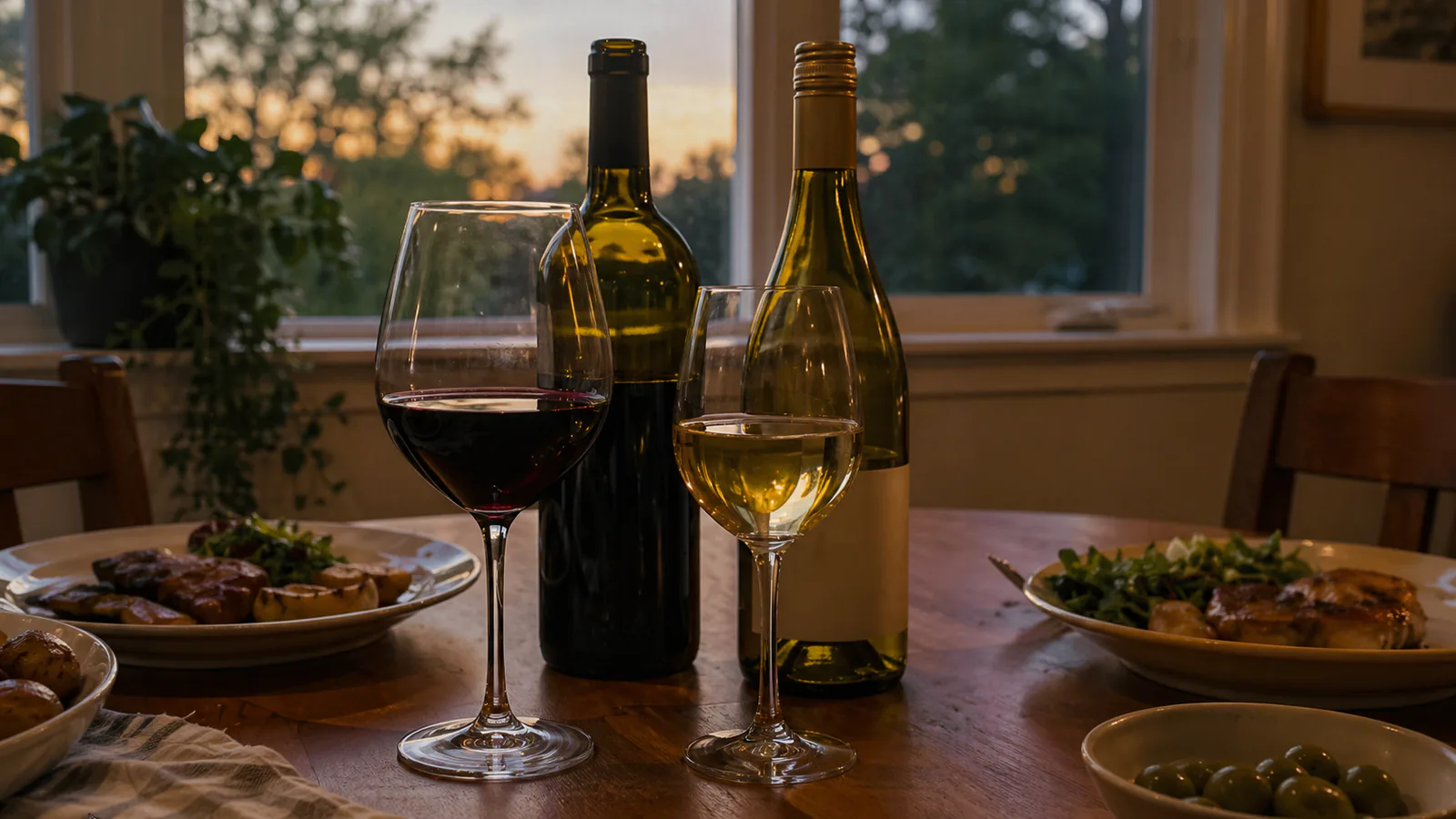
Red vs White Wine: How They Really Differ
The real differences between red and white wine, from grape skins and tannins to serving temp, food pairing, and when to reach for each.