
Claire Bennett
Wine Editor13 min read
Mexican Food Wine Pairing: What To Pour With Tacos
The best wines with Mexican food, from tacos al pastor and carnitas to enchiladas, mole, ceviche, and the rosé rule that handles salsa heat.
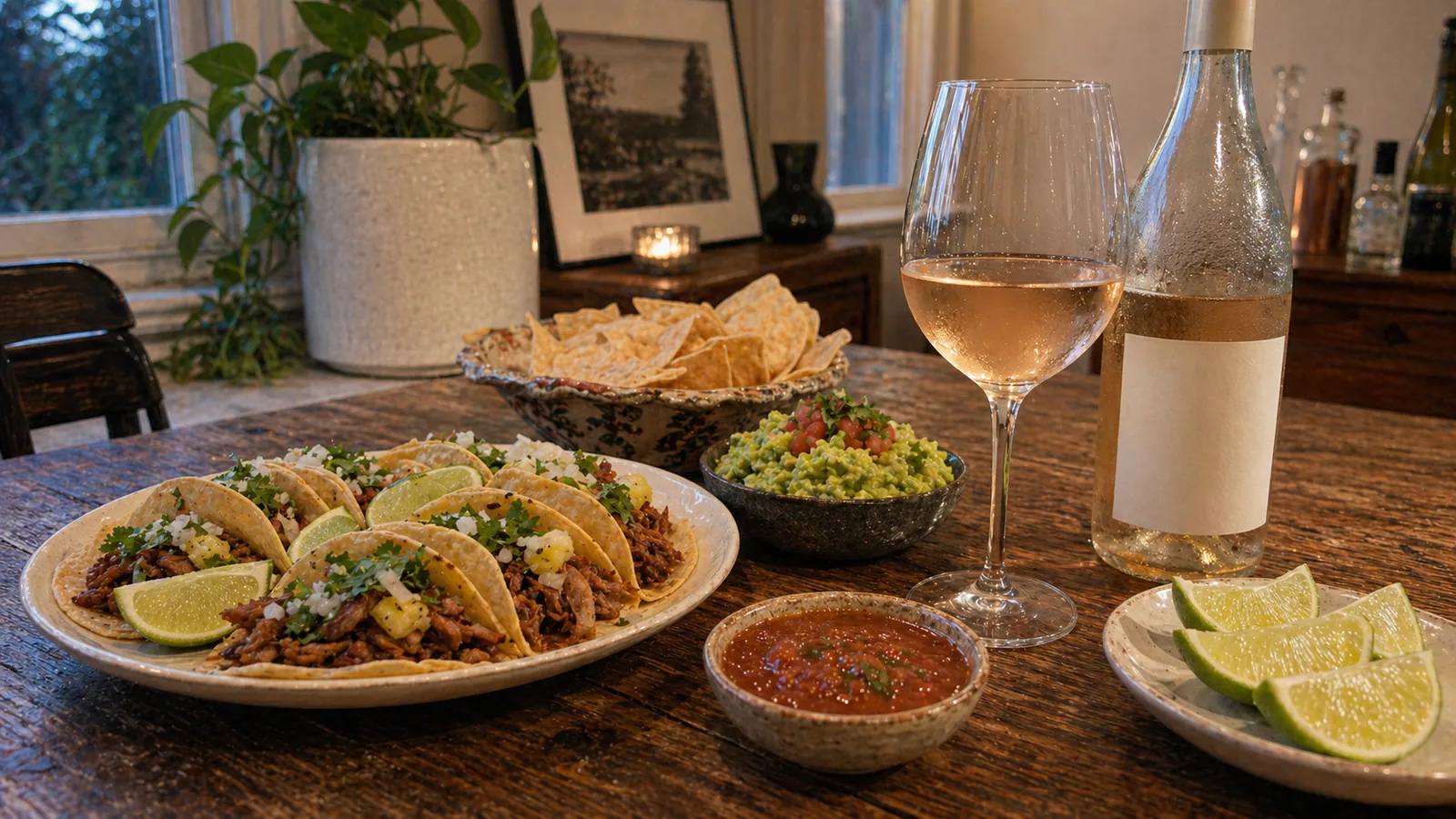
Mexican food is where most wine pairing rules quietly fall apart. You order tacos al pastor with three salsas, your friend gets the mole, and someone always asks if Cabernet is fine here. It usually is not. The plate has chili, lime, smoke, fat, fresh herbs, and a sauce doing more work than the meat, and the wine has to navigate all of it.
By the end of this page you’ll know:
- The single bottle that handles a taco night with three salsas, two proteins, and a guacamole bowl
- Why oaky Cabernet turns spicy chorizo into a mouthful of metal, and the red lane that actually works
- The off-dry white most people overlook that calms habanero better than any beer
- The mole rule nobody writes down, and the grape it was practically built for
- How to match wine to salsa heat in three steps without tasting every bottle on the shelf
- The vegetarian Mexican pairing that turns black beans and roasted poblanos into a real meal
What Is the Best Wine With Mexican Food?
The best all-purpose wine with Mexican food is dry rosé. It has the freshness of a white, the fruit of a red, and enough body to handle char, fat, and salsa without picking a fight. A dry Provence rosé, a Spanish Garnacha rosé, or a Tavel covers tacos, fajitas, ceviche, and most of the table at once.
If rosé is not your style, off-dry Riesling is the second answer. The touch of residual sugar tames chili heat, the acidity carries through lime and tomato, and it works equally well with carnitas, enchiladas verdes, and shrimp tacos. Mexican cuisine and German Riesling get along better than people expect.
For red drinkers, reach for fruity low-tannin reds. Garnacha, Beaujolais (Gamay), Zinfandel, and lighter Pinot Noir all complement the smoke and spice without scraping your tongue. These red wines have enough body for grilled meat dishes and enough fruit to handle salsa.
What to avoid: oaky Cabernet Sauvignon, big Syrah, and young Bordeaux with anything spicy. High tannins plus capsaicin reads as bitter and metallic on the palate, and the wine fights the food instead of feeding it.
| Wine | Food |
|---|---|
| Dry rosé | Tacos, fajitas, ceviche, mixed plates |
| Off-dry Riesling | Spicy salsas, carnitas, enchiladas verdes |
| Sauvignon Blanc | Ceviche, fish tacos, lime-heavy dishes |
| Garnacha | Carne asada, chorizo, red salsas |
| Zinfandel | BBQ-style meat dishes, mole, beef tacos |
| Pinot Noir | Mushroom tacos, mole poblano, duck |
| Sparkling wine | Fried tacos, chips and guac, party plates |
| Albariño | Shrimp tacos, ceviche, fish in salsa verde |
How Do I Pair Wine With Tacos al Pastor and Carnitas?
Tacos al pastor is sweet, smoky, slightly spicy, and built around pork shoulder marinated in chilies, achiote, and pineapple. You want a wine with enough fruit to meet the pineapple and enough freshness to handle the salsa. Garnacha is the textbook answer because the strawberry and pepper notes echo the chili rub.
Zinfandel works for the same reason. It is jammy, fruity, often a touch sweet, and it complements pork the way a good salsa does. Look for cooler-climate Zinfandel without 15 percent alcohol so the wine does not amplify the heat.
Carnitas is richer and more savory. The pork is slow-cooked in its own fat until the edges crisp, and it usually arrives with raw onion, cilantro, lime, and a green salsa. Dry rosé and off-dry Riesling are both excellent here. The acidity cuts the fat and the fruit picks up the lime.
If you want red with carnitas, choose Beaujolais or a chilled Pinot Noir. The cherry and earth notes complement the pork without burying it. Skip anything with high tannins because the lime and salsa will pull out the bitterness.
What Wine Goes With Enchiladas and Mole?
Enchiladas vary wildly by sauce. Enchiladas rojas (red chili sauce) want a fruity medium-bodied red. Garnacha, Zinfandel, Tempranillo, and Carmenere all work because they have enough body for the cheese and meat without the high tannins that fight the chili. A young Rioja is a sneaky-good choice.
Enchiladas verdes (tomatillo, green chili, cilantro) are sharper and brighter. Sauvignon Blanc is the obvious pick because the citrusy, herbal profile mirrors the salsa exactly. Albariño, Verdejo, and Grüner Veltliner all do similar work. Skip oaked whites here.
Enchiladas suizas with cream sauce are the rich exception. Chardonnay, dry Riesling, or a fruity rosé all complement the cream and cheese. The wine needs body to match, plus enough acidity to keep the dish feeling clean.
Mole is the great wine pairing puzzle. A traditional mole poblano contains chocolate, dried chilies, nuts, seeds, raisins, and spices, and the result is rich, dark, slightly sweet, and complex. The wine needs to meet that complexity without competing with it. Pinot Noir is the surprise answer, especially a riper New World style. The earthy, fruity notes complement the mole’s depth, and the low tannins stay out of the chocolate’s way.
For a bigger mole pairing, try Zinfandel or a fruity GSM blend. The dark berry notes complement the chocolate, and the touch of sweetness in the fruit matches the dried chilies. Avoid austere old-world reds with mole. They taste thin beside the sauce.
What Wine Pairs Best With Fajitas and Carne Asada?
Fajitas are smoke, char, sizzle, and a pile of grilled peppers and onions. Carne asada is similar: marinated skirt or flank steak, citrusy, charred, often served with guacamole, salsa, and warm tortillas. Both want a red with body, fruit, and not too much oak. The same smoke-and-spice playbook drives the BBQ wine pairing guide.
Malbec is the classic pairing for carne asada. Argentine Malbec has plum, blackberry, and a soft cocoa edge that matches the char and the lime marinade. It is fruity enough to handle the salsa and structured enough to feel like a real red wine with steak.
Garnacha and Carmenere are equally strong picks. Both bring berry notes, mild spice, and medium tannins that complement the meat without overwhelming the lime and cilantro. A Spanish Garnacha and a tray of carne asada is the kind of pairing that ends with people asking what bottle you brought.
Tempranillo from Rioja or Ribera del Duero works well too, especially with grilled chorizo or beef fajitas. The leather, cherry, and dill notes mirror the smoke. Choose a Crianza or Reserva for richer cuts and a younger Joven for street-style fajitas.
If you want white wine with fajitas, dry rosé is the move. A Tavel or a Spanish Garnacha rosé has the body to handle grilled meat and the freshness to cut through the lime. Sparkling rosé is the dinner-party version of the same idea.
What Wine Goes With Ceviche and Seafood Tacos?
Ceviche is raw fish or shrimp cured in lime juice, mixed with chili, onion, cilantro, and tomato. The dish is bright, acidic, citrusy, and fresh, so the wine needs the same character. Sauvignon Blanc is the safest pick because it shares the lime and herb profile and the acidity holds up against the cure.
Albariño is the coastal alternative. The Spanish white has citrus, peach, and a saline edge that complements seafood beautifully. Vermentino, Verdejo, and Grüner Veltliner all work for the same reasons. Avoid oaked Chardonnay with ceviche because the butter and vanilla flatten the bright lime notes.
Fish tacos and shrimp tacos follow the salsa. With salsa verde, lime crema, and slaw, reach for Sauvignon Blanc, Albariño, or a sparkling wine. The crisp acidity and salt-cutting bubbles complement the fried fish or grilled shrimp without weighing the meal down.
For Baja-style fried fish tacos, sparkling wine is genuinely brilliant. Cava is the value pick, Champagne is the splurge, and dry Prosecco is fine in a pinch. The bubbles cut the fried batter, the acidity meets the lime, and the wine resets your palate between tacos.
If the seafood tacos lean spicy, with chipotle crema or a habanero salsa, switch to off-dry Riesling or a fruity dry rosé. Sweetness becomes useful the moment heat enters the dish.
How Do I Match Wine to Salsa Heat?
The salsa decides the bottle more than the meat does, and the rule is straightforward. The hotter the salsa, the more residual sugar and the lower the alcohol you want.
For mild salsas (pico de gallo, salsa verde, mild red sauces), almost any acidic white or low-tannin red works. Sauvignon Blanc, Albariño, Pinot Grigio, dry rosé, Beaujolais, and Garnacha are all in play.
For medium-spicy salsas (jalapeño, chipotle, ranchera), step toward fruit and away from oak. Off-dry Riesling, dry rosé, Garnacha, and Zinfandel all hold up. Avoid oaky Chardonnay and big Cabernet because the heat amplifies the wine’s roughest edges.
For genuinely hot salsas (habanero, ghost pepper, arbol), sweetness becomes essential. Off-dry Riesling, Gewürztraminer, demi-sec sparkling wine, or a fruity rosé with low alcohol all calm the burn. Bone-dry whites and tannic reds make the heat feel sharper, not softer.
Acidity helps too. A wine with bright acidity works well with chili because it lifts the food and refreshes your mouth between bites. The combination of acidity and a touch of sweetness is the balance that handles spicy Mexican food best.
| Wine | Food |
|---|---|
| Sauvignon Blanc, Pinot Grigio, dry rosé | Mild salsa: pico de gallo, salsa verde |
| Off-dry Riesling, Garnacha, Zinfandel | Medium salsa: jalapeño, chipotle, ranchera |
| Off-dry Riesling, Gewürztraminer, demi-sec sparkling | Hot salsa: habanero, arbol, ghost pepper |
| Sparkling rosé, Cava, Prosecco | Fried, salty, party-plate spread |
What Wine Goes With Vegetarian Mexican Dishes?
Vegetarian Mexican has more range than people give it credit for. Chiles rellenos, black beans, refried beans, roasted poblanos, mushroom tacos, sweet corn dishes, and bean enchiladas all benefit from different bottles.
Chiles rellenos (poblano stuffed with cheese and battered or roasted) want a medium-bodied wine with fruit. A young Tempranillo, Garnacha, or fruity Pinot Noir works because the wine has enough body for the cheese and enough freshness for the chili. Off-dry Riesling is the white-wine alternative.
Black beans and refried beans bring earthiness and richness. They love medium reds with soft tannins. Garnacha, Carmenere, and Beaujolais all complement the dish without bullying it. The classic move is to match the bean dish to whichever protein is on the plate.
Mushroom tacos and roasted vegetable tacos love Pinot Noir. The earthy, fruity profile complements the mushroom, and the low tannins stay out of any salsa. A fruity rosé works equally well, especially with grilled vegetables and corn.
Sweet corn dishes (esquites, elote, corn tamales) want bright whites or a fruity rosé. Sauvignon Blanc, Albariño, Verdejo, and unoaked Chardonnay all work because they meet the natural sweetness of the corn without flattening it. A dry sparkling wine is the brunch-style version.
Why Are Rosé and Off-Dry Whites the Safest Picks?
Mexican food covers an enormous range of flavors, sometimes on the same plate, and the wines that handle that range best share three traits: bright acidity, fruity character, and low to moderate alcohol. Dry rosé and off-dry white wines both check all three boxes.
Rosé works because it sits between white and red. It has the freshness and acidity of a white wine, which handles lime, citrus, and tomato. It has the fruit and body of a red wine, which complements meat, char, and smoke. It rarely has the high tannins that clash with chili. One bottle covers a table where four people are eating four different things.
Off-dry whites like Riesling and Gewürztraminer work because residual sugar is the proven counter to chili heat. The sweetness does not need to taste sugary. A Spätlese Riesling from the Mosel feels balanced and fresh, and it makes a habanero salsa feel rounder and less aggressive on the palate.
The other piece is alcohol. Wines above 14 percent amplify chili heat. Wines around 11 to 12.5 percent feel cooler and more refreshing alongside spicy food, which is one of the reasons German Riesling and lighter Beaujolais pair so well with Mexican cuisine.
For a mixed Mexican dinner with two bottles, open one off-dry Riesling and one Garnacha or Beaujolais. That setup covers spicy, smoky, citrusy, and rich dishes across the table. Sparkling wine plus a fruity red is the celebration version.
Frequently Asked Questions
What is the best wine to drink with Mexican food?
Dry rosé is the safest single bottle for Mexican food because it has the acidity to handle citrus and salsa, plus the fruit to meet smoke and spice. Off-dry Riesling, Sauvignon Blanc, Garnacha, and Zinfandel are also excellent choices. Skip high-tannin reds with anything spicy because the heat amplifies tannin and the wine tastes bitter.
Does red wine go with Mexican food?
Yes, when the red is fruity and low in tannins. Garnacha, Beaujolais, Zinfandel, and lighter Pinot Noir all work because they complement the smoke, char, and chili without scraping your tongue. Save big Cabernet Sauvignon and oaky Syrah for steak nights, not taco nights.
What wine pairs with tacos?
Dry rosé handles almost any taco. For carnitas and al pastor, Garnacha and Zinfandel work especially well. For fish or shrimp tacos, choose Sauvignon Blanc, Albariño, or sparkling wine. Spicy tacos with hot salsas pair better with off-dry Riesling.
What wine goes with enchiladas?
It depends on the sauce. Enchiladas rojas pair with Garnacha, Tempranillo, or Zinfandel. Enchiladas verdes pair with Sauvignon Blanc or Albariño. Creamy enchiladas suizas pair with Chardonnay or dry Riesling. The salsa picks the bottle.
What wine pairs with mole?
Pinot Noir is the surprise winner with mole poblano because the earthy, fruity notes complement the chocolate and dried chilies, and the low tannins stay out of the way. Zinfandel and fruity GSM blends are bigger alternatives. Skip austere old-world reds because they taste thin beside the sauce.
What wine should I drink with spicy Mexican food?
Off-dry Riesling, Gewürztraminer, and fruity rosé are the best picks for spicy Mexican food. Residual sugar tames capsaicin better than bone-dry wine, and lower alcohol keeps the heat from feeling sharper. Avoid high-alcohol reds and oaky whites with anything genuinely hot.
Can I drink Sauvignon Blanc with Mexican food?
Sauvignon Blanc works beautifully with citrusy, herbal Mexican dishes like ceviche, fish tacos, salsa verde, and chiles rellenos. The lime and grassy notes mirror the cilantro and tomatillo, and the crisp acidity holds up against the cure on a ceviche. It is less ideal with very spicy or very rich dishes, where rosé or Riesling works better.
Mexican food gets easier the moment you stop trying to force one bottle to do everything. Match the salsa first, the protein second, and keep tannins out of any plate with serious chili. For the quick reference across pasta, pizza, steak, chicken, seafood, and more, use the full wine pairing chart.
Keep Reading
Tempranillo Wine: Taste, Regions, Pairings, Price Guide
What Tempranillo tastes like, how Rioja's ageing tiers work, the food it pairs with, and how to spot the best value bottles. A plain-English guide.
Riesling: Sweet vs Dry, Regions, and Pairing Guide
Riesling runs from bone-dry to dessert-sweet, and the label tells you which. Here's how to read it, what it tastes like, and what to eat with it.
BBQ Wine Pairing: What To Pour With Every Smoke
The best wines for BBQ by meat and sauce, from Zinfandel with ribs to Malbec with brisket, plus rosé and Riesling for chicken and spicy sauces.