
Claire Bennett
Wine Editor14 min read
Pizza Wine Pairing: What to Pour With Every Slice
The best wine with pizza by style: Sangiovese with margherita, Zinfandel with pepperoni, Chardonnay with white pizza, plus the bottle for mixed tables.
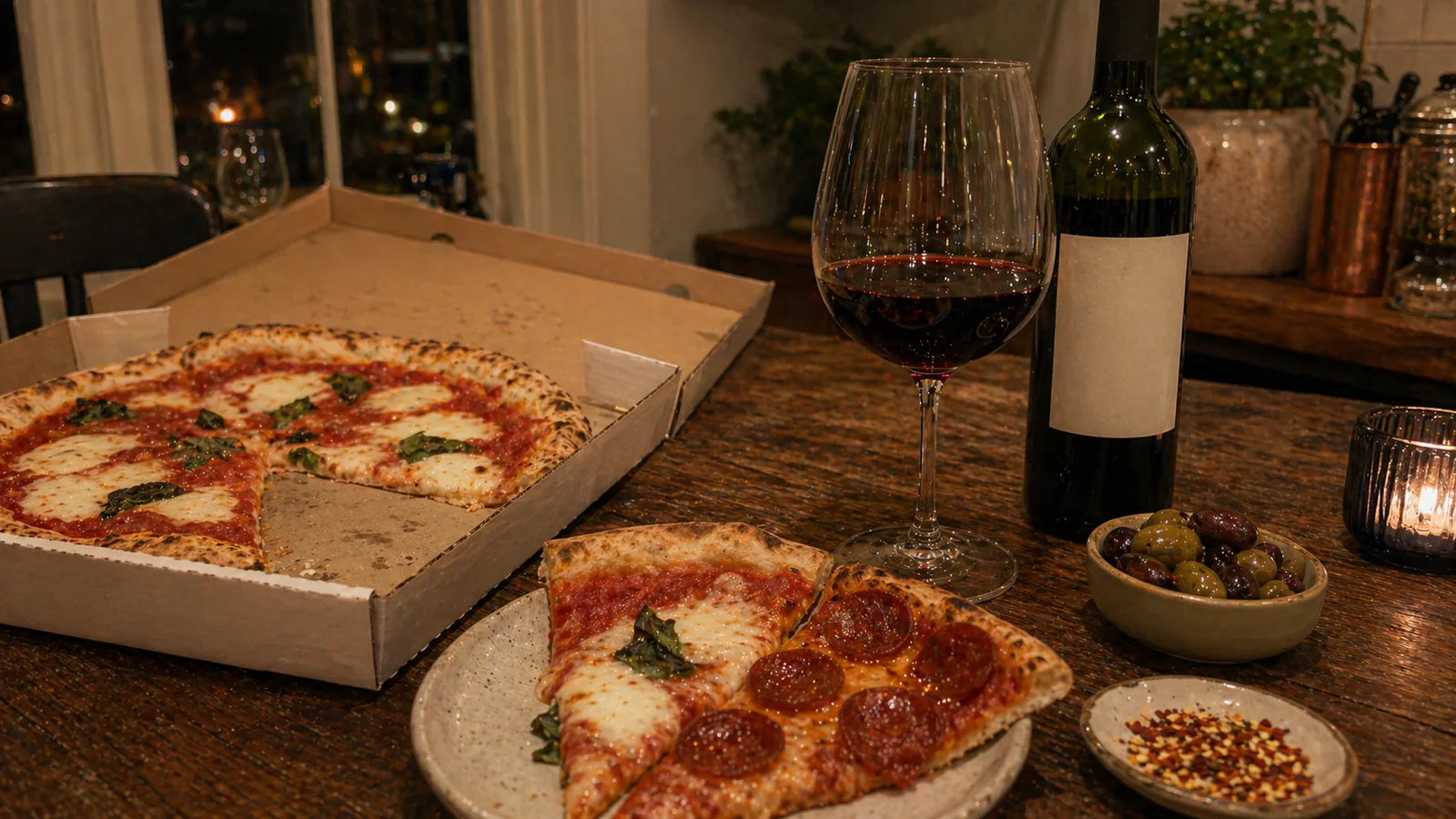
It is Friday night, the box is on the counter, and the bottle in your hand is somehow always a Cabernet Sauvignon you bought for a steak that never happened. The pizza tastes fine. The wine tastes fine. Together they taste a little bit like neither one is trying. There is a much better answer for every kind of pizza you actually order, and almost none of it is “just grab a Chianti.”
By the end of this page you’ll know:
- The one Italian red that handles a six-pizza table without flinching
- Why Cabernet Sauvignon flattens a margherita and the bottle that wakes it back up
- The fizzy red that turns Hawaiian pizza into something you actually want to drink with
- The Chardonnay rule for white pizza that flips everything you have heard about oak
- The off-dry trick that saves jalapenos, pineapple, and any other sweet-spicy topping
- The two-bottle setup that covers a mixed pizza table for six people without anyone noticing
What Wine Goes Best With Pizza?
The best all-purpose wine with pizza is a medium-bodied red with high acidity and soft tannins. That profile mirrors the tomato sauce, lifts the cheese, and refreshes your palate between slices. Sangiovese, Barbera, Montepulciano d’Abruzzo, Chianti, and lighter Grenache all do this job beautifully.
Italian wines are the obvious starting point because they grew up at the same table. The acidity in a Chianti meets the acidity in a tomato sauce as equals, and the savoury, slightly herbal notes complement basil, oregano, and a charred crust. You are pouring centuries of trial and error into the glass.
If you want to skip the analysis and grab one bottle, make it a Chianti Classico or a Barbera d’Alba. Both are friendly, both are widely stocked, and both pair with most pizzas on a delivery menu. Save the bigger reds for steak night.
White wine works too, especially with white pizza, salad pizza, and seafood pizza. Pinot Grigio, Vermentino, Chardonnay, and dry Riesling all earn a place at pizza dinner. Sparkling wine is the cheat code for a mixed table because the bubbles cut through cheese fat the same way a squeeze of lemon does.
| Wine | Food |
|---|---|
| Sangiovese / Chianti | Margherita, marinara, classic tomato pizzas |
| Barbera | Margherita, mushroom, sausage, pepperoni |
| Zinfandel | Pepperoni, meat lovers, BBQ chicken |
| Lambrusco | Hawaiian, prosciutto, salami, mortadella |
| Chardonnay | White pizza, four-cheese, mushroom and truffle |
| Pinot Grigio | Margherita, white pizza, salad pizza |
| Off-dry Riesling | Hawaiian, jalapeno, BBQ chicken, buffalo chicken |
| Dry rosé | Margherita, prosciutto, vegetable pizza |
What Wine Pairs With Margherita and Other Tomato Pizzas?
Margherita pizza is mozzarella, tomato, basil, and a charred crust. Three of those four ingredients want acidity in the glass, which is why Italian reds keep showing up in this answer.
Sangiovese is the textbook match. A young Chianti or a Chianti Classico has the bright cherry fruit, dried herbs, and grippy acidity to mirror the sauce and lift the cheese. Sangiovese di Romagna and Brunello di Montalcino are the upgrades when you feel like spoiling the pizza.
Barbera is the friendlier alternative. It carries less tannin than Sangiovese, more juicy red fruit, and the same vivid acidity. Barbera d’Alba and Barbera d’Asti both pair beautifully with margherita, marinara, and any tomato-based classic preparation. If a friend at the table dislikes “drying” reds, this is the one to pour.
Montepulciano d’Abruzzo and a good entry-level Chianti are the safe-and-cheap moves. Both deliver dark cherry, soft tannins, and enough lift to handle the tomato sauce without overpowering the basil. Sangiovese, Barbera, and Montepulciano are the three Italian reds you should keep on the rack if pizza shows up at your house more than twice a month.
For white-wine drinkers, dry rosé is the easiest answer. A Provence rosé or a Sangiovese rosato has enough red fruit to handle tomato and enough freshness to keep mozzarella feeling light. Pinot Grigio and Vermentino also work, especially if the pizza is heavy on basil or fresh tomato.
What Wine Goes With Pepperoni and Spicy Pizza?
Pepperoni asks for fruit. The spice, the salt, and the rendered fat all need a wine that pushes back with juicy red or black fruit instead of more savoury intensity. Zinfandel is the obvious move and the right one nine times out of ten.
A California Zinfandel from Lodi or Sonoma brings ripe blackberry, a touch of pepper, and enough body to stand up to greasy slices without bullying them. Primitivo from Puglia is the Italian cousin that does similar work for less money. Both have the soft tannins and high alcohol that meat lovers pizza tends to ask for.
Sangiovese still works if you prefer something lighter. A Chianti Classico Riserva has the structure to meet pepperoni grease, and the bright acidity scrubs the salt off your palate between bites. Barbera, Montepulciano, and a young Cabernet Franc are also excellent options for spicy pepperoni pizza.
Syrah and Shiraz are the bigger swing. The peppery, smoky character of a cool-climate Syrah from the Northern Rhône or a Barossa Shiraz lines up with the spice in pepperoni, especially if the pie has chili oil or hot honey on top. Keep an eye on tannins because too much grip can make the cheese taste rubbery.
If the pizza is genuinely hot (jalapeno, calabrian chili, fresh chili flakes), pivot to off-dry Riesling. A Spätlese or Kabinett Riesling from the Mosel has the residual sugar to round off the heat and the acidity to handle the tomato. It is the same trick that works with spicy curries and Thai food.
What Wine Goes With White Pizza?
White pizza skips the tomato sauce, leans on cream, garlic, ricotta, mozzarella, and sometimes mushrooms or truffle oil. The wine needs body to meet the cream and freshness to lift the cheese. That is Chardonnay’s lane.
A lightly oaked Chardonnay from Burgundy, Sonoma, or Margaret River works beautifully with a four-cheese white pizza, a ricotta and spinach pie, or a mushroom and fontina slice. The wine offers apple, lemon, and a touch of cream that mirrors the sauce and stops the dish from feeling heavy. Heavy oak smothers the cheese, so favour restraint.
Chablis is the upgrade if you want crisper structure. The lean Chardonnay character delivers citrus, mineral edge, and acidity that suits a delicate cheese pizza without losing the body the dish demands. Chablis with white pizza and mushrooms is one of those quiet weeknight pairings that makes you wonder why you ever ordered red.
Pinot Grigio is the lighter alternative. A good northern Italian Pinot Grigio brings pear, citrus, and a clean snap that pairs well with a simple cheese pizza or a white pizza with arugula on top. Vermentino and Albarino do the same job with a little more personality and a faint salty edge.
For red-wine drinkers stuck on having a glass of red, choose Pinot Noir. The low tannins keep the cheese feeling soft instead of squeaky, and the cherry fruit lifts mushroom and truffle white pizzas beautifully. Skip Cabernet Sauvignon and Syrah here because the tannins fight the dairy.
What Wine Goes With Meat Lover’s, Sausage, and BBQ Chicken Pizza?
Meat lover’s pizza is the test case for “bring out the bigger red.” Sausage, pepperoni, bacon, ham, ground beef, and meatballs all add fat, salt, and savoury richness. The wine needs body, fruit, and enough acidity to keep the slice from feeling like a brick.
Zinfandel is the headline match for a meat lovers pizza. The jammy red and black fruit, the soft tannin, and the higher alcohol all line up with the toppings. Primitivo, GSM blends from the Rhône or Australia, and a Châteauneuf-du-Pape are the upgrades when the table is big enough to justify them.
Sausage pizza shines with peppery reds. Syrah, Shiraz, Pinotage from South Africa, and Malbec from Mendoza all bring the smoky, savoury character that fennel sausage and Italian sausage ask for. A Sangiovese with a little more weight (Chianti Classico Riserva, Vino Nobile di Montepulciano) still works if you want to stay Italian.
BBQ chicken pizza is a different animal. The sweet, smoky sauce competes with anything bone-dry and tannic, so Malbec, Zinfandel, Touriga Nacional, and a juicy Grenache or GSM blend are smarter picks. If you prefer white, an off-dry Riesling or a fruit-forward Gewurztraminer handles the sauce without fighting the chicken.
Sangiovese deserves one more mention here because it is the universal donor of pizza wine. A good Chianti Classico can handle pepperoni, sausage, mushroom, and meat lovers’ pizza in the same dinner without picking a fight with any of them. If the table is split, this is the bottle that keeps the peace.
| Wine | Food |
|---|---|
| Zinfandel / Primitivo | Pepperoni, meat lovers, sausage |
| Syrah / Shiraz | Sausage, pepperoni, hot honey |
| Malbec | BBQ chicken, smoked meats, brisket pizza |
| GSM blend | Meat lovers, sausage, mushroom and meat |
| Chianti Classico Riserva | Pepperoni, sausage, mixed meats |
| Pinotage | Sausage, smoked meats, charred crust |
What Wine Goes With Veggie, Mushroom, and Salad Pizza?
Vegetable pizza is the category most people overthink. The trick is to follow the dominant vegetable. Mushroom pizza wants earth and fruit. Salad pizza wants crisp acidity. Roasted pepper and onion pizza wants a fruity red. The crust and cheese stay constant; the topping decides the wine.
Mushroom pizza is Pinot Noir’s home turf. The earthy, savoury character of Pinot Noir mirrors the mushrooms, and the low tannin keeps the cheese feeling soft. A Burgundy, an Oregon Pinot, or a Marlborough Pinot Noir all work. Barbera, light Grenache, and a chilled Cabernet Franc are the alternatives.
Salad pizza or arugula pizza wants a crisp white. A Sauvignon Blanc, Grüner Veltliner, Vermentino, or Albarino brings the citrus and herbal notes that complement vegetables instead of fighting them. The wine acidity balances the lemon, olive oil, and shaved Parmigiano on top.
Roasted vegetable pizza (peppers, onions, eggplant, zucchini) wants a fruity red with bright acidity. A Sangiovese, Barbera, Grenache, or a juicy dry rosé all pair well with caramelised vegetables and a tomato base. Skip the heavy oaked reds because they bury the vegetables.
Pesto pizza is its own category. The basil, garlic, pine nut, and Parmigiano combination wants a Vermentino, a young Sauvignon Blanc, or a Provence rosé. The herbal acidity lines up with the pesto, and the wine stays bright enough to handle the cheese.
What Wine Goes With Hawaiian, Anchovy, and Dessert Pizza?
Hawaiian pizza is the divisive one, but the wine match is not. Lambrusco. The lightly fizzy, dry-to-off-dry Italian red has the bubbles to scrub the cheese, the acidity to handle the tomato, and the touch of sweetness that finally gets along with pineapple. Pour it cold and the room stops arguing.
Off-dry Riesling is the second answer. A Spätlese Riesling from the Mosel handles ham, pineapple, and cheese as one combination instead of three problems. Zinfandel works too because the jammy fruit meets pineapple on equal terms.
Anchovy pizza needs sharp white wine with mineral edge. Albarino, Vermentino, Assyrtiko from Santorini, and bone-dry Riesling all cut through the salt and umami. A dry Provence rosé is a smart third option. Avoid big oaky whites and tannic reds because both make the anchovies taste fishy.
Dessert pizza (Nutella, fruit, ricotta, honey) calls for sweet wine. Moscato d’Asti is the easy match because the lightly sweet bubbles complement chocolate, fruit, and ricotta without being heavy. A late-harvest Riesling, a Sauternes, or a sweet Lambrusco Rosato all work depending on what is on top.
What Are the Pizza Wine Pairings That Always Clash?
There are only a handful of combinations that consistently make pizza night worse. Knowing them is faster than memorising the right answer for every pie.
Big oaky Cabernet Sauvignon with margherita. The tannins fight the cheese, the oak buries the basil, and the fruit gets crushed by the tomato. Save your serious Cab for the steak.
Heavy buttery Chardonnay with classic tomato pizzas. Oak and butter clash with tomato acidity and turn the cheese gluey. If you want Chardonnay with pizza, choose Chablis or an unoaked style and pair it with a white pizza instead.
Bone-dry whites with spicy pizza. Jalapeno, calabrian chili, and hot honey all amplify the alcohol burn in a dry Sauvignon Blanc or a high-octane Chardonnay. Switch to off-dry Riesling and the heat instantly feels rounder.
Tannic young Barolo or Brunello with delicate white pizza. The wine is built for braised meat and aged cheese, not for ricotta and mozzarella. The cheese turns squeaky and the wine tastes like leather.
Pinot Grigio with meat lovers. The wine is too thin to meet the toppings. The fat dominates the glass and the wine disappears. Reach for a Zinfandel, Syrah, or Chianti Classico instead.
For a mixed pizza table, open one bottle of Chianti Classico or Barbera and one bottle of Pinot Grigio or off-dry Riesling. Two wines, six pizzas, no clashes. That is the whole game. The same sauce-first thinking carries over to the pasta wine pairing guide.
Frequently Asked Questions
What is the best wine to pair with pizza?
A medium-bodied Italian red with bright acidity is the best wine pizza pairing for most occasions. Sangiovese (Chianti, Brunello), Barbera, and Montepulciano d’Abruzzo all pair well with margherita, pepperoni, mushroom, and most classic pizzas. For white pizza or seafood pizza, choose Chardonnay or Pinot Grigio. For Hawaiian or BBQ chicken pizza, reach for Lambrusco or off-dry Riesling.
What wine goes with pepperoni pizza?
Zinfandel is the best wine with pepperoni pizza. The jammy fruit, soft tannins, and higher alcohol stand up to the salt, spice, and grease. Primitivo, Syrah, Sangiovese, and a juicy GSM blend are also excellent pepperoni pizza wine pairings. Skip very tannic reds like young Cabernet Sauvignon because they fight the cheese.
What wine goes with margherita pizza?
Sangiovese is the classic margherita pizza wine. A Chianti, Chianti Classico, or Brunello di Montalcino has the acidity to mirror the tomato, the savoury character to complement basil, and enough cherry fruit to lift the mozzarella. Barbera, Montepulciano d’Abruzzo, dry rosé, and Pinot Grigio also pair beautifully with margherita pizza.
What wine goes with white pizza?
Chardonnay is the best white pizza wine pairing because the body matches the cream and the acidity lifts the cheese. Choose a lightly oaked Chardonnay from Burgundy, Sonoma, or Margaret River, or an unoaked Chablis for crisper structure. Pinot Grigio, Vermentino, and a soft Pinot Noir are smart alternatives. Avoid heavy oaked whites and tannic reds with white pizza.
What wine goes with Hawaiian pizza?
Lambrusco is the best Hawaiian pizza wine. The fizzy, slightly sweet Italian red has the bubbles to cut cheese fat, the acidity to handle tomato, and enough sweetness to complement pineapple and ham. Off-dry Riesling and Zinfandel also pair well with Hawaiian pizza because the fruit-forward character meets the pineapple on equal terms.
What wine goes with BBQ chicken pizza?
Malbec is the safest BBQ chicken pizza wine because the plummy fruit complements smoky barbecue sauce. Zinfandel, GSM blends, Touriga Nacional, and off-dry Riesling are also strong choices. The sweet glaze on a BBQ chicken pizza fights bone-dry, tannic reds, so favour fruit-forward styles with soft tannins or a touch of residual sugar.
Can you drink white wine with pizza?
Yes, white wine is excellent with pizza, especially white pizza, salad pizza, seafood pizza, and any pie heavy on cheese or fresh herbs. Pinot Grigio, Chardonnay, Sauvignon Blanc, Vermentino, and dry Riesling all pair well with the right pizza. Sparkling wine is the smartest choice for a mixed pizza table because the bubbles and acidity reset your palate between slices.
Pizza wine pairing gets easier the moment you stop hunting for one universal bottle. Match the dominant flavour, respect the sauce, and keep acidity in the glass. For the quick version across steak, chicken, seafood, cheese, and more, use the full wine pairing chart.
Keep Reading
Sangiovese: Italy's Most Important Red Grape
Sangiovese is the soul of Tuscany and the backbone of Chianti and Brunello. Here's what it tastes like, where to find it, and what to eat with it.
Zinfandel Wine: Taste, Regions, Pairings, Price Guide
What Zinfandel actually tastes like, why it's bigger than most reds, the difference from White Zin, and the food it pairs with. A plain-English Zin guide.
Pasta Wine Pairing: What To Pour With Every Sauce
The best wine with pasta by sauce, from tomato and bolognese to creamy carbonara, pesto, seafood pasta, and baked lasagna.