
Claire Bennett
Wine Editor16 min read
Wine and Cheese Pairing: 9 Matches That Never Miss
The classic wine and cheese pairings that actually work, the ones that clash, and how to handle a six-cheese board with two bottles.
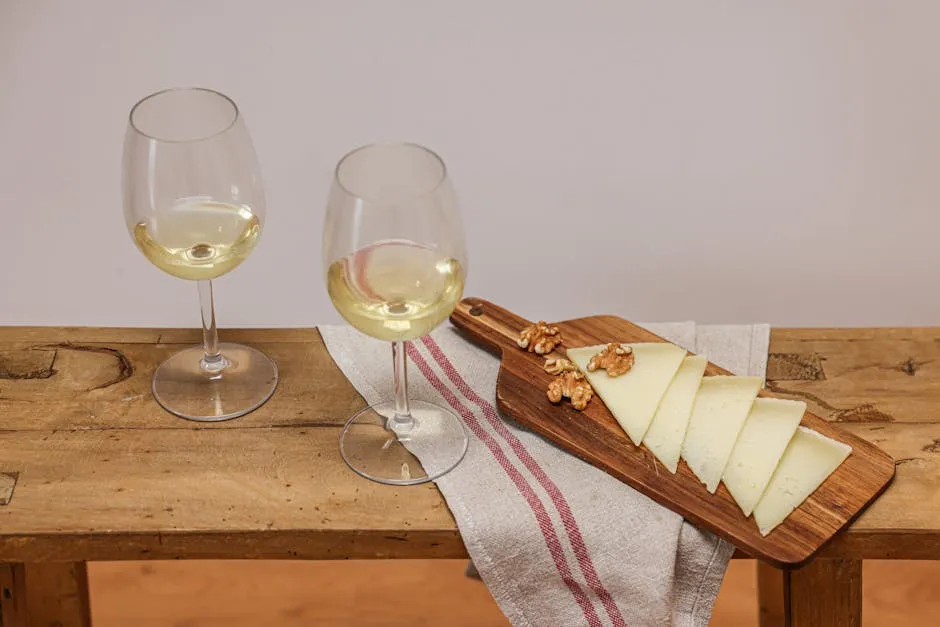
Wine and cheese is one of those pairings everyone says they know about, and most of the advice out there is either uselessly vague (“pair red with aged cheese”) or so prescriptive it’s paralysing (“only Sancerre with chevre, and only on a Tuesday when Mercury is in retrograde”). Neither is much help when guests are arriving in 20 minutes and you’re staring at a half-built board on the bench. The truth is there are about nine classic wine and cheese pairings that almost never miss, a small handful of clashes worth dodging, and one cheat code that lets you stop worrying about the rest. Here’s all of it, in the order you’ll actually use it.
By the end of this page you’ll know:
- The one cheat-code wine that handles almost every cheese on a board (it’s not a red, and it’s not the obvious white either)
- Why “red wine goes with cheese” is the most repeated piece of bad advice in food, and the three cheeses where it does work
- The two-bottle setup that covers a six-cheese board without anyone noticing you didn’t open a third
- The dessert wine that turns a wedge of Roquefort into the moment of the night
- The regional shortcut that takes the guesswork out of every pairing decision in under ten seconds
- Why off-dry Riesling beats every red on the rack with the funkiest, smelliest washed-rind cheeses
Try it
Find Your Match
Pick a wine, get the four cheeses it loves. Or flip it: pick a cheese, get the wines that meet it best.
Reds · Burgundy · Oregon
Pinot Noir
The diplomat. Slips between cheeses without ever raising its voice.
- Body
- ●●●○○
- Intensity
- ●●●○○
- Serve
- 55-60°F
Tasting notes. Cherry, forest floor, soft tannins
- My top pick
Alpine · Jura
Comté (24mo)
"Silky Pinot meets long-aged Comté’s brown-butter depth. Quiet perfection."
Brown butter, toasted nut, pineapple
★★★★★96/100 - 2nd pick
Alpine · Switzerland
Gruyère
"Earthy Pinot answers Gruyère’s broth. Alpine in a glass."
Brothy, hazelnut, savory crystals
★★★★★92/100 - 3rd pick
Washed-rind · Burgundy
Époisses
"Burgundy’s grape meets Burgundy’s cheese. They were raised together."
Pungent, meaty, washed in Marc
★★★★★90/100 - 4th pick
Aged goat · California
Humboldt Fog
"Forest-floor Pinot meets Humboldt’s ash and lemon. A woodland walk."
Ash line, lemon, mushroom
★★★★★88/100
Build a board around Pinot Noir. Add cheeses from the list above.
Your board
A board for Pinot Noir
Sommelier tip. Serve cheeses 30 minutes from the fridge, mildest to strongest. Open the wine 20 minutes before pouring.
What’s the One Rule That Always Works?
High-acid wines pair with nearly any cheese. That’s the cheat code. If you remember nothing else from this page, remember that.
Acidity does three jobs at once. It cuts through fat, it lifts salt, and it refreshes your palate between bites so the next mouthful tastes as good as the first. That’s why Champagne handles everything from triple-cream Brie to aged Cheddar without breaking stride. It’s why Sauvignon Blanc is the Swiss Army knife of cheese wines. And it’s why a bone-dry Riesling can manage cheeses that turn every red on the rack into mouthwash.
When you’re standing in the bottle shop staring down a cheese platter, reach for something acidic. You’ll rarely go wrong.
Why Does Red Wine So Often Clash With Cheese?
You’ve heard it a hundred times. Red wine goes with cheese. It gets repeated at dinner parties, printed on restaurant menus, and parroted by people who’ve clearly never tested it side by side. For most cheeses, it’s terrible advice.
Here’s what’s happening on your tongue. Tannins (the dry, grippy compounds in red wine that come from grape skins, seeds, and oak) bind to fat and protein. With a soft, fatty cheese like Brie or Camembert, those tannins have nothing pleasant to grab and they end up tasting harsh and bitter. Meanwhile the cheese drags out the wine’s most metallic, astringent notes. Both end up worse than they would have been alone. Pour a glass of Cabernet Sauvignon, bite into a piece of triple-cream Brie, and you’ll taste the problem in real time.
The three exceptions to the tannin rule. Aged hard cheeses can handle bigger reds. Parmigiano-Reggiano, aged Manchego, aged Cheddar, vintage Gouda. They’re low in moisture, high in salt, and packed with umami compounds that soften the perception of tannin. So if you’re set on a serious red at your cheese night, build the board around the hard stuff and the pairing snaps into focus. The Cabernet Sauvignon and aged Cheddar pairing is the headline example: try them together once and the rule writes itself.
What Wine Goes With Soft Cheeses Like Brie, Camembert, and Havarti?
Bubbles and Brie is one of those pairings where the moment you try it, you wonder why anyone serves anything else. The carbonation in Champagne (and any decent Crémant, Cava, or dry sparkling) physically scrubs the fat off your palate, while the acidity pulls the cheese’s flavour forward. Same logic as a squeeze of lemon on a buttery dish.
If sparkling isn’t on the table, an unoaked Chardonnay works hard in its place. Chablis is the standout match here, with bright apple and chalky minerality that flatters the mushroomy notes of a ripe Camembert. A Loire Chenin Blanc does similar work. Pinot Noir is the friendly red option, especially with a riper, runnier Brie where the cheese has developed deeper buttery, earthy notes.
Skip Cabernet Sauvignon, Syrah, Malbec, and anything heavily oaked here. The fat in a soft cheese has nothing to fight tannin with, and you’ll taste the clash on the first bite.
| Wine | Food |
|---|---|
| Champagne / Crémant / Cava | Brie, Camembert, triple-cream |
| Chablis (unoaked Chardonnay) | Brie, Camembert, fresh ricotta |
| Sauvignon Blanc | Fresh mozzarella, burrata, young Camembert |
| Pinot Noir | Ripe runny Brie, mild Camembert |
What About Hard Aged Cheeses Like Parmesan, Pecorino, and Manchego?
This is where the rules flip. Aged hard cheeses have spent months (or years) losing moisture and concentrating salt and umami. That dense, savoury intensity is exactly what big reds need to round off their tannins.
Aged Manchego with Tempranillo (a Rioja in particular) is one of the great regional pairings. The wine’s leather and dried-cherry notes echo the nutty caramel of the sheep’s milk cheese, and there’s enough body in both to meet in the middle. Parmigiano-Reggiano with a Barolo or Barbaresco hits the same way: weighty, savoury, properly serious. Pecorino Romano, sharper and saltier than Parmigiano, wants something with a bit more fruit, like a younger Chianti or a Sangiovese from Montalcino.
Aged Cheddar opens up even more options. Cabernet Sauvignon and aged Cheddar is the textbook example of why the tannin rule has exceptions: the cheese has the salt and protein to absorb the tannin, and what you get is two big flavours meeting on level terms. Tawny Port works if you want something nuttier and sweeter. Amontillado Sherry with any aged hard cheese is a sleeper hit most people never try, because the oxidative, nutty character of the wine mirrors the cheese exactly.
Aged Gouda deserves its own paragraph. The really old stuff (12 months and up, sometimes called “Old Amsterdam” or “Beemster XO”) develops crunchy little crystals of tyrosine and a butterscotch sweetness that pairs with almost anything dark and brooding. Cabernet Sauvignon, Syrah, vintage Port, even a sweet Pedro Ximénez Sherry. Younger Gouda is a different cheese entirely: softer, milder, more flexible, and happiest with a Pinot Gris or a fruity Rosé.
Which Wine Pairs Best With Blue Cheeses Like Stilton and Roquefort?
Sweet wine. Almost always. The funkier the blue, the sweeter the wine should be.
The classic move is Port with Stilton. Specifically a good Tawny Port, where the nutty oxidation softens the blue’s sharp salty bite. Ruby Port works too if that’s what’s open. The combination is built into British food culture for a reason, and one taste tells you why. For a buyer’s shortlist, see the best port wine picks.
The other legendary pairing is Sauternes with Roquefort. This is one of those food-and-wine moments that makes you stop talking mid-sentence. The honeyed, apricot-laced sweetness of Sauternes wraps around the salt and pungency of the cheese, and what you get is something neither component could deliver alone. If you’ve never tried it, it’s worth the price of one good wedge of Roquefort and one half-bottle of Sauternes to find out what the fuss is about.
For Gorgonzola, the sweet-and-creamy “dolce” style plays nicely with off-dry Riesling or a Moscato d’Asti. The harder, sharper “piccante” style of Gorgonzola wants something with a bit more weight, like a late-harvest Riesling, a Vin Santo, or even an aged Recioto.
How Do I Pair Wine With Goat Cheese and Fresh Cheeses?
Sauvignon Blanc with goat cheese, full stop. Specifically a Loire-style Sauvignon Blanc (Sancerre, Pouilly-Fumé, or any decent Touraine) with a fresh chèvre. This is one of the oldest regional pairings in France, and it works because both wine and cheese share the same bright, grassy, citrus-edged personality. They feel like they were made for each other because, in a sense, they were.
If Sauvignon isn’t your thing, dry Riesling, Grüner Veltliner, and Albariño all do similar work. Aged goat cheeses (the harder, more crumbly styles) can handle a Champagne or a light Pinot Noir without losing the plot.
Fresh cheeses like burrata, fresh mozzarella, and ricotta are best treated like the goat cheese family. Crisp whites with bright acidity. A young Vermentino with burrata is one of the easiest summer pairings ever invented, and a chilled Pinot Noir Rosé works if you want a little colour in the glass.
The one thing to avoid is anything oaked or rich. A big buttery Chardonnay smothers goat cheese’s clean tang and the whole pairing goes flat.
What About Washed-Rind and Pungent Cheeses Like Munster and Taleggio?
This is the category where most pairing advice falls apart. Washed-rind cheeses (Munster, Taleggio, Époisses, Limburger, and the truly pungent end of the spectrum) come with funk, ammonia, and a salty edge that overpowers most table wines. The trick is residual sugar.
Off-dry Riesling is the answer almost every time. The wine’s natural acidity carries through the funk, the touch of sugar tames the saltiness, and the floral notes give your palate something to hang onto besides the rind’s barnyard intensity. A Spätlese or Kabinett Riesling from the Mosel handles Munster better than anything else in the bottle shop, and it does the same trick with Taleggio and Époisses.
Gewürztraminer from Alsace is the other regional move. It has the same off-dry character as Riesling with bigger lychee and rose-petal aromatics that complement the rind rather than compete with it. The classic Alsatian pairing is Gewürztraminer with Munster, and if you’ve never tried it on a snowy night with a hunk of dark bread, put it on the list.
Avoid bone-dry whites and anything tannic here. The funk eats them alive.
| Wine | Food |
|---|---|
| Tempranillo (Rioja) | Manchego, aged sheep's milk cheeses |
| Cabernet Sauvignon | Aged Cheddar, aged Gouda, Parmigiano-Reggiano |
| Barolo / Barbaresco | Parmigiano-Reggiano, aged Pecorino, Castelmagno |
| Tawny Port | Stilton, aged Cheddar, vintage Gouda |
| Sauternes | Roquefort, blue cheeses, foie-gras-style spreads |
| Off-dry Riesling | Munster, Taleggio, Époisses, Limburger, Havarti |
| Gewürztraminer (Alsace) | Munster, mild washed-rinds, Havarti |
| Amontillado Sherry | Manchego, aged Cheddar, Parmigiano |
| Moscato d'Asti | Gorgonzola dolce, fresh ricotta, mild blues |
What Are the Classic Wine and Cheese Pairings By Region?
If you’re ever stuck, pair wine and cheese from the same place. They grew up together. Same soil, same climate, same food culture, same dinner tables for generations. The classic wine and cheese pairings that survived survived because they worked.
A short list of regional matches that always deliver:
- Loire Valley: Sancerre or Muscadet with local goat cheeses (Crottin de Chavignol, Selles-sur-Cher)
- Burgundy: White Burgundy with Comté; red Burgundy with Époisses or a young Brie de Meaux
- Piedmont: Barolo or Barbaresco with Parmigiano-Reggiano, aged Taleggio, or Castelmagno
- Tuscany: Chianti or Sangiovese with Pecorino Toscano
- Rioja: Tempranillo with Manchego
- Champagne: Champagne with Chaource or Brie de Meaux
- Northern Rhône: Syrah with mature Comté or aged Gruyère
- Alsace: Gewürztraminer or Pinot Gris with Munster
- Sauternes / Bordeaux: Sauternes with Roquefort
How Do I Build a Cheese Board With Just Two Wines?
Trying to find the perfect wine for every individual cheese is a trap. You’ll open six bottles, stress for an hour, and your guests will mostly drink whatever’s nearest. Here’s the actual playbook for a six-cheese board with one or two wines.
- Anchor with a high-acid white. Champagne, Chablis, Sauvignon Blanc, or a dry Riesling. This single bottle handles 80% of what you put on the board. If you only open one wine all night, this is the one.
- Add a lighter red as your second option. Pinot Noir or Beaujolais covers anyone who wants red, and plays well with most cheeses without the tannin problem. Skip the Cabernet Sauvignon unless your board is built around aged hard cheeses.
- Build the board around the wines, not the other way around. Lean toward soft cheeses (Brie, Camembert, fresh chèvre), one or two semi-firm cheeses (Havarti, Gouda, Comté), and one or two harder aged options (Manchego, Pecorino, aged Cheddar). That spread plays nicely with both bottles.
- Add a sweet wine if you’re going big. A half-bottle of Sauternes or Tawny Port for the blue-cheese course turns a casual board into a finishing flourish people will talk about. Honestly worth the extra bottle.
That’s the whole game. Two wines, maybe three with a sweet finisher, covering an entire board for four to eight people. Your guests will think you spent an hour planning. You spent ten minutes.
What Are the Most Common Wine and Cheese Pairing Mistakes?
Even experienced hosts walk into the same handful of traps. Here are the ones worth dodging.
- Pouring Cabernet Sauvignon with Brie. The single most common mistake at any cheese night. Save your Cabernet for aged Cheddar, aged Gouda, or Parmigiano, and reach for sparkling, Chablis, or Pinot Noir with the soft stuff.
- Serving cheese cold. Cheese flavour comes alive at room temperature. Pull everything out of the fridge an hour before serving. A fridge-cold Camembert tastes like rubber.
- Over-oaking the white. A heavy, buttery Chardonnay smothers most cheeses, especially anything fresh, goaty, or delicate. Reach for unoaked styles like Chablis, Mâcon, or a clean New World Chardonnay if you want a richer white.
- Skipping the bread. Bread or a neutral cracker is the palate reset between bites. Without it, even great pairings start to blur.
- Matching strong with strong. People assume a powerful blue needs a powerful red. The opposite is true. Power-on-power crashes; sweetness-on-power harmonises.
- Forgetting the water glass. Sparkling water between pours keeps your palate honest. Cheese is salty, wine is concentrated, and you’ll taste both better with a clean mouth.
Get those six wrong and even the best wine and cheese pairings stop working. Get them right and even average bottles start to shine. For the broader pairing playbook across steak, seafood, pasta, and chocolate, head to the wine pairing chart.
Frequently Asked Questions
Does white wine actually go with cheese better than red?
For most cheeses, yes. Acidity is the friendliest partner for fat and salt, and white wines tend to have higher acidity and lower tannin than reds. Champagne, Sauvignon Blanc, and dry Riesling are safer bets across a mixed board than any Cabernet Sauvignon or Syrah. Big reds shine with aged hard cheeses like Parmigiano, aged Cheddar, and aged Manchego, and almost nothing else.
What’s the best red wine for cheese if I don’t want a white?
Pinot Noir, every time. It has the lowest tannin of any major red, enough body to feel like a real red wine, and it gets along with Brie, Camembert, Comté, mild Cheddar, and most semi-firm cheeses without a fight. Beaujolais (Gamay) is a close second and usually cheaper. If you’re committed to a bigger red like Cabernet Sauvignon or Syrah, build the board around aged hard cheeses (Parmigiano-Reggiano, aged Manchego, aged Cheddar) so the salt and umami can absorb the tannin.
What wine goes with charcuterie and cheese boards?
Charcuterie loves the same wines as cheese: high-acid whites, lighter reds, and dry Rosé. A crisp Italian white like Vermentino or a young Chianti are both Italian-style classics. For richer cured meats (jamón, prosciutto, saucisson), Tempranillo or a chilled Beaujolais work nicely. Sparkling wine is the safest blanket choice if your board mixes meat and cheese, because the bubbles and acidity reset your palate between bites.
Can I serve sparkling wine with cheese?
Yes, and you probably should more often. Sparkling wine (Champagne, Cava, Crémant, dry Prosecco) is one of the most cheese-friendly categories on the planet. The combination of acidity and carbonation cuts through fat better than almost anything else, which is why bubbles and Brie is such a classic. It also handles pungent washed-rind cheeses like Munster, hard aged cheeses like Parmigiano, and even some blues without much trouble.
Why does cheese make red wine taste bitter?
The tannins in red wine bind to the fat and protein in cheese, especially soft, fatty cheeses like Brie or Camembert. The result is a bitter, drying sensation in your mouth and a metallic edge to the wine. Aged hard cheeses don’t cause this problem because they have higher salt and umami, which soften the perception of tannin. Match a red to the right cheese (aged, hard, salty) and the bitterness disappears.
What’s a foolproof wine for any cheese board?
Champagne, or any quality dry sparkling wine. If you had to walk into a cheese shop, grab one bottle, and trust it to work with whatever was on the board, this is the answer. The acidity handles fat, the bubbles refresh your palate, and it pairs from the freshest goat cheese to the funkiest Roquefort without breaking stride. A non-vintage Champagne or a good Crémant will outperform almost any other single bottle you could choose.
Can you serve dessert wine with cheese?
Yes, and the famous classic wine and cheese pairings live in this category. Sauternes with Roquefort, Tawny Port with Stilton, late-harvest Riesling with Gorgonzola piccante, Moscato d’Asti with Gorgonzola dolce. The salt-and-sugar balance is the magic. Treat dessert wines as the dedicated blue-cheese course at the end of a board and you’ll never look back.
What’s the safest bottle to bring as a cheese-board gift?
A non-vintage Champagne or a quality Crémant. It works with whatever’s on the board, it feels like a thoughtful gift rather than a default red, and it sets the tone for the night. If sparkling feels off, a chilled Sancerre, a dry Riesling, or a good Beaujolais cru like Fleurie are all hard to get wrong. Avoid bringing a big oaky red unless you already know your host is serving aged hard cheeses.
Keep Reading
Wine Pairing Chart: What To Pour With Dinner
A practical wine pairing chart for steak, chicken, seafood, pasta, pizza, cheese, chocolate, spicy food, and holiday dinners.
Best Port Wine: 13 Bottles Worth Buying
13 best port wines across every style: Ruby, Tawny, LBV, and White. One confident pick for every budget, occasion, and taste.
Sauvignon Blanc: Taste, Regions, and Food Pairing
Sauvignon Blanc is the loud, zesty white that smells like cut grass and tropical fruit. How it tastes, where it grows, what to eat with it.