Claire Bennett
Wine Editor15 min read
Seafood Wine Pairing: What To Pour With Fish
The best wines with seafood by style, from oysters and Muscadet to lobster and Chardonnay, salmon and Pinot Noir, and spicy shrimp.
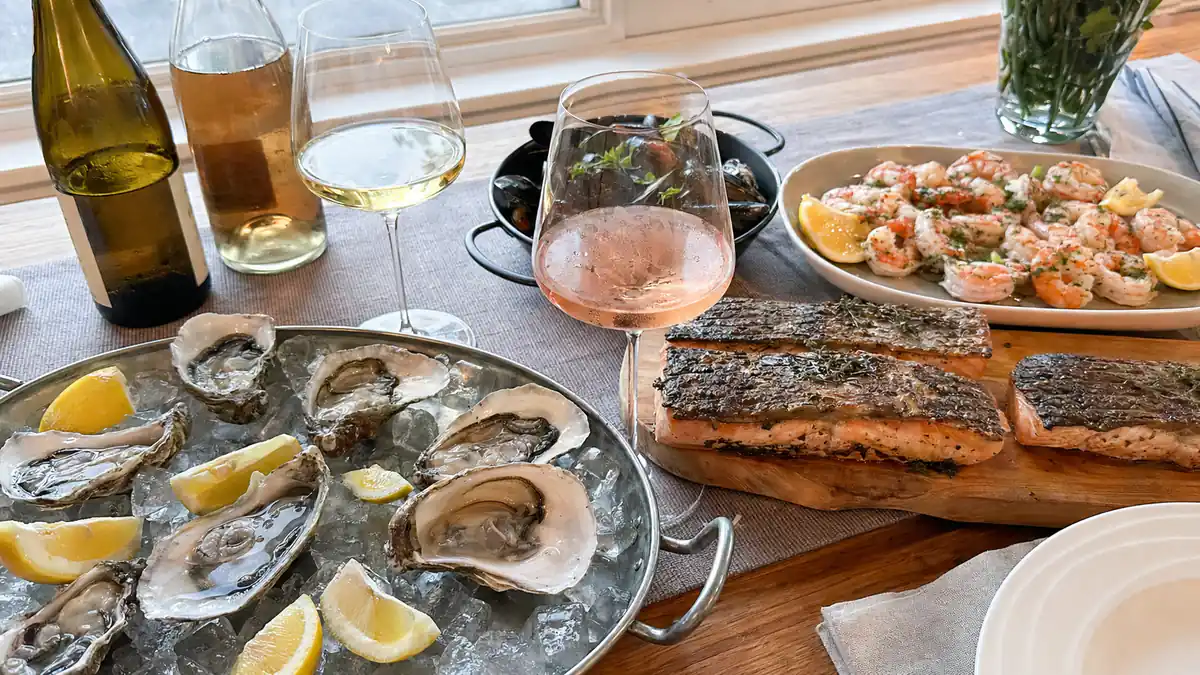
Seafood is where wine pairing advice gets weirdly dramatic. You order oysters, grill salmon, make shrimp tacos, or steam mussels, and suddenly someone at the table acts like one wrong bottle will ruin the evening. Relax. Match the wine to the seafood’s weight, richness, cooking method, and sauce.
By the end of this page you’ll know:
- The shellfish bottle that makes oysters taste colder, cleaner, and more expensive
- Why lobster can love Chardonnay while lemony white fish usually does better with Sauvignon Blanc
- The red wine lane that works for salmon, tuna, and grilled fish without making the plate taste metallic
- When shrimp wants Albarino, when it wants Riesling, and when sparkling wine is the smarter move
- The sauce test that tells you whether to pour crisp white wine, richer Chardonnay, dry rose, or Pinot Noir
- How to cover a mixed seafood dinner with two bottles instead of turning the table into a guessing game
What Is the Best Wine With Seafood?
The best all-purpose wine with seafood is a crisp, dry white wine with bright acidity. Sauvignon Blanc, Albarino, Muscadet, Vermentino, Pinot Grigio, Gruner Veltliner, and Chablis all work because they keep the food fresh and do not bury delicate flavors.
Sparkling wine is the safest special-occasion choice. Champagne, Cava, Cremant, and dry Prosecco are brilliant with oysters, fried seafood, crab cakes, calamari, and salty shellfish. Bubbles and acidity cut richness, clean up salt, and make the next bite taste sharp again.
Richer seafood needs richer wine. Lobster, crab, scallops in butter, and creamy seafood pasta can handle Chardonnay, white Burgundy, Chenin Blanc, or Champagne. The wine needs enough body for butter or cream, plus enough freshness to stop the dish from feeling heavy.
Salmon and tuna are the bridge to red wine. They have more flavor and oil than white fish, so dry rose, Pinot Noir, Gamay, lighter Grenache, and even some chilled reds can work beautifully. Keep tannin low and the serving temperature cool.
| Wine | Food |
|---|---|
| Muscadet | Oysters, clams, mussels, raw shellfish |
| Chablis | Crab, scallops, white fish, seafood pasta |
| Albarino | Shrimp, prawns, fish tacos, ceviche |
| Sauvignon Blanc | Lemony fish, herb sauces, ceviche, goat cheese salads |
| Chardonnay | Lobster, crab, scallops in butter, creamy seafood |
| Pinot Noir | Salmon, tuna, grilled fish, mushroom-topped seafood |
| Sparkling wine | Oysters, fried seafood, calamari, crab cakes |
| Riesling | Spicy shrimp, Thai seafood curry, sweet chili prawns |
How Do I Choose Wine for Different Seafood Preparations?
Start with weight. Delicate fish like sole, cod, flounder, snapper, and halibut usually wants light white wines. Pinot Grigio, Vermentino, Albarino, Sauvignon Blanc, Gruner Veltliner, and unoaked Chardonnay keep the pairing clean.
Then look at richness. Butter, cream, crab, lobster, scallops, and richer sauces need more body. Chardonnay, white Burgundy, Champagne, Chenin Blanc, and richer Pinot Gris have enough texture to complement the dish.
Finally, check the sauce. Lemon, vinegar, capers, tomatoes, green herbs, and raw preparations need high acidity. Coconut curry, chili, ginger, and sweet glaze need fruit, refreshment, and sometimes sweetness. Char, smoke, mushrooms, and soy can open the door to dry rose or light red wine.
The biggest mistake is choosing by color alone. White wines are usually easier with seafood, but a lean white can feel thin beside lobster in butter. A low-tannin red can be better than Sauvignon Blanc with grilled salmon, especially when the fish has mushrooms, lentils, soy, or charred edges.
What Wine Goes Well With Oysters, Clams, and Mussels?
Oysters want wine that feels cold, clean, and sharp. Muscadet is the classic because it is lean, salty, and refreshing, with no heavy fruit getting in the way. Chablis, Champagne, Cava, and Albarino are also excellent options.
Raw oysters and Champagne get all the attention, but Cava and Cremant can be just as useful. The bubbles lift the brine, the acidity cuts through the texture, and the wine makes a tray of oysters feel like a very good decision.
Clams and mussels usually follow the sauce. Steamed clams with garlic and parsley love Muscadet, Vermentino, or Sauvignon Blanc. Mussels in white wine broth love the same bottle you cooked with, as long as it is dry, crisp, and good enough to drink.
For mussels in tomato, saffron, or chorizo broth, choose something with more fruit. Dry rose, Albarino, Vermentino, and light Grenache all work better than a very austere white. The sauce has more weight, so the wine needs more personality.
What Wine Goes With White Fish?
White fish needs freshness first. Cod, sole, snapper, sea bass, flounder, and halibut all have delicate flavors, so heavy oak, high alcohol, and big tannin can make the food taste smaller. Keep the wine light, crisp, and clean.
Pinot Grigio is the simple choice for mild fish with lemon, herbs, or olive oil. Good northern Italian Pinot Grigio has pear, citrus, and enough acidity to make grilled or baked fish taste brighter. Bland Pinot Grigio disappears, so choose one with real snap.
Sauvignon Blanc works when the dish has citrus, capers, salsa verde, dill, parsley, or green vegetables. It is especially good with ceviche, fish tacos with lime, and any seafood dish that makes your mouth water before the first bite. For a deeper read on the grape, see the Sauvignon Blanc guide.
Vermentino and Albarino are the coastal overachievers. Vermentino brings lemon, herbs, and a faint salty edge. Albarino brings citrus, peach, and zip. Both pair excellently with grilled fish, prawns, fried white fish, and seafood salads.
Chablis is the more polished option. It is Chardonnay, but lean, mineral, and usually unoaked. That profile makes it ideal with white fish, crab, scallops, oysters, and simple seafood dishes where butter is present but not the whole point.
What Wine Goes With Lobster, Crab, and Scallops?
Lobster needs wine with body. The meat is sweet, rich, and often served with butter, so very lean white wines can taste sharp beside it. Chardonnay is the classic answer, especially white Burgundy, Sonoma Chardonnay with restraint, or a clean Australian Chardonnay.
Lobster Chardonnay pairings work best when the wine has texture and acidity together. Too much oak can make the seafood taste sweet and the wine taste like vanilla. A balanced Chardonnay gives you lemon, apple, creaminess, and enough lift for the butter.
Crab is slightly more delicate but still sweet. Chablis, Champagne, Chenin Blanc, Albarino, and white Burgundy are all strong choices. If the crab is in cakes, dip, pasta, or a rich sauce, sparkling wine becomes even more useful because it cuts through oil and cream.
Scallops sit between delicate and rich. Seared scallops love Chablis, Champagne, white Burgundy, Vermentino, or Chenin Blanc. If there is brown butter, corn, bacon, or cauliflower puree on the plate, Chardonnay gets even better.
| Wine | Food |
|---|---|
| White Burgundy | Lobster, scallops, crab, halibut in butter |
| Champagne | Crab cakes, lobster rolls, fried scallops |
| Chenin Blanc | Crab, scallops, seafood pie, creamy sauces |
| Chablis | Crab legs, seared scallops, white fish |
| Richer Pinot Gris | Lobster, crab pasta, seafood risotto |
What Wine Goes With Shrimp and Prawns?
Shrimp is all about seasoning. Plain grilled shrimp, garlic prawns, shrimp cocktail, shrimp tacos, and spicy shrimp curry are different dishes, even when the seafood is the same.
For grilled shrimp with lemon, garlic, and olive oil, pour Albarino, Vermentino, Sauvignon Blanc, or dry rose. These wines have enough acidity for citrus and enough fruit for the sweet snap of shrimp.
For shrimp cocktail, choose Sauvignon Blanc, Albarino, sparkling wine, or dry Riesling. Cocktail sauce brings tomato, horseradish, sweetness, and heat, so the wine needs brightness rather than weight.
For fried shrimp or calamari, sparkling wine is the best move. Cava, Champagne, Cremant, dry Prosecco, and sparkling rose cut through crunch and oil. A crisp white wine works too, but bubbles make the pairing feel cleaner.
For spicy shrimp, open off-dry Riesling, Gewurztraminer, sparkling rose, or a juicy dry rose. Sweetness matters when chili is involved. It does not need to taste sugary, but a little residual sugar can calm heat better than another dry white.
What Wine Goes With Salmon, Tuna, and Oily Fish?
Salmon is the seafood that makes people question the white-wine rule. It has enough oil, flavor, and texture to handle Pinot Noir, especially when grilled, roasted, or served with mushrooms. Keep the Pinot light, fresh, and slightly cool.
Dry rose is the most flexible salmon wine. It works with grilled salmon, herb salmon, salmon salad, and salmon with tomato, dill, or aioli. It has white-wine freshness with enough red-fruit flavor for the fish’s richness.
Chardonnay works with richer salmon preparations, especially when there is butter, cream, corn, or roasted vegetables. Sauvignon Blanc works better when the salmon has lemon, herbs, capers, or yogurt sauce. The sauce still gets the deciding vote.
Tuna can handle more red wine than most fish. Seared tuna works with Pinot Noir, Gamay, Grenache, dry rose, or even a lighter Merlot if the dish has soy, sesame, mushrooms, or pepper. Avoid heavy tannin because it can make tuna taste metallic.
Oily fish like mackerel, sardines, and trout need acidity. Albarino, dry rose, sparkling wine, Vermentino, and Txakoli are all useful because they cut oil without fighting the flavor. If the fish is smoked, choose something with more fruit, like dry rose or a chilled light red.
Can Red Wine Work With Seafood?
Red wine works with seafood when the red is light, fresh, and low in tannin. Pinot Noir is the safest because it brings cherry fruit, acidity, and earthy notes without the heavy grip that clashes with fish. Gamay, light Grenache, and some chilled Cabernet Franc can also work.
Use red wine with richer, darker, or more savory seafood preparations. Salmon, tuna, grilled swordfish, octopus, mushroom-topped fish, tomato-based seafood stew, and soy-glazed dishes all have enough flavor for a lighter red.
Skip big young Cabernet Sauvignon, Barolo, Petite Sirah, and very tannic Syrah with most seafood. Tannin and fish oil can create a metallic edge. It is one of the few pairing problems people can actually taste immediately.
Merlot has a narrow lane. A soft, cooler-climate Merlot can work with tuna, grilled salmon, or tomato-based seafood stew, especially if the dish has herbs or mushrooms. Keep it moderate in oak and alcohol.
What Wine Goes With Spicy, Fried, or Saucy Seafood?
Spicy seafood needs lower alcohol, high acidity, and sometimes sweetness. Riesling is the reliable answer for Thai seafood curry, spicy shrimp, sweet chili prawns, and ginger-heavy dishes. Gewurztraminer works when the dish has fragrant spice, coconut, or lychee-like sweetness.
Fried seafood wants sparkling wine. Fish and chips, fried shrimp, calamari, crab cakes, and seafood fritters all taste better when bubbles clear out the salt and oil. Champagne is excellent, but Cava and Cremant give you the same useful structure for less money.
Tomato-based seafood dishes want acidity and fruit. Cioppino, seafood marinara, mussels in tomato broth, and fish stew can work with dry rose, Vermentino, Barbera, Sangiovese, or a lighter Grenache. Avoid reds that taste drying before you even take a bite.
Creamy seafood dishes want body and lift. Chardonnay, Chenin Blanc, white Burgundy, Champagne, and richer Pinot Gris all suit seafood chowder, creamy seafood pasta, scallop risotto, and lobster sauce. The wine should feel generous but still clean.
For coconut curry or sweet-spicy sauces, dry wine can taste a little harsh. Off-dry Riesling, Gewurztraminer, demi-sec sparkling wine, or fruit-forward rose can make the heat feel rounder. This is one of the few places where a touch of sweetness earns its keep.
What Are the Best Seafood Wine Pairings by Dish?
Use this chart when you know the dish and need the bottle quickly. It gives the safest first choice, plus the reason the combination works.
| Wine | Food |
|---|---|
| Muscadet | Oysters |
| Chablis | Crab or scallops |
| Chardonnay | Lobster with butter |
| Albarino | Grilled shrimp or prawns |
| Sauvignon Blanc | Lemon fish or ceviche |
| Pinot Noir | Grilled salmon or tuna |
| Sparkling wine | Fried seafood |
| Off-dry Riesling | Spicy shrimp or seafood curry |
| Dry rose | Fish tacos, salmon, mixed seafood |
If the table feels close but the dish has a strong sauce, let the sauce decide. Lemon pushes you toward Sauvignon Blanc or Albarino. Butter pushes you toward Chardonnay or Champagne.
Chili pushes you toward Riesling. Grill char pushes you toward rose or Pinot Noir.
For a mixed seafood dinner, open one crisp white and one flexible bottle with more body. Muscadet plus Chardonnay works if the table leans shellfish and lobster. Sauvignon Blanc plus dry rose works if there are tacos, salads, grilled fish, and shrimp. Champagne plus Pinot Noir is the dinner-party version.
What Are the Most Common Seafood Wine Pairing Mistakes?
Using heavy reds with delicate fish. Big tannin can make fish taste metallic and dry. If you want red, start with Pinot Noir, Gamay, or a chilled light Grenache.
Forgetting the sauce. Lemon fish and lobster in butter both count as seafood, but they want different bottles. Acidic sauces need crisp acidity. Rich sauces need body with freshness.
Pouring oaky Chardonnay with everything. Chardonnay can be excellent with lobster, crab, scallops, and creamy seafood. It can feel clumsy beside oysters, ceviche, and very delicate fish.
Serving whites ice-cold. Very cold wine can taste flat beside seafood. Give richer whites like Chardonnay, Chenin Blanc, and white Burgundy a few minutes out of the fridge before pouring.
Ignoring sweetness with spice. Hot shrimp and seafood curry often taste better with Riesling or Gewurztraminer than bone-dry white wine. A little sweetness keeps chili from taking over.
Frequently Asked Questions
What wine goes best with seafood?
Crisp white wine is the safest answer for most seafood. Muscadet, Sauvignon Blanc, Albarino, Pinot Grigio, Vermentino, Gruner Veltliner, and Chablis all work because they bring freshness and acidity. For a buyer’s shortlist of these styles, see the best crisp white wines. For richer seafood like lobster, crab, and scallops, Chardonnay, Champagne, or Chenin Blanc can be better.
Is white wine always best with seafood?
White wine is usually easier with seafood, especially raw shellfish and delicate fish. Red wine can work with salmon, tuna, grilled fish, octopus, and tomato-based seafood dishes when it is light and low in tannin. Pinot Noir, Gamay, and chilled Grenache are the safest red options.
What red wine goes with seafood?
Pinot Noir is the best red wine with seafood because it has low tannin, bright acidity, and enough fruit for richer fish. It works especially well with salmon, tuna, grilled swordfish, and mushroom-topped fish. Gamay, light Grenache, and soft Merlot can work when the dish has tomato, soy, smoke, or char.
What wine goes with lobster?
Chardonnay is the classic wine with lobster, especially when butter is involved. White Burgundy, restrained California Chardonnay, Champagne, and Chenin Blanc also work because they have body and acidity together. If the lobster is in a roll with mayo and fries, sparkling wine is a brilliant choice.
What wine goes with shrimp?
Albarino, Sauvignon Blanc, Vermentino, dry rose, and sparkling wine all work with shrimp. Garlic shrimp likes Albarino or Vermentino, while shrimp cocktail likes Sauvignon Blanc or sparkling wine. Spicy shrimp is better with off-dry Riesling or Gewurztraminer.
What wine goes with salmon?
Pinot Noir, dry rose, Chardonnay, and Sauvignon Blanc all work with salmon. Choose Pinot Noir or rose for grilled or roasted salmon, Chardonnay for richer salmon with butter or cream, and Sauvignon Blanc for lemon, herbs, capers, or yogurt sauce. Keep big tannic reds away from the fish.
What wine goes with oysters?
Muscadet is the classic oyster wine because it is crisp, lean, and slightly salty. Champagne, Cava, Chablis, and Albarino are also excellent with oysters. The key is high acidity and no heavy oak.
What wine goes with spicy seafood?
Off-dry Riesling is the safest wine with spicy seafood because it has acidity and a little sweetness. Gewurztraminer works with fragrant curry, ginger, coconut, and sweet chili sauces. Sparkling rose and fruit-forward dry rose are good options when the dish is spicy and fried.
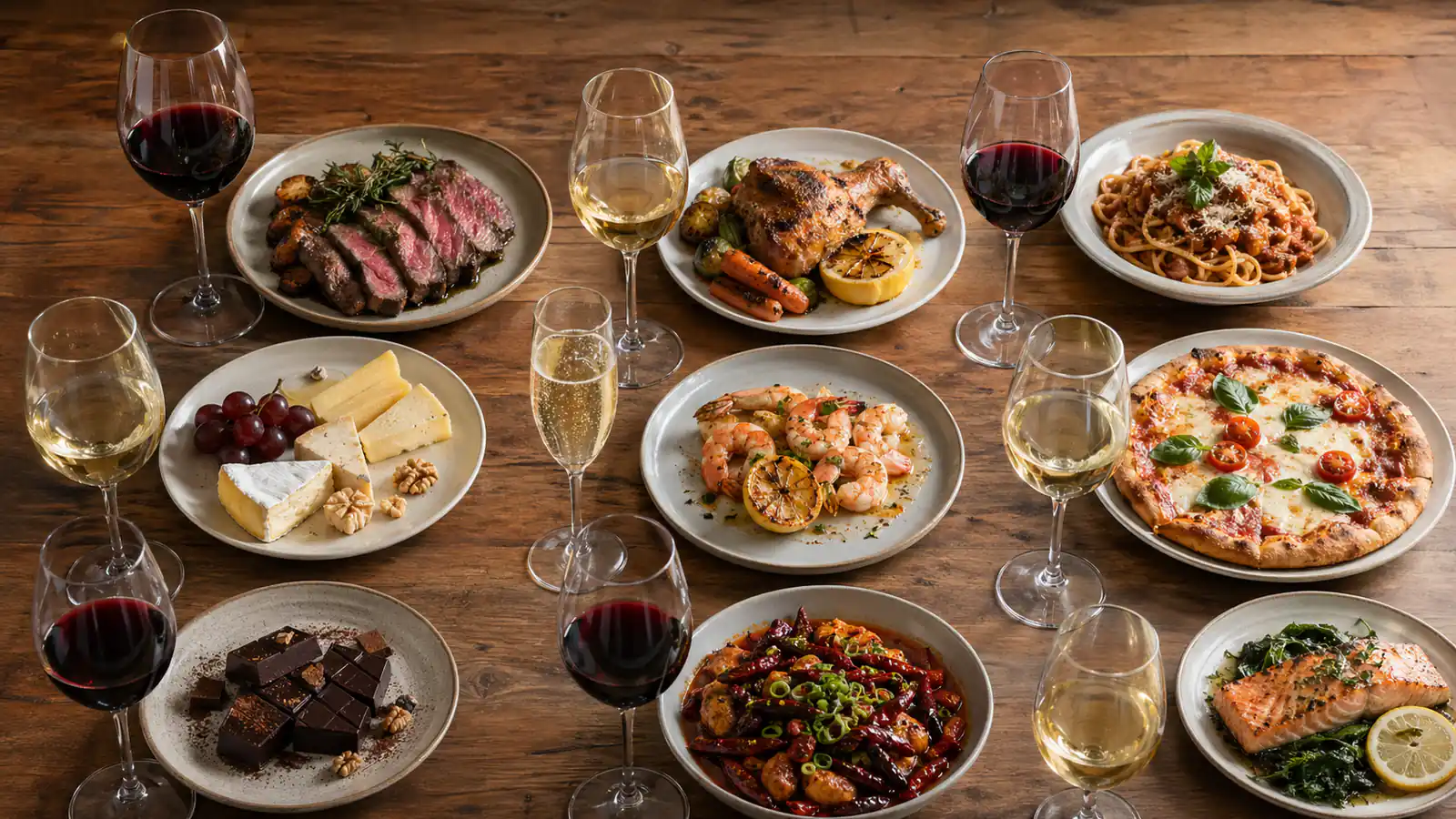
Seafood gets much easier once you stop looking for one universal bottle. Match the weight, respect the sauce, and keep freshness in the glass. For the quick version across steak, chicken, pasta, pizza, cheese, and more, use the full wine pairing chart.
Keep Reading
Sauvignon Blanc: Taste, Regions, and Food Pairing
Sauvignon Blanc is the loud, zesty white that smells like cut grass and tropical fruit. How it tastes, where it grows, what to eat with it.
Sushi Wine Pairing: What to Pour With Every Roll
The best wine with sushi by style, from sashimi and salmon rolls to spicy tuna and tempura, plus the cheat-code bottle for a mixed order.
Wine Pairing Chart: What To Pour With Dinner
A practical wine pairing chart for steak, chicken, seafood, pasta, pizza, cheese, chocolate, spicy food, and holiday dinners.