
Claire Bennett
Wine Editor13 min read
Chocolate Wine Pairing: What Actually Works
Pair wine with dark, milk, and white chocolate without the bitter clash. The sweetness rule, the bottles to grab, and the mistakes to dodge.
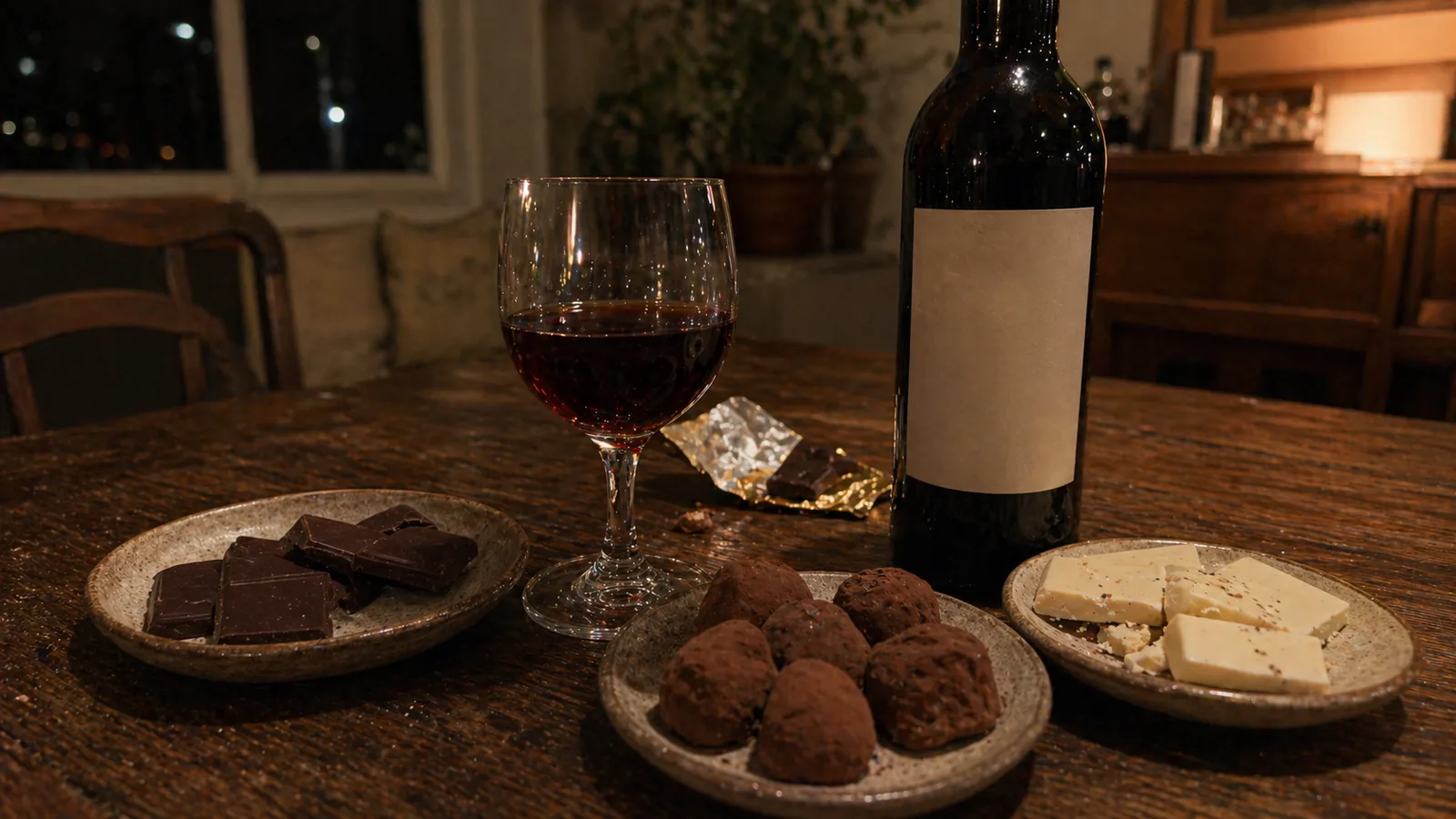
You buy a beautiful bar of 70% dark chocolate, open the big Cabernet you were saving, take a bite and a sip, and your mouth fills with something that tastes like burnt rubber and bitter coffee. You assumed red wine plus chocolate was a safe move because everyone says so. The pairing failed because the chocolate was sweeter and more bitter than the wine, and the tannins had nowhere kind to land. Get the balance right and you stop fighting the bar in your hand.
By the end of this page you’ll know:
- The one rule that decides almost every chocolate and wine pairing in under five seconds
- Why your favourite big Cabernet keeps tasting metallic with dark chocolate, and the two reds that actually work instead
- The sweet pink wine from Piedmont that turns a milk chocolate bar into a dinner-party finisher
- Which wine to pour with white chocolate so it stops disappearing into the glass
- The sneaky pairing for salted caramel truffles that almost nobody thinks of
- How to handle a mixed box of chocolates with a single bottle, no guesswork required
What’s the One Rule For Pairing Wine With Chocolate?
The wine should be at least as sweet as the chocolate. That’s the rule. If you remember nothing else from this page, remember that one line.
When the wine is drier than the chocolate, your brain reads the wine as sour, sharp, and a little bitter. Dry red wine plus a sweet truffle is the textbook example. The sugar in the chocolate strips the fruit out of the wine and leaves the tannin standing alone. Switch to a wine with a touch of residual sugar and the same chocolate suddenly tastes rounder, softer, and more like itself.
The second rule is weight. Light chocolate likes light wine. Dense, dark, high-cocoa chocolate wants something with body, fortified strength, or oxidative depth. A delicate Moscato d’Asti is heaven with white chocolate and lost beside a 90% bar.
What Wine Goes With Dark Chocolate?
Dark chocolate (anything from 60% cocoa upwards) is where most pairings go wrong. The cocoa is bitter, the chocolate is barely sweet, and the texture is dense. You need a wine that brings sweetness, fruit, or fortified weight to the table.
Port is the classic for a reason. A good Late Bottled Vintage or Tawny Port has dried fruit, caramel, and enough sugar to handle 70% chocolate without flinching. Ruby Port works if the chocolate is leaning toward berry and red fruit notes. Tawny Port is the better match when the chocolate is darker, nuttier, or roasted. For a buyer’s shortlist, see the best port wine picks.
Banyuls and Maury, two fortified reds from southern France, were practically invented for dark chocolate. They taste like dried cherries, fig, and cocoa themselves, so they meet the chocolate on its own ground. The full style breakdown lives in the fortified wine guide. If you can find a bottle, try it once and the lesson sticks.
For a dry red that actually works with dark chocolate, look for ripe Zinfandel, Amarone, or a juicy Primitivo. They bring jammy fruit and high alcohol that read as sweet on the palate, even when the wine itself is technically dry. Bold Cabernet Sauvignon and tannic Syrah usually clash with dark chocolate. The tannins double up with the cocoa’s bitterness, and you end up with the burnt rubber problem.
| Wine | Food |
|---|---|
| Tawny Port | 70% dark chocolate, dark chocolate with nuts |
| Ruby Port | Dark chocolate with berries, dark chocolate truffles |
| Banyuls or Maury | 70-85% dark chocolate, ganache, flourless cake |
| Zinfandel | Dark chocolate with spice or pepper |
| Amarone | Very dark chocolate, chocolate-covered dried fruit |
| Late-harvest Zinfandel | Dark chocolate brownies, fudge |
What Wine Pairs Best With Milk Chocolate?
Milk chocolate is sweeter, creamier, and lighter than dark. The sugar level is higher, the cocoa is softer, and the texture is round. Heavy fortified wines can flatten it. You want something fruit-forward with a little sweetness or generous fruit on the finish.
Pinot Noir is the friendliest red for milk chocolate. The cherry and raspberry fruit complements the milk-and-cocoa combination, and the low tannin keeps the pairing from going harsh. A soft Merlot does similar work, especially with milk chocolate that has caramel or hazelnut in the mix.
Brachetto d’Acqui is the secret weapon. It is a lightly sparkling sweet red from Piedmont, low in alcohol, packed with strawberry and rose petal. Pour it cold with a milk chocolate bar and the table will think you spent more on the wine than you did. Lambrusco Dolce works in the same lane.
For something white, off-dry Riesling and Vouvray (Chenin Blanc with residual sugar) handle milk chocolate beautifully. They have the acidity to cut the cream and enough sweetness to match the bar. A young Tawny Port also pairs well, especially with milk chocolate that has nuts, caramel, or toffee. For more dessert-friendly options, see the best sweet wines guide.
The wines to skip with milk chocolate are bone-dry whites and tannic reds. A crisp Sauvignon Blanc tastes thin beside the cream. A young Cabernet Sauvignon turns metallic. The whole pairing falls flat.
| Wine | Food |
|---|---|
| Pinot Noir | Milk chocolate, milk chocolate with hazelnuts |
| Brachetto d'Acqui | Milk chocolate bars, chocolate-covered strawberries |
| Off-dry Riesling | Milk chocolate with caramel or salted nuts |
| Merlot | Milk chocolate with fruit fillings |
| Tawny Port (younger) | Milk chocolate with nuts, toffee, or caramel |
| Lambrusco Dolce | Milk chocolate, chocolate-dipped berries |
What Wine Goes With White Chocolate?
White chocolate is technically not chocolate by the strict definition. It is cocoa butter, sugar, and milk solids, with no cocoa solids at all. That means no bitterness to balance, just sweetness and creaminess. The wine has to bring acidity, sugar, and aromatics that complement vanilla and cream.
Moscato d’Asti is the easy default. The wine is sweet, lightly fizzy, and tastes like peach, orange blossom, and honey. Pour it with a piece of plain white chocolate and the pairing feels like dessert without the plate.
Sauternes and other late-harvest sweet whites work brilliantly. The honeyed apricot of Sauternes, the lychee and rose of late-harvest Gewurztraminer, the citrus marmalade of Sauternes-style Semillon all complement white chocolate without burying it. Late-harvest Riesling is excellent with white chocolate that has fruit fillings, lemon, or berries.
Sparkling wine is the surprise winner. A demi-sec Champagne or a sweeter Prosecco refreshes the palate after each rich, creamy bite. Dry Champagne can taste a little austere beside white chocolate, so look for the words demi-sec, doux, or extra dry on the label.
Avoid most red wines with white chocolate. The fruit and tannin in red wine tend to overpower the delicate vanilla notes, and the pairing rarely lands. The one exception is Brachetto d’Acqui, which is light enough and sweet enough to keep the chocolate centre stage.
What Wine Pairs With Chocolate Cake, Truffles, and Ganache?
Chocolate desserts add a third dimension. The dish is no longer just chocolate. It is chocolate plus butter, cream, sugar, fruit, nuts, or coffee. Each addition shifts the wine choice.
For dense chocolate cake, flourless chocolate torte, or chocolate brownies, reach for a fortified red. Tawny Port, Banyuls, late-harvest Zinfandel, or a Pedro Ximenez Sherry all bring enough sweetness and weight to match the dessert’s richness. PX Sherry tastes like liquid raisins and figs and is one of the most underused chocolate cake wines on the planet.
Chocolate truffles depend on the filling. Plain dark truffles want Banyuls or Tawny Port. Salted caramel truffles love a young Tawny Port or a glass of Madeira. Truffles with raspberry, cherry, or orange love Ruby Port or Brachetto. Truffles with nuts and praline want anything with nutty oxidation, so Tawny Port, Madeira, and Amontillado Sherry all shine.
Ganache pairs the same way as the chocolate it is built from, plus a notch sweeter to handle the cream. A 70% ganache wants Banyuls or LBV Port. A milk chocolate ganache wants Brachetto, off-dry Riesling, or a sweeter Tawny.
Chocolate mousse is light and airy, so the wine can be lighter too. Brachetto d’Acqui, Moscato d’Asti, demi-sec Champagne, and a young Ruby Port all work. Skip anything heavy. The mousse will collapse under it.
Does Red Wine Actually Go With Chocolate?
Sometimes. The bigger and drier the red, the worse it usually pairs with chocolate. The lighter and fruitier the red, the better the chances. The trick is matching the red to the right kind of chocolate, not the other way around.
Pinot Noir works with milk chocolate and lighter desserts because the tannin is low and the fruit is bright. Zinfandel and Primitivo work with dark chocolate because their jammy ripeness reads as sweet on the palate. Amarone works with very dark chocolate because the wine itself tastes a little like dried fruit and cocoa.
Cabernet Sauvignon, young Bordeaux, Nebbiolo, Sangiovese, and tannic Syrah generally clash with chocolate. The tannins are too high, the fruit is too dry, and the cocoa drags out the wine’s most bitter notes. If the bottle you have is one of these, save it for steak and grab a Port for the dessert course.
The middle lane belongs to Merlot, Grenache, GSM blends, and softer Malbec. They can work with milk chocolate, especially if the chocolate has fruit, nuts, or caramel. They struggle with very dark chocolate unless the bar leans roasted, fruity, or spiced.
What Are the Most Common Chocolate Wine Pairing Mistakes?
The same handful of traps catch most people. Avoid these and the pairing rate goes up immediately.
Pouring big dry reds with dark chocolate. Cabernet Sauvignon plus 70% chocolate is the most common chocolate wine pairing mistake at any tasting. The cocoa amplifies the tannin and the chocolate strips the fruit. Switch to Port, Banyuls, or Zinfandel.
Forgetting the sweetness rule. A chocolate that tastes sweeter than your wine will always make the wine taste sour. The wine has to lead on sweetness, every single time. The match between wine sweetness and chocolate sweetness is what creates the perfect pairing.
Pouring dry Champagne with chocolate. A bone-dry brut Champagne can taste flat and tart against a sweet milk chocolate truffle. Reach for demi-sec Champagne, Prosecco, or sparkling Brachetto if bubbles are the goal.
Treating chocolate as one category. Dark, milk, and white chocolate are three different ingredients with different sugar levels, cocoa percentages, and fat structures. A single wine can’t cover all three any better than a single wine can cover oysters and steak.
Serving the wine too cold. Fortified wines like Port, Madeira, and PX Sherry taste flat below 14C. Pull them out of the fridge 15 minutes before serving so the fruit and caramel notes can open up.
Ignoring inclusions. Chocolate with sea salt, chili, hazelnuts, mint, orange, or ginger changes the pairing. Salt sharpens the wine, chili wants residual sugar (Riesling, Brachetto), nuts love nutty oxidation (Tawny Port, Madeira), and mint can fight everything except a sweet sparkling.
Frequently Asked Questions
What is the best wine for chocolate?
Port is the safest single answer for most chocolate, especially dark chocolate and chocolate desserts. Late Bottled Vintage Port, Tawny Port, and Ruby Port all match the sweetness and weight of cocoa-forward bars. For milk chocolate, Pinot Noir or Brachetto d’Acqui are friendlier choices. For white chocolate, Moscato d’Asti or Sauternes complements the cream and vanilla notes better than anything else on the rack.
Does red wine go with chocolate?
Light, fruity reds with low tannin go with chocolate. Pinot Noir works with milk chocolate, Zinfandel and Amarone work with dark chocolate, and Brachetto d’Acqui works with almost any chocolate bar. Big dry reds like Cabernet Sauvignon and tannic Syrah usually clash because the tannin amplifies the cocoa’s bitterness and the chocolate strips the fruit out of the wine.
What wine pairs with dark chocolate?
Dark chocolate pairs best with sweet, fortified, or richly fruited wines. Tawny Port and Ruby Port are the classic answers because they bring sugar, dried fruit, and caramel notes that match roasted cocoa. Banyuls and Maury, two fortified reds from southern France, were practically built for dark chocolate. For a dry red, Zinfandel, Amarone, and Primitivo are the safest because their jammy fruit reads as sweet against the bitter cocoa.
What wine goes with milk chocolate?
Milk chocolate goes well with Pinot Noir, Merlot, off-dry Riesling, and Brachetto d’Acqui. Pinot Noir and Merlot have soft fruit and low tannin that flatter the cream and cocoa. Off-dry Riesling and Brachetto bring sweetness and acidity that cut the richness without overpowering the chocolate. A younger Tawny Port is excellent with milk chocolate that has caramel, nuts, or toffee.
What wine goes with white chocolate?
White chocolate pairs best with sweet, aromatic whites and lightly sparkling wines. Moscato d’Asti is the easiest answer because its peach and honey notes complement the vanilla and cream of white chocolate. Sauternes, late-harvest Riesling, and demi-sec Champagne all work for the same reason. Skip dry red wines with white chocolate; the fruit and tannin tend to bury the delicate flavours.
Can you drink Champagne with chocolate?
Yes, but choose a sweeter style than brut. Demi-sec Champagne, doux Champagne, and sparkling Brachetto handle chocolate better than bone-dry brut, which can taste tart and lean against the sugar. Demi-sec Champagne with white chocolate or milk chocolate is one of the most elegant chocolate wine pairings you can pour, and it works particularly well with creamy desserts like chocolate mousse.
What wine goes with chocolate cake?
Chocolate cake wants a fortified or sweet wine with enough body to match the dessert. Tawny Port and Banyuls are the textbook answers for dark chocolate cake. Pedro Ximenez Sherry tastes like liquid raisins and figs and pairs incredibly well with flourless chocolate torte and dense chocolate brownies. For milk chocolate cake, a younger Tawny Port or a glass of Brachetto d’Acqui keeps the dessert front and centre.
What wine pairs with chocolate truffles?
Truffles depend on the filling. Plain dark chocolate truffles want Banyuls, Maury, or Tawny Port. Salted caramel truffles love Madeira or a young Tawny Port. Fruit-filled truffles (raspberry, cherry, orange) pair beautifully with Ruby Port or Brachetto. Truffles with nuts and praline shine with Madeira, Amontillado Sherry, or any wine with nutty oxidation.
Chocolate gets a lot easier once the sweetness rule clicks. Match the wine’s sugar to the chocolate’s sugar, respect the cocoa percentage, and let the inclusions guide the rest. For the quick version across cheese, steak, seafood, and more, use the full wine pairing chart.
Keep Reading
Best Port Wine: 13 Bottles Worth Buying
13 best port wines across every style: Ruby, Tawny, LBV, and White. One confident pick for every budget, occasion, and taste.
Fortified Wine Guide: Port, Sherry, Madeira
Port, Sherry, Madeira, Marsala, Vermouth: what fortified wine actually is, how each style tastes, how to serve it, and how long it keeps once opened.

Best Sweet Wines: 12 Bottles Across Every Sweet Style
12 best sweet wines across Riesling, Moscato, sweet reds, Port, Sauternes, Tokaji, and Ice Wine. Every bottle sweetness-rated and verified live.