Claire Bennett
Wine Editor12 min read
Types of White Wine: Crisp to Rich Guide
From crisp Sauvignon Blanc to buttery Chardonnay, here's how the main types of white wine taste, where they come from, and what to eat with them.
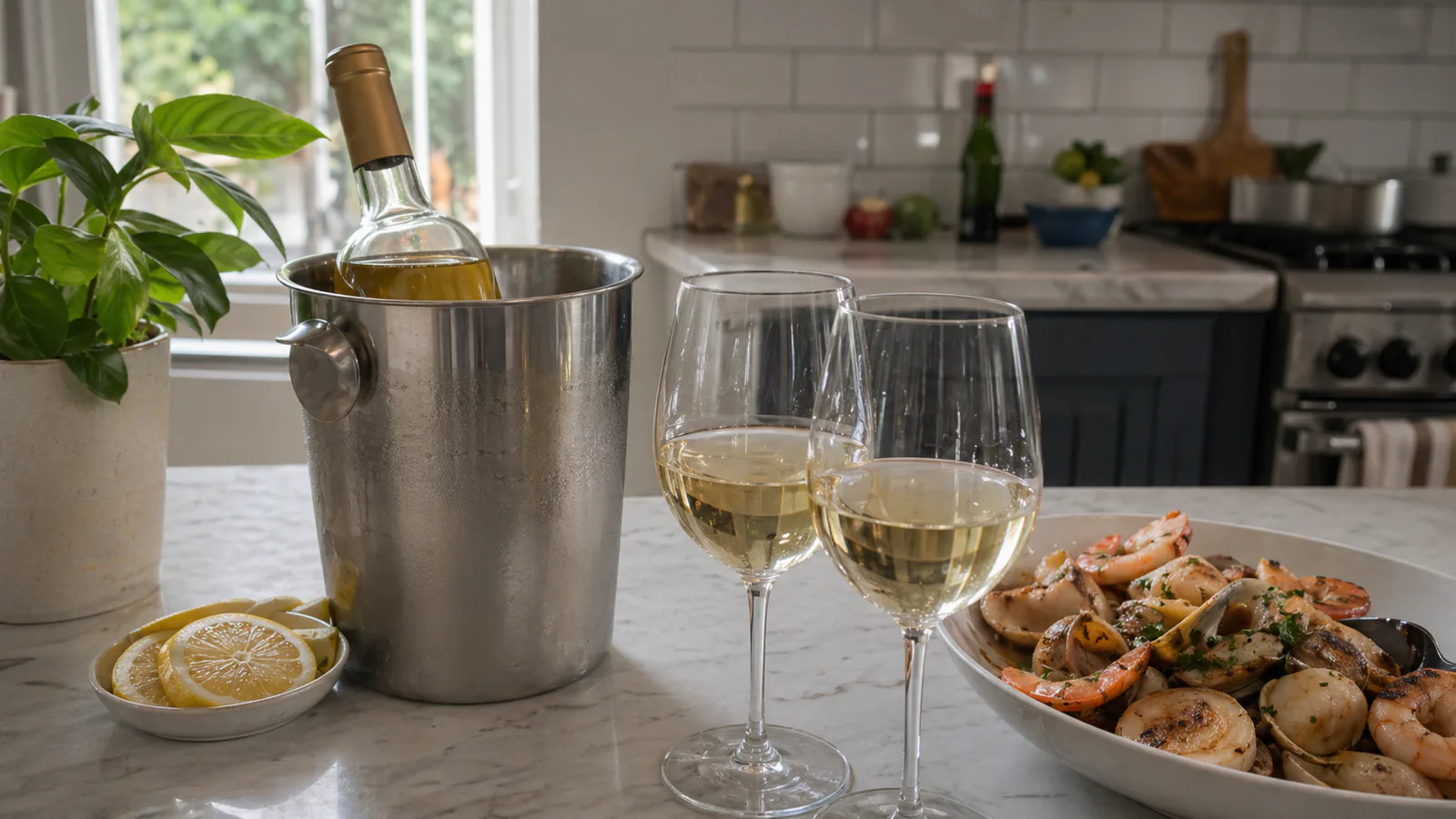
A crisp Sauvignon Blanc and a rich, oaked Chardonnay are both white wines. So are a steely Chablis, a floral Viognier, and a bone-dry Pinot Gris. Each one is built for different occasions, different food, different temperatures, and different palates. This guide sorts the full range of white wine styles by body weight so you know exactly what you’re ordering before you do.
By the end of this page you’ll know:
- Why the same grape (Pinot Gris vs. Pinot Grigio) can taste completely different depending on where it was grown
- The one question that tells you whether a Chardonnay will taste like butter or lemon
- Which white wine has almost no sweetness but always gets mistaken for one
- The overlooked Spanish grape that outperforms its price tag at almost every level
- How to match a white wine to a meal in under ten seconds, without memorising a chart
What Are the Main Types of White Wine?
White wine is made from green, gold, or occasionally pink-skinned grapes. During winemaking, the grape skins are removed early (unlike red wine), so the colour stays pale yellow to deep gold. The flavour and body of the finished wine depend on the grape variety, where it was grown, and how the winemaker handled it.
The cleanest way to sort white wine styles is by body: how heavy or light the wine feels in your mouth, the way milk feels heavier than water. That scale runs from light and crisp, through medium-bodied, to full-bodied and oaked. Every variety has a home on that scale, and once you know it, you can predict how a wine will taste before you pour it.
What Does a Light, Crisp White Wine Taste Like?
Light, crisp whites are high in acidity, low in body, and dry. They feel clean and refreshing, the kind of wine you reach for on a warm afternoon or with something delicate on the plate. The flavours tend to run toward citrus, green apple, and fresh herbs.
Sauvignon Blanc
Sauvignon Blanc is the benchmark for crisp white wine. It’s bone dry, high in acidity, and packed with bright flavours: grapefruit, lime zest, cut grass, and sometimes a bracing mineral edge. Loire Valley Sauvignon (Sancerre, Pouilly-Fumé) is leaner and more mineral. New Zealand Sauvignon Blanc, especially from Marlborough, is louder: tropical fruit, passionfruit, gooseberry.
It’s the go-to white for green vegetables, fresh goat’s cheese, and lighter fish dishes. If someone tells you they “don’t like oaky wine,” hand them a Sauvignon Blanc.
Best regions: Loire Valley (France), Marlborough (New Zealand), Bordeaux (France) Food match: Asparagus, grilled fish, fresh goat’s cheese, Thai green curry
Pinot Grigio / Pinot Gris
Same grape, two very different wines. Italian Pinot Grigio (from the northeast: Veneto, Friuli, Alto Adige) is light, clean, and dry. It has a delicate pear and green apple character, barely-there body, and a crisp finish. It’s not trying to be complex. It’s trying to be easy to drink with a plate of grilled seafood, and it succeeds.
Alsatian Pinot Gris from France is a different animal entirely. It’s fuller, richer, and can range from off-dry to sweet. The same grape, a colder climate, and a different winemaking philosophy produce a wine that feels nothing like its Italian cousin.
Best regions: Friuli, Veneto, Alto Adige (Italy); Alsace (France); Oregon (USA) Food match: Grilled seafood, light pasta, pork dishes (especially for Alsatian Pinot Gris)
Albariño
Albariño comes from Galicia in northwestern Spain (and Vinho Verde country in Portugal, where it’s called Alvarinho). It’s one of the most food-friendly whites on this list: bright peach and apricot flavours, a pronounced saline, almost ocean-like edge, and snappy acidity that cuts through anything oily.
It’s still underpriced for what it delivers. A good bottle from Rías Baixas usually runs $15–$25 and drinks like something twice the price.
Best regions: Rías Baixas (Spain), Vinho Verde (Portugal) Food match: Oysters, grilled prawns, clams, lobster, lighter fish
What Are the Best Medium-Bodied White Wines?
Medium-bodied whites sit between the zesty end and the rich, oaky end of the scale. They have more texture and weight than Pinot Grigio but less fat than an oaked Chardonnay. The flavour profiles tend toward stone fruit, citrus blossom, and sometimes a faint sweetness even in technically dry wines.
Riesling
Riesling is one of the most misunderstood white wine grapes. Many people assume it’s sweet because they’ve had a cheap, sugary version. In reality, Riesling runs the full spectrum from searingly dry to lusciously sweet, and the best dry Rieslings are extraordinary.
German Riesling from the Mosel has a signature style: high acidity, lower alcohol, delicate honey and slate flavours, and a lightness that feels almost effervescent. Alsatian Riesling is drier and more structured. Australian Riesling (especially from Clare Valley and Eden Valley) is lean and limey with a petrol character that develops beautifully with age.
If the label says “Kabinett” (Germany) or “Trocken,” it’s dry. “Spätlese” without “Trocken” means slightly sweet.
Best regions: Mosel and Rhine (Germany), Alsace (France), Clare Valley (Australia) Food match: Smoked salmon, Vietnamese food, Thai dishes, aged hard cheeses, pork belly
Gewürztraminer
Gewürztraminer smells like a perfume counter: rose petals, lychee, ginger, orange blossom. It’s one of the most aromatic white wine grapes and one of the most distinctive. The style tends toward off-dry to moderately sweet, with lower acidity and a rich, almost oily texture.
It’s made most famously in Alsace, where the wines can be surprisingly full-bodied. It’s one of the few whites that holds up to strongly spiced food.
Best regions: Alsace (France), Alto Adige (Italy), Germany Food match: Spiced dishes, Moroccan food, soft washed-rind cheeses, foie gras
Chenin Blanc
Chenin Blanc is the shape-shifter of white wine. In the Loire Valley it becomes Vouvray (off-dry to sweet) and Savennières (dry and mineral). In South Africa it’s the country’s most planted grape and produces everything from everyday dry whites to serious age-worthy wines. In both cases, you get high acidity, honey and quince flavours, and a waxy texture.
A good South African Chenin Blanc at $15 is one of the best-value whites on the shelf. Look for bottles from Swartland or Stellenbosch.
Best regions: Loire Valley (France), Swartland and Stellenbosch (South Africa) Food match: Roast chicken, soft cheeses, apple-based dishes, light curries
What Are the Fuller-Bodied White Wines Worth Knowing?
Full-bodied whites have weight, texture, and often a richness that makes them feel almost substantial. Some of that comes from the grape itself; some from winemaking choices like oak ageing or malolactic fermentation. These are the whites that pair with heartier dishes and age well in a cellar.
Chardonnay
Chardonnay is the world’s most planted white grape and the most polarising. The reason people either love it or “don’t drink Chardonnay” usually comes down to whether it was oaked.
Unoaked Chardonnay is bright, clean, and citrus-forward, closer in feel to Sauvignon Blanc than people expect. Oaked Chardonnay (Burgundy, California, Margaret River) picks up vanilla, toast, and a creamy, buttery texture from barrel fermentation and ageing. The best white Burgundies (Puligny-Montrachet, Meursault) are oaked Chardonnay, and they’re some of the most complex white wines in the world.
If you see “unoaked” on the label, expect something crisp. If you see “barrel fermented” or “aged in French oak,” expect richness.
Best regions: Burgundy (France), Napa Valley and Sonoma (USA), Margaret River (Australia), Chablis (France) for unoaked Food match: Roast chicken, lobster, creamy pasta, oaked versions with butter-sauced fish or pork
Viognier
Viognier is a thick-skinned, low-acid grape from the northern Rhône (Condrieu is the benchmark appellation). The flavour is full-on: peach, apricot, jasmine, orange blossom, and a lush, almost viscous texture. It’s one of the few whites that genuinely benefits from decanting for 15 minutes before you pour.
It rarely has the acidity to feel refreshing on a hot day. Think of it as an autumn evening wine, matched with something with fat in it.
Best regions: Northern Rhône (France), McLaren Vale (Australia), California Food match: Pork belly, roast duck, cream-based sauces, spiced dishes
Sémillon
Sémillon is the unsung grape of white Bordeaux. On its own it can be waxy, low-acid, and a bit flat when young. But aged (particularly in Hunter Valley, Australia, where it’s bottled young and left to develop), it transforms into something exceptional: toasty, honeyed, lanolin-textured, and complex in a way that surprises anyone who tries it for the first time.
Dry Sémillon from Bordeaux blended with Sauvignon Blanc (Bordeaux Blanc) is crisp and grassy. Hunter Valley Sémillon aged five to fifteen years is one of Australia’s great wine styles.
Best regions: Bordeaux (France), Hunter Valley (Australia) Food match: Aged Hunter: grilled fish, light cream sauces. Bordeaux Blanc: oysters, grilled vegetables
What’s the Difference Between Oaked and Unoaked White Wine?
Oak ageing changes white wine in two ways: it adds flavour (vanilla, toast, spice, a creamy or buttery texture), and it softens acidity. Both effects come from the wine spending time in wooden barrels, either during fermentation or afterwards.
Unoaked white wine is fermented in stainless steel tanks. The result is cleaner, more fruit-forward, and higher in acidity. Chardonnay and Chenin Blanc are the two varieties most often made in both styles, which makes them the easiest to compare side by side.
The practical test: if a white wine feels round, creamy, and has a buttery or toasty edge, it’s almost certainly been oaked. If it tastes sharply of fruit and citrus with nothing softening it, it’s unoaked or stainless-fermented.
Neither style is better. They suit different occasions and different dishes. The error is ordering an oaked Chardonnay to go with delicate grilled fish (too heavy) or an unoaked Pinot Grigio with a cream-sauced chicken (too light).
How Do I Pair White Wine With Food?
The quickest pairing shortcut: match the weight of the wine to the weight of the dish. Light wines with light food. Full-bodied wines with richer food. Acidity in the wine cuts through fat and oil in the food, which is why a zippy Sauvignon Blanc works so well with deep-fried fish.
A few rules that hold almost universally:
Crisp whites (Sauvignon Blanc, Pinot Grigio, Albariño): Seafood, shellfish, lighter salads, goat’s cheese, herb-forward dishes, Thai food, Vietnamese food.
Medium whites (Riesling, Chenin Blanc, Gewürztraminer): Smoked fish, spiced dishes, roast pork, soft cheeses. Off-dry styles (slightly sweet Riesling, Vouvray) are brilliant with anything that has a chilli heat because the residual sugar tempers the burn.
Full whites (oaked Chardonnay, Viognier, Sémillon): Roast chicken, lobster, cream sauces, richer fish like salmon or tuna, mild cheeses. These can hold their own against pork and veal if the sauce is creamy enough.
The pairing that trips most people up: oaked Chardonnay with delicate white fish like sole or flounder. The wine overwhelms the food. Go unoaked, or switch to a Pinot Grigio. For the bigger contrast across colours, see red vs white wine.
Frequently Asked Questions
What is the most popular type of white wine?
Chardonnay is the most widely planted and purchased white wine grape in the world. Sauvignon Blanc and Pinot Grigio follow closely behind. In terms of what gets ordered by the glass at restaurants, Sauvignon Blanc and Pinot Grigio dominate because they’re easy-drinking and broadly familiar. Among the aromatic types of white wine, Gewürztraminer and Riesling are popular for their distinctive character, especially with food.
What is a good white wine for beginners?
Pinot Grigio and unoaked Chardonnay are the easiest starting points. Both are dry, smooth, and approachable without strong oak or high acidity that can feel jarring if you’re new to wine. If you want something with a little more character, a New Zealand Sauvignon Blanc has obvious, fruit-forward flavours that make it immediately likeable. Avoid aged or complex styles until you’ve got a few bottles under your belt. For a verified shortlist, see the best white wines for beginners guide.
What is the difference between Pinot Grigio and Pinot Gris?
Same grape variety, different styles. Italian Pinot Grigio (Veneto, Friuli) is light, dry, and neutral. Alsatian Pinot Gris is richer, sometimes off-dry, and has more texture and weight. The naming convention is a loose regional signal: “Grigio” usually means Italian style, “Gris” usually means Alsatian or richer-style. Oregon Pinot Gris tends to sit somewhere between the two.
Is white wine sweet or dry?
Most white wines sold in restaurants and bottle shops are dry, meaning the sugar in the grape has been fully fermented into alcohol. Riesling, Gewürztraminer, and Chenin Blanc are made in both dry and sweet styles, but even the sweet versions have high acidity that stops them feeling cloying. Moscato, late-harvest wines, and Sauternes are genuinely sweet. Sparkling wines like Prosecco and Champagne range from bone dry to noticeably sweet depending on the style. If you’re unsure, “dry,” “Brut,” or “Trocken” on the label means low or no residual sugar.
What white wine goes best with chicken?
Unoaked or lightly oaked Chardonnay is the classic match: enough body to hold up to the meat, enough freshness to cut through fat. Chenin Blanc works well with roast chicken, especially if there are herbs involved. For a cream-sauced chicken dish, a fuller oaked Chardonnay or Viognier handles the richness without being overwhelmed. If the chicken is lightly spiced or served with a citrus sauce, a Riesling or Sauvignon Blanc is a better fit.
What is the difference between oaked and unoaked Chardonnay?
Oaked Chardonnay spends time in wooden barrels before bottling, picking up vanilla, toast, and a creamy or buttery texture. Unoaked Chardonnay is fermented in stainless steel and tastes more of citrus, green apple, and fresh fruit. Chablis from northern Burgundy is the benchmark unoaked style. Meursault and Puligny-Montrachet are benchmark oaked styles. If a bottle says “un-oaked,” “stainless steel fermented,” or “Chablis,” expect something crisp. Marsanne, another full-bodied white from the Rhône that takes well to oak ageing, is worth exploring once you’ve got a handle on Chardonnay’s two modes.
Are there other types of white wine worth knowing?
Yes. Verdejo from Rueda in Spain is a crisp, aromatic white with a slightly bitter finish that works beautifully as a table wine with tapas or lighter dishes. Marsanne and Roussanne from the Rhône produce richer, stone fruit-driven whites that age well. Torrontés from Argentina is highly aromatic with a floral nose. How terroir (soil type, climate, altitude) shapes each variety’s flavour is a rabbit hole, but knowing these styles exist means you’ll recognise them when a good bottle-shop staffer points one out.
Ready to put this into practice? Our guide to the best crisp white wines covers specific bottles at every price point, including the ones worth picking up on a Tuesday.
Keep Reading
Chardonnay: Taste, Best Regions, Food Pairings
What Chardonnay tastes like, why Chablis and California versions feel like different wines, the best food pairings, and how much to spend.
Best White Wine for Beginners: 8 Bottles to Start
Eight beginner-friendly white wines that taste good from the first sip. Pinot Grigio, Sauvignon Blanc, Riesling, Moscato, and more under $28.
Red vs White Wine: How They Really Differ
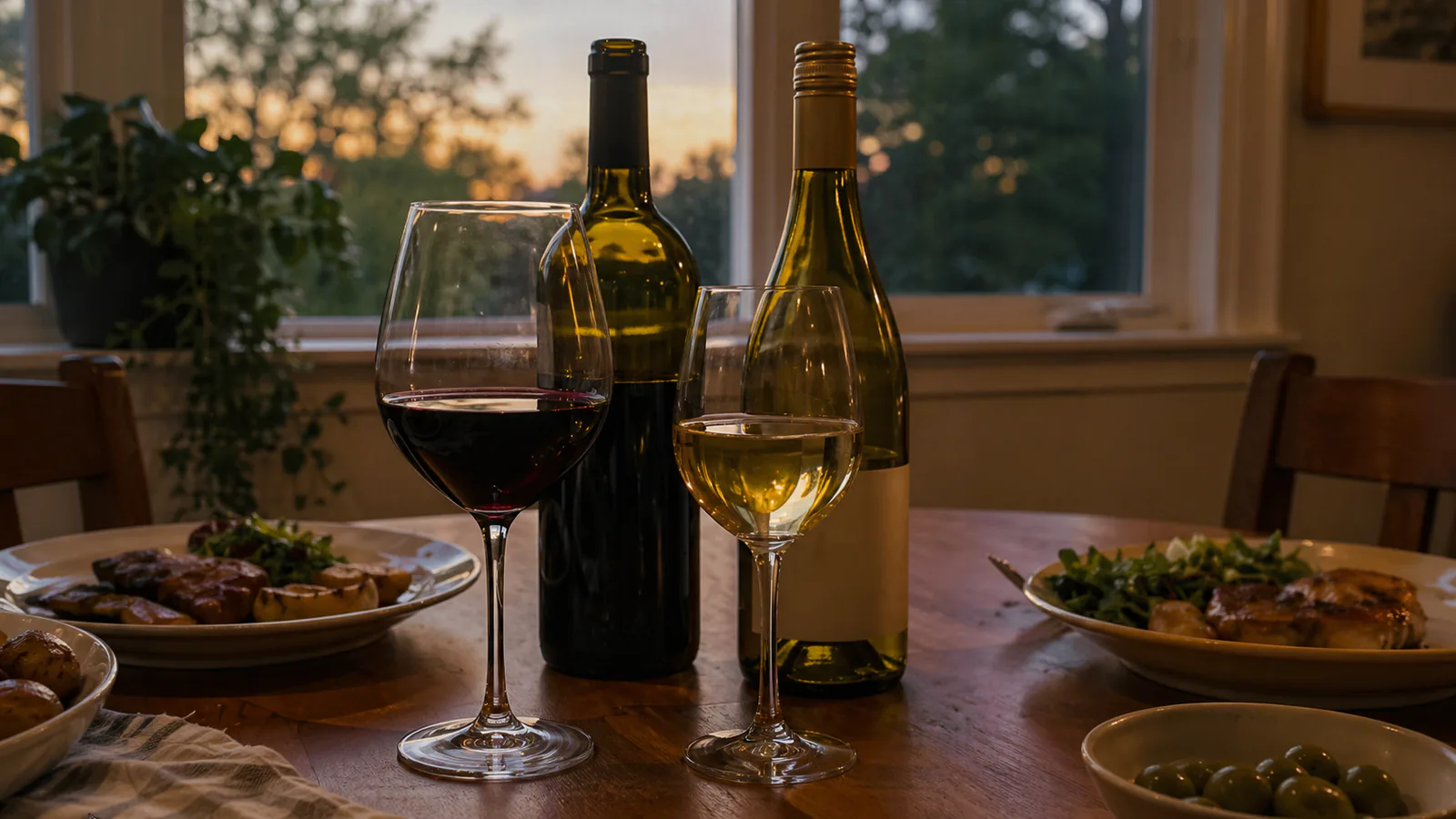
The real differences between red and white wine, from grape skins and tannins to serving temp, food pairing, and when to reach for each.