Claire Bennett
Wine Editor24 min read
Best Crisp White Wines: 8 Bottles That Actually Deliver
Eight crisp white wines that cut through food and taste better cold. Sauvignon Blanc to Chablis to Vermentino, all dry, all high-acid, all under $35.
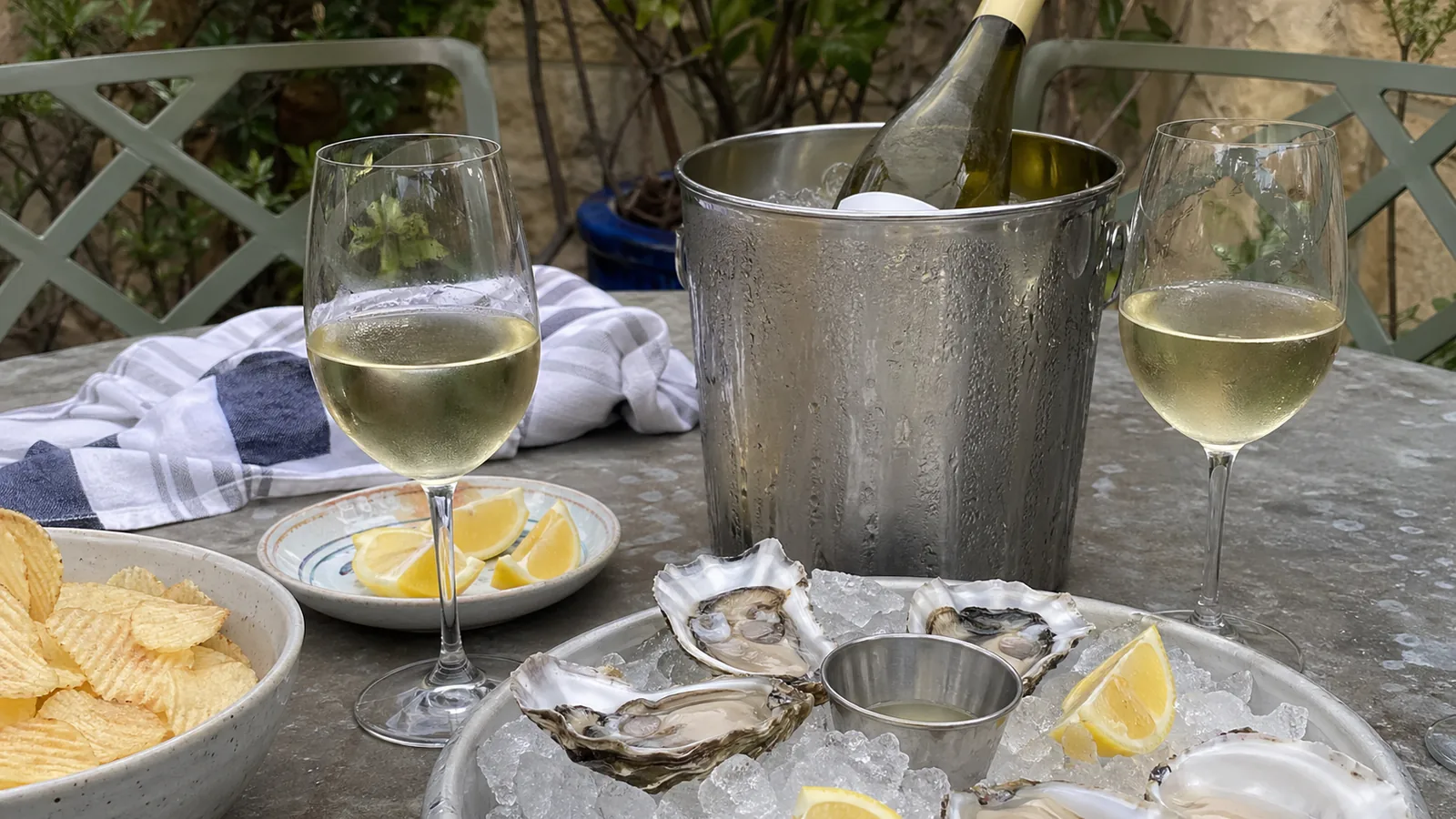
The word “crisp” gets overused on wine labels, but it means something specific: high acidity, dry finish, nothing coating the mouth after you swallow. Crisp white wines wake up your palate. They cut through food, make you reach for the glass again, and don’t ask anything of you except a cold bottle and something worth eating.
These eight wines span seven regions: Marlborough, Sardinia, Vinho Verde, Austria, Alto Adige, Burgundy, and the Loire Valley. Different grapes, different countries, one shared quality: you’ll want to finish the bottle.
All are dry. All are high-acid. All taste noticeably better cold.
Our Top 3 Picks

Cloudy Bay Sauvignon Blanc 2025
Marlborough, New Zealand · Sauvignon Blanc
93 pts Wine Spectator

Kim Crawford Sauvignon Blanc 2025
Marlborough, New Zealand · Sauvignon Blanc
90 pts James Suckling

Prices vary by state. Click through for your current price.
1. Kim Crawford Sauvignon Blanc 2025
Kim Crawford built its reputation in New Zealand’s Marlborough region by making one style extremely well: vibrant, fruit-forward Sauvignon Blanc at a price that doesn’t require a second thought. The 2025 is exactly what you’d expect from a producer that’s been doing this for decades, and that consistency is the whole point.
The nose is limes, green apple, melon, and fresh herbs, with a whisper of bell pepper. It’s zesty and lemony, with bright citrus notes that run from grapefruit to fresh lime. On the palate it’s light and crisp, medium-bodied with clean acidity and that dry, precise finish that makes Marlborough Sauvignon Blanc so food-friendly. James Suckling scored it 90 points. At $17.97, it’s one of the most easy-drinking crisp whites available anywhere, and you can stock a half-dozen without blinking.
Pour it cold over a caesar salad, grilled shrimp, a cheese board, or goat cheese with crackers. It holds up well just on its own before dinner too.
2. Argiolas Costamolino Vermentino 2024
Vermentino is the grape Sardinia does better than anywhere else, and Argiolas is the producer most associated with making it correctly. The Costamolino has been the benchmark for years: it sits at the sweet spot between affordable and interesting in a way that very few Italian whites manage.
James Suckling scored the 2024 at 92 points. It opens with pine, mint, and honeysuckle aromas from the Sardinian scrubland called macchia, followed by ripe stone fruit, grapefruit, and sweet citrus. The citrus flavor carries through to the palate, which is vibrant and textural with lingering acidity. At 13.7% ABV it has body behind it. It drinks more seriously than the price suggests.
The wine is built for food: rock lobster, squid, clams in broth, anything from the sea. Vegetable dishes work well too, especially fava beans or fennel.
3. Soalheiro Alvarinho 2024
Alvarinho is the Portuguese name for the grape most people know as Albariño from Spain. Soalheiro is the producer who made the grape famous in Portugal’s Monção e Melgaço subregion, a remote granite-soiled pocket of Vinho Verde that produces something quite different from the light, fizzy Vinho Verde most people are familiar with.
Decanter gave the 2024 97 points. This Portuguese wine opens with floral notes, apricot, and hints of pear, then builds to a denser palate with texture and structure that doesn’t rely on sweetness. At 12.5% ABV it’s low enough to drink freely rather than sip carefully. The acidity is natural and bright, and the finish carries a mineral quality that comes from the granite subsoil. This is the wine on the list most likely to make someone rethink what they thought they knew about white wine from this region.
Pairs beautifully with grilled fish, shellfish, white meats, and lighter Asian and Mediterranean dishes.
4. Nigl Freiheit Grüner Veltliner 2024
Grüner Veltliner is Austria’s national white grape, and Nigl is one of the most respected producers in the Kremstal region. The Freiheit is their entry-level bottling, which in this context means a 91-point James Suckling wine at under $25.
The profile is distinctive if you’ve never had it: peaches, pears, lemons, pineapple, and a characteristic celery note that sounds odd but makes the wine uniquely food-friendly. The citrus notes are bright and clean. Medium-bodied with excellent freshness and a clean, peachy finish. At 12.5% ABV it’s light on its feet. The celery-and-herb quality is what Austrians call würzig (spicy/savory), and it’s the reason Grüner Veltliner works so well with everything from asparagus to schnitzel to Vietnamese salad rolls.
If you’ve only been drinking French and New Zealand whites, this is a worthwhile detour.
5. Santa Margherita Pinot Grigio 2024
Santa Margherita created the modern template for Italian Pinot Grigio. Before this bottle became famous in the 1960s, Pinot Grigio was mostly a light, forgettable bulk wine. The Alto Adige winery proved the grape could be something more: clean, precise, food-friendly, and consistently reliable.
The 2024 is true to type. Straw-yellow colour, a clean and intense aroma of green apple and Golden Delicious, bright and well-balanced taste, dry finish. At 12% ABV it’s one of the lighter wines on the list. The style is almost aggressively versatile: it works as an aperitif, alongside seafood, next to fresh cheeses, and with light pasta or lighter pasta dishes. The 3.7-star customer rating from thousands of verified buyers is the best indicator of how reliably it performs.
If you need a crowd-pleasing white that won’t confuse anyone at the table, this is the pick.
6. William Fèvre Chablis Champs Royaux 2024
Chablis is the French Chardonnay that skips all the Chardonnay stuff: no oak, no butter, no tropical fruit. You get citrus, white stone fruit, and the mineral quality that comes from Kimmeridgian limestone soils in the Chablis region of France. Winemakers call it “flinty” or “chalky.” The easier description: it tastes like the inside of a cold stone cellar. That’s a compliment.
William Fèvre is the largest Grand Cru landowner in the Chablis appellation, which is about as established a credential as the region offers. The Champs Royaux is their entry-level Burgundy wine: fresh, with notes of citrus and white stone fruit, a very slight oaky finish, and the minerality that makes Chablis worth knowing. Unlike most French wines that lean on oak for texture, this one lets acidity and the minerally character do the work. At 12.5% ABV, it’s the leanest Chardonnay you’ll drink all year.
Pairs classically with oysters and grilled seafood. Also excellent with chicken in a cream sauce: the acidity cuts straight through.
7. Domaine de la Pépière Muscadet Clisson 2022
Most people know Muscadet as the inexpensive French white that goes with oysters. They’re not wrong, but Domaine de la Pépière is what happens when a serious winemaker takes the grape’s best terroir and treats it with real care. The Clisson is a single-vineyard wine from one of the best hillsides in the Sèvre et Maine appellation, aged on its lees for extended time to build texture and depth.
What you get is one of the driest, most minerally white wines in France. The acidity and minerality from the granite soils work together in a way that’s closer to Chablis than to most dry wines. It pairs with scallops, smoked salmon, fatty fish with sauce, and even something as rich as seared foie gras. The 2022 vintage has aged well. At $32.97 it’s the most interesting bottle on this list at that price point.
If you serve this to someone who says they don’t like Muscadet, they’ll change their mind.
8. Cloudy Bay Sauvignon Blanc 2025
Cloudy Bay made Marlborough Sauvignon Blanc famous. Since 1985, this bottle has been the reference point for what the style can achieve. The 2025 shows why that reputation has lasted four decades. Wine Spectator scored it 93 points. James Suckling gave it 92. It made the retailer’s Top 100 of 2025.
The fruit notes are what stay with you: lemongrass, lemon verbena, and celery salt on the nose, then pineapple, mango, grapefruit, lemon curd, and a touch of orange sherbet on the palate. The citrus flavor is more layered than most Sauvignon Blancs. At 13.5% ABV it has more body than Kim Crawford. The finish is long and expressive, gaining momentum rather than fading out. If Kim Crawford is the reliable every-week bottle, Cloudy Bay is the one you open when the occasion warrants it.
Grilled white fish, raw oysters, or a summer evening on the deck where the food is secondary anyway.
Find Your Wine Match
Not Sure Which One? Take the 20-Second Quiz
Three quick questions. One matched bottle.
What are you pairing it with?
What's the occasion?
Which style suits you?
Let's find the right bottle for you.
Tell us a bit about the occasion and what you're after. We'll match you to one of the bottles on this page.
Photo by Skyler Ewing on PexelsReading your answers…
How We Chose These Wines
Frequently Asked Questions
What makes a white wine crisp?
The key factor is acidity. All wines contain natural acids, but crisp whites have noticeably higher levels, particularly tartaric and malic acids, which create that clean, mouth-watering sensation after every sip. The acidity and minerality in these wines work together to give crisp whites a tart, almost sparkle-like freshness, even without any effervescence.
Grapes harvested earlier retain more of this natural acidity. Cooler growing regions (Marlborough, Burgundy, Austria, Vinho Verde) preserve acidity better than warm ones. Winemakers also protect it by avoiding malolactic fermentation, the process that converts sharp malic acid to softer lactic acid. If a white wine is buttery, it’s gone through malolactic fermentation. If it’s crisp, it hasn’t. Most crisp whites are also easy to drink in the sense that they don’t demand attention the way a tannic red does: they’re refreshing, food-friendly, and immediately approachable.
What’s the difference between crisp and dry white wine?
Dry means low residual sugar. Crisp means high acidity. They often go together but not always. A dry white wine with low acidity will taste flat and soft. Among the best white wines for food pairing, the crisp dry wines consistently outperform flat, soft styles because the acidity acts like a squeeze of lemon, brightening whatever it’s paired with. All eight wines on this list are both dry wines and crisp.
Which crisp white wine goes best with seafood?
Pretty much any of them. For raw oysters and shellfish, Chablis and Muscadet are the classic matches: their mineral, chalky character is a near-perfect mirror for briny seafood. For grilled fish, Sauvignon Blanc from Marlborough or Alvarinho from Vinho Verde both work brilliantly. For oily fish like salmon or sardines, the Sardinian Vermentino’s herbal edge and citrus flavor add a useful contrast. The hints of citrus and notes of citrus in Sauvignon Blanc are especially useful with seafood. Lighter whites also pair well with light pasta and seafood pasta dishes. The rule of thumb: match the acidity of the wine to the richness of the seafood.
How cold should I serve crisp white wine?
Colder than a room-temperature pour, but not straight from the fridge. The ideal range is 45-50°F. Most fridges run around 35-38°F, which mutes the aromas in almost any white wine. The solution is simple: put the bottle in the fridge two hours before you drink it rather than keeping it in there permanently, or pull it out 10 minutes before you pour. You’ll notice the difference, especially with wines like Chablis and Muscadet where the mineral character only emerges at the right temperature.
What other crisp white wines are worth trying?
The eight bottles above are a strong starting point, but the category of crisp dry white wine is enormous. Some of the best white wines to explore beyond this list:
Riesling from Germany or the Alsace region of France can be bone dry and searingly crisp. A dry Riesling is entirely different from a sweet Riesling: lemony, mineral, and beautifully structured. Alsace wine tends toward slightly richer styles than German Riesling, but both reward exploration.
Chenin blanc from the Loire Valley is one of the most underrated whites in France. The Chenin blanc grapes in Vouvray (when made dry) and Savennières produce wines with extraordinary acidity and depth. Vouvray in particular delivers floral, honeyed aromatics with a bone-dry finish when the vintage is right.
Sancerre is Sauvignon Blanc grown in a specific region of France in the Loire Valley. It’s more austere and mineral than the Sauvignon Blancs of Marlborough, with a herbaceous quality that’s closer to grass and flint than tropical fruit. Worth the premium if you enjoy the style.
Assyrtiko from Santorini, Greece, is one of the most mineral, high-acid white wines in the world. The volcanic soils give it a character unlike anything from France, Italy, or the New World. Hard to find at wine stores, but worth seeking out.
Pinot Gris (called Pinot Grigio in Italy) ranges from light and neutral to richly textured depending on origin. Alsace Pinot Gris tends toward richness; Italian Pinot Grigios from Alto Adige stay light and crisp.
Aligoté (or aligote as it’s sometimes written) is Burgundy’s other white grape, often overlooked in favour of Chardonnay. At its best it delivers sharp acidity and citrus character at a better price than most Burgundy wine.
Bordeaux Blanc (Sauvignon Blanc and Sémillon blends from Bordeaux) can be excellent and is often better value than equivalent French wines from other regions. Viognier, by contrast, is aromatic and lower in acidity: fine if you want a fragrant white, but for pure refreshment, the higher-acid grapes on this page remain the better choice.
Albariño from Spain’s Rías Baixas is the Spanish twin of Soalheiro’s Alvarinho. Same grape, different country, similar citrus-driven profile. You’ll find it widely available at wine stores across the US, usually at a similar price to the wines on this list.
What if I want a richer, oakier white instead?
Crisp is one direction; creamy is the other. If you find these too austere and want something rounder, our best buttery Chardonnay round-up is the counterpart to this page. The two styles cover almost every white-wine occasion between them. For tighter budgets, the best cheap white wine list keeps the crisp profile under $20.
What wine is best for GERD?
Crisp white wines are high in acidity, which makes them pleasurable to drink but potentially uncomfortable for people with acid reflux or GERD. Lower-acid options will be easier to tolerate: lightly oaked Chardonnay, Viognier, or a slightly off-dry style where residual sugar softens the acid perception. Sparkling wine is particularly hard on GERD and is usually best avoided. For still wines, Pinot Gris and softer styles of Pinot Grigio tend to have lower acidity than Sauvignon Blanc or Chablis. The honeysuckle and floral aromatics of Viognier can give you fragrance without the aggressive acid hit that most crisp whites deliver.
What is the most crisp dry white wine?
Among widely available bottles, Muscadet and Chablis are generally considered the most bone-dry, high-acid styles. Both are unoaked, both are produced in cool northern French regions that preserve maximum natural acidity, and neither has any residual sweetness to soften the edge. Between the two, Chablis tends to be crisper and more mineral, while Muscadet is slightly lighter-bodied. If you want the most crisp dry white wine experience possible, the William Fèvre Chablis Champs Royaux and the Domaine de la Pépière Muscadet on this list are both excellent starting points. For wines from the New World, Sauvignon Blanc from Marlborough comes closest to that level of acid-driven crispness, and it’s easier to find at most Napa Valley restaurants and wine shops than Chablis.
Keep Reading
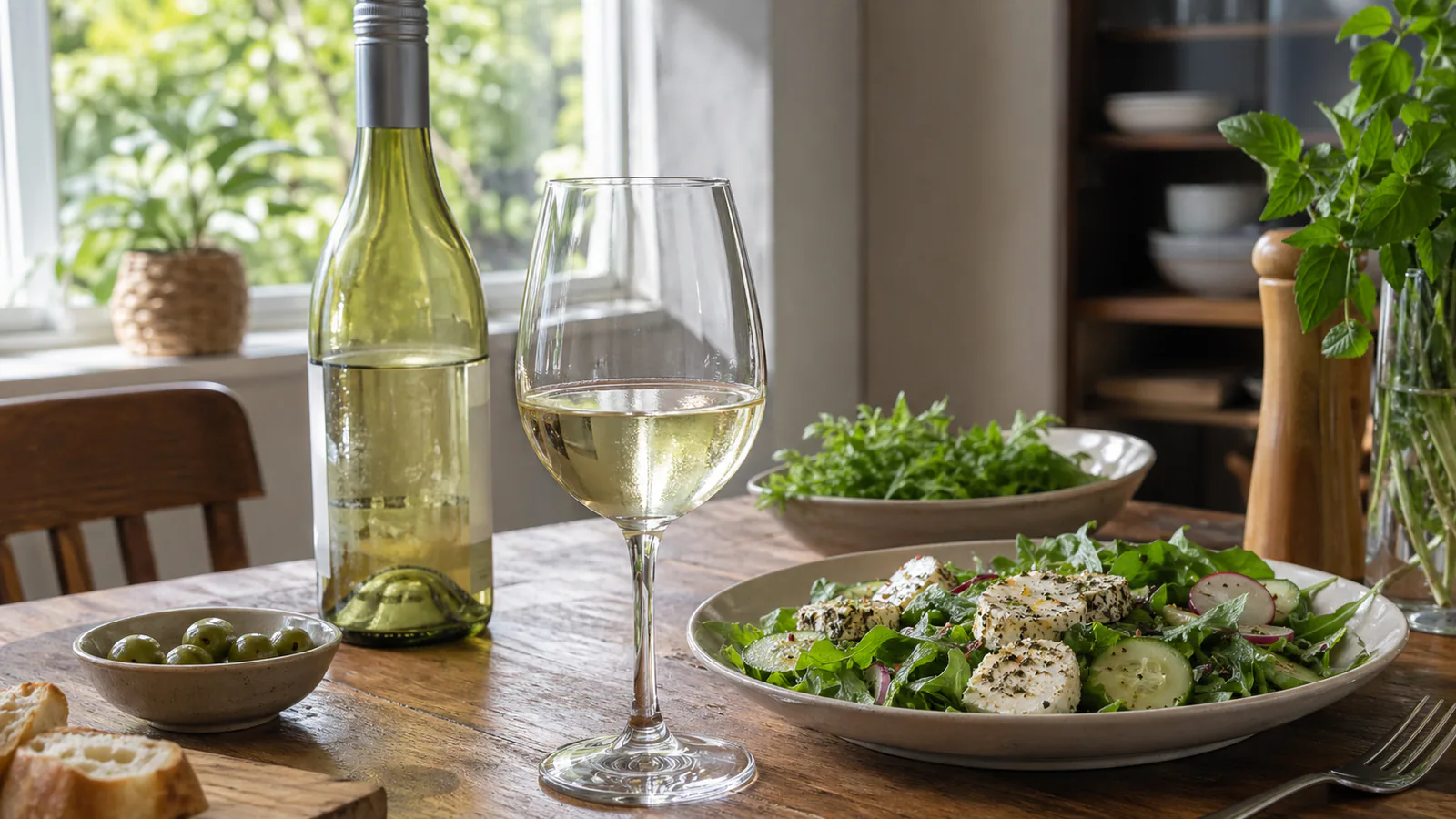
Sauvignon Blanc: Taste, Regions, and Food Pairing
Sauvignon Blanc is the loud, zesty white that smells like cut grass and tropical fruit. How it tastes, where it grows, what to eat with it.
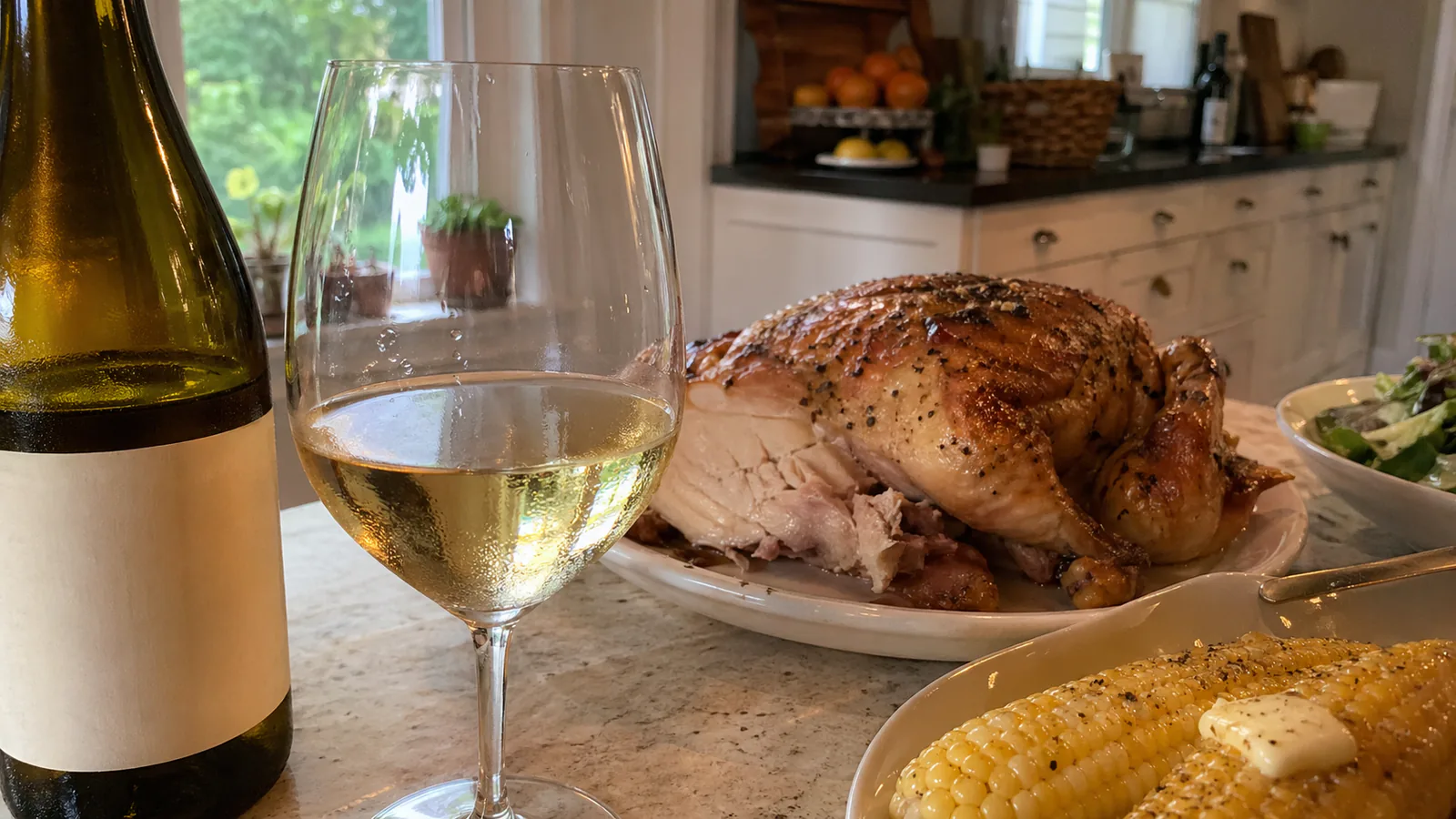
Best Buttery Chardonnay: 8 Bottles Worth Every Sip
Eight buttery Chardonnays that deliver creaminess, oak, and tropical richness. From under $15 to the premium tier, all California, all worth it.
Best Cheap White Wine: 8 Bottles Worth Buying Under $20
The best cheap white wines under $20, from zippy Marlborough Sauvignon Blanc to rich Sonoma Chardonnay. Critic-scored and crowd-verified.