Claire Bennett
Wine Editor10 min read
Nebbiolo: The King of Piedmont, Explained
Nebbiolo is the grape behind Barolo and Barbaresco. Pale colour, savage tannins, perfumed roses and tar, and decades of ageing potential.
Nebbiolo: The King of Piedmont, Explained
You pour a glass of Barolo expecting something dark and brooding, and you get a wine the colour of strong tea. Then you taste it and your mouth puckers like you bit into a tannin sandwich. That’s Nebbiolo announcing itself. The grape gets called the king of Piedmont for a reason: it makes some of the world’s longest-lived, most aromatic, most demanding red wines, and almost nothing else in the wine world tastes quite like it.
By the end of this page you’ll know:
- Why a Barolo can be released no earlier than 38 months after harvest, and what that ageing actually does to the wine
- The single sensory cue (it isn’t fruit) that gives Nebbiolo away in a blind tasting before you’ve even smelled the glass
- The difference between Barolo and Barbaresco, and which one to start with if you’ve never had Nebbiolo
- The serving mistake that makes 9 out of 10 first Nebbiolo experiences disappointing
- The under-$30 entry point that lets you taste real Nebbiolo character without spending Barolo money
What Is Nebbiolo?
Nebbiolo is an indigenous Italian grape grown almost exclusively in the northwestern region of Piedmont, where it has been documented since at least the 13th century. The name comes from the Italian word “nebbia”, meaning fog. There are two competing explanations: the autumn fog that rolls through the Langhe hills at harvest time, or the white bloom that develops on the ripe grapes and looks like fog. Either way, the name has stuck for around 800 years.
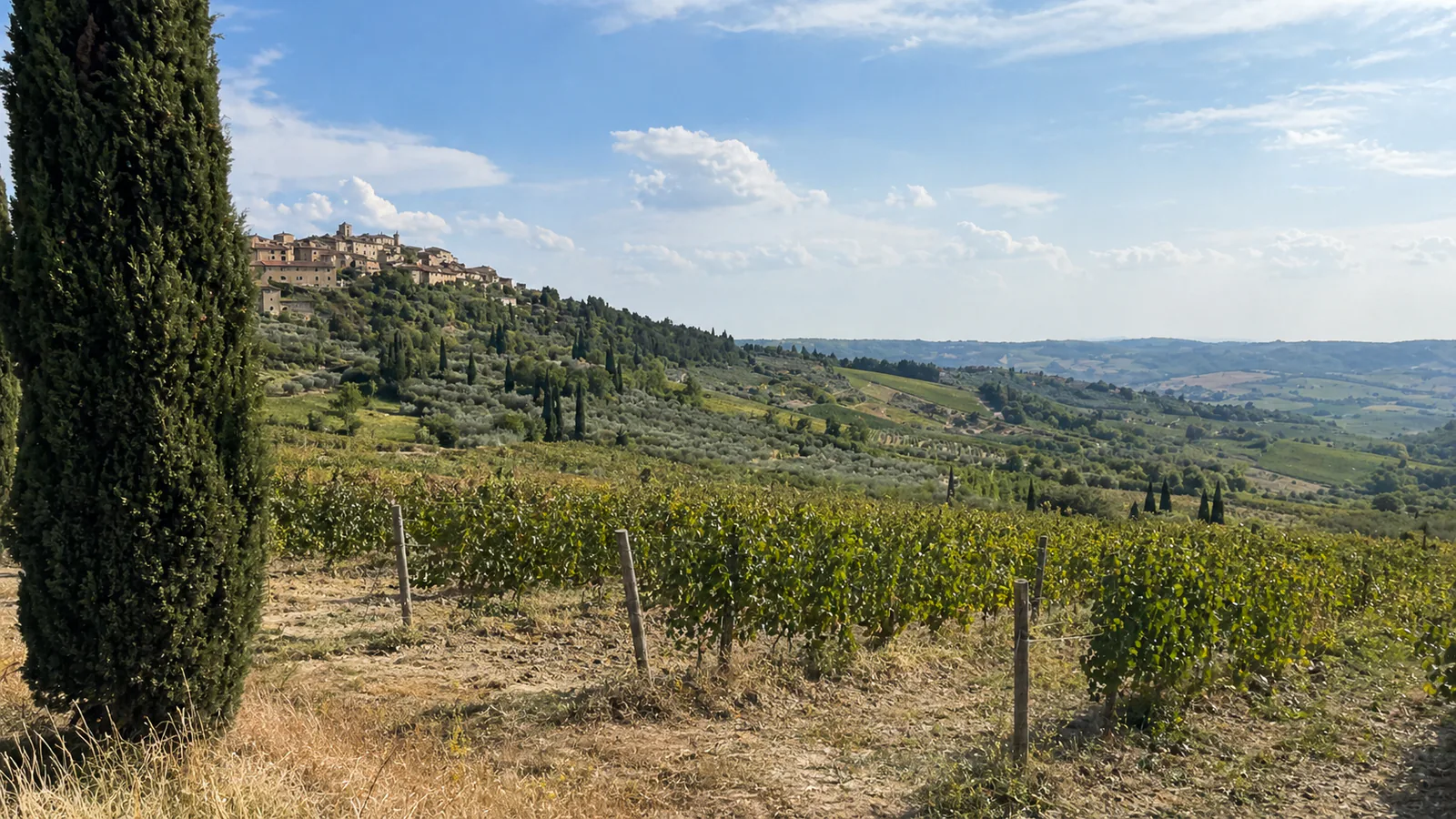
The grape is famously fussy. It buds early (so spring frost is a constant threat), it ripens late (often into late October), and it demands very specific sites: south-facing slopes with calcareous marl soils to hit its full potential. Move it 50 kilometres in the wrong direction and it stops being interesting. That’s why Nebbiolo is essentially a Piedmont story, with small outposts in Lombardy and a handful of experimental plantings elsewhere that rarely match the originals.
DNA analysis suggests Nebbiolo is one of the parents (or an old sibling) of several other Northern Italian grapes, including Freisa and possibly Vespolina. It’s an ancient variety, and like other ancient grapes (Pinot Noir comes to mind), it’s been selected and re-selected over the centuries into a handful of distinct clones: Lampia, Michet, and Rosé being the three big ones in the Langhe.
What Does Nebbiolo Taste Like?
The first thing to know about Nebbiolo is that it lies about its weight. The wine is pale, often a translucent garnet that can look almost orange at the rim, especially with age. New drinkers see the colour and expect something light. They get something closer to a wrestling match.
Here’s the structural snapshot:
- Body: medium to full (palate-coating despite the pale colour)
- Tannin: very high, often grippy and chewy in young bottles
- Acidity: high
- Oak: traditional producers use large old Slavonian oak botti; modernists use French barrique. Style varies massively.
- Alcohol: 13.5 to 15 percent, often pushing the higher end
The flavour profile is unmistakable once you’ve tasted it. The signature trio is rose petal, tar, and cherry, often with truffle and leather creeping in as the wine ages. There’s almost always a savoury, herbal undertone: dried mushroom, anise, fennel, sometimes a whiff of orange peel. The fruit is red rather than black: tart cherry and dried strawberry rather than blackcurrant.
What surprises most people is the perfume. For all its tannic muscle, Nebbiolo is one of the most aromatic red grapes in the world. Stick your nose in a glass of mature Barolo and the room changes.
Where Is Nebbiolo Grown?
The Nebbiolo map is small. Almost all the great wine comes from a handful of zones in Piedmont, with one important outlier in Lombardy.
Barolo
The most famous Nebbiolo zone, sometimes called the king of Italian wines. Barolo is a tiny area south of Alba, made up of 11 communes (the most renowned being Barolo, La Morra, Castiglione Falletto, Monforte d’Alba, and Serralunga d’Alba). Each commune has a recognisable signature: La Morra makes more elegant, perfumed Barolos, while Serralunga produces the most powerful and structured.
By regulation, Barolo must age a minimum of 38 months before release, with at least 18 of those in oak. Riserva Barolo demands 62 months. The result is a wine that often needs another 5 to 15 years in bottle before it really shows its best. Young Barolo can feel like chewing on a leather glove.
Barbaresco
Barbaresco sits to the north of Alba and is often described as Barolo’s elegant younger sibling. The soils are slightly less calcareous, and the wines tend to come together a few years earlier. Minimum ageing is 26 months (50 for Riserva), and the style is generally lighter on tannin while keeping the perfume intact. If you’ve never had Nebbiolo, start with a Barbaresco: it shows the grape’s character without the brutal patience requirement of young Barolo.
Roero
Across the Tanaro river from Barolo, the Roero zone makes Nebbiolo in a fresher, more approachable style. Sandier soils give wines that drink well at five to ten years rather than fifteen. Roero offers strong value for drinkers who want serious Nebbiolo without Barolo prices.
Langhe Nebbiolo
The entry-level appellation. Langhe Nebbiolo can come from anywhere across the broader Langhe zone, including declassified fruit from Barolo and Barbaresco vineyards. These wines are released young, often see less oak, and are designed to drink in their first three to five years. This is your weeknight Nebbiolo.
Valtellina
In the alpine north of Lombardy (the lesser-known corner of Italy’s wine map), Nebbiolo is grown on terraced slopes and called Chiavennasca locally. The wines (Valtellina Superiore, Sforzato di Valtellina) are leaner, more mountain-fresh, and often less expensive than their Piedmont cousins. Sforzato uses dried grapes for a richer, more concentrated style worth seeking out.
Gattinara and Ghemme
Northern Piedmont’s lesser-known Nebbiolo zones, with volcanic soils that give the wines a flintier, more mineral character. Both are excellent value compared to Barolo and Barbaresco.
What Food Pairs With Nebbiolo?
Nebbiolo is built for big, savoury, fatty food. The high tannin needs protein and fat to round it off, the high acid handles richness, and the savoury herbal notes love mushroom and game. This is autumn and winter wine, plate-of-truffle wine, slow-braise wine.
Reliable matches:
- Truffle dishes (white truffle from Alba is the religious experience)
- Brasato al Barolo (beef braised in Barolo)
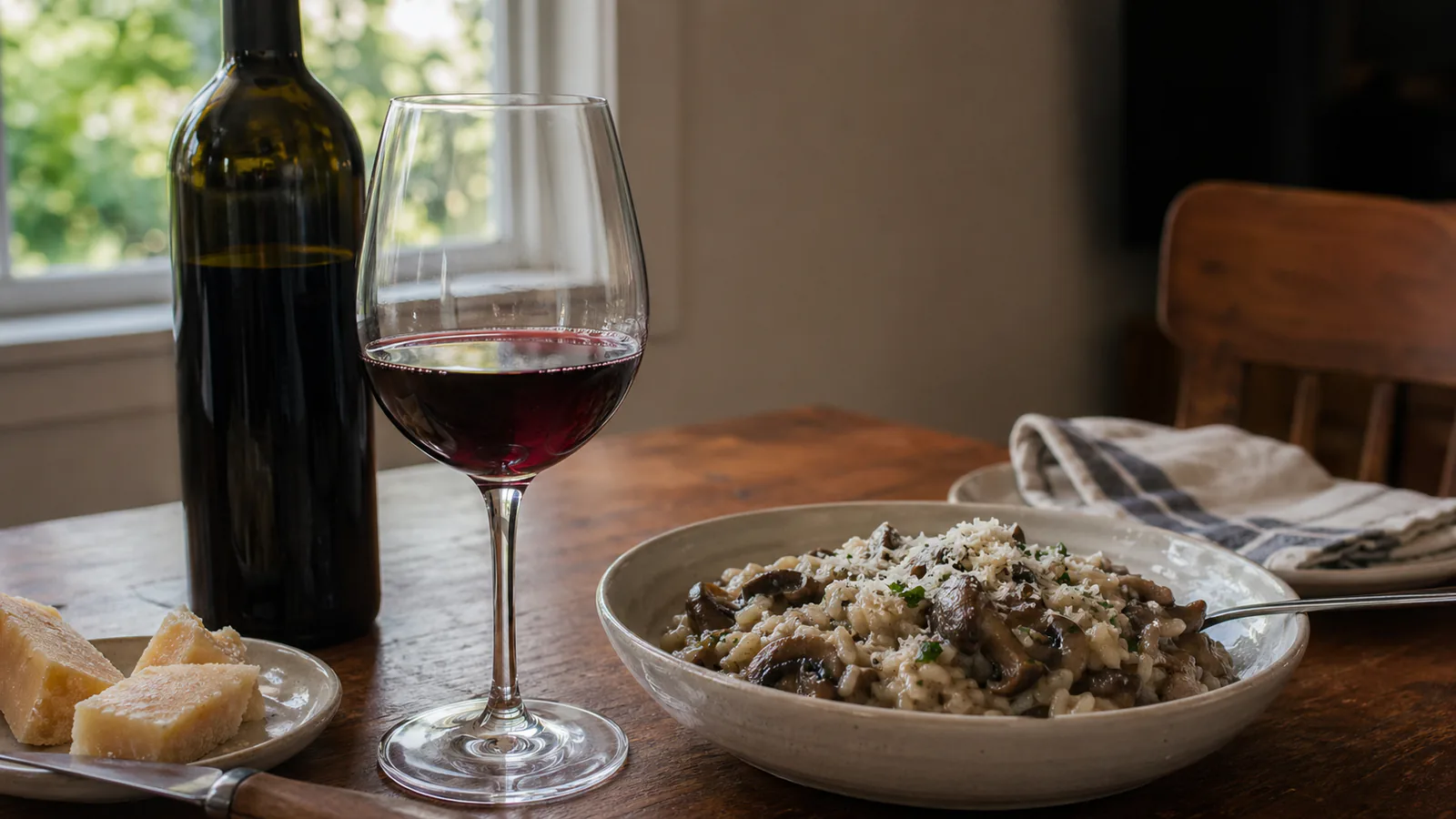
- Wild mushroom risotto with porcini
- Tajarin (thin Piedmontese egg pasta) with butter and sage
- Osso buco
- Game: venison, wild boar, hare, pheasant
- Aged hard cheeses: Castelmagno, Parmigiano Reggiano, aged pecorino
- Roast goose or duck
- Roasted lamb with rosemary
- Bagna cauda (the Piedmontese garlic-anchovy dip with vegetables)
What to avoid: anything delicate. Sushi, white fish, salads, light pastas with cream. The wine will steamroll the food. Spicy heat is also a difficult pairing because tannin amplifies capsaicin and the wine will taste harsh.
How Should I Serve Nebbiolo?
This is where most first Nebbiolo experiences go sideways. People open a young Barolo, pour it straight, and write the wine off as harsh. Then someone walks them through it properly and they understand why people love this grape.
The rules:
- Temperature: 16 to 18 degrees Celsius. A young Barolo served too warm tastes flabby and alcoholic.
- Glassware: a large Burgundy-style bowl. Nebbiolo is an aroma wine, and you need surface area for the perfume to develop.
- Decanting: young Barolo (under 10 years) wants 2 to 3 hours in a decanter, sometimes longer. Barbaresco needs 60 to 90 minutes. Older Barolo (15-plus years) wants only a careful pour to leave sediment behind, then 30 minutes in the glass.
On ageing: this is the grape’s strongest argument. Top Barolo from a great vintage routinely drinks beautifully at 20 to 30 years, and the best Riserva bottles can run past 40. The transformation over time is the point: tannins soften, the rose-and-cherry primary fruit fades into truffle, dried fig, and forest floor, and the wine becomes something completely different from what you’d taste at release.
If you’ve never tasted an aged Nebbiolo, find a way to do it once. It changes how you think about the grape.
How Much Should I Spend on Nebbiolo?
The price ladder is real. Here’s the rough shape:
- $20 to $30: Langhe Nebbiolo, basic Roero, entry-level Valtellina. Honest, recognisable Nebbiolo character. Drink within five years.
- $30 to $50: good Barbaresco, mid-tier Gattinara and Ghemme, value Barolo from less famous communes. The grape starts showing its full personality.
- $50 to $90: strong Barolo and Barbaresco from established producers. This is where most serious Nebbiolo drinkers live.
- $90 to $200: single-vineyard Barolo (Cannubi, Brunate, Rocche) and top Riserva bottles. Cellar wines designed for 15-plus years.
- $200-plus: legends. Bottles from Giacomo Conterno, Bartolo Mascarello, Bruno Giacosa, and a handful of others. Trophy territory.
If you’re testing the grape for the first time, spend $25 to $35 on a Langhe Nebbiolo or a basic Barbaresco from a respected producer. That’s enough to taste why people obsess over this stuff without committing to a $90 bottle that won’t drink well for another decade anyway.
Frequently Asked Questions
Why is Nebbiolo so tannic if it looks pale?
Colour and tannin come from different parts of the grape. Anthocyanins (which give red wine its colour) are extracted from the skin during fermentation. Nebbiolo skins are relatively low in anthocyanins, but very high in tannin compounds. Long maceration times (Nebbiolo often macerates for three to four weeks) extract those tannins thoroughly while only modest colour comes along for the ride.
Is Nebbiolo similar to Pinot Noir?
They share a few things: pale colour, perfumed aromatics, and a tendency to fade to brick-orange as they age. But Nebbiolo has dramatically more tannin and more acid than Pinot Noir, and the flavour profile leans tar and rose where Pinot leans cherry and earth. If you love Pinot, Nebbiolo is a logical next step, but expect a much bigger wine.
What’s the difference between Barolo and Barbaresco?
Both are 100 percent Nebbiolo grown in neighbouring zones. Barolo’s soils and exposure produce a more powerful, longer-lived wine that needs more time. Barbaresco tends to be slightly more elegant and accessible, with shorter required ageing (26 months versus 38). Barolo has the bigger reputation, but Barbaresco is often the smarter buy for current drinking.
How long should I age a Barolo?
Most Barolo is released too young to drink at peak. A good rule: drink basic Barolo at 8 to 15 years from vintage, single-vineyard Barolo at 12 to 25 years, and Riserva Barolo at 15 to 30 years. If you’re impatient, decant for 3 hours and pair with something rich.
Why does Nebbiolo smell like roses?
The aroma comes from a compound called damascenone, plus a family of terpenes that the grape is unusually rich in. These compounds are what create the floral, perfumed top notes that make Nebbiolo so distinctive. The rose smell isn’t your imagination, it’s chemistry.
What’s the cheapest way to taste real Nebbiolo?
Buy a Langhe Nebbiolo from a respected Barolo producer for $20 to $30. These wines are often made from younger vines or declassified fruit from the same vineyards that go into the producer’s flagship Barolo. You get the family resemblance for a fraction of the price.
Ready to step up to a serious red? Here are the best full-bodied red wines worth seeking out, including Nebbiolo picks that will reward both your palate and your patience.
Keep Reading
Piedmont Wine: Barolo, Barbaresco, Nebbiolo Guide
Piedmont wine explained: Barolo vs Barbaresco, Nebbiolo, Barbera, Dolcetto, Moscato d'Asti. What it tastes like and how much to spend.
Pasta Wine Pairing: What To Pour With Every Sauce
The best wine with pasta by sauce, from tomato and bolognese to creamy carbonara, pesto, seafood pasta, and baked lasagna.
Italy Wine Guide: Regions, Grapes, and Where to Start
Italian wine made simple. The 20 regions, the grapes worth knowing, what DOCG means, and how to pick a bottle without overthinking it.