Claire Bennett
Wine Editor10 min read
Sangiovese: Italy's Most Important Red Grape
Sangiovese is the soul of Tuscany and the backbone of Chianti and Brunello. Here's what it tastes like, where to find it, and what to eat with it.
Sangiovese: Italy’s Most Important Red Grape
You order a margherita pizza on a Friday night, the waiter asks if you want a glass of red, and the bottle they pour you tastes like the meal was built around it. That’s almost always Sangiovese doing the work. The grape has a way of grabbing tomato, olive oil, and a bit of char and turning the whole plate into something more than the sum of its parts. Once you know what to look for on a label, you’ll never have to ask “what red goes with this?” again.
By the end of this page you’ll know:
- The single Italian appellation where Sangiovese reaches its highest, longest-aged form, and the minimum number of months it sits before release
- Why two bottles labelled “Sangiovese” can taste like completely different wines depending on which Tuscan town the vines sit in
- The black rooster on a Chianti label and what it actually guarantees about the bottle in your hand
- The pairing rule that makes Sangiovese almost impossible to mismatch at an Italian dinner
- The price tier where Sangiovese stops being a Tuesday-night red and starts behaving like a serious cellar wine
What Is Sangiovese?
Sangiovese is the most widely planted red grape in Italy, taking up roughly 10 percent of the country’s vineyard area. The name comes from “sanguis Jovis”, which loosely translates to “blood of Jove” or Jupiter. It’s been documented in Tuscany since at least the 16th century, and its DNA points to a parentage involving Ciliegiolo and a now-rare Calabrian grape called Calabrese di Montenuovo.
The grape is genetically restless. It mutates easily, which means there are dozens of distinct clones planted across Italy, each producing a slightly different wine. The two big families are Sangiovese Piccolo (smaller berries, more concentrated) and Sangiovese Grosso (larger berries, used for Brunello di Montalcino under the local name Brunello). When you taste a Brunello next to a Chianti, that clonal difference is part of what you’re picking up on.
Sangiovese is fussy in the vineyard. It ripens late, it’s sensitive to climate, and it needs warm, dry sites with good drainage to show its best. That’s why Tuscany is the homeland: the central Italian hills give it the heat to ripen and the cool nights to keep its acidity sharp.
What Does Sangiovese Taste Like?
Sangiovese has a distinct fingerprint that’s recognisable once you’ve tasted a few. The fruit profile leans toward tart red cherry rather than ripe black fruit, and there’s almost always a savoury edge: dried herbs, tomato leaf, leather, sometimes a whiff of cured meat in older bottles.
Here’s the structural snapshot:
- Body: medium to medium-full
- Tannin: medium to high, drying and grippy
- Acidity: high (this is the secret to its food-pairing power)
- Oak: ranges from none to heavy, depending on producer and appellation
- Alcohol: 13 to 14.5 percent typically
The high acidity is the thing to fix in your head. It’s what makes Sangiovese feel alive on the palate, what cuts through fatty food, and what gives it the structure to age. A young Chianti Classico can feel almost aggressive in its freshness. Give it five years and that acid settles into something more elegant.
In glass, Sangiovese tends to be a translucent ruby, sometimes with garnet edges, lighter in colour than its weight on the palate suggests. Don’t trust the visual. A pale Sangiovese can still pack serious tannin and structure.
Where Is Sangiovese Grown?
Sangiovese is overwhelmingly an Italian story, and within Italy it’s overwhelmingly a Tuscan story. A handful of regions matter, and each one produces a noticeably different style.
Chianti and Chianti Classico
Chianti is the famous one, but the label hides a lot. Plain “Chianti” can come from anywhere in a sprawling zone and ranges from cheerful pizza wine to serious bottle. Chianti Classico is the historic heartland between Florence and Siena. The black rooster (Gallo Nero) on the neck label is the consortium seal that guarantees the wine comes from inside the Classico zone.
By regulation, Chianti Classico must be at least 80 percent Sangiovese, though many top producers go 100 percent. Expect bright sour cherry, dried herbs, and a savoury, food-friendly grip. This is the everyday face of great Sangiovese.
Brunello di Montalcino
The pinnacle. Brunello is made from 100 percent Sangiovese (the local Sangiovese Grosso clone) and grown around the hilltop town of Montalcino, south of Siena. The minimum ageing is serious: at least 24 months in oak and another four months in bottle, with the wine not released for sale until five years after harvest. Riserva Brunello must wait six years.
The result is a denser, deeper, more powerful wine than Chianti. Black cherry replaces sour cherry, leather and tobacco show up, and the tannins have the structure to age 20-plus years. This is the cellar wine.
Vino Nobile di Montepulciano
Often overlooked, often great value. Vino Nobile comes from the town of Montepulciano (not the grape called Montepulciano, which is grown elsewhere in Italy). It’s at least 70 percent Sangiovese, locally called Prugnolo Gentile. Stylistically it sits between Chianti Classico and Brunello: more weight than the former, more approachability than the latter.
Romagna and Central Italy
Sangiovese di Romagna comes from the Emilia-Romagna region just north of Tuscany and is generally lighter, fruitier, and built for early drinking. It’s the bottle to grab when you want Sangiovese character without the price tag of a Classico or Brunello. Umbria and Le Marche also make capable Sangiovese.
Super Tuscans
In the 1970s, a handful of Tuscan producers got tired of the Chianti rules and started blending Sangiovese with Cabernet Sauvignon, Merlot, and Cabernet Franc. The wines were technically declassified to “table wine” but priced like luxury goods. Today the Super Tuscan category sits under the IGT Toscana designation and produces some of Italy’s most expensive bottles. If you see a Tuscan red labelled Toscana IGT with a designer bottle and a $100-plus price tag, that’s the lineage.
What Food Pairs With Sangiovese?
The pairing rule for Sangiovese is almost embarrassingly simple: if it’s Italian, it works. The grape evolved alongside the cuisine, and that high acidity plus moderate body means it slips into Italian food the way a key slips into a lock.
The acid is the engine. It cuts through tomato, fat, and salt, which is exactly what a tomato-based pasta or a slice of pepperoni pizza needs. The savoury herbal notes echo oregano, basil, and rosemary. The tannins handle grilled meats without overwhelming them.
Reliable matches:
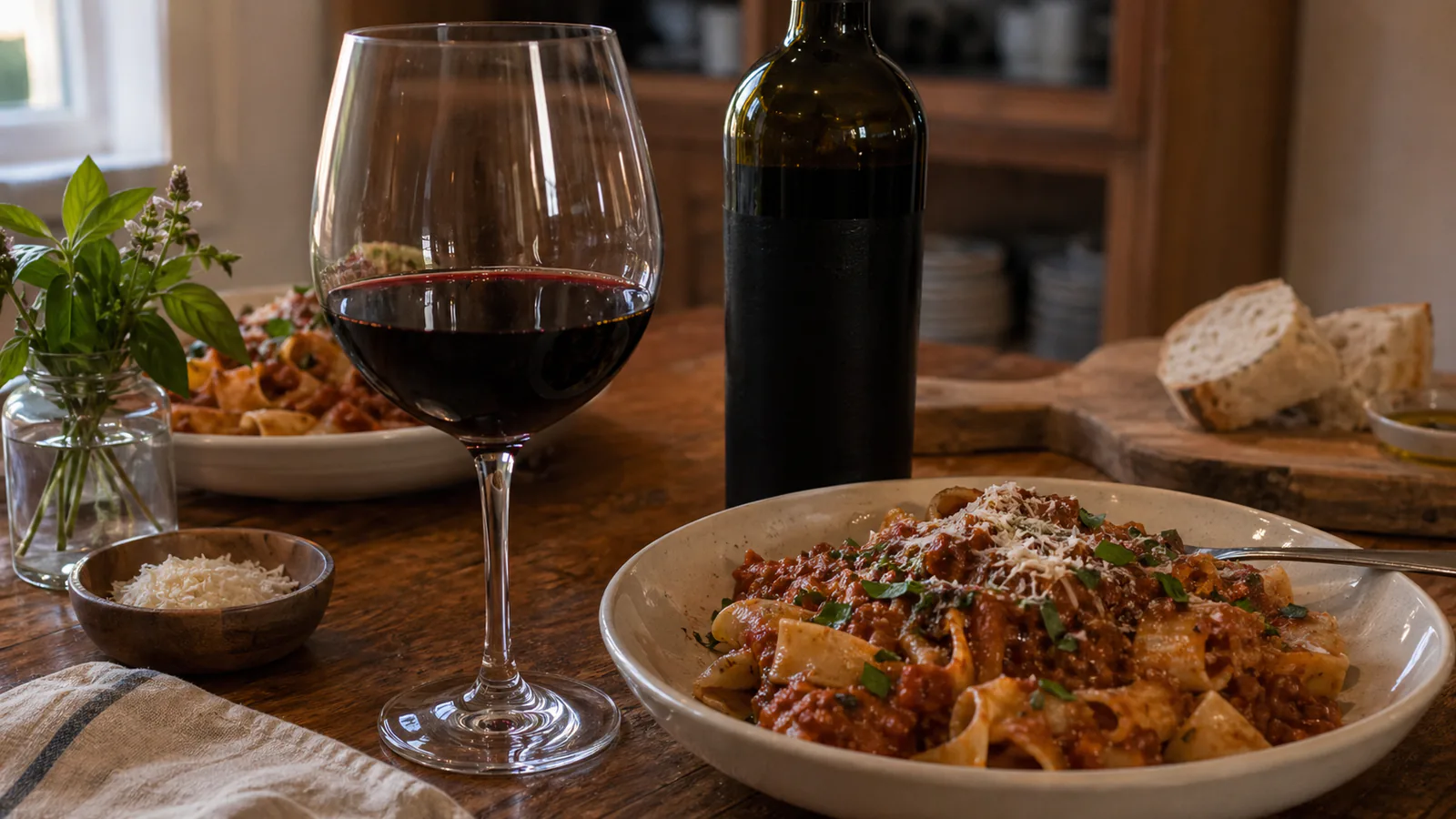
- Spaghetti or pappardelle with bolognese or tomato sauce
- Margherita and pepperoni pizza
- Osso buco and slow-braised veal
- Pecorino, Parmigiano Reggiano, and aged hard cheeses
- Grilled lamb chops with rosemary
- Ribollita and Tuscan bean stews
- Wild mushroom risotto
- Eggplant parmigiana
- Charcuterie with prosciutto and salami
- Grilled steak Florentine (bistecca alla fiorentina)
The one place to be careful: very delicate fish dishes. Sangiovese’s tannins and acid can flatten a piece of subtle white fish. If you must pair it with seafood, lean toward grilled or tomato-sauced preparations rather than poached or steamed.
How Should I Serve Sangiovese?
Serve Sangiovese cooler than you think. Most people pour it at room temperature, and most rooms are too warm. The sweet spot is 16 to 18 degrees Celsius, which means a 20-minute stop in the fridge before you open the bottle if your house runs warm.
Glassware matters more for Sangiovese than for fruit-forward New World reds, because so much of what you’re tasting is aroma. A medium-sized red wine glass with a tapered rim concentrates those tomato leaf, dried herb, and cherry notes. A traditional Bordeaux-shaped glass works fine for Chianti and Vino Nobile. For Brunello, a larger Burgundy-shaped bowl gives the wine room to open up.
Decanting:
- Young Chianti Classico: 30 minutes in a decanter wakes it up.
- Brunello: 60 to 90 minutes for young vintages. Older bottles benefit from gentle decanting to separate sediment.
- Vino Nobile: 30 to 45 minutes does the trick.
On ageing: most Chianti Classico drinks well from release through about 10 years. Riserva Chianti and Brunello can go 15 to 25 years in a proper cellar. Super Tuscans vary by producer, but the top ones routinely outlive 20 years.
How Much Should I Spend on Sangiovese?
You can drink good Sangiovese at almost any budget. Here’s the rough map:
- $10 to $15: entry-level Chianti, Sangiovese di Romagna, basic Tuscan IGT. These are weeknight pizza wines. Don’t expect complexity, do expect freshness.
- $15 to $25: good Chianti Classico, decent Vino Nobile, the entry level for serious producers. This is the sweet spot for most dinners.
- $25 to $50: Chianti Classico Riserva, Chianti Classico Gran Selezione, mid-tier Brunello. The wine starts showing real depth, structure, and ageing potential.
- $50 to $100: top Brunello, top Gran Selezione, mid-level Super Tuscans. You’re paying for a wine that will reward 10 to 20 years in a cellar.
- $100-plus: flagship Brunello, top Super Tuscans (Sassicaia, Tignanello, Solaia, Ornellaia). Trophy bottles, not Tuesday wines.
If you’re new to the grape, start in the $18 to $25 Chianti Classico range. That’s where you taste Sangiovese clearly without any winemaking gymnastics getting in the way.
Frequently Asked Questions
Is Sangiovese a dry wine?
Yes. Sangiovese is almost always made dry. The high natural acidity means even ripe vintages don’t read as sweet. If you ever taste a Sangiovese with noticeable sweetness, it’s likely a Vin Santo (a sweet Tuscan dessert wine that uses Sangiovese alongside white grapes).
Is Sangiovese the same as Chianti?
Not exactly. Chianti is a place and a wine made there. Sangiovese is the grape. Almost all Chianti is made primarily from Sangiovese (at least 70 to 80 percent depending on the appellation), but the grape also stretches across the rest of Italy’s wine map, including Brunello di Montalcino, Vino Nobile di Montepulciano, and Romagna.
How does Sangiovese compare to Cabernet Sauvignon?
They’re both medium-to-full-bodied reds with structure, but they read very differently. Cabernet leans into ripe blackcurrant, cedar, and chocolate, with smoother tannins and a denser feel. Sangiovese is brighter, more savoury, with sour cherry, herbs, and a sharper acid line. If Cabernet is the steakhouse red, Sangiovese is the trattoria red.
Why does Sangiovese taste so good with Italian food?
Because they grew up together. Italian cuisine leans on tomato, olive oil, herbs, and cured pork. Sangiovese has high acidity (which cuts tomato), savoury herb notes (which mirror oregano and basil), and enough tannin to handle meat and cheese. The grape and the cuisine evolved within a few hundred miles of each other for centuries.
How long does Sangiovese age?
It depends on the bottle. Basic Chianti is built to drink within three years. Chianti Classico holds for 8 to 12 years from a good vintage. Brunello di Montalcino is one of Italy’s longest-lived reds, with top examples drinking beautifully at 20 to 30 years. Super Tuscans vary, but the flagship bottles often age 15 to 25 years.
Is Sangiovese good for beginners?
It’s a great second-step grape. If you’ve already enjoyed Merlot and want something with more savoury character and food-pairing range, Sangiovese is the natural next move. It can feel a little tart and tannic if you’re coming straight off sweet, fruit-forward reds, so start with a softer Chianti Classico rather than a young Brunello.
Ready to taste it for yourself? Here are the best red wines under $20, including reliable Sangiovese picks that will make any Italian dinner feel like a small holiday.
Keep Reading
Tuscany Wine: Chianti, Brunello & Super Tuscans
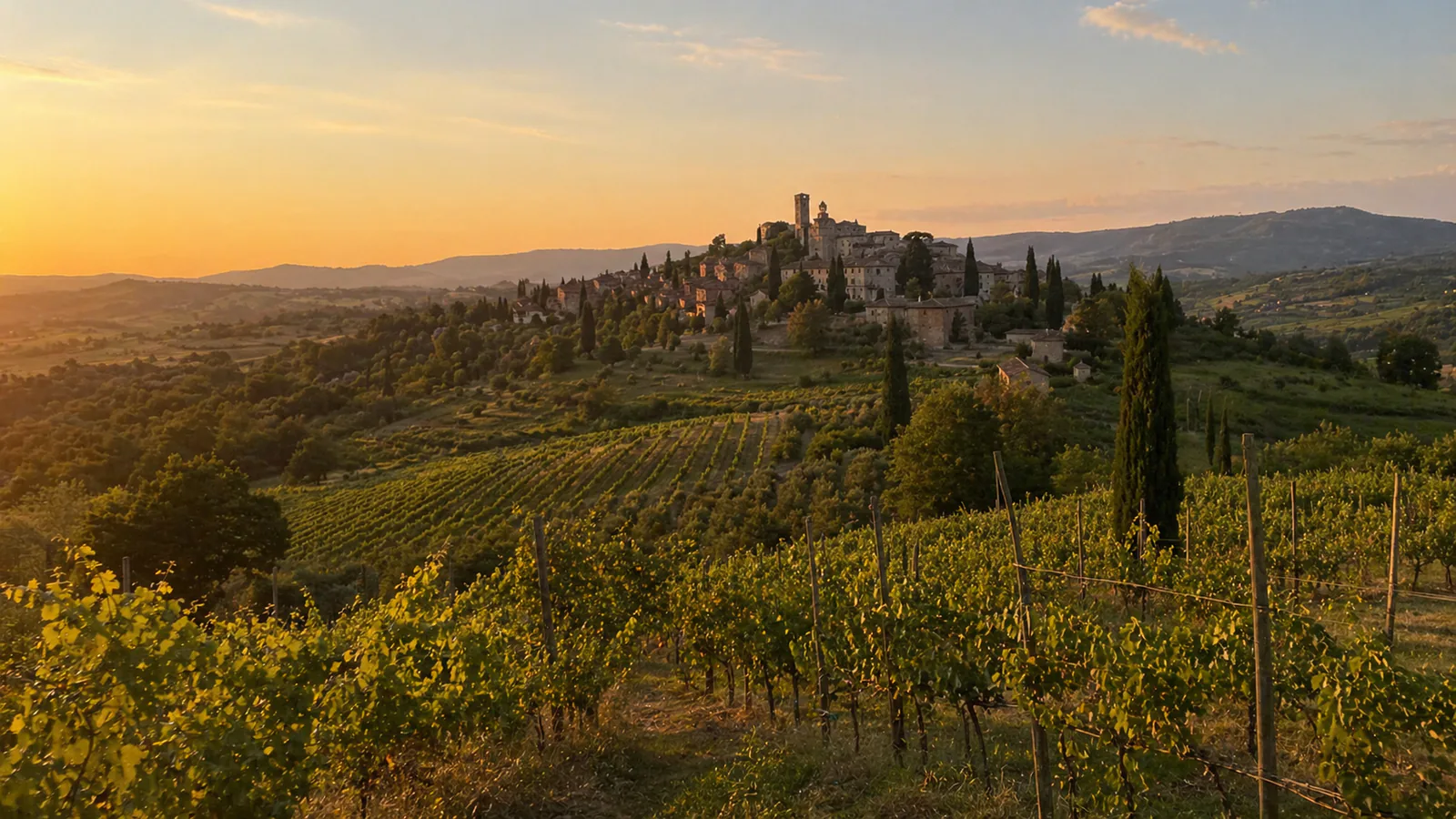
What Tuscan wine actually is, the difference between Chianti and Brunello, what makes a Super Tuscan, and how much to spend. Plain English.
Pizza Wine Pairing: What to Pour With Every Slice
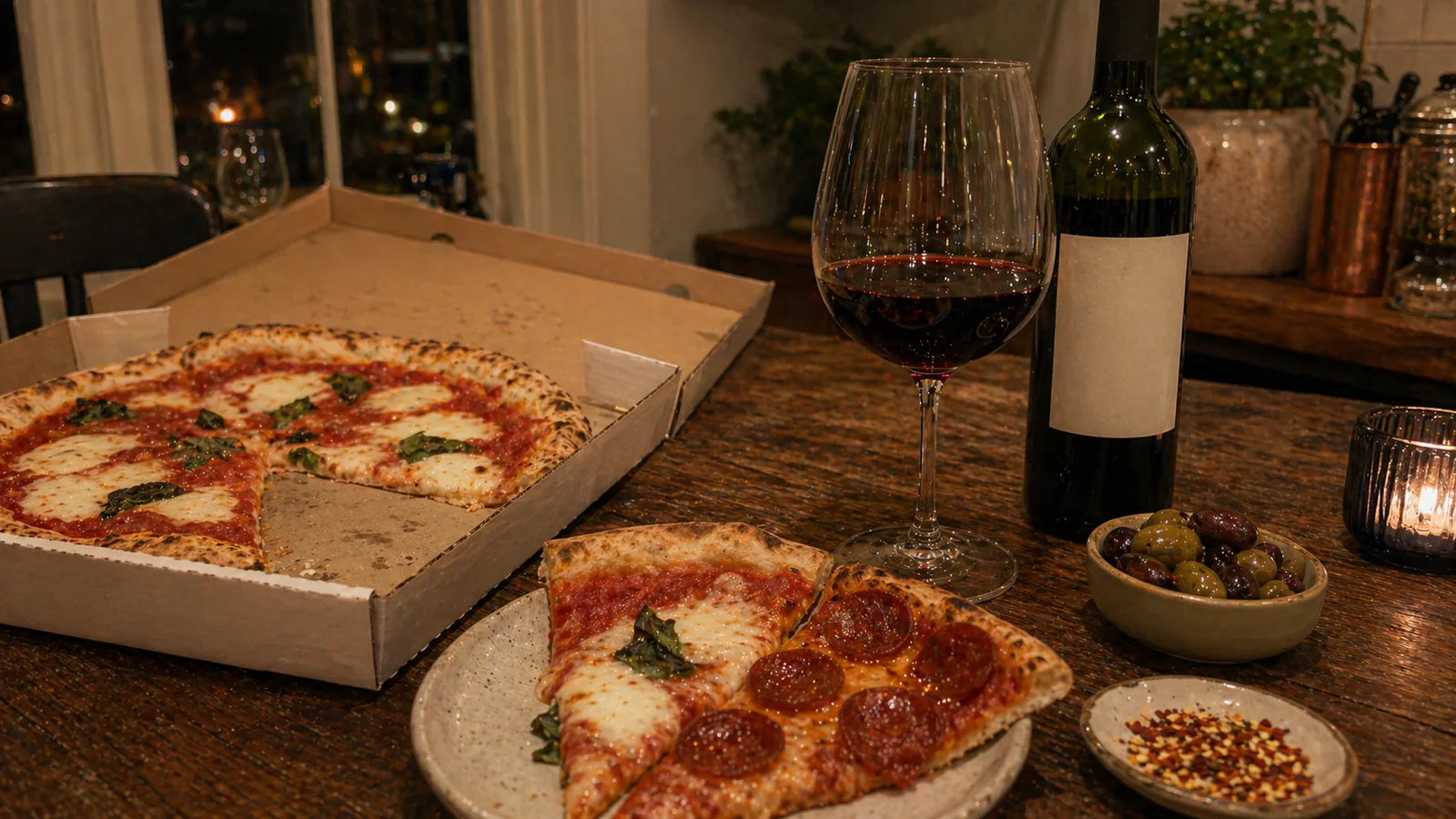
The best wine with pizza by style: Sangiovese with margherita, Zinfandel with pepperoni, Chardonnay with white pizza, plus the bottle for mixed tables.
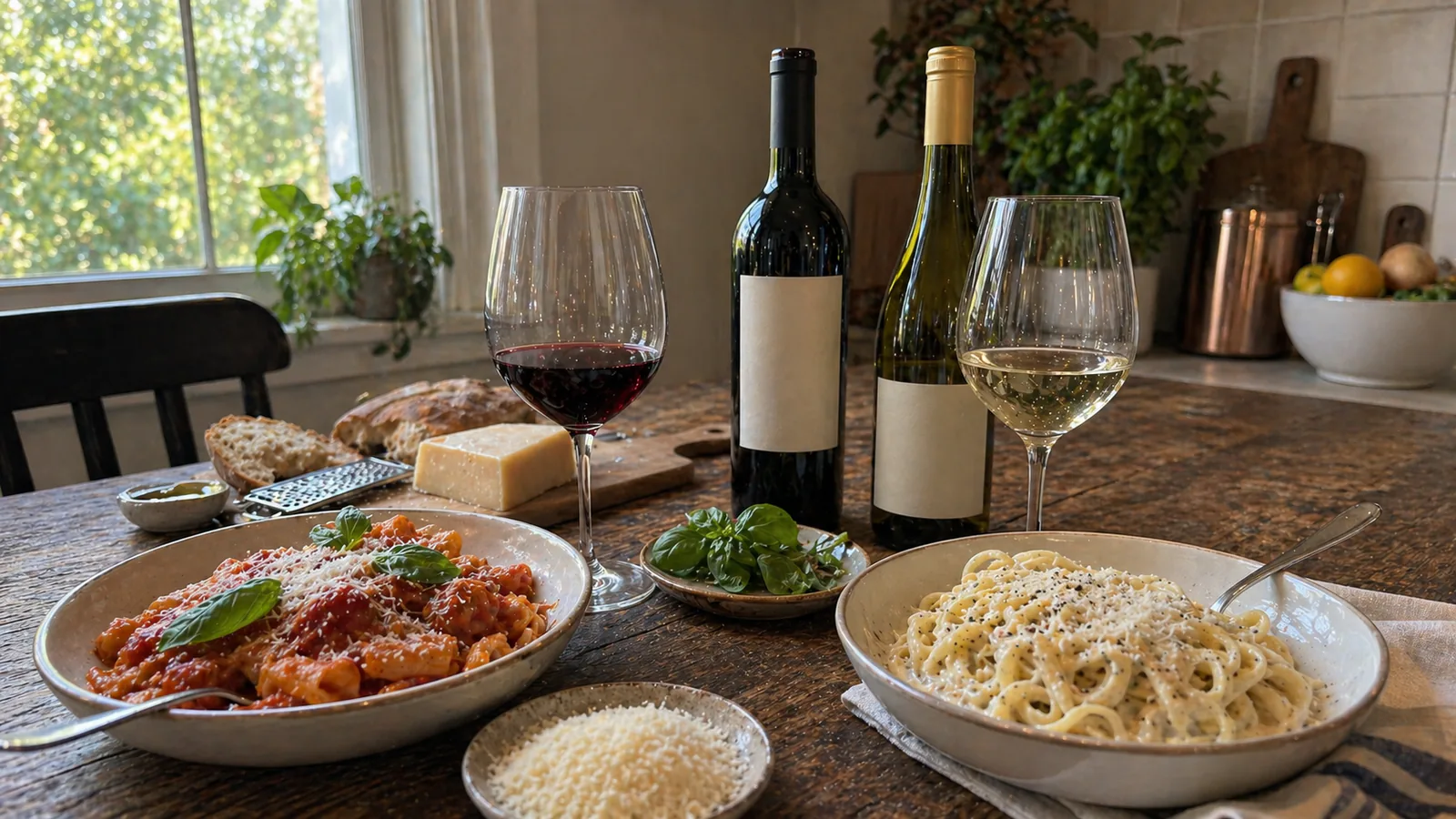
Pasta Wine Pairing: What To Pour With Every Sauce
The best wine with pasta by sauce, from tomato and bolognese to creamy carbonara, pesto, seafood pasta, and baked lasagna.