Claire Bennett
Wine Editor12 min read
Sparkling Wine Types: Champagne to Pet-Nat
From Champagne to pét-nat, discover every sparkling wine type, how each is made, how sweet or dry it is, and what to pair it with.
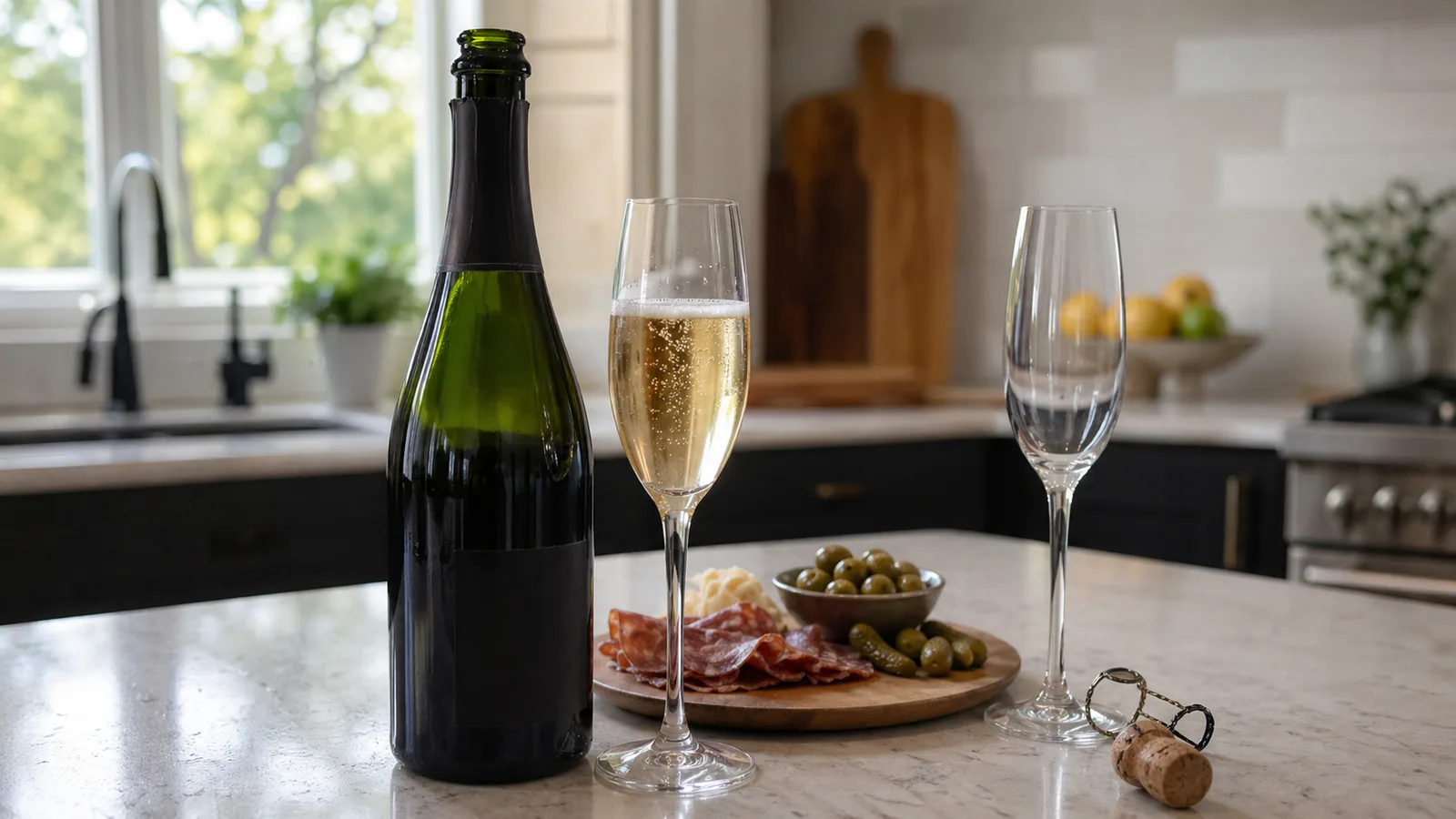
Every sparkling wine on the shelf got its bubbles a different way. That production difference is what separates Champagne from Prosecco, Cava from Crémant, and pét-nat from everything else. The method also explains the price: traditional-method wines take years longer to make and cost accordingly. Once you know the five production methods, you can look at any sparkling wine label and predict what the glass is going to taste like before you spend a cent.
By the end of this page you’ll know:
- Why Champagne and Cava can be made from the same grapes but taste completely different (and it’s not just the price)
- The one production method that makes Prosecco cheaper than Champagne to produce, and why that’s not an insult
- The sweetness level hiding on every bottle label, written in a language most people never decode
- Which sparkling wine is technically red, and why it pairs better with pizza than with oysters
- The ancient style that skips the second fermentation entirely and why sommeliers keep pushing it
What Makes a Sparkling Wine Sparkling?
All sparkling wine gets its bubbles from carbon dioxide trapped inside the bottle. The differences between styles come down to how that CO2 got there.
In most quality sparkling wines, the bubbles come from a second fermentation: yeast consumes sugar and produces alcohol plus CO2, which has nowhere to go and stays dissolved in the wine. In cheaper wines, CO2 is simply injected into still wine. The production method shapes everything about the final glass: bubble size, texture, flavor depth, and price.
There are five main methods, and they’re worth understanding before you spend a cent.
What Are the Main Methods for Making Sparkling Wine?
Méthode champenoise (traditional method). The second fermentation happens inside the individual bottle. The wine sits on its lees (the spent yeast) for months or years, picking up bready, toasty, complex flavors. At the end, the yeast residue is frozen in the neck and expelled in one clean pop. This is how Champagne, Cava, Crémant, Franciacorta, and most English sparkling wines are made. It is labor-intensive. That’s why the bottles cost more.
Charmat method (tank method). The second fermentation happens in a large pressurized tank rather than in the bottle. The wine spends far less time on the lees, so it stays fresh, fruity, and aromatic. Prosecco is the most famous example. The tank method is faster and cheaper to run, which is why you can find good Prosecco produced at every price point.
Ancestral method (pét-nat). Short for pétillant naturel, which means “naturally sparkling.” The wine is bottled before the first fermentation is fully complete, so the remaining yeast finishes inside the bottle. The result is often hazy, slightly funky, and lower in pressure than Champagne. No disgorgement, no dosage, no added sulfur in most cases. Pét-nat is the oldest style of sparkling wine in existence and the one you’ll see on every natural wine list right now.
Transfer method. A hybrid. The second fermentation happens in the bottle (like traditional method), but instead of disgorgement per bottle, the wine is emptied into tanks, filtered, and rebottled under pressure. Keeps some of the lees character while making production more efficient. Used for some Australian sparkling wines and some mid-range American sparkling.
Carbonation (injection). CO2 is pumped directly into still wine, the same way a sodastream works. The bubbles are large, coarse, and dissipate quickly. Reserved for the cheapest bracket. You’ll recognise this style by the aggressive fizz that dies in ten minutes flat.
What Are the Main Types of Sparkling Wine?
The types of sparkling wine you’ll encounter most often span several countries and production styles. Here’s what each one is called, where it comes from, and what to expect in the glass.
Champagne
Made in the Champagne region of northern France, exclusively from Chardonnay, Pinot Noir, and Pinot Meunier. Every bottle uses the traditional method, with extended lees aging: non-vintage Champagne sits for at least fifteen months, vintage Champagne for at least three years. The result is a wine with a creamy texture, fine persistent bubbles, and a flavor profile that ranges from crisp green apple and citrus in lighter styles to brioche, hazelnut, and roasted nuts in aged or prestige cuvées. Nothing made outside Champagne, even using the same method and grapes, can legally carry the name. That’s why the price floor is where it is.
Prosecco
Italy’s most exported sparkling wine, produced in the Veneto and Friuli regions from the Glera grape. Made via the Charmat method, Prosecco is fermented in pressurized tanks and bottled young to preserve its signature freshness: white peach, pear, cream, and light floral notes. For verified buyer picks, see the best Prosecco guide. It comes in three styles: spumante (fully sparkling), frizzante (lightly fizzy), and tranquillo (still, rarely seen outside Italy). Asti Spumante and Moscato d’Asti, made from the Moscato Bianco grape in Piedmont, are sometimes grouped with Prosecco in casual conversation but are distinct wines with lower alcohol and noticeably sweet profiles.
Cava
Spain’s answer to Champagne, produced mainly in Catalonia using the traditional method. The primary grapes are Macabeo, Xarel-lo, and Parellada, all Spanish varieties. Because of this, Cava tastes different from Champagne even though the method is identical: earthy, slightly almond-forward, with apple and citrus. Crianza Cava ages for at least nine months on the lees, Reserva for fifteen months, Gran Reserva for thirty months. Gran Reserva Cava is genuinely excellent and significantly cheaper than equivalent Champagne.
Crémant
Cremant is the collective name for traditional-method sparkling wines produced in France outside the Champagne appellation. The French winemaker community uses it to cover a broad range of regional styles, each with its own character. Crémant d’Alsace (made from Pinot Blanc, Auxerrois, and Pinot Gris) is one of the best value bottles on any wine list. Crémant de Bourgogne, de Loire, de Bordeaux, de Limoux, du Jura, and de Die each have distinct grape profiles and regional character. They use the same production method as Champagne but at a fraction of the price. If Champagne is out of budget, this is where to look.
Franciacorta
Italy’s prestige traditional-method sparkling wine, produced south of Lake Garda in Lombardy from Chardonnay, Pinot Noir, and Pinot Bianco. Franciacorta takes its appellation rules seriously: non-vintage spends at least eighteen months on the lees, vintage at least thirty months, Riserva sixty months. It’s the Italian sparkling wine most likely to change your mind if you think only French bubbly can reach the top tier. The result is a wine with complexity and creaminess that rivals Champagne but carries a unique Italian character. Far less known outside Italy than it deserves to be.
English Sparkling Wine
England’s chalky, cool-climate vineyards in Sussex, Kent, and Hampshire now produce traditional-method sparkling wines that consistently beat Champagne in blind tastings. The same chalk soils that run under the Champagne region continue under the English Channel. Smart investment and a generation of skilled winemakers taking the climate seriously has turned the category into something genuinely exciting. The grapes are the same: Chardonnay, Pinot Noir, Pinot Meunier. The style is lean, precise, and high-acid, with green apple and brioche. Nyetimber and Chapel Down are the names to know. Expensive, because the yields are low and the labor is real.
American Sparkling Wine (California)
California produces sparkling wine at every tier, from cheap Charmat-method bottles to serious traditional-method wine from Carneros, Anderson Valley, and the Santa Cruz Mountains. Several major Champagne houses (Moët, Taittinger, Roederer) invested in California production in the 1980s. Their American labels, Domaine Chandon, Domaine Carneros, and Roederer Estate, remain the benchmark for the category. Expect riper fruit profiles than their European counterparts, with more peach and strawberry alongside the classic biscuit notes.
Sekt
Germany and Austria’s sparkling wine category, covering a wide range of styles and qualities. Basic Sekt is often made by the tank method from imported base wine. Winzersekt, made from estate-grown German grapes using traditional method and labeled with the producer’s name, is the level worth seeking out. Riesling-based Sekt is particularly distinctive: steely, high-acid, mineral, and often with a touch of residual sweetness. Lighter than Champagne, crisper, and priced to drink without ceremony.
Lambrusco
Lambrusco is red sparkling wine from Emilia-Romagna in northern Italy, made from the Lambrusco grape. It ranges from bone dry to lightly sweet, from pale ruby to deep garnet, and from gently fizzy to fully sparkling. The cheap, sweet version that flooded export markets in the 1970s gave the whole category a bad reputation. Modern Lambrusco di Sorbara and Lambrusco Grasparossa are a completely different experience: dry or off-dry, food-friendly, bright in acidity, with notes of cherry, violet, and a slight herbal edge. Pair it with cured meats, pizza, or anything from the Emilian table.
How Sweet or Dry Is Your Sparkling Wine?
The sweetness level in sparkling wine is determined by the dosage: a small addition of still wine and sugar made after disgorgement. Every traditional-method sparkling wine receives one (or deliberately receives none). The levels from driest to sweetest:
| Label | Residual Sugar | What It Tastes Like |
|---|---|---|
| Brut Nature / Zero Dosage | 0-3 g/L | Bone dry, austere, very crisp |
| Extra Brut | 0-6 g/L | Dry with just a hint of softness |
| Brut | 0-12 g/L | The most common style: dry, clean, versatile |
| Extra Dry / Extra Sec | 12-17 g/L | Confusingly named, slightly off-dry |
| Sec | 17-32 g/L | Noticeably sweet, good with fruit desserts |
| Demi-Sec | 32-50 g/L | Sweet, pair with pastry or blue cheese |
| Doux | 50+ g/L | Very sweet, dessert wine territory |
The name “Extra Dry” trips people up every time. It sounds drier than Brut but it’s actually sweeter. Brut is the one you want if you’re looking for a standard dry sparkling wine.
Does Sparkling Wine Come in Rosé and Red?
Yes, and both are worth knowing about.
Sparkling rosé is made in every major sparkling wine region. Champagne rosé is produced either by blending a small amount of still Pinot Noir into the white wine, or by brief skin contact with red grapes (saignée). Rosé Champagne tends toward strawberry, raspberry, and red cherry notes alongside the classic biscuit and brioche. Prosecco rosé was only officially recognized as a DOC category in 2021 and has grown fast since. Cava rosado uses Garnacha and Trepat.
Sparkling red is a real category, led by Lambrusco. Australia also produces sparkling Shiraz, a wine that reads like a party trick until you taste a good one: inky, full-bodied, and genuinely delicious with a cheese board or a holiday roast. It’s produced using the transfer method, with extended time on lees, and carries a rich texture that dry sparkling whites simply don’t have.
What Temperature and Food Pairings Work for Sparkling Wine?
Serve all sparkling wine cold: 6-8°C (43-46°F) for lighter styles like Prosecco and Asti, 8-10°C (46-50°F) for fuller styles like Champagne, Cava, and Crémant. Sparkling Shiraz and Lambrusco can go a touch warmer, around 10-12°C (50-54°F), which lets the fruit come forward.
Pairing sparkling wine with food is more forgiving than most people think. The high acidity and bubbles cut through fat and salt, which means:
- Champagne and Crémant: oysters, fried chicken, soft cheeses, anything creamy or salty
- Prosecco: charcuterie, light pasta, seafood antipasto, strawberries
- Cava: tapas, paella, jamón, fried seafood
- Franciacorta: risotto, fish, white truffle dishes
- Lambrusco: pizza, mortadella, parmigiana, anything from a Sunday Italian table
- Sekt: smoked salmon, sushi, light Asian dishes
- Sparkling Shiraz: aged cheddar, roast beef, game
The practical rule: if it’s fried, salty, or fatty, sparkling wine works. The bubbles and acid do the heavy lifting. For weekend brunch picks, see the best wine for brunch guide.
Frequently Asked Questions
What is the difference between Champagne and Prosecco?
Champagne is a sparkling wine made in northern France using the traditional method, where the second fermentation happens inside the bottle. The wine ages on its lees for a minimum of fifteen months, producing complex bready and toasty flavors. Prosecco is a sparkling wine made in northeastern Italy using the Charmat (tank) method, with fermentation in pressurized tanks. The result is fresher and fruitier, with less complexity but more immediate appeal. Champagne is typically more expensive because the production is more labor-intensive.
What does “brut” mean on a sparkling wine label?
Brut refers to the residual sugar level: a brut sparkling wine contains between 0 and 12 grams of sugar per liter, which makes it dry to the palate. It’s the most common sweetness designation and the safest default when you want something that won’t taste sweet. Extra brut is drier still. Extra dry, confusingly, is actually slightly sweeter than brut.
What is pét-nat wine?
Pét-nat is short for pétillant naturel, an ancestral-method sparkling wine bottled before the first fermentation is complete. The remaining yeast finishes inside the bottle, creating natural carbonation. The result is often hazy, slightly funky, and low in alcohol, with a gentler fizz than Champagne. Pét-nat is made from any grape variety in any region, and is one of the few sparkling styles that commonly appears as an orange wine.
Is Cava the same as Champagne?
Cava is made using the same traditional method as Champagne, but it comes from Spain (mostly Catalonia) and uses entirely different grapes: Macabeo, Xarel-lo, and Parellada. The method is identical but the flavor profile is distinct: earthy, slightly nutty, with apple and almond alongside the mousse. Gran Reserva Cava, aged thirty months or more on the lees, delivers genuine complexity at a fraction of Champagne’s price.
What is the sweetest type of sparkling wine?
The sweetest categories are demi-sec (32-50 g/L of residual sugar) and doux (50 g/L and above). Asti Spumante and Moscato d’Asti from Piedmont are popular sweet sparkling wines that are also lower in alcohol, usually around 5-7%. They taste of peach, apricot, and fresh Muscat grape, and pair well with fruit-based desserts. Demi-sec Champagne is also produced by most major houses and works beautifully with blue cheese or crème brûlée.
Can you age sparkling wine?
Most sparkling wine is made to be drunk young. Prosecco, Cava Crianza, and pét-nat are best within one to three years of disgorgement. Vintage Champagne and Gran Reserva Cava, on the other hand, are made to age: a good vintage Champagne can develop for fifteen to twenty years, gaining toasty, nutty, and honeyed complexity. Check the disgorgement date on the label when in doubt. If it’s a non-vintage sparkling wine that’s been sitting on a shelf for five years, it’s probably past its best.
Ready to put this to use? If you’re choosing between Champagne and Prosecco for a specific occasion, our Prosecco vs Champagne guide breaks down exactly when each one earns its place. Or if you want a specific bottle recommendation, our best Prosecco picks cover every price point.
Keep Reading
Best Prosecco: 14 Bottles Worth Popping in 2026
14 best Prosecco bottles across Brut, Extra Dry, Rosé, Col Fondo, and Superiore DOCG. Real critic scores, real customer ratings, all $13 to $30.
Best Wine for Brunch: 12 Bottles for Lazy Weekends
12 brunch wine picks across sparkling, white, rosé, sweet Moscato, and light reds. One confident bottle for mimosas, eggs Benedict, and pancakes.
France Wine Guide: Regions, Grapes, Where to Start
A plain-English tour of French wine. Bordeaux, Burgundy, Champagne, Rhone, Loire, Provence: what each region tastes like and how to pick a bottle.