
Claire Bennett
Wine Editor13 min read
The Wine Sweetness Scale: Bone Dry to Dessert
Six levels from bone dry to dessert, with grams of sugar at each, real bottle examples, and how to read sweetness off any label.
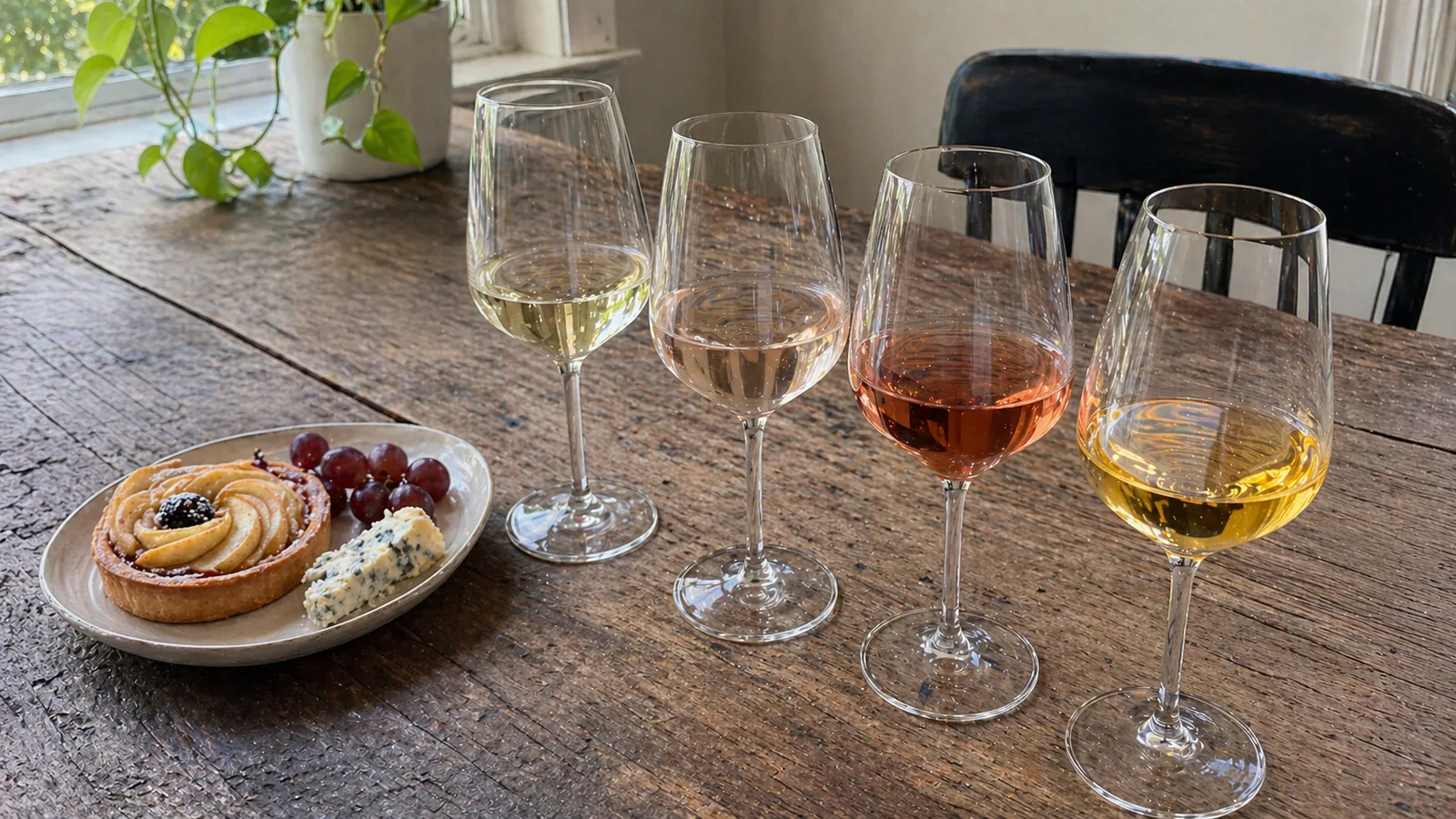
You ask the bottle-shop person for a “dry red” and walk out with a Shiraz that tastes like blackberry jam. Your friend swears their Chardonnay is “bone dry” but it tastes sweeter than the Riesling you had last week. The label says nothing useful, the prices range from $12 to $80, and you have no real way to predict whether the wine in your hand will taste sweet, dry, or somewhere in between. Time to fix that.
By the end of this page you’ll know:
- The exact six-level scale that pros use, with grams of sugar at each step and real bottles you’ve probably seen
- Why a “dry” Chardonnay can taste sweeter than a German Riesling that has 10 times more sugar in it
- The five label words that actually tell you sweetness on Champagne (and the four on still wines)
- The scale most people get wrong on Prosecco
- A grape-by-grape cheat sheet so you can predict sweetness before opening anything
- Why the “I don’t drink sweet wine” crowd is missing some of the best dinner pairings on the planet
What Is Residual Sugar in Wine?
Residual sugar (RS) is the grape sugar left in the wine after fermentation finishes. Yeast eats sugar and produces alcohol; if the yeast eats every gram of sugar, the wine is bone dry. If the winemaker stops fermentation early or adds sugar back, sugar remains.
It’s measured in grams per litre. One gram per litre is one gram of sugar in 1,000 ml of wine. A standard 750ml bottle of off-dry Riesling at 15 g/L contains about 11 grams of sugar total: roughly the same as one teaspoon. A bottle of Sauternes at 150 g/L contains about 110 grams: roughly half a cup of sugar in the bottle. The numbers seem small until you remember the bottle is mostly water and alcohol.
Sweetness on the tongue is what residual sugar feels like. The actual taste of “sweet” registers right at the tip of your tongue and lingers afterward. A wine with 30 g/L will taste obviously sweet. A wine with 4 g/L is technically dry, even though some people will swear they can taste a hint of sweetness in it.
The trick that confuses everyone: aroma is not sweetness. A wine can smell intensely of ripe peach, tropical fruit, or honey while having almost no actual sugar. The brain reads the fruit aromas and decides “sweet,” even though the tongue isn’t getting any sugar signal. This is why a warm-climate Chardonnay can taste sweeter than a German Kabinett Riesling that has five times the sugar in it. Acidity and aroma fool the brain. The numbers don’t lie.
The Six Levels of Wine Sweetness, Explained
This is the working scale most pros and producers use. Memorise it once, refer back forever.
Level 1: Bone Dry (under 1 g/L)
Almost no detectable sugar. The wine feels lean and savoury. Many serious sparkling wines (Champagne labelled Brut Nature or Extra Brut) sit here, along with most fine-wine reds (Bordeaux, Barolo, Burgundy) that finished completely dry.
Examples you’d recognise: Brut Nature Champagne, most quality Bordeaux, traditional Chablis, top-tier Sancerre, Muscadet, dry Fino sherry.
Level 2: Dry (1 to 4 g/L)
The biggest category by far. Most table wine in the world lives here. There’s a touch of sugar, but you don’t taste it as sweetness, you taste it as “round” or “ripe.” Most reds you order at a restaurant fall here.
Examples: most Cabernet Sauvignon, Merlot, Shiraz, Pinot Noir; most Italian reds (Chianti, Barbera, Valpolicella); dry Spanish reds; most New World Chardonnay; most Sauvignon Blanc; Pinot Grigio.
Level 3: Off-Dry (5 to 17 g/L)
Sweetness is detectable but the wine still pairs with food. Brut Champagne falls here (yes, Brut has measurable sugar, often around 8 to 12 g/L). German Kabinett Riesling sits here. So does most Prosecco labelled Extra Dry (which, despite the name, is sweeter than Brut).
Examples: Brut Champagne, Extra Dry Prosecco, German Kabinett Riesling, Vouvray Sec or Demi-Sec, off-dry Chenin Blanc, many rose wines, Lambrusco Amabile.
Level 4: Medium-Sweet (18 to 50 g/L)
You taste sweetness clearly, but the wine still feels balanced if it has enough acidity. This is where Spatlese and Auslese German Rieslings live. Demi-Sec Champagne. Some New-World Moscato.
Examples: German Spatlese Riesling, Vouvray Demi-Sec, Demi-Sec Champagne, white Zinfandel, most Moscato d’Asti, off-dry Gewurztraminer.
Level 5: Sweet (50 to 120 g/L)
Sweet enough that you wouldn’t drink it through dinner, but it can pair with strong cheeses, foie gras, or rich desserts. German Beerenauslese Riesling. Late-harvest wines. Many Tokaji styles.
Examples: German Beerenauslese, late-harvest Sauvignon Blanc or Riesling, Vouvray Moelleux, sweet Madeira (Bual or Malmsey), some Tokaji.
Level 6: Dessert (120 g/L and up)
Pure dessert. Sticky, viscous, often surprisingly age-worthy. Sauternes. Tokaji Aszu. Eiswein. Pedro Ximenez sherry.
Examples: Sauternes, Tokaji Aszu (5 or 6 puttonyos), Eiswein, Pedro Ximenez sherry, top-tier Trockenbeerenauslese, Vin Santo, fortified Muscat (Rutherglen).
Why Do Some “Dry” Wines Taste Sweet?
The single most common confusion in wine. The answer is that sweetness on the tongue and “fruitiness” in the nose are different things, and your brain blurs them together.
A wine that smells of ripe peach, tropical fruit, vanilla, and butter will taste sweeter than its actual sugar level suggests. The aromas trigger a sweetness expectation, and your brain delivers on it. This is why warm-climate Chardonnay (loaded with ripe fruit and oak vanillin) often tastes sweet to people, even when it’s bone dry.
The reverse is also true. A wine with high acidity tastes drier than it is. German Kabinett Riesling can have 30 to 40 g/L of sugar and still feel refreshing because the acid is so high it cuts through everything. The numbers say medium-sweet. Your mouth says off-dry. The acid wins.
So if you’ve ever said “I don’t like sweet wines” but then loved a particular Riesling, this is why. The Riesling’s acidity probably masked the sugar. Most German Rieslings drink drier than their labels suggest. The opposite happens with low-acid, high-fruit wines that drink sweeter than they actually are.
If you want to test this for yourself, pour an off-dry German Riesling and a dry Australian Chardonnay side by side at the same temperature. The Riesling has more sugar. The Chardonnay will probably taste sweeter. Once you’ve felt it, you understand the trick forever.
How Do You Read Sweetness Off a Wine Label?
Different categories use different code words. Here are the main ones.
Champagne and traditional sparkling wines use a clear scale by law:
- Brut Nature / Zero Dosage = bone dry, 0 to 3 g/L
- Extra Brut = dry, 0 to 6 g/L
- Brut = off-dry, 0 to 12 g/L (the most common style)
- Extra Dry / Extra Sec = off-dry to medium, 12 to 17 g/L
- Sec = medium-sweet, 17 to 32 g/L
- Demi-Sec = sweet, 32 to 50 g/L
- Doux = dessert, over 50 g/L
Yes, Extra Dry is sweeter than Brut. The scale is from an era when most Champagne was sweet, and the names made sense relative to what came before. Now they’re just historical quirks. Brut is the everyday Champagne or Prosecco choice; Extra Dry is for people who prefer a touch more sweetness.
German wines use ripeness levels (the Pradikat system) which roughly track sweetness:
- Trocken = dry (under 9 g/L)
- Halbtrocken = off-dry
- Kabinett = light, often off-dry
- Spatlese = medium-sweet (usually)
- Auslese = sweet
- Beerenauslese (BA) = very sweet
- Trockenbeerenauslese (TBA) = dessert
- Eiswein = dessert
A bottle labelled “Riesling Trocken” is dry. A “Riesling Kabinett” without “Trocken” usually has some sweetness. “Auslese” almost always means sweet. The same hierarchy applies to other German wines (Gewurztraminer, Pinot Gris/Grauburgunder).
French regions use varied terms:
- Sec = dry
- Demi-Sec = off-dry to medium
- Moelleux = sweet
- Doux = sweet
- Liquoreux = dessert (Sauternes, Barsac)
- Vendange Tardive (Alsace) = late harvest, usually sweet
- Selection des Grains Nobles (Alsace) = very sweet, dessert level
Italian wines use:
- Secco = dry
- Abboccato = off-dry
- Amabile = medium-sweet
- Dolce = sweet
The fallback when none of these are on the label: check the alcohol level. Most dry wines are 12 to 15% alcohol. If you see a wine at 9% or 10%, sugar is almost certainly present (the yeast didn’t get to finish). A 10% Riesling at any reputable producer is definitely off-dry to sweet.
How Sweet Are the Wines Most People Drink?
Mapped against the scale, the headline answers:
Cabernet, Merlot, Shiraz, Pinot Noir. Almost always dry (1 to 4 g/L). Some New-World examples nudge into off-dry territory (a few Aussie Shirazes can hit 6 to 8 g/L because the grapes are picked very ripe).
Most Chardonnay. Dry, although the ripe fruit and oak make many warm-climate examples taste sweet. The sugar is usually under 4 g/L; the perceived sweetness comes from the aroma profile.
Sauvignon Blanc. Bone dry to dry, almost universally.
Pinot Grigio. Dry. The Italian style is lean and savoury; New World Pinot Gris (especially Alsatian style) can be off-dry.
Riesling. This is the wide one. Could be anything from bone dry (German Trocken, Australian Clare Valley) to dessert (TBA, Eiswein). The label tells you which.
Champagne. Off-dry by default (Brut, around 8 to 12 g/L). Brut Nature is bone dry. Demi-Sec is medium-sweet.
Prosecco. Brut (off-dry, around 6 to 12 g/L) is the modern standard. Extra Dry is slightly sweeter. Plain “Prosecco” without a sweetness designation is often Extra Dry or Dry, both noticeably sweet.
Rose. Provence rose is bone dry to dry. White Zinfandel and many New-World rosés are off-dry to medium-sweet. The colour doesn’t tell you anything; the region and producer do.
Moscato d’Asti. Medium-sweet by category. Lovely with peaches and ricotta.
Port. Sweet (around 100 g/L for most styles). Tawny, Ruby, and Vintage Port are all in dessert-wine territory.
Sherry. A surprise. Fino and Manzanilla are bone dry. Amontillado is dry. Oloroso is dry too (if “Seco”). Cream and Pedro Ximenez are dessert-level sweet. The label has to tell you, because the same word “sherry” covers everything from bone dry to syrup.
How Does Sweetness Match Food?
Two real rules.
Sweet wine should be sweeter than the dessert. If the dessert is sweeter than the wine, the wine tastes thin and sour. This is the single most common dessert-pairing mistake. A bone-dry Champagne with a chocolate cake is a disaster, because the cake has more sugar than the Champagne, and the wine collapses on contact. A Sauternes or a Madeira works because the wine carries enough sugar to keep up.
Off-dry wines crush spicy food. Capsaicin from chillies is partially neutralised by sugar. A bone-dry wine with Thai green curry feels harsh and amplifies the heat. An off-dry Riesling at 15 g/L feels balanced and refreshing alongside the same dish. This is why German and Alsatian Rieslings are the classic pairing for curries, Sichuan food, and anything chilli-heavy.
Other quick wins:
- Salty food + sweet wine. Blue cheese and Sauternes. Prosciutto and Moscato. The contrast works because the sugar amplifies the savoury and the salt cuts through the sugar.
- Rich, fatty food + off-dry whites. A Vouvray Demi-Sec with foie gras or a duck rillette. The fat needs the sugar to balance and the acid to clean up.
- Light dessert + light dessert wine. Fruit tart with Moscato d’Asti, not Sauternes. Match the intensity, not just the sweetness.
People who refuse sweet wine miss most of the best food pairings on the planet. Sauternes with Roquefort, Tokaji with foie gras, Spatlese with green curry, Pedro Ximenez with vanilla ice cream: all classic for a reason. If you want a softer entry point, our round-up of the best sweet red wine has bottle picks that don’t tip into dessert territory. If you’ve never tried any of these, fix one this month and your “I don’t drink sweet wine” position will probably soften.
Frequently Asked Questions
What’s the difference between dry and off-dry wine?
Dry wines have under 4 grams of sugar per litre, and you don’t really taste the sweetness. The full breakdown lives in our dry vs sweet wine guide. Off-dry wines have 5 to 17 g/L, and you can detect a touch of sweetness, but the wine still pairs with most food. Brut Champagne is technically off-dry. So is German Kabinett Riesling. Most reds and most Sauvignon Blancs are dry.
Is Prosecco sweeter than Champagne?
Usually, yes. Standard Brut Prosecco often has 10 to 12 g/L of sugar; standard Brut Champagne is more often 6 to 9 g/L. The bigger gap shows up in Extra Dry Prosecco (commonly 14 to 17 g/L), which is sweeter than almost any Champagne you’ll drink. Look for “Brut” on the label if you want the drier style.
Why does my Chardonnay taste sweet if it’s dry?
Aroma fooling your brain. Ripe-fruit and oak-driven Chardonnay (vanilla, butter, tropical fruit) trigger a sweetness expectation even when the actual sugar is under 4 g/L. The wine is technically dry, but it drinks “sweet” because of how your nose is reading it. Try an unoaked Chablis next to it and the difference is obvious.
Are all Rieslings sweet?
No, this is the biggest misconception in wine. Riesling can be bone dry (German Trocken, Australian Clare and Eden Valleys, Alsatian) or dessert-level sweet (TBA, Eiswein). The label has to tell you. If you’ve only had one Riesling and it was sweet, try a Clare Valley Trocken next. Same grape, completely different wine.
What’s the sweetest wine in the world?
Tokaji Eszencia is in the running, with sugar levels often above 400 g/L. It’s so concentrated that fermentation barely happens, and the wine sometimes contains less than 5% alcohol. Other contenders: Pedro Ximenez sherry (often 350 g/L), some Eisweins, and old Tokaji Aszu Eszencia. Most of these are sipped in tiny pours, more like a syrup than a beverage.
Does sweetness affect how long a wine ages?
Yes. Sweet wines, especially those with high acidity, age extraordinarily well. Sauternes and Tokaji can drink beautifully at 50 years old. The sugar acts as a preservative, the acid keeps things bright, and the wine slowly develops nutty, honeyed, dried-fruit notes. Some of the longest-lived wines on the planet are very sweet.
What’s Next?
Sweetness is one of four pillars of wine structure. The others are acidity (the mouth-watering tartness), tannin (the drying grip in reds), and body (the weight on your palate). Once you can read all four, picking a bottle starts to feel less like a guess.
For a guided tour through all four, How to Taste Wine Like You Know What You’re Doing walks you through them in four steps. Or if you want to nail the perceived-versus-actual-sweetness trick this week, line up a Marlborough Sauvignon Blanc, a German Kabinett Riesling, and an oaked Californian Chardonnay. Pour each at the same temperature. Sip back and forth. The Riesling has the most sugar. Bet your tongue can’t tell.
Keep Reading
Dry vs Sweet Wine: How to Tell the Difference
Residual sugar separates dry from sweet wine. Here's how fermentation works, what label terms mean, and how to pick the right style every time.
Best Sweet Red Wines Worth Trying Right Now
If dry reds aren't your thing, these sweet reds deliver fruit-forward flavour without the tannin bite. Eight bottles worth knowing about.
Riesling: Sweet vs Dry, Regions, and Pairing Guide
Riesling runs from bone-dry to dessert-sweet, and the label tells you which. Here's how to read it, what it tastes like, and what to eat with it.