Dry vs Sweet Wine: How to Tell the Difference
Residual sugar separates dry from sweet wine. Here's how fermentation works, what label terms mean, and how to pick the right style every time.
Picture this: someone in your group says “I only drink dry wine” and then orders a glass of New Zealand Sauvignon Blanc. Nothing wrong with that choice. But technically? Many bottles of NZ Sauv Blanc carry a few grams of residual sugar and taste intensely fruity. Are they “dry”? Sort of. Are they what most people picture when they say dry? Not really.
This is the confusion that trips up wine buyers every single day. And it’s easy to fix once you understand the one thing that actually determines wine sweetness: what happens inside the tank during fermentation.
By the end of this page you’ll know:
- The exact moment in winemaking when a wine becomes dry or sweet (it’s not about the grape)
- Why a wine can taste like a fruit salad and still register zero sugar on the tech sheet
- The two words on a German Riesling label that tell you instantly whether it’s dry or sweet
- The alcohol percentage trick that gives away a wine’s sweetness before you even pour it
- Which food situation calls for a dry wine and which one genuinely needs a sweet one
What Makes a Wine Dry or Sweet?
Fermentation is where it all happens. When you press grapes, you get juice full of natural sugars. Add yeast, and those sugars start converting into alcohol and carbon dioxide. If the yeast runs out of food and finishes the job completely, almost no sugar is left. The result is a dry wine.
If the winemaker stops fermentation early, by chilling the tank, adding sulfur, or filtering out the yeast, the leftover sugar stays in the wine. That’s residual sugar, and it’s the only real measure of wine sweetness.
A dry wine typically has under 10 g/L of residual sugar. Bone dry styles like Chablis or Muscadet run below 2 g/L. As you move up the scale, the sweetness becomes more noticeable: off-dry wines sit around 10-30 g/L, semi-sweet wines climb to 50 g/L, and dessert wines can hit 120 g/L or more.
The average person can’t detect sweetness below about 15 g/L without training. That’s why a wine with 8 g/L of residual sugar often tastes “dry” to most drinkers even though the tech sheet says it isn’t bone dry.
Why Do Some Dry Wines Taste Sweet?
This is the big one. You pour a Pinot Gris from Alsace and it tastes rich, almost honeyed. You try a ripe Californian Chardonnay that seems almost sweet. Both wines might be completely dry on the sugar scale.
What you’re tasting is fruit-forward aromatics, not residual sugar. When grapes ripen, they develop aroma compounds that smell and taste like stone fruit, tropical fruit, citrus, and berries. Your brain reads these aromas as sweet because in everyday life, sweet things usually come with fruit flavours. Wine breaks that rule.
Oak ageing adds another layer. Vanilla and caramel notes from barrels give a perception of sweetness even when the sugar content is near zero. Glycerol, a natural byproduct of fermentation, contributes a soft, round mouthfeel that some people read as sweetness.
The practical upshot: if you think a wine tastes “sweet” but you usually prefer dry, try checking the alcohol content on the label. High alcohol (13.5% and above) generally signals that fermentation ran fully and residual sugar is low. A wine at 9% or 10% ABV almost certainly has significant residual sugar.
How Do You Read a Label to Know If a Wine Is Dry or Sweet?
Labels use a mix of regional terms that signal wine sweetness, but they’re not always consistent. Here’s what the main ones actually mean.
Sparkling wine terms are the most standardised. Brut Nature or Extra Brut means bone dry (under 3 g/L RS). Brut is dry (under 12 g/L). Extra Dry or Extra Sec sounds dry but is actually off-dry (12-17 g/L). Sec means semi-sweet. Demi-Sec is noticeably sweet. Doux is dessert-level sweetness.
German Riesling has its own scale. Kabinett is off-dry to dry. Spätlese is off-dry to semi-sweet. Auslese is sweet. Beerenauslese and Trockenbeerenauslese are dessert territory. If the label says “Trocken” (German for dry), the wine is dry regardless of its ripeness level.
Italian still wines use abboccato for off-dry and dolce for sweet. French labels use sec (dry), demi-sec (semi-sweet), and moelleux (sweet to rich). Most New World bottles don’t use these terms at all, so the alcohol percentage and grape variety become your best guide.
What’s the Difference Between Dry and Sweet on the Palate?
Beyond the sugar itself, dry and sweet wines feel different in your mouth.
Dry wines tend to have higher, more noticeable acidity. Sauvignon Blanc makes your mouth water. Riesling (dry styles) has a bright, almost laser-sharp acidity that cuts through food. Tannins in dry red wines add a gripping sensation on the gums and the back of your tongue.
Sweet wines feel rounder and fuller. The sugar coats the palate, softening the acidity and smoothing out any rough edges. A Moscato d’Asti feels like sipping peach nectar: low alcohol, gentle bubbles, high sweetness, zero grip. An ice wine is dense and syrupy, almost chewy.
Acidity also masks sweetness. A Riesling Spätlese with 40 g/L of residual sugar can taste less sweet than a low-acid wine with only 20 g/L, because the bright acidity keeps your palate sharp. This is why German Rieslings often seem drier than the numbers suggest.
When Should You Choose a Dry Wine?
You’re eating savoury food. Dry wines are better partners for most food because their acidity cuts through fat and salt rather than fighting with it. A bone-dry Sangiovese alongside a pasta Bolognese, a Cabernet Sauvignon with a ribeye, a Sauvignon Blanc with goat’s cheese: the wine’s acidity refreshes each bite.
You’re drinking before dinner. An aperitif should open your appetite, not fill it. A brut Champagne, a dry Sherry, a crisp Muscadet: these get the stomach ready. A sweet wine at the start of a meal tends to overwhelm whatever comes next.
The dish is already rich. Full-bodied dishes with cream sauces, roasted meats, or umami-heavy ingredients need a dry wine alongside. Sweetness on sweetness is a trap. Dry red wines and dry white wines cut through richness; sweet wines amplify it.
You want the wine to stay in the background. Dry styles are typically more versatile at the table. Chardonnay, Pinot Gris, Merlot, Malbec, Tempranillo: these accompany food without demanding attention.
When Should You Choose a Sweet Wine?
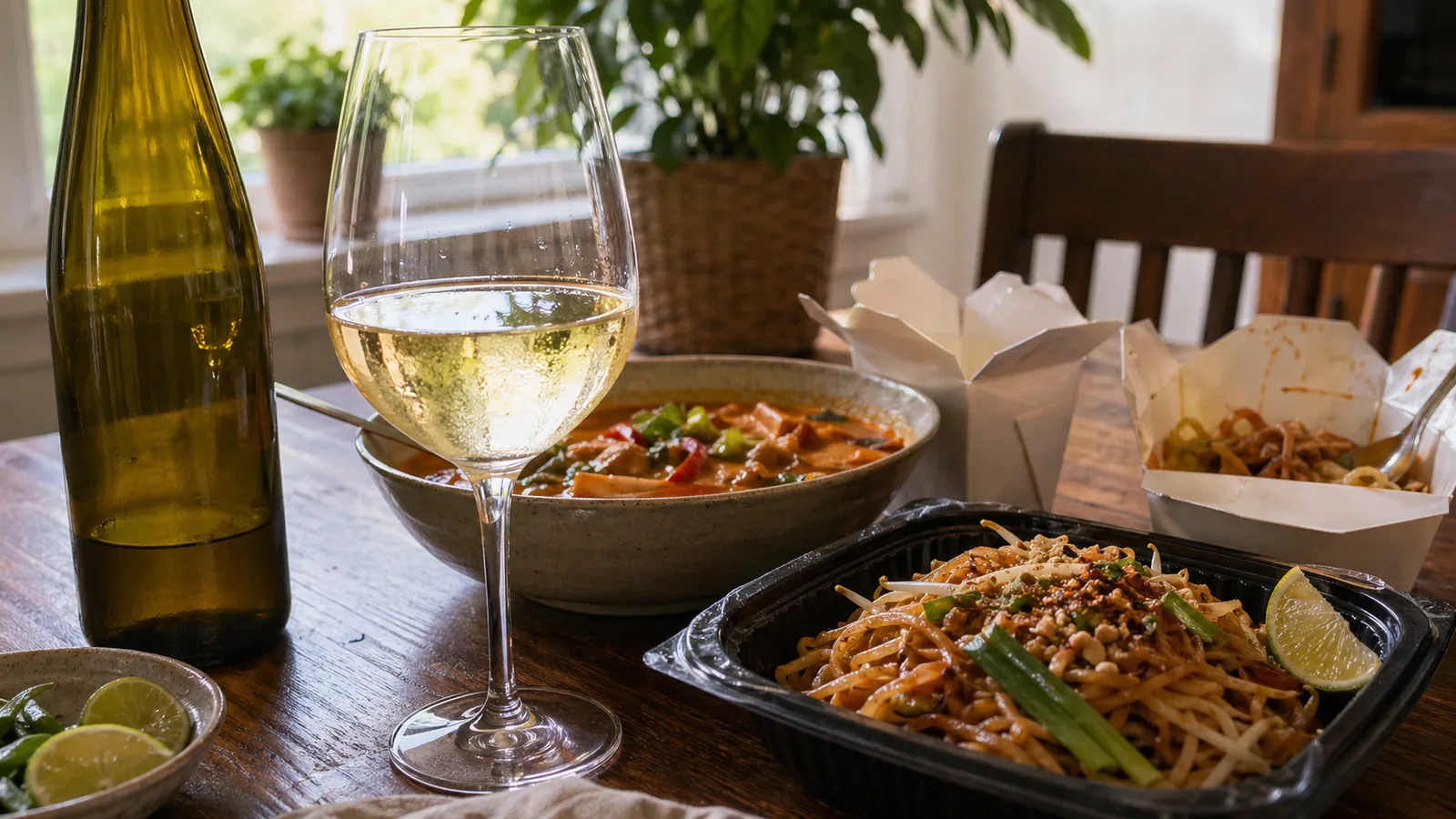
The food is spicy. Spicy heat and tannins are a rough combination. A bone-dry red wine alongside a Thai green curry makes both the food and the wine taste harsh. A slightly sweet Riesling, a Gewurztraminer, or a Moscato softens the heat and brings out the aromatics in the dish. This is one of the best food pairing rules in wine.
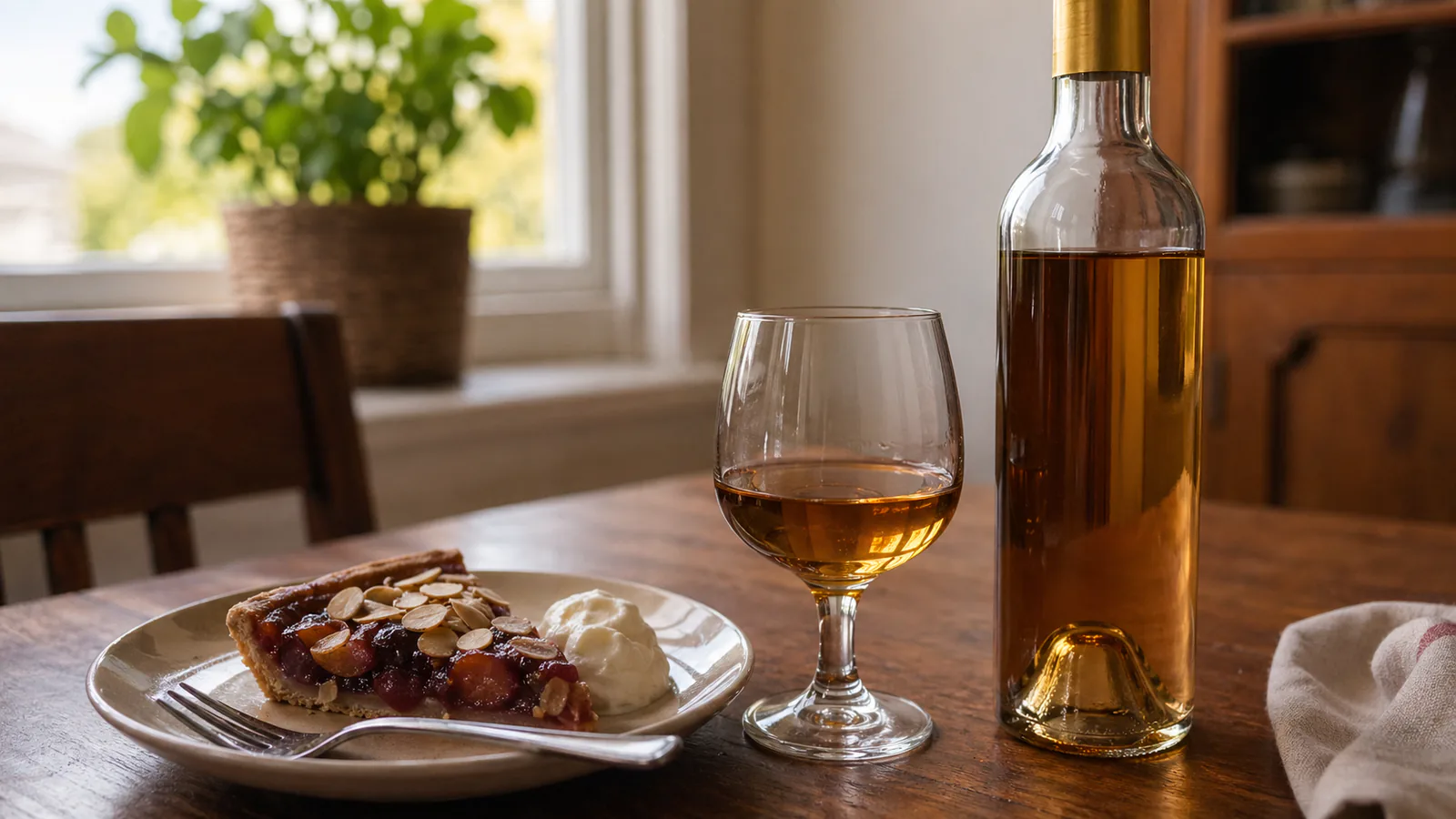
You’re matching dessert. Dry wine alongside a sweet dessert makes the wine taste thin and sour. The rule most wine educators use: the wine should be at least as sweet as the dessert. Sauternes with crème brûlée, Tokaji with a fruit tart, tawny Port with chocolate: the sweetness matches and neither overwhelms the other.
You’re serving foie gras or blue cheese. These are the exceptions where very sweet wines work with very rich savoury flavours. Sauternes with foie gras is one of the classic pairings in French cuisine. A sweet dessert wine alongside Roquefort or Stilton turns the contrast of salt and sweetness into something that works brilliantly.
You just want to drink something lighter and easier. Moscato d’Asti at 5.5% ABV is a perfectly valid choice on a warm afternoon. Dessert wines in small pours are one of the more pleasurable things in wine. For verified buyer picks, see the best sweet wines guide, and for the full taxonomy of sticky styles, the dessert wine guide.
Sweetness Scale: From Bone Dry to Dessert
| Style | Residual Sugar | Typical Examples |
|---|---|---|
| Bone dry | Under 2 g/L | Muscadet, Chablis, Brut Nature Champagne |
| Dry | 2-10 g/L | Cabernet Sauvignon, Sauvignon Blanc, Pinot Grigio, dry Riesling |
| Off-dry | 10-30 g/L | Riesling Kabinett, Gewurztraminer, Pinot Gris (Alsace), Vouvray Sec |
| Semi-sweet | 30-50 g/L | Riesling Spätlese, Demi-sec Champagne, White Zinfandel |
| Sweet | 50-120 g/L | Moscato d’Asti, late-harvest Riesling, Sauternes |
| Dessert | Over 120 g/L | Tokaji Aszu, ice wine, Pedro Ximenez Sherry, Tawny Port |
Frequently Asked Questions
Is red wine dry or sweet?
Most red wines are dry. Cabernet Sauvignon, Merlot, Pinot Noir, Malbec, Zinfandel, Sangiovese, Tempranillo, and Cabernet Franc all ferment to near-zero residual sugar. Sweet red wines are the exception: fortified styles like Port and Tawny Port are stopped mid-fermentation to retain sweetness, and wines like Brachetto d’Acqui or Lambrusco have some residual sweetness by style. The sugar levels in sweet reds are typically much higher than in standard table wines.
Can a fruity wine be dry?
Yes, and this trips up more people than almost anything else in wine. Fruit-forward character comes from the grape’s aromatic compounds, not from sugar content. A New Zealand Sauvignon Blanc can taste intensely of passionfruit and citrus and still be technically dry. Pinot Noir from a warm vintage can smell like overripe cherries and still have under 2 g/L of residual sugar. The aroma and the sweetness level are separate things.
What does “off-dry” mean on a wine label?
Off-dry means the wine has a small but noticeable amount of residual sugar, typically between 10 and 30 g/L. The sweetness is present but not prominent. Many wine drinkers who claim they only drink dry wine actually prefer off-dry styles: the slight sweetness smooths out acidity and makes the wine feel rounder without tasting sugary. German Riesling Kabinett and Alsatian Gewurztraminer are classic examples.
Does higher alcohol mean a drier wine?
Usually, yes. Alcohol is produced when yeast converts sugar. Higher alcohol levels generally mean the yeast consumed more sugar during fermentation, leaving less residual sugar behind. If a wine has alcohol levels of 13.5% or above, the yeast consumed most of the sugar, which means very little residual sugar is left. A wine at 9% ABV, on the other hand, stopped fermenting before all the sugar was consumed. This works as a quick label check, though it’s not a perfect rule: some fortified wines have high alcohol levels and high sugar because spirit was added during fermentation specifically to stop it.
What’s the sweetest wine you can buy?
Pedro Ximenez Sherry and Trockenbeerenauslese Riesling are among the sweetest wines made. PX sherry can reach 400-500 g/L of residual sugar, almost syrup-thick, with flavours of dried fig, raisin, and molasses. TBA Riesling is made from individually selected botrytis-affected grapes and can cost hundreds of dollars a half-bottle. Ice wine and Tokaji Aszu (especially 6 Puttonyos grade) are also among the most intensely sweet wines available.
Which wine style works best with spicy food?
Off-dry to sweet white wines are your best option. An off-dry Riesling, a Gewurztraminer, or a Moscato softens the heat rather than amplifying it. Avoid high-tannin dry reds with very spicy dishes: the tannins interact with capsaicin to make both feel harsher. A light, low-tannin red like a chilled Lambrusco or a Brachetto d’Acqui can work for moderately spiced dishes. From years of talking wine-club members through their next case, the Riesling pairing with spicy Asian food is the one recommendation that always lands.
Knowing where a wine sits on the sweetness scale changes how you shop, how you pair, and how you talk about what you actually like. The next time someone says “I only drink dry wine” while reaching for a fruit-forward Pinot Gris, you’ll know exactly what’s happening.
Ready to explore the sweet end of the spectrum? See our guide to the best sweet wines, or if dry is your territory, our red wine recommendations have the bottles worth trying.
Related Guides
Riesling: Sweet vs Dry, Regions, and Pairing Guide
Riesling runs from bone-dry to dessert-sweet, and the label tells you which. Here's how to read it, what it tastes like, and what to eat with it.
Best Sweet Wines: 12 Bottles Across Every Sweet Style
12 best sweet wines across Riesling, Moscato, sweet reds, Port, Sauternes, Tokaji, and Ice Wine. Every bottle sweetness-rated and verified live.
Dessert Wine Guide: Sweet Styles Worth Trying
The major styles of dessert wine explained: how they're made, how sweet they actually are, and which bottle to open with what.