Claire Bennett
Wine Editor9 min read
Wine Buying Guide: How to Pick a Bottle You'll Like
A practical framework for choosing wine you'll enjoy every time. No sommelier required.
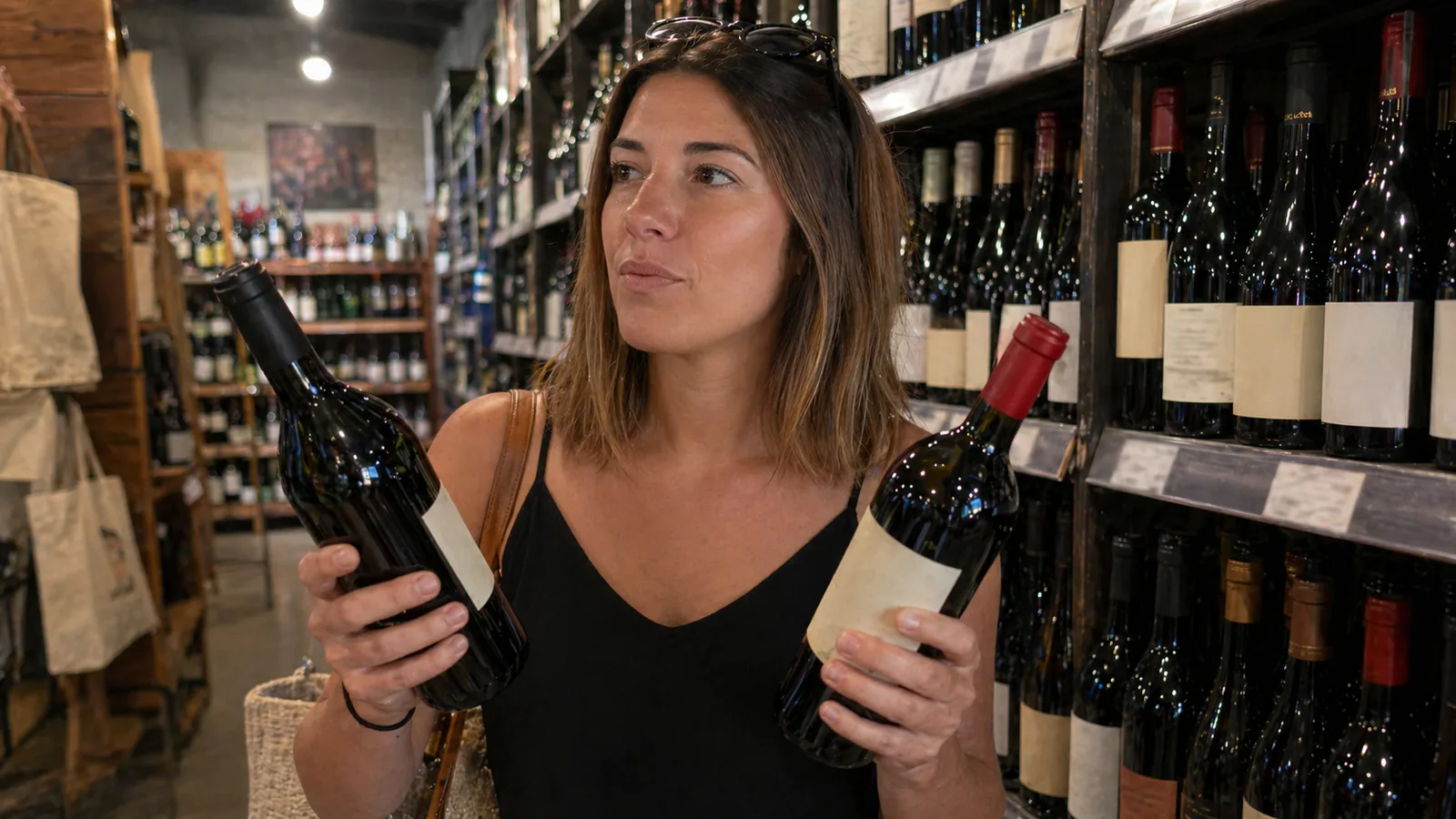
Most bad wine purchases come down to the same thing: picking by appearance instead of taste. The bottle design, the price, the label art, none of it reliably tells you whether you’ll enjoy what’s inside. Two questions do. This guide is built around those two questions, with practical shortcuts for every place you actually buy wine.
By the end of this page you’ll know:
- The single question to ask yourself before you even look at a label (it cuts the wall of bottles in half instantly)
- Why the $15-$25 range is where the quality-to-price ratio peaks, and what you’re actually buying when you go above it
- How to read a wine label in under 10 seconds without any prior knowledge
- The real difference between buying at a supermarket versus a bottle shop, and when each one is worth it
- How to order wine at a restaurant without defaulting to the second-cheapest bottle every single time
- The six grapes that are genuinely the best starting points if you’re still building your palate
What’s the Easiest Way to Pick a Wine I’ll Like?
Start with your own taste, not the label. Before you look at anything on the shelf, answer two questions: do you prefer sweet or dry? Light or full-bodied?
If you’re not sure, think about the last wine you enjoyed. Was it the kind that went down easily and felt a bit fruity? Or was it deeper, drier, with a bit of grip to it? That distinction alone will point you toward completely different sections of the store.
From there, a few rules of thumb that hold up across most situations:
For reds: if you like bold flavours and aren’t bothered by a dry finish, go for Cabernet Sauvignon or Malbec. If you want something lighter and smoother, look for Pinot Noir or Grenache.
For whites: if you prefer something crisp and refreshing, Sauvignon Blanc or Pinot Grigio are reliable. If you want something richer and rounder, Chardonnay (especially oaked) is the one.
For something in between: a dry rosé or a light Pinot Noir both work well as crowd-pleasers.
How Much Should I Spend on a Bottle of Wine?
The $15-$25 range is the sweet spot for everyday drinking. Below that, a big chunk of the price goes toward taxes, distribution, and packaging. Above $25, you’re still getting better wine, but the returns start to diminish fast.
Roughly how it breaks down:
- Under $12: Fine for cooking, risky for drinking. Some genuine gems exist but they take hunting.
- $12-$20: Solid everyday drinking. Plenty of well-made bottles from good producers in this range.
- $20-$40: Noticeably more complexity. This is where weekend-worthy bottles live.
- $40-$80: Real quality, but the jump from $25 isn’t as dramatic as marketing suggests.
- $80+: You’re paying for provenance, scarcity, and reputation. Sometimes worth it, often not.
The biggest mistake people make is assuming price equals quality in a straight line. It doesn’t. A well-made $18 Malbec from Mendoza can outdrink a badly-made $50 bottle every day of the week. The best cheap wine that tastes expensive round-up has bottles that consistently punch above their price.
How Do I Read a Wine Label Without Getting Confused?
Most labels are designed to look fancy, not to inform. Here’s what actually matters and what you can ignore. (For the deep dive, how to read wine labels walks through every term you’ll see.)
The stuff worth reading:
- Grape variety (or lack of it): If the label says “Shiraz” or “Sauvignon Blanc,” you know what you’re getting. If it just says a region name (like “Burgundy” or “Rioja”), the grape is implied by tradition. Burgundy reds are always Pinot Noir. Rioja reds are always Tempranillo. You don’t need to memorise all of them, but these two come up constantly.
- Region: Broadly tells you the style. Cool climates (like New Zealand, France’s Loire Valley) tend to produce leaner, more acidic wines. Warm climates (Argentina, California, Southern Italy) tend toward riper, fuller-bodied styles.
- Vintage (the year): For most wines under $30, vintage matters less than people think. For older bottles or fine wine regions, it matters more.
The stuff you can ignore:
- Most of the label design. A beautiful label costs money to produce, and that cost comes out of the wine budget.
- Awards stickers. They’re self-selected by producers and not independently meaningful.
- Back label descriptions. They’re written by the producer to sell the bottle. Read them for fun, not for guidance.
What Should I Buy at the Supermarket vs a Wine Shop?
Both have their place. The key is knowing what each does well.
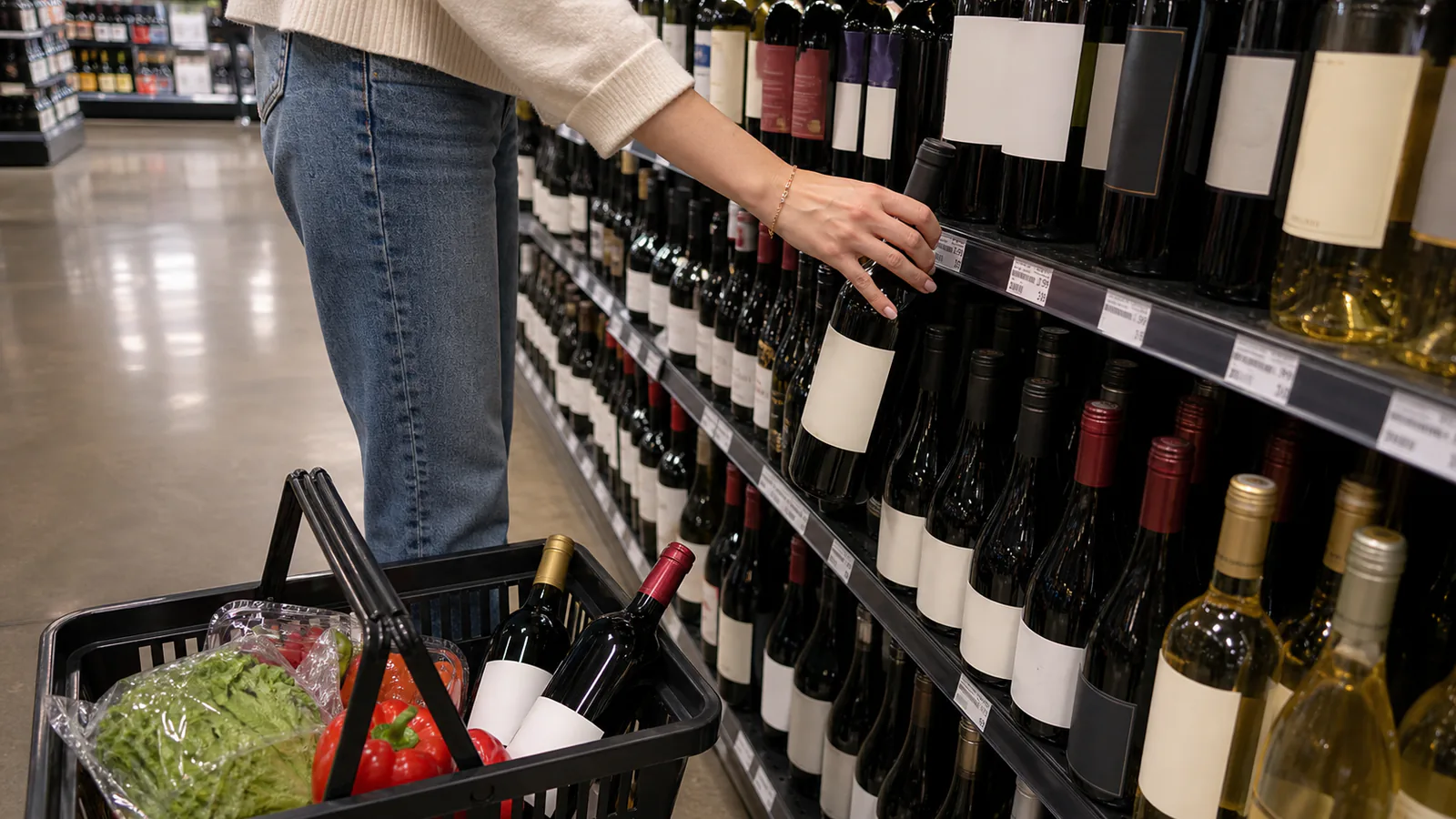
Supermarkets are convenient and fine for well-known brands you already trust. The range is curated for mass appeal, which means fewer surprises in either direction. You’re unlikely to find a hidden gem, but you’re also unlikely to waste money on something genuinely unpleasant. Our best grocery store wine round-up flags the bottles worth grabbing on a normal shop.
Bottle shops and independent wine stores are where the interesting stuff lives. Staff usually know the stock well and can point you toward producers that the supermarkets don’t carry. The range tends to reflect actual buying decisions made by someone who cares about wine, not a category manager optimising for shelf rotation.
The practical rule: for everyday drinking and meals at home, a supermarket works perfectly. When you want something worth talking about at dinner, or you’re buying a gift, go to a bottle shop and tell them your budget.
How Do I Order Wine at a Restaurant Without Overpaying?
The second-cheapest bottle on the list has a reputation for being a safe pick. The reasoning goes: restaurants mark up the cheapest wine most aggressively, so the second-cheapest is better value. This is sometimes true, often not. It’s mostly just a reflex.
A more reliable strategy: look for the wines from less famous regions. If a list has both a Napa Valley Cabernet and a Chilean Cabernet at a similar style description, the Chilean is almost always better value. Same goes for wines from Portugal, Spain’s lesser-known regions, and South African Chenin Blanc versus French Vouvray.
By-the-glass selections are also worth checking first. A good restaurant keeps its by-the-glass list short and rotates it to stay fresh. If something on that list sounds interesting, ask the staff about it. They’ll usually tell you honestly if it’s good, because they want you to enjoy it and come back.
The one rule that actually holds: don’t order a wine style you don’t like just because it’s cheap or because it “goes with the dish.” You’ll enjoy dinner more with a glass of something you like than a glass of something technically correct.
What Are the Best Wines to Try If I’m Just Starting Out?
Forget the prestige regions for now. Six grapes cover most occasions and make it easy to understand your own palate before you start exploring:
Reds:
- Malbec (Argentina): Full, fruity, and low in that bitter grip (tannin). Easy to like, hard to get wrong.
- Pinot Noir (New Zealand, Oregon): Lighter, silkier, and a good gateway to more complex reds.
- Grenache / Garnacha (Spain, France): Round, approachable, and pairs with almost everything.
Whites:
- Sauvignon Blanc (New Zealand, France): Crisp, fresh, and easy to identify by its grassy or citrus character.
- Pinot Grigio (Italy): Light and clean. A reliable choice when you’re not in the mood to think about it.
- Chardonnay (Australia, Burgundy): The range is wide, from lean and mineral to buttery and oaked. Try a few to see where you land.
Once you’ve had a few bottles of each and have a sense of what you like, you’ll naturally start filling in the gaps: other regions, other vintages, other producers. The wine list stops looking like a wall and starts looking like a menu.
Frequently Asked Questions
Is expensive wine actually better?
Mostly, but not in a straight line. Up to around $25-$30, quality tends to improve with price. Above that, you’re often paying for reputation, region, and scarcity more than for taste.
Blind tasting studies consistently show that people have trouble distinguishing expensive wines from well-made mid-range ones. Spend what feels right for the occasion.
What does “dry” mean on a wine label?
Dry means the wine has very little residual sugar. Most red wines and many whites are dry. It has nothing to do with how the wine feels in your mouth. A dry wine can still feel smooth, and a wine with a touch of sweetness can still feel quite tart.
Does the vintage year really matter?
For most bottles under $30, the vintage year matters less than the producer and region. Where it matters more: aged reds from Bordeaux or Burgundy, Champagne, and vintage Port. For your Friday night bottle of Sauvignon Blanc, the year is mostly irrelevant.
What wine should I bring to a dinner party?
A mid-range bottle in the $20-$30 range is the sweet spot for bringing to someone else’s table. Pinot Noir is a safe red that most people enjoy and that works across a range of food. A good Sauvignon Blanc covers the whites. If you know the host’s preferences, lean into those instead of playing it safe.
Can I trust wine scores and ratings?
As a rough guide, yes. A wine with a 90+ score from a credible publication has been assessed positively by someone who tastes professionally. But scores reflect a specific palate at a specific moment.
Use them as a filter, not as an instruction. A 92-point wine you personally find boring is less useful than an 87-point wine you keep reaching for.
How do I know if a wine has gone bad?
The main sign is a smell like damp cardboard or a musty cellar. That’s cork taint, caused by a faulty cork, and it happens to roughly 2-3% of cork-sealed bottles. If it smells off, it is off. Pour it away.
A wine that’s simply oxidised from being open too long will taste flat and sherry-like. Neither is dangerous, just unpleasant.
Once you know what you like, picking a bottle stops being guesswork. If you want to sharpen your palate faster, the next step is learning to actually taste what’s in the glass. How to Taste Wine Like You Know What You’re Doing walks through the four steps that turn drinking into tasting, in about five minutes.
Keep Reading
How to Read a Wine Label (Old World vs New World)
Decode any wine label in under a minute. The 5 things that matter, what reserve and grand cru actually mean, and when vintage is worth caring about.
Best Cheap Wine That Tastes Expensive: 8 Bottles
Eight wines under $25 that taste like they cost twice as much. From a 97-point Bordeaux to Champagne-method sparkling, here's the list.
Best Grocery Store Wines: 13 Bottles Worth Buying
13 grocery store wines worth grabbing. Sparkling, rosé, white, and red picks verified live, with prices, scores, and honest tasting notes.