
Claire Bennett
Wine Editor27 min read
Best Grocery Store Wines: 13 Bottles Worth Buying
13 grocery store wines worth grabbing. Sparkling, rosé, white, and red picks verified live, with prices, scores, and honest tasting notes.
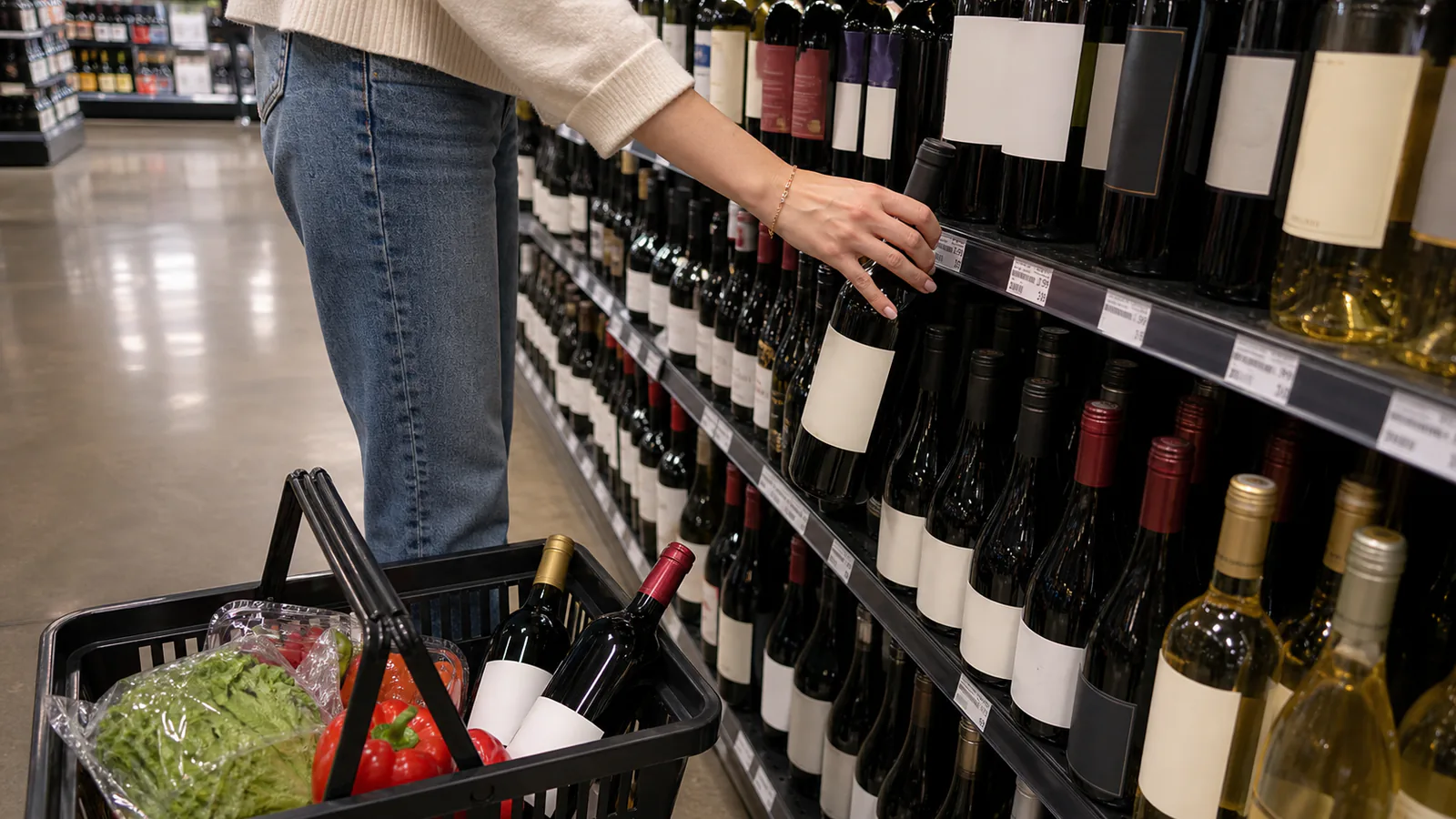
Grocery store wine is a three-minute decision made next to a basket of pasta and milk. The labels look similar, the prices feel arbitrary, and the only feedback you get is at home when you open it. These 13 bottles cut through that. Each one turns up reliably at major US chains, has been verified with a live price, and is worth grabbing without second-guessing.
These 13 wines show up at major US grocery and retail chains regularly: Trader Joe’s, Whole Foods, Costco, Total Wine, Kroger, Target, and similar. They’re the bottles worth buying when you don’t have time to research and don’t want to guess. Each one has been verified live with a real price and a named product.
The list covers sparkling, rosé, white, and red so you can find something for whatever the evening calls for.
Our Top 3 Picks

Miraval Rosé 2024
Cotes de Provence, France · Grenache, Cinsault, Syrah
92 pts Decanter

Kim Crawford Sauvignon Blanc 2025
Marlborough, New Zealand · Sauvignon Blanc
90 pts James Suckling

Prices vary by state. Click through for your current price.
Best Sparkling Wines at the Grocery Store
Sparkling wine is the most underrated grocery store buy. The two Proseccos here show up in the aisle at Kroger, Target, and Total Wine, they pour well from the fridge on short notice, and neither one will make you wince at the register. La Marca handles the crowd; Mionetto handles the budget.
La Marca Prosecco
La Marca is the Prosecco that most people reach for without thinking, and they keep reaching for it because it delivers. Two independent critics scored it 90: James Suckling and Wilfred Wong. Verified customer ratings back that up with a 4.2-star average across more than 2,000 reviews. That kind of review volume is a real signal: people are buying this repeatedly, not just trying it once.
Light bubbles, a touch of peach and pear on the nose, and an easy finish that doesn’t overstay its welcome. It’s approachable enough for guests who don’t usually drink wine and honest enough that people who do will still enjoy a glass. At $18.97, it’s the sparkling wine that earns its place in the regular rotation.
Mionetto Prosecco Brut
When you want sparkling without spending La Marca money, Mionetto is the call. It scored 90 from Wine Enthusiast and sits at $16.97, making it the most case-friendly sparkling option on this list. Clean, crisp, and easy to pour for a crowd without any sense that you’ve cut a corner.
This is the bottle to grab when you need a dozen glasses before dinner and don’t want every cent going to the bubbly. It works with everything from antipasto to light seafood starters, and it holds its own at a dinner table next to much pricier options.
Best Rosé Wines at the Grocery Store
Rosé is where the grocery store wine aisle has quietly gotten very good. Both bottles here are Provence-style: dry, pale, and food-friendly. Both carry the kind of label recognition that reads as a real choice rather than a default.
Miraval Rosé 2024
Three independent critics agreed on this one: Decanter gave it 92, James Suckling gave it 92, and Robert Parker added 90. That level of consensus across different reviewers is unusual at $19.97. Miraval is made in Provence from Grenache, Cinsault, and Syrah, and it shows: dry strawberry on the palate, a faint peach note on the nose, and a mineral finish that lifts it out of the generic rosé category.
It’s food-friendly enough to work with grilled fish, charcuterie, or a simple chicken dinner, and easy enough to drink by itself on the porch. For a rosé you can reliably find at Whole Foods and Total Wine, this is the one to remember.
Chateau d’Esclans Whispering Angel Rosé 2024
The pale pink bottle is one of the most recognizable in the rosé category, and that recognition does real work when you’re pulling something off a shelf. James Suckling scored the 2024 at 92. Bone dry, made from Grenache and Cinsault grown in Cotes de Provence. Watermelon, white peach, and a delicate finish that doesn’t linger past its welcome.
At $22.97, it sits a few dollars above Miraval, and you’re paying partly for the label recognition. That’s not a criticism: in the wine aisle, a label that signals confidence is worth something. This is the rosé that makes the dinner table feel like a decision was made.
Best White Wines at the Grocery Store
White wine is where the grocery store wine aisle does the most consistent work. These four picks cover the styles that show up reliably: crisp Sauvignon Blanc for seafood and warm evenings, a classic Pinot Grigio for when you want something neutral and crowd-safe, and a Chardonnay worth the upgrade over the house pour.
Kim Crawford Sauvignon Blanc 2025
Kim Crawford Marlborough Sauvignon Blanc is one of the most consistent grocery store finds in the white wine category. James Suckling scored the 2025 at 90. High acidity, grapefruit and passionfruit on the palate, clean and crisp with a finish that keeps it food-friendly without being sharp. At $15.97, it’s the best-value white on this list and the one to reach for when you need something reliable in a hurry.
It works with seafood, chicken, light pasta, and as an aperitif by itself. Non-wine drinkers find it easy. Wine drinkers find it honest. That combination is harder to pull off than it sounds.
Josh Cellars Sauvignon Blanc 2024
Josh Cellars is one of the most widely distributed wine brands in the US grocery aisle, and the Sauvignon Blanc is the most underrated bottle in their lineup. At $14.97, it’s the most affordable white on this list. Citrus-forward, clean acidity, and an easy finish that doesn’t ask anything of you.
This is the bottle to grab when the occasion is casual and the budget is firm. It holds up alongside Thai food, salads, and grilled vegetables in a way that makes it more versatile than its price suggests. A genuine bargain at the grocery store wine shelf.
Santa Margherita Pinot Grigio 2024
Santa Margherita is one of those bottles that shows up in good Italian restaurants and better grocery stores, and for good reason. Pinot Grigio from the Alto Adige appellation in northern Italy tends to be crisper and more mineral than the broader Venetian style, and Santa Margherita is the label that introduced a lot of people to that distinction.
At $25.97, it’s the most expensive white on this list, but it earns it. Pear, citrus, and a clean mineral finish. This is the Pinot Grigio to put on the table when you want the white to feel like a real choice rather than a filler. Widely available at Kroger, Whole Foods, and Total Wine.
La Crema Sonoma Coast Chardonnay 2023
La Crema is one of the best-distributed Chardonnay labels in the US, and the Sonoma Coast version is the one worth reaching for. Cool-climate Chardonnay from Sonoma Coast tends toward more restraint than the full-butter, heavy-oak style. There’s fruit: apple, pear, a little white peach. The oak is kept in check and the acidity gives it enough freshness to pair with food.
At $19.97, it drinks well above its price point and earns consistent praise from verified customer ratings. This is the Chardonnay for people who’ve been burned by the butterscotch-bomb style and want something with a little more structure. A crowd pleaser that doesn’t sacrifice quality to get there.
Best Red Wines at the Grocery Store
The red wine aisle is where most people default to the same safe pick every time. These five bottles give you better options across price points: a light Pinot Noir for versatility, a crowd-pleasing Cabernet for easy dinners, a proper Malbec with real critic credentials, and a premium red blend for when you want to spend up.
Josh Cellars Pinot Noir 2024
Josh Cellars Pinot Noir is one of the most widely distributed light reds in the US grocery aisle, and the 2024 is a reliable entry-level pick for everyday drinking. Light tannin, cherry and raspberry on the palate, and enough acidity to work alongside a range of foods without demanding a specific pairing.
At $15.97, it’s the best-value red on this list and the one to grab when you need something that works for everyone at the table. It handles chicken, salmon, mushroom dishes, and pasta with equal ease. If you’ve been stuck reaching for the same Cabernet Sauvignon out of habit, this is a useful reminder that Pinot Noir is a friendlier dinner companion for most meals.
Josh Cellars Cabernet Sauvignon 2023
Josh Cellars Cabernet Sauvignon is the entry-level Cab that shows up in grocery stores from coast to coast, and it earns its place there. At $15.97, you’re getting a California Cabernet Sauvignon with enough dark fruit, soft tannin, and structure to hold its own on the dinner table without needing a specific occasion.
Dark cherry, a hint of vanilla from oak, and a round finish that doesn’t dry out your mouth. It’s the cab to grab when you want something that feels deliberate but doesn’t require any thought. Pairs cleanly with burgers, pasta with red sauce, and anything coming off the grill.
BenMarco Malbec 2022
This is the red that earns a second look. BenMarco sources Malbec from the Uco Valley in Mendoza, where high altitude and cooler temperatures slow ripening and give the fruit a mineral edge that prevents it going jammy. James Suckling scored it 93, Vinous gave it 91, and Wine Spectator added 90. Three independent critics in agreement is a reliable signal.
Dark plum, blueberry, and a violet note on the nose. Fuller body, firmer tannin, and a finish that rewards food. At $19.99, it’s one of the best-value Malbecs available at Total Wine and similar retailers, and it drinks well above its price point. This is the bottle to grab when the dinner is beef or lamb and you want the wine to match.
The Prisoner Wine Company Red Blend 2022
The Prisoner is the premium option on this list, and it earns that spot. A Napa Valley red blend built around Zinfandel, with Cabernet Sauvignon, Petite Sirah, Syrah, and Charbono bringing structure and depth. The result is a wine that’s bold and fruit-forward without being heavy: dark cherry, pomegranate, and a hint of vanilla from 12 months in oak.
At $44.99, it’s clearly in a different tier from the rest of the list. You’ll find it at Total Wine, Whole Foods, and Kroger in most states. When you want to spend up on a red that will generate a comment from whoever’s at the table, this is the grocery store wine that delivers that moment. It’s become a mass-market brand, but the quality-to-price ratio at the premium grocery tier still holds.
Find Your Grocery Store Wine
Not sure which bottle to grab? Answer three questions.
Three quick questions. One matched bottle.
What are you eating tonight?
What's the vibe?
What kind of wine do you usually go for?
Let's find the right bottle for you.
Tell us a bit about the occasion and what you're after. We'll match you to one of the bottles on this page.
Photo by Skyler Ewing on PexelsReading your answers…
How We Chose These Wines
Frequently Asked Questions
What is the best grocery store wine?
The best grocery store wine depends on the style you want, but a few bottles are consistently worth grabbing regardless of the occasion.
For rosé, Miraval is the pick: 92 points from both Decanter and James Suckling at under $20. For red, BenMarco Malbec at $19.99 punches well above its price point with a 93 from James Suckling. For white, Kim Crawford Sauvignon Blanc at $15.97 is the most reliable option: 90 from James Suckling, widely available, and food-friendly enough to work with almost any meal.
If you want a single default to memorize, Miraval Rosé is the best all-purpose grocery store wine: good enough that wine drinkers respect it, easy enough that everyone else enjoys it, and priced where it belongs.
Which supermarket has the best wine selection?
Total Wine and More has the broadest selection of any major US wine retailer, stocking thousands of labels including many small producers not found at standard grocery chains. Whole Foods skews toward organic, natural, and premium bottles, with a well-edited selection in the $15 to $40 range.
Trader Joe’s is a strong budget option, and they carry a rotating selection of interesting bottles at low prices, often from smaller producers. Costco is underrated for premium wine, stocking Kirkland Signature labels including a Napa Valley Merlot and Cabernet that frequently match or exceed wines at twice the price.
For everyday grocery store wine shopping, Total Wine gives you the most options. For discovery and value, Trader Joe’s rewards regular visits. If your budget runs tighter, our best wines under $15 list focuses entirely on that price band.
What makes a good grocery store wine?
A good grocery store wine is reliable, food-friendly, and worth its price point. In practice, that means it’s available consistently at your local grocery store (not a limited release), it pairs with a range of foods rather than demanding a specific dish, and the quality justifies what you’re spending.
Look for a named grape and a named region on the front label: a bottle that says “Malbec, Mendoza” or “Riesling, Mosel” is being honest about what it is. Entry level wines without region labels often have a generic flavor profile built for maximum inoffensiveness rather than character. Our wine buying guide walks through how to read a label fast when you’re standing in the aisle. The grocery store shelves have plenty of fruity, approachable reds and whites that deliver real personality once you know which labels to pick up.
The brands on this list, Josh Cellars, Kim Crawford, La Marca, BenMarco, treat their grocery distribution as a real product. That’s why they show up here. For more bottles in the same value lane, see our roundup of good cheap wine that punches above its price.
What wine is best for GERD or acid reflux?
Lower-acid wines are easier on acid reflux and gastritis. From this list, the Malbec (BenMarco) and Chardonnay (La Crema) have the lowest natural acidity. The sparkling wines and Sauvignon Blancs, La Marca, Mionetto, Kim Crawford, and Josh Sauvignon Blanc, have the highest acidity and are the styles to approach carefully if this is a concern.
A practical approach: serve any wine with food rather than on an empty stomach, choose a dry wine over a sweet one, and keep pours moderate. Aged reds and oak-aged whites tend to be softer on acidity than younger, high-acid styles.
Keep Reading
Best Wines Under $15: Good Bottles That Don't Cost Much
Eight wines under $15 that are genuinely good. Critic-scored, customer-rated, and priced for a regular Tuesday night.
Good Cheap Wine: 12 Bottles Worth Buying Under $25
12 good cheap wines across red, white, rosé, sweet, and sparkling. Every bottle critic-scored or customer-rated, every one between $13 and $25.
Wine Buying Guide: How to Pick a Bottle You'll Like
A practical framework for choosing wine you'll enjoy every time. No sommelier required.