
Claire Bennett
Wine Editor10 min read
Syrah vs Shiraz: Same Grape, Two Wines Explained
Why one grape goes by two names, what Syrah and Shiraz actually taste like, the regions worth knowing, and the food that brings each style to life.
Syrah vs Shiraz: Same Grape, Two Wines Explained
Someone hands you a glass of red at a barbecue and says “it’s a Shiraz.” Five hours later at a wine bar a server pours you a Syrah and you taste something completely different. Same grape, same colour, same family of flavours, and yet your mouth says they’re not the same wine. That gap is one of the most interesting stories in wine, and once you understand it, you’ll know exactly which bottle to grab for which occasion.
By the end of this page you’ll know:
- The single chemical compound that gives the grape its peppery kick and why some bottles have it and some don’t
- Why a $25 Northern Rhône Syrah and a $25 Barossa Shiraz can taste like they came from different planets
- The Australian region that makes the smoothest, most polished version of the grape (it’s not Barossa)
- The serving temperature trick that makes a $15 Shiraz drink like a $30 bottle
- The cut of meat that’s basically built for Syrah, and why it works every time
What Is Syrah / Shiraz?
Syrah is a thick-skinned, dark-fleshed red grape that originated in the Northern Rhône Valley of France. DNA analysis settled the debate in the 1990s: it’s the offspring of two obscure French varieties, Mondeuse Blanche and Dureza, and it has nothing to do with the Persian city of Shiraz despite the name and the romantic theories.
The grape spread from France to Australia in the 1830s, when Scottish viticulturist James Busby brought cuttings to New South Wales and South Australia. Australians ended up calling it Shiraz, possibly through a misreading of “Scyras” or just an Anglicisation that stuck. Today both names sit on shelves around the world and the spelling tells you a lot about what to expect in the glass.
Syrah ripens late and likes warm sites with good drainage. It’s planted on the steep granite slopes of Hermitage and Côte-Rôtie in France, in the warm valleys of Barossa and McLaren Vale in Australia, in Washington’s Walla Walla, in Sonoma’s Bennett Valley, and across South Africa, Chile, and Argentina. The grape adapts to climate the way few varieties do, which is exactly why the same vine can produce a peppery, restrained French wine and a ripe, jammy Australian one.
The Syrah-Shiraz naming question matters because it’s not just a label. It’s a signal. When a winemaker chooses “Syrah” on the bottle, they’re usually telling you the wine leans French in style. “Shiraz” leans Australian. Some bottles split the difference and use both, which usually signals a riper but still structured style.
What Does Syrah / Shiraz Taste Like?
This is where the two names actually matter. Both styles share a backbone of dark fruit, full body, and firm tannins, but the details diverge sharply.
Quick stat block:
- Body: medium-full to full
- Tannins: medium-high, firm in cooler-climate Syrah, softer and rounder in warm-climate Shiraz
- Acidity: medium to medium-high
- Alcohol: 13.5–15.5% ABV (Northern Rhône lower, Barossa often higher)
- Oak: common, French oak in Syrah, often American oak in Shiraz (vanilla and coconut signature)
- Sweetness: dry, but ripe Shiraz can taste off-dry from sheer fruit weight
- Colour: deep purple to inky black
Northern Rhône Syrah tastes like blackberry, smoked meat, bacon fat, violet, and crucially, cracked black pepper. The pepper note comes from a compound called rotundone, and Syrah is the grape variety that expresses it most strongly. Cooler vintages bring more pepper, riper years dial it back. Older bottles develop notes of olive tapenade, leather, and dried herbs.
Australian Shiraz is louder and rounder. Blackberry jam, blueberry, plum, milk chocolate, sweet baking spice, eucalyptus on some sites, and that distinctive American-oak vanilla and coconut on the bigger bottles. Pepper is still there but takes a back seat to fruit. The texture is plush, the alcohol is higher, and the finish is long and warm.
Cool-climate Australian Shiraz (Yarra Valley, Adelaide Hills, Canberra District) splits the difference with bright fruit, finer tannins, and more pepper than Barossa.
If you taste blackberry, pepper, and a faintly meaty quality, you’re probably in Syrah territory. If you taste blueberry jam, vanilla, and chocolate, that’s Shiraz.
Where Is Syrah / Shiraz Grown?
Syrah / Shiraz is one of the most widely planted red grapes in the world. A few regions stand out for genuinely distinctive style.
Northern Rhône, France
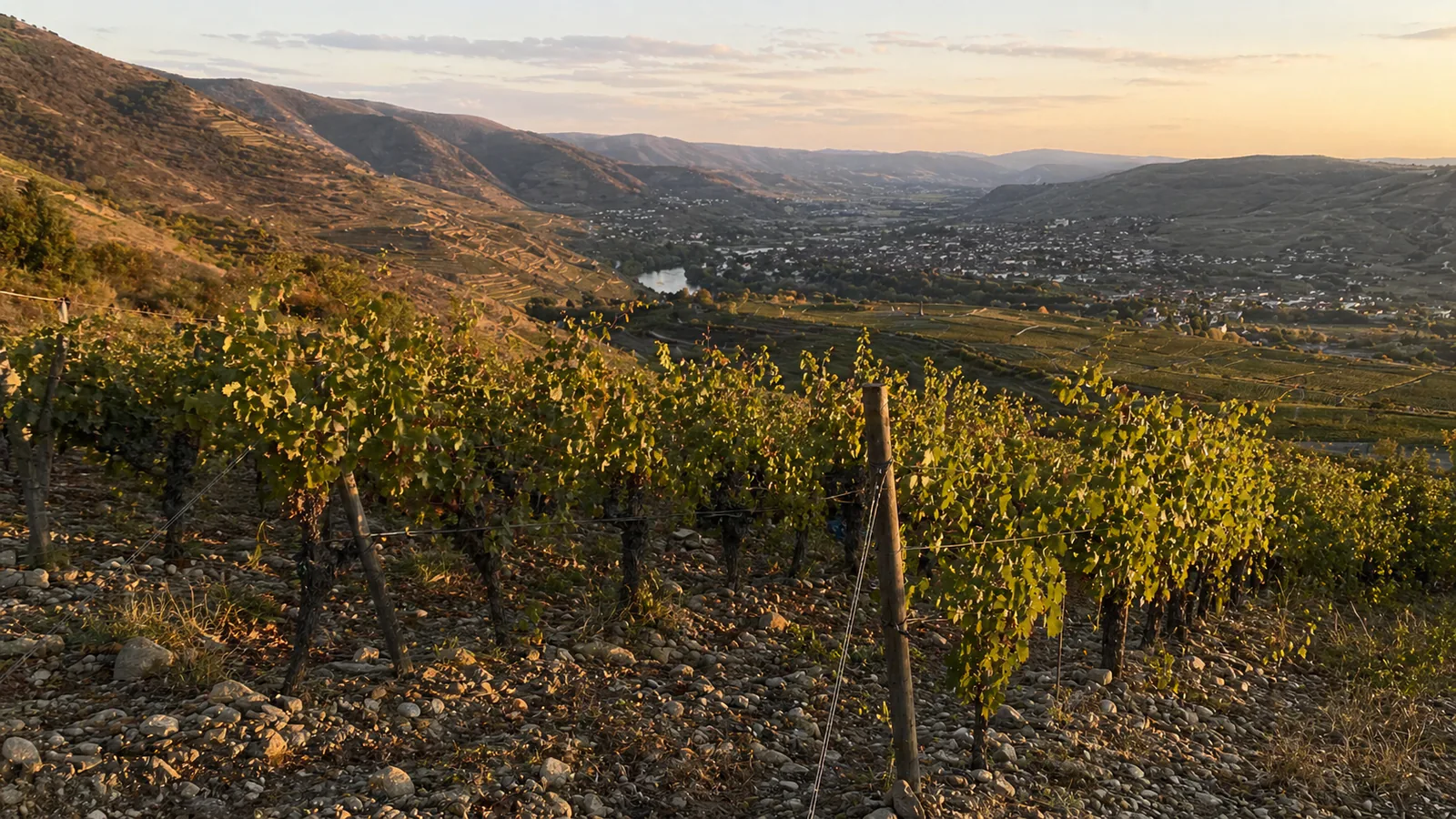
The grape’s spiritual home in the Rhône Valley. Look for Côte-Rôtie (elegant, perfumed, sometimes co-fermented with a small amount of white Viognier), Hermitage (the most powerful and age-worthy expression), Cornas (rustic, dark, and structured), Saint-Joseph (lighter and more approachable), and Crozes-Hermitage (the value play of the region). These are wines built on minerality, savoury depth, and that signature black pepper.
Barossa Valley, Australia
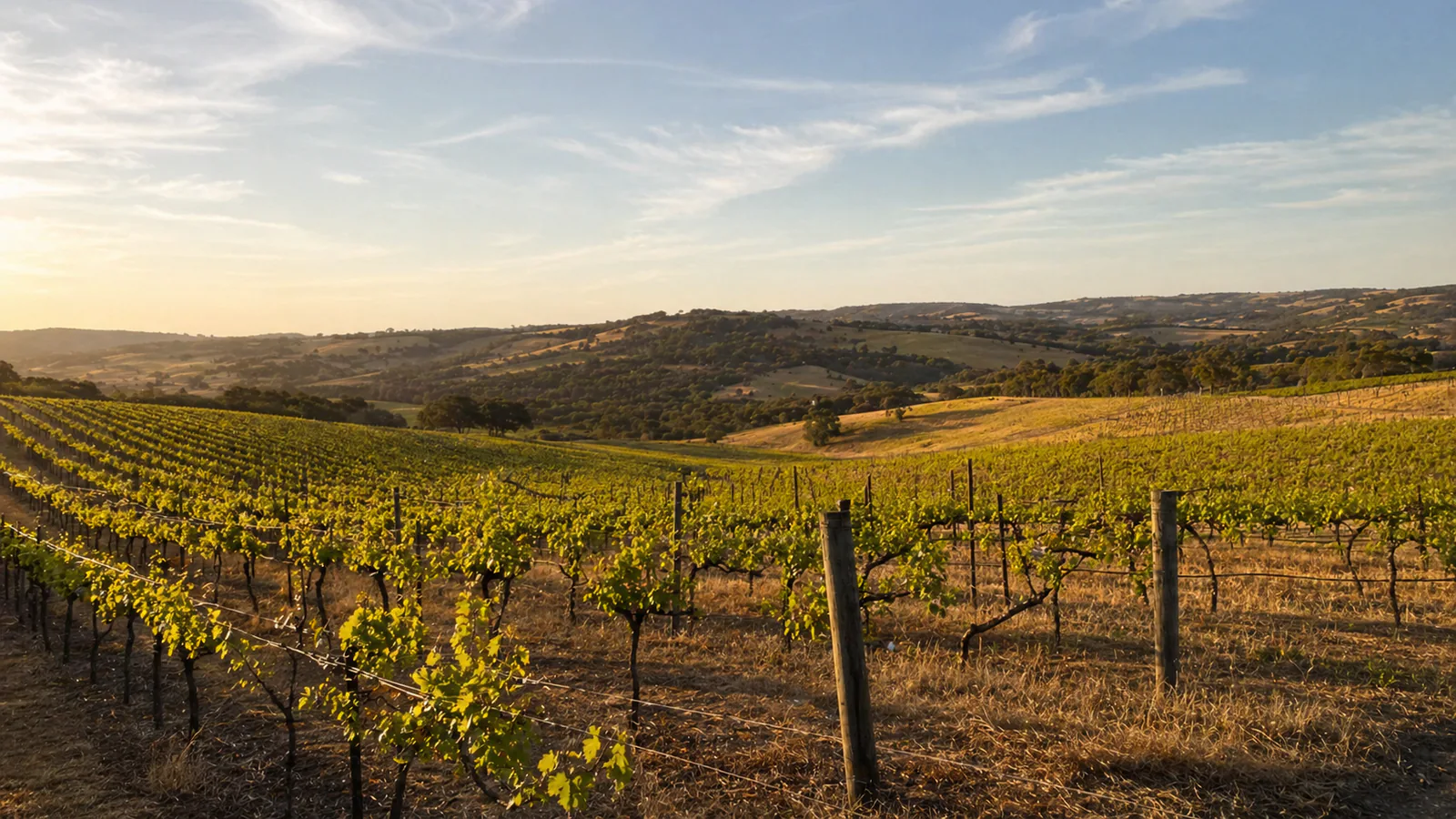
Barossa Valley is to Shiraz what Bordeaux is to Cabernet. Old vines, some over 150 years old, produce thick, ripe, full-bodied wines with blackberry, dark chocolate, and sweet spice. Penfolds Grange is the benchmark. At the everyday level, producers like Yalumba, Peter Lehmann, and Two Hands deliver excellent value.
McLaren Vale, Australia
A coastal region south of Adelaide that produces a slightly more elegant style than Barossa. Still ripe and full-bodied, but with more tension and a savoury, earthy edge. Look for d’Arenberg, Wirra Wirra, and Chapel Hill.
Hunter Valley, Australia
Older, more restrained Shiraz with leather, earth, and a distinctive “sweaty saddle” note that’s love-it-or-hate-it. Tyrrell’s is the classic name.
Washington State, USA
Washington Syrah from Walla Walla, the Rocks District of Milton-Freewater, and Red Mountain has become some of the most exciting in the world. Smoky, savoury, peppery, often with a stony minerality that recalls the Rhône but with more fruit. K Vintners, Cayuse, and Gramercy Cellars set the standard.
Sonoma and Paso Robles, California
California Syrah is a quieter category but worth seeking out. Bennett Valley, Sonoma Coast, and the Petaluma Gap produce cool-climate Syrah with bright fruit and pepper. Paso Robles makes a riper, fruit-driven style that sits closer to Shiraz than Syrah.
Stellenbosch and Swartland, South Africa
South African Syrah (most labels say Syrah, not Shiraz) is one of the best-value categories on the shelf right now. The Swartland in particular makes wines with a savoury, peppery, Rhône-leaning style at prices that French equivalents can’t touch.
What Food Pairs With Syrah / Shiraz?
The body weight and tannin structure of Syrah / Shiraz make it one of the most reliable food wines you can buy, especially for anything off a grill or a slow-cooked dish.
For Syrah-style bottles (peppery, savoury, restrained):
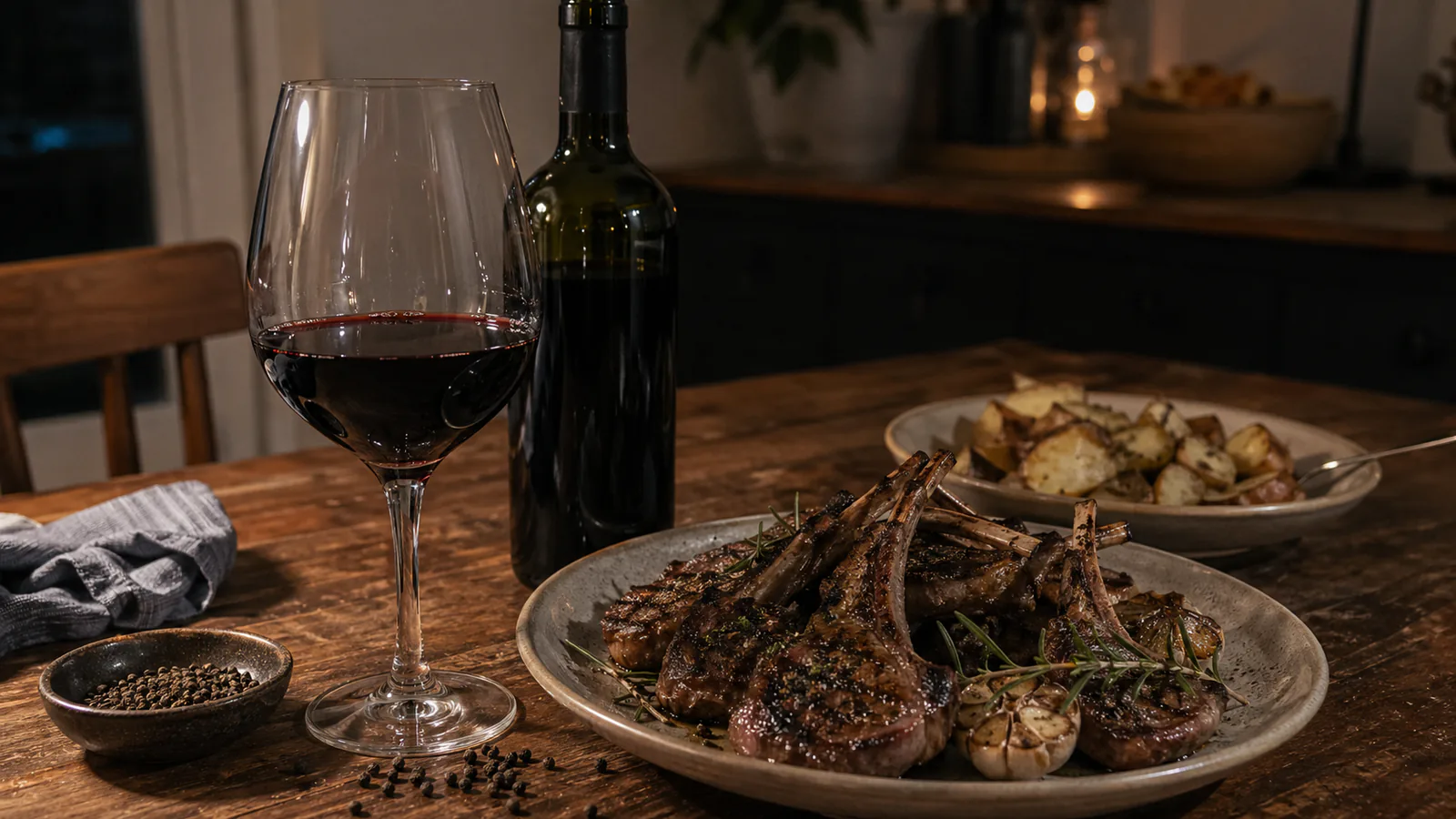
- Grilled lamb chops with rosemary. The pepper and the herbs lock together perfectly.
- Beef stew or boeuf bourguignon. A classic Northern Rhône match.
- Duck breast with cherry sauce. The wine’s dark fruit and the duck’s richness are made for each other.
- Peppered steak (steak au poivre). Pepper on pepper sounds redundant. It works.
- Wild mushroom dishes. Earthy meets earthy.
For Shiraz-style bottles (ripe, fruit-forward, full):
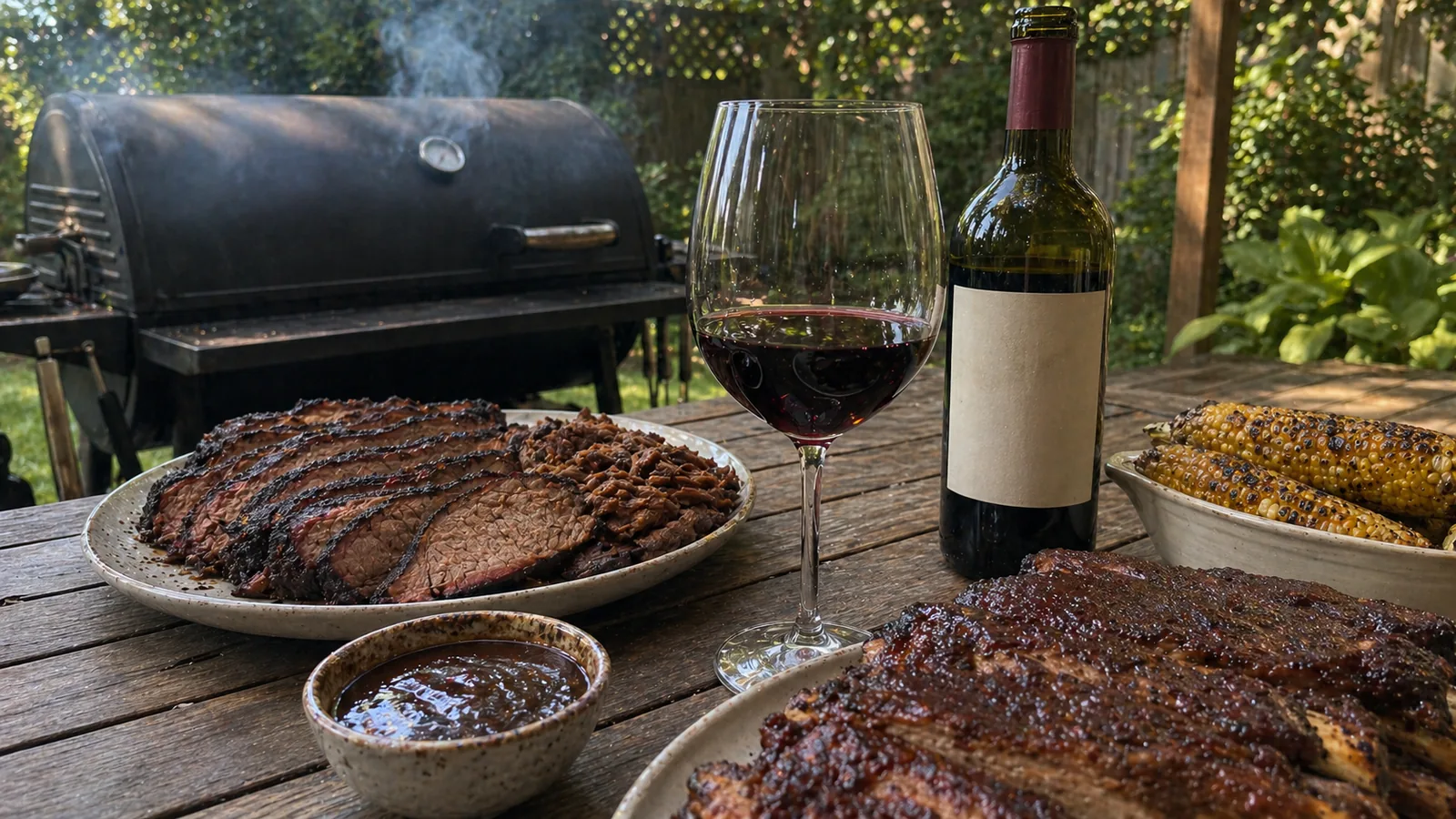
- BBQ ribs with smoky sauce. The wine’s sweet fruit balances the smoke and char.
- Slow-cooked beef brisket. The richness handles the wine’s weight.
- Lamb shoulder with North African spices. Cumin, coriander, and paprika echo Shiraz’s spice profile.
- Hard cheeses like aged cheddar or Gouda. Salty, nutty, perfect with ripe fruit.
- Pepperoni or sausage pizza. The fat and spice match the wine’s intensity.
- Chargrilled kangaroo or venison if you can find it. The lean, gamey meat lifts the wine.
What to avoid: light fish, delicate salads, anything cream-based. Syrah / Shiraz is the wrong wine for subtle food.
How Should I Serve Syrah / Shiraz?
Temperature: 16–18°C, slightly cooler for lighter-bodied Northern Rhône Syrah (15–17°C). If your house is warm, 10 minutes in the fridge before opening makes a real difference. Serving Shiraz at 22°C kitchen temperature flattens the fruit and makes the alcohol feel hot.
Glassware: a large bowl Bordeaux-style glass works for both styles. If you have Burgundy glasses (rounder, wider), use them for cool-climate Syrah where aromatics matter more.
Decanting: young, full-bodied Shiraz from Barossa or McLaren Vale benefits from 30 to 60 minutes in a decanter. Northern Rhône Syrah, especially Hermitage and Côte-Rôtie, opens up over 60 to 90 minutes. Older bottles (10+ years) need careful pouring to leave sediment in the bottle, and shorter air time so the delicate aromas don’t fade.
Ageing: entry-level Shiraz is best within five years. Mid-tier Shiraz and most Syrah hit a sweet spot at five to ten years. Hermitage, Côte-Rôtie, Penfolds Grange, and other top bottles can age 20 years or more, developing leather, tobacco, dried fruit, and savoury depth.
How Much Should I Spend on Syrah / Shiraz?
The price tiers split cleanly along style lines, with Shiraz offering more value at the entry level and Syrah getting more interesting at the top end.
- Under $12: entry-level Australian Shiraz. Often jammy and one-dimensional, but useful for casual drinking and sangria. Yellow Tail and Jacob’s Creek live here.
- $15 to $25: the value sweet spot. Barossa and McLaren Vale Shiraz from producers like Peter Lehmann, Wirra Wirra, and Yalumba. Northern Rhône Crozes-Hermitage and Saint-Joseph also sit here, along with most South African Syrah and Washington bottlings.
- $25 to $60: serious territory. Top McLaren Vale and Barossa Shiraz, mid-tier Côte-Rôtie and Hermitage, premium Washington Syrah. This is where the wines start showing site, structure, and ageing potential.
- $60 to $200: flagship Australian Shiraz (Henschke Mount Edelstone, Torbreck RunRig, John Duval), top Northern Rhône (Chave, Guigal “La La” wines), and the best Washington Syrah.
- $200 and up: Penfolds Grange, Hermitage La Chapelle, Guigal La Mouline. Collector territory.
Realistically, the $20 to $30 range is where most drinkers will get the most pleasure. If you’re trying to understand the difference between Syrah and Shiraz, buy a $25 Crozes-Hermitage and a $25 Barossa Shiraz, drink them side by side, and the gap will tell you everything.
Frequently Asked Questions
Is Syrah the same as Shiraz?
Yes, exactly the same grape variety. The names signal regional style. Syrah is the French name and usually points to a more restrained, peppery, savoury wine. Shiraz is the Australian name and points to a riper, fruitier, fuller-bodied style. Some New World winemakers pick “Syrah” specifically to signal they’re aiming for the French style.
Which is better, Syrah or Shiraz?
Neither is better. They’re built for different moods. If you want a wine to drink with a peppery steak or beef stew, reach for a Syrah from the Northern Rhône or Washington. If you want a big, ripe wine for BBQ or a winter Sunday roast, reach for a Barossa Shiraz. Most people end up loving both, just for different reasons.
Why does Shiraz taste peppery?
That’s a compound called rotundone, which is naturally present in Syrah / Shiraz grape skins. Cooler-climate sites and cooler vintages produce more rotundone, which is why Northern Rhône Syrah is more peppery than Barossa Shiraz. About 20% of people are genetically unable to taste rotundone, so if pepper notes seem invisible to you, that’s why.
What’s the difference between Shiraz and Cabernet Sauvignon?
Both are full-bodied reds with firm tannins, but they taste different. Cabernet Sauvignon is built around blackcurrant, cedar, and graphite, with tight tannins and a more linear structure. Shiraz is rounder, fruitier, and more openly hedonistic, with blackberry and chocolate notes and softer tannins. Cabernet ages longer, Shiraz drinks better young. Both sit near the top of our best full-bodied red wines roundup.
Is Shiraz a strong wine?
Yes, by red wine standards. Most Shiraz comes in at 14 to 15.5% alcohol, with some Barossa bottles pushing 16%. Northern Rhône Syrah is often a touch lower, around 13 to 14%. The combination of high alcohol and full body makes Shiraz feel weightier than most reds, which is why people often describe it as “warming.”
How long does an opened bottle of Shiraz last?
Three to five days if you re-cork and keep it cool. Big, tannic Shiraz often improves on day two as the tannins integrate. By day five the fruit starts to flatten. A vacuum stopper extends this by a day or two. Older bottles (10+ years) lose their lift faster, often within 48 hours of opening.
If you want to test these style differences with actual bottles, here are the best full-bodied red wines, with picks across both Syrah and Shiraz styles.
Keep Reading
Rhône Valley Wine: Northern vs Southern, Grapes, Best Buys
What Rhône Valley wine actually is, how Northern and Southern Rhône differ, the grapes behind GSM blends, and why Côtes du Rhône is the smart buy.
Barossa Valley: Australia's Shiraz Capital Explained
What Barossa Valley wine actually is, why old-vine Shiraz costs what it does, Eden Valley's cooler side, and how much to spend. Plain-English guide.
BBQ Wine Pairing: What To Pour With Every Smoke
The best wines for BBQ by meat and sauce, from Zinfandel with ribs to Malbec with brisket, plus rosé and Riesling for chicken and spicy sauces.