
Claire Bennett
Wine Editor13 min read
BBQ Wine Pairing: What To Pour With Every Smoke
The best wines for BBQ by meat and sauce, from Zinfandel with ribs to Malbec with brisket, plus rosé and Riesling for chicken and spicy sauces.
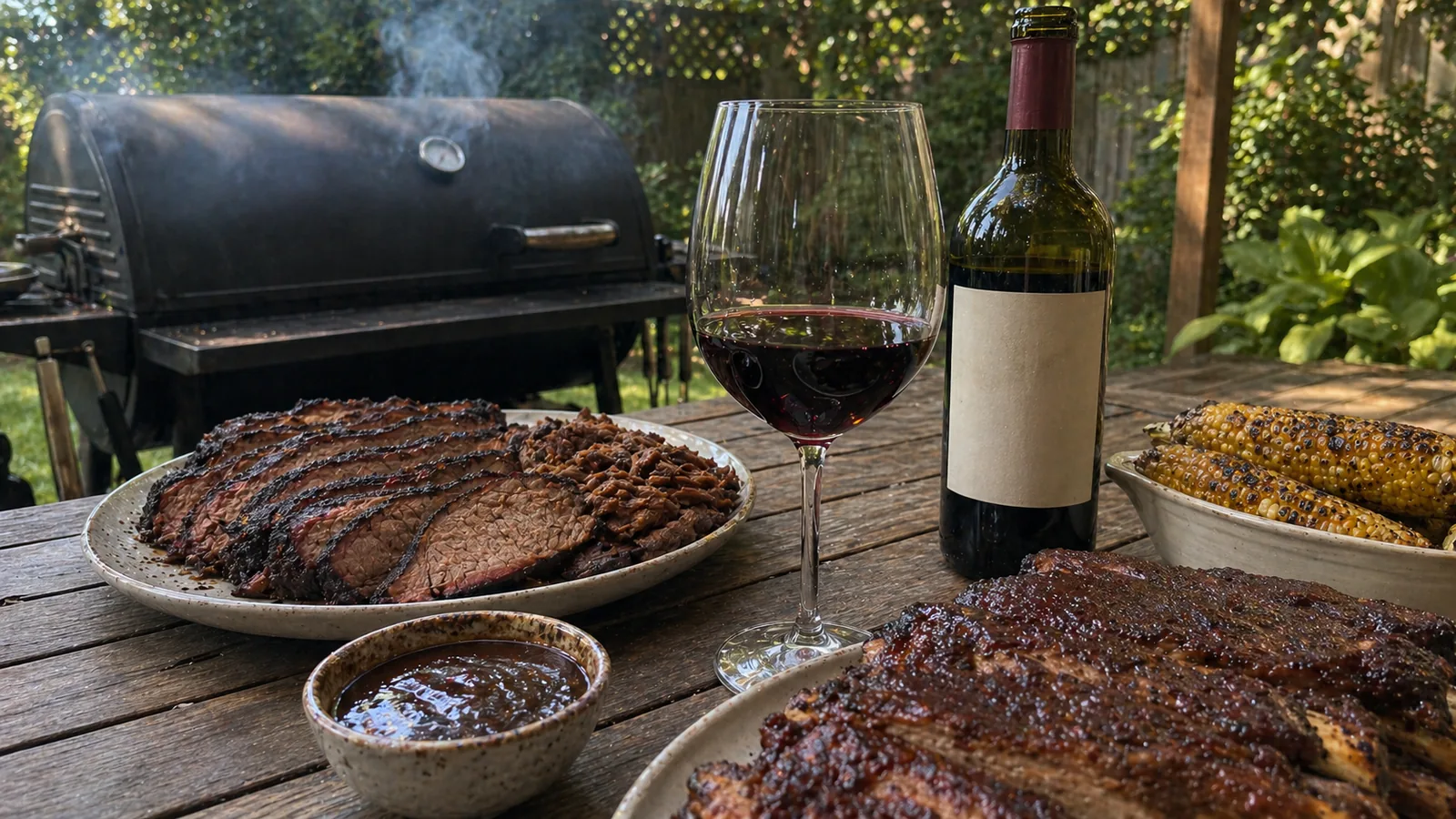
BBQ has a way of breaking the wine rules people learned at restaurants. The meat is fatty, the sauce is sweet, the smoke is loud, and that “always pour Cabernet with red meat” advice can fall apart fast.
It usually comes down to two things: what kind of meat is on the plate, and what kind of sauce is on top of it. Once you know how smoke, char, sugar, and chili each move the wine, the bottle picks itself.
By the end of this page you’ll know:
- The one bottle under twenty bucks that handles sticky BBQ ribs better than expensive Cabernet
- Why brisket loves Malbec and Syrah, while pulled pork is happier with Zinfandel or rosé
- The off-dry white that calms a spice rub or hot sauce without tasting sweet
- How sweet barbecue sauce quietly wrecks a dry tannic red, and what to pour instead
- The grilled-chicken move that works whether the marinade is lemon-herb or jerk
- The simple chill trick that makes Shiraz and Grenache taste right with smoked food in summer
What Is the Best Wine With BBQ?
The best all-purpose wine for BBQ is a fruit-forward red with soft tannin and a smoky edge. Zinfandel, Malbec, Shiraz, Grenache, and Cotes du Rhone all hit that mark. They have enough body for fatty meat, enough fruit for sweet sauce, and enough freshness to keep the meal lively in the heat.
Cabernet Sauvignon can work, but it is fussier than people think with BBQ. The grip of young Cabernet can clash with sugary sauce and chili heat, especially on ribs and pulled pork. Save the serious Cabernet for a hard-seared steak and pour a juicier red beside the smoker.
White wine deserves a seat at the table too. Off-dry Riesling, dry rosé, Albarino, and a richer Chardonnay all earn their keep with grilled chicken, sausages, fish, and vegetables. The trick is matching the wine to the weight of the dish, not the colour of the meat.
| Wine | Food |
|---|---|
| Zinfandel | BBQ ribs, pulled pork, sticky sauce |
| Malbec | Brisket, smoked beef, burgers |
| Syrah / Shiraz | Smoked ribs, pepper rubs, sausages |
| Grenache | Grilled chicken, lamb, mixed grill |
| Cotes du Rhone | Burgers, sausages, weeknight grill |
| Tempranillo / Rioja | Brisket, smoked pork shoulder |
| Dry rosé | Grilled chicken, sausages, salads |
| Off-dry Riesling | Spicy ribs, jerk chicken, hot sauce |
Why Does Smoked Food Need Different Wine Than Grilled Food?
Smoked food and grilled food look similar on the plate but behave very differently in the glass. Smoke adds a low, savoury, almost sweet character that bonds with darker fruit and spice notes in the wine. Grilled food brings sharper char, faster cooking, and usually less of that deep smoke flavour.
Smoked brisket, ribs, and pulled pork sit in a smoker for hours, picking up oak, hickory, or mesquite. That favours wines with their own dark, brooding side: Syrah, Malbec, Zinfandel, Tempranillo, and richer Grenache. The wine is meeting the smoke, not fighting it.
Grilled chicken, fish, sausages, and vegetables get a hot, fast cook. There is char, but less smoke. That opens the door to lighter, brighter bottles like rosé, Pinot Noir, Grenache, Cotes du Rhone, Sauvignon Blanc, and Albarino.
Temperature matters too. Reds with soft tannin taste much better with BBQ when they are slightly cool, around 60 to 65 F. A short twenty minutes in the fridge stops Shiraz, Zinfandel, and Malbec from feeling heavy in summer heat.
What Wine Goes With BBQ Ribs?
BBQ ribs are sweet, sticky, smoky, and rich, which makes them a tough match for any wine that leans dry and tannic. The sugar in the sauce makes a young Cabernet taste harder and more bitter, while the smoke calls for fruit and spice in the bottle.
Zinfandel is the classic answer for a reason. Old-vine Zinfandel from California brings ripe blackberry, brambly fruit, black pepper, and a little smoke of its own. The fruit absorbs the sauce, the pepper meets the rub, and the wine still feels generous after the second rib.
Shiraz works the same way with a slightly different accent. Australian Shiraz brings darker, jammier fruit, mocha, and warmth that suits sticky pork or beef ribs. Cotes du Rhone and Grenache are the gentler cousins: lower tannin, softer fruit, easy to pour at a backyard cookout.
For dry-rubbed ribs without sweet sauce, you have more room to move. Tempranillo, Malbec, and even a juicy Cabernet Franc can shine because there is less sugar fighting the wine. The drier the rub, the more structured the red can be.
What Wine Pairs With Brisket?
Brisket is the trophy cut of American BBQ: low and slow for hours, beefy, fatty, and crusted in bark. It can take a serious red, but only if the red has enough fruit to deal with the smoke and salt.
Malbec is the most reliable choice. Argentine Malbec gives you deep plum, blackberry, violets, and a soft cocoa note that sits beautifully next to bark and burnt ends. The tannin is plush rather than grippy, so it does not dry out the meat.
Syrah is the second move, especially Northern Rhone Syrah or Australian Shiraz with restraint. Black pepper, smoked meat aromas, and dark fruit pull the brisket forward. If the brisket has a bold pepper crust, Syrah is hard to beat.
Tempranillo and Rioja Reserva are excellent for slow-smoked beef. The dried cherry, leather, and oak notes mirror the long cook in the smoker. A Rioja Crianza is the sneaky weeknight version: lower price, same family of flavours.
If you want to open something more familiar, Zinfandel and Cotes du Rhone Villages both work. Skip very young, very tannic Cabernet unless the brisket is naked, lean, and served without sauce.
What Wine Goes With Pulled Pork?
Pulled pork pulls in two directions. The meat itself is mild and rich. The sauce, whether vinegar-forward Carolina, sweet and tomato-based Kansas City, or mustard-based South Carolina, often steals the spotlight.
For sweet, tomato-based sauce, Zinfandel and Shiraz are made for the job. Their ripe fruit handles the sugar without turning sour, and their pepper notes meet the spice. A juicy Grenache works too, especially lightly chilled.
For Carolina vinegar sauce, switch to something with brighter acidity. Dry rosé, Beaujolais, Cotes du Rhone, and Sangiovese all work because the wine matches the bite of the sauce rather than fighting it. A flabby, ripe red can taste dull beside vinegar-forward pork.
For mustard sauce, off-dry Riesling and dry Riesling are both excellent. The wine has enough acidity to handle the mustard tang and enough fruit to flatter the pork. Gewurztraminer is the wildcard: aromatic, slightly off-dry, and very good with mustard and slaw on a bun.
For pulled-pork sandwiches with slaw, dry rosé is the easy default. It handles the bun, the sauce, the slaw, and the pork all in one pour, which matters when the table is loud and people want to drink, not analyse.
What Wine Should I Pour With Grilled Chicken?
Grilled chicken is the most flexible BBQ pairing because the meat is mild and the seasoning does the heavy lifting. The marinade or rub usually decides the wine more than the chicken itself.
Lemon-herb chicken loves Sauvignon Blanc, Albarino, Vermentino, or a crisp unoaked Chardonnay. The acidity in the wine matches the citrus, and the fresh fruit suits parsley, thyme, oregano, or rosemary.
BBQ-sauced chicken wants a fruitier red or a generous rosé. Grenache, Zinfandel, Pinot Noir, and Cotes du Rhone all work. So does a serious dry rosé from Provence or southern France, which can carry sweet sauce while staying summery.
Spicy or jerk chicken needs a wine with a little sweetness or a lot of fruit. Off-dry Riesling, Gewurztraminer, sparkling rosé, or a fruit-forward Grenache all calm the heat. Avoid high-alcohol bottles, which can make chili feel hotter on the second sip. The same logic carries over to the Mexican food wine pairing guide, where smoke and chile overlap with BBQ.
For chicken thighs cooked over open flame with a spice rub, lightly chilled Pinot Noir, Gamay, or Cabernet Franc are all clever moves. They give you red wine without smothering the bird, and their freshness keeps the plate lively.
| Wine | Food |
|---|---|
| Zinfandel or Shiraz | BBQ ribs (sweet sauce) |
| Malbec | Brisket and burnt ends |
| Tempranillo / Rioja | Slow-smoked beef or pork |
| Grenache or Cotes du Rhone | Pulled pork, mixed grill |
| Sauvignon Blanc or Albarino | Lemon-herb grilled chicken |
| Off-dry Riesling | Jerk chicken, spicy ribs |
| Dry rosé | Sausages, chicken, mixed plates |
| Pinot Noir (chilled) | Grilled chicken thighs, lighter pork |
What Wine Goes With Burgers and Sausages?
Burgers and sausages are weeknight BBQ, which means the wine should be friendly, fruity, and easy to pour at a long table. This is not the night for the special-occasion bottle.
For a classic cheeseburger, Malbec is the safe move. The dark fruit and soft tannin complement the beef, the cheese softens the structure, and the price-quality ratio is hard to beat. Cotes du Rhone, Grenache blends, and Cabernet Franc all work in the same lane. For the seared, restaurant-style version, see the steak wine pairing guide.
For a cheeseburger with sweet pickles, ketchup, or barbecue sauce, lean fruitier. Zinfandel, Shiraz, or a juicy Beaujolais handle the sugar and tang better than a dry, structured red.
Sausages are friendly with a long list of wines. Pork sausages with fennel love Sangiovese, Chianti, Barbera, or a chillable Grenache. Spicy sausages, chorizo, or merguez prefer rosé, Riesling, or Tempranillo. Bratwurst with mustard and slaw lines up perfectly with off-dry Riesling.
If the burger or sausage is on a brioche bun with strong sauce, give the wine a slight chill. Cool red wine cuts through fat and salt much better than the same bottle at room temperature on a hot afternoon.
How Does Sweet vs Spicy BBQ Sauce Change the Wine?
Sauce drives more BBQ pairings than the meat itself. Two racks of ribs cooked the same way can want completely different bottles based on the sauce that hits them at the end.
Sweet sauce, especially Kansas City style, makes dry tannic reds taste hard and slightly sour. The wine needs ripe fruit to meet the sugar. Zinfandel, Shiraz, Grenache, and fruit-forward Malbec are all built for this. So is a juicy Primitivo from Italy.
Spicy sauce, hot rubs, and jerk seasoning bring chili heat. Heat amplifies alcohol and tannin, so big high-alcohol reds usually backfire. Off-dry Riesling, Gewurztraminer, sparkling rosé, and lower-alcohol Grenache all calm the heat and refresh the palate.
Vinegar-forward sauce (Carolina-style) wants wine with bright acidity. Dry rosé, Beaujolais, Sangiovese, Cabernet Franc, and Cotes du Rhone all complement the tang. A heavy oaky red can taste flat and dull next to a sharp vinegar sauce.
Mustard sauce, common in South Carolina, leans tangy and savoury. Dry and off-dry Riesling, Gruner Veltliner, and lighter rosé all work. The wine should be crisp and a touch fruity, not heavily oaked.
Smoky-only, no sauce: this is where structured reds finally get to shine. Cabernet Sauvignon, Bordeaux, and serious Tempranillo all work with bare smoked brisket, dry-rubbed ribs, or salt-and-pepper smoked beef.
What Are the Most Common BBQ Wine Pairing Mistakes?
Pouring big tannic Cabernet with sweet sauce. Sugar makes tannin taste harder. Save the muscular Cabernet for a hard-seared steak and pour Zinfandel, Shiraz, or Malbec with ribs and pulled pork instead.
Serving red wine too warm in summer. A red bottle sitting on a sunny patio can taste flabby and hot. Twenty minutes in the fridge fixes the problem and makes the wine taste fresher with smoked food.
Forgetting white wine and rosé exist. Grilled chicken, fish, vegetables, and sausages often pair better with rosé, Riesling, Albarino, or Sauvignon Blanc than with any red. Going red-only on a BBQ table leaves half the dishes underserved.
Ignoring chili heat. High-alcohol Zinfandel or Shiraz with a hot rub can make every bite feel hotter. Switch to off-dry Riesling, sparkling rosé, or a lighter Grenache the moment chili shows up.
Buying one bottle for the whole BBQ. A backyard plate covers smoked beef, sticky chicken, sausages, slaw, and grilled vegetables. Open one fruity red and one crisp white or rosé, and the table covers itself.
Frequently Asked Questions
What is the best wine for BBQ?
Zinfandel is the most reliable wine for BBQ because its ripe dark fruit and pepper notes complement smoked meat and sweet barbecue sauce. Malbec, Shiraz, Grenache, and Cotes du Rhone all work well across most BBQ pairings. For chicken or spicy dishes, dry rosé or off-dry Riesling can be a smarter call than any red.
Does Cabernet Sauvignon go with BBQ?
Cabernet Sauvignon works with BBQ when the meat is dry-rubbed, salt-only, or served without sweet sauce. Sugar in barbecue sauce can make young Cabernet taste hard and bitter, so reach for Zinfandel, Shiraz, or Malbec when sticky sauce is involved. For naked smoked brisket or salt-and-pepper steak, a serious Cabernet still shines.
What red wine pairs best with BBQ ribs?
Zinfandel is the classic red for BBQ ribs because its ripe fruit absorbs the sweet sauce and its pepper notes match the rub. Shiraz, Malbec, and Grenache are excellent backups, especially when lightly chilled. Avoid very tannic young reds with sticky ribs because the sugar will make them taste sharper.
What wine goes with brisket?
Malbec is the safest wine with brisket thanks to its plush plum fruit, soft tannin, and cocoa edge. Syrah, Shiraz, and Tempranillo also pair beautifully with slow-smoked beef. For lean brisket without heavy sauce, a Rioja Reserva or a Cabernet-Malbec blend can be excellent.
What wine pairs with pulled pork?
Pulled pork loves Zinfandel and Shiraz when the sauce is sweet and tomato-based. For Carolina vinegar sauce, switch to dry rosé, Beaujolais, or Sangiovese. For mustard sauce or pulled-pork sandwiches with slaw, off-dry Riesling and dry rosé both make the plate sing.
What wine goes with grilled chicken on the BBQ?
Grilled chicken pairs well with Sauvignon Blanc, Albarino, dry rosé, or unoaked Chardonnay when the seasoning is lemon-herb. With BBQ-sauced chicken, switch to Grenache, Zinfandel, or a fruit-forward red blend. For jerk or spicy chicken, off-dry Riesling and Gewurztraminer keep the heat under control.
Should I chill red wine for BBQ?
Yes, lightly. Most BBQ-friendly reds taste better around 60 to 65 F, which is cooler than a warm summer kitchen or patio. Give Zinfandel, Shiraz, Malbec, and Grenache fifteen to twenty minutes in the fridge before pouring.
What wine goes with spicy BBQ?
Off-dry Riesling is the safest wine with spicy BBQ because its acidity and gentle sweetness cool chili heat. Gewurztraminer, sparkling rosé, and lower-alcohol Grenache also work. Skip high-alcohol Zinfandel or Shiraz when the rub or sauce is genuinely hot.
If you want one rule for BBQ night, pour a fruity red with soft tannin and keep a bottle of dry rosé in the fridge. Zinfandel for ribs, Malbec for brisket, Grenache for everything else. For the bigger picture across steak, chicken, pasta, and seafood, use the full wine pairing chart.
Keep Reading
Syrah vs Shiraz: Same Grape, Two Wines Explained
Why one grape goes by two names, what Syrah and Shiraz actually taste like, the regions worth knowing, and the food that brings each style to life.
Mexican Food Wine Pairing: What To Pour With Tacos
The best wines with Mexican food, from tacos al pastor and carnitas to enchiladas, mole, ceviche, and the rosé rule that handles salsa heat.
Steak Wine Pairing: What To Pour With Every Cut
The best wines with steak by cut, sauce, seasoning, and doneness, from Cabernet with ribeye to Malbec with chimichurri.