Claire Bennett
Wine Editor25 min read
Best Full-Bodied Red Wines: 8 Heavyweights Under $30
Eight full-bodied red wines worth opening. Cab, Zinfandel, Petite Sirah, Malbec, Shiraz, Nebbiolo, Aglianico. All under $30.
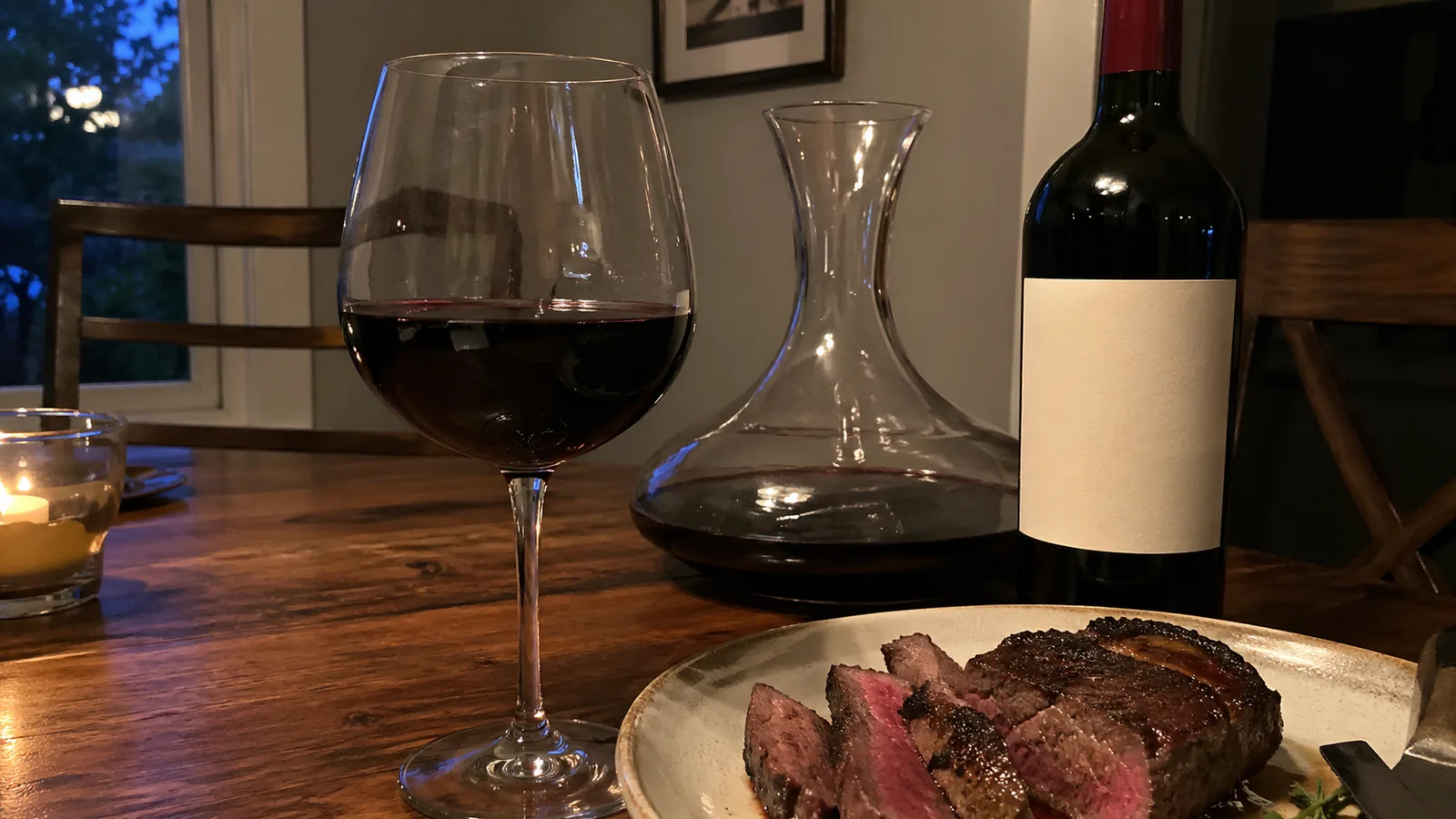
Full-bodied red wine is the heavyweight class. Dense, dark, high in alcohol, grippy with tannin, built for steak, slow-cooked beef, and cold nights. It’s the style most people picture when they hear “red wine,” which is exactly why the category is the trickiest to shop. Cheap full reds taste hot. Expensive full reds taste overextracted. The sweet spot is narrow.
Below are eight full bodied red wines, all priced under $30 and dark in the glass. Each is weighty on the palate, carries higher tannin than lighter styles, clocks 14%+ alcohol, and has been validated by at least one serious critic score or a pile of buyer ratings. The list spans California Cabernet, Petite Sirah, Argentine Malbec, old-vine Zinfandel, Barossa Shiraz, Tuscan Super-Tuscan style, Piedmont Nebbiolo, and a southern Italian Aglianico. It’s a best full-bodied red shortlist that covers the major styles without breaking the $30 ceiling.
Pour one with a ribeye, a slow-braised short rib, or a plate of aged hard cheese. Decant for an hour if you have it. This is the category where the dinner-table stakes are highest and where getting the right bottle matters most.
Our Top 3 Picks

Kenwood Six Ridges Cabernet Sauvignon 2021
Alexander Valley, California · Cabernet Sauvignon
97 pts Decanter

Girard Petite Sirah 2021
Napa Valley, California · Petite Sirah
93 pts Robert Parker

Susana Balbo Signature Malbec 2023
Uco Valley, Argentina · Malbec
93 pts James Suckling
Prices vary by state. Click through for your current price.
1. Kenwood Six Ridges Cabernet Sauvignon 2021
If you’re looking for one full-bodied red at one price, this is the call. Kenwood’s Six Ridges Cabernet Sauvignon picked up 97 from Decanter, which is a monster score for a wine under $25. It comes from Alexander Valley, the warmer northern stretch of Sonoma County that grows some of the densest, most velvety Cabs in California.
You’ll get black cherry, blackberry, cedar, dark chocolate, and the kind of full-bodied structure that Cabernet fans live for. Tannin is firm but ripe, the oak is well-integrated, and the finish is long. Pair it with ribeye, lamb shoulder, or aged hard cheese. Decant for 30 to 60 minutes if you have time. This is a wine that drinks like a $40 bottle at half the price.
2. Girard Petite Sirah 2021
Petite Sirah is the densest red wine most Americans will ever drink. Despite the misleading name, it’s a completely different grape from Syrah (it’s actually Durif), and it produces wines so dark they’re almost black in the glass. Girard’s 2021 Napa Petite Sirah scored 93 from Robert Parker and 91 from James Suckling.
Expect blueberry, blackberry, black pepper, a hint of graphite, and the kind of chest-thumping tannin that needs a serious piece of meat to balance. Pair it with short rib, barbecue brisket, or a peppercorn-crusted steak. Decant for an hour minimum. If you want full-bodied red wine taken to the logical extreme, this is your bottle.
3. Susana Balbo Signature Malbec 2023
Susana Balbo is one of Argentina’s most respected winemakers, and her Signature Malbec is the bottle to buy when you want full-bodied Malbec with real refinement. The 2023 picked up 93 from James Suckling, 92 from Vinous, 92 from Wilfred Wong, and a full 5.0 stars from 20 buyers. That’s a rare trifecta on a $26 wine.
Expect plum, black cherry, a little violet, dark chocolate, and the silky tannin that makes Malbec the gateway full-bodied red for so many drinkers. Body is full, alcohol hovers around 14.5%, finish is long. Pair it with grilled steak, Argentine empanadas, roast lamb, or a cheese board heavy on aged hard cheeses. This is the Malbec to pour when you want to convert someone.
4. Ravenswood Dry Creek Valley Zinfandel 2024
Zinfandel is California’s signature full-bodied red, and Ravenswood has been making great Zin since 1976. The Dry Creek Valley bottling picked up 94 from Wine Enthusiast, which is serious praise at $26. Dry Creek is the heart of California old-vine Zin, and the wines show the style at its most concentrated.
Expect dense blackberry jam, brambly dark fruit, a touch of baking spice, white pepper, and the warm, slightly boozy finish that comes with Zinfandel’s naturally high alcohol (this one lands at 14.5%+). Pair it with pulled pork, BBQ ribs, pepperoni pizza, or spiced chilli. Chill for 10 minutes before pouring to keep the alcohol heat in check.
5. Torbreck Woodcutter’s Shiraz 2023
Barossa Valley Shiraz is the most full-bodied expression of Syrah on the planet, and Torbreck is one of the Barossa’s most celebrated producers. The Woodcutter’s is their entry-level Shiraz at just $26, and it drinks like a much more serious wine. Dense, warm, and unmistakably Australian.
Expect blackberry, plum jam, a hit of vanilla from the American oak, smoke, dark chocolate, and the warm, spicy finish that Barossa fruit delivers. Body is full, alcohol is generous (typically 14.5-15%), finish lingers. Pair it with grilled lamb, slow-roasted beef brisket, or a sharp aged cheese. If you want to understand what Australian full-bodied red is about in one bottle, this is it.
6. La Massa Toscana 2021
La Massa is one of Tuscany’s most beloved “Super-Tuscan style” reds. Made by Giampaolo Motta in Panzano, it’s a Sangiovese-led blend with Cabernet Sauvignon, Merlot, and Alicante, aged in French oak. The 2021 scored 94 from Robert Parker, 94 from Vinous, and 93 from James Suckling. Three major critics all above 93 for $28 is rare air.
Expect dense black cherry, dried herbs, tobacco leaf, a balsamic edge, and the kind of firm, elegant tannin that Tuscan wine does better than anywhere else. Body is full, finish is long, and the wine only gets better with an hour in the decanter. Pair it with bistecca alla Fiorentina, slow-cooked beef ragù over pappardelle, or a wild boar stew. This is what Italian full-bodied red looks like done at the highest level.
7. Pecchenino Langhe Nebbiolo 2023
Nebbiolo is the grape behind Barolo and Barbaresco, Italy’s two most famous full-bodied reds. A top-label Barolo can run $80+, but Langhe Nebbiolo (the same grape from the same region, just without the longer ageing requirement) gives you most of the experience for a third of the price. Pecchenino’s 2023 picked up 91 from Vinous and 90 from Wine Enthusiast.
Expect red cherry, rose petals, tar, a little leather, and the drying, structured tannin that is Nebbiolo’s signature. Body is full to very full, acidity is high, tannin is chewy. Pair it with osso buco, truffle risotto, braised short rib, or any rich Piedmontese dish. Decant for an hour. This is the wine to drink when you want to understand why Italian collectors are obsessed with Nebbiolo.
8. Elena Fucci Aglianico del Vulture SCEG 2023
Aglianico is called the Barolo of the South, and it’s the reason wine nerds love southern Italy. Elena Fucci works on the slopes of Mount Vulture, an extinct volcano in Basilicata, and her SCEG bottling is the entry to her range. Vinous scored it 92, Robert Parker 91.
Expect black cherry, volcanic minerality, dried Mediterranean herbs, a smoky edge, and the bold, grippy tannin that Aglianico shares with its northern Italian cousins. Body is full, acidity is high, finish goes on. Pair it with lamb ragù, aged pecorino, grilled sausage, or anything slow-cooked with tomato. At $29, it’s one of the better full-bodied Italian reds you can buy outside the Piedmont and Tuscan blockbusters.
More Worth Knowing
What makes a red wine “full-bodied”?
Three things: alcohol, tannin, and extract. Full-bodied wines clock 14-15.5% alcohol content by volume, carry firm-to-grippy tannin (the wine is high tannin, tannic, sometimes outright chewy), and pack so much dissolved matter from the wine grapes’ skins that the wine feels weighty on the tongue. Full body is the shorthand you’ll see on shelf talkers and tech sheets. The mouth-coating density you feel on the palate is a combination of glycerol, phenolics, and residual sugar (almost always low on a dry red wine, but sometimes just high enough to contribute body). Hold a full-bodied red up to the light: you can’t see through it. Hold a light-bodied red up and you can read text behind it. Medium-bodied reds sit in between; they show more grip than a Beaujolais but less viscosity than a Napa Cab.
The classic full-bodied grapes (or grape variety list, more formally) are Cabernet Sauvignon, Malbec, Petite Sirah, Syrah/Shiraz, Zinfandel, Nebbiolo, Aglianico, Tannat, and (in Tuscan or Spanish blends) Sangiovese or Tempranillo with Cabernet. Region matters a lot too: warmer climates like Barossa, Napa Valley, Mendoza, Paso Robles, and southern Italy consistently make wines fuller than their cooler counterparts. Bordeaux wine (particularly a right-bank Merlot and Cabernet Franc blend, along with Madiran from southwest France) also belongs in this class, though at a typical alcohol level slightly lower than New World heavyweights.
Fuller-bodied than full: the rarefied end
At the outermost end of the spectrum sit Amarone della Valpolicella (from the Veneto region in Italy, made from partially-dried grapes so the sugars in wine concentrate before fermentation) and Port wine (a fortified Italian wine’s cousin from Portugal). These fuller-bodied bottles push 15-16% alcohol and can read as dessert wine if the sweetness of wine hasn’t been fully fermented out. Valpolicella Ripasso sits just below Amarone in intensity. These aren’t on this list (they’re either outside $30 or a different category), but worth knowing as benchmarks if you keep climbing the full-body ladder.
Full-bodied red wine food pairings
Full reds need food that can stand up to them. Ribeye, New York strip, lamb and mutton roasts, lamb shoulder, short rib, BBQ brisket, slow-braised beef, roast game, mushroom-heavy meat dishes, and hard cheeses are all classic pairings. For a deep dive on the textbook match, our steak and wine pairing guide breaks down the best cut-to-bottle combinations. Heavy tomato sauces (bolognese, ragù), pepperoni pizza, mushroom risotto with seared duck, and spiced chilli also hold their own. Thick stew with root vegetables is a reliable winter pick. The rule of thumb: the fattier and more savoury the dish, the bigger the wine can be.
Food to avoid: light fish, salads, most delicate vegetables, most dessert dishes, and a Chardonnay-style cream sauce. A full-bodied red will bulldoze them flat. (If you must pair full red with dessert, something dark-chocolate-heavy works best; the acids in wine and the cocoa cut through each other.)
Decanting: required or hype?
For a full-bodied red under $30, decanting is rarely required but almost always helps. Thirty to sixty minutes of air softens the tannin, integrates the alcohol, and lets the fruit come forward. This is especially true for tannin-rich wines like young Cabernet, Petite Sirah, and Nebbiolo, which can taste tight straight from the bottle. Pour it into a jug, a big glass, or any wide-mouthed vessel. The aeration is what matters, not the fancy decanter. If a wine has been aged in oak for a long time (French oak barrels are standard for the higher end of this category), the decant also helps dissipate any leftover sulfur and blow off any tight vanilla or cinnamon notes from the barrel. The fruit-forward aromas and flavors (red berries, black currants, cassis, mocha, even a whisper of caffè mocha on some New World Cabs) take 20-30 minutes to fully emerge.
How full-bodied reds are made
Winemaking a full-bodied red is a combination of grape choices and cellar decisions. Winemakers make wines full-bodied through phenolic content in wine work and cellar timing. Start with very ripe fruit (warm sites, late harvest, high sugar at pick), allow a long maceration for maximum phenolic extraction from grape skins, often put the wine through malolactic fermentation in winemaking (the malolactic conversion that softens sharp malic acid into creamier lactic acid, adding viscosity and fuller-bodied mouthfeel) with native yeast or inoculated strains, then age in oak barrels (new French or American) to layer in vanilla, cinnamon, and that coffee-mocha smoothness. The alcoholic beverage labelling laws tell you the final ABV, but not the extraction method; that’s where knowing the producer helps. Higher alcohol is a direct consequence of riper grapes. Higher tannin comes from the skins and seeds.
Different wine styles emphasize different choices: California and Australia often favour longer oak barrels and higher alcohol; Italy and Spain lean on traditional large oak casks for more aromatic lift; Bordeaux splits the difference with French oak and earlier picks for balance. The goal across wine styles is the same: big aromas and flavors held up by acid and tannin-rich structure, without going into dessert territory.
Find Your Wine Match
Find Your Full-Bodied Red
Three quick questions. One matched bottle.
What are you pairing it with?
When are you drinking it?
How full is full?
Let's find the right bottle for you.
Tell us a bit about the occasion and what you're after. We'll match you to one of the bottles on this page.
Photo by Skyler Ewing on PexelsReading your answers…
How We Chose These Wines
Frequently Asked Questions
What’s the most full-bodied red wine?
Petite Sirah (Durif), Amarone from Italy’s Valpolicella, Barossa Valley Shiraz, Tannat from Madiran or Uruguay, Argentine wine from Mendoza (Malbec Reserva especially), and Napa Valley Cabernet Sauvignon are typically the most full-bodied red wines on the market. Petite Sirah is the densest of the common varieties; a good Petite Sirah is so dark it stains the glass. Girard’s Petite Sirah on this list is a textbook example. For comparison on the other end of the spectrum, a light Sauvignon blanc from the Loire shows the exact opposite profile: pale, crisp, no tannin, and obviously a white wine rather than a red.
Full-bodied vs bold vs heavy: are they the same?
Roughly, yes. “Full-bodied” is the proper wine term, “bold” is the marketing-friendly synonym, and “heavy” is what most drinkers call it at a dinner table. All three describe wines with high alcohol, firm tannin, and weight on the palate. You’ll see all three used on wine shop shelf talkers. Don’t overthink it.
Best full-bodied red wine for steak?
Cabernet Sauvignon is the classic pairing, and the Kenwood Six Ridges on this list is the straight-down-the-middle answer. For a ribeye, go Cab or Petite Sirah; for lamb, go Malbec or Shiraz; for brisket, go Zinfandel or Aglianico. The common thread is tannin: fatty, well-seared meat softens the tannin and lets the fruit come forward.
How long should I decant a full-bodied red?
Thirty to sixty minutes is the sweet spot for most full-bodied reds under $30. Young Cabernet, Petite Sirah, and Nebbiolo benefit the most from a full hour. Malbec and Zinfandel open up faster, 20-30 minutes is enough. You don’t need a fancy decanter; a clean glass jug or a wide-mouthed carafe works just as well. The goal is surface area.
Full-bodied red wine for beginners: is it a good starting point?
Usually not. Beginners tend to find high-tannin, high-alcohol red wines harsh on the first sip. Most of these picks are dry reds in the strict sense, so our best dry red wines round-up is a softer entry point. Start with lighter red berries-driven styles (Pinot Noir, Beaujolais, Malbec at the softer end) and graduate to fuller-bodied wines once your palate adapts. That said, Malbec and Zinfandel are the gentlest members of the full-bodied club; an umami-forward meat dinner with one of these bottles is a solid introduction. A fruity Zin with a bit of cinnamon-spiced BBQ rub makes for an approachable entry point. Wines tend to get grippier and higher in tannin as the body scale climbs, so pace yourself.
Best red wine for steak dinners and meat dishes?
Cabernet Sauvignon remains the go-to for ribeye. Merlot and Cabernet blends (also known as a red blend or, in some cases, a “Meritage” varietal blend, like La Massa’s Super-Tuscan) handle lamb beautifully. Malbec is the answer for any grilled red meat. Zinfandel, with its black fruit, dark fruit flavors, and notes of blueberry and bramble, plus a licorice whisper on the finish, carries BBQ and spiced meat dishes. The common denominator is bold flavors in both the food and the bottle; you want to match weight for weight.
What other full-bodied wines should I try?
If you like the full-bodied reds on this list, branch out into Amarone (the Veneto region’s prestige wine), Tannat from Madiran in southwest France or Uruguay, dry versions of Tuscan wine like Brunello di Montalcino or a serious Chianti Classico Gran Selezione, and Italian wine from Sicily and Puglia (Nero d’Avola, Primitivo). Wines like Cabernet Sauvignon from Washington, Paso Robles, or Coonawarra are also worth a taste. Different Bordeaux wine regions (left bank Pauillac/Saint-Estèphe, right bank Pomerol/Saint-Émilion) will also give you different views of Cabernet and Merlot at the full end. For non-Italian big reds, a South African Pinotage or a bold Tannat will round out your exposure.
A note on wine tasting and tasting descriptors
Wine tasting full-bodied reds is partly about identifying fruit flavors, partly about feeling structure. Wine tasting descriptors worth knowing: cassis (ripe blackcurrant, a common Cabernet note), ribes (the botanical genus for currants, used by pros to describe that sharp dark-berry character), aroma of wine that shows vanilla and cinnamon usually signals oak, and a touch of tar or leather usually means bottle age. If the wine smells like beer or rancid yeast, that’s a wine fault and you can send it back. Liquorice is a common descriptor for Zinfandel and Shiraz finishes.
Keep Reading
Cabernet Sauvignon: Taste, Regions, Pairings
What Cabernet Sauvignon tastes like, where the best bottles come from, what to pair it with, and how much to spend. The plain-English guide.
Best Dry Red Wines: 8 Bottles Worth Knowing
Eight bone-dry reds across Cabernet, Sangiovese, Tempranillo, Syrah, Malbec, Pinot, and Cab Franc. All under $30, all critically rated.
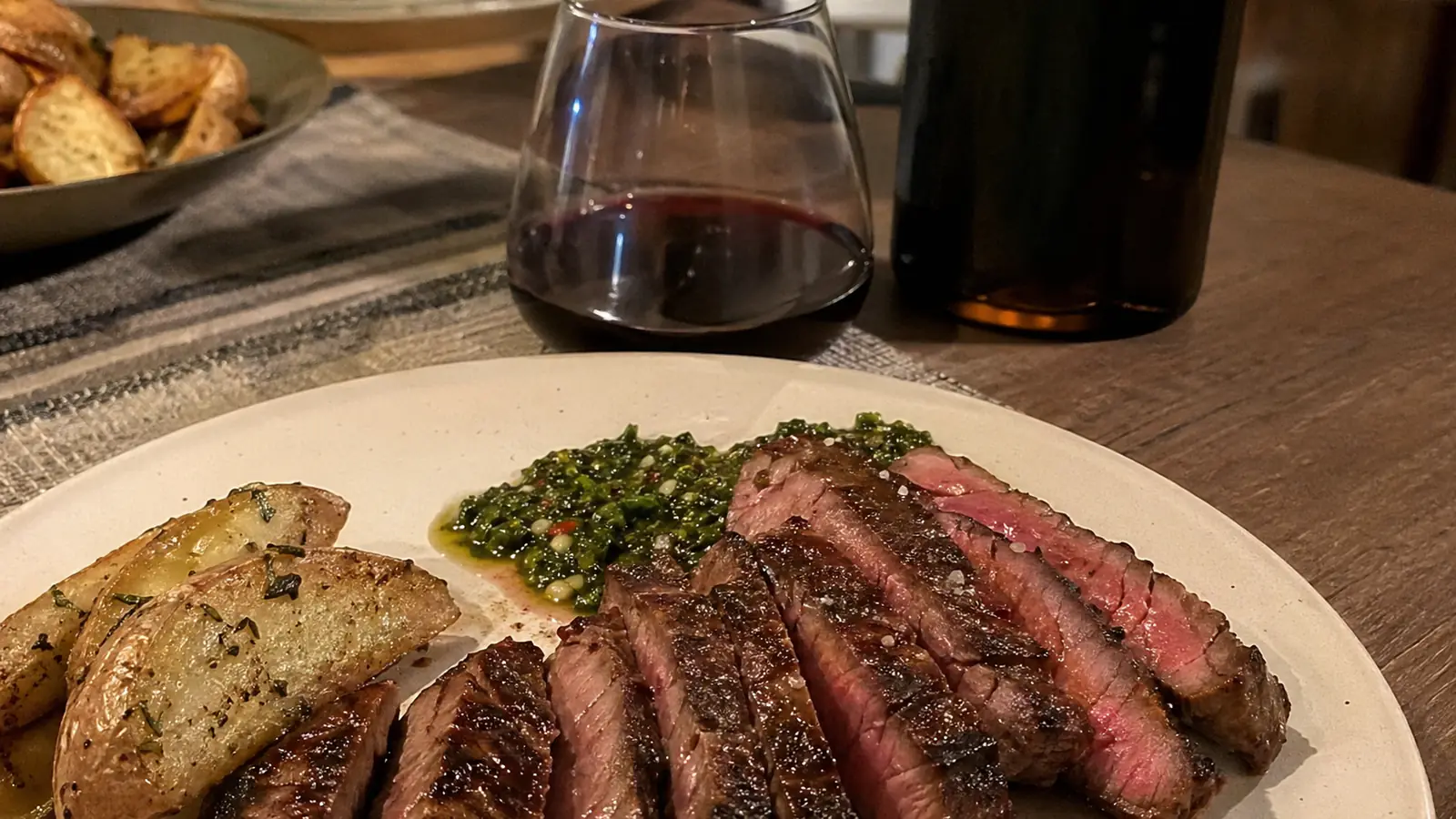
Steak Wine Pairing: What To Pour With Every Cut
The best wines with steak by cut, sauce, seasoning, and doneness, from Cabernet with ribeye to Malbec with chimichurri.