
Claire Bennett
Wine Editor12 min read
Best Wine Glasses: 6 Picks for Every Budget and Wine Type
Six wine glasses ranked by type: from a versatile everyday set to a premium universal glass. Find the right glass for red, white, stemless, and more.
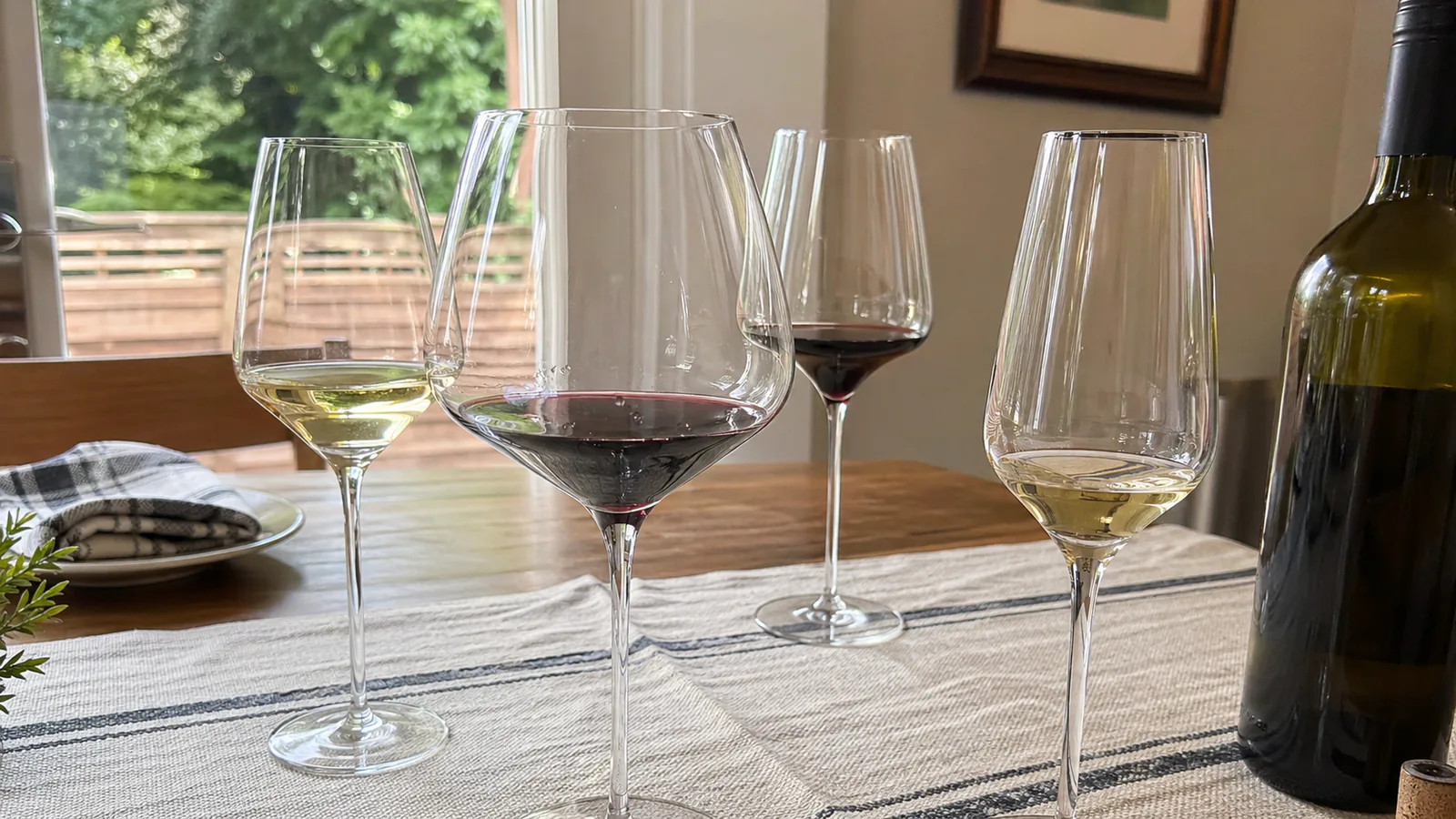
The glass you pour into matters. A wide, open bowl gives a Pinot Noir room to breathe and concentrates the aroma at the rim. A narrower tulip bowl holds white wine cooler and focuses the more delicate white wine aromatics. The same Bordeaux poured into a tumbler and into a proper Burgundy glass can taste like two different wines.
You don’t need a separate glass for every wine type. You do need at least one glass built for the wine you drink most. Here are six picks across every budget and style, from an everyday stemmed set to the universal glass a sommelier reaches for.
Best Overall: Spiegelau Style Red Wine Glasses
The Spiegelau Style glasses are the red wine glasses most households should own. The 20.5oz Bordeaux-style bowl is wide enough to give Cabernet Sauvignon and Merlot room to breathe, but not so oversized that it becomes awkward for everyday use. Lead-free crystal, dishwasher safe, and available as a set of four at a price that won’t make you anxious about putting them through a full week.
Over 3,200 reviews at 4.6 stars. Spiegelau is a glassware brand trusted by both casual wine drinkers and working wine professionals. The crystal construction shows off the deep red and garnet tones in a Cabernet, and the Bordeaux bowl shape concentrates fruit and oak aromas toward the rim. If you’re buying one set of red wine glasses, this is the one.
Best for Red Wine: Riedel Vinum Pinot Noir
The Riedel Vinum Pinot Noir is the wide Burgundy bowl that shows what glass engineering can do for a single wine type. The shape is designed specifically for Pinot Noir and Burgundy-style reds: a large, round bowl that opens up the delicate aroma compounds and allows them to develop before you drink. The wide rim slows the wine as it enters the mouth, directing it across the front of the palate where lighter reds show their best.
4.8 stars from 541 reviews. Riedel has made the Vinum range for decades, and the Burgundy glass is one of their most referenced designs. Wine professionals and working sommeliers reach for a wide Burgundy bowl with Pinot Noir for good reason. Dishwasher safe and sold as a set of two.
Best for White Wine: Spiegelau Style Crystal White Wine Glasses
White wines need a narrower, more tapered bowl than reds. The Spiegelau Style white wine glass has a tulip shape that keeps white wine at a cooler temperature and channels the more delicate white wine aromatics toward the nose and rim. The citrus and stone fruit characters in a Sauvignon Blanc, or the butter and vanilla aroma of a Chardonnay, read more clearly in this shape than in a wider red wine bowl.
3,200+ reviews at 4.6 stars. The lead-free crystal construction is clear and elegant without being fragile, and the dishwasher-safe design makes it practical for regular use. It pairs as a matched set alongside the Spiegelau Style red if you want a complete everyday glassware setup.
Best Stemless: Libbey Stemless Wine Glasses
Stemless wine glasses trade some formality for practicality. Without a stem, there’s no risk of tipping, they stack more easily, and they go through the dishwasher without anxiety. The Libbey stemless set gives you 12 glasses in one box: enough for a dinner party, a backyard evening, or a household where glassware disappears regularly.
4.7 stars from nearly 4,700 reviews, the most reviewed glasses on this list. The 15.5oz bowl works for red wine and white wine alike. Standard glass rather than crystal, but clear, sturdy, and built to last through everyday use. The main tradeoff is temperature: holding the bowl in your hand warms the wine faster, which matters more for white wine than red.
Best Premium: Gabriel-Glas StandArt
The Gabriel-Glas StandArt is the premium universal wine glass: one shape that works across every wine type. The 16oz tulip bowl is wide enough for red wine aroma development and tapered enough to concentrate white wine aromatics. It handles Pinot Noir, Bordeaux, Sauvignon Blanc, Champagne, and sparkling wine without compromise. Holding the glass by the stem, it feels noticeably lighter than most crystal wine glasses of the same size.
4.6 stars from 1,473 reviews, and it arrives in a gift box. Zalto is the other name at this level of the market. The Zalto Denk’Art Universal is the benchmark most wine professionals cite, and the Gabriel-Glas delivers comparable refinement at a more accessible price point. Hand-blown in Austria, dishwasher safe, lead-free crystal.
Best Budget Set: Paksh Novelty Italian Red Wine Glasses
The Paksh Novelty glasses show that a good wine experience doesn’t require premium pricing. The 18oz Italian-style bowl is generous and elegant, with a long stem and a wide opening that lets a red wine breathe properly. They’re clear, stable, and won’t sting if one breaks.
Nearly 10,000 reviews at 4.7 stars: the strongest review signal of any glass on this list. At well under $30 for a set of four, these are the glasses to buy when you want proper stemmed glassware without the commitment. They perform well for Cabernet Sauvignon, Merlot, and Bordeaux-style blends.
Which Wine Glass Do You Need?
The shape of a wine glass matters more than the brand name. Here’s how to match glass shape to wine type.
Red wine glasses have a wide, rounded bowl that gives the wine more surface area for aroma release and allows red wines to breathe. A Bordeaux glass has a tall, straight-sided bowl suited to full-bodied reds like Cabernet Sauvignon. A Burgundy glass is rounder and wider, designed to concentrate the delicate aroma of Pinot Noir. For most everyday reds, a general Bordeaux-style bowl handles the full range well.
White wine glasses have a narrower tulip bowl that holds white wine at a cooler temperature and focuses lighter aromatics. A smaller bowl also means less air contact, which preserves the freshness of white wine. The same principle applies to sparkling wine and Champagne. A narrower glass holds the bubbles longer and keeps that sparkle intact as you drink.
Stemless wine glasses work well for casual and outdoor use. They’re more stable, easier to store, and go through the dishwasher without the stem creating a problem. The tradeoff is temperature: holding the bowl directly warms the wine faster, which matters for chilled whites and sparkling wine more than for reds.
Universal wine glasses, like the Gabriel-Glas StandArt or Zalto Denk’Art Universal, are designed to handle any wine type in a single shape. Sommeliers use them for comparative tastings where the glass shape shouldn’t be a variable. For home use, a universal glass simplifies everything: one set covers every type of wine you pour.
If you’d rather build the right tasting habits before upgrading the glassware, our how to taste wine guide walks through the full sequence. A note on crystal: premium glassware brands like Riedel, Spiegelau, and Schott Zwiesel use lead-free crystal rather than standard glass. Crystal produces a thinner, lighter rim and a cleaner bowl that shows the colour of the wine more accurately. Schott Zwiesel’s Tritan crystal is specifically engineered for dishwasher resistance without losing that rim fineness.
Frequently Asked Questions
What is the best wine glass brand?
Riedel is the most widely recognised premium wine glass brand worldwide, with the Riedel Vinum range as the reference point most sommeliers and wine professionals use when comparing crystal glassware. Spiegelau is owned by Riedel and produces more accessible crystal wine glasses at a lower price point. Gabriel-Glas leads the premium universal glass category. At the very top of the market, Zalto and the Jancis Robinson x Richard Brendon glass are the benchmarks that serious wine collectors and wine enthusiasts cite.
What wine glasses do sommeliers use?
Working sommeliers typically use a universal wine glass that allows comparative tasting across wine types without the glass shape becoming a variable. The Zalto Denk’Art Universal is the most referenced choice at the professional level, followed by Gabriel-Glas and the Riedel Sommeliers series. For restaurant service, Riedel Vinum and Spiegelau are common because they’re durable, dishwasher safe, and practical at volume.
What is the difference between a red and white wine glass?
The bowl of the glass is the key difference. A red wine glass has a wider, rounder bowl that gives red wines more surface area for aroma and allows the wine to breathe. A white wine glass has a narrower, tulip-shaped bowl that holds the wine at a cooler temperature and concentrates the more delicate aroma of white wine toward the rim. The tasting experience changes noticeably when you pour the same wine into each shape.
Are expensive wine glasses worth it?
For serious wine drinkers, yes. The rim thickness and bowl shape of a premium crystal glass genuinely change the flavour and aroma delivery. A finer rim delivers wine to the palate more cleanly, and precise bowl geometry concentrates specific aroma compounds more effectively. Riedel Veritas and Riedel Sommeliers demonstrate this effect clearly against standard glassware. For casual drinking, a quality wine glass set from Spiegelau or the Paksh Novelty captures most of the benefit at a fraction of the price.
What are stemless wine glasses good for?
Stemless wine glasses are best for casual settings: outdoor entertaining, informal gatherings, and households where standard stemware gets knocked over easily. They’re more stable on uneven surfaces, dishwasher safe without stem breakage risk, and easier to store in a standard cabinet. The main limitation is temperature control: holding the bowl directly warms the wine faster, which affects chilled white wine and sparkling wine more than red wine served at room temperature. For everyday red wine, stemless glasses perform as well as stemmed options. To open a tougher red, a decanter does more for aroma than any glass shape alone.
Keep Reading
Best Wine Decanter: 5 Picks for Red Wine and Gifting
Five wine decanters ranked by use case: crystal, aerating, gift set, and classic design. Find the right decanter for red wine and everyday use.
How to Taste Wine Like You Know What You're Doing
Four steps to actually tasting wine. What to pay attention to so you can tell good from great, without the pretension.
Best Wine Tasting Kits: 5 Gifts for Wine Lovers
Five wine tasting kits ranked by use case: aroma wheels, journals, blind tasting party kits, and sommelier-grade aroma sets.