Claire Bennett
Wine Editor12 min read
Best Wine Tasting Kits: 5 Gifts for Wine Lovers
Five wine tasting kits ranked by use case: aroma wheels, journals, blind tasting party kits, and sommelier-grade aroma sets.
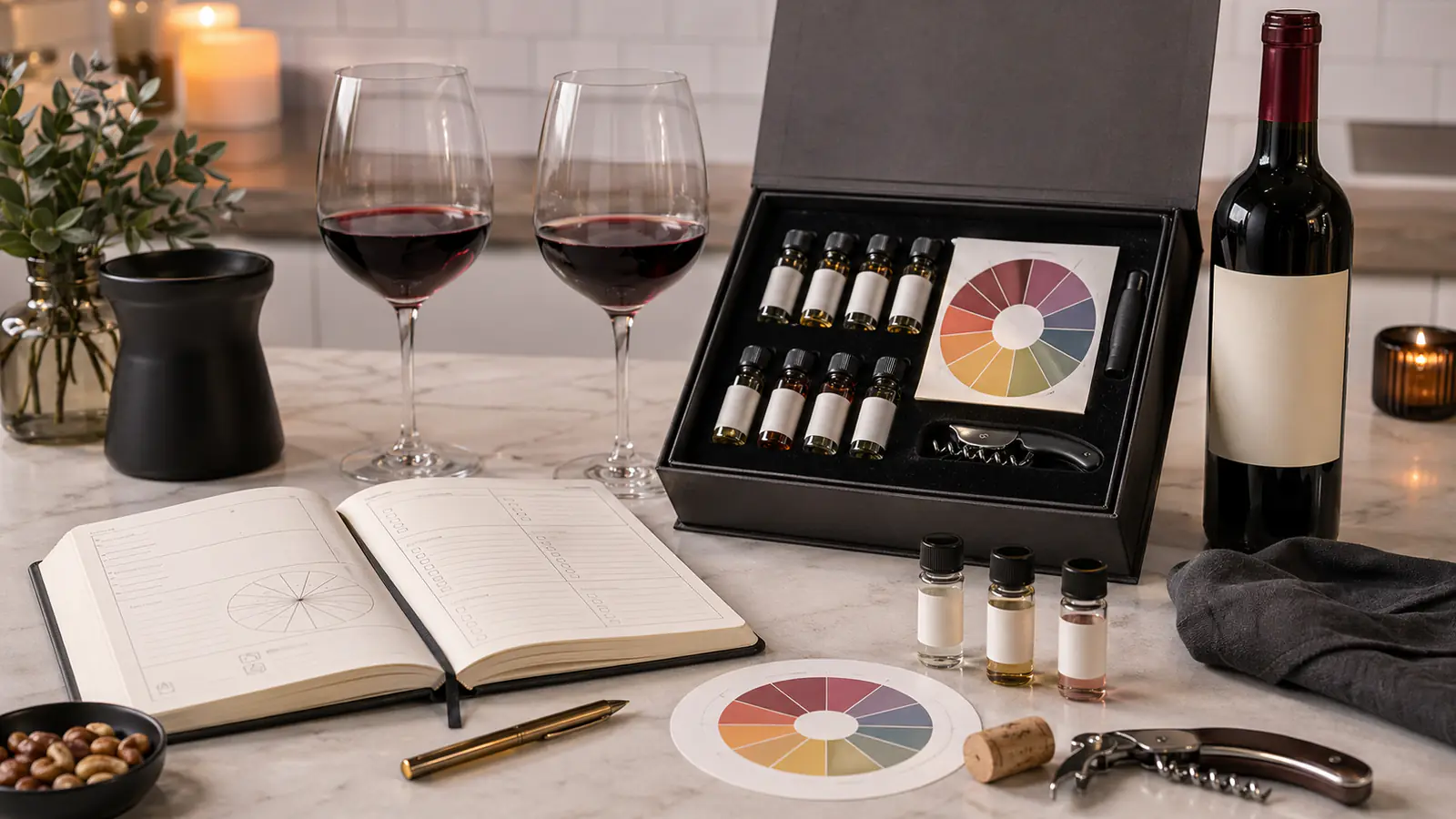
A wine tasting kit is the kind of gift that turns a regular Friday night in into something that feels intentional. Instead of pouring a glass and scrolling on your phone, you slow down, smell the wine, write down what you taste, and start to figure out why one bottle hits and another doesn’t.
The five kits below cover every use case a wine lover actually has. A flashcard game for couples who want to taste with structure. A guided journal for the person who’s already started taking notes on their phone.
An aroma wheel for under $20 that fits in any stocking. A blind tasting party kit for groups. And a sommelier-grade aroma training set for the friend who’s seriously into it.
Wine tasting kits fall into four main categories:
- Tasting party kits come with bottle covers, scorecards, or flashcards and turn a regular dinner into a structured tasting.
- Wine journals are guided log books with prompts for color, aroma, and flavor, built for tracking what you drink over time.
- Aroma wheels and reference cards teach you how to name what you’re smelling, from blackcurrant in a Cabernet Sauvignon to lemon zest in a Sauvignon blanc.
- Premium aroma training kits include vials of actual wine aromas to train your nose, the same tools sommeliers use in WSET courses.
Each one teaches a different piece of the same tasting experience: figuring out what’s in the glass and putting words to it.
Best Overall: Vino Cards Wine Tasting Game
Vino Cards is the wine tasting kit to give someone who wants to learn while they drink, not after. The kit pairs flashcards with a tasting game format, so a pair or a small group can taste two or three bottles together and use the cards to compare what they’re picking up against what’s actually in the glass. Cards cover the major grape varieties, classic regions, and food pairing rules.
201 reviews at 4.5 stars. The flashcard format is what makes this work as a gift. A wine journal sits on a shelf until someone opens it.
A flashcard game pulls itself out at dinner because the cards are a prompt to start tasting in the first place. For a wine lover who wants more structure than “this is nice” but isn’t ready to commit to a course, this is the easy entry point.
Best for Tracking What You Drink: Clever Fox Wine Journal
The Clever Fox Wine Journal is the kit for the wine lover who’s already started taking tasting notes on their phone and would clearly rather have a real book. Each entry has prompts for color, aroma, body, finish, food pairing, and a personal score, so the writing stays focused without feeling like homework. The journal also includes an aroma wheel reference, a tasting glossary, and pairing suggestions, which means you don’t need to bring a separate book to the table.
249 reviews at 4.7 stars. This is the highest-rated pick on the list. The guided structure is what separates this from a blank notebook.
A wine drinker who’s tried to keep tasting notes in the Notes app on their phone knows the problem: without prompts, every bottle gets the same three adjectives. The Clever Fox prompts pull more out of each tasting and build a proper log over time, so by bottle thirty the drinker can flip back and see how their palate has shifted.
Best Under $20: Wine Folly Aroma Wheel Chart
The Wine Folly Aroma Wheel is the kit that fits in a stocking and still gets used a year later. The double-sided glossy chart maps the aroma of red, white, rosé, and sparkling wine, covering a wider variety of notes than most drinkers can name on their own.
From common ones like cherry and oak to less obvious ones like leather, tobacco, and wet stone. It’s laminated, durable, and small enough to live on a kitchen counter or a wine fridge door.
292 reviews at 4.4 stars: the highest review count on this list. Wine Folly built the modern aroma wheel that nearly every other tasting kit borrows from, and this is the official version. The use case is simple.
You pour a glass, sniff, and try to name what you’re smelling. The chart is right there to give you the vocabulary. For under $20, it’s the easiest way to upgrade a wine drinker’s tasting from “tastes like wine” to “smells like ripe blackberry and a little vanilla.”
Best for Hosting a Blind Tasting: All You Need Is Wine Party Kit
The All You Need Is Wine party kit is the gift for the host. The kit ships with bottle covers that hide each label, numbered tags, scorecards, and a guide that walks you through running a proper blind tasting at home. You pick four to six bottles, slide them into the covers, and let the room rank them without knowing the price tag or the region.
168 reviews at 4.5 stars. The reason this works as a gift is that it forces an experience rather than just adding another wine accessory to a drawer. A wine lover who’s read about blind tasting on a wine blog has probably never actually run one because the logistics get fiddly.
This kit removes the friction. Buy six bottles, cover them, hand out scorecards, see whose palate is sharper than they thought. The kit is reusable, so the host runs it once a year for the foreseeable future.
Best Premium Aroma Training Kit: TASTERPLACE Red Wine Aroma Set
The TASTERPLACE Red Wine Aroma Set is the kit for the wine lover who’s serious about training their nose. The set includes vials of the major red wine aromas, blackcurrant, cherry, plum, vanilla, leather, tobacco, green pepper, and others, that show up in classic red varietals. You smell each vial blind, then start picking those same aromas out of an actual glass of Cabernet Sauvignon, Merlot, or Malbec.
118 reviews at 4.4 stars. This is the same training method used in WSET courses and sommelier programs. Most wine drinkers can taste the difference between two reds without being able to name what’s different.
The TASTERPLACE kit closes that gap. After a few sessions, the same person who used to say “this one’s fruity” can say “this is blackcurrant and a little graphite, probably a Bordeaux blend.” For a wine lover who wants to take tasting from a hobby to a real skill, this is the premium pick.
How to Choose a Wine Tasting Kit
The right wine tasting kit comes down to who’s drinking, how social the experience needs to be, and how much they actually want to learn.
Match the kit to the drinker. A casual wine lover who orders the same Pinot every Friday gets more out of a flashcard game or an aroma wheel than a sommelier-grade aroma set.
Someone who’s already started reading wine books or watching tasting videos will get more out of the Clever Fox journal or the TASTERPLACE aroma kit. The Wine Folly aroma wheel works at every level, which is why it’s the safest pick if you don’t know the recipient’s depth.
Solo, couple, or party. A journal is solo. A flashcard game is for couples or small groups. A blind tasting party kit needs four or more drinkers around the table.
Buying the wrong format is the most common mistake, you give someone a four-person blind tasting kit and they have nobody to use it with. Match the kit to how the recipient actually drinks wine.
Education vs experience. Some kits teach you something specific: aroma vocabulary, grape varieties, food pairing rules. Others give you a structured experience without much teaching: a fun blind tasting, a memorable dinner. Both are legitimate gifts.
Ask what the recipient says they wish they knew about wine. If they say “I never know what to order in a restaurant”, a flashcard kit covering grapes and regions hits. If they just want a more interesting Friday night, a tasting party kit is the answer.
Add a bottle if you’re giving it as a gift. Most of these kits don’t include actual wine. A $20 reference chart looks thin under a tree on its own. Pairing a kit with a $25 to $40 bottle the recipient hasn’t tried turns it into a complete present. For more bundle ideas at that price point, see our wine gifts under $50 list. A bold red Malbec from Argentina or a buttery Chardonnay from California works for almost any kit on this list.
Frequently Asked Questions
What’s in a wine tasting kit?
It depends on the format. A tasting game kit like Vino Cards includes flashcards for grape varieties, regions, and food pairings. A wine journal includes guided prompts for color, aroma, body, finish, and personal score.
An aroma wheel is a single double-sided reference chart. A blind tasting party kit includes bottle covers, numbered tags, and scorecards. A premium aroma kit like TASTERPLACE includes vials of actual wine aromas, blackcurrant, vanilla, leather, and others.
Most kits don’t include the wine itself, you bring your own bottle.
Are wine tasting kits a good gift?
Yes, especially for a wine lover who’s past the “just buy them a bottle” stage. A wine tasting kit gives the recipient a structured way to enjoy wine they already drink, instead of adding another bottle to the rack.
The Vino Cards game and the Clever Fox journal are the two safest gift picks because they work at any experience level. The Wine Folly aroma wheel works as a stocking stuffer or a card-attached add-on to a wine bottle.
Pair any kit with a $25 to $40 bottle the recipient hasn’t tried and you have the perfect gift for almost any wine drinker on the list.
Can you do a blind wine tasting at home?
Yes, and the All You Need Is Wine kit is built specifically for it. You pick four to six bottles in the same category, like four red wines under $30, slide each one into a numbered cover, and have the room rank them without knowing the price or producer.
The point of a blind tasting is to separate what you actually taste from what the label tells you to taste. Most wine drinkers find that the bottle they thought was the cheapest scores well, and the most expensive bottle isn’t always the favorite of the group.
What’s the difference between a wine tasting kit and a wine subscription box?
A wine tasting kit is a physical tool you keep, a journal, a flashcard game, an aroma wheel, a party kit, that helps you taste better with wines you already buy. A wine subscription box ships actual wine to the recipient’s doorstep on a monthly cadence, with the bottles curated by a sommelier or wine club.
Subscription boxes cost more long-term but introduce you to wines you wouldn’t pick yourself. Tasting kits are a one-time gift that keeps working every time the recipient pours a glass. Many wine lovers end up with both.
Do you need to know about wine to use a wine tasting kit?
No. The whole point of most kits on this list is to teach you while you drink. The Wine Folly aroma wheel and the Vino Cards game are designed for beginners, with vocabulary and prompts built in.
The Clever Fox journal walks you through each tasting with prompts, so a complete beginner can fill out a useful entry on bottle one. Only the TASTERPLACE aroma training kit assumes a recipient who’s already serious about wine.
For everyone else, the kit teaches the skill as you go. Our how to taste wine guide walks through the same process step by step if the recipient wants a primer alongside the kit.
Keep Reading
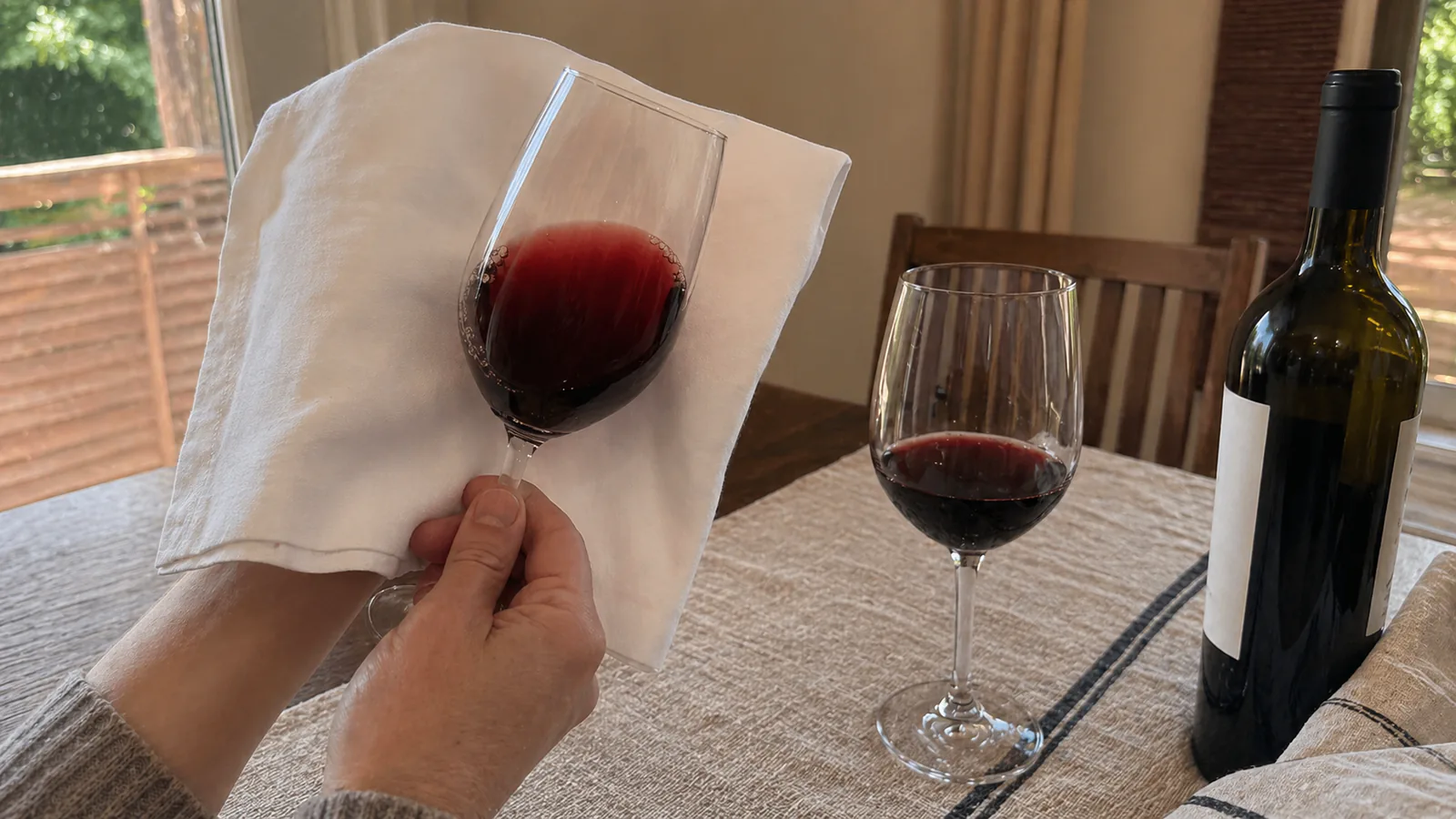
How to Taste Wine Like You Know What You're Doing
Four steps to actually tasting wine. What to pay attention to so you can tell good from great, without the pretension.
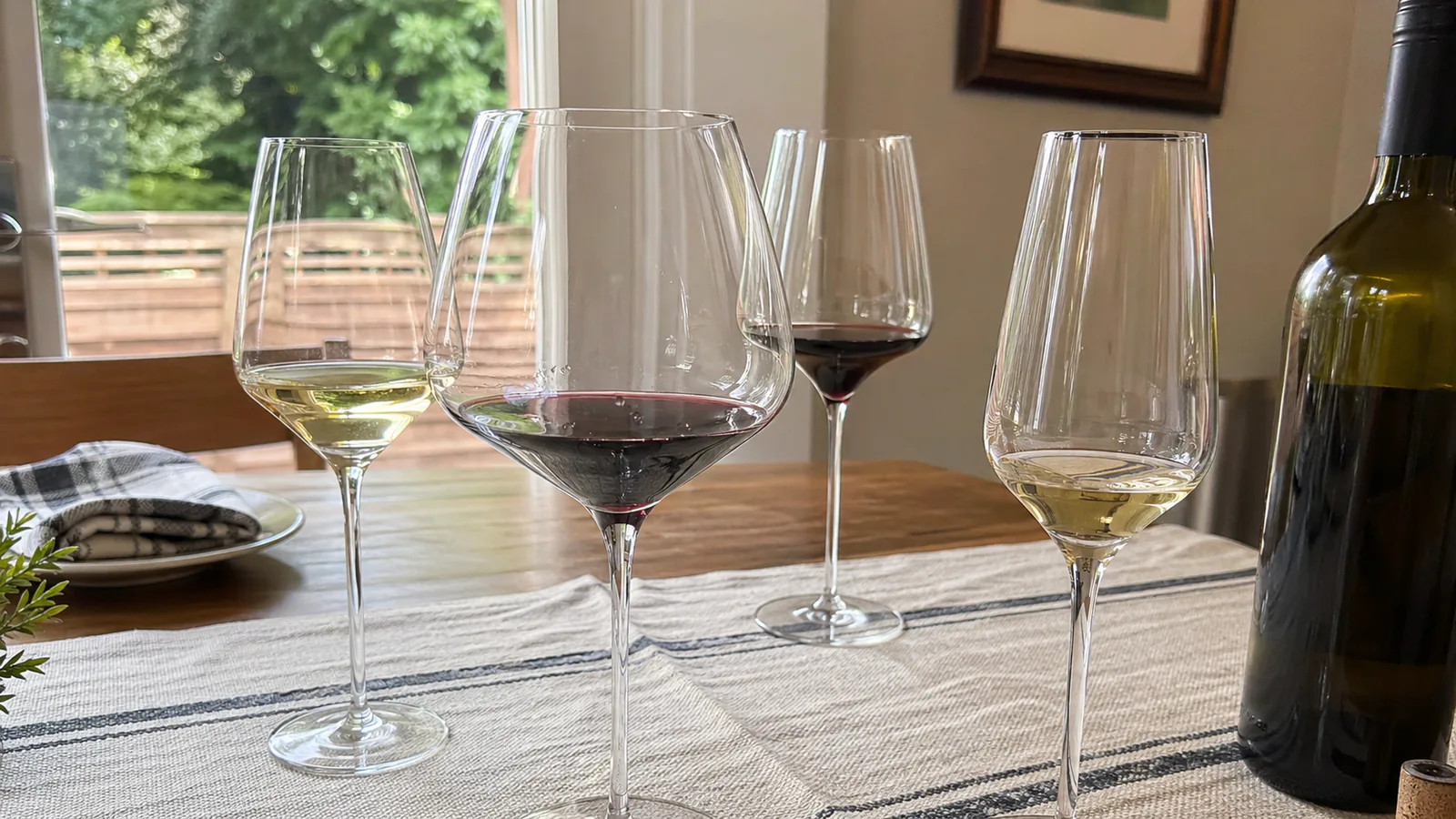
Best Wine Glasses: 6 Picks for Every Budget and Wine Type
Six wine glasses ranked by type: from a versatile everyday set to a premium universal glass. Find the right glass for red, white, stemless, and more.
Wine Gifts Under $50: 12 Picks That Look Way Pricier
12 wine gifts under $50, all on Amazon, all 4.6+ stars. Crystal decanters, premium aerators, electric openers, glasses, and chillers.