
Claire Bennett
Wine Editor11 min read
Wine Faults and Flaws: How to Spot a Bad Bottle
Spot a corked, oxidised, or heat-damaged wine in seconds. The eight common wine faults, what they smell like, and how to send a bottle back.
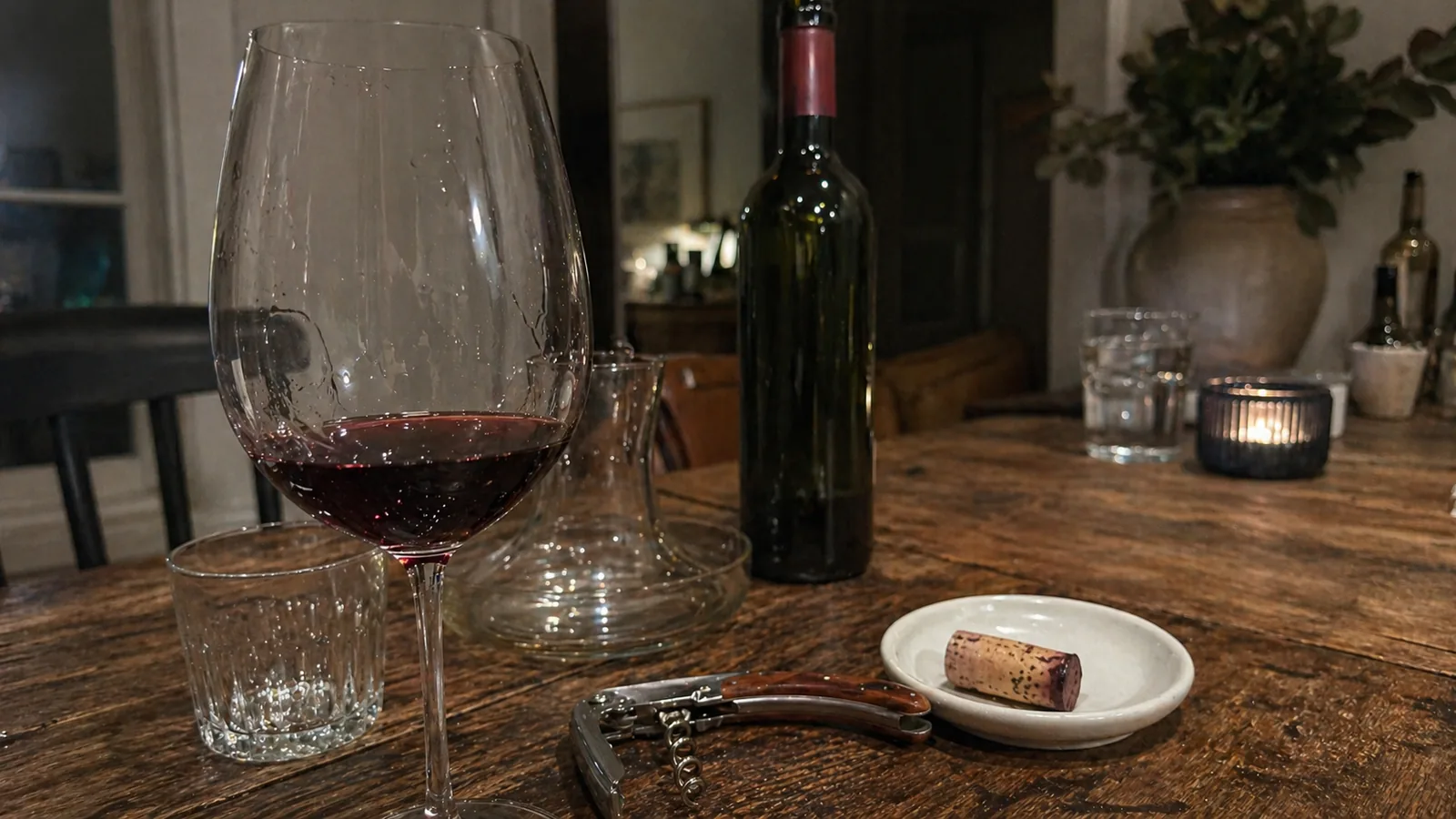
You open a bottle, pour a glass, and something feels off. It doesn’t smell bad exactly, just muted. Like the wine is wearing a wet sweater. Two sips in you’re sure something’s wrong but you can’t name it. That’s the most common wine fault on the planet, and once you can name it (and the seven other usual suspects), you’ll stop drinking compromised bottles in polite silence and start sending them back.
By the end of this page you’ll know:
- The wet-cardboard smell that affects about one in every twenty-five bottles, and why nobody ever mentions it
- The fault that disappears with 20 minutes in a decanter (so don’t write a wine off too fast)
- The “barnyard” smell that’s a flaw in some wines and a feature in others, and how to tell which
- Exactly what to say to a sommelier or shop staff to get a faulty bottle replaced without drama
- The one-bottle test that lets you train your nose to spot cork taint forever
- When a “funky” wine is the style on purpose and you should keep drinking
What Is Cork Taint and Why Is It So Common?
Cork taint is the most common wine fault by a wide margin. Roughly one in 25 bottles sealed with natural cork is affected to some degree, though the industry-quoted number ranges from 1 to 7% depending on the study and the cork supplier.
The cause is a chemical called 2,4,6-trichloroanisole, almost always referred to as TCA. It forms when natural compounds in cork react with chlorine-based cleaning products. Tiny amounts of TCA can spoil an entire bottle.
What it smells like:
- Wet cardboard
- Damp basement
- Wet dog
- Old, mouldy newspaper
- Mushroom (but not in a good way)
The most consistent description is “muted.” A corked bottle’s fruit aromas vanish. The wine smells flat, dull, and slightly damp. In severe cases it smells aggressively like wet cardboard. In mild cases it just smells like the wine is wearing a blanket: you know something’s missing but you can’t quite place it.
TCA is not a health risk. It tastes terrible but it won’t hurt you. The right move is to send the bottle back. Any reputable shop or restaurant replaces a corked bottle without question. It’s a known cost of doing business with natural cork.
Wines sealed with screwcap, glass stopper, or synthetic cork can’t get classic cork taint, which is one reason the New World moved heavily toward screwcaps in the early 2000s.
What Does Oxidation in Wine Smell Like?
Oxidation happens when wine has had too much exposure to air, either from a faulty cork, poor storage, or the bottle being old. The wine reacts with oxygen and loses its freshness.
What it smells and tastes like:
- Bruised apple
- Sherry, but on a wine that shouldn’t taste like sherry
- Stewed fruit
- Caramel or toffee notes that don’t belong
- A flat, brownish colour in whites; a brick or muddy tone in reds
Some wines are intentionally oxidised: sherry, vin jaune from the Jura, some orange wines, and Madeira. Those styles use oxidation as a feature. The fault is when oxidation shows up in a wine that wasn’t meant to taste that way.
A 5-year-old supermarket Sauvignon Blanc that smells like sherry is oxidised. A 15-year-old top Burgundy that smells slightly mature and complex is just aged, not faulted. The line between “developing nicely” and “oxidised” is one of those judgement calls that comes with practice.
If a young white wine has lost its citrus and smells like apples that have been sitting in a fruit bowl for a week, it’s oxidised. Send it back.
What Is Reduction in Wine?
Reduction is the opposite of oxidation. It’s the wine being cut off from oxygen for too long, usually during winemaking, which lets sulfur compounds build up.
What it smells like:
- Struck match
- Rotten egg
- Burnt rubber
- Cabbage
- Garlic
- Sometimes gunpowder
Reduction is often a “fault” you can fix yourself. Mild reduction blows off after 20 to 30 minutes in a decanter or even just swirling the glass aggressively. Some sommeliers will throw a copper coin into a reductive wine to bind the sulfur compounds.
Severe reduction (the sustained rotten-egg smell that doesn’t fade) is a real flaw and worth sending back. But a slight struck-match note that disappears after some air is more of a quirk than a defect, and you’ll find it on plenty of high-end wines.
Reduction is more common in screwcap-sealed wines because the seal is so tight that no oxygen gets in during ageing. Modern screwcaps with a slightly looser oxygen transmission rate are designed to address this.
What Is Brettanomyces (Brett) in Wine?
Brett is a yeast that can grow during fermentation or barrel ageing. In small amounts it adds character. In large amounts it dominates the wine.
What it smells like:
- Band-aid (the most common descriptor)
- Barnyard, hay, or stable
- Sweaty saddle leather
- Smoked meat or bacon
- Spice and a slightly metallic finish
This is the fault that splits wine drinkers. A small amount of brett in a Northern Rhone Syrah, an aged Bordeaux, or a serious Italian red can add complexity that some people love. The same level in a Marlborough Sauvignon Blanc would be a clear fault.
How to tell brett-as-feature from brett-as-fault:
- Style and region. Some Old World regions (Rhone, Bordeaux, Tuscany) have historically tolerated low-level brett. New World wines and clean, fruit-led styles shouldn’t have any.
- Balance. If the brett notes overpower the fruit, it’s a fault. If they sit underneath as one of many flavours, it might be intentional.
- Producer reputation. A respected producer making wine that’s slightly bretty is probably doing it on purpose. A supermarket bottle that’s bretty is probably faulted.
For most modern winemakers, even a hint of brett is unwanted. The cleaner-fruit-led style has won out at almost every price point.
What Does Volatile Acidity Smell Like?
Volatile acidity (VA) shows up when bacteria in the wine produce acetic acid, the same compound that makes vinegar.
What it smells like:
- Nail polish remover
- Vinegar
- Sometimes a sharp, almost solvent-like edge
A small amount of VA can lift a wine and add complexity. Many great wines have a touch of it. The fault is when it dominates, when the wine smells more like vinegar than wine, or has a sharp acetone note that stings the nose.
Some old, neglected bottles develop VA over time. Some warm-climate wines made without enough sulfite protection develop it during fermentation. Either way, a sharp vinegary note in your glass means the bottle is on its way out.
How Do You Spot a Heat-Damaged Bottle?
Heat damage happens when wine has been stored or shipped in too-warm conditions. The wine cooks slightly and loses its structure.
Signs of heat damage:
- The wine tastes flat, pruney, or stewed
- Fresh fruit is gone, replaced with dried-fruit notes
- The cork has pushed up slightly past the lip of the bottle
- There’s seepage or a sticky residue around the capsule
- The wine looks duller than it should
This is the fault you should suspect when buying online wine in summer or grabbing a bottle from the back shelf of a small shop without proper storage. A bottle stored above 25 degrees Celsius (77 Fahrenheit) for any length of time will degrade. A bottle that’s been in a hot car or a sunny window for a few hours can be done.
Heat damage isn’t reversible. If the bottle looks suspect (cork pushed up, seepage), don’t buy it. If you’ve already opened it and it tastes pruney, send it back.
What Is Light Strike?
Light strike is damage caused by ultraviolet light hitting the wine through a clear or pale-coloured bottle. The light reacts with riboflavin and amino acids in the wine and produces sulfur compounds.
What it smells like:
- Cooked cabbage
- Onion
- Wet wool
- A slightly putrid, off note that doesn’t blow off
Light strike is most common in clear-glass-bottled white wines, sparkling wines, and roses. That’s why most quality wine is bottled in dark glass. If you ever see a clear-glass white wine that’s been sitting in a shop window for weeks, leave it. It’s almost certainly light-struck.
The fault is irreversible and the bottle should go back.
What’s Refermentation in Still Wine?
A still wine that’s slightly fizzy when it shouldn’t be is usually showing signs of refermentation in the bottle. Residual yeast or bacteria has restarted fermentation, producing carbon dioxide.
Signs:
- A still red or white that has visible bubbles or a prickly texture
- The cork pops out with unusual force
- The wine looks slightly hazy
A small amount of natural fizz is intentional in some natural wines and styles like Vinho Verde. But a Cabernet Sauvignon that fizzes is faulted. The fault often produces off-flavours alongside the fizz: sour, yeasty, sometimes a bit cidery.
If a wine wasn’t meant to be sparkling and is, send it back.
How Do You Send a Faulty Bottle Back at a Restaurant?
This is where most people freeze. The good news: it’s much less awkward than it feels. (For the broader rituals around the wine list, see how to order wine at a restaurant.)
The script:
- Don’t drink half the bottle first. Smell, taste a small sip, and decide within two minutes of the wine being poured. The longer you wait, the harder the conversation.
- Wave the sommelier or server over politely. Don’t make a scene.
- Say it directly. “I think this bottle might be corked.” Or “this smells off to me, would you mind tasting it?”
- Let them taste. Most restaurants train their staff to recognise common faults. They’ll either agree or say it’s how the wine should taste.
A good restaurant replaces the bottle without question if you’ve called a fault correctly. A great restaurant offers to taste it with you and explain whether it’s a fault or a stylistic quirk. The standard wine etiquette for the cork-and-pour ritual is on your side here, even if it feels nervy in the moment. If a sommelier insists a clearly corked wine isn’t corked, you’re at the wrong restaurant.
You can also send back a bottle from a wine shop in the next few days, even after pulling the cork. Bring the bottle (with most of the wine still in it) and the receipt. Reputable shops replace it. They have a process for sending corked bottles back to the importer.
When Is a “Funky” Wine the Style and Not a Fault?
Some wines smell unusual on purpose. Telling the difference matters because nobody wants to send back a perfectly good bottle (and nobody wants to drink a flawed one in polite silence).
The styles where funk is on purpose:
- Natural wine. Native yeast fermentation can produce gentle barnyard, hay, or cidery notes. A clean natural wine smells fresh and lifted; a flawed one smells aggressive or vinegary.
- Biodynamic Burgundy. Often shows herbal, mushroomy, slightly wild notes that read as “funky” the first time but are part of the style.
- Aged red wine. Wine over 15 years can show developed notes (mushroom, leather, dried herbs, tobacco) that are a feature, not a fault.
- Sherry, vin jaune, Madeira. Intentionally oxidised. They taste like sherry because they are sherry.
- Northern Rhone Syrah. Some bretty, smoky character is part of the regional style.
The general test: does the funk add complexity to a wine that still has fresh fruit and structure underneath? If yes, it’s style. Does the funk dominate and replace the fruit? If yes, it’s fault.
When in doubt, give the wine 30 minutes in the glass. Faults usually get worse. Stylistic funk usually integrates as the wine opens up.
Frequently Asked Questions
Will a corked wine make me sick?
No. TCA is unpleasant to taste but not toxic. You can drink a corked bottle without harm. You just won’t enjoy it.
How long can I send a faulty wine back?
Most retailers accept faulty bottle returns within a few days of opening as long as you bring back the bottle with most of the wine still in it. Restaurants should take it back the same evening. The longer you wait, the harder it is to make the case.
Why does my wine taste bitter or astringent? Is that a fault?
Probably not. Bitterness and astringency are usually tannin, especially in young red wine. Tannic wines feel drying and slightly grippy in the mouth, not faulty. Try the wine with food (fatty cheese or meat tames tannins) or decant it for an hour to soften the edges.
Are screwcap wines fault-free?
Screwcaps eliminate cork taint and most oxidation problems but they don’t prevent every fault. Reduction is more common under screwcap. Heat damage and light strike still happen. Refermentation can still occur. Screwcaps just remove one big variable.
Is a wine with sediment in it spoiled?
No. Sediment is harmless and often a sign of an older or less-filtered wine. Decant the bottle slowly and leave the sediment behind. The wine itself is fine.
Can I tell a faulty wine from the colour alone?
Sometimes. A young white that looks deep yellow or brown is probably oxidised. A red with brick or brown edges that’s only a few years old is probably damaged. Cork taint, brett, and reduction don’t change colour, so colour alone won’t catch every fault.
Now you can name what’s wrong with a flawed bottle, the rest of wine knowledge is mostly upside. Pour the next one, smell it for a beat, and trust that if something feels off, you can finally explain why. If you want to sharpen the smell-and-taste step that catches every fault here, how to taste wine walks through the four-step routine.
Keep Reading
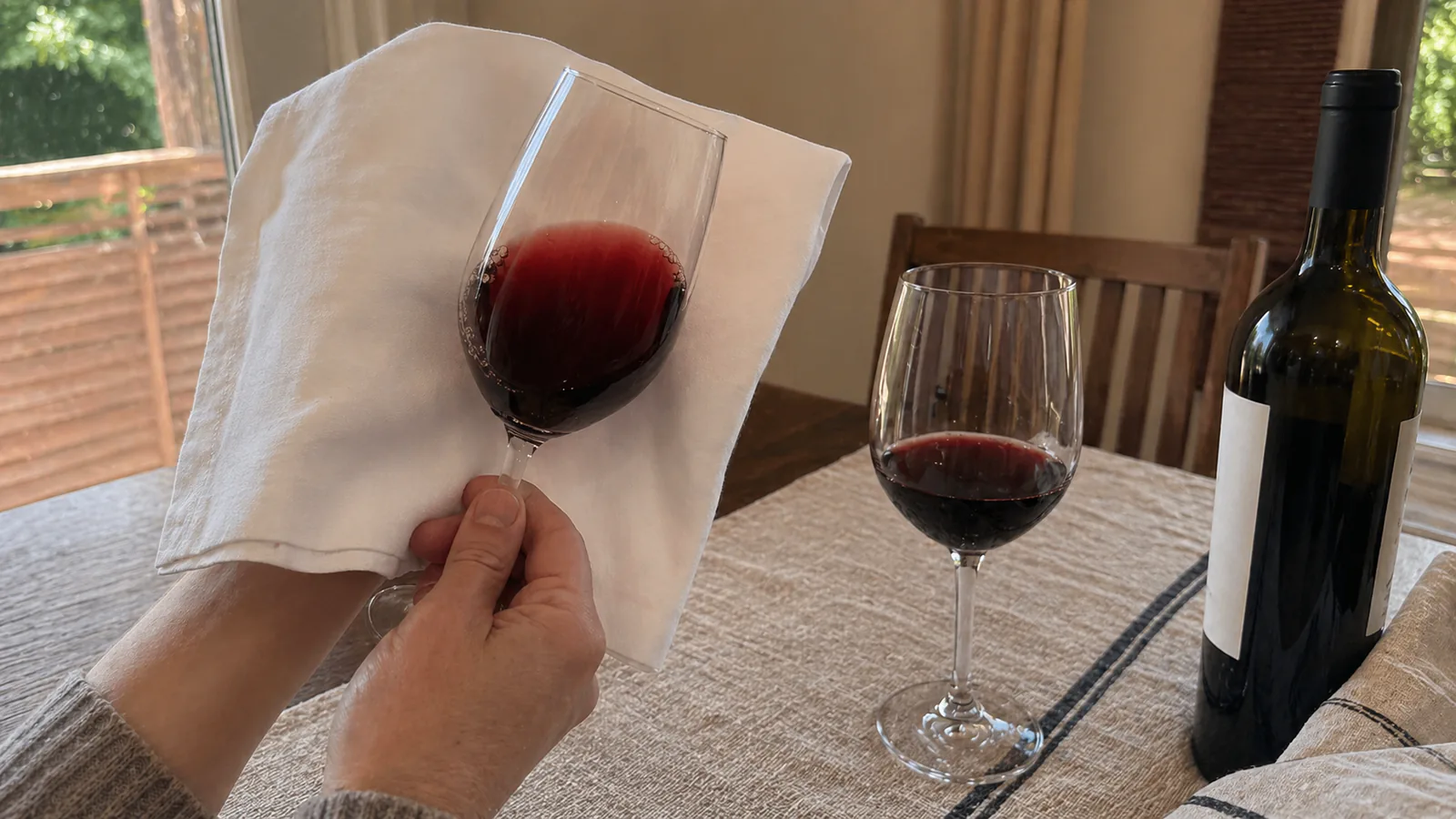
How to Taste Wine Like You Know What You're Doing
Four steps to actually tasting wine. What to pay attention to so you can tell good from great, without the pretension.

Wine Etiquette: What Actually Matters at the Table
The wine etiquette rules that genuinely matter, the ones you can ignore, and how to drink confidently around people who care too much.

How to Order Wine at a Restaurant Without Panicking
Read any wine list in 30 seconds, talk to the sommelier with three magic phrases, and handle the bottle approval ritual without sweating.