Claire Bennett
Wine Editor10 min read
How to Order Wine at a Restaurant Without Panicking
Read any wine list in 30 seconds, talk to the sommelier with three magic phrases, and handle the bottle approval ritual without sweating.
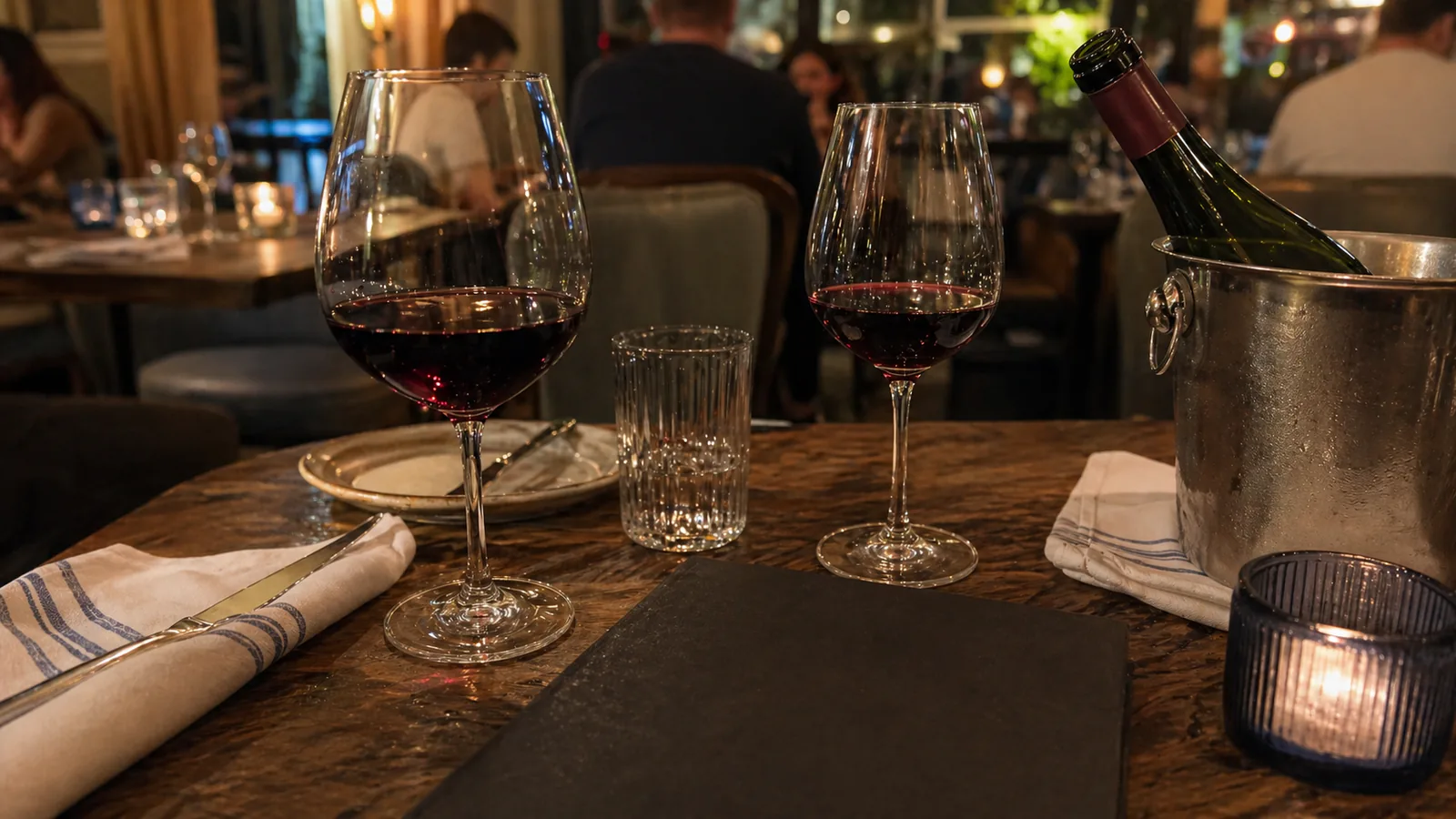
The waiter hands you the list, gives you a small nod, and walks away. The list is twelve pages. Half the wines are in a language you can’t quite read. The cheapest bottle is $48 and the most expensive is $480. Your date is watching. Your dad is watching. Your boss is watching. You have about ninety seconds before someone asks you what’s good.
This is the moment most people freeze. Then they grab the second-cheapest red and hope. There’s a better way, and it takes about a minute to learn. The rest of this page walks you through reading any list fast, talking to a sommelier without sounding lost, and handling the bottle approval ritual without sweating through your shirt.
By the end of this page you’ll know:
- The 30-second list scan that works on any restaurant list, from a corner bistro to a Michelin two-star
- Why the second-cheapest wine is the worst-value bottle on most lists, and what to order instead
- The three magic phrases that turn any sommelier from intimidating to your best ally at the table
- What you’re actually checking when the server hands you the cork, and the one thing not to do with it
- When the splash taste is your chance to send the bottle back, and when it’s not
- The wine-by-the-glass math that tells you when a bottle is the smarter buy, often after just two pours
How Do I Read a Wine List Quickly?
Most lists follow the same shape. Sparkling at the top. Whites in the middle, organised either by region (France, Italy, USA, Australia) or by style (light, aromatic, full-bodied). Reds below them, same logic. Sweet and fortified at the bottom. Once you see this pattern, every list looks like the same list.
Skip the page-by-page read. You don’t have time. Instead, do this in 30 seconds:
- Pick a colour. Red, white, or sparkling. The food has already decided this for you. Match what most people at the table are eating.
- Pick a region or grape you’ve liked before. Pinot Noir from anywhere. Spanish reds. Italian whites. Whatever you remember enjoying.
- Pick a price band. Look for two or three bottles in your range. Don’t read every wine. Read three.
That’s the scan. Anything beyond that is research, not ordering.
If the list has a “by the glass” section at the front, read that first. Restaurants put their best by-the-glass options at the front of the list because that’s what they want to sell. Often, the bottle versions of those wines are the safer bets on the full list, because the sommelier has already decided they’re worth pouring.
Should I Order the Second-Cheapest Wine?
No, and the reason is mathematical. Restaurants know guests are embarrassed to order the cheapest, so they put their highest-margin bottle in the second-cheapest slot. You pay extra to feel less awkward, and the wine in the glass is often worse than the bottle one row down or three rows up.
Order the cheapest if it’s a wine you’d buy yourself. Or jump up two or three rows into a wine the sommelier has visibly priced fairly. Or, if the list has a glass-pour version of a similar wine, order a glass first to test it before committing to a bottle.
The better rule: pick the wine you actually want to drink, not the wine you think makes you look right. The waiter has seen every order. They’re not silently ranking your taste.
If you’re working a budget, tell the sommelier the number directly. “I’d like to spend around $60 on a bottle for two of us” is a sentence sommeliers love. It saves them suggesting a $90 bottle to someone who’ll spend the meal worrying about the bill.
How Do I Talk to a Sommelier Without Sounding Lost?
Three sentences cover almost every situation. Use them in this order.
“We’re spending around $X.” Set the budget first. Without it, the sommelier is guessing. With it, they can pick from the bottles in your range. Saying a number is not embarrassing. Sommeliers genuinely want to find you the right wine, and the right wine has a price.
“We’ve enjoyed a [grape or region] before. Something in that direction?” Even if you only know one wine you liked, that’s enough. “We had a really nice Malbec last week.” “I usually drink Sauvignon Blanc.” “We had a Burgundy at our anniversary that we still talk about.” Any of those gives the sommelier a starting point.
“We’re eating [X], does that change what you’d pick?” The food matters more than people think. A delicate fish destroys a heavy red. A steak overpowers a crisp white. The sommelier already knows the menu. They’ll adjust their pick to fit. (For the at-home version, our wine pairing chart covers the most common dish-and-grape matches.)
That’s it. Three sentences. The sommelier does the rest.
If they suggest something out of your budget, say so. “Anything closer to the $X range?” closes the gap without awkwardness. If they suggest a grape you’ve never heard of, ask “what does it taste like, in plain terms?” A good sommelier will compare it to something you’ll recognise. “Like a softer Cabernet” or “like a richer Pinot Grigio.”
What Happens During the Bottle Approval Ritual?
Three steps, all quick. Here’s what each one is actually for.
Step 1: The label check. The server brings the bottle to the table, label out, and pauses. You’re confirming this is the wine you ordered. Look at the producer name and the vintage year. (If decoding what’s on the label still trips you up, how to read wine labels walks through the five things that matter.) If you specifically ordered the 2020 and they brought the 2022, this is your moment to flag it. Otherwise, nod once and they’ll open it.
Step 2: The cork. Some restaurants will place the cork on the table. Some will hand it to you. Some will skip this step entirely (especially with screwcaps). You’re not meant to sniff it. You’re not meant to taste it. You’re checking that it’s intact, not crumbling, and not so soaked through that the wine has been seeping past it. Look at it for two seconds and put it back down. Don’t roll it between your fingers like an inspector.
Step 3: The splash taste. The server pours about an ounce into your glass. You’re checking for two specific flaws: cork taint (smells like wet cardboard, damp basement, or a moldy newspaper) and oxidation (smells flat, stale, or like sherry when the wine isn’t sherry). Smell first. If the wine smells clean, take a small sip. If it tastes like the wine the menu described, nod and they’ll pour for everyone.
The splash taste is not “do I like this wine?” That decision was made when you ordered. It’s “is this wine flawed?” If yes, send it back. If no, the bottle is yours.
When Can I Send a Bottle Back?
When it’s flawed. Not when you’ve changed your mind.
Genuine reasons to send back:
- Corked. Smells of wet cardboard, damp basement, or musty cloth. Affects roughly 1 in 20 bottles with natural cork. A good server will swap it without question.
- Oxidised. Tastes flat, stale, sherry-like, or noticeably brown in the glass when the wine should be red or yellow.
- Cooked. The wine has been stored too warm. Tastes stewed, dull, or has lost all freshness.
- Wrong wine. They brought a different vintage, vineyard, or producer than you ordered.
Not reasons to send back:
- “I thought it would taste different.”
- “It’s not as nice as the one we had last time.”
- “I changed my mind.”
- “It’s not what I expected.”
Sending back a wine you simply don’t enjoy puts the restaurant in a bind. They’re now stuck with an open bottle they can’t sell. Most reputable places will swap it anyway to keep you happy, but you’ve used a courtesy that’s meant for actual problems.
If you’re not sure whether the wine is flawed, ask the sommelier to taste it. “I’m not sure about this, would you mind?” is a fair sentence. They’ll know within seconds and tell you straight.
What About Corkage and Bringing Your Own Bottle?
Corkage is the fee a restaurant charges to open a bottle you’ve brought yourself. It typically runs $15 to $40 in casual venues and $30 to $75 at fine-dining restaurants. Some places don’t allow it at all. Always call ahead.
When corkage is worth it: you have a special bottle you’ve been saving, the restaurant doesn’t carry it, or your bottle is significantly better than what’s on their list at your budget. When it isn’t: the restaurant has a strong list and the corkage fee plus retail price of your bottle ends up close to what you’d spend on theirs.
Etiquette tip: don’t bring a bottle that’s already on the restaurant’s list. It puts the sommelier in an uncomfortable spot. And always offer the sommelier a taste of your bottle, especially if it’s something interesting. They almost always decline, but the gesture matters.
When Should I Order by the Glass Versus by the Bottle?
The math is simpler than people think. A bottle holds five glasses. Restaurants typically charge per glass at about a quarter to a third of the bottle price.
Two rough rules:
- If two of you are likely to have two glasses each, order the bottle. Four glasses at $14 each is $56. The bottle of the same wine is often $50.
- If one of you is having one glass and the other is sticking to water or a different drink, order by the glass. A bottle is overkill, and a half-finished bottle gets left behind.
The exception: a wine list with deep variety. If you want to try a Riesling with the starter and a Syrah with the main, glasses give you that flexibility. Two bottles for two people becomes a lot of wine very quickly.
Some restaurants do a “half bottle” or “carafe” option, which is roughly two and a half glasses. Worth ordering when you want the bottle experience without the bottle volume.
How Do I Order Wine on a Date?
The same way you order on any night, with one extra move: ask your date what they like.
“Are you in the mood for red, white, or sparkling?” is a question that lands warmer than presenting them a list and saying “you pick.” It signals confidence (you’ll happily order) and care (their preference matters). If they don’t have a strong opinion, you’ve earned the right to make the call. If they do, you’ve just dodged ordering a Cabernet for someone who only drinks crisp whites.
Don’t perform expertise you don’t have. Trying to impress with terms you half-remember is the fastest way to land flat. Ordering with confidence (“a glass of the Chablis to start, and we’ll look at the list”) lands every time. The waiter takes you seriously. Your date relaxes. The night gets better.
If you’re picking up the bill, set the budget with the sommelier privately if you can. “Around $X for the bottle” said quietly leaves the surprise out of the cheque later.
Frequently Asked Questions
What if there’s no sommelier at the restaurant?
Ask the server. They’ve usually been trained on the list, even if briefly. Use the same three sentences (budget, grape or region you like, what you’re eating) and they’ll point you somewhere reasonable. If they look completely lost, default to a wine from a region you trust at a price you’re comfortable with.
Is it okay to ask the price out loud?
Yes, especially if the host or guest list has changed. “What’s the price on the Malbec?” said politely is a normal question. Hovering over the list pretending to read it just to find a number takes longer and feels stranger.
How much wine should I order for a group?
A bottle for every two to three people if everyone’s drinking, plus an extra bottle for the table if it’s a long dinner. For a six-person dinner planning two courses, three bottles is a fair starting place. Start with two, order a third when you’re halfway through the second.
What if the wine I ordered is sold out?
The server should tell you before you wait. They’ll usually offer a similar bottle at a similar price. If their substitute doesn’t fit, ask for two or three options. Don’t feel pressured to take the first replacement just because the original is gone.
Can I order wine in a restaurant if I don’t drink much?
Absolutely. Order by the glass. Many restaurants do half-pours or smaller measures if you ask. A half glass of something you actually want is better than a full bottle you’ll only finish half of.
Is it bad form to order the most expensive bottle?
Only if you’re trying to perform. If you genuinely want it and can afford it, order it. The worst combination is ordering an expensive bottle and then not enjoying it because you’re too anxious about the price to taste it.
The whole game is calm. Order what you want, ask for help when you need it, and treat the server like an ally instead of a judge. Ready for the next round? Brush up on wine etiquette so you’re set the moment the bottle arrives.
Keep Reading
Wine Etiquette: What Actually Matters at the Table
The wine etiquette rules that genuinely matter, the ones you can ignore, and how to drink confidently around people who care too much.
How to Read a Wine Label (Old World vs New World)
Decode any wine label in under a minute. The 5 things that matter, what reserve and grand cru actually mean, and when vintage is worth caring about.
Wine Pairing Chart: What To Pour With Dinner
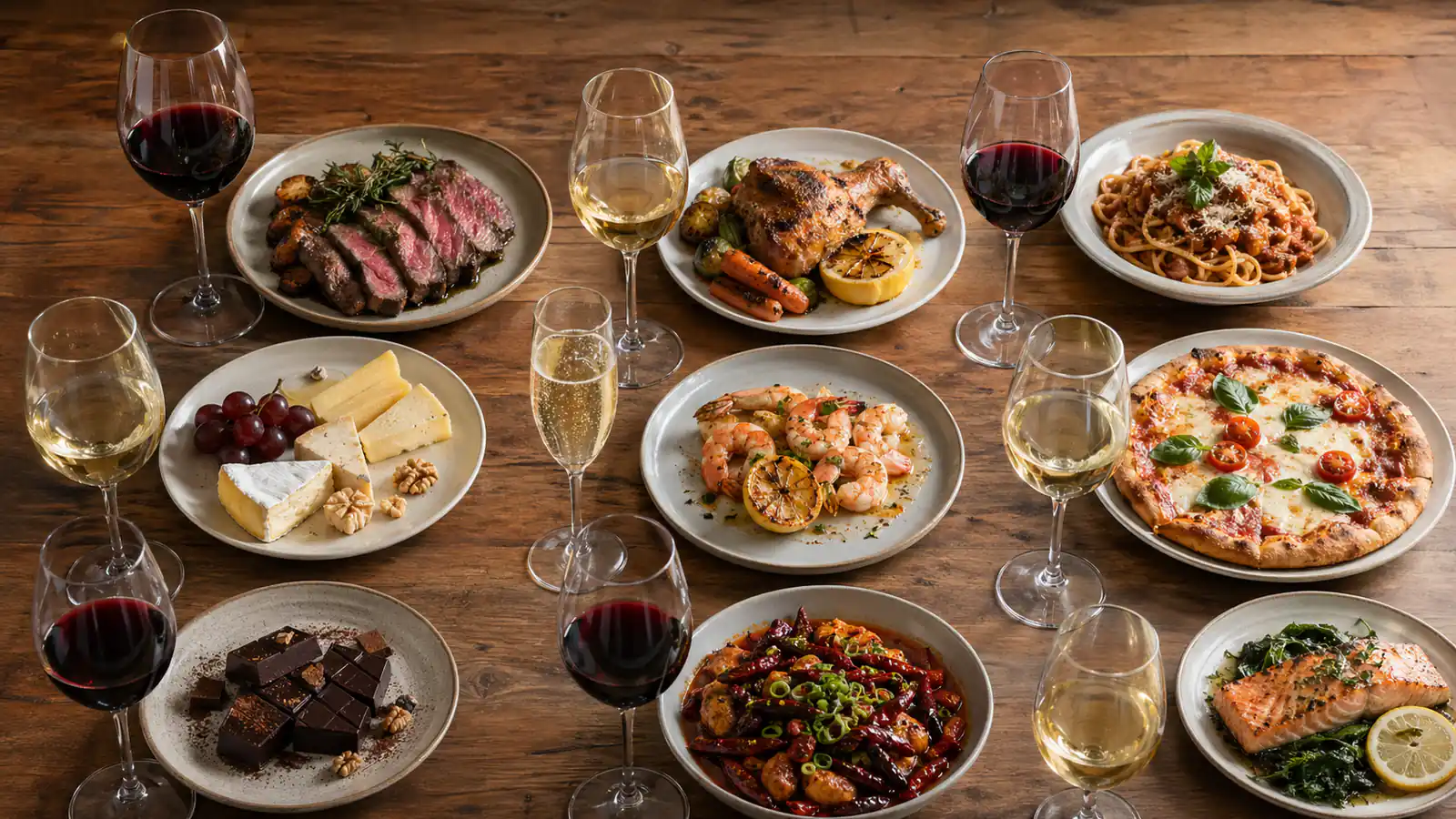
A practical wine pairing chart for steak, chicken, seafood, pasta, pizza, cheese, chocolate, spicy food, and holiday dinners.