
Claire Bennett
Wine Editor10 min read
How to Hold a Wine Glass (and Why It Matters)
The grip that keeps your wine at the right temperature, the swirl that releases the aroma, and the shortcut for stemless glasses.
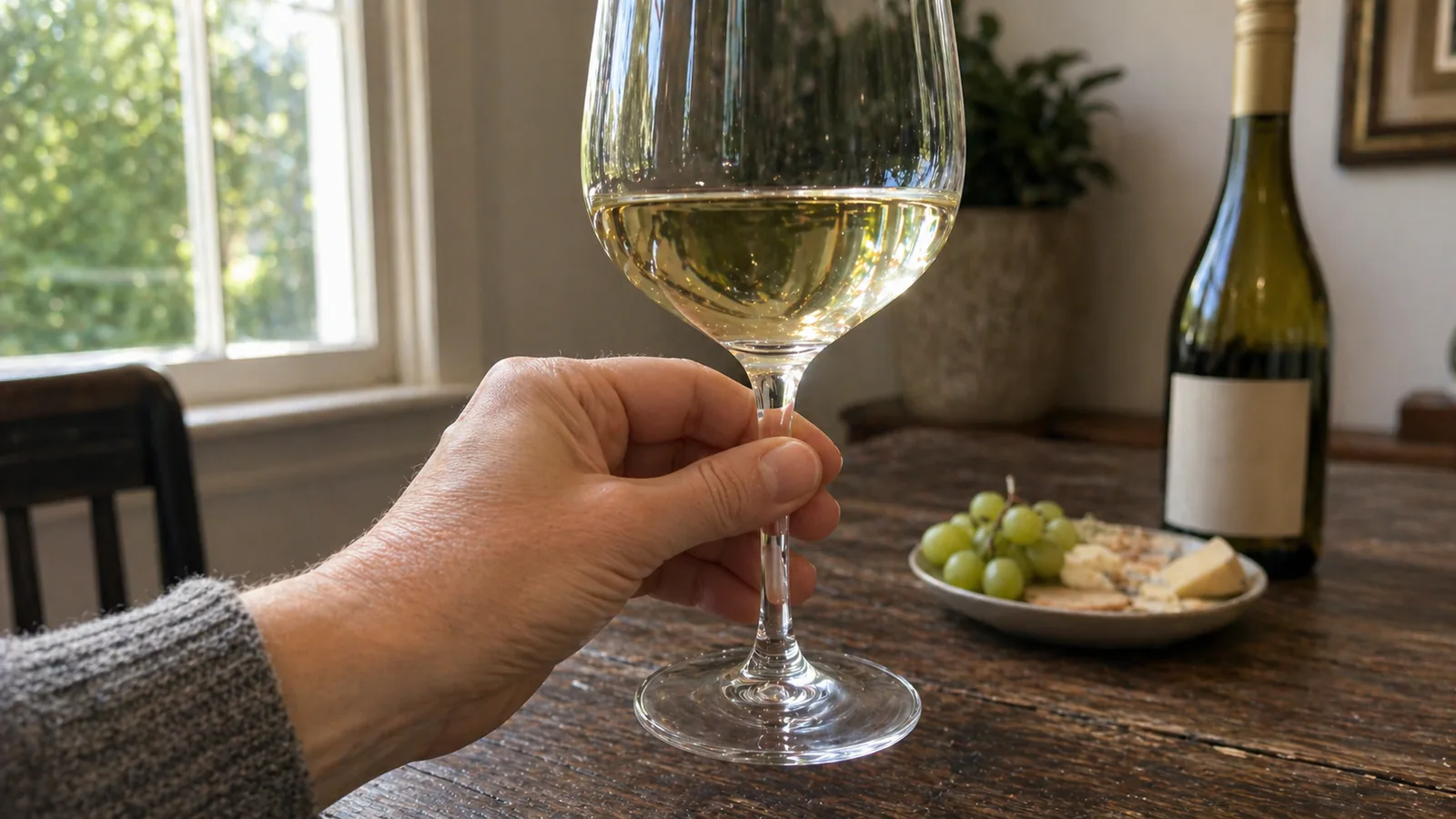
Holding a wine glass by the bowl raises the wine’s temperature by 3 to 5 degrees in five minutes. That’s enough to flatten a white, accelerate bubble loss in a sparkling, and push a red’s alcohol forward before the fruit can show up. The stem grip has one job: keeping your body heat away from a wine that was deliberately served cold to taste right. This page covers the physics, the technique, and the adjustments for stemless glasses, sparkling flutes, and that moment when you have to pass a glass across a table without spilling any.
By the end of this page you’ll know:
- The exact temperature your hand pushes a glass of white wine to in five minutes (and why that ruins it)
- The pinch grip vs the cradle, and which one signals “I drink wine often” without saying a word
- The swirling rule that changes direction depending on whether the glass is on the table or in your hand
- Why stemless glasses exist, and the workaround that keeps them from being a downgrade
- The grip pros use to taste wine that looks weird but lets them see the colour without raising the glass
- How to pass a wine glass across a table without anyone losing wine, eye contact, or composure
Why Should I Hold a Wine Glass by the Stem?
Two reasons, both real, neither about looking elegant.
Temperature. Your hand sits at about 36°C (97°F). White wine wants to be served between 8°C and 12°C (46°F to 54°F). Red wine wants 15°C to 18°C (59°F to 64°F). Cup the bowl with a full hand for five minutes and you’ve raised the temperature by 3°C to 5°C. That’s enough to mute a white’s acidity, blow a sparkling wine flat faster, and make a red taste like alcohol instead of fruit. The stem keeps your hand off the wine.
Visual clarity. Half of wine tasting is what you see. Tilt the glass against a white surface and look at the colour, the depth, and the edge. Fingerprints on the bowl distort the view, especially with reds where the colour change at the rim tells you about age. Hold the stem and the bowl stays clean.
There’s a third quiet reason: how the glass moves. Holding the stem lets you swirl with a flick of the wrist. Holding the bowl forces a clumsier whole-arm rotation. Swirling is what releases the aromas, and aromas are 80% of taste. The grip and the swirl are the same gesture.
What’s the Best Grip for a Wine Glass?
The pinch grip. Thumb on one side of the stem, first two fingers on the other side, near the base. The base of the glass rests on the lower part of your fingers or against your palm. The stem stays vertical, the bowl stays cool, the swirl is one wrist movement.
The cradle (palm under the foot, fingers around the stem) works for tasting situations where you want to lift the glass to look at the wine against a light source. You’ll see sommeliers do this when they’re inspecting a wine, less often when they’re drinking it.
The bowl grip (full hand around the bowl, the way most people hold a glass of water) is the one to avoid. It’s not a faux pas in the wedding-toast sense. It just makes your wine taste worse within a few minutes.
Practice once at home. Pour water into a wine glass. Hold the stem in the pinch grip. Swirl. Sip. Set it down. Repeat ten times until your hand stops drifting up to the bowl. After that it’s automatic.
How Do I Hold a Stemless Wine Glass?
Stemless glasses solved one problem (they fit in normal cupboards, they don’t tip over on uneven tables, they’re cheaper to ship) and created another. There’s no stem, so there’s nowhere to put your hand without warming the wine.
The workaround: hold the base. Pinch grip the bottom of the glass, where it tapers down to a thicker rim, with your thumb and first two fingers. Your hand is on the glass but not on the wine. The bowl stays cool, the visual stays clean.
The other workaround: chill the wine slightly colder before pouring than you would for a stemmed glass. If a stemmed Sauvignon Blanc wants 10°C in the glass, pour the stemless version at 8°C. By the time you’ve taken three sips, your hand will have warmed it to where it should be anyway.
If the host is using stemless and you’re a guest, just match what they’re doing. Bringing your own wine theory to someone else’s table reads as fussy. The bigger picture on guest behaviour is in our wine etiquette guide.
How Do You Hold a Glass for a Formal Tasting?
For a tasting, the grip changes once. When you want to inspect the colour against the white tablecloth or paper, pros sometimes hold the glass by the foot itself, with the foot pinched between thumb and first finger. The bowl tilts at an angle, the wine spreads thin against the inside of the bowl, and the colour at the edge becomes easy to read.
This is a tasting move, not a drinking move. You’d look strange holding a glass like that all night. But for the colour-check step of evaluation, it gives you the cleanest view.
Once you’ve looked, drop back to the stem grip for swirling, smelling, and tasting. Same glass, three different holds in 10 seconds. Each one for a specific task.
Should I Hold Red and White Wine Glasses Differently?
Same grip, different urgency.
Reds are served warmer (15°C to 18°C), so a brief moment of bowl contact won’t damage them. You have more margin. Whites are served much colder (8°C to 12°C), so any hand-on-bowl contact warms them past their best within a couple of minutes.
In practice: if your glass of red briefly slips into a bowl-hold while you’re talking, the wine is fine. If your glass of white does, the wine is noticeably less crisp by the third sip. The stem grip is non-negotiable for whites, sparkling, and rose. For reds, it’s strongly preferred but slightly more forgiving.
The shape of the glass tells you what to do. A wide-bowled red wine glass (Burgundy or Bordeaux shape) almost forces you to grip the stem because the bowl is too wide for a comfortable cradle. A narrower white wine glass invites the bowl-hold, which is exactly when you most need to resist it. If you’re upgrading your stemware, our best wine glasses round-up covers the shapes that actually change the read.
How Do I Hold a Champagne or Sparkling Glass?
Stem grip, lower on the stem than you would for a still wine. Champagne flutes are usually thinner and longer, so anchoring near the base feels more stable. The wider end of the foot rests against your palm if you want the extra steadiness for a toast.
Don’t swirl sparkling wine. Swirling agitates the bubbles and they go flat fast. The bubbles do the aroma work for you, rising up the centre of the glass and releasing the wine’s smell as they pop at the surface. You’re holding the glass mainly so you can sip it, not so you can spin it.
For coupes (the wide, flat sparkling glasses you see in vintage photos), grip the stem the same way. The wider bowl makes the wine go flat faster anyway, which is why most modern restaurants serve sparkling in flutes or tulip-shaped glasses instead.
How Do I Swirl Wine Without Spilling?
Two methods. Pick the one that fits the moment.
Glass on the table. Set the base flat on the table. Use your fingers to slide the base in small circles, keeping the foot in contact with the surface. Counter-clockwise is traditional for right-handed people, clockwise for left-handed. The reason is mechanical: a counter-clockwise swirl with the right hand uses your wrist’s natural arc, which keeps the motion smooth and controlled. The wine climbs the inside of the bowl in a steady spiral.
Glass in the air. Hold the stem with the pinch grip. Rotate your wrist in small circles. Most right-handers find clockwise feels more natural in the air than on the table. The wine still spirals, but the gesture is smaller and faster. Don’t go big. The bigger the swirl, the more likely the wine sloshes over the rim.
Beginners almost always swirl too aggressively. Three seconds of slow circles is enough to release the aromas. Any more is showing off.
If you want to practice without staining a tablecloth, put a tablespoon of water in a wine glass at home and swirl it for two minutes a day for a week. By the end of the week, you’ll have the muscle memory and you’ll never again do the awkward “watch out, I’m swirling” face at the table.
How Do I Pass a Wine Glass to Someone Else?
Pinch the stem at the very top, just below the bowl. Hold the glass upright. Pass it base-first toward the other person so they can grip the stem from below as you let go.
Don’t pass a glass by the bowl. The receiver has to put their hand on the bowl to take it, which puts both your fingerprints and theirs on the glass. The wine warms while the glass changes hands.
If the glass is full to the brim, pass it slowly. Most people fill glasses too high (a third for reds, halfway for whites is the rule). If you’re pouring for a guest and they’re seated, walk the glass to them rather than passing it across an obstacle course of plates.
For toasts at a long table, the same rule applies. If you can’t reach across, lift your glass slightly toward the person and meet their eye. The clink isn’t the toast. The eye contact is.
What If I’m at a Casual Dinner and It Doesn’t Matter?
Then it doesn’t matter. Hold the glass however you like. The stem grip is for situations where temperature, taste, and visual clarity actually count: a tasting, a fine wine, a dinner where the wine is part of the event.
If you’re drinking a $12 Tuesday-night red on the couch, the bowl grip won’t ruin your evening. The glass is meant to serve the wine, not the other way round.
The reason worth knowing the stem grip is that the moments where it matters tend to be the moments where you didn’t expect it to matter. A friend opens something special. A restaurant brings something nicer than you ordered. The grip is a small habit that pays off when the wine deserves it, and it costs nothing to practice the rest of the time.
Frequently Asked Questions
Does it really matter if I hold the bowl?
For everyday wine, not much. For a wine that’s been carefully chilled or carefully aged, yes. Your hand can warm a glass of white wine by 3°C to 5°C in five minutes, which is enough to make a noticeable difference in how it tastes. The stem grip is a free upgrade.
Why are some wine glasses stemless if the stem matters?
Stemless glasses trade the temperature benefit for practical reasons: they don’t tip over, they fit in dishwashers and cupboards, they’re cheaper to ship, and they survive casual dinners better. They’re a fine choice for everyday drinking. For wines you really care about, a stemmed glass still wins.
Is the cradle grip ever correct?
For inspecting a wine, yes. Sommeliers cradle the foot when they want to lift the glass to a light source and check the colour and clarity. For drinking, the pinch grip on the stem is the cleaner default.
How full should a wine glass actually be?
About a third full for reds, halfway for whites, two-thirds for sparkling flutes. This isn’t aesthetics. A third-full red glass leaves room for swirling without sloshing, and the empty space above the wine collects the aromas you smell when you tilt the glass.
Should I lift my pinky finger?
No. The pinky-out grip is folklore from old British tea tradition and has nothing to do with wine. Hold the stem with thumb and first two fingers. The other fingers do whatever feels comfortable, ideally curled lightly under the foot.
What if my hand feels unsteady on the stem?
Anchor the foot of the glass against the lower part of your fingers or against your palm. The grip is thumb and two fingers on the stem, but the base resting against your hand gives you the stability of a wider hold without your warm hand touching the bowl.
The grip is a one-minute habit that pays off every time you’re handed a glass of something good. Want to put it to use? Read how to taste wine for the four-step tasting routine that turns the grip into actual flavour you can name.
Keep Reading
Wine Etiquette: What Actually Matters at the Table
The wine etiquette rules that genuinely matter, the ones you can ignore, and how to drink confidently around people who care too much.
Best Wine Glasses: 6 Picks for Every Budget and Wine Type
Six wine glasses ranked by type: from a versatile everyday set to a premium universal glass. Find the right glass for red, white, stemless, and more.
How to Taste Wine Like You Know What You're Doing
Four steps to actually tasting wine. What to pay attention to so you can tell good from great, without the pretension.