Claire Bennett
Wine Editor5 min read
Food and Wine, Without the Rules
Red with red meat and white with fish is a starting point, not a rule. How pairing actually works, and five principles that hold across every meal.
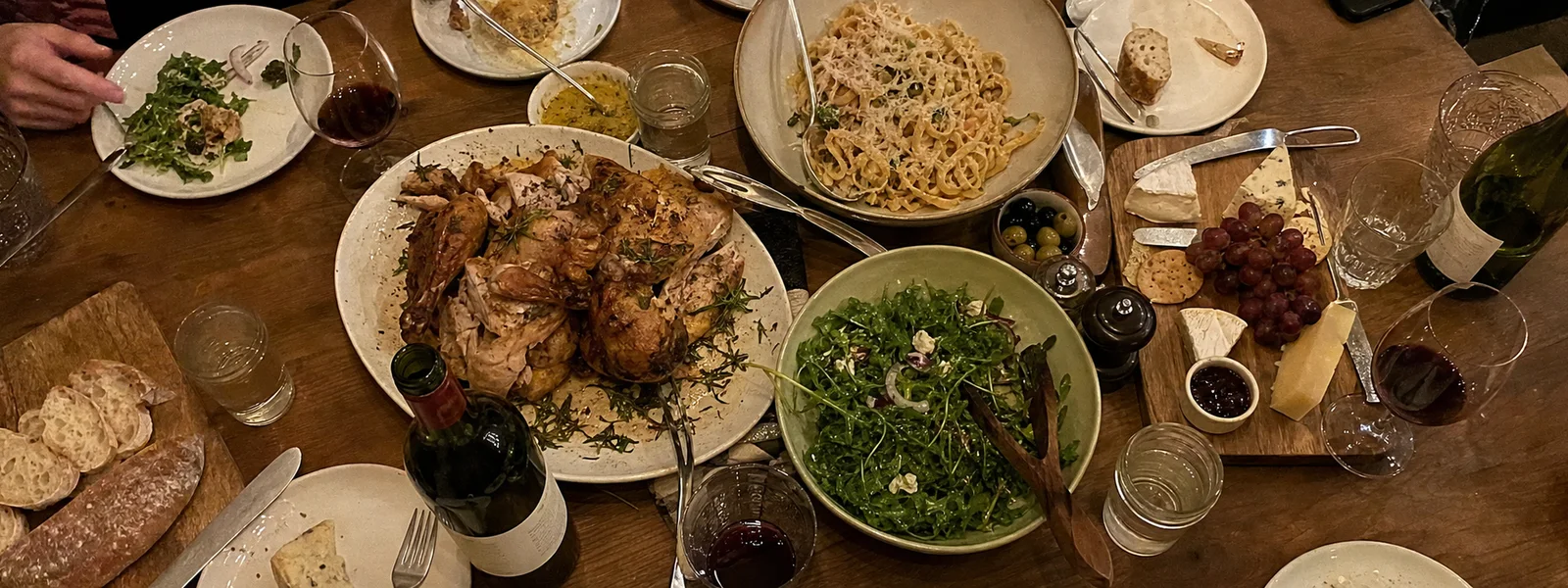
“Red with red meat, white with fish.” Useful as a starting position. Completely misleading as a rule.
A fatty grilled salmon is better with Pinot Noir than most white wines. A chicken roasted with forty cloves of garlic calls for Chardonnay or Viognier, not Sauvignon Blanc. Oysters and Muscadet is one of the best pairings in the world — but so is Champagne, which is not white wine in the colour sense.
The colour-based rule collapses almost immediately when you test it against real food. What actually works is understanding a small set of principles — weight, acid, tannin, sweetness — and applying them to whatever’s on the table.
By the end of this page you’ll know:
- The five real principles of pairing (not a colour chart)
- Why weight is more important than colour
- What acid does to fat — and why it’s the most useful tool you have
- The tannin-protein relationship that explains red wine with steak
- Five pairings that always work and five combinations to avoid
The Five Real Principles
1. Match Weight to Weight
The most important principle. A light dish needs a light wine. A rich dish needs a substantial wine.
A delicate sole dish in a butter sauce will be obliterated by a Barossa Shiraz. A lamb shoulder slow-cooked in red wine needs something that can stand up to it — a pale Pinot Grigio won’t.
This is why grilled salmon works with Pinot Noir: salmon is rich and fatty. A high-acid, light-bodied red with low tannin handles rich fish without overwhelming it. Meanwhile, a bland white fish like cod or whiting is better with a light, crisp white — Muscadet, Pinot Grigio, Chablis — because the delicacy of the food calls for delicacy in the wine.
Weight, not colour.
2. Acid Cuts Fat
High-acid wines make fatty food taste lighter and brighter. This is the secret behind most classic regional pairings:
- Chablis with oysters. The mineral acid cuts through the brininess and fat of the oyster.
- Chianti with pasta Bolognese. The high-acid Sangiovese cuts through the rich beef and tomato.
- Champagne with fried chicken. The bubbles and acid slice through the fat perfectly. This is not a joke pairing — it’s genuinely excellent.
- Riesling with spicy food. The acidity refreshes between bites, and the slight sweetness cools the heat.
Anytime you have a dish built around fat, cream, or richness, reach for a high-acid wine. It will make both the food and the wine taste better.
3. Tannins Need Protein
Tannins bind to proteins. In your mouth, that creates a drying, grippy sensation. But when protein from food is present — a steak, a leg of lamb, aged hard cheese — the tannins bind to the food’s proteins first. The result: the wine feels smoother, the food tastes richer, and both are elevated.
This is why tannic reds and red meat is a classic. It’s not arbitrary tradition. The tannins in a Cabernet Sauvignon or Barolo need protein to resolve. Without it, the wine feels harsh and drying.
The inverse is also true: a tannic red wine with a delicate, low-protein dish — white fish, light salad, vegetable-based food — will make the wine taste astringent and unpleasant. The tannins have nowhere to go.
4. Sweet Beats Sweet (and Spice)
When pairing with sweet food, the wine must be at least as sweet as the dish — ideally sweeter. A dry red wine with chocolate cake produces one of the more unpleasant experiences in food and wine: the cake makes the wine taste harsh, thin, and bitter.
Match sweetness to sweetness: Sauternes with blue cheese or foie gras, late-harvest Riesling with fruit desserts, port with dark chocolate.
The same principle applies to spice. Very spicy food strips perception of tannin and acid, leaving only the alcohol burning. A slightly off-dry wine — German Spätlese Riesling, an Alsatian Gewurztraminer — provides sweetness that cools the heat and makes the spice more manageable. High-acid and low-tannin also help.
5. Regional Pairings Usually Work
Generations of people figured out what grows well together. The regional pairing instinct is reliable: drink what grows with what grows.
- Italian Sangiovese with Italian tomato-based pasta and pizza — the acidity in the food and the wine mirror each other perfectly.
- Alsatian Riesling with Alsatian choucroute garnie.
- Burgundy Pinot Noir with Burgundian dishes featuring cream, mushroom, and lard.
- Manzanilla Sherry with jamón ibérico from Andalusia.
These pairings evolved together over centuries. Trust them as a starting point.
Five Pairings That Always Work
These hold across every meal, every level of cooking, every occasion:
- Champagne (or good sparkling wine) with anything fried. Fried chicken, fish and chips, tempura. The acid and bubbles cut through oil perfectly.
- Dry Riesling with spicy food. Thai, Indian, Vietnamese, Sichuan. The slight fruitiness and high acid cool the heat.
- Pinot Noir with salmon or duck. Rich, fatty protein that benefits from a light-bodied red with low tannin and high acid.
- Sancerre (or good Sauvignon Blanc) with fresh goat’s cheese. The herbaceous, acidic wine mirrors the tangy, fresh cheese almost exactly.
- Sauternes with Roquefort or Stilton. Sweet wine, salty blue cheese. The contrast is one of the great experiences in wine and food.
Five Combinations to Avoid
These are reliable failures:
- Tannic red wine with oily fish. Sardines or mackerel make tannic reds taste metallic and bitter.
- Dry red wine with chocolate dessert. The sweetness of the chocolate makes the wine taste thin and harsh.
- High-alcohol red with very spicy food. The alcohol amplifies the heat rather than cooling it.
- Very delicate whites (Muscadet, Vinho Verde) with a rich roast. The food obliterates the wine.
- Oaked Chardonnay with lemon-dressed salads or ceviche. The oak clashes with the bright citrus and the weight is wrong for the delicacy of the dish.
You’ve completed The Fundamentals. These six chapters cover the working vocabulary of wine — labels, grapes, structure, Old World vs New World, tasting, and pairing. Everything else is detail built on this foundation. Start with what you’ve learned, drink with attention, and the rest follows.
Keep Reading
Building a Tasting Vocabulary
The language of wine is a memory system, not a performance. How to describe what you taste, write a useful note, and remember what you liked.
Reading a Wine Label
Decode any bottle in under a minute. Five facts every label gives you, how Old World hides the grape, and what Reserve actually means.
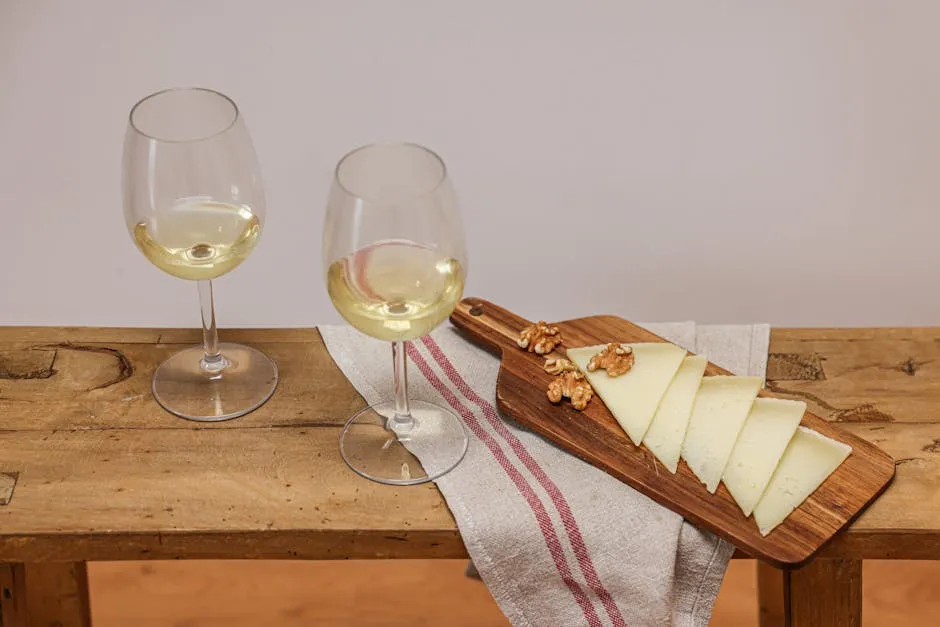
Wine and Cheese Pairing: 9 Matches That Never Miss
The classic wine and cheese pairings that actually work, the ones that clash, and how to handle a six-cheese board with two bottles.