Claire Bennett
Wine Editor5 min read
Building a Tasting Vocabulary
The language of wine is a memory system, not a performance. How to describe what you taste, write a useful note, and remember what you liked.
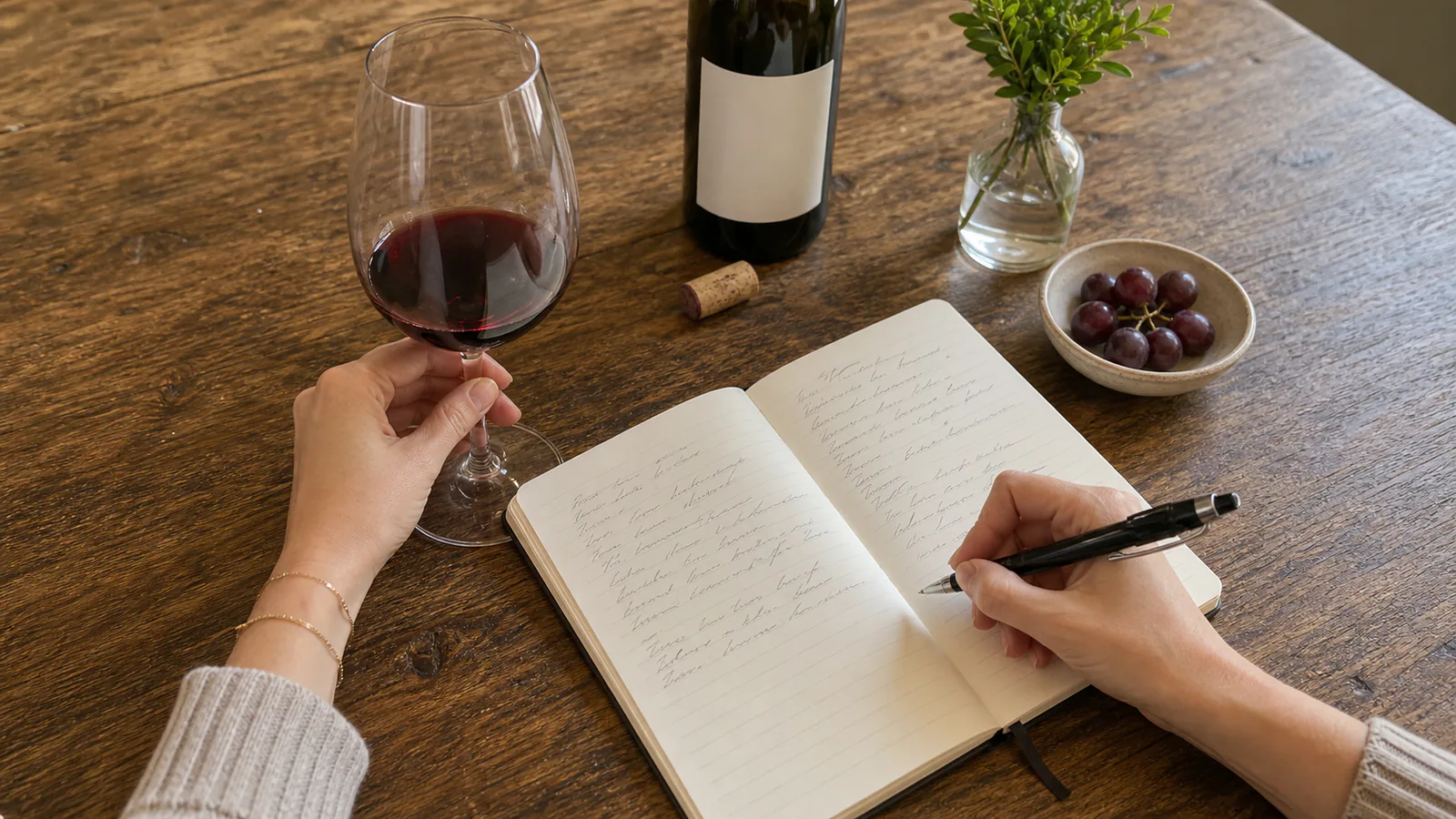
A tasting note is not a performance. It’s a memory system.
The people who write elaborate notes about “wet stones and a hint of crushed violet” aren’t trying to impress you — they’re building a reference for themselves, a description precise enough to reconstruct the experience of a specific wine at a specific moment. That’s worth doing, even if your vocabulary is entirely “smells like cherries, a bit grippy.”
The goal isn’t to sound like a sommelier. The goal is to remember what you liked, be able to communicate it to a wine shop assistant, and learn something from each glass you drink. By the end of this page you’ll know:
- The five-step process for tasting wine with attention
- How to use colour as a source of real information
- The major aroma families and which wines they point to
- The taste descriptors that actually map to structural properties
- How to write a tasting note that’s useful to you six months later
The Five Steps
These are sometimes called “the five S’s.” They’re a sequence for slowing down and paying attention to a wine, layer by layer.
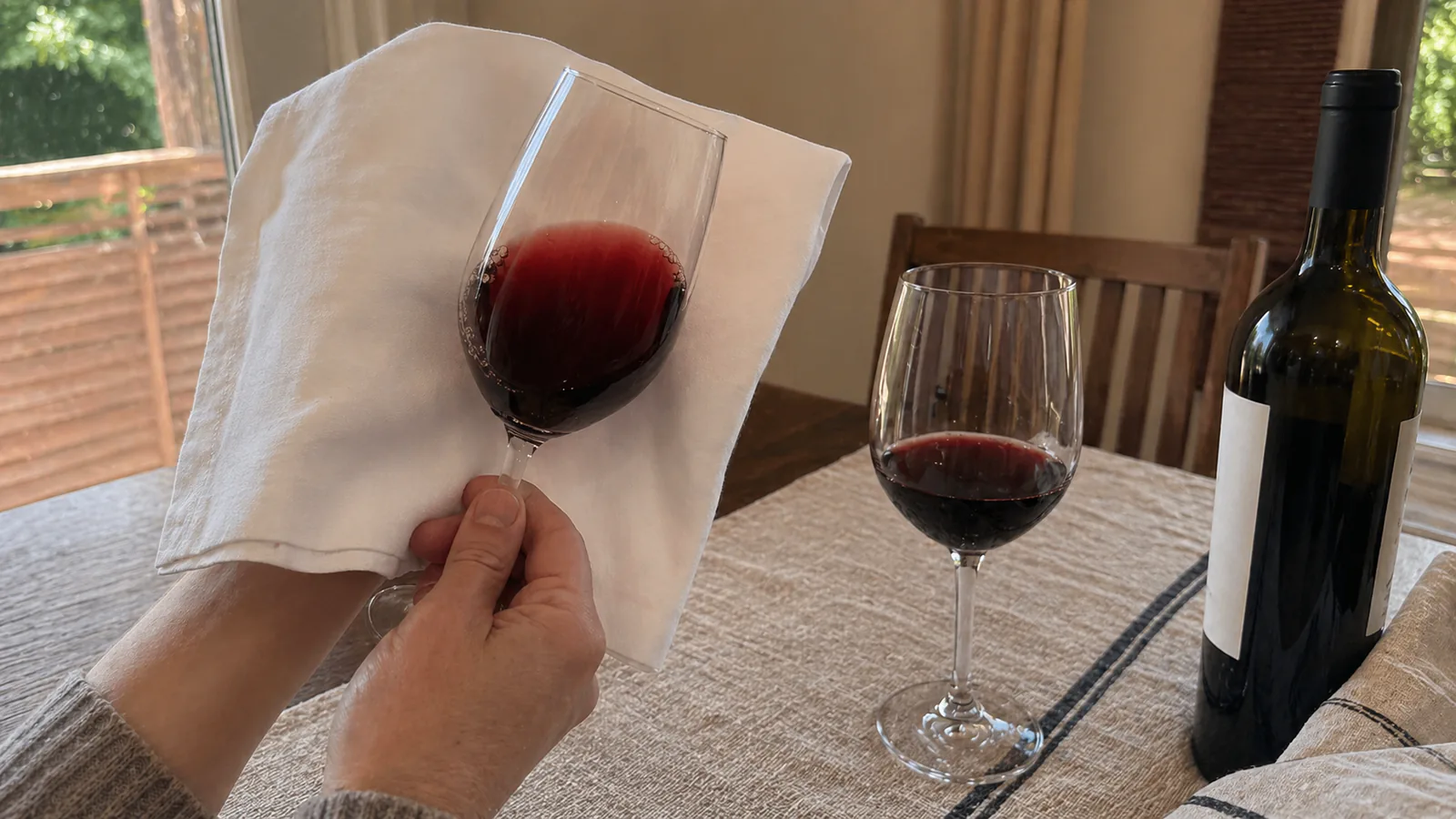
1. See. Look at the wine against a white background. In reds: is it deep ruby or pale garnet? Is the rim (the thin edge of the wine at the glass’s edge) translucent or opaque? Deep colour suggests higher tannin and extract. A garnet going brown at the rim signals age. Pale, translucent ruby is your first signal that you’re looking at Pinot Noir or Gamay rather than Cabernet.
In whites: deep gold suggests oak-aging or age. Pale straw suggests young, unoaked, high-acid. Green tints indicate very young wine, often from a cool climate.
2. Swirl. Swirl the glass to release aroma compounds. Hold the base on the table and rotate. You’re aerating the wine, exposing more surface area to oxygen. What runs back down the sides after you stop are the “legs” or “tears” — a sign of alcohol content, not quality.
3. Sniff. Put your nose in the glass and inhale. Don’t think yet — just smell. Then sniff again and start categorising: fruit? earth? oak? something floral? your first impression is often your most honest.
4. Sip. Take a small mouthful. Let it sit on your tongue. Roll it around. Try the slightly ridiculous sommelier technique of drawing a small amount of air through pursed lips over the wine — it volatilises the aroma compounds and sends them up through the back of your palate. Notice: where do you feel the acid? (sides of the mouth) Where do you feel the tannins? (gums, inside cheeks)
5. Savour. After swallowing, notice the finish — how long does the flavour linger? A long finish (30+ seconds of identifiable flavour) is a sign of quality. A short finish, gone in seconds, usually indicates a simpler wine.
Using Colour as Information
Colour tells you things a label doesn’t.
In red wines:
- Deep purple-black: young, very tannic, possibly Cabernet Sauvignon or Syrah
- Ruby: mid-weight, medium age, could be many varieties
- Garnet: aged, tannins softening, complexity likely
- Brick-red or orange rim: significant age (10+ years for most wines)
- Pale ruby: Pinot Noir, Gamay, or a light-bodied red in general
In white wines:
- Almost colourless to pale straw: young, unoaked, probably high acid
- Light gold: could be slightly older or lightly oaked
- Deep gold: oaked, possibly aged, possibly a sweet wine
- Amber: oxidised wine (intentional, as in Sherry or orange wine, or a fault)
The Major Aroma Families
Aromas in wine fall into three broad generations:
Primary aromas come from the grape itself.
- Fruit: black fruit (blackcurrant, plum) vs red fruit (cherry, raspberry, strawberry) vs tropical fruit (mango, passion fruit, pineapple) vs citrus (lemon, lime, grapefruit)
- Floral: rose, violet, orange blossom, elderflower
- Herbal/green: grass, bell pepper, mint, eucalyptus, herbs
Secondary aromas come from fermentation.
- Yeasty: bread dough, brioche, yoghurt (common in Champagne and wine that’s undergone malolactic fermentation)
- Lactic: cream, butter
Tertiary aromas come from aging — in oak or in bottle.
- Oak: vanilla, toast, cedar, smoke, coconut
- Oxidative: walnut, dried fruit, caramel
- Bottle age: leather, tobacco, earth, mushroom, truffle, dried flowers, petrol (Riesling)
Writing a Useful Tasting Note
A tasting note doesn’t need to be long. It needs to be specific enough that when you read it six months later you can reconstruct the experience and make a decision (buy again, or not).
Here’s a template that works:
Colour: [descriptor] Nose: [first impression] — [specific aromas] Palate: [body] — [acid level] — [tannin level if red] — [flavours] Finish: [length and final impression] Verdict: [would you buy again? what food? what occasion?]
An example of a note that’s actually useful:
2020 Josmeyer Riesling “Le Kottabe,” Alsace. Pale gold. Nose: petrol, lime zest, white peach, slate. Palate: bone dry, very high acid, light-medium body. Long finish with a citrus/mineral tail. Excellent with the grilled fish. Buy again at this price.
That’s 42 words. It will still be useful in three years.
Compare that to a note written purely in impressions: “Really nice white, quite dry, went well with dinner.” That tells you nothing useful.
The difference isn’t expertise. It’s specificity.
Keep Reading
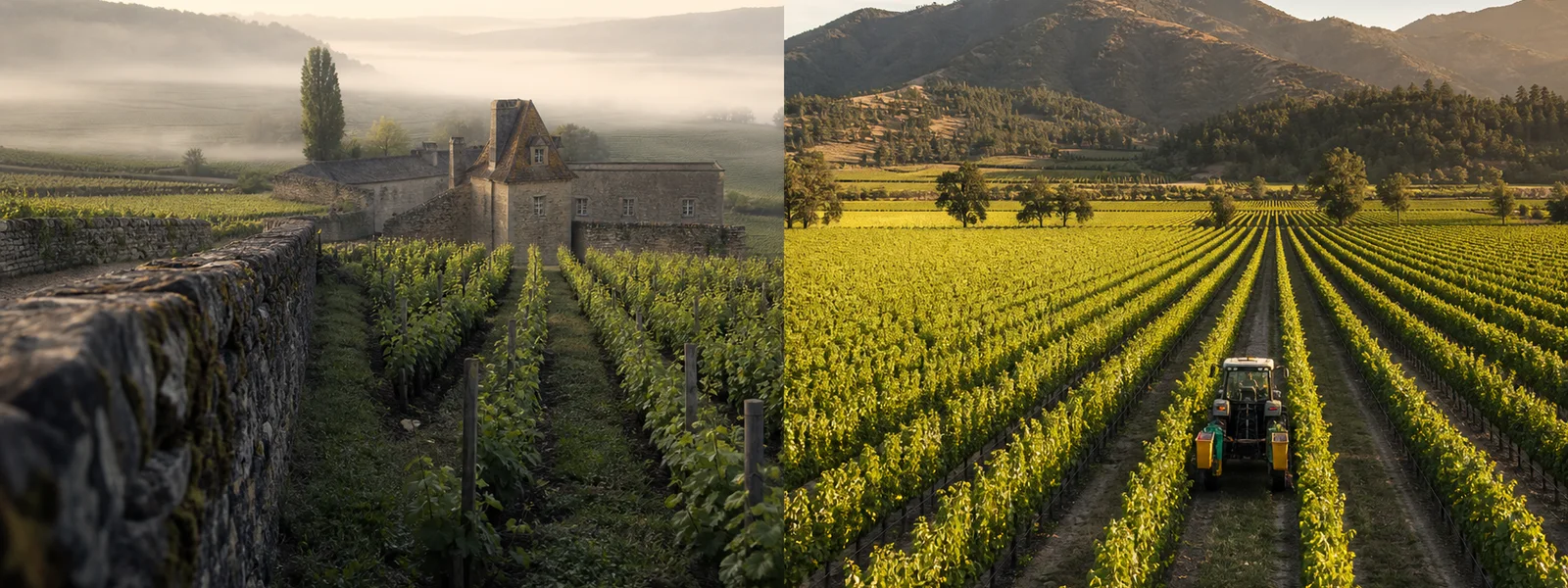
Why Old-World and New-World Still Matter
Two philosophies about what wine should taste like. Understanding Old World vs New World explains most of what you find in the glass.
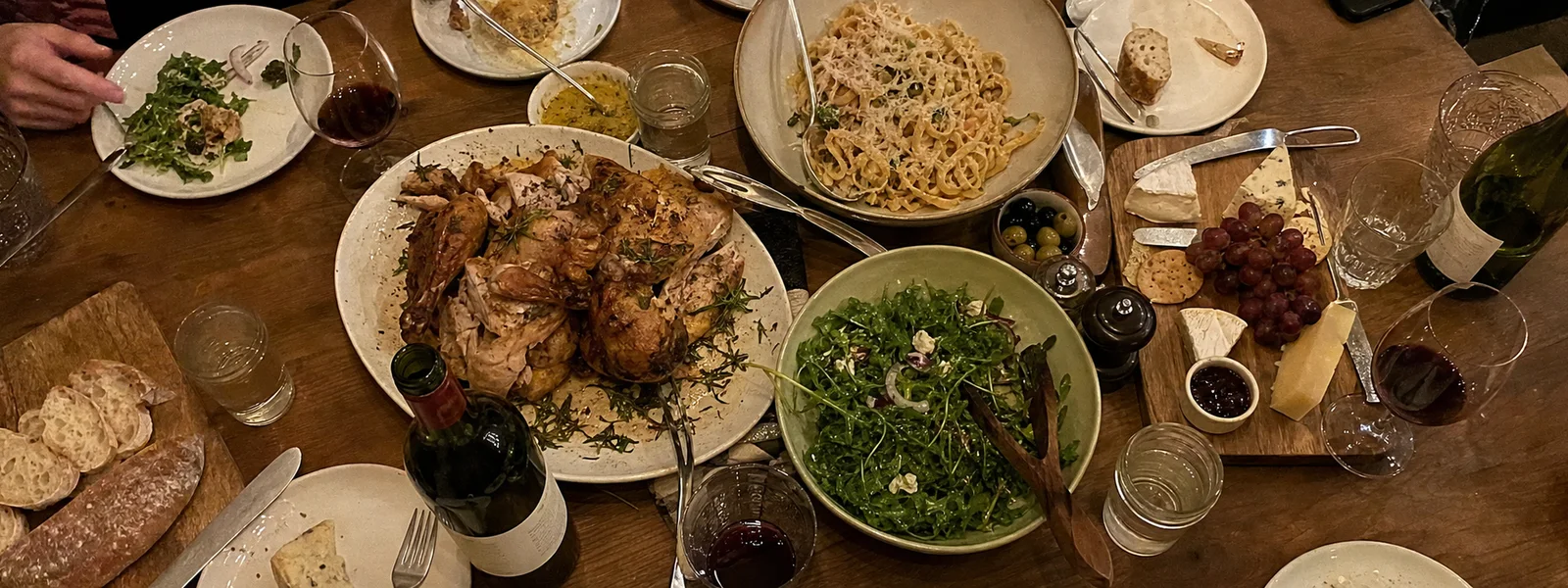
Food and Wine, Without the Rules
Red with red meat and white with fish is a starting point, not a rule. How pairing actually works, and five principles that hold across every meal.
How to Taste Wine Like You Know What You're Doing
Four steps to actually tasting wine. What to pay attention to so you can tell good from great, without the pretension.