Claire Bennett
Wine Editor5 min read
Reading a Wine Label
Decode any bottle in under a minute. Five facts every label gives you, how Old World hides the grape, and what Reserve actually means.
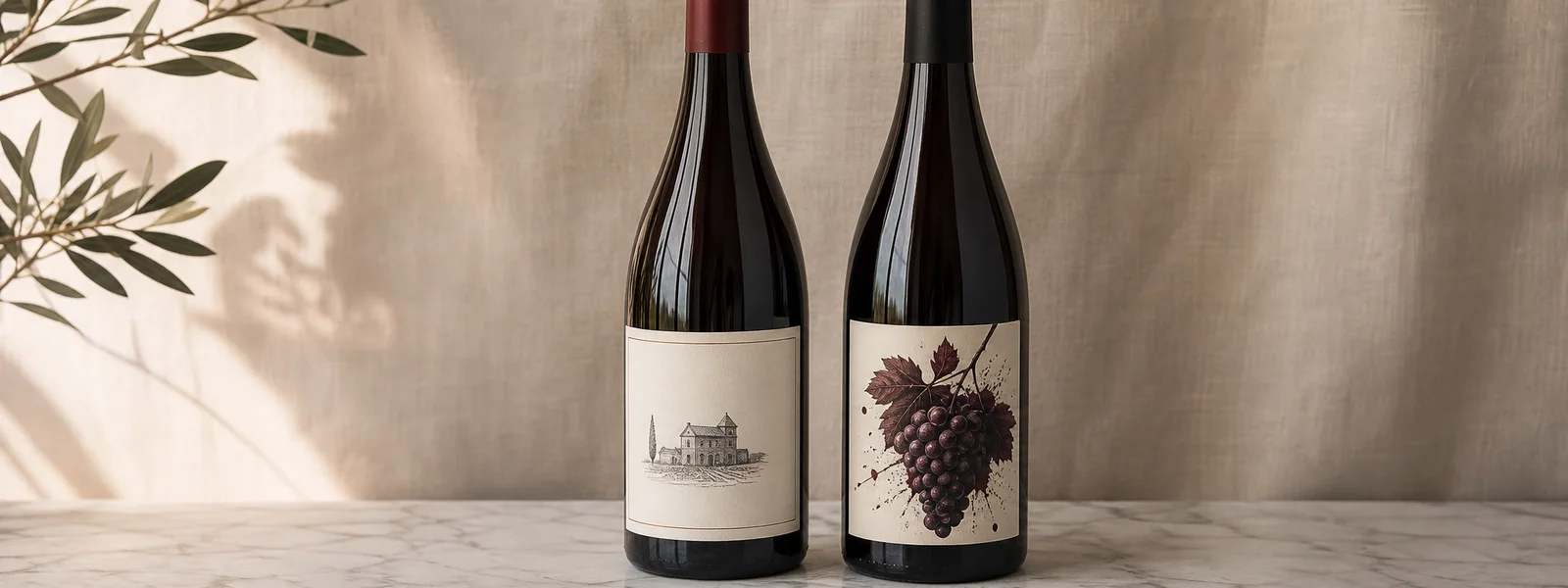
A Sancerre and a California Sauvignon Blanc are the same grape. The French bottle never mentions it. That single fact explains everything about why wine labels confuse people.
By the end of this page you’ll know:
- The five things every label is required to tell you
- Why Old World labels hide the grape — and why that’s actually useful
- What Reserve, Grand Cru, AOC, and DOCG actually mean
- How to read any Bordeaux or Burgundy bottle in ten seconds
- Which back-label claims are real and which are marketing noise
The Five Things Every Label Tells You
Strip away the gold foil and fancy typography and every wine label in the world gives you five pieces of information. The order changes. The language changes. But these five are always there.
The producer. This is the winery, estate, château, or domaine. Usually the most prominent name on the bottle. When you find one you trust, this is the name worth memorising.
The region or the grape. This is where the systems diverge. New World bottles name the grape: Pinot Noir, Chardonnay, Malbec. Old World bottles name the place: Chablis, Rioja, Barolo. Both give you the same information once you know how to translate.
The vintage. The year the grapes were harvested — either large on the front or on a small neck tag. No year means non-vintage (NV), common in Champagne and entry-level supermarket wine.
The alcohol percentage (ABV). Small print, usually near the bottom. More useful than people realise. A Pinot Noir at 12.5% drinks lighter and crisper than one at 14.5%. Same grape, different experience.
The country of origin. Required on every imported bottle. The back label often gives a more specific region too.
That is the whole label, structurally. Everything else is either legal requirement, extra detail, or marketing.
Why Old World Labels Hide the Grape
Old World producers — France, Italy, Spain — label by place. The logic: the place tells you everything. The soil, the climate, the laws, the permitted varieties, the winemaking tradition. Say “Burgundy” and you’ve said Pinot Noir plus a century of production rules.
Here is the cheat sheet for the regions you’ll see most:
- Burgundy (Bourgogne). Reds are Pinot Noir. Whites are Chardonnay. Sub-regions — Chablis, Meursault, Gevrey-Chambertin — follow the same two-grape rule.
- Bordeaux. Reds are Cabernet Sauvignon and Merlot blends. Left Bank leans Cabernet, Right Bank leans Merlot.
- Champagne. Pinot Noir, Chardonnay, and Pinot Meunier, blended or single-variety.
- Chianti. Italian red, mostly Sangiovese.
- Rioja. Spanish red, mostly Tempranillo.
- Barolo / Barbaresco. Italian reds, 100% Nebbiolo.
Once you know these six translations, no Old World label will stop you at the shelf.
What Do All Those Status Words Mean?
Reserve / Reserva / Riserva. In Spain and Italy these are legally defined: Reserva Rioja must age a minimum of three years, Riserva Barolo five. In the US and Australia “Reserve” is unregulated — any producer can print it. Check whether you’re reading a legally defined term or a marketing decision.
AOC / AOP (France). Appellation d’Origine Contrôlée. A government-certified origin. Wines carrying an AOC label have met rules about grape varieties, yields, and production methods. It is a quality floor, not a quality guarantee — but it means the bottle is what it says it is.
DOCG (Italy). Denominazione di Origine Controllata e Garantita. Italy’s highest official classification. The “G” — Garantita — means a tasting panel has signed off on it. Barolo, Brunello di Montalcino, and Amarone all carry this designation.
Grand Cru / Premier Cru (Burgundy). A hierarchy of vineyard quality, not producer reputation. Grand Cru is the highest tier — 33 vineyards total in all of Burgundy. Premier Cru is the tier below, still excellent. The vineyard name appears on the label; the producer is secondary.
Château (Bordeaux). Literally “castle,” but in practice just means a single wine-producing estate. There are over 7,000 châteaux in Bordeaux. The word alone tells you nothing about quality.
What the Back Label Is Actually Telling You
The back label is where marketing lives. Some of it is useful. Most of it is noise.
Vintage notes. “A particularly warm year in Napa” — this kind of context is useful if it comes from an independent source. Printed by the producer, treat it as opinion.
Tasting notes. “Notes of dark cherry, cedar, and graphite.” These are suggestions, not instructions. Your palate may find something completely different, and that’s fine.
Sulfite warning. Required on all wine sold in the US. Sulfites occur naturally in all wine; producers also add them as a preservative. The warning does not mean the wine is high in sulfites — it means some are present. If you’re sensitive, look for “no added sulfites” bottles. But headaches are more often caused by alcohol, tannins, or histamines than sulfur.
Food pairing suggestions. Usually reliable as a starting point. Ignore them once you’ve developed your own preferences.
Keep Reading
The Six Grapes to Know First
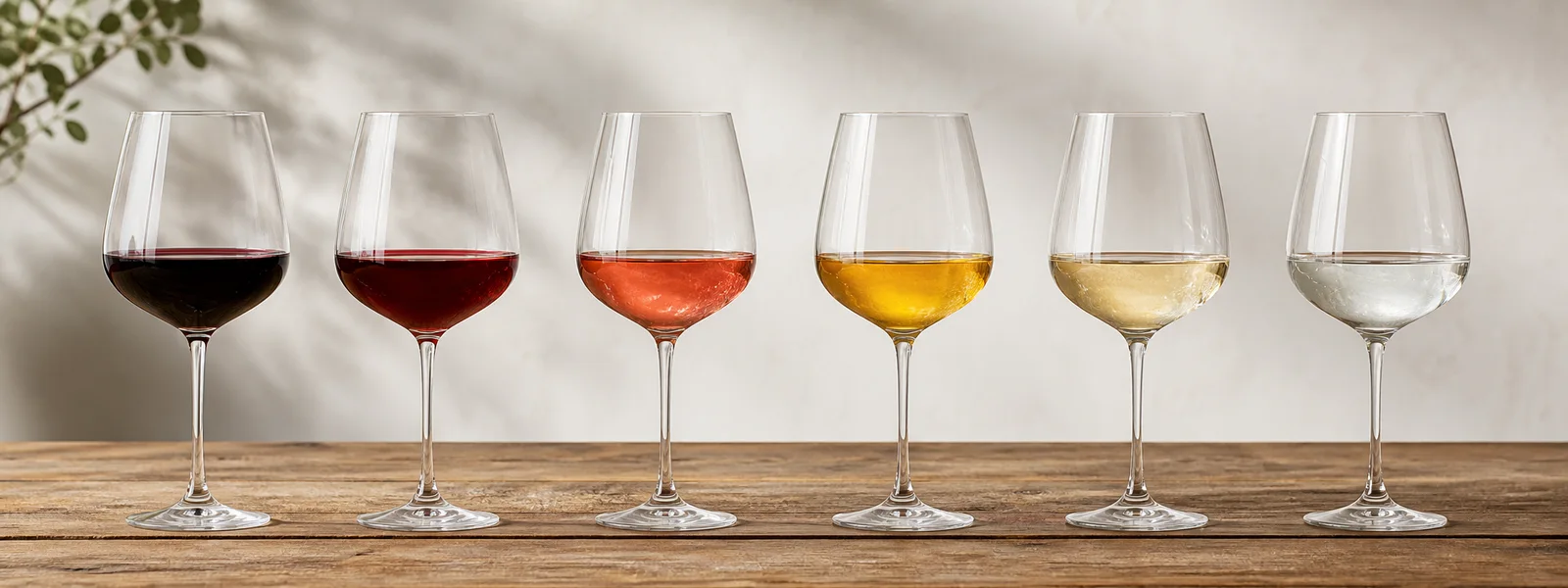
Six grapes explain almost everything you'll drink. What each one tastes like, where it grows best, and the one bottle to start with for each variety.
Why Old-World and New-World Still Matter
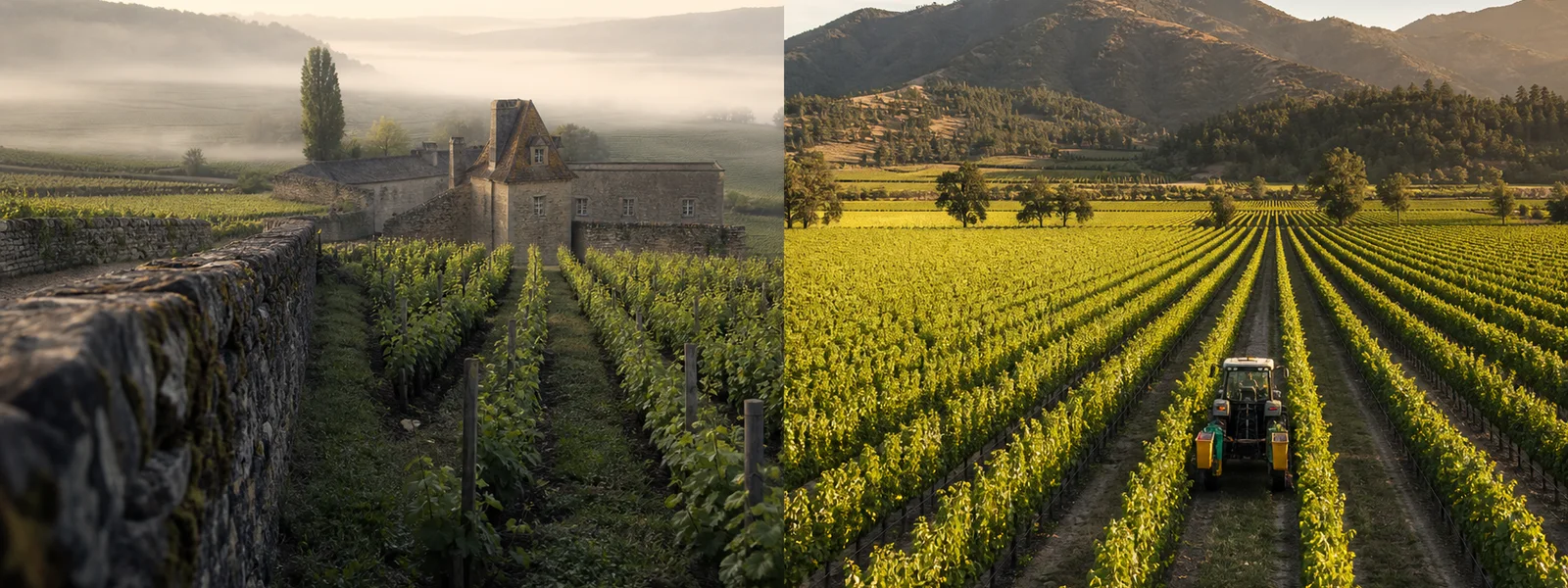
Two philosophies about what wine should taste like. Understanding Old World vs New World explains most of what you find in the glass.
How to Read a Wine Label (Old World vs New World)
Decode any wine label in under a minute. The 5 things that matter, what reserve and grand cru actually mean, and when vintage is worth caring about.