Claire Bennett
Wine Editor12 min read
Wine Blends Explained: Bordeaux, GSM, and More
What makes a wine blend, why winemakers blend, and how to read a blend label. Covers Bordeaux, GSM, Champagne, Rioja, and the 75% labelling rule.
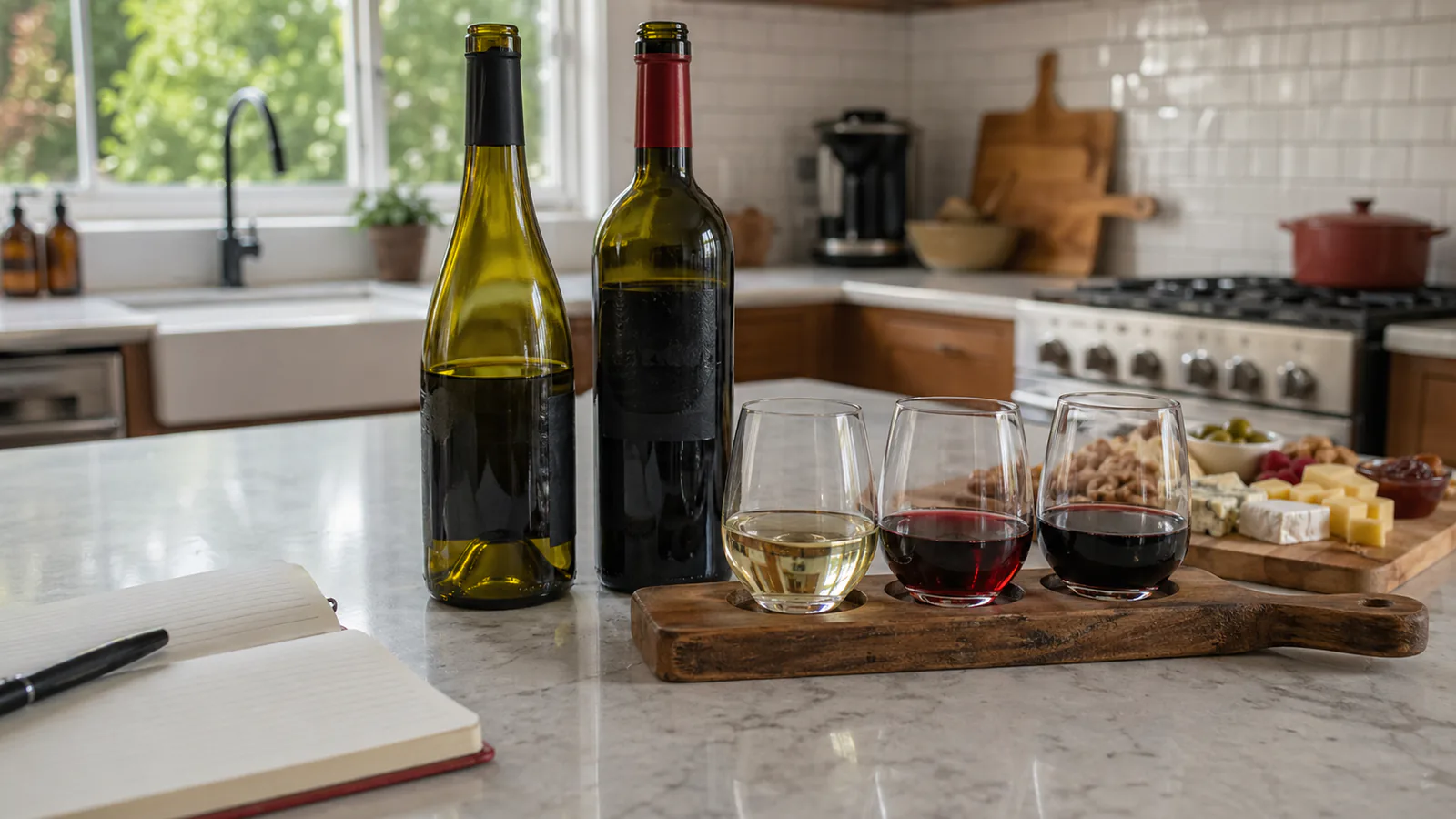
You’ve picked up a bottle labeled “Red Blend” and wondered whether that’s winemaker shorthand for something brilliant, or a polite cover for whatever was left over. That label tells you almost nothing. Meanwhile, Châteauneuf-du-Pape, one of the most respected appellations in France, lists no grapes at all and can legally include up to 13 of them.
Wine blending is older than almost any rule in the book. By the end of this page you’ll know:
- The percentage law that lets a bottle call itself “Cabernet Sauvignon” while containing up to 25% of something else entirely
- Why Bordeaux’s most celebrated châteaux combine five grape varieties, and which one almost always appears in the smallest drop
- The reason Grenache and Syrah are rarely bottled alone, and why they become something greater when you put them together
- What a field blend is, why the practice almost disappeared, and which famous fortified wine never let it go
- How to decode a blend label before you open it, including when the back label actually tells you the truth
What Is a Wine Blend, Exactly?
A wine blend is a wine made from two or more grape varieties combined into a single bottle. The winemaker ferments the grapes separately, then brings them together before bottling, tasting and adjusting the ratios until the blend hits its target.
The opposite is a single-varietal wine: a bottle built on one grape variety, like a Burgundy made entirely from Pinot Noir, or an Alsace Riesling with nothing else in it.
In practice, three types of wine blends exist in the market:
Old World blends are named by place, not grape. A bottle of Châteauneuf-du-Pape tells you where it came from. It doesn’t tell you what’s in it. Bordeaux, Rioja, Champagne, and the Rhône Valley all work this way. The assumption is that the region’s rules govern the grapes used, so the label only needs to tell you the address.
New World blends name the wine by grape variety, by a regional inspiration (like “Meritage” for an American Bordeaux-style blend), or by a creative concept (“The Prisoner,” “Apothic Red”). Some are labeled with the blend composition right on the front or back.
Single-varietal blends are the third category, and arguably the most confusing. A bottle labeled “Cabernet Sauvignon” in the United States can legally contain up to 25% of other grape varieties. The wine is still a blend. It just doesn’t say so.
What Is the 75% Rule for Wine Labelling?
In the United States, the TTB (Alcohol and Tobacco Tax and Trade Bureau) sets the rules for what goes on a wine label. To label a wine by a single grape variety, that variety must make up at least 75% of the bottle. The remaining 25% can be anything.
In Europe, the baseline is higher: 85% of the named variety is required in most appellations. But European producers rarely want to label their wines by grape anyway, since regional identity is the point.
Oregon is the strictest in the US, requiring 90% for its core set of varieties. Washington and California both operate under the federal 75% floor.
What this means in practice: if you’re shopping for a Cabernet Sauvignon and the wine costs under $20, there’s a reasonable chance it contains Merlot, Malbec, or Petit Sirah smoothing out the edges. That isn’t a flaw. Blending at that level is often what makes the wine drinkable at that price. The winemaker chose to add those grapes because they made the wine better.
Why Do Winemakers Blend Wine?
The clearest way to understand blending is to think about what each grape variety does well and what it can’t do on its own.
Balance. Cabernet Sauvignon at its purest has bold tannins and a firm, sometimes austere structure. Add Merlot and the blend softens. The cherry fruit and rounder texture of Merlot fills in where Cab Sauv can feel tight. Suddenly both varieties are showing a better version of themselves than either could alone.
Complexity. Different grape varieties bring different flavor profiles. Blend them and you get layers that a single variety simply can’t produce. Grenache gives you ripe red berry fruit and alcohol. Syrah adds black pepper, depth, and color. Mourvèdre brings body and savory notes. The combination builds something with more dimension than any of the three offers solo.
Consistency. Weather varies every year. A warm vintage might push one variety toward overripeness while another holds its acidity well. By drawing from multiple vineyards or varieties, a winemaker can keep the house style consistent even when one component has an off year. This is exactly how Champagne houses maintain their non-vintage blends across years.
Regional tradition. What grows together tends to go together. Cabernet Sauvignon and Merlot evolved alongside each other in Bordeaux because they ripen at different times and thrive in the same climate. Centuries of experience confirmed they work. The Old World regions that built their reputations on blending did so because the grapes in question genuinely complemented each other, not by accident.
What Are the Most Famous Wine Blends in the World?
Bordeaux: the red blend that became the benchmark
Red Bordeaux draws from five grape varieties: Cabernet Sauvignon, Merlot, Cabernet Franc, Malbec, and Petit Verdot. The exact ratio depends on which part of Bordeaux you’re in.
On the left bank (Médoc, Pauillac, Saint-Émilion’s neighbour Pessac-Léognan), Cabernet Sauvignon dominates. The gravelly soils suit its late ripening. Merlot softens the structure. Cabernet Franc adds aromatic complexity and red fruit. Petit Verdot appears in small quantities, typically a few percent, contributing deep color, floral notes, and firm tannin.
On the right bank (Pomerol, Saint-Émilion), the clay soils favour Merlot. Here it takes the lead, often 70–80% of the blend, with Cabernet Franc adding backbone. Petrus, arguably Pomerol’s most famous wine, runs almost entirely on Merlot.
White Bordeaux uses a different cast: Sauvignon Blanc for freshness and aromatic lift, Sémillon for body and the capacity to age, sometimes a touch of Muscadelle.
GSM: the Rhône’s answer
The Southern Rhône gives us what most of the New World calls GSM: Grenache, Syrah, Mourvèdre. Châteauneuf-du-Pape, the appellation’s most famous wine, is technically allowed to include up to 13 varieties in its blend, though most producers build around the three.
Grenache anchors the blend with ripe red fruit, warmth, and alcohol. Syrah adds dark fruit, black pepper, and the color Grenache lacks. Mourvèdre provides body, earthiness, and structure in the finish. The result is a wine with more layers than any of the three can build alone.
Australian producers in the Barossa and McLaren Vale adopted this combination in the 20th century and made it their own. Australian GSM tends to be more fruit-forward and opulent than its French reference point, but the structural logic is identical.
Champagne: blending across grapes and years
Champagne’s three permitted varieties are Chardonnay, Pinot Noir, and Pinot Meunier. Most non-vintage Champagne blends all three, and also blends across multiple years, drawing on reserve wines from previous harvests to maintain the house style regardless of vintage conditions.
Chardonnay brings freshness, acidity, and elegance. Pinot Noir adds body, red fruit, and structure. Pinot Meunier contributes roundness and approachability in youth. A Blanc de Blancs uses only Chardonnay. A Blanc de Noirs uses only red varieties. Both are exceptional, but the classic Champagne blend is the three working together.
Chianti and the Super Tuscans
Chianti is built on Sangiovese, which brings high acidity, bright red fruit, and the kind of structure that holds up to food. Chianti Classico requires at least 80% Sangiovese, with the rest open to additional red varieties including Colorino, Canaiolo, Cabernet Sauvignon, and Merlot.
Super Tuscans emerged in the 1970s as Italian producers began ignoring DOC regulations to blend Sangiovese with international varieties. Sassicaia, built on Cabernet Sauvignon, and Tignanello, blending Sangiovese with Cab and Merlot, broke the rules and changed what Italian wine could aspire to. Today they’re among the most sought-after bottles in the country. The full regional read sits in the Tuscany guide.
Rioja: Tempranillo with support
Rioja’s signature red blend pairs Tempranillo with Garnacha (Grenache), Graciano, and sometimes Mazuelo (Carignan). Tempranillo provides structure, earthy red fruit, and the backbone for ageing. Garnacha adds warmth and body. Graciano contributes acidity and aromatic intensity. The proportions shift depending on the producer and the style: Crianza, Reserva, and Gran Reserva all express the blend differently because of time in oak and bottle.
Meritage: the American Bordeaux
Meritage is a trademarked term for American Bordeaux-style blends. To qualify, a wine must use only Bordeaux varieties (Cabernet Sauvignon, Merlot, Cabernet Franc, Petit Verdot, Malbec for reds; Sauvignon Blanc, Sémillon, Muscadelle for whites), and none of those varieties can exceed 90% of the blend. It was created partly to give winemakers a way to label high-quality blends without hiding behind a single-varietal label that didn’t tell the whole story.
Field blends: the oldest form
Before modern winemaking separated varieties, farmers planted multiple grapes together in the same vineyard and harvested them all at once. The result was a field blend: whatever the vineyard produced, vinified together. It’s imprecise by modern standards, but it produces wines with a distinctive character shaped by the specific combination of grapes in that plot of land.
Port remains one of the most prominent examples of this tradition. The Douro Valley has hundreds of permitted varieties, and many of its vineyards were planted with mixed selections that producers now embrace rather than untangle.
How Do You Read a Wine Blend Label?
The honest answer is that European labels often tell you almost nothing about what’s inside. A bottle of Côtes-du-Rhône identifies a region; you’re expected to know the rules from there, or trust the producer.
American and Australian labels are more informative:
- Single variety named on the label: 75% minimum of that variety in the US (85% in most EU appellations). Check the back label for a composition note; some producers include it.
- “Red Blend” or “White Blend”: The producer chose not to name a primary variety, or no single variety crosses the 75% threshold. Not a warning sign. Often a wine made from multiple equal contributors.
- “GSM,” “Meritage,” “Claret,” “Bordeaux-style”: Regional style labels that tell you the grape framework without naming the exact proportions.
- Tech sheets: Most serious producers publish full varietal percentages on their website. If you want to know exactly what’s in the bottle, that’s where to look.
Back labels on premium blends increasingly include the grape composition. It’s worth flipping the bottle over.
When Do Wine Blends Shine Compared to Single-Varietal Wines?
Blends tend to excel with food. The interplay of different varieties produces a more complex flavor profile that adapts well to a range of dishes. A Bordeaux-style blend with roast lamb, a GSM with slow-cooked pork shoulder, a Rhône white with a rich fish. The blended structure gives you more to work with at the table.
Single-varietal wines tend to excel when the goal is purity. A great Burgundy Pinot Noir is an argument for letting one grape say everything it has to say. A Chablis Chardonnay, untouched by blending, shows what the variety can do in a specific piece of limestone ground. Neither format is superior.
The practical guide: if you’re serving guests and want a wine that works across a range of plates, a well-made blend is usually the more flexible choice. If you want to explore what a single grape or a single region can do at its best, the single varietal is the one to reach for.
Frequently Asked Questions
What is a wine blend?
A wine blend is a wine made from two or more grape varieties combined into a single bottle. Wine blending involves fermenting each variety separately, then combining them in proportions that hit a specific flavor profile, balance, and structure. It’s the most common approach in the world’s celebrated wine regions: red Bordeaux, Champagne, and Châteauneuf-du-Pape are all blends.
Is a wine blend better or worse than a single-varietal wine?
Neither is inherently better. Blends give winemakers more tools to build complexity, balance, and consistency. Single-varietal wines offer purity of expression: one grape, one region, nothing in the way. The characteristics of each style serve different goals. The best versions of both are exceptional, and the answer depends on what you’re drinking with and what you want from the glass.
What does GSM mean on a wine label?
GSM stands for Grenache, Syrah, Mourvèdre. It identifies a Rhône-style blend that originated in southern France and was widely adopted by Australian producers in the Barossa Valley and McLaren Vale. The three varieties complement each other structurally: Grenache provides red fruit and alcohol, Syrah contributes color and black pepper, and Mourvèdre adds body and earthiness. The proportions vary by producer, but Grenache is typically the dominant grape.
What is a Meritage wine?
Meritage is a trademarked American term for Bordeaux-style blends. Red Meritage wines use only the five traditional Bordeaux red varieties: Cabernet Sauvignon, Merlot, Cabernet Franc, Petit Verdot, and Malbec. No single variety can exceed 90% of the blend. White Meritage uses Sauvignon Blanc, Sémillon, and sometimes Muscadelle. The term exists so producers can put a recognisable name on a quality blend rather than defaulting to a single-variety label that undersells what’s in the bottle.
What is a field blend wine?
A field blend is a wine made from multiple grape varieties planted together in the same vineyard, harvested at the same time, and fermented together. Before modern winemaking separated varieties into individual lots, field planting was standard practice. The result is a wine where the grape mix reflects the specific vineyard rather than a deliberate blending decision. Port production in the Douro Valley preserves this tradition: many historic vineyards contain dozens of varieties growing side by side, all going into the same wine.
Why is the grape variety not listed on some wine labels?
In most European wine regions, the appellation rules already define which grapes can be used, so listing them on the label is considered redundant. A Châteauneuf-du-Pape buyer is expected to know that the wine comes primarily from Grenache with supporting varieties. This is similar to how Champagne’s three-grape framework is understood without being spelled out. If you want to know the exact blend, the producer’s website or tech sheet is the place to look. Outside Europe, New World producers are increasingly transparent, and many include full grape percentages on the back label. Certain premium producers now list proportions on the front label as a point of difference.
Ready to put this to work? The next step is finding the red wine style that fits what you actually like to drink. Head to the red wine guide for a breakdown of every major style from light to full-bodied, with the blends that do each best.
Keep Reading
Cabernet Franc: The Parent Grape You Should Know
Cabernet Franc is the parent of Cabernet Sauvignon and Merlot, the soul of Chinon, and one of the smartest red picks for food. Here's the full story.
Grenache: The Warm-Climate Workhorse Red
Grenache (Garnacha) is the soul of Châteauneuf-du-Pape and Priorat. Strawberry, white pepper, herbs, and a knack for lifting any blend it joins.
Tuscany Wine: Chianti, Brunello & Super Tuscans
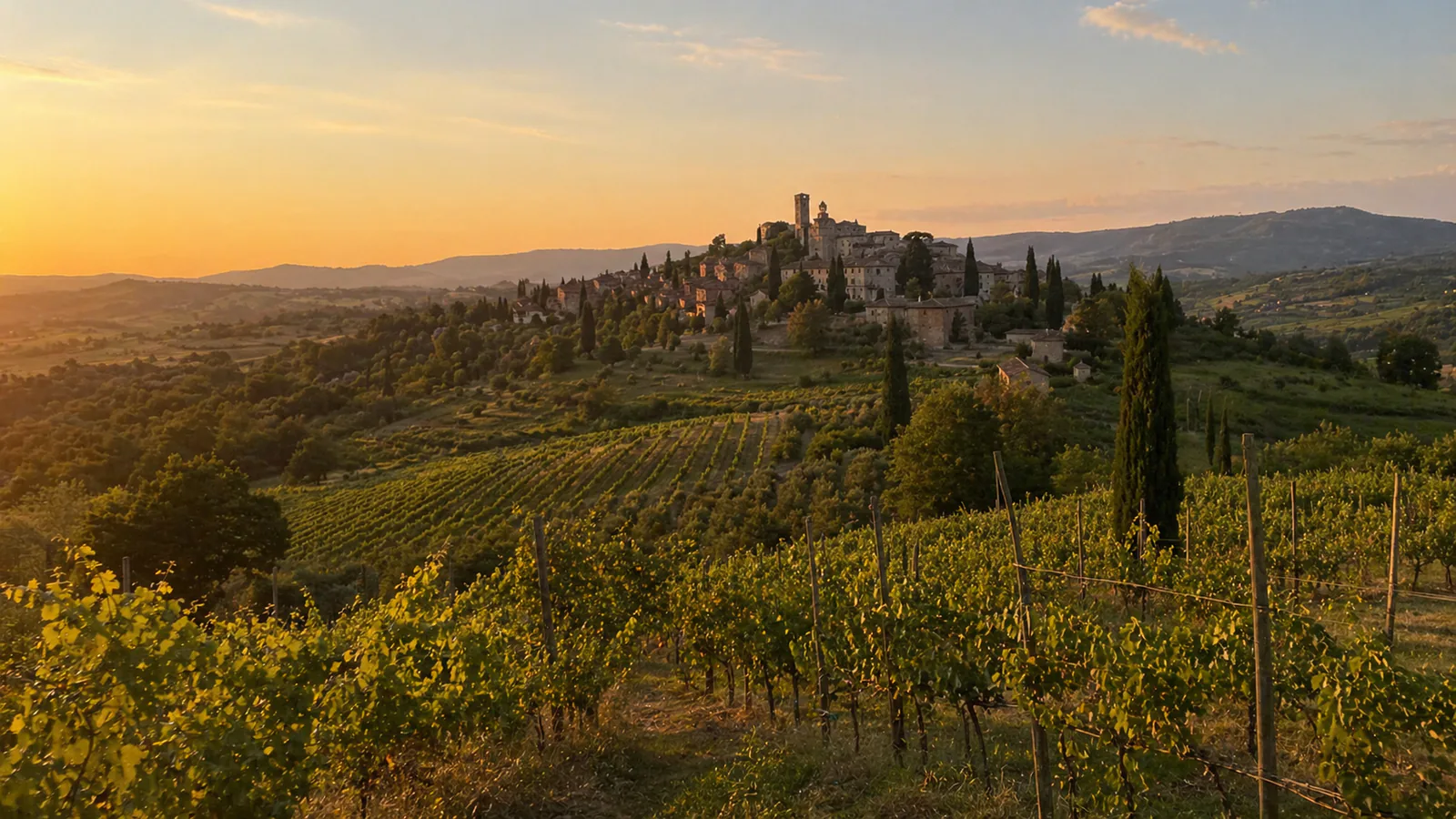
What Tuscan wine actually is, the difference between Chianti and Brunello, what makes a Super Tuscan, and how much to spend. Plain English.