
Claire Bennett
Wine Editor12 min read
Dessert Wine Guide: Sweet Styles Worth Trying
The major styles of dessert wine explained: how they're made, how sweet they actually are, and which bottle to open with what.
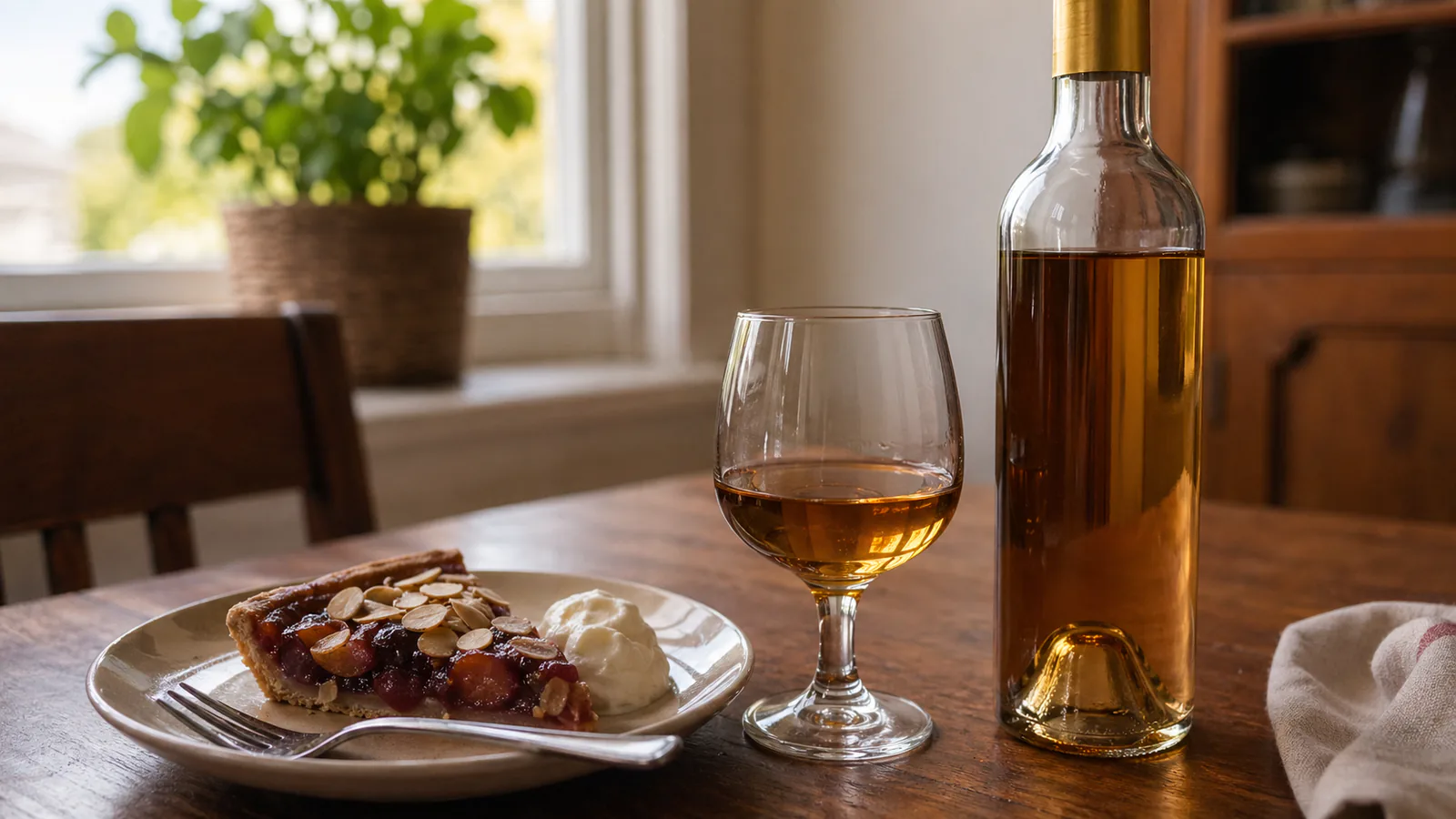
You’ve been there: a slice of rich chocolate cake arrives, you’re still drinking the dry Cabernet Sauvignon from dinner, and the first sip tastes bitter and wrong. The wine hasn’t changed. Your dessert just raised the sweetness stakes and your glass couldn’t keep up. A classic pairing mismatch, and it’s easy to fix once you know which bottles to reach for.
By the end of this page you’ll know:
- The four completely different ways winemakers produce sweetness in wine (and why each one creates a different flavour profile)
- Why ice wine from Canada can hit 220 grams of sugar per litre while a late harvest Riesling from Germany might be barely off-dry
- The one pairing rule that prevents every awkward dessert moment at the table
- Why Pedro Ximenez sherry poured straight over vanilla ice cream is genuinely one of the best things you can do with a glass
- The style most people have never heard of that pairs perfectly with biscotti and aged cheese (hint: it comes from Tuscany)
- Which bottles are technically fortified and which are technically dessert wines, and why the two categories overlap more than most guides admit
How Is Dessert Wine Made?
Sweetness in wine comes from residual sugar: the natural grape sugars that didn’t fully ferment into alcohol. Winemakers create this in four main ways, and each method produces a noticeably different result in the glass.
Late harvest. Grapes are left on the vine well past the normal picking date. As they hang there into the late season, they shrivel, losing water and concentrating their sugars. Any grape variety can be harvested late, but Riesling, Semillon, Chenin Blanc, and Gewurztraminer are the classic choices. German labels use terms like Spatlese and Auslese to signal how late the grapes were picked. In Alsace, it’s Vendange Tardive.
Noble rot (botrytis). Botrytis cinerea is a grey fungus that attacks grape skins in specific humid conditions. Sounds unpleasant. The result is extraordinary: the fungus dehydrates the berry, concentrates the sugars, and adds a layer of complexity you’d never get otherwise. Flavours of ginger, saffron, beeswax, and honey appear that no other production method can replicate. Sauternes and Tokaji are the two wines that built their entire reputations on it.
Dried grapes (passito or straw wine). Grapes are harvested at normal ripeness, then laid out on straw mats or hung to dry for weeks or months. Water evaporates. Sugar concentrates. The resulting must is thick, almost like fruit syrup. This method is called passito in Italy and straw wine more broadly; you’ll see it labelled strohwein in Germany and vin de paille in France (which translates to “straw wine”). It gives you wines like Vin Santo and Recioto della Valpolicella, where the flavours run to figs, dates, and dried cherries.
Ice wine (eiswein). Grapes freeze naturally on the vine, which requires temperatures below -8°C. When they’re pressed in their frozen state, the ice crystals stay behind and only the intensely sweet, concentrated juice runs free. Canada is the world’s largest producer of ice wine today, though the style originated in Germany and Austria. The result is honeyed, intensely sweet, and bracingly acidic all at once.
One method that often gets confused with the above: fortification, where a spirit (usually brandy) is added to stop fermentation and lock in residual sugar. Port, Madeira, and sherry are fortified wines. Some are sweet; others are completely dry. Fortified wine is its own category with its own logic, and if you want the full picture, the fortified wine guide covers it in detail.
What Are the Main Styles of Dessert Wine?
These eight styles cover most of what you’ll encounter on a wine list or bottle shop shelf.
Sauternes. From Bordeaux, France. Made from Semillon, Sauvignon Blanc, and Muscadelle grapes affected by noble rot. The wine is golden, rich, and layered: apricot, honey, marmalade, toasted brioche. It ages for decades. A good Sauternes with foie gras is one of the classic French pairings, but it works equally well with creamy blue cheese or an apple tart.
Tokaji. From northeastern Hungary, made primarily from Furmint grapes infected with botrytis. Tokaji Aszu is the flagship style, rated by “puttonyos” (a measure of botrytised grape paste added). Expect orange peel, apricot jam, honey, and a bracing acidity that keeps it from tasting heavy. Loved by Russian tsars and French kings in their time. Still worth the fuss.
Ice wine (eiswein). Intense, concentrated, and piercing in its sweetness. Canadian ice wine made from Vidal grapes tends toward peach and lychee; German eiswein made from Riesling runs to lime, apricot, and honey. Residual sugar can hit 220 g/L. Serve it small, cold, and with something rich enough to hold its own: a strong blue cheese or pecan pie.
Vin Santo. Tuscany’s answer to a glass of something remarkable after dinner. Made from Trebbiano and Malvasia grapes dried on straw mats (or hung in drying lofts) for months before pressing. The result is amber, nutty, and rich with dried fruit: figs, dates, walnuts, a whisper of oxidation. The traditional pairing is cantucci biscotti: you dip the biscotti in the wine. It’s as good as it sounds.
Moscato d’Asti. From Piedmont, Italy, made from the Muscat Blanc grape (locally called Moscato Bianco). Lightly sparkling (frizzante), low in alcohol (around 5.5%), and absolutely bursting with peach, apricot, and orange blossom. This is the gateway dessert wine: low stakes, immediately loveable, pairs with almost any fruit dessert or a cheese plate. Exactly as approachable as it looks.
Late harvest Riesling. Germany and Alsace produce the benchmarks, but good examples come from Austria, New Zealand, and Washington State too. The high natural acidity in Riesling balances the sweetness so well that even a very sweet Auslese or TBA (Trockenbeerenauslese) doesn’t taste cloying. Flavours run from stone fruit and lime to honey and petrol in older bottles. Spatlese and Auslese are the accessible entry points; Beerenauslese and TBA are the rare, expensive, extraordinary versions.
Pedro Ximenez (PX) sherry. Spain’s most extreme dessert wine, made from sun-dried Pedro Ximenez grapes in Jerez. Dark brown, almost syrupy, with residual sugar that can exceed 400 g/L. Flavours of raisins, dried figs, dark chocolate, molasses, and treacle. It’s technically a fortified wine, but PX sits so firmly in the dessert wine conversation that any guide omitting it would be incomplete. Pour it over vanilla ice cream. You won’t regret it.
Recioto della Valpolicella. Made in Valpolicella, Italy, using the same dried-grape (passito) process as Amarone, but where Amarone ferments out dry, Recioto stops fermentation early to keep the sweetness. The result is a rich, velvety sweet red wine with flavours of black cherry jam, dark chocolate, and violets. Pairs brilliantly with anything chocolate-forward. A bottle that most wine drinkers haven’t found yet.
What’s the Difference Between Dessert Wine and Fortified Wine?
The categories overlap, which is why the question keeps coming up.
Fortified wine has had a spirit (usually brandy) added during or after fermentation, lifting alcohol to 17-22% ABV. The sweetness of a fortified wine depends entirely on when that spirit was added: add it during fermentation and yeast dies early, leaving plenty of residual sugar. Add it after full fermentation and you get a dry wine that happens to be high in alcohol.
That’s why fino sherry is bone dry and Tawny Port is rich and sweet. Both are fortified. Sweetness is a separate variable.
Dessert wine, by contrast, is a descriptor for any wine that tastes noticeably sweet, regardless of how that sweetness was achieved. A botrytis Sauternes is a dessert wine but not a fortified wine. PX sherry is both. Ice wine is a dessert wine but definitely not fortified.
The short version: all fortified dessert wines are dessert wines, but not all dessert wines are fortified. And not all fortified wines are sweet. If you want the full rundown on Port, Madeira, sherry and the rest, the fortified wine guide is the right place.
How Sweet Is Dessert Wine, Actually?
Sweetness is measured by residual sugar (RS) in grams per litre. Table wines are typically below 10 g/L. Here’s where dessert wines sit:
| Style | Residual Sugar | Flavour register |
|---|---|---|
| Moscato d’Asti | 80-120 g/L | Light, peachy, delicate |
| Late harvest Riesling (Spatlese) | 40-90 g/L | Stone fruit, citrus, crisp |
| Late harvest Riesling (Auslese/TBA) | 90-300 g/L | Honey, apricot, concentrated |
| Sauternes | 100-200 g/L | Apricot, honey, marmalade |
| Tokaji Aszu (5 puttonyos) | 120-180 g/L | Orange peel, honey, bracing acidity |
| Ice wine | 150-220 g/L | Intense peach, lime, honey |
| PX sherry | 400-500 g/L | Raisin, chocolate, syrup |
High acidity is the counterweight to sweetness. A Sauternes at 180 g/L RS tastes more lively than a flabby late harvest white at 100 g/L because the acid keeps pulling you back for another sip. Tokaji and Riesling both use their natural acidity as a balancing act. PX sherry, by contrast, is genuinely thick and sticky. That’s the point.
What Temperature Should You Serve Dessert Wine?
Serving dessert wine at the right temperature makes a real difference to how it tastes in the glass.
Cold temperatures suppress sweetness and make wine taste crisper, which is useful when you’re dealing with high residual sugar. Too cold and you lose the aromatics. The serving temperature range by style:
- Moscato d’Asti and light sparkling sweet wines: 6-8°C (43-46°F). Well chilled, almost like you’d serve a good sparkling wine.
- Light late harvest whites and Riesling: 8-10°C (46-50°F).
- Sauternes, Tokaji, and rich whites: 10-12°C (50-54°F). A touch warmer lets the complexity open up.
- Tawny Port and dessert sherries: 12-14°C (54-57°F).
- PX sherry: 14-16°C (57-61°F). Serving it too cold mutes the extraordinary aromatics.
- Vin Santo: 10-12°C (50-54°F).
On glassware: dessert wines are served in smaller glasses, typically 4-6 oz. The pour size is smaller too. At 75ml, the standard restaurant pour is roughly half a table wine pour. These wines are rich and high in sugar; a full glass would be overwhelming. The smaller pour concentrates the aromas and keeps the experience from becoming too much.
What Food Should You Pair with Dessert Wine?
The rule is simple: your wine should be at least as sweet as the food you’re pairing it with, ideally a touch sweeter. If the dessert outsweets the wine, the wine tastes sharp, bitter, and wrong. That’s the same effect you’d get drinking a dry red Cabernet Sauvignon with a slice of chocolate cake.
Here’s how to put it into practice:
Sauternes with foie gras or crème brûlée. The fat in foie gras and the caramelised sugar in crème brûlée love the honeyed acidity of Sauternes. Classic French pairing for a reason.
Tokaji with aged cheese or a rich pastry. Tokaji’s orange peel and apricot notes work beautifully with funky, salty aged cheese. Also excellent with panettone or any brioche-style enriched bread.
Late harvest Riesling with apple tart or pumpkin pie. The stone fruit and spice notes in the wine echo the filling. The acidity cuts through the pastry richness.
PX sherry over vanilla ice cream. Pour it straight over a scoop. The contrast between cold, neutral ice cream and the thick, raisin-dark sweetness of PX is genuinely brilliant. No other preparation required.
Moscato d’Asti with fresh berries or light fruit tarts. The low alcohol and gentle sweetness of Moscato d’Asti makes it the right choice for delicate desserts. A lemon tart or a bowl of peaches in summer. If you want a bubbly option and Moscato d’Asti is too light, look for a demi-sec or doux Champagne, which carries enough sweetness to work alongside most fruit-based desserts.
Recioto della Valpolicella with dark chocolate. This is the correction for the Cabernet-and-chocolate mistake. You need a sweet red wine with enough body to match dark chocolate’s intensity. Recioto is perfect. PX works too.
Vin Santo with biscotti. Traditional Tuscan finish to a meal. The nutty, dried-fruit richness of Vin Santo is designed for the crunch of cantucci.
The one pairing to avoid: a very dry, tannic red wine with anything heavily chocolate-forward. Tannins and chocolate tannins compound each other badly. If you love chocolate with wine, go sweet, not dry.
Frequently Asked Questions
Is dessert wine the same as sweet wine?
Broadly, yes. “Dessert wine” is the common term for wines with noticeable residual sugar, typically served with or instead of dessert. The category includes everything from lightly sweet Moscato d’Asti to the ultra-rich Pedro Ximenez sherry. Some wine regions and producers use “sweet wine” as the label on the bottle. In practice, it means the same thing.
How long does dessert wine last after opening?
Longer than you’d expect, because the high sugar acts as a preservative. A Sauternes or Tokaji can hold well in the fridge for 3-5 days after opening. Fortified styles like Port and PX sherry will last weeks. Moscato d’Asti, being sparkling, will lose its fizz quickly. Drink it within a day or two of opening. If in doubt, use a wine stopper and refrigerate.
Why does dessert wine come in half bottles?
Because a little goes a long way. A 375ml half bottle serves two people a standard restaurant pour each, which is exactly the right amount. Full 750ml bottles of Sauternes and Tokaji exist, but the half bottle format became standard because these wines are served in small pours alongside food rather than consumed by the glass all evening. A practical convention that matches how people actually drink them.
Can you cook with dessert wine?
Yes, and it’s worth trying. A splash of Sauternes or late harvest Riesling in a pan sauce for duck or pork adds sweetness and complexity. PX sherry reduces into an extraordinary glaze for roasted figs or a tart. Vin Santo is the traditional liquid used in certain Tuscan braised dishes. The same rule applies as with any cooking wine: use something you’d actually drink.
Is expensive dessert wine worth it?
Often, yes. Here’s why. Wines like Sauternes and Tokaji Aszu are labour-intensive to produce: botrytis affects individual berries unevenly, which means pickers walk the same rows multiple times, selecting one grape at a time. A single vine might produce only one glass of Sauternes in a good year. From years of talking wine-club members through their next case, I’ve seen the same pattern: people who try a good Sauternes or a top Tokaji once rarely go back to cheap sweet alternatives. The price reflects genuine scarcity, not prestige inflation.
If you’re ready to explore further, the best sweet wines guide has specific bottle recommendations at every price point, including a few that will genuinely surprise you.
Keep Reading
Best Sweet Wines: 12 Bottles Across Every Sweet Style
12 best sweet wines across Riesling, Moscato, sweet reds, Port, Sauternes, Tokaji, and Ice Wine. Every bottle sweetness-rated and verified live.
Fortified Wine Guide: Port, Sherry, Madeira
Port, Sherry, Madeira, Marsala, Vermouth: what fortified wine actually is, how each style tastes, how to serve it, and how long it keeps once opened.

Moscato: Sweet Wine Guide for Brunch and Dessert
Moscato is the low-alcohol sweet wine that tastes like peach and orange blossom. Here's the difference between Moscato d'Asti, Asti, and still Muscat.