Claire Bennett
Wine Editor11 min read
Viognier: The Perfumed White Wine of the Rhone
Viognier smells like apricot and honeysuckle and almost went extinct in the 1960s. Here's how it tastes, where it grows, and what to eat with it.
Viognier: The Perfumed White Wine of the Rhone
By the 1960s, Viognier was down to fewer than 20 acres of vines in the entire world. One producer in a single French village spent two decades keeping the grape alive. Today it grows on four continents and produces some of the most recognisable white wine in any category. The perfume is the tell: stone fruit, honeysuckle, apricot, and a floral edge that no other white grape replicates. One glass is usually enough to make the conversion permanent.
By the end of this page you’ll know:
- The story of how a single producer rescued Viognier from extinction in the 1960s (and why every bottle today owes him)
- Why a small percentage of white grape gets co-fermented with red Syrah in the world’s most prestigious red wine appellation
- The exact occasion Viognier is built for, and the one season it’s wrong
- What to look for on a Viognier label that tells you the wine is built to last more than two years
- The Australian region that does Viognier as well as France, at half the price
What Is Viognier?
Viognier is a white wine grape with thick golden skin, naturally low acidity, and a perfume so distinctive that one whiff is usually enough to identify it for life. Its origin is murky, but DNA testing places it in the Northern Rhone Valley of France, where it has grown for at least 600 years and possibly much longer. Some theories trace it to ancient Roman plantings; others suggest a Croatian or Dalmatian ancestry brought west in the early Middle Ages.
What’s certain is that Viognier was almost lost. By the 1960s, the grape’s home appellation, Condrieu, had shrunk to fewer than 20 acres of vines, and the variety was on the verge of disappearing entirely. The wines were difficult to make, the yields were low, and the post-war French wine market was chasing volume, not perfume.
A small group of growers, led by Georges Vernay in the village of Condrieu, refused to let the grape die. Vernay replanted, refined the winemaking, and championed Viognier through the 1970s and 1980s. By 1990, Condrieu had stabilised and the grape’s reputation had recovered. Today, Viognier grows across France, California, Australia, Virginia, South Africa, and Chile. Every glass owes a debt to those holdouts.
The grape itself is fussy. It ripens unevenly, drops yields easily, and can lose acidity in warm vintages. Get it right, and you get one of the most distinctive perfumes in the wine world. Get it wrong, and you get a flat, soapy wine that explains why so few growers persisted with it for so long.
What Does Viognier Taste Like?
Quick stat block:
- Body: Full
- Acidity: Low to medium-low
- Sweetness: Dry (occasionally late-harvest sweet styles)
- Oak: Often, but lightly used. Some producers go unoaked.
- Alcohol: 13.5 to 15 percent
The aromatic profile is the headline. Apricot is the consistent calling card, often with peach, honeysuckle, jasmine, and a faintly tropical edge that hints at mango or guava. Underneath that perfume sits a softer set of secondary notes: ginger, candied citrus peel, beeswax, and sometimes a savoury hint of dried herbs.
In the mouth, Viognier is full and round. The low acidity makes it feel almost viscous, the way honey moves compared to water. The texture is one of its calling cards. Where Sauvignon Blanc is sharp and Riesling is electric, Viognier is plush.
That fullness is also its weakness. Without acidity, Viognier can feel heavy or hot if the alcohol is too high. The best examples balance the aromatic richness with just enough freshness to keep the wine from feeling cloying. This is why winemaking matters so much for Viognier. Fermentation temperature, oak handling, and harvest timing are all critical, and a clumsy producer can turn a great vineyard into a soapy mess.
Oak influence is common but usually subtle. Top Condrieu producers use older neutral barrels for fermentation and ageing, which adds texture and gentle creaminess without imposing vanilla or toast. New World Viognier is sometimes oakier, especially from California, but the trend is moving toward lighter oak and more transparent winemaking.
Where Is Viognier Grown?
Northern Rhone, France
The spiritual home, and the white face of the Rhône Valley. Two appellations specifically focus on Viognier as a single varietal.
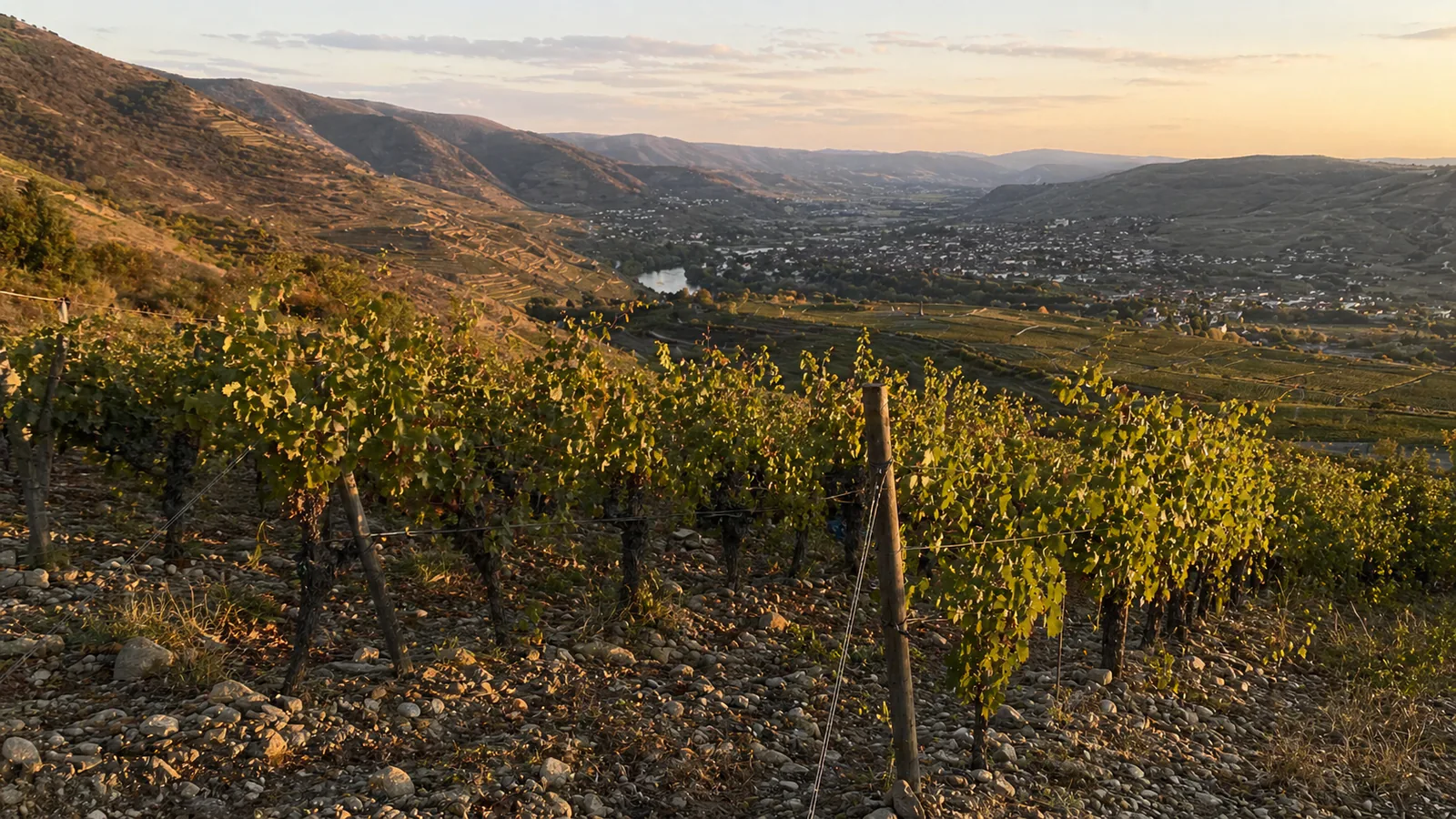
Condrieu is the iconic Viognier appellation. About 200 acres of vines on terraced granite slopes above the Rhone River produce some of the most expensive and revered white wines in France. Top producers: Georges Vernay, E. Guigal, Yves Cuilleron, André Perret, and Pierre Gaillard. Expect to pay $50 to $150 a bottle, with single-vineyard wines climbing higher.
Château-Grillet is even smaller and stranger. The entire appellation covers just nine acres and consists of a single estate. Wines are scarce, expensive ($150-plus a bottle), and bottled in distinctive amber glass. They’re more cult object than table wine.
The unusual story: in the Northern Rhone red wine appellation of Côte-Rôtie, producers are legally allowed to co-ferment Viognier with the dominant Syrah, up to 20 percent. The Viognier is added to the fermentation tank with whole bunches of Syrah, and the two grapes ferment together. The result is a red wine with extra aromatic lift, smoother tannins, and a perfumed quality that pure Syrah doesn’t have. Most producers use 1 to 8 percent Viognier in practice. It’s one of the only places in the world where a small amount of white grape is intentionally added to a prestigious red.
Southern Rhone and Languedoc, France
Viognier is also planted across the broader Rhone, often as a blending grape in white Côtes du Rhone wines or as a varietal in IGP Pays d’Oc bottlings from Languedoc. These are usually inexpensive, fruit-forward, and built for casual drinking. Look for them in the $12 to $20 range.
Eden Valley and Adelaide Hills, Australia
Australia took Viognier seriously earlier than most New World countries. Yalumba in the Eden Valley has been the country’s leading champion since the 1980s and produces a wide range of Viognier, from a $20 entry-level bottling to single-vineyard wines that rival good Condrieu. The Australian style tends to be a touch riper than the French version, with more obvious stone fruit and less savoury complexity, but quality at the top end is genuinely high.
California, USA
California Viognier grows mostly in cooler coastal regions: Paso Robles, Santa Barbara County, and the Sierra Foothills. The style ranges from oakless and bright to richly textured and almost Condrieu-like. Tablas Creek (Paso Robles) and Alban Vineyards (Edna Valley) make some of the most respected examples. Prices range from $20 for casual bottles to $60 for serious single-vineyard wines.
Virginia, USA
Virginia has quietly become one of the most surprising Viognier regions in the world. The state’s humid summers and cool autumn nights suit the grape well, and Viognier was officially named Virginia’s signature grape variety in 2011. Producers like Barboursville, Horton, and Veritas make accomplished bottlings that punch above their region’s reputation.
Other regions
South Africa (Western Cape), Chile (Casablanca Valley), and Argentina all produce Viognier in smaller quantities. New Zealand has experimented with it on Waiheke Island. None of these regions has reached the consistency of Australia or California yet, but standout bottles do exist.
What Food Pairs With Viognier?
Viognier’s full body and aromatic richness make it a bad fit for delicate dishes and a brilliant fit for anything with stone fruit, soft cheese, or gentle spice on the plate. The pairing logic is straightforward. Match the weight of the wine to the weight of the food, and let the apricot-and-honeysuckle perfume meet flavours it actually shares territory with.
Dishes that work:
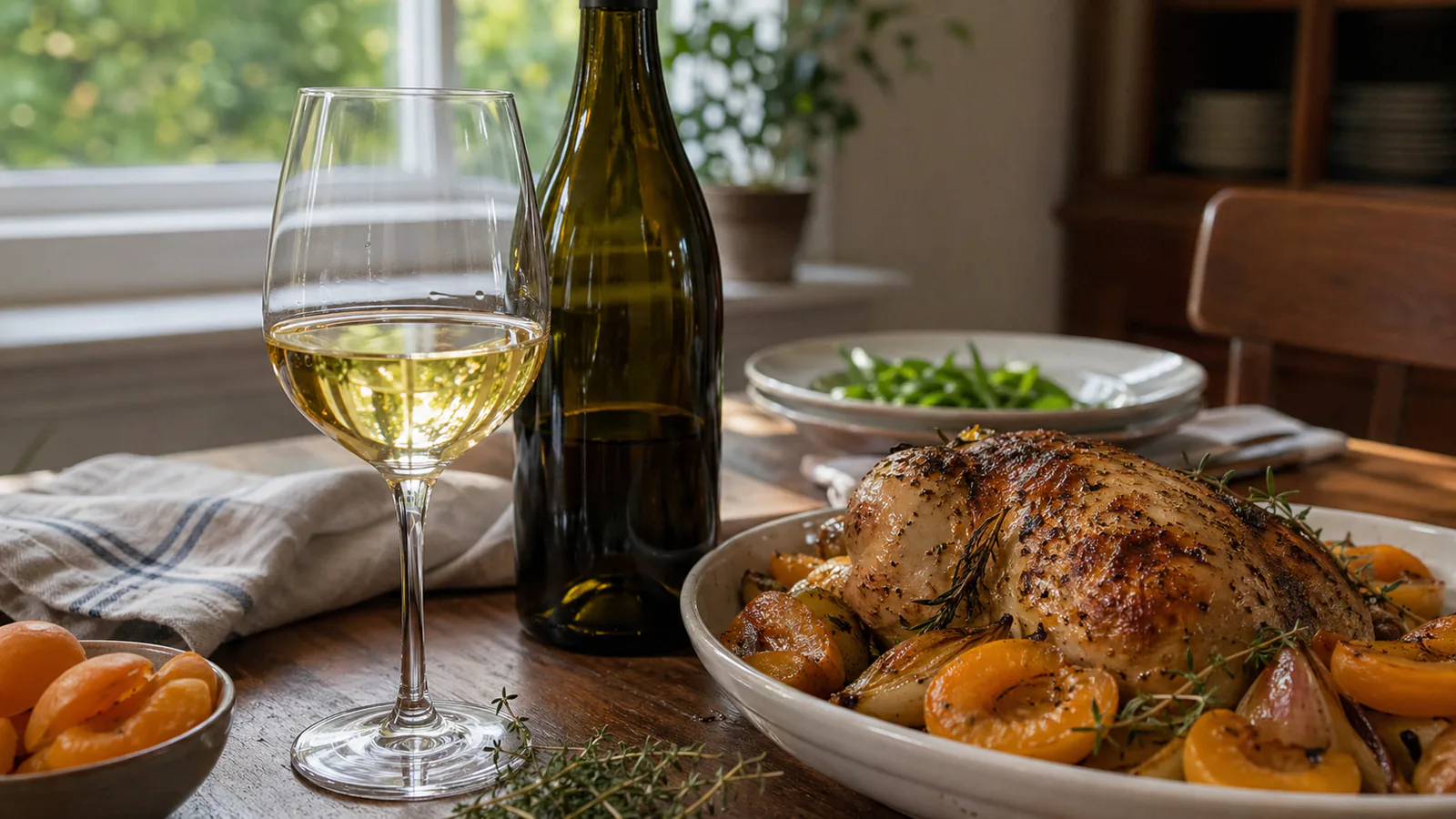
- Apricot-glazed chicken or pork
- Pork belly with a stone-fruit chutney
- Roast chicken with herbs and citrus butter
- Lobster, especially with butter or saffron
- Scallops in cream or saffron-vanilla sauce
- Soft, creamy cheeses: triple-cream Brie, Saint-André, fresh ricotta
- Moroccan tagines with apricot, almond, and warm spice
- Indian dishes that lean aromatic rather than fiery: chicken tikka, butter chicken, korma
- Thai dishes with coconut milk and basil
- Pumpkin or butternut squash risotto
Where Viognier fails: light raw fish (sashimi, ceviche), bright vegetable dishes, anything heavily acidic. The wine’s low acidity has nothing to push back against citrus dressings or vinaigrettes, and the perfume can overwhelm clean, delicate flavours. Save it for plates with weight and richness.
The autumn-evening point matters. Viognier’s profile is wrong for hot summer afternoons. The fullness and low acidity make it feel heavy in heat. Save it for cooler weather, when stone fruit, cream sauces, and roast meats start showing up on tables.
How Should I Serve Viognier?
Temperature: 9 to 11 degrees Celsius (around 48 to 52 Fahrenheit). Cooler than red wine but warmer than the standard “ice cold” of around 4 degrees. Too cold mutes the perfume, which is the entire reason to drink Viognier. Pull the bottle out of the fridge 15 to 20 minutes before serving.
Glassware: a larger white wine glass or a Burgundy bowl helps. Viognier’s aromatics need room to breathe, and a small glass traps them. If you only have one set of glasses, use the biggest you’ve got.
Decanting: usually unnecessary, but a young Condrieu can benefit from a 15-minute decant to lift the bouquet. Don’t decant for hours. Viognier oxidises faster than most whites because of its low acidity.
Ageing: most Viognier is built to drink young, within two or three years of release. The aromatics fade with age, and the wine often loses its lift. Top Condrieu and serious Australian or Virginian Viognier can age five to ten years, picking up honey, dried apricot, and a waxy texture. But unlike Riesling or Chenin Blanc, Viognier is not a long-cellar grape. Drink it while the perfume is still alive.
How Much Should I Spend on Viognier?
Under $20: Southern Rhone, Languedoc, basic California, and entry-level Yalumba. These are casual, fruit-forward bottles for everyday drinking. Don’t expect Condrieu-level perfume, but a good $15 Australian Viognier will still be unmistakable.
$20 to $40: Mid-tier Viognier from quality producers. Yalumba’s “Eden Valley Viognier,” Tablas Creek’s Cotes de Tablas Blanc, and Virginia’s better producers all sit here. This is the sweet spot for serious Viognier without Condrieu prices.
$40 to $80: Entry-level Condrieu and top New World single-vineyard wines. E. Guigal’s basic Condrieu and Yalumba’s “Virgilius” both punch in this range. These are the bottles that show why the grape has its reputation.
$80 to $200: Single-vineyard Condrieu from top producers. Vernay’s “Coteau de Vernon,” Cuilleron’s “Vertige,” and Guigal’s “La Doriane” are the benchmarks. These are special-occasion bottles for stone-fruit-friendly meals.
$200 and up: Château-Grillet and rare allocations from top Northern Rhone producers. Cult territory.
If you’ve never had a serious Viognier, the smartest first move is a $30 to $40 Yalumba “Virgilius” or a $50 entry-level Condrieu from E. Guigal. Either will tell you exactly what the grape is supposed to do.
Frequently Asked Questions
What does Viognier taste like?
Apricot, peach, honeysuckle, and jasmine are the consistent flavour notes. The texture is full and round because acidity is low and body is high. Lighter examples lean stone-fruit and floral. Richer examples (especially Condrieu) add ginger, candied citrus peel, and a waxy, almost honeyed quality.
Is Viognier sweet or dry?
Almost all Viognier is dry. The low acidity and ripe stone-fruit perfume can make the wine taste lightly sweet on the finish, but the residual sugar is usually minimal. A handful of producers in Condrieu and California make late-harvest sweet styles, but those are clearly labelled and are not the default.
How do you pronounce Viognier?
“Vee-ohn-yay.” Three syllables, with the stress on the last. The “g” is silent.
What’s the difference between Viognier and Chardonnay?
Both are full-bodied white wines, but they’re built completely differently. Chardonnay is a blank canvas. It picks up flavour from oak, malolactic fermentation, and lees ageing. Viognier comes pre-loaded with perfume, and most of its character is intrinsic to the grape rather than added by winemaking. Chardonnay is more versatile with food. Viognier is more distinctive in the glass.
Why is Viognier blended into Côte-Rôtie?
The tradition dates back centuries. Adding a small percentage of Viognier (legally up to 20 percent, usually 1 to 8 percent in practice) to Syrah at fermentation lifts the red wine’s perfume, smooths the tannins, and stabilises the colour through a chemistry called co-pigmentation. The result is a more aromatic, more graceful Syrah than pure varietal Northern Rhone reds.
Should you decant Viognier?
Usually no. A 15-minute decant on a young Condrieu can help the aromatics open up, but most New World Viognier shows everything you need straight from the bottle. Avoid long decants. Viognier oxidises faster than most whites because of its low acidity.
Ready to bring some Viognier home? Our guide to the best crisp white wines covers Viognier and the wider world of aromatic, food-friendly whites worth knowing.
Keep Reading
Rhône Valley Wine: Northern vs Southern, Grapes, Best Buys
What Rhône Valley wine actually is, how Northern and Southern Rhône differ, the grapes behind GSM blends, and why Côtes du Rhône is the smart buy.
Types of White Wine: Crisp to Rich Guide
From crisp Sauvignon Blanc to buttery Chardonnay, here's how the main types of white wine taste, where they come from, and what to eat with them.
Chicken Wine Pairing: What To Pour With Dinner
The best wines with chicken by cooking method and sauce, from roast chicken and Chardonnay to fried chicken and bubbles.