Claire Bennett
Wine Editor10 min read
Gamay Wine: The Chillable Red From Beaujolais
Gamay is the light, juicy red behind Beaujolais. Here's how it tastes, where the best bottles come from, and what to eat with it.
Gamay Wine: The Chillable Red From Beaujolais
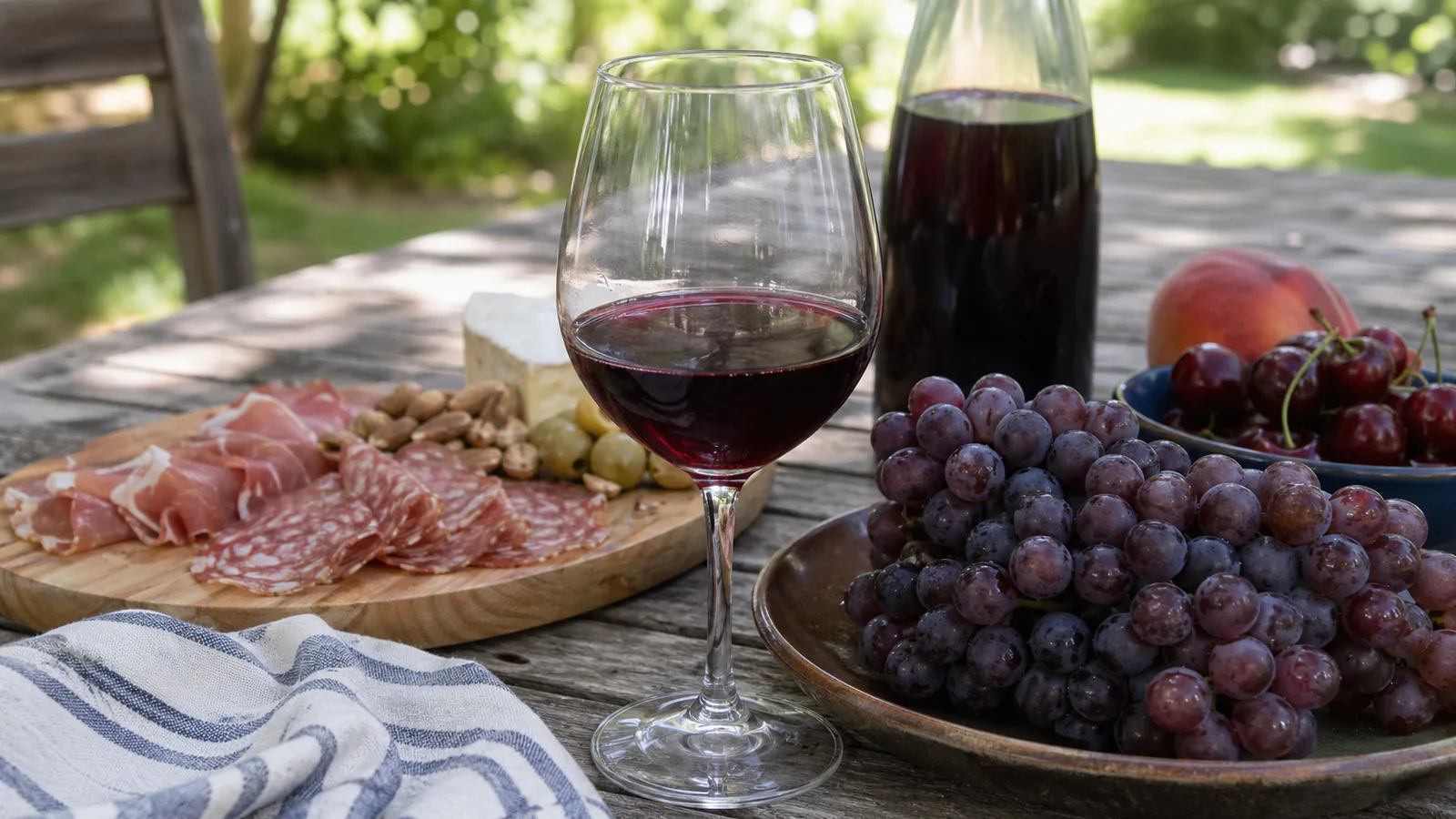
Gamay is the only serious red wine that genuinely improves with 20 minutes in the fridge. Light enough to chill without losing its character, structured enough to hold up to food off the grill, and cheap enough to open two without overthinking it. A $20 bottle from the right Beaujolais village drinks with the seriousness of a $45 Pinot Noir. Once you know where to look, you’ll reach for it constantly.
By the end of this page you’ll know:
- The single winemaking trick that gives young Beaujolais its banana and bubblegum aromas (and why some producers love it while others avoid it)
- Why a $15 bottle from Morgon can drink with the seriousness of a $40 Burgundy
- The temperature sweet spot for Gamay that most wine lists get wrong by 5 degrees
- The 10 villages whose names tell you you’re getting the good stuff
- The Thanksgiving pairing argument that makes Gamay the smartest bottle on the table
What Is Gamay?
Gamay (full name: Gamay Noir à Jus Blanc) is a red wine grape with thin skin, naturally high acidity, and very little tannin. It first appears in records from 14th-century Burgundy, where it grew so prolifically that the Duke of Burgundy banned it in 1395, calling it the “vile and disloyal plant” and ordering all vines uprooted from his prized slopes. The duke wanted Burgundy reserved for Pinot Noir.
The ban worked. Gamay got pushed south into the granite hills of Beaujolais, where it found exactly the soil it needed. Six hundred years later, that supposedly disloyal grape is still the only red allowed in Beaujolais wines, and the region produces almost all the world’s serious Gamay.
Genetically, Gamay is a natural cross between Pinot Noir and an ancient white grape called Gouais Blanc. That parentage shows in the glass. Gamay has Pinot Noir’s silky texture and red fruit character, with a juicier, brighter, easier-going personality.
What Does Gamay Taste Like?
Quick stat block:
- Body: Light
- Acidity: High
- Tannin: Low
- Sweetness: Dry
- Oak: Usually none, sometimes light oak in cru bottlings
- Alcohol: 12 to 13.5 percent
The flavour profile depends heavily on how the wine was made. Young Beaujolais Nouveau and most village-level Beaujolais use a technique called carbonic maceration (more on that below), which gives the wine signature aromas of banana, bubblegum, candied red fruit, and red berries.
Cru Beaujolais (the top-tier bottlings from the 10 named villages) often uses traditional fermentation instead. Those wines taste more serious: black cherry, raspberry, violet, crushed gravel, sometimes a savoury herbal edge that reminds you of sage or thyme. Older cru bottles develop a forest-floor character that sommeliers love to confuse with aged Burgundy in blind tastings.
What you won’t find in Gamay: heavy tannin, oak-driven vanilla and toast, jammy ripe-fruit weight. If those are the things you love about Cabernet Sauvignon or Australian Shiraz, Gamay will feel thin to you. If you want a red that refreshes instead of weighs you down, you’ve found your grape.
What Is Carbonic Maceration?
Carbonic maceration is the winemaking technique that gives young Beaujolais its distinctive aromas, and it’s worth understanding because it explains why Gamay tastes like Gamay.
In normal red winemaking, grapes are crushed first, then yeast turns the sugars in the juice into alcohol. Carbonic maceration skips the crushing step. Whole bunches of grapes go into a sealed tank that’s flushed with carbon dioxide. With no oxygen around, fermentation actually starts inside each individual grape, before the skins ever break.
The result is a wine that’s lower in tannin (because the skins barely interact with the juice), higher in fruit, and full of aromatic compounds you don’t get from regular fermentation. Banana esters and bubblegum notes are the famous calling cards. Some drinkers love them. Some find them gimmicky. Top producers in the Beaujolais Crus often use partial carbonic maceration or skip it entirely, which is why a serious Morgon tastes nothing like a $9 Beaujolais Nouveau.
Where Is Gamay Grown?
Beaujolais, France
This is the heartland. Beaujolais is a 50-mile strip of granite-rich hills just south of Burgundy, one of the under-the-radar zones in our France wine guide, and it produces roughly 99 percent of the world’s Gamay. The region has a quality hierarchy that’s actually useful to know.
Beaujolais (basic): The cheapest tier, fruity and simple. Fine for parties, not memorable on its own.
Beaujolais-Villages: A step up, drawn from 38 villages with better terroir. Better balance, more depth, often the sweet spot for value.
Beaujolais Nouveau: Released the third Thursday of November, just weeks after harvest. It’s a marketing event as much as a wine. Drink it cold within a few months. Don’t expect complexity.
Cru Beaujolais: The 10 named villages with the best soil and the most ambitious winemaking. These are the bottles that age, develop, and earn the comparisons to Burgundy. The 10 crus, from north to south: Saint-Amour, Juliénas, Chénas, Moulin-à-Vent, Fleurie, Chiroubles, Morgon, Régnié, Brouilly, Côte de Brouilly. Morgon (structured, ageable), Fleurie (perfumed and elegant), and Moulin-à-Vent (the most powerful, sometimes called the “King of Beaujolais”) are the three to start with.
Loire Valley, France
A small amount of Gamay grows in the Loire, mostly in Touraine. It’s lighter and sharper than Beaujolais, often blended with other grapes. Pleasant, rarely transcendent.
Switzerland
The Swiss are the second-largest Gamay growers in the world, with most plantings in the Valais. Swiss Gamay is harder to find outside the country, but the bottles are honest, fruity, and built for casual drinking.
Oregon, USA
A handful of Willamette Valley producers (notably Brick House and Division Wine Co.) make serious Gamay from cool-climate sites. The style sits between Beaujolais and Pinot Noir, with bright acidity and red fruit purity. Quantities are tiny, prices are reasonable, and the bottles are getting attention.
Niagara, Canada
Ontario’s Niagara Peninsula has emerged as a credible Gamay region. The cool climate suits the grape, and producers like Malivoire and 13th Street make polished, food-friendly bottles that can match village-level Beaujolais in quality.
What Food Pairs With Gamay?
Gamay’s combination of bright acidity, low tannin, and modest weight makes it one of the most flexible food wines on the shelf. It’s the bottle to grab when you have a mixed table and don’t want to negotiate.
The pairing logic: high acidity cuts through fat, low tannin keeps things gentle, and the red fruit profile bridges salty, savoury, and lightly spiced dishes without dominating any of them. It works with food a heavier red would steamroll and food a white wine would feel underpowered against.
Specific dishes that work:
- A charcuterie board, especially with saucisson, pâté, and cornichons
- Roast chicken with herbs and lemon
- Grilled or roasted salmon
- A classic Margherita pizza or a mushroom flatbread
- Burgers and turkey burgers (the lighter the patty, the better the match)
- Coq au vin (Gamay was probably the original wine in the dish before fancier cookbooks switched to Burgundy)
- Picnic food: quiches, cold roast meats, hard-boiled eggs, potato salad
- Thanksgiving turkey with all the fixings
- Vietnamese pho, banh mi, or rice noodle bowls
- Cheeseboards heavy on soft and semi-soft cheeses (Brie, Comté, young Gouda)
The Thanksgiving pairing is the one to remember. The traditional American Thanksgiving table has turkey, sweet sides, savoury sides, cranberry, and a cast of dishes that punish heavy reds and underwhelm fuller whites. A chilled bottle of cru Beaujolais splits the difference and makes the whole table happy.
How Should I Serve Gamay?
Temperature first. Most reds get served too warm, and Gamay suffers more than most when that happens. Aim for 12 to 14 degrees Celsius (around 54 to 57 Fahrenheit), which is cooler than typical room temperature but not refrigerator cold.
The shortcut: 20 minutes in the fridge before opening. If the wine has been sitting in a warm kitchen, give it 30. The cool serving temperature sharpens the acidity, lifts the aromatics, and stops the alcohol from feeling pushy.
Glassware: a standard Burgundy bowl works well, because it lets the aromatics open up. A standard red wine glass is fine too. Don’t bother with anything fancier.
Decanting: usually unnecessary. Cru Beaujolais with 10 or more years in the bottle can benefit from 30 minutes in a decanter to shake off any reduction, but young and mid-range Gamay is built to drink the moment you pull the cork.
Ageing: most Beaujolais is meant to be drunk young, within two or three years of release. Cru Beaujolais is the exception. A good Morgon, Moulin-à-Vent, or Côte de Brouilly can age for 10 to 15 years and shift toward something genuinely Burgundy-like, with notes of dried cherry, leather, and forest floor. If you want to experiment, buy a few bottles, open one a year, and watch the wine evolve.
How Much Should I Spend on Gamay?
Gamay is one of the best values in red wine. The pricing tiers are clean.
Under $15: Basic Beaujolais and Beaujolais-Villages. Look for honest producers like Georges Duboeuf (the basic bottlings), Domaine de la Madone, or Henry Fessy. These are the bottles for casual drinking, parties, and anywhere you want a competent red without a long deliberation.
$15 to $25: Beaujolais-Villages from quality producers and entry-level cru bottlings. This is the price band where Gamay starts to overdeliver. A village-level Fleurie or Brouilly at $20 will outperform plenty of $40 Pinot Noirs.
$25 to $45: Serious cru Beaujolais. Look for names like Jean Foillard, Marcel Lapierre, Jean-Paul Brun (Domaine des Terres Dorées), Yvon Métras, Jean-Marc Burgaud, and Domaine Diochon. These producers are the reason wine writers keep saying Beaujolais is the best-value region in France.
$45 and up: Single-vineyard cru bottlings from top producers, especially in Morgon (Côte du Py) and Moulin-à-Vent. The ceiling on Gamay is lower than on Burgundy, but the wines at this level are serious, complex, and built for the cellar.
If you’ve never bought serious Gamay before, start in the $20 to $30 zone with a Morgon or Fleurie from a respected producer. That single bottle will tell you everything you need to know about why Gamay deserves its current critical attention.
Frequently Asked Questions
Is Gamay the same as Pinot Noir?
No, but they’re related. Gamay is a natural cross between Pinot Noir and Gouais Blanc, so it shares some of Pinot’s silky texture and red-fruit character. Gamay tends to be lighter, juicier, lower in tannin, and significantly less expensive. Cru Beaujolais aged 10 years can be mistaken for Burgundy in blind tastings, which is the highest compliment Gamay regularly receives.
Should you drink Gamay chilled?
Yes. Gamay is one of the few reds that genuinely benefits from a chill. Aim for around 12 to 14 degrees Celsius, which is roughly 20 minutes in the fridge before opening. Serving it at warm room temperature mutes the acidity and exaggerates the alcohol.
What’s the difference between Beaujolais Nouveau and cru Beaujolais?
Beaujolais Nouveau is released weeks after harvest, made for immediate drinking, and built around the fruity, banana-like aromas of carbonic maceration. Cru Beaujolais comes from the 10 top villages, uses more careful winemaking, often skips or reduces carbonic maceration, and produces serious wines that can age 10 to 15 years. They’re the same grape with two completely different intentions.
How long does Gamay age?
Most Gamay is built to drink within two or three years. Cru Beaujolais from top producers (Foillard, Lapierre, Burgaud, Brun) can age 10 to 15 years and develops impressive complexity in that window, picking up dried cherry, leather, and forest-floor notes. Basic Beaujolais doesn’t reward cellar time.
What’s the easiest cru Beaujolais to find?
Morgon and Fleurie are the most widely distributed crus in North America and the UK. Morgon tends to be more structured and ageable; Fleurie is lighter and more aromatic. Brouilly is the largest cru by volume and often the cheapest, which makes it a good entry point if you want to taste cru-level Gamay without spending much.
Is Gamay a good wine for beginners?
Yes. Low tannin and bright fruit make Gamay one of the friendliest red wines for new drinkers. It doesn’t have the grippy, drying mouthfeel that puts beginners off Cabernet Sauvignon, and the chillable serving style makes it feel less serious and more approachable.
Ready to put Gamay on your shelf? Our roundup of the best light-bodied red wines covers specific Beaujolais bottlings worth buying, alongside Pinot Noir and other low-tannin reds for warmer-weather drinking.
Keep Reading
France Wine Guide: Regions, Grapes, Where to Start
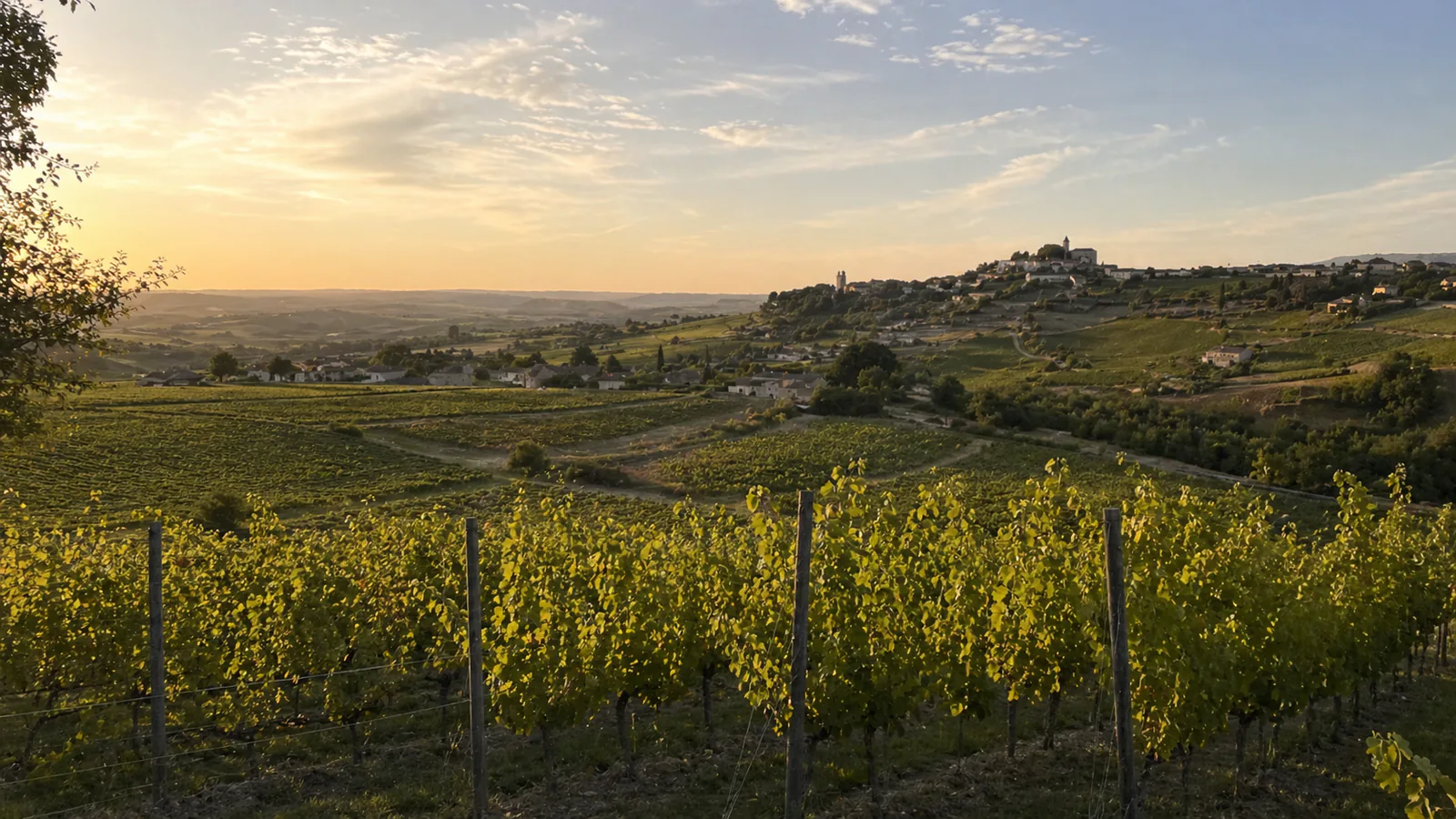
A plain-English tour of French wine. Bordeaux, Burgundy, Champagne, Rhone, Loire, Provence: what each region tastes like and how to pick a bottle.
Best Light Red Wines: 8 Easy-Drinking Bottles
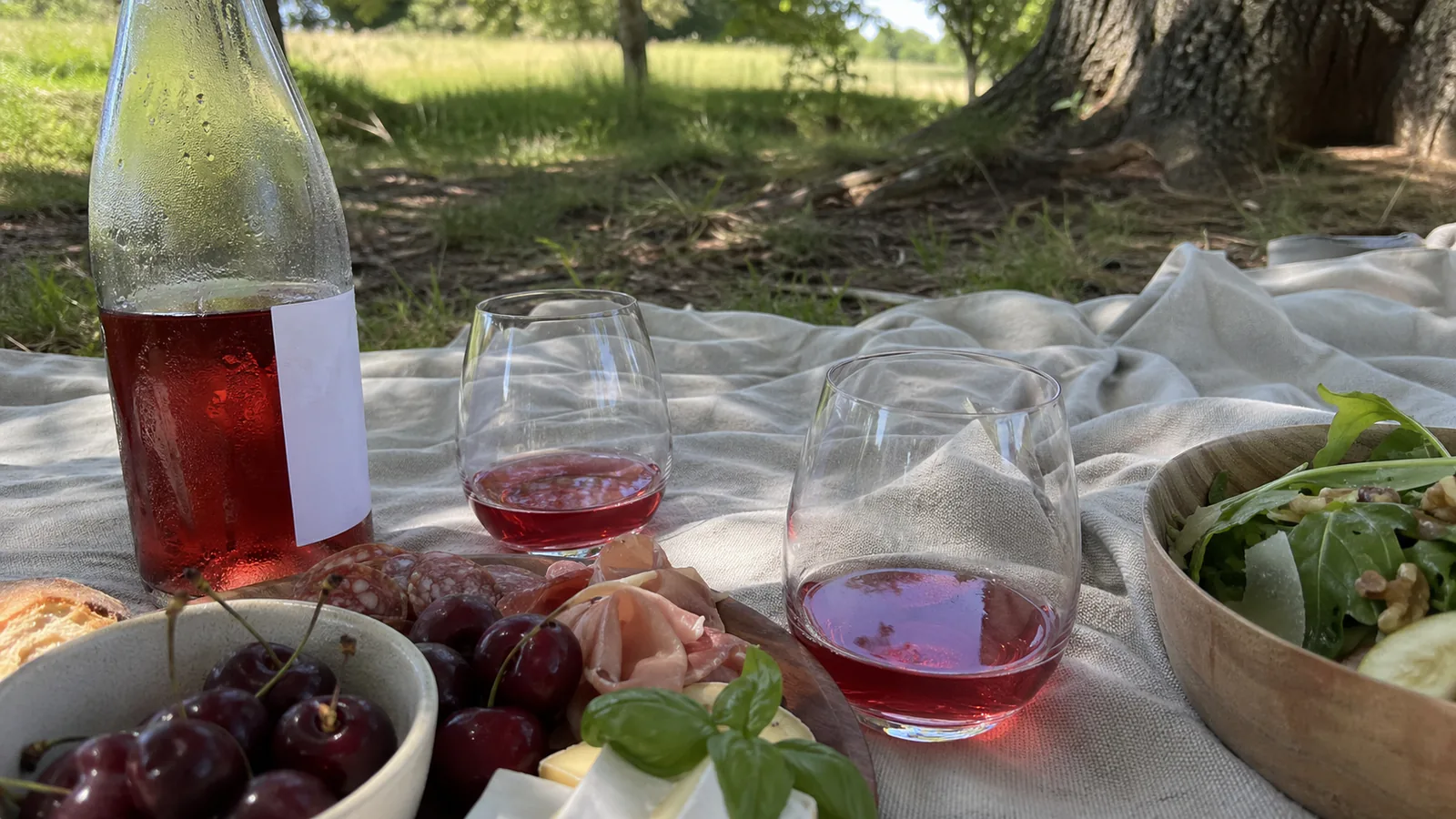
Eight light red wines under $30. Beaujolais, Pinot Noir, Frappato, Schiava, Mencia, and more, all chillable and food-friendly.
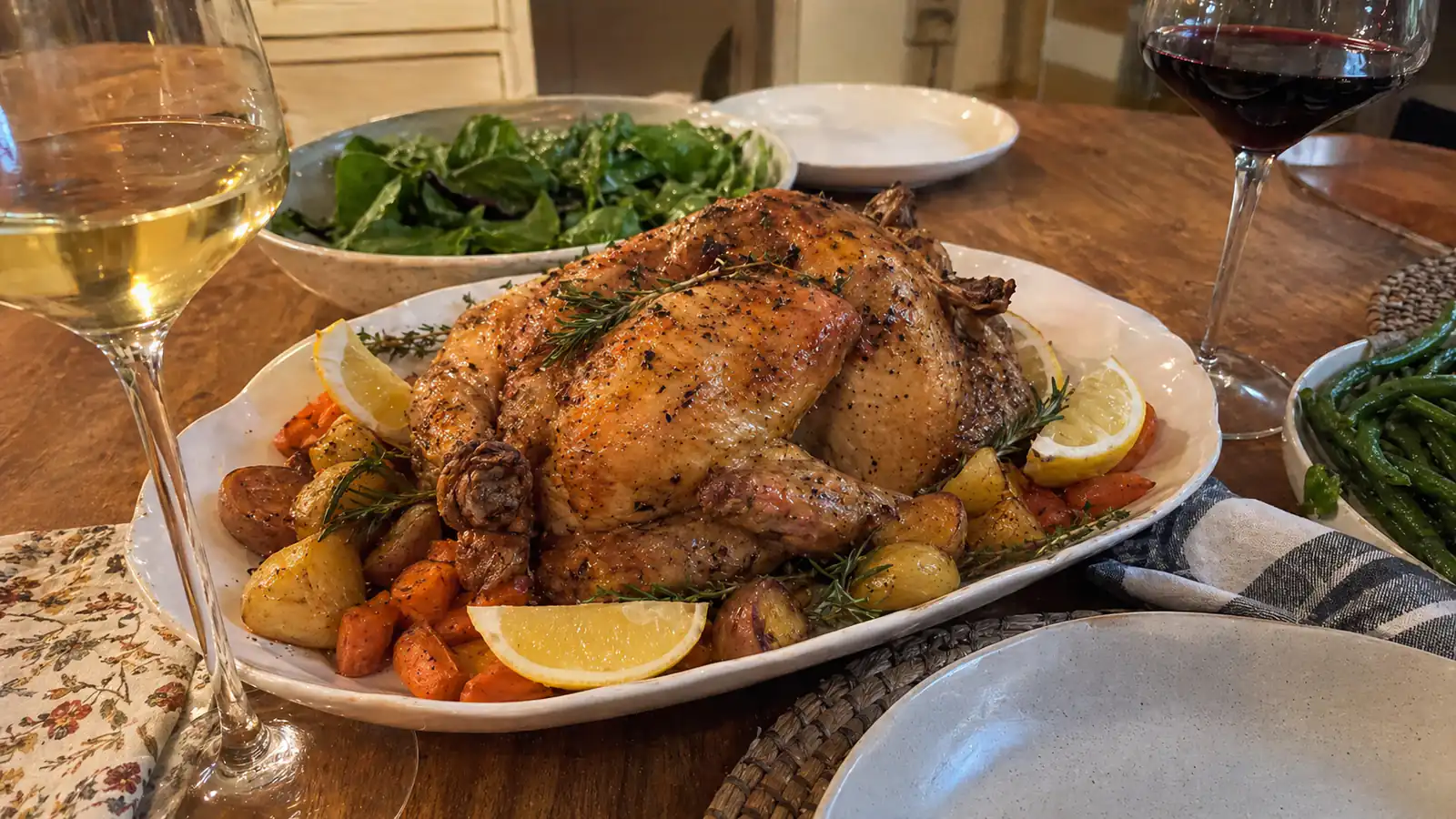
Thanksgiving Wine Pairing: What To Pour With Dinner
The best wines for Thanksgiving dinner, from turkey and Pinot Noir to cranberry sauce, stuffing, sweet potatoes, and pumpkin pie.