Claire Bennett
Wine Editor12 min read
Thanksgiving Wine Pairing: What To Pour With Dinner
The best wines for Thanksgiving dinner, from turkey and Pinot Noir to cranberry sauce, stuffing, sweet potatoes, and pumpkin pie.
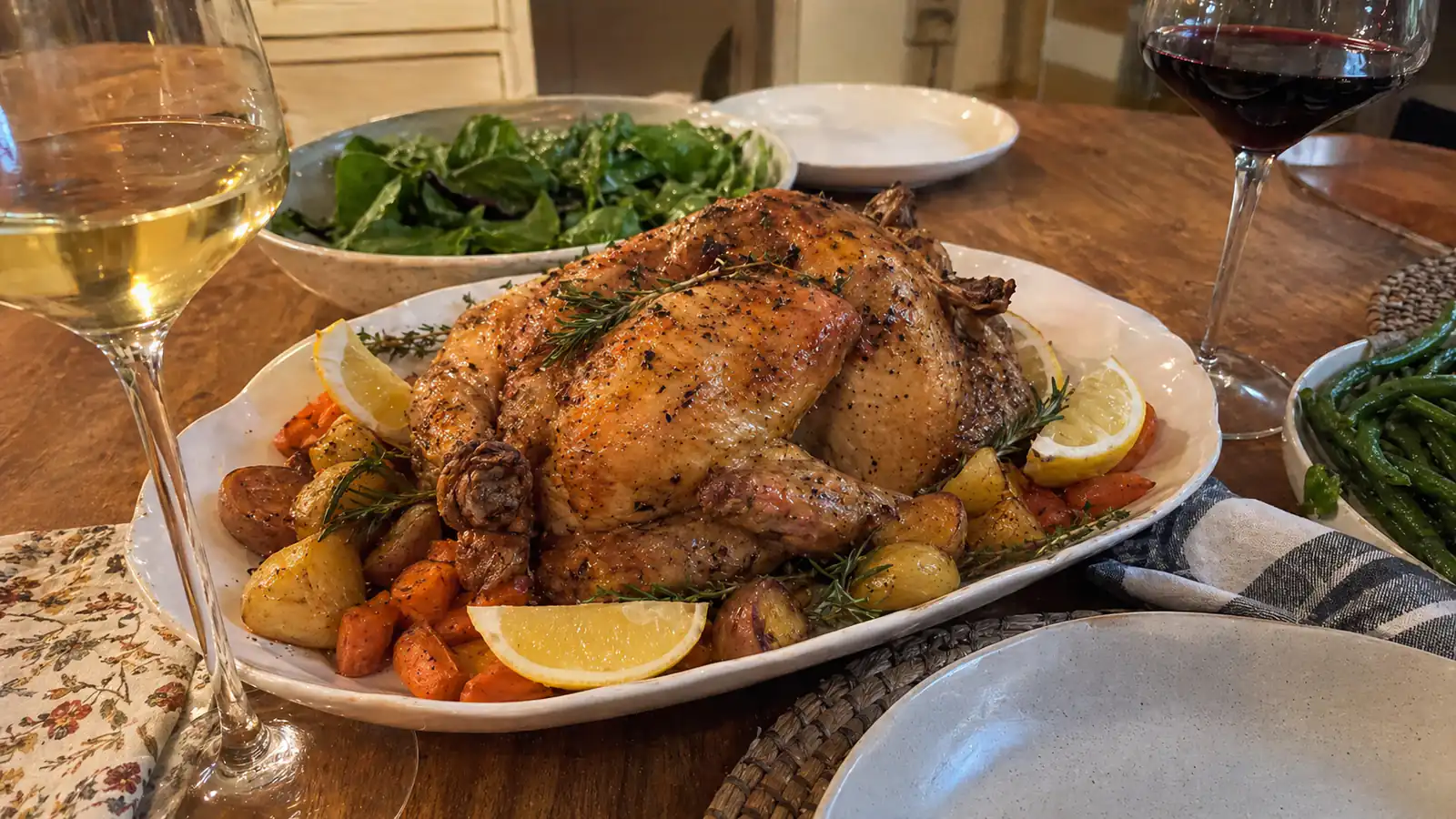
Thanksgiving is the dinner where the turkey gets all the credit and the wine choice quietly decides whether the meal feels easy or stressful. You have one bird, ten side dishes, half the family who only drinks red, and a pie waiting in the kitchen. One bottle was never going to handle all of that, which is why most people pick the wrong thing and then blame the gravy.
The good news is that a few sensible choices cover the whole table. You want bottles with bright acidity, gentle tannin, enough fruit for cranberry and yams, and enough body to keep up with stuffing. Get those three or four bottles right and the rest of the meal does its own work.
By the end of this page you’ll know:
- The two-bottle setup that keeps both red drinkers and white drinkers happy without opening half the rack
- Why most Thanksgiving tables go wrong with Cabernet Sauvignon, and the lighter red that fixes it in one pour
- The under-$25 sparkling wine move that makes the appetizer hour feel like the main event
- The cranberry sauce trick that decides whether your wine tastes fruity or weirdly metallic
- The pumpkin pie pairing that works better than dessert wine almost every time
- How many bottles to buy for a table of eight, twelve, or twenty without overshooting or running dry
What Is the Best Wine for Thanksgiving Dinner?
The best all-purpose Thanksgiving wine is Pinot Noir. It has low tannin, bright cherry and red berry fruit, and enough earthy depth for turkey, mushrooms, herbs, and stuffing. Oregon Pinot Noir is the classic American answer, with Burgundy and cooler California Pinot close behind. It gives the red wine drinkers something satisfying without bullying the bird.
For the white wine drinkers, choose a richer style with real acidity. Chardonnay, Chenin Blanc, white Burgundy, or a richer Pinot Gris all work because they have body for the meal and freshness for the sides. Skip the sharpest, leanest whites here: a wire-thin Sauvignon Blanc can taste mean beside cranberry and sweet potatoes.
Sparkling wine is the third bottle worth opening. Champagne, Cava, Cremant, or a brut English sparkling all earn their place during the appetizer round and into the meal itself. Bubbles reset the palate after every salty cracker, charcuterie board, and second helping.
If you only buy one bottle, make it Pinot Noir. If you buy two, add a richer white. If you buy three, add sparkling. Past three, you are choosing for the dessert course and the late-night cheese plate, which is the fun part.
| Wine | Food |
|---|---|
| Pinot Noir | Roast turkey, stuffing, mushroom sides, cranberry sauce |
| Chardonnay | Turkey, mashed potatoes, creamy sides, gravy |
| Beaujolais (Cru) | Turkey, ham, charcuterie, cranberry |
| Riesling (off-dry) | Spicy sides, glazed ham, sweet potato dishes |
| Sparkling wine | Appetizers, fried bites, the whole meal |
| Dry rose | Turkey, ham, salads, picnic-style sides |
| Zinfandel | Glazed ham, smoky stuffing, roasted vegetables |
What Wine Pairs Best With Roast Turkey?
Pinot Noir is the best wine with roast turkey. The bird is mild, slightly sweet, and roasts to a savory crust, which is the exact zone where Pinot shines. Oregon Pinot Noir gives you red cherry, cranberry, and a little forest floor, all of which complement the turkey instead of competing with it.
Burgundy works the same way at the top end, with more savory complexity and a steeper price. If you want a Burgundy without the markup, look at Bourgogne Rouge or village wines from the Cote Chalonnaise. Cooler California Pinot Noir from Sonoma Coast or Sta. Rita Hills is also reliable.
Chardonnay is the white wine answer. Roast turkey loves the same things Chardonnay loves: butter, herbs, pan drippings, golden skin, and roasted root vegetables. White Burgundy is the classic pour, but a balanced California or Australian Chardonnay does the job too. Keep oak in check so the wine tastes like seasoning rather than a vanilla candle.
For a juicier, friendlier red, Cru Beaujolais is hard to beat. Morgon, Fleurie, and Moulin-a-Vent give you Pinot-like elegance with riper Gamay fruit, and they often cost less. They also take a short chill, which is a small luxury when the kitchen is at 80 degrees from running the oven all afternoon.
What Wine Goes With Stuffing and Gravy?
Stuffing is the dish that decides how rich your wine needs to be. Bread stuffing with herbs, sausage, mushrooms, or chestnuts adds savory weight to the plate, which is why Pinot Noir, Chardonnay, and Cru Beaujolais all keep working. The wine needs body to match, plus acidity to keep the meal from feeling heavy.
Sausage stuffing pushes you toward riper red wine. Cru Beaujolais, Grenache, and softer Zinfandel handle pork fat and herbs well. If the sausage is spicy, a Cotes du Rhone or a fruity Zin gives you the warmth without the tannic grip that flattens turkey.
Cornbread stuffing leans sweeter and softer. Off-dry Riesling, Chenin Blanc, and dry rose all complement cornbread without making the bite taste cloying. For red drinkers, Pinot Noir and Beaujolais still work because their red fruit lifts the sweetness.
Gravy is mostly fat and salt, which is friendly territory for almost any balanced wine. The acidity in good Chardonnay and Pinot Noir makes gravy taste cleaner. A flabby, low-acid wine is the only real risk.
What Wine Pairs With Cranberry Sauce?
Cranberry sauce is the trickiest item on the table because it brings sweetness, sharp acidity, and a slightly tart edge to every bite. The wine has to taste fruity before it tastes serious, or the cranberry will make it taste flat and bitter.
Pinot Noir handles cranberry beautifully because it shares the same red fruit profile. The wine echoes the sauce, which makes both taste better. Cru Beaujolais does the same trick with juicier Gamay fruit.
Off-dry Riesling is the secret weapon for tables with very sweet cranberry sauce, especially the canned style with brown sugar or orange zest. The small amount of residual sugar in the wine matches the sauce, while the acidity keeps the bite clean. This is one of the few pairings where dry wine can taste a little sour.
Dry rose with real fruit also works. Provence rose can feel slightly thin against a sweet sauce, so look for Spanish rosado, Tavel, or a slightly darker rose from southern France or California. These have enough red fruit to keep up.
Avoid heavy, tannic reds with cranberry. Cabernet Sauvignon, young Syrah, and Barolo can taste metallic next to the sauce. The tannin and the cranberry’s acidity collide in a way that ruins both.
What Wine Goes With Sweet Potatoes and Mashed Potatoes?
Sweet potatoes are sweeter than people give them credit for, especially with maple, marshmallow, brown sugar, or pecan toppings. Off-dry Riesling is the most reliable pour because the wine’s sweetness matches the dish without making the wine taste like dessert. Gewurztraminer also works if the recipe leans toward ginger or warm spice.
For a red, choose Pinot Noir, Cru Beaujolais, or a fruity Zinfandel. These have enough red fruit to complement sweet glazes without picking a fight. Skip dry, austere reds here. They can make sweet potatoes taste cloying and the wine taste like cardboard.
Mashed potatoes are mostly butter and cream, which is a Chardonnay paradise. White Burgundy is the polished choice, while a balanced California or Australian Chardonnay covers the everyday version. Chenin Blanc is the smarter pick if you want lift, especially Vouvray or a good South African Chenin.
For a red drinker eating mostly potatoes and turkey, Pinot Noir is still the right answer. The light tannin, bright acidity, and red fruit keep the plate fresh. Add mushroom gravy and Pinot Noir gets even better.
What Wine Should I Pour With Pumpkin Pie?
Off-dry Riesling is the best wine with pumpkin pie. Pumpkin pie is more about cinnamon, nutmeg, ginger, and cream than pumpkin itself, and Riesling’s acidity, stone fruit, and gentle sweetness suit warm spice better than almost any dessert wine.
Late-harvest Riesling, demi-sec Vouvray, and Moscato d’Asti are also excellent. The rule is simple: the wine should be sweeter than the dessert. A bone-dry wine beside a sweet pie can taste sour and small.
Tawny Port is the more serious move. The nutty, caramelized fruit complements pumpkin spice and pecan pie at the same time, which is useful if your dessert table runs deep. Serve it slightly cool and pour small.
Sparkling wine works better than people expect with pie. Demi-sec Champagne, Moscato d’Asti, or a sparkling rose with real fruit all keep the plate lively. If you have leftover brut from dinner, save it for the cheese plate rather than the pie.
How Many Bottles Do I Need for a Thanksgiving Crowd?
Plan on roughly half a bottle of wine per adult guest across the meal. That covers an aperitif glass, two glasses with dinner, and a small pour with dessert. Heavy drinkers and long, slow meals need more, so round up rather than down.
A table of eight needs five to six bottles: one sparkling, two whites, two reds, and either a sweet wine or a second sparkling for dessert. A table of twelve wants eight to nine bottles split the same way. Twenty guests want around twelve, with the same balance scaled up.
The simplest split for a mixed crowd is one third sparkling, one third white wine, one third red wine. The sparkling does double duty as aperitif and palate cleaner. The white covers turkey, gravy, mashed potatoes, and creamy sides. The red covers turkey, stuffing, ham, and cranberry.
If guests are bringing wine, ask for a specific style rather than leaving it open. “Bring a Pinot Noir or a sparkling under $25” gets you something useful. “Bring whatever you like” gets you three bottles of Cabernet that no one asked for. For the December run-up, see the best wines for Christmas picks.
| Wine | Food |
|---|---|
| Sparkling wine | Appetizers and the first 30 minutes |
| Pinot Noir or Cru Beaujolais | Turkey, stuffing, cranberry, mushrooms |
| Chardonnay or Chenin Blanc | Turkey, gravy, mashed potatoes, creamy sides |
| Off-dry Riesling | Sweet potatoes, glazed ham, spicy sides, pie |
| Tawny Port or dessert wine | Pumpkin pie, pecan pie, cheese |
What Wines Should I Skip on Thanksgiving?
Big, tannic Cabernet Sauvignon is the most common Thanksgiving wine mistake. It can taste bitter against cranberry, dry against turkey, and overpowering next to most sides. Save it for steak the following weekend.
Heavy oaked Chardonnay can also stumble. The vanilla and butter notes get cloying when the table already has mashed potatoes, gravy, and a buttered roll on every plate. Choose a more restrained Chardonnay or pivot to Chenin Blanc.
Very tannic, young Syrah and Malbec face the same cranberry problem as Cabernet. They can work with smoked turkey or glazed ham, but not with the classic roast bird and sweet sides. If you love these grapes, look for older bottles that have softened.
Bone-dry sparkling wine struggles with pumpkin pie. Brut Champagne is brilliant during dinner and ruined by a slice of pie at the end. For dessert, choose demi-sec Champagne, Moscato d’Asti, or sparkling rose with fruit.
Frequently Asked Questions
What is the best wine for Thanksgiving?
Pinot Noir is the best all-purpose wine for Thanksgiving because it pairs well with turkey, stuffing, mushrooms, and cranberry sauce without heavy tannin. Oregon Pinot Noir is the classic choice, with Burgundy and cooler California Pinot close behind. For white wine drinkers, a balanced Chardonnay or Chenin Blanc covers the same plate from the other direction.
Should I serve red or white wine with turkey?
Both work, and the smart move is to pour both. Pinot Noir is the safest red because its low tannin and bright fruit suit roast turkey, stuffing, and gravy. Chardonnay is the safest white because its body matches butter, cream, and roasted skin. Cru Beaujolais and Chenin Blanc are excellent backup options.
How many bottles of wine per person at Thanksgiving?
Plan on roughly half a bottle of wine per adult guest across the whole meal. A table of eight wants five to six bottles split between sparkling, white, and red. Round up if guests stay long or drink steadily, and add a small bottle of dessert wine if pie is a serious event in your house.
What sparkling wine works for Thanksgiving dinner?
Brut Champagne, Cava, Cremant, and dry English sparkling all work for Thanksgiving. They have enough acidity for appetizers, fried bites, and even the main course. Cava and Cremant give you Champagne-style structure for less money, which makes them ideal when you need several bottles for a crowd.
What wine goes with pumpkin pie?
Off-dry or late-harvest Riesling is the best wine with pumpkin pie because the sweetness and acidity complement cinnamon, nutmeg, and ginger. Demi-sec Vouvray, Moscato d’Asti, Tawny Port, and demi-sec Champagne also pair beautifully. Skip dry red wine because cinnamon and brown sugar will make it taste bitter.
What wine should I bring as a Thanksgiving guest?
Bring a Cru Beaujolais, an Oregon Pinot Noir, or a brut sparkling wine. All three are flexible enough to work with whatever the host is cooking, and they sit comfortably in the under $25 to $40 zone where dinner-party wine should live. If the host has a sweet table, an off-dry Riesling is a thoughtful bonus bottle.
Thanksgiving rewards the cook who keeps the wine list short and well chosen. Open one sparkling, one Pinot Noir, and one Chardonnay, and you have covered the bird, the sides, and most of the people at the table. For the quick version across chicken, steak, seafood, pasta, pizza, and cheese, use the full wine pairing chart.
Keep Reading
Pinot Noir: Taste, Best Regions, Food Pairings
What Pinot Noir tastes like, where the best bottles come from, what to pair with it, and how much to spend on the heartbreak grape.
Gamay Wine: The Chillable Red From Beaujolais
Gamay is the light, juicy red behind Beaujolais. Here's how it tastes, where the best bottles come from, and what to eat with it.
Best Wines for Christmas: 17 Bottles for Every Table
The best wines for Christmas dinner, gifts, and toasts, across sparkling, white, red, rosé, and Port. 17 crowd-safe picks that cover every palate.