Claire Bennett
Wine Editor25 min read
Best Light Red Wines: 8 Easy-Drinking Bottles
Eight light red wines under $30. Beaujolais, Pinot Noir, Frappato, Schiava, Mencia, and more, all chillable and food-friendly.
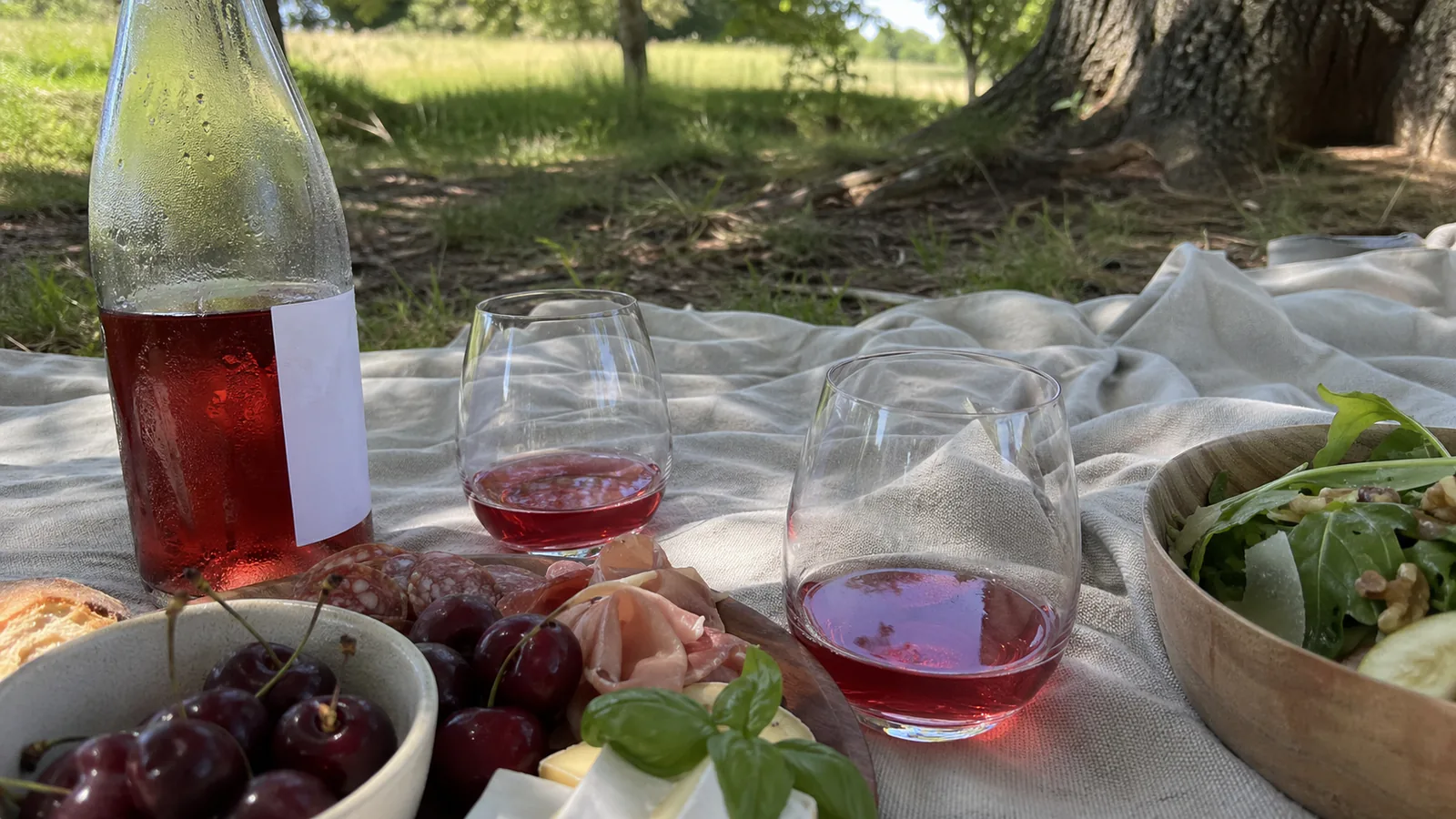
Most red wine on the supermarket shelf is built like a freight train. Heavy, tannic, oaky, exhausting on a Tuesday. Light red is the entire other half of the category, and once you find your way in, the rest of the year opens up: chicken dinners, summer afternoons, friends who say “I don’t really like red.” Light reds answer all of it.
Light just means lower in body, alcohol, and tannin. Think Beaujolais, Pinot Noir, Schiava, Frappato. They drink cool, they pair with food that big reds bulldoze, and they’re impossible to take too seriously. They’re also where some of the best value in wine hides, because nobody’s bidding up the price of a juicy Beaujolais Cru.
Below are eight bottles that prove the point. Each is under $30, each is a genuinely light-bodied red wine (or light-medium), and each will work with the kind of food most people actually eat on a weeknight. The list spans Burgundy, Beaujolais, Sicily, Alto Adige, Sonoma Coast country and Santa Barbara County wine country, plus Galicia, so any palate finds something familiar and something new.
Our Top 3 Picks

Louis Latour Bourgogne Pinot Noir 2022
Burgundy, France · Pinot Noir

Domaine Gilles Coperet Fleurie Les Roches 2023
Beaujolais, France · Gamay
93 pts Wine Enthusiast

Prices vary by state. Click through for your current price.
1. Louis Latour Bourgogne Pinot Noir 2022
If you’re going to drink one Pinot Noir this year, drink one from Burgundy. That’s the home of Pinot Noir, and Louis Latour is the easiest way in: a long-established producer, a regional Bourgogne bottling that costs a quarter of what village-level Burgundy does, and 4.5 stars from 54 buyers who keep coming back. It tastes like classic Burgundy in miniature: bright red cherry, a little forest floor, soft tannin, no oak overload.
This is a textbook light red. Body is feather-weight, alcohol sits around 12.5%, the finish is clean and refreshing. Chill it for 15 minutes before pouring and serve with roast chicken, salmon with a herb sauce, or a mushroom risotto. It also makes a fantastic pre-dinner glass on its own.
2. Domaine Gilles Coperet Fleurie Les Roches 2023
Beaujolais is the king of light reds. Made from Gamay grapes in the granite hills just south of Burgundy, it gives you all the cherry and red-fruit charm of Pinot Noir at half the price. Fleurie is one of the ten Beaujolais “crus” (the top tier), and Domaine Gilles Coperet’s Les Roches picked up 93 from Wine Enthusiast, 93 from Wilfred Wong, and 92 from James Suckling. That’s three serious scores under $20.
Expect crunchy red cherry, a touch of violet, almost no tannin, and the kind of bright, juicy finish that begs for charcuterie or grilled salmon. Drink it cool, pour generously, and don’t overthink it. This is the bottle to keep two of in the fridge year-round.
3. Alois Lageder Schiava 2024
Schiava is the lightest mainstream red wine you can buy. It comes from Alto Adige, a German-speaking corner of northern Italy where the wines are pale, low-alcohol, and built for lunchtime. Alois Lageder is the region’s most respected biodynamic producer, and his Schiava 2024 is the perfect introduction: under $20, almost rosé-pale in the glass, and a complete reset on what red wine can be.
You’ll get crisp red apple, watermelon rind, a tiny brush of almond, and basically no tannin at all. Drink it cold (yes, really, straight from the fridge), and pair it with pizza, cured ham, or any antipasto plate. If you’ve never been told you can chill red wine, this is the bottle that proves you should.
4. Donnafugata Bell’Assai Vittoria 2023
Frappato is Sicily’s secret light red. Bright, perfumed, distinctly Mediterranean, and almost unknown outside Italy. Donnafugata’s Bell’Assai is named for the local farmers’ phrase meaning “very good indeed,” which sums up the wine. James Suckling scored it 91, Vinous 90.
You’ll taste fresh strawberry, dried herbs, a hit of orange peel, and the kind of bright red-fruit lift you usually only find in good Pinot Noir. Body is light-medium, tannin is soft. Pair it with grilled vegetables, a Mediterranean salad, swordfish, or a tomato-based pasta. Serve cool, around 14 to 15°C.
5. Lincourt Rancho Santa Rosa Pinot Noir 2023
If Burgundy isn’t your thing and you want a lighter California Pinot, this is it. Lincourt sits in Sta. Rita Hills, the cool-climate Santa Barbara sub-region that produces some of the most elegant Pinots in the country. James Suckling scored this 94, which is collector-grade praise on a $22 bottle.
Expect red cherry, raspberry, a little baking spice, and the soft, supple texture that makes good Pinot so addictive. Body is light-medium and the finish lasts. Pair it with duck breast, grilled salmon, or a mushroom and herb risotto. Drink it slightly cool. This is a Pinot you can pour with confidence at any dinner.
6. Guimaro Camino Real Mencia 2022
Mencia is the Spanish light-medium red that wine geeks won’t shut up about, and Guimaro is one of the most exciting producers working in Galicia’s Ribeira Sacra. The Camino Real picked up 95 from James Suckling, 95 from Vinous, and 93 from Robert Parker. That’s a stack of scores collector reds aspire to, on a wine you can buy now for under $30.
Expect dark cherry, slate, violets, a little smoke, and the wet-stone minerality that the steep slate slopes of Ribeira Sacra impart. Body sits between light and medium, tannin is fine and silky. Pair it with grilled tuna, lamb chops, mushroom dishes, or any roasted bird. This is a bottle that will quietly become your new favourite Spanish red.
7. Domaine Gilles Coperet Morgon 2023
A second Beaujolais, but don’t skip this one. Morgon is the most structured and age-worthy of the ten Beaujolais Crus, the one that Burgundy fans buy when they want light red with a backbone. Domaine Gilles Coperet’s 2023 picked up 92 from both Wilfred Wong and James Suckling.
Where the Fleurie above is bright and floral, this Morgon goes deeper: black cherry, a savoury edge, more tannin, more substance. Still light by full-bodied Cab standards, but it can stand up to a steak frites or a roast pork loin. Decant for 15 minutes if you have time. This is the Beaujolais that converts skeptics.
8. Folk Machine Charbono 2023
Wildcard pick. Charbono (also called Bonarda in Argentina) was once the second most-planted red grape in California, then almost vanished. A handful of producers are bringing it back, and Folk Machine’s Charbono is one of the best examples for under $25. It has the lightness of a good Beaujolais but the savoury, almost rustic edge of an Italian country wine.
Expect dark plum, blueberry, a little earth, soft tannin, and the kind of low-key, low-alcohol drinkability that makes you pour a second glass. Pair with grilled mushrooms, lentils, sausage and peppers, or a charcuterie plate. If you want a light red nobody else will have heard of, this is your bottle.
More Worth Knowing
A quick note on grape varieties
The eight wines on this list cover Pinot Noir, Gamay, Schiava, Frappato, Mencia, and Charbono (Bonarda). If you want to explore further, other light to light-medium varietal options include Trousseau (Jura, France), Poulsard (also Jura), Zweigelt (Austria), Pineau d’Aunis (Loire), and Cinsault (Languedoc and South Africa). All of these grape varieties drink lighter than typical Cabernet or Syrah and thrive in a cooler climate. Try one each season as your interest grows; the best red for any given evening usually isn’t the boldest one in the rack.
Light reds vs the heavyweights
If you want to feel the contrast between light-bodied reds and the boldest reds out there, drink one from this list back-to-back with a Nebbiolo (Barolo or Barbaresco from Piedmont wine country, both made by producers like Aldo Conterno or his neighbours), a Châteauneuf-du-Pape AOC from the southern Rhône (often a Grenache-led blend), or a big California Cabernet. The difference in body, tannin, and alcohol is immediate. Italian heavyweights like Barolo and Barbaresco can clock 14% alcohol with chest-thumping tannin; Sancerre is a white wine that runs cooler than most light reds. Light reds sit in their own lane on the spectrum: more vibrant, more crisp on the palate, more food-friendly, less brooding.
The same comparison works with white wine. A Loire Valley wine like Sancerre (wine made from Sauvignon Blanc on flint and limestone soils, often listed in databases simply as “Loire Valley (wine)” or “Sancerre (wine)”), a Chardonnay from Burgundy wine country or California, even a Rosé all share territory with light reds in terms of body and acid. The tactical move is to keep one light red, one crisp white, and one rosé in the fridge. That’s most weeknight situations covered without thinking. The acids in wine these styles share are what make them so food-friendly: an acidic backbone keeps every glass refreshing.
How body, oak, and tannin combine in tasting descriptors
Wine tasting descriptors get easier when you separate three axes. Body is weight on the palate. Oak (wine aged in oak, sometimes catalogued as just “oak (wine)” in tasting databases, picks up vanilla, toast, or coconut depending on the barrel). Tannin is grip on the gums. A light red can be unoaked and silky, like the Schiava or Frappato. It can be lightly oaked and savory, like a good Burgundy. It can be slightly tannic but still light, like a young Mencia or Morgon. Mix and match those three axes and you can describe almost any wine.
Light, medium, full: what’s the difference?
Body in wine is roughly the same as body in milk: skim is “light,” whole is “medium,” cream is “full.” It’s a function of alcohol, glycerol, and the density of dissolved compounds. Light reds typically sit at 11-12.5% alcohol, drink without weight, and don’t coat your mouth. Medium reds (Chianti, Tempranillo, lighter Cabernet) sit at 13-13.5% with more grip and a more savory profile. The boldest, most full-bodied reds (Cabernet Sauvignon, Shiraz/Syrah, Malbec) push 14-15%+ and feel heavy on the palate. Bolder doesn’t mean better; it just means a different style choice.
Tannin is a separate thing, but it tends to track with body: lighter wines are usually softer and silkier, while fuller, more tannic wines are grippier. The grape variety matters more than the region, so a light-region Cabernet is still going to feel bigger than a Pinot from anywhere. Wines tend to follow their grape’s structural blueprint.
Dry wines, fruit-forward wines, and what to expect
Almost every wine on this list is bone-dry. “Light” doesn’t mean sweet. Light reds run from elegant and nuanced (Burgundy Pinot, Mencia) to fruit forward and juicy (Beaujolais, Frappato), with most landing somewhere fruity, vibrant, and balanced. The Donnafugata Frappato shows fresh strawberry, the Coperet Fleurie shows a burst of cherry and violet, the Schiava is silky and almost weightless, the Mencia is earthy with a velvety texture and slate edge. Different shapes of “light,” all dry. The fruit and floral aromas you’ll find in good light red wine sit on the nose without any sweet-wine residue.
Why you should chill light reds
Light reds taste twice as good when they’re served slightly chilled, around 12-15°C (55-59°F). At full room temperature, the fruit goes flat and any alcohol heat dominates. Twenty minutes in the fridge before serving is the difference between “fine” and “addictive.” This is especially true for Beaujolais, Schiava, and Frappato. Any sommelier worth listening to will tell you the same: temperature is the number one variable a home pourer can change to make a light red taste better.
The traditional rule of “white cold, red room temperature” was written when room temperature meant a stone-walled European cellar at 16°C, not a 22°C American kitchen. Adjust accordingly.
Light red food pairings
The whole point of light reds is they pair with food big reds can’t. Roast chicken, grilled salmon, tuna steak, pork loin, mushroom dishes, lentils, vegetable-forward pasta, fatty cuts that need acid to cut through, cheese boards, and any antipasto plate all work. If you’re new to red wine and want a friendlier on-ramp, our best red wines for beginners round-up overlaps heavily with this list. They’re also the only red wines that play nicely with spicy food. A chilled Beaujolais with Thai green curry or Korean fried chicken is a quietly genius move.
Two more pairings worth trying: light reds like Pinot Noir or Frappato with seared tuna (the wine echoes the meaty texture of the fish), and a slightly chilled Mencia with mushroom risotto or grilled vegetables (the wine’s earthy, savory edge meets the umami of the dish). For cheese, soft cow’s-milk cheeses and aged hard cheeses both work; very strong blues are too much.
How light red is actually made
Most light reds are made by giving the grapes minimal skin contact during fermentation in winemaking, which keeps the colour pale and the tannin low. Yeast in winemaking does its usual job (turning grape sugar into alcohol), but the winemakers stop pulling phenolic content in wine from the skins early. Some producers add a touch of carbonic maceration (the Beaujolais signature, where whole grapes ferment intracellularly) for extra bright, juicy fruit. Almost no light red sees heavy new oak (wine made under that style would lose its lightness), so most are aged in steel, concrete, or neutral old barrels. The result is wine that tastes like fresh fruit, not toast. The aroma of wine in this category leans floral and red-fruited rather than cocoa and vanilla.
Vineyard work matters too. Light reds usually come from a cooler climate site where grapes ripen slowly and keep their natural acidity. Burgundy, Beaujolais, Alto Adige, Galicia’s Ribeira Sacra, the Sonoma Coast, and parts of Sicily all share this trait. Terroir (the soil, slope, and weather of a specific vineyard) shapes the final glass: granite gives Beaujolais its lift, slate gives Mencia its mineral edge, limestone gives Burgundy Pinot its clarity. When a producer talks about ripe fruit balanced by cool-climate acid, this is what they mean.
Find Your Wine Match
Find Your Light Red
Three quick questions. One matched bottle.
What are you pairing it with?
When are you drinking it?
How light do you want it?
Let's find the right bottle for you.
Tell us a bit about the occasion and what you're after. We'll match you to one of the bottles on this page.
Photo by Skyler Ewing on PexelsReading your answers…
How We Chose These Wines
Frequently Asked Questions
What counts as a light red wine?
A light red wine is one that’s lower in alcohol (usually 11-12.5%), lower in tannin, and lighter in body than a typical Cabernet Sauvignon or Shiraz. The classic light reds are Pinot Noir, Gamay (Beaujolais), Schiava, Frappato, and lighter expressions of Mencia and Cinsault. They drink quickly, pair with food big reds bulldoze, and benefit from being chilled.
What’s the lightest red wine you can buy?
Schiava (also called Vernatsch) from Italy’s Alto Adige is the lightest mainstream red. It pours pale, almost rosé-coloured, with no real tannin and around 11.5% alcohol. After Schiava, in roughly increasing order: Beaujolais Nouveau, Trousseau, Frappato, basic Beaujolais, Bourgogne-level Pinot Noir, Lambrusco Secco, then everything else.
Should I chill light red wine?
Yes. Almost every light red tastes better at 12-15°C (55-59°F), which is cooler than typical room temperature. Twenty minutes in the fridge is the right amount. The fruit lifts, the alcohol heat fades, and the wine drinks fresher. This applies especially to Beaujolais, Schiava, Frappato, and basic Pinot Noir.
What food pairs with light red wine?
Light reds shine with food that overpowers heavier reds: roast chicken, grilled salmon, tuna steak, mushroom dishes, lentils, antipasto, charcuterie, pizza, and tomato-based pasta. They’re also the only red wines that hold up to mildly spicy food. A chilled Beaujolais with Thai or Korean food is a regular move at any clued-in dinner table.
Light red vs medium red vs full red: how do I tell?
Look at the alcohol content on the label of the bottle (the alcoholic beverage classification rules require it). Light reds sit at 11-12.5%, medium reds at 13-13.5%, full reds at 14% and up. Then check the colour in the glass: light reds are translucent (you can read text through the wine), full reds are opaque. Last, taste: light reds feel like water on the palate with fruit lifted on top, full reds coat the mouth and linger. The sweetness of wine isn’t the variable here (almost all of these are dry); body, tannin, and alcohol are.
Are light reds versatile enough as an everyday red?
Yes. Light reds are arguably the most versatile category of red wine. They pair with more food types than full-bodied reds, they don’t require decanting, they don’t fatigue your palate over a long meal, and they suit a wider temperature range (cellar to fridge-cold). Wines like the Beaujolais and Schiava on this list are go-to choices for almost any midweek dinner or casual lunch. The wine fault risk is lower too: thin oak, minimal extraction, and modest alcohol mean fewer ways for the bottle to turn out unbalanced.
What’s a “rouge” wine?
“Rouge” is just the French word for red. You’ll see it on French labels (Bourgogne Rouge = red Burgundy, Côtes du Rhône Rouge = red Rhône), and it’s not a separate category. The Louis Latour Bourgogne Pinot Noir on this list is technically a Bourgogne Rouge. Worth knowing if you ever shop a French wine shop and want to skip the white section. Compared with cocoa-driven big reds, a “rouge” from Burgundy or Beaujolais leans toward red fruit and floral aromas; the cocoa bean and dark chocolate notes belong to the more full-bodied end of the spectrum.
Keep Reading
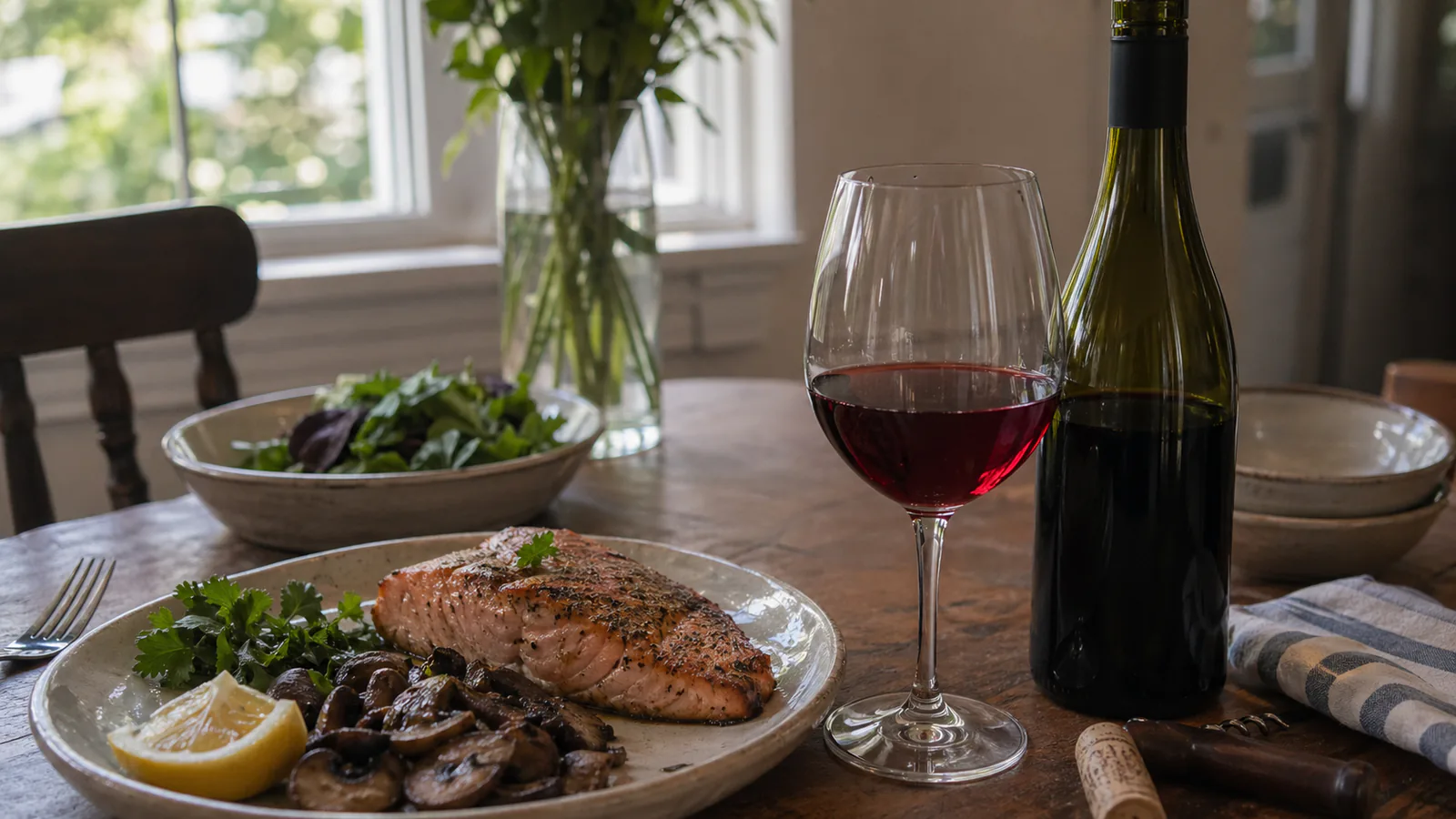
Pinot Noir: Taste, Best Regions, Food Pairings
What Pinot Noir tastes like, where the best bottles come from, what to pair with it, and how much to spend on the heartbreak grape.
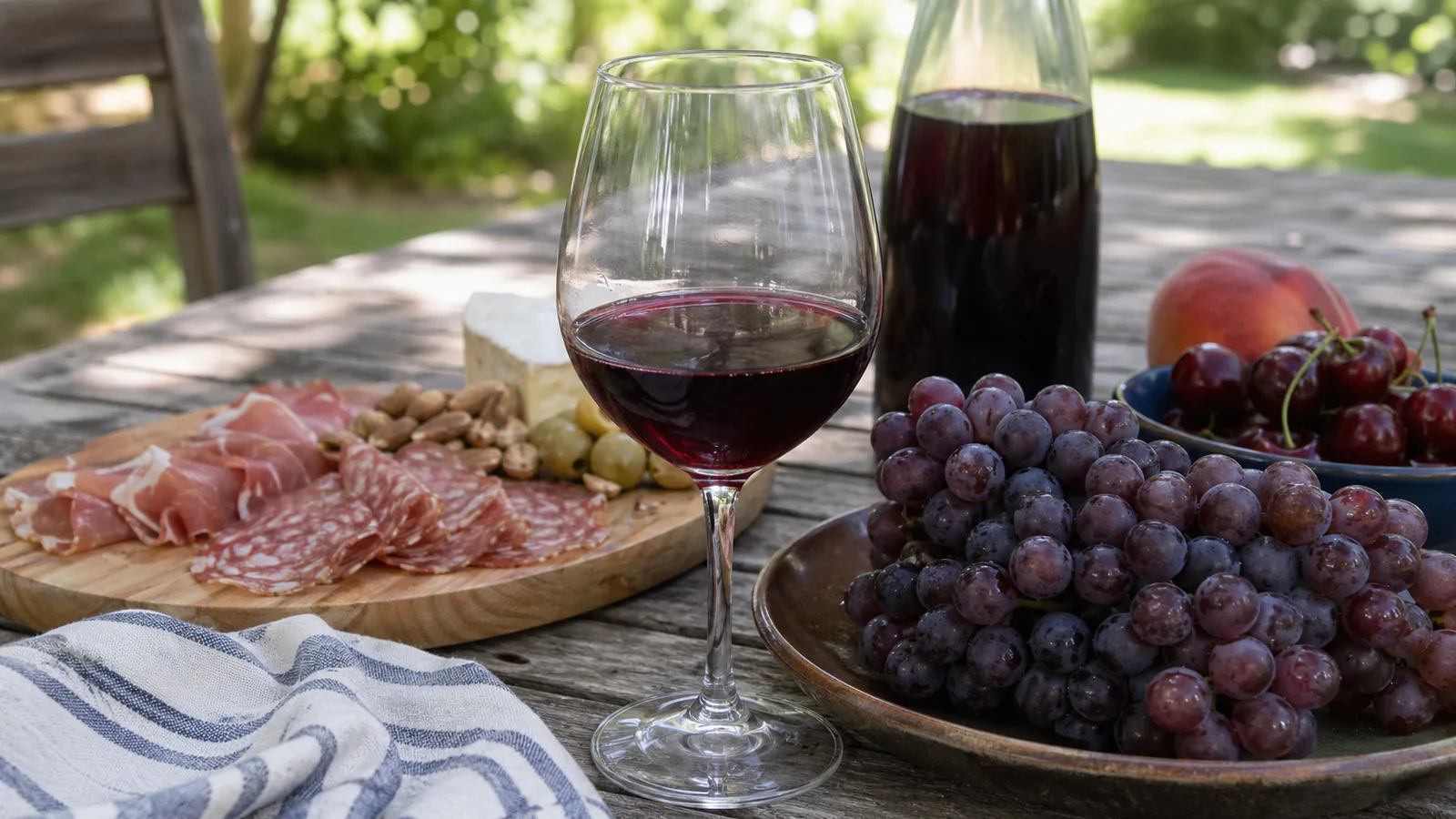
Gamay Wine: The Chillable Red From Beaujolais
Gamay is the light, juicy red behind Beaujolais. Here's how it tastes, where the best bottles come from, and what to eat with it.
Best Red Wine for Beginners: 8 Bottles to Start With
Eight beginner-friendly red wines that taste good from the first sip. Low-tannin, fruit-forward, food-friendly picks under $25.