
Claire Bennett
Wine Editor12 min read
Wine Storage Tips: Keep Bottles From Going Bad
The four enemies of wine, the ideal temperature, and where to store bottles at home when you don't have a cellar (with the kitchen warning).
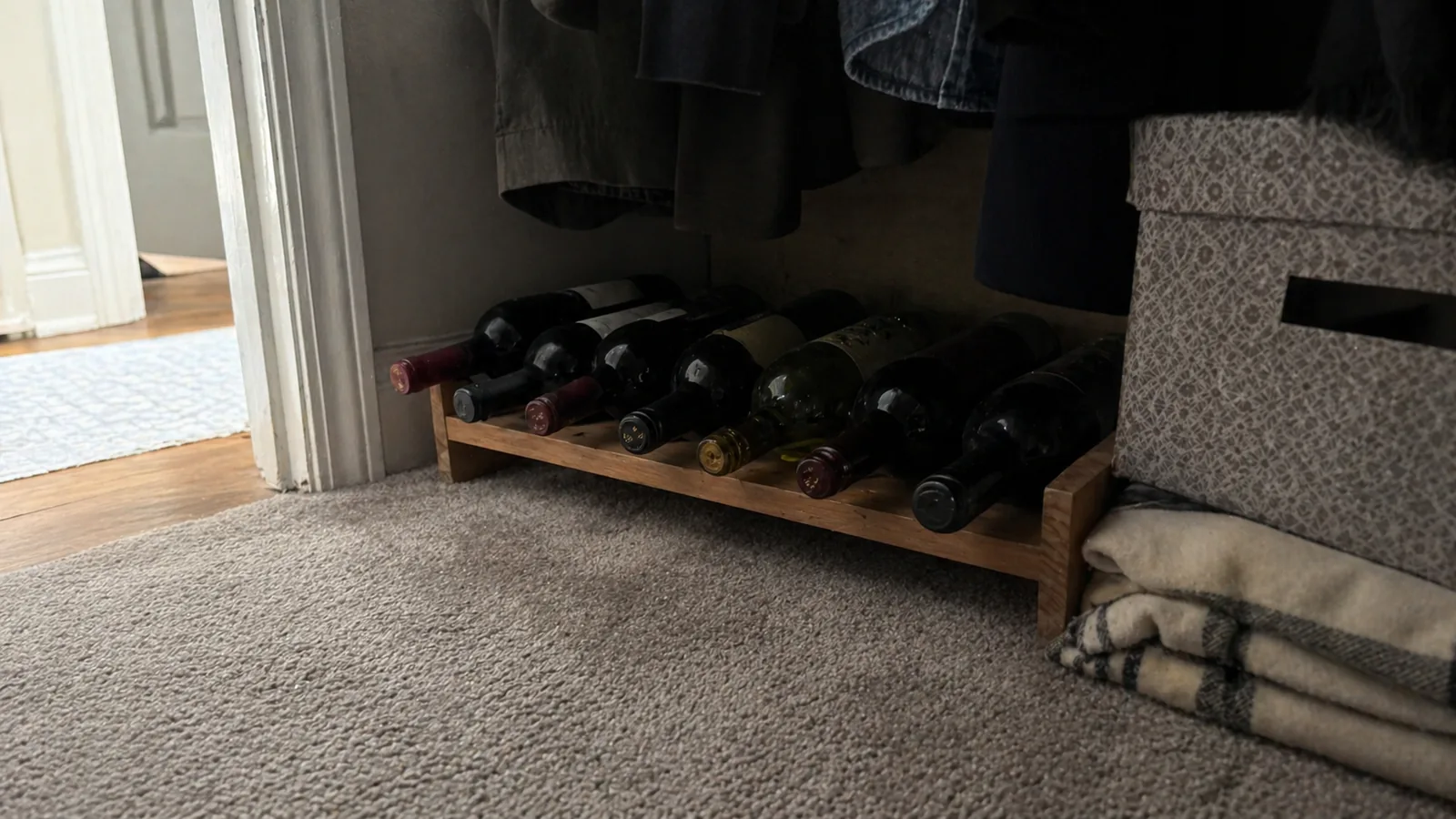
You bought a bottle on holiday. You meant to drink it within a month. Three years later you find it on top of the kitchen cupboard, behind the cookbook you don’t read, and you wonder if it’s still any good. You open it. It tastes flat, dull, brown at the edges. The wine is done.
That’s heat damage. Most home wine deaths aren’t dramatic. They’re slow. The kitchen cupboard sat at 26°C every afternoon for three summers, and the wine slowly cooked. This page walks through the four things that age wine badly, the temperature you actually want, and where to store bottles when you don’t have a cellar (which is most people).
By the end of this page you’ll know:
- The four enemies that destroy wine, ranked by how much damage they actually do
- Why the kitchen is the worst room in your house for storing wine, even if it feels cool to you
- The exact temperature range that keeps wine alive, and the much narrower band that lets it improve
- Why a steady 22°C is gentler on wine than a fridge that swings between 4°C and 14°C
- The under-bed and back-of-closet trick that beats a wine fridge for the first dozen bottles you own
- How long different wines last unopened, from supermarket Sauvignon Blanc to a $40 Bordeaux
What Are the Four Enemies of Wine?
In order of damage:
1. Heat. The single biggest killer. Wine ages chemically faster as temperature rises. At 30°C, a wine ages roughly twice as fast as it would at 15°C. A bottle that should peak in five years can taste old at two if it’s been sitting somewhere warm. Above 27°C for any sustained period, wine starts to bake. The fruit flavours fade, the alcohol stands forward, and you get a dull, stewed taste called “maderised” wine.
2. Temperature swings. A bottle held at a steady 22°C is doing better than a bottle that swings from 12°C overnight to 24°C in the afternoon. The expansion and contraction pushes wine past the cork seal and lets oxygen in. Stable temperature, even if slightly warmer than ideal, is gentler than an unstable cool spot.
3. Light, especially UV. Sunlight breaks down compounds in wine and causes “lightstrike,” a fault that makes the wine smell like wet cardboard or boiled cabbage. Whites and rosés are most vulnerable. Reds last longer because their darker bottles filter more light. Even artificial light over months will damage wine. Dark storage matters.
4. Vibration and humidity swings. These two are the smallest factors but worth knowing. Constant vibration (next to the washing machine, near a busy speaker, on top of the fridge) disturbs sediment and may speed up unwanted reactions. Humidity that’s too low (under 50%) dries out corks. Humidity that’s too high (over 80%) grows mould on labels. Most homes sit in the safe range without trying.
If you can only solve for one, solve for heat. Get the wine somewhere consistently cool and you’ve already done 70% of the work.
What’s the Ideal Temperature for Wine Storage?
The sweet spot is 12°C to 14°C (53°F to 57°F). This is the temperature traditional cellars naturally hold underground, and it’s where wine ages slowly and gracefully. Within this range, reds and whites both keep well, and the chemistry that lets a wine improve over years happens at the right pace.
The acceptable range is wider: anywhere from 10°C to 18°C (50°F to 64°F) is fine for most wines for at least a few years. The wine will age slightly faster at the warmer end and slightly slower at the cooler end, but neither extreme will damage a bottle in normal home conditions.
The danger zone starts around 20°C and gets serious at 24°C and above. A bottle at 24°C ages twice as fast as one at 14°C. A bottle at 30°C ages three to four times as fast and starts to taste cooked within months.
Why fluctuations matter more than people think: a cellar that holds 16°C steady is better for wine than a closet that swings between 12°C and 22°C every day. Each swing forces wine in and out of the cork seal a fraction. Over a year, that’s a lot of small breaches. Steady is the goal, and steady plus cool is the dream.
Why Should I Store Wine on Its Side?
Cork-sealed bottles only. The reason is moisture. Cork stays alive and seals well when it’s wet. When the bottle stands upright, the cork dries out from the inside, shrinks, and lets oxygen in. Six months upright with a cork seal is usually fine. Three years upright and most cork-sealed wines will be oxidised.
Lying the bottle on its side keeps wine in contact with the cork. The cork stays plump, the seal holds, the wine is protected.
Screwcap bottles don’t have this problem. The seal doesn’t depend on moisture. You can store screwcaps upright forever. This matters because most everyday whites and many Australian and New Zealand reds are now screwcap, which means they’re easier to store. If your wine rack is full and you have a screwcap bottle in your hand, stand it on the kitchen bench if you want. The wine is fine.
Sparkling wine is a special case. The internal pressure keeps the cork plump regardless of orientation. Most champagne houses now recommend storing sparkling upright if you’ll drink it within a year, and sideways if you’re keeping it longer.
Why Is the Kitchen the Worst Room for Wine?
Three reasons stack up. First, the kitchen swings the most. Cooking pushes the temperature up by 5°C to 8°C, sometimes for hours. The room cools again overnight. Repeat daily for years and the wine cycles harder than wine in any other room.
Second, the cupboards above appliances run hot. Above the oven, above the fridge, above the dishwasher, above the toaster. All of them release heat upward, and the cupboards trap it. A cupboard above an oven can sit at 35°C for an hour after dinner.
Third, kitchens have light, vibration, and smells. Sunlight through windows. Vibration from appliances. Strong food smells that can seep through cork over time, especially garlic, onion, and curry. Wine doesn’t belong here.
The exception: a wine fridge in the kitchen. A purpose-built unit with insulated walls and stable cooling is fine anywhere, including the kitchen. The kitchen problem is the room conditions, not the location itself.
If your only option is a kitchen cupboard, pick one as far from heat sources as possible. Low cupboards are cooler than high ones because heat rises. A cupboard on a north-facing kitchen wall (away from the sun if you’re in the southern hemisphere, the south-facing wall if you’re north of the equator) holds steadier than one in direct afternoon light.
Where Should I Store Wine If I Don’t Have a Cellar?
Most people don’t have a cellar. Most people don’t need one. Here’s a ranked list of home spots that work well enough for everyday bottles.
1. Under a bed in an interior room. The floor of an interior bedroom (no exterior wall) is one of the most stable temperatures in a typical home. It’s dark. It’s quiet. It’s away from kitchens and laundries. A flat shoebox-style wine rack under the bed holds 12 bottles easily. This is the best free option in most homes.
2. The back of a wardrobe. Same logic. Interior wardrobes hold steady at 18°C to 22°C in most climates. Dark, quiet, no vibration. Lay the bottles on their sides on a low shelf at the back. Avoid the top shelf because heat rises and avoid the front because it gets brighter when the wardrobe opens.
3. A hallway cupboard or under-stair storage. Same temperature stability if it’s in the middle of the house. Even better if there’s a hard floor that stays cool. The downside: hallway cupboards often hold linen or vacuum cleaners, which means more vibration and more opening.
4. A garage, only if your climate is mild. Garages are tempting because they feel cool when you walk in. They’re actually one of the worst options in hot climates. Summers push uninsulated garages to 35°C to 40°C, and winters drop them to near freezing. Only use a garage if it’s insulated and stays between 10°C and 22°C year-round.
5. A basement, if you have one. Basements are usually 4°C to 6°C cooler than the rest of the house and hold steadier. The closer to the floor, the cooler. The closer to a heating vent, the warmer.
What to avoid: kitchens, laundries, near hot water systems, sunrooms, attics, anywhere with afternoon sun, and any spot that hits direct radiator or heater warmth in winter.
Do I Need a Wine Fridge?
Depends on what you’re storing and how long.
If you buy bottles for the next month, no. A cool dark closet is enough. If you collect bottles meant to age (most reds over $30, anything cellar-worthy), a wine fridge is a good investment once you have 24 or more bottles. Our best wine fridge round-up has the units worth considering at each bottle count.
Wine fridges differ from kitchen fridges in two ways: they hold a warmer, steadier temperature (typically 12°C to 14°C, vs 4°C in a food fridge), and they vibrate less. A standard kitchen fridge is too cold for long-term storage and the compressor cycles on and off, which dries out corks faster than a stable cellar would.
Dual-zone wine fridges hold reds at one temperature and whites at another. Useful if you have both types ready to drink. Single-zone fridges set to around 13°C work for both for storage purposes (you’ll want to chill whites further before serving anyway).
A regular kitchen fridge is fine for short-term storage of opened or about-to-drink wine. Anything over a few weeks and you’re better off in a closet. The cold dries the cork. The vibration adds up. The food smells get in.
How Long Will Different Wines Keep Unopened?
Rough rules. Real-world results depend on storage.
- Everyday whites under $20 (Sauvignon Blanc, Pinot Grigio, unoaked Chardonnay): drink within 1 to 2 years of vintage. They’re built fresh.
- Everyday reds under $20 (Merlot, Shiraz, Tempranillo, supermarket Cabernet): 2 to 5 years is the comfortable range. Most won’t improve much past that.
- Mid-tier reds, $20 to $40: 5 to 10 years for most. Some Cabernets, Riojas, and Barolos at this price will keep longer if stored right.
- Premium reds, $40 plus, structured varieties (Bordeaux, Barolo, age-worthy Napa Cabernet, premium Australian Shiraz): 10 to 25 years for the right vintage in the right conditions.
- Sparkling wine, non-vintage: 2 to 4 years. Vintage champagne, 10 to 20 years.
- Dessert wines (Sauternes, late-harvest Riesling, Port): many last decades. Some genuinely improve for 30 years or more.
The thing to remember: most wine made today is meant to be drunk young. Less than 10% of all wine produced will improve with age. A $15 Pinot Grigio at five years old is not a treasure. It’s a tired bottle. Drink the everyday stuff in its first year or two and you’ll always be drinking better wine than someone “saving” it.
If you’re not sure whether a bottle is age-worthy, the rule of thumb: the wine has to have enough acid and tannin (in reds) to hold up, and enough fruit to outlast the slow fading. Most under-$20 wines don’t.
How Should I Store an Open Bottle?
Different rules apply once the cork is out.
Push the cork back in, or use a wine stopper, and put the bottle in the fridge. Reds too. The fridge slows oxidation, and you can warm the red back up when you pour the next glass. Most opened wines hold up for 3 to 5 days in the fridge with a stopper, longer for fortified wines, shorter for delicate whites. (Style-by-style timing lives in how long does wine last after opening.)
Sparkling wine survives the night with a sparkling-specific stopper. The pressure stoppers grip the rim and hold the carbonation for 1 to 2 days. Without a stopper, sparkling goes flat within hours.
If you regularly have leftovers, a vacuum pump (cheap, around $15) extends an opened bottle’s life by a couple of days. Inert gas systems (more expensive, around $25) extend it by a week or more. For most home drinkers, a stopper plus the fridge is enough.
Decanted wine that you didn’t finish should still go back into the original bottle, not stay in the decanter. The smaller the airspace, the slower the oxidation. Pour what’s left back, cork it, and refrigerate.
Frequently Asked Questions
Can I store wine in the fridge long-term?
Not ideally. A standard kitchen fridge runs at around 4°C, which is colder than wine wants for storage. Over months, the cold dries out the cork and the constant compressor cycling vibrates the bottle. Short-term (days to weeks) is fine. Long-term, find a closet at 18°C instead.
Does old wine always taste better?
No. Most wine peaks within 1 to 5 years of release and goes downhill from there. Only structured wines built to age (premium Bordeaux, Barolo, vintage champagne, certain Burgundies) genuinely improve over decades. The rest just get tired.
What if I’m storing wine in a hot climate?
Get a wine fridge. In a climate where summer indoor temperatures stay above 24°C even in the cool spots, no closet will save your wine. A 12-bottle wine fridge starts around $150 and pays for itself the first time it saves a $40 bottle from baking.
Is a wine rack on the kitchen counter okay?
For bottles you’ll drink within a month, fine. Anything longer and you’re cooking the wine slowly. Move the keepers somewhere darker and cooler.
How do I know if a bottle has gone bad before I open it?
Check for signs of heat damage: a cork pushed up past the rim of the bottle, wine seeped into the foil capsule, or a fill level much lower than other bottles of the same age. Any of these and the wine is probably oxidised or cooked.
Should I worry about humidity?
Only if it’s extreme. Below 30% humidity, corks may dry over years. Above 80%, labels can grow mould. Most homes sit between 40% and 60%, which is fine. If you’re using a wine fridge, most have humidity control built in.
The whole game is keeping things cool, dark, and stable. Get those three right and your wine will outlast you. If you’re still kitting out your set-up, our best wine rack round-up covers the racks worth owning. Or read how to taste wine so the bottles you’ve stored well taste as good as they should.
Keep Reading
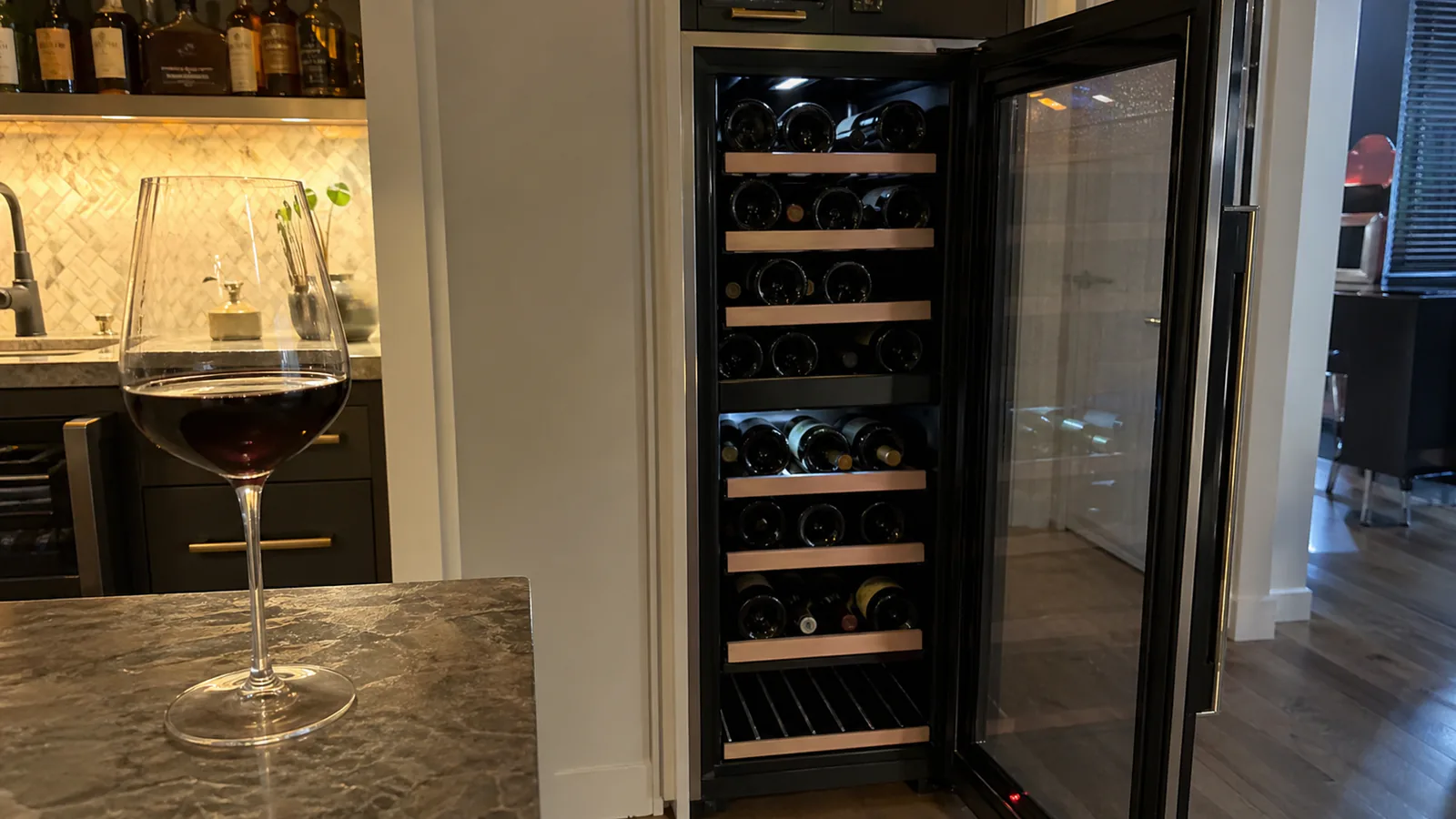
Best Wine Fridge: 5 Picks for Every Budget and Space
Five wine fridges ranked by use case: countertop, dual zone, and freestanding. Find the right wine cooler for your collection and budget.
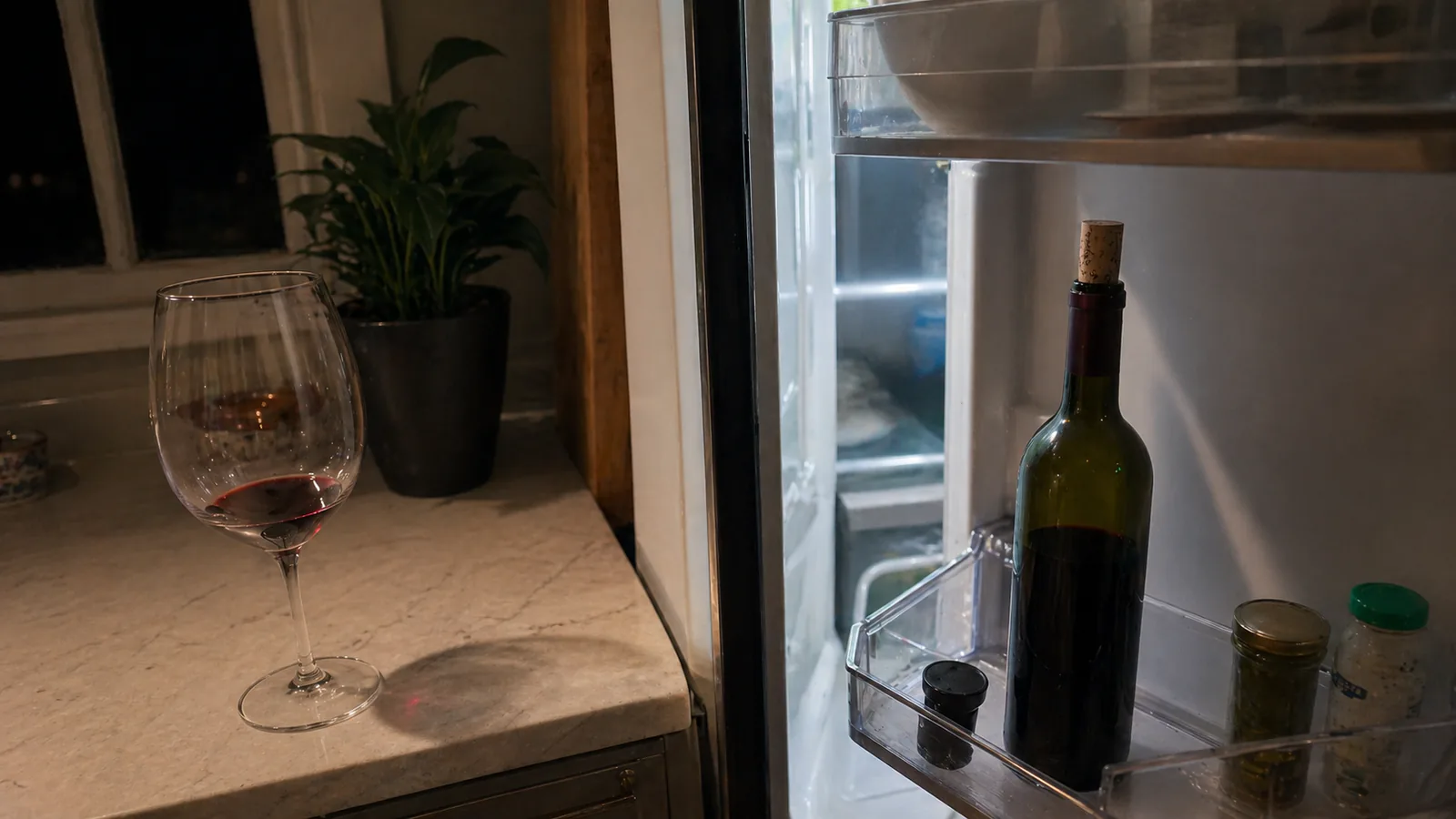
How Long Does Wine Last After Opening?
Exactly how long opened wine lasts: 3-5 days for still wine, 1-2 for sparkling, weeks for fortified, plus the tools and tricks that buy you more time.
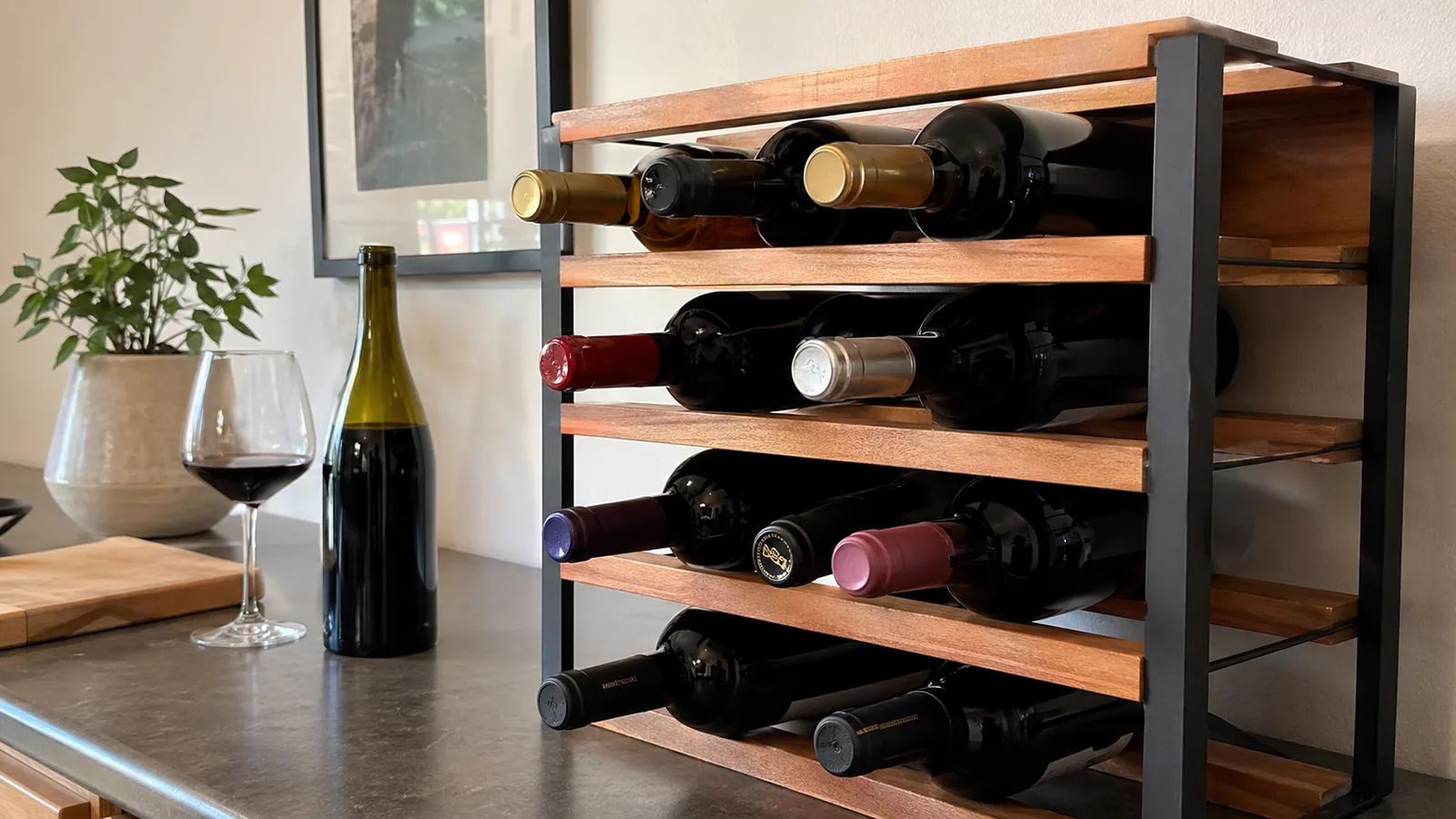
Best Wine Rack: 5 Picks for Every Space and Style
Five wine racks ranked by use case: countertop, stackable, honeycomb metal, and display. Find the right rack for your bottles and space.