Claire Bennett
Wine Editor10 min read
How Long Does Wine Last After Opening?
Exactly how long opened wine lasts: 3-5 days for still wine, 1-2 for sparkling, weeks for fortified, plus the tools and tricks that buy you more time.
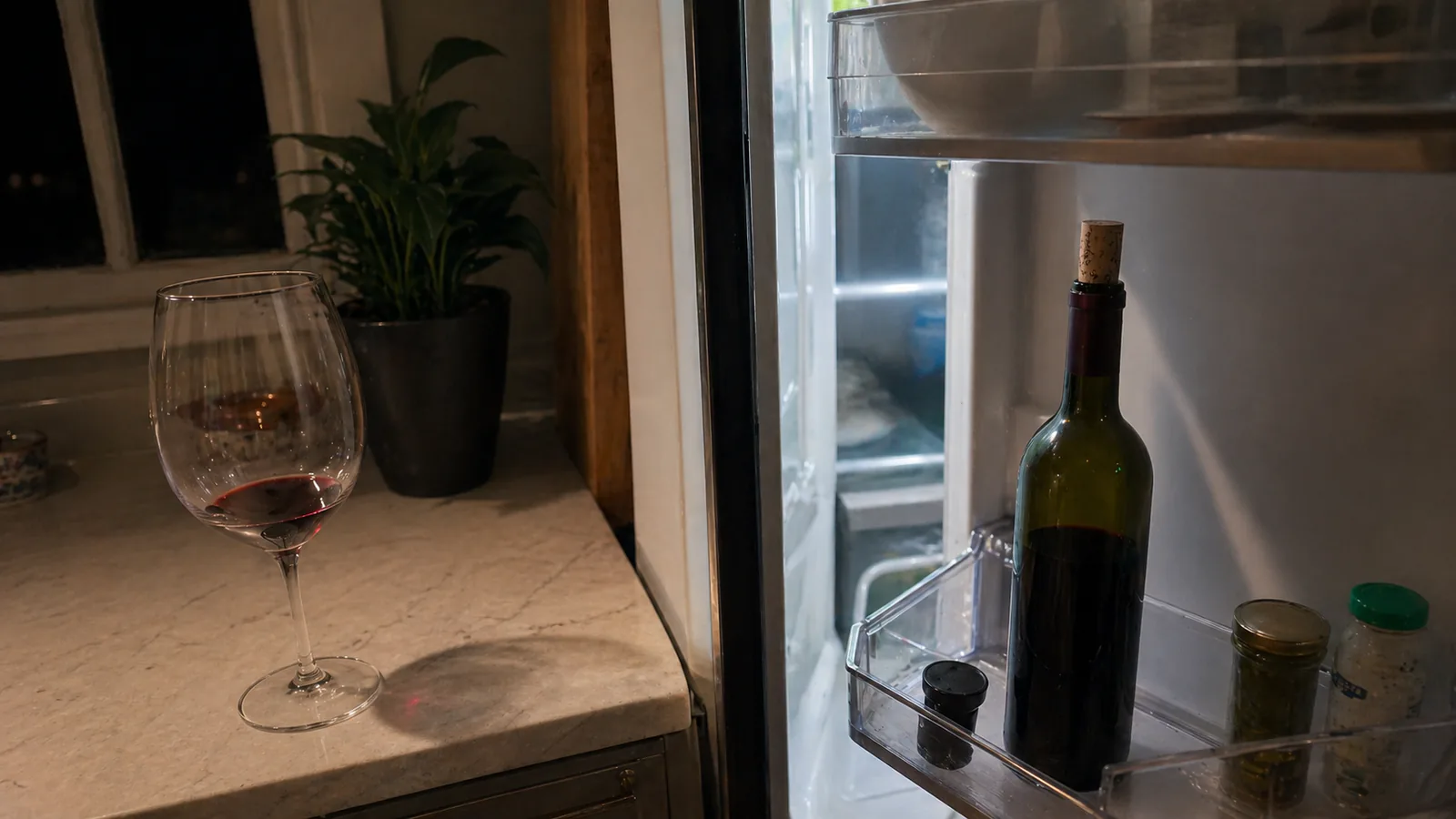
You opened a great bottle on Tuesday, drank two glasses, popped the cork back in, and now it’s Sunday. The cork comes out and you sniff. Is it still good? Is it dead? Is “dead” even the right word? Most of the advice online is panicky and contradictory: half the internet says wine lasts 24 hours, the other half says a week. Neither is fully right. Here’s what actually happens to wine after you open it, how long you’ve genuinely got, and the cheap tricks that double or triple your window.
By the end of this page you’ll know:
- The simple day-count for every wine style, including the one that lasts six weeks
- What’s actually happening to opened wine (it’s not “going off,” it’s oxidising, and that’s a different problem)
- The exact smell that tells you a wine has tipped past drinkable
- Why an opened bottle of Champagne is dying faster than your phone battery
- The $30 gadget that keeps a bottle perfect for a month, and the $10 one that buys you a week
- The fridge trick that works on red wine even though no one talks about it
How long does wine actually last after opening?
The honest answer depends on the style. Here’s the real lifespan for each, assuming you re-cork (or screw the cap back on) and put the bottle somewhere cool.
Sparkling wine: 1 to 2 days. The bubbles start escaping the moment you pop the cork. A proper Champagne stopper buys you a second day, but you’re racing the clock. By day three, the wine is flat and tired.
Light, crisp whites and rosé: 3 to 5 days. Sauvignon Blanc, Pinot Grigio, dry rosé, unoaked Chardonnay. Re-cork and refrigerate. The high acidity and low oak make these surprisingly resilient. A four-day-old Sauv Blanc can still taste sharp and useful.
Full-bodied whites: 3 to 5 days. Oaked Chardonnay, white Rioja, Viognier. Similar window to crisp whites, though the oak and texture start to flatten faster. Day three is the comfort zone.
Light reds: 3 to 5 days. Pinot Noir, Beaujolais, Grenache. Fewer tannins and lower extract means oxidation hits faster than you’d expect. Refrigerate them. Yes, even reds.
Full-bodied reds: 3 to 6 days. Cabernet Sauvignon, Shiraz, Malbec, Bordeaux blends. The high tannin and oak act as natural preservatives. A big red on day five is often still good. By day seven you’ll know.
Fortified wines: weeks. Tawny Port lasts 4 to 6 weeks open. Vintage Port lasts about a week (treat it like a big red). Sherry varies wildly: a Fino lasts a week, an Amontillado or Oloroso holds for a month or two. Madeira is essentially indestructible: opened bottles last a year or more.
Sweet dessert wines: 2 to 3 weeks. The high sugar and acid keep these stable far longer than dry whites of the same alcohol level.
What actually happens to wine after you open it?
The wine isn’t “spoiling” in the way milk spoils. There are no bacteria multiplying. What’s happening is oxidation, the same chemical reaction that turns a sliced apple brown.
The moment you pull the cork, oxygen rushes in. Compounds in the wine (especially the polyphenols that give red wine its colour and structure, and the aromatic esters that smell like fruit and flowers) react with that oxygen and change. The bright, lifted aromas fade. The fresh fruit turns into stewed, dried fruit. The colour shifts: reds go from purple to brick, whites go from pale gold to deep amber.
A small amount of oxidation can be a good thing. Most wines actually taste better an hour after opening than they do at first pour, because some of the sulphites and harsher notes blow off. This is why decanters exist. The problem is when oxidation runs unchecked for days. By that point, the wine has lost the parts that made it interesting and started picking up the parts that don’t taste good.
A second, slower process called acetification can also kick in. Tiny amounts of acetic acid bacteria (the same kind that makes vinegar) are present in every wine. With enough oxygen and time, they convert alcohol into acetic acid. This is why a forgotten bottle on the counter eventually smells like vinegar. Refrigerating the wine slows both oxidation and acetification dramatically.
What does oxidised wine taste like?
Once you know the flavour, you’ll spot it instantly. Oxidised wine tastes and smells like:
- Bruised apple. The classic tell, especially in whites. The fresh, crisp apple becomes the limp, browning slice you left out at lunch.
- Sherry-like nuttiness. Walnut, hazelnut, sometimes burnt caramel. This is fine in actual Sherry (it’s the style). In a Sauvignon Blanc, it’s a problem.
- Flat or hollow finish. The wine tastes like the structure has collapsed. You take a sip and it just… ends.
- Vinegar or nail polish. This is full acetification. The wine has tipped past oxidised into spoiled. Pour it out.
- Cooked fruit. Stewed berries, prune, raisin notes where there should be fresh fruit. Common in oxidised reds.
The smell test is faster than the taste test. Pour a small amount into a glass, swirl, and sniff. If you get clean fruit and the same character you remembered when you opened it, the wine is fine. If you get bruised apple, sherry nuttiness, or that telltale vinegar prickle, the wine is past it.
How can you tell if an opened wine has gone bad?
You don’t need a thermometer or a refractometer. Three checks tell you everything.
Smell. A healthy wine smells like wine. Fruit, oak, earth, whatever it had the day you opened it. A dead wine smells flat, cooked, or sharp. The first sniff is usually decisive.
Look. Pour into a clear glass and tilt against a white surface. Whites that have shifted to deep amber or gold are oxidised. Reds that have lost their purple core and turned brick-orange at the edges are tired (though some reds are naturally that colour with age, so this is a softer signal).
Taste. A small sip confirms it. If the wine still tastes like itself, drink it. If the fruit has gone, the structure feels hollow, or there’s a vinegar twang on the finish, pour it out.
If you’re on the fence, cook with it. A wine that’s tired for sipping is often still fine for braising, deglazing, or finishing a sauce. The heat and reduction concentrate what’s left and burn off the off-notes.
What tools help wine last longer once it’s opened?
The gadget aisle is full of expensive nonsense, but a few things genuinely work.
Coravin ($200 to $300). The serious tool. A thin needle pierces the cork, you pour through it, and inert argon gas takes the place of the wine you removed. The cork reseals itself when you pull the needle out. A Coraved bottle can last a month or more without measurable oxidation. Worth it if you open expensive bottles you can’t finish in a sitting. Our best wine preservation system round-up compares the units worth owning at each price tier.
Vacuum pumps ($10 to $20). A rubber stopper plus a hand pump that sucks air out of the bottle. Buys you an extra 1 to 3 days on still wines. They don’t create a true vacuum, but every bit of oxygen you pull out matters. Cheap, easy, no real downside.
Inert gas spray ($10 to $15). A can of food-grade argon or nitrogen. A two-second spray into the bottle before re-corking forms a heavier-than-air blanket over the wine, blocking oxygen contact. Great for rare bottles you don’t want to risk pulling a cork through repeatedly.
Champagne stoppers ($5 to $15). A pressure-locking stopper for sparkling wine. Buys you 1 to 2 extra days of fizz. Not optional if you ever leave bubbles overnight. The best wine stopper round-up has the picks worth keeping in the drawer.
Half-bottles. The simplest trick: pour your remaining wine into a clean 375ml bottle until it’s full to the top, then re-cork. Less air contact equals less oxidation. A bottle filled to the neck holds for noticeably longer than a half-empty 750ml.
Why does sparkling wine fail so fast?
Champagne and Prosecco are the most fragile wines on your rack once they’re open. Two reasons.
The bubbles are running for the door. The CO2 dissolved in the wine is what gives you the fizz. The moment you pop the cork, that gas starts escaping into the air. A loose foil cap or a regular cork won’t hold the pressure. Within 24 to 48 hours, you’ve lost most of the carbonation, and a flat sparkling wine is sad.
Sparkling wines are usually fresher and lower in tannin. Even still, they don’t have much built-in protection against oxidation. The fresh apple and citrus notes that make Champagne so good fade quickly once oxygen gets in.
A proper Champagne stopper (the metal kind with hinged side clips) is the difference between a bottle that’s flat by tomorrow morning and a bottle that’s still good for a glass two days later. The classic kitchen-myth fix (a teaspoon dropped into the neck of the bottle) doesn’t work, no matter how many times you’ve heard it.
Do fortified wines really last for weeks?
Yes, and it’s not magic. Two reasons fortified wines like Port, Sherry, and Madeira hold so long.
High alcohol. Most fortified wines sit between 15 and 22% ABV. That’s enough alcohol to suppress most of the spoilage reactions that bring down a regular table wine. The wine is essentially preserving itself.
Many were already oxidised on purpose. Tawny Port and Oloroso Sherry were aged for years in barrels that allowed slow oxygen exposure. The wine has already gone through controlled oxidation as part of its style. A bit more on the kitchen counter doesn’t change the character, because the character already includes those nutty, dried-fruit notes.
Madeira is the extreme case. It was historically made by being heated and shipped through tropical climates, deliberately cooked and oxidised until it became basically immune to further damage. An opened bottle of Madeira keeps for a year or more. You can buy a bottle, drink it across two summers of gravy and trifle, and it’ll still be fine.
Vintage Port is the exception in the fortified family. It’s bottled young and meant to be drunk soon after opening (within a week, ideally), because it hasn’t been pre-oxidised the way Tawny has.
Can you cook with wine that’s gone past its prime?
If a wine has gone tired but not full vinegar, cooking is where it earns its second life. The heat drives off most of the dull, oxidised aromas, and the reduction concentrates whatever fruit and acidity is left.
Use a tired red for braising beef, lamb, or short ribs. The long cook time turns flat fruit into deep savoury richness. Use a tired white for pan sauces, risotto, or steaming mussels. The acid stays useful even when the aromatics fade.
The one rule: if it smells like vinegar, pour it out. Cooking won’t hide acetification. The acidity becomes harsh and the dish takes on a sharp, off-balance edge.
Frequently Asked Questions
Does wine go bad if it’s not refrigerated after opening?
Faster, yes. An opened bottle left on the kitchen counter can be tired in 24 to 36 hours. The same bottle in the fridge gives you 3 to 5 days. Heat speeds up every oxidation reaction in the wine, so a warm kitchen is the worst place for an opened bottle.
Can you drink wine that’s been open for a week?
Probably not, unless it’s a fortified or a very tannic red that you’ve kept refrigerated and well-corked. Most still wines are tired by day six or seven. Smell first. If it smells flat or sherried, cook with it instead. If it smells like vinegar, pour it out.
Does putting a spoon in Champagne keep it fizzy?
No. The myth has been tested countless times and the spoon does nothing measurable. A proper hinged Champagne stopper is the only thing that meaningfully slows CO2 loss. The spoon trick is folklore.
Can you re-cork wine with the original cork?
Yes, and you should. Push the cork back in dry-side first (the dry end goes in, the wine-stained end stays out, so you don’t introduce extra residue). It won’t seal as tightly as the original factory seal, but it cuts oxygen contact significantly compared to leaving the bottle open.
Why does my wine taste different the next day, even though it’s not bad?
That’s normal mild oxidation. A wine on day two often tastes softer, rounder, and less aromatic than it did at first pour. Some wines (especially big reds) actually improve. Others (especially fresh whites and aromatic varieties) lose what made them special. Both outcomes are part of the same process, just expressed differently across styles.
The next time you open a bottle, you’ll know exactly what you’ve got and how long you’ve got it for. If you want to push that window even further, our wine storage tips cover the temperature and light rules that protect every bottle, opened or not.
Keep Reading
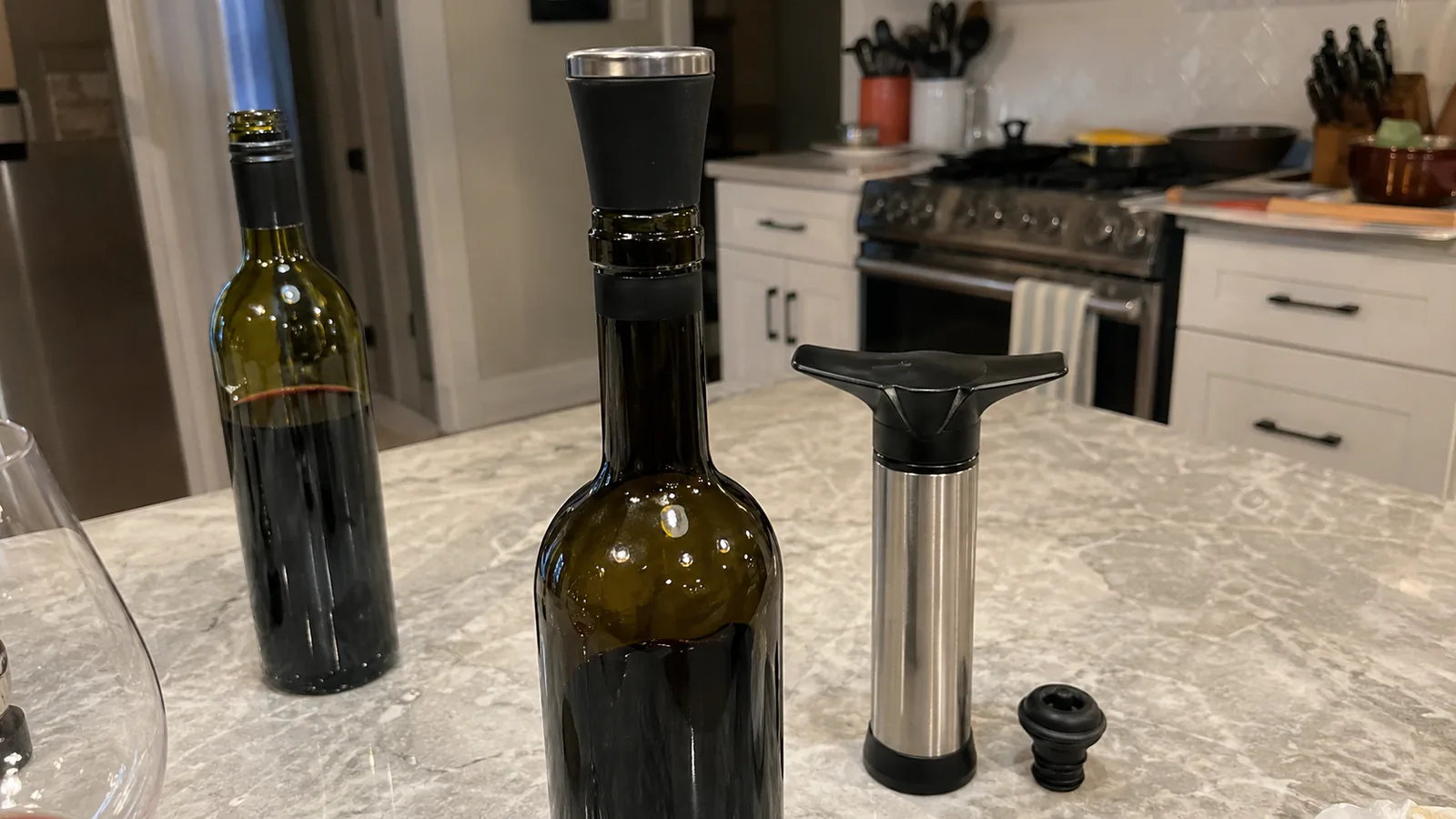
Best Wine Preservation System: 5 Picks That Work
Five wine preservation systems ranked by method: vacuum pump, Coravin needle, sparkling stopper, and simple seal. Keep open bottles fresh.
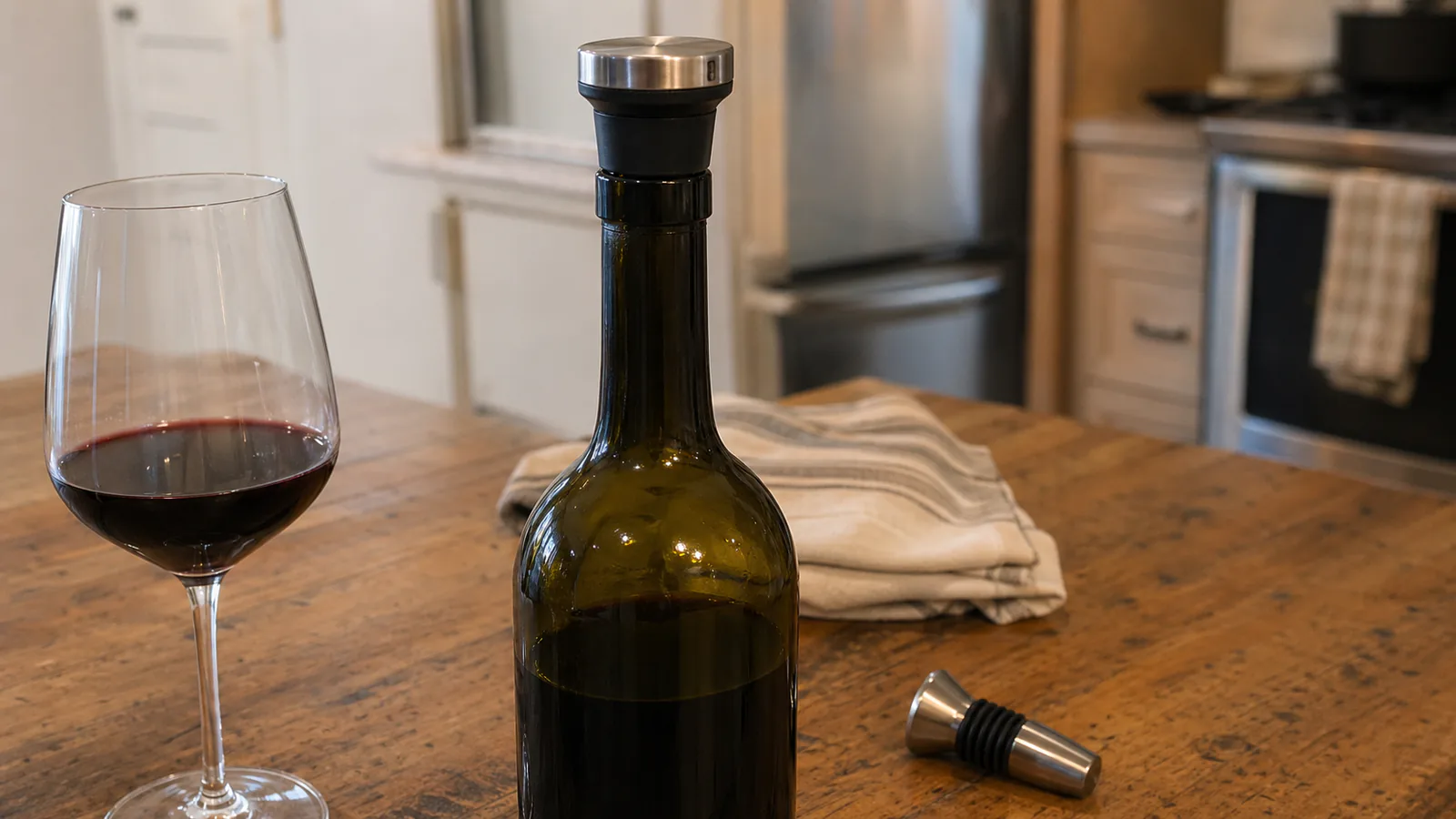
Best Wine Stopper: 5 That Actually Keep Wine Fresh
The right wine bottle stoppers keep a leftover bottle tasting good the next day. Five best wine stoppers, ranked by type and what they actually do.
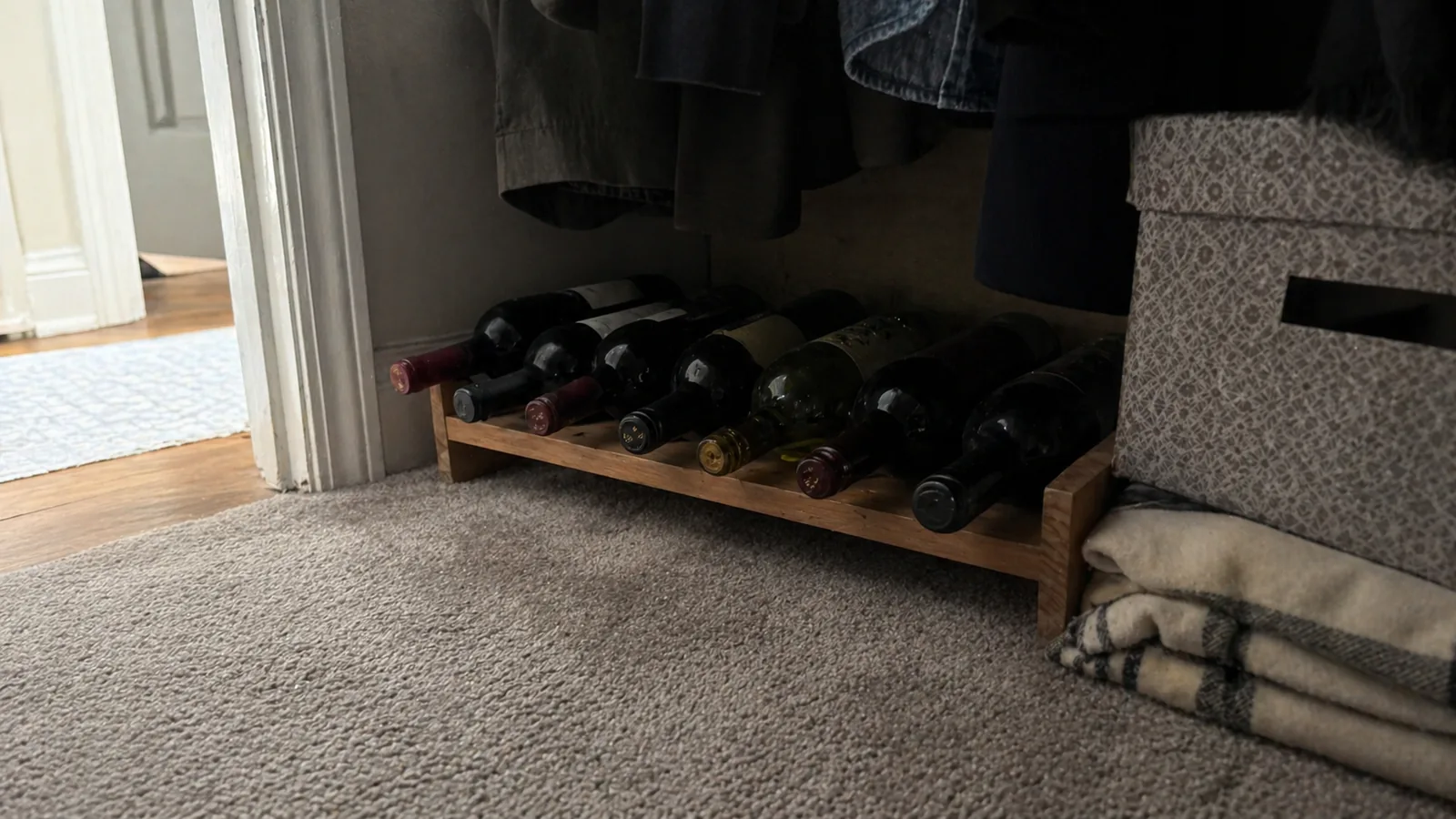
Wine Storage Tips: Keep Bottles From Going Bad
The four enemies of wine, the ideal temperature, and where to store bottles at home when you don't have a cellar (with the kitchen warning).