
Claire Bennett
Wine Editor13 min read
Argentina Wine Guide: Malbec, Mendoza, and Where to Start
Cover Mendoza, Malbec, Valle de Uco, Torrontés, high-altitude vineyards, and exactly where to start with Argentine wine.
Argentina Wine Guide: Malbec, Mendoza, and Where to Start
You grabbed a $16 Malbec from the Argentine section without overthinking it. Maybe there was a cow on the label. You took it home, poured it with a steak or a Tuesday-night pasta, and it was noticeably better than you expected. Fuller, darker, softer than that French red you tried last month, with a floral thing going on that you couldn’t quite name. You put it down to luck.
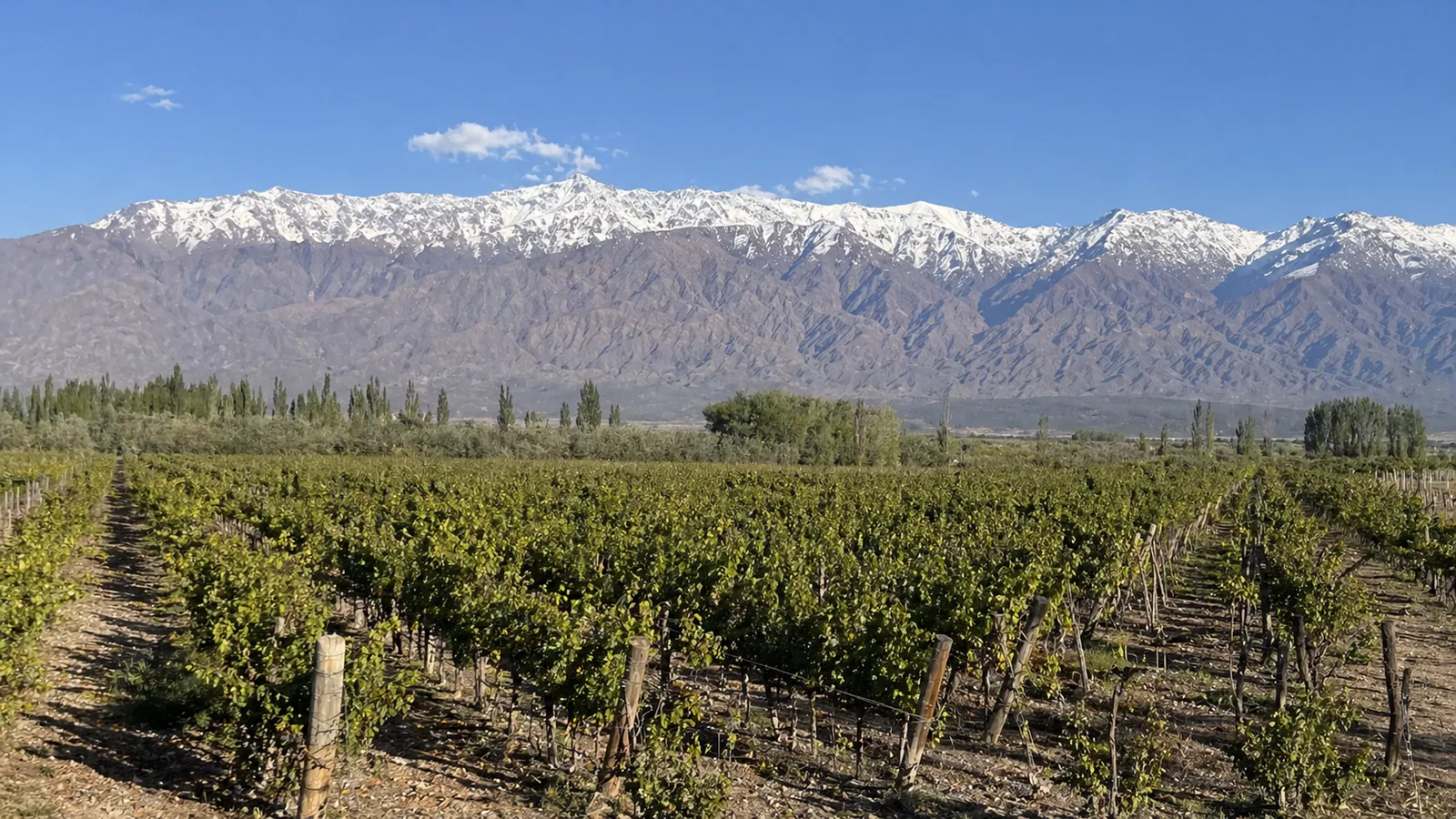
It wasn’t luck. Argentina figured out that growing grapes at extreme altitude changes everything: the colour, the tannin, the freshness, the sheer intensity of the fruit. The Andes act as a wall and an air conditioner at once, and the vineyards clinging to their foothills turn out wines that most warm-climate countries can’t replicate. This guide explains how that works, which regions and grapes are worth your attention, and what to buy first.
By the end of this page you’ll know:
- Why the same Malbec grape produces inky, plush, violet-scented wines in Argentina and lean, austere, almost rustic ones in France, and the single geographic reason for that gap
- The counterintuitive fact that some Argentine vineyards sit above 3,000 metres, higher than most of the Alps, and still ripen grapes fully every single year
- Why Torrontés, Argentina’s signature white grape, smells like dessert wine and tastes nothing like it: plus the one food pairing that makes every other bottle look ordinary
- What Valle de Uco is, why it produces a completely different style to the rest of Mendoza, and the price point where the quality jump becomes obvious
- The value case for Argentine wine: why a $25 Argentine bottle regularly beats a $50 equivalent from France, California, or Italy
Why Does Argentina Produce Such Distinctive Wine?
Argentina is the fifth-largest wine producer in the world and the largest in South America. Wine arrived with Spanish colonists in the mid-1500s, when Jesuit priests planted vines in the Cuyo region to supply Mass. Those vines thrived in a way the priests probably didn’t expect: the high desert at the foot of the Andes turned out to be one of the more extraordinary wine-growing environments on the planet.
The crucial detail is phylloxera. The vine louse that devastated European vineyards in the late 19th century never established itself in Argentina’s sandy, arid soils. That means many old Malbec vines across Mendoza are still on their original rootstock, some over a century old. Old vines produce lower yields and more concentrated fruit. Every other major wine country had to replant on resistant rootstock after phylloxera. Argentina largely didn’t.
Then there’s the altitude. Mendoza’s city sits at about 750 metres, and the vineyards climb from there. The Valle de Uco, Mendoza’s highest and most prestigious sub-zone, runs from 900 to 1,500 metres. Salta’s Calchaqui Valley in the north stretches from 1,700 metres up to an extraordinary 3,111 metres at Finca Altura Máxima, the highest commercial vineyard on earth. Compare that to Bordeaux (10 to 80 metres), Burgundy (200 to 400 metres), or Napa Valley (30 to 500 metres in the hills). Argentine vineyards operate in a different atmospheric category entirely.
Altitude does three things to grapes that you can taste directly in the wine. First, UV radiation is far more intense up there. Grape skins thicken in response, producing more pigment and more tannin. That’s why Mendoza Malbec pours an almost opaque inky purple, darker than nearly any other red wine. Second, intense daytime sunshine fully ripens the fruit, giving the wines ripe, generous black-fruit flavours. Third, temperatures crash at night even in summer. That cold air rolling off the Andes preserves the natural acidity in the grapes. The result is the combination that makes Argentine wine so compelling: ripe, powerful fruit with a fresh, bright finish that stops it from feeling heavy.
What Are Argentina’s Most Important Wine Regions?
Mendoza
Mendoza is the engine of Argentine wine. It sits on the eastern side of the Andes in the Cuyo region and accounts for roughly 70% of all Argentine wine production. Four sub-regions matter: Luján de Cuyo (the historic heartland, first zone declared a Denomination of Origin, home to classic old-vine Malbec), Maipú (workhorse zone at lower elevation, lots of the $12 to $18 bottles you know), Valle de Uco (the high-altitude modern wave, see below), and Eastern Mendoza (bulk production for supermarket shelves).
- Main grapes: Malbec, Cabernet Sauvignon, Bonarda, Torrontés, Chardonnay
- Style: ripe, generous, full-bodied reds; approachable at entry level, serious at the top
- Price start: $10 for entry-level, $20 to $35 for quality bottles, $50+ for single-vineyard
Valle de Uco (within Mendoza)
Valle de Uco deserves its own mention because it’s operating at a different level to the rest of Mendoza. It’s a high-altitude corridor southwest of the city, made up of three departments: Tupungato, Tunuyán, and San Carlos. Vineyards sit between 900 and 1,500 metres, which gives the wines noticeably more freshness, structure, and aromatic lift than lower Mendoza.
This is where Argentina’s most ambitious producers built their flagships. Catena Zapata’s Adrianna Vineyard, Zuccardi’s Piedra Infinita range, and the Vines of Mendoza’s single-estate wines all come from here. The style is less jammy than classic Mendoza Malbec: more elegant, more precise, with tannins that firm up with age. These are wines you can lay down for 10 to 15 years.
- Main grapes: Malbec, Cabernet Franc, Cabernet Sauvignon, Chardonnay
- Style: structured, fresh, age-worthy; more European in feel than lower Mendoza
- Price start: $25 for entry Valle de Uco, $40 to $80 for serious bottles
Salta (Calchaqui Valley)
Salta is in the far northwest of Argentina, a long way from Mendoza both geographically and stylistically. The Calchaqui Valley is the main wine-growing area, with Cafayate as its most famous sub-zone. Altitudes run from 1,700 metres at the valley floor to over 3,000 metres at the extreme. The combination of intense UV, thin air, and a dramatic diurnal temperature swing (days can hit 35°C, nights drop below 10°C) creates wines of extraordinary freshness and aromatic intensity.
Salta is the home of Torrontés, Argentina’s signature white. The altitude Malbec from here also tastes different: leaner, more perfumed, with a herbal lift you don’t get in Mendoza. Production is limited and prices are rising as the region’s reputation grows.
- Main grapes: Torrontés, Malbec, Cabernet Sauvignon, Tannat
- Style: high-acid, aromatic whites; fresh, perfumed reds
- Price start: $15 for entry Torrontés, $20 to $40 for quality reds
Patagonia (Neuquén and Río Negro)
Patagonia is the cool-climate frontier at the southern end of Argentine wine. Neuquén and Río Negro provinces sit at much lower altitudes (300 to 900 metres) but far further south, with a cold, windy climate that produces restrained, European-influenced wines. Pinot Noir, Malbec in a lighter style, and Chardonnay all perform well here.
The names to know are Noemia (Río Negro Malbec of real elegance) and Chacra (biodynamic Pinot Noir that competes with decent Burgundy at half the price). These are still niche, limited-production bottles, but the international reputation is building.
- Main grapes: Pinot Noir, Malbec, Chardonnay, Merlot
- Style: light, fresh, mineral; cooler and more restrained than Mendoza
- Price start: $20 for entry Patagonian bottles, $40+ for the serious estates
San Juan
San Juan sits north of Mendoza, hotter and drier. It produces a significant volume of everyday wine and some good Syrah, Bonarda, and Pedro Giménez (a white grape used for fresh, early-drinking whites). It doesn’t carry the prestige of Mendoza but turns out decent everyday drinking at competitive prices.
- Main grapes: Syrah, Bonarda, Malbec, Pedro Giménez
- Style: ripe, forward, early-drinking
- Price start: $10 to $18
Why Does Argentine Malbec Taste So Different From French Malbec?
This is the question most people have after their first Cahors and their first Mendoza in the same week. They’re the same grape. The wines taste almost nothing alike.
Malbec originated in southwest France, where it’s called Côt or Auxerrois in the Cahors appellation. French Malbec grows at around 100 to 200 metres above sea level in a cool, variable, Atlantic-influenced climate on limestone and iron-rich clay soils. The result is a leaner, more tannic, darker-fleshed wine with earthy, savoury notes and a firm, sometimes austere finish. Cahors Malbec can be excellent, but it’s a regional curiosity. Barely anyone outside France drinks it.
Malbec arrived in Argentina in 1853, planted by French agronomist Michel Pouget on behalf of the Mendoza provincial government. The grape found the high-altitude desert almost absurdly hospitable. Phylloxera and frost wiped out most of France’s Malbec in the 20th century. Argentina’s just kept growing, and the vines got older and better.
In Mendoza, the altitude UV exposure thickens the grape skins, producing more pigment (that signature inky purple colour) and more tannin, but tannins that are riper and softer because the fruit reaches full maturity before picking. The style you get is: deep violet on the nose, plum and blackberry fruit, chocolate and vanilla from oak, a velvety mid-palate, and tannins that grip gently rather than scrape. Alcohol runs 13.5% to 15%, higher than Cahors typically reaches. The finish is fresher than the weight suggests, thanks to the cold nights.
Argentina took a minor blending grape from rural France and turned it into a global phenomenon with a clear identity. The world’s most-planted Malbec is now in Mendoza, not Cahors.
What Is Torrontés and Why Should You Try It?
Torrontés is the wine most people haven’t tried but should try this week. It’s Argentina’s signature white grape, primarily grown in Salta and parts of Mendoza, and it does something that surprises almost everyone on first pour.
It smells like dessert wine. Rose petal, jasmine, peach, lychee, a heady floral richness that makes you assume it’s going to be sweet. Then you taste it and it’s bone dry, with clean acidity and a crisp, lively finish. The contrast between the nose and the palate is the trick. It’s one of the most distinctive white wines you can pour someone who thinks they know what white wine smells like.
The grape covers three related varieties, with Torrontés Riojano from Salta considered the best. Quality bottles almost never top $20 and most of the good ones sit between $12 and $18. Drink it young, chill it hard (around 8°C), and pair it with something that has fragrant spice: Thai green curry, biryani, Vietnamese pork rolls, Sichuan cold noodles. The pairing is counterintuitive and reliably excellent. Most wine guides recommend Torrontés with seafood, which works, but spiced food is where it becomes genuinely memorable.
If you’ve never had a glass, find a bottle of Clos de los Siete’s Viognier blend or any producer from Cafayate labelled Torrontés Riojano and open it this weekend with something spicy. Report back.
Where Should You Start If You’re New to Argentine Wine?
Four bottles, under $80 total, covering the styles that define the country.
Bottle 1: Entry Mendoza Malbec, $15 to $18. Trapiche Oak Cask Malbec, Alamos Malbec, or Norton Reserva. All three over-deliver for the price. Plummy, soft, great with a weeknight steak or a beef burger. This is your baseline for what Argentine red tastes like.
Bottle 2: Valle de Uco Malbec, $28 to $35. Achaval-Ferrer’s Mendoza Malbec, Zuccardi Q Malbec, or Clos de los Siete (a Bordeaux-style blend from Uco). This is where you taste the difference altitude makes: more structure, fresher acidity, longer finish, genuine complexity. Pair it with lamb or a mushroom risotto.
Bottle 3: Torrontés from Salta, $14 to $18. Any bottle from Cafayate labelled Torrontés Riojano. Chill it hard and pour it before dinner with something spiced. This is the one that surprises people every time.
Bottle 4: Bonarda or Patagonian Pinot Noir, $18 to $22. Bonarda (Malbec’s underrated sibling, juicy and plummy, often from Maipu old vines) shows you another side of Mendoza. A Patagonian Pinot from Chacra or a budget Río Negro bottle shows you that Argentina can do restraint as well as power.
Total spend: roughly $70 to $75 for four bottles that cover every major Argentine style. If you can only do two, pick Bottle 1 and Bottle 3. The contrast alone is worth the evening.
Frequently Asked Questions
Is Argentine Malbec sweet?
No. Argentine Malbec is a dry wine. The ripe plum and blackberry fruit makes it taste rich and generous, and if it’s been aged in new oak you’ll get vanilla and chocolate notes that some people read as sweetness. But there’s no residual sugar. If you find Malbec tastes sweet compared to, say, a French Pinot Noir, that’s the ripe fruit and rounded tannins doing the work, not sugar in the wine.
What’s the best Malbec region in Argentina?
For most people most of the time, Luján de Cuyo and Valle de Uco are the two names worth seeking out on a label. Luján de Cuyo (south of Mendoza city) produces the classic style: plush, rich, reliably good from $20 upward. Valle de Uco, at higher altitude, gives you more structure and finesse, and it’s where the most ambitious and age-worthy Malbecs come from. If the label just says “Mendoza” with no sub-region, it’s probably from the lower-altitude bulk zones and priced accordingly.
What food goes with Malbec?
Grilled red meat is the classic match, and it’s classic for a reason: the tannin structure and dark fruit in Mendoza Malbec cuts beautifully through fatty beef. Beyond steak, try it with lamb chops, a slow-braised short rib, a mushroom and lentil ragù, or aged hard cheese like Manchego or aged Gouda. It also handles chimichurri and charred vegetables far better than most full-bodied reds.
What’s Bonarda?
Bonarda is Argentina’s second most-planted red grape, though you wouldn’t know it because Malbec takes all the attention. It’s called Charbono in California and Douce Noir in parts of France. In Argentina it produces juicy, plummy, easy-drinking reds at the entry level and, from old vines in Maipu and eastern Mendoza, genuinely complex wines at the quality end. It’s worth trying from a producer who treats it seriously. The price is usually $15 to $25 and the quality-to-cost ratio is excellent.
Is Argentine wine good value?
Yes, consistently. Argentina is one of the few wine countries where the quality-per-dollar ratio holds up at almost every price point. A $15 to $18 Mendoza Malbec regularly outperforms European reds at the same price. The $25 to $40 bracket, especially from Valle de Uco or named Luján de Cuyo estates, gives you wines that compare to bottles costing twice as much from Bordeaux or Tuscany. Even at $50 and above, the best Argentine single-vineyard wines sit comfortably alongside the world’s best reds without carrying European pricing.
What’s the difference between a $15 and a $50 Argentine Malbec?
Mostly: where the grapes grew, how old the vines are, and how long the wine spent in barrel. The $15 bottle is from lower-altitude vineyards, picked for volume and consistency, aged briefly in large or older oak. It’s fruity, approachable, and drinks well immediately. The $50 bottle is from a specific high-altitude site in Luján de Cuyo or Valle de Uco, possibly from 50-year-old vines, aged 12 to 18 months in French barriques. You get depth, structure, layers of flavour that open over an hour in the glass, and a wine that will improve in the bottle for another five to ten years. The jump is real. It’s worth making once, at least, so you know what you’re comparing against.
The regions guide gives you the map. The next step is knowing which specific bottles to reach for in each style. The best red wines under $20 list has strong Mendoza picks with full tasting notes, and for a broader look at where Argentina fits in the global picture, the wine regions of the world guide is a good next read.
Keep Reading
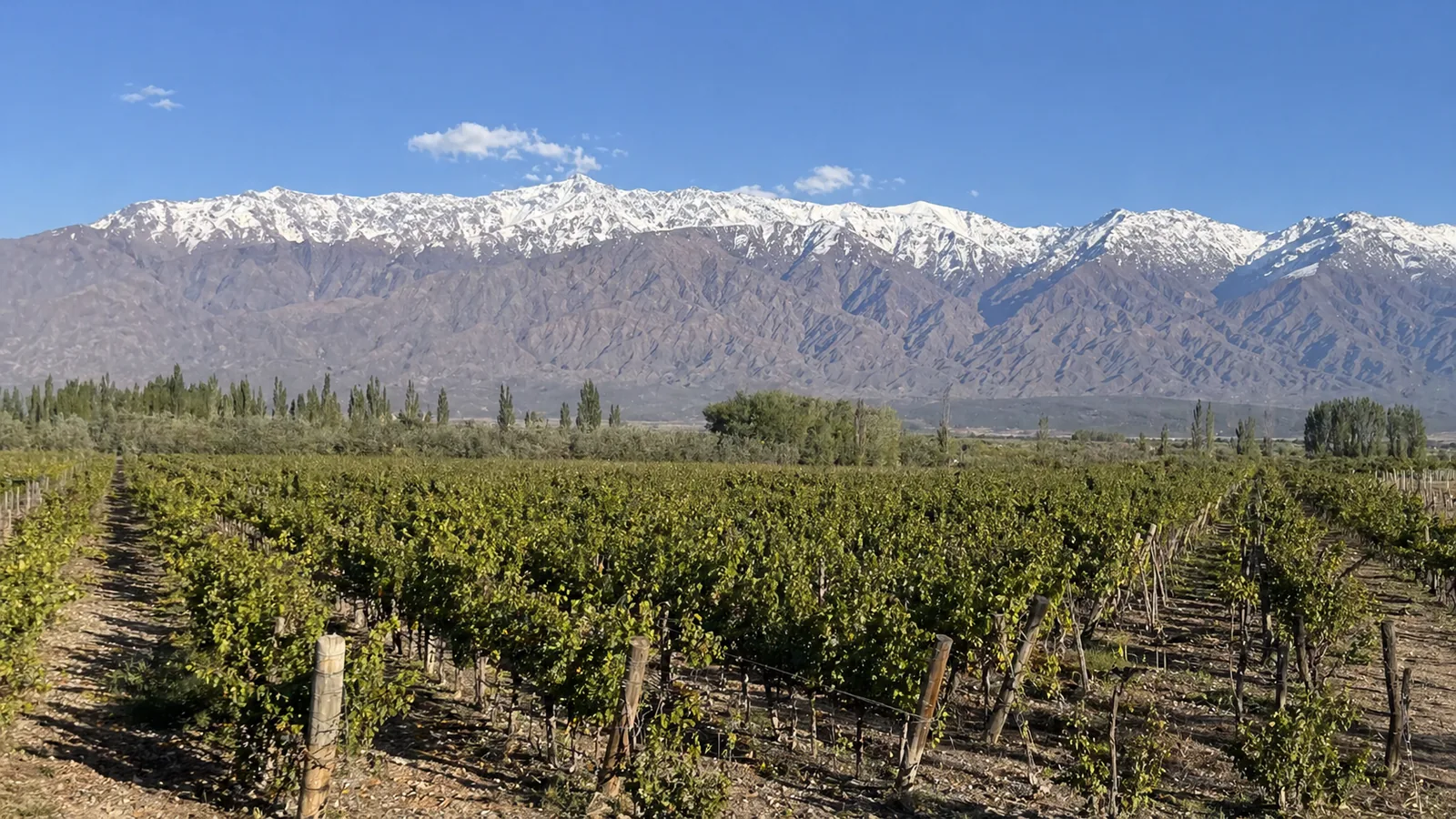
Mendoza Wine: Argentina's Malbec Heartland Explained
What Mendoza wine actually is, why altitude makes its Malbec different, the sub-regions worth knowing, and how much to spend for the good stuff.
Wine Regions of the World: A Plain-English Guide
Old World vs New World, the major regions in each, how climate shapes style, and where to start drinking. The pillar guide for curious wine drinkers.