Claire Bennett
Wine Editor10 min read
Gewurztraminer: The Most Aromatic White Wine
Gewurztraminer smells like lychee, rose, and ginger. Here's how it tastes, where the best bottles come from, and the dishes it actually beats.
Gewurztraminer: The Most Aromatic White Wine
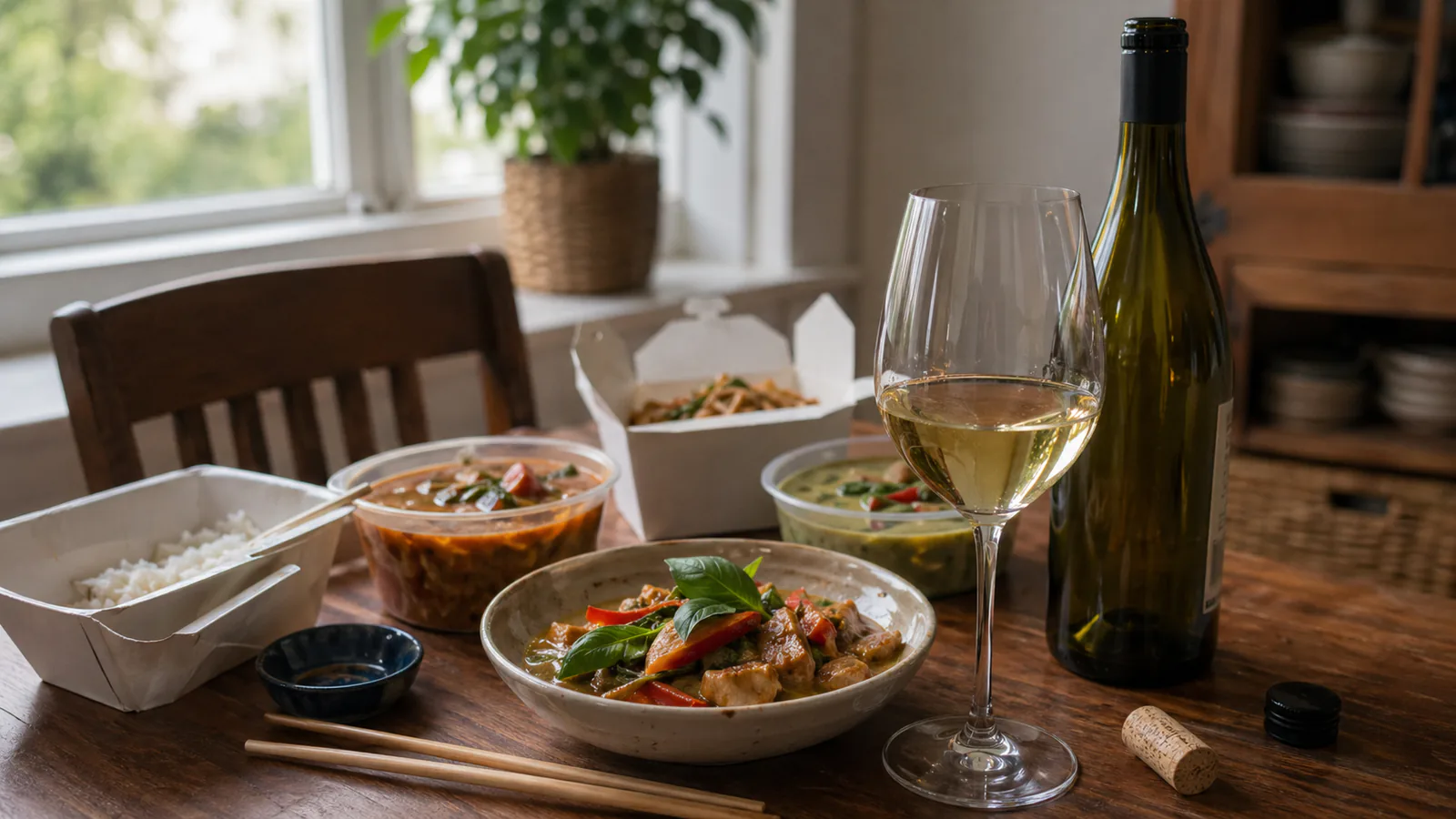
You order a Thai green curry and the server asks if you want a wine recommendation. You panic. The Sauvignon Blanc gets bullied by the chilli. The Chardonnay turns to butter on top of coconut milk. The rosé just gives up. There’s one bottle that actually wins this fight, and it has the longest, scariest name on the list. Time to learn it.
By the end of this page you’ll know:
- The exact moment to reach for Gewurztraminer instead of Riesling (the difference is sharper than you think)
- Why a single Alsatian Grand Cru bottling can taste like rose petal soup, in the best possible way
- The pronunciation that stops you sounding nervous when you order it (it’s only six syllables and you’ve got this)
- The unexpected cheese that makes Gewurztraminer click better than any other white wine
- The label clue that tells you whether the bottle in your hand is bone-dry or honey-sweet
What Is Gewurztraminer?
Gewurztraminer is a white wine grape with pinkish skin, intensely aromatic flavour, and a long pedigree in Alpine Europe. The name breaks into two parts: “Gewürz” is German for “spice,” and “Traminer” refers to the village of Tramin in Italy’s Alto Adige, where the parent grape (Traminer) has grown for at least 1,000 years.
So the literal translation is “spicy Traminer.” That’s earned. The grape produces wine with such concentrated aromatics that it’s recognisable from across the room. Lychee is the textbook descriptor, but the bouquet usually adds rose petal, ginger, allspice, pink grapefruit, and sometimes a faintly perfumed quality that reminds people of Turkish delight or Earl Grey tea.
The pink skin is unusual. Most white grapes are green or gold. Gewurztraminer’s skin gives the wine a slightly deeper colour than other whites, often a rich gold or even a faint copper-pink in concentrated examples.
It’s a low-yielding, fussy grape. It buds early (which makes it vulnerable to spring frost), ripens unevenly, and loses acidity quickly in warm weather. Those quirks are why it grows best in cooler climates with long, slow growing seasons.
How do you pronounce Gewurztraminer?
Six syllables: “geh-VURTS-trah-MEE-ner.” Stress on the second syllable. The “Gewürz” part rhymes loosely with “hurts,” and the rest follows phonetically. The umlaut over the “u” is often dropped on English-language labels, but the German pronunciation stays the same.
What Does Gewurztraminer Taste Like?
Quick stat block:
- Body: Medium to full
- Acidity: Low to medium
- Sweetness: Ranges from dry to lusciously sweet
- Oak: Almost never
- Alcohol: 13 to 14.5 percent (some Alsatian bottles push higher)
The flavour profile is unmistakable. Even before your first sip, the nose tells you what you’re holding. Lychee dominates, with rose petal close behind. Ginger and allspice come next, sometimes paired with grapefruit pith, candied orange peel, or honeysuckle. The mouthfeel is round and oily, almost lush, with a low-acid texture that feels viscous compared to a Sauvignon Blanc or Riesling.
The sweetness level is where most beginners trip up. Gewurztraminer is made in everything from bone-dry styles to dessert-sweet Sélection de Grains Nobles, and the label often won’t tell you which you’re getting. Alsatian basic-tier Gewurztraminer is usually off-dry: technically dry, but with enough residual sugar that it tastes lightly sweet on the finish. Vendanges Tardives bottles are noticeably sweet. Sélection de Grains Nobles bottles are dessert wines.
The hidden trap: the low acidity makes Gewurztraminer feel sweeter than it actually is. A Riesling with the same residual sugar tastes drier because the acidity cuts through. With Gewurztraminer, expect a softer, rounder, more honeyed finish even when the wine is technically off-dry.
Where Is Gewurztraminer Grown?
Alsace, France
Alsace is the gold standard. The region sits in the rain shadow of the Vosges Mountains in northeastern France, which gives it warm, dry summers and cool nights, ideal for ripening Gewurztraminer slowly while preserving aromatics. Alsace produces the fullest-bodied, most concentrated, most age-worthy bottlings in the world.
Look for “Alsace Grand Cru” on the label, which signals one of 51 named single-vineyard sites. The Grand Crus most associated with great Gewurztraminer include Goldert, Hengst, Sporen, and Furstentum. Producers worth knowing: Trimbach, Hugel, Domaine Weinbach, Zind-Humbrecht, and Domaines Schlumberger. Trimbach’s “Cuvée des Seigneurs de Ribeaupierre” is a benchmark dry style. Zind-Humbrecht makes some of the most celebrated Vendanges Tardives and Sélection de Grains Nobles bottlings in the world.
Germany
German Gewürztraminer (with the umlaut, locally) grows mostly in Pfalz and Baden. The style tends to be lighter and more delicate than Alsatian, with lower alcohol and a more restrained nose. Good examples are charming, but they lack the structural intensity of the best Alsatian bottles.
Alto Adige, Italy
The grape’s ancestral home. Alto Adige Gewürztraminer (often labelled “Traminer Aromatico”) is bone-dry, lighter in alcohol, and more focused on freshness than perfume. It’s the closest you’ll get to a “Gewurztraminer for people who don’t think they like Gewurztraminer.” Producers like Tramin, Elena Walch, and Cantina Terlano are reliable starting points.
Washington State, USA
Columbia Valley produces some impressive Gewürztraminer, often from older plantings that survived the region’s earlier cool-climate experiments. The style sits between Alsatian richness and Italian restraint. Chateau Ste. Michelle and Eroica are widely distributed.
New Zealand
Cool-climate New Zealand Gewürztraminer (mostly from Gisborne and Marlborough) tends to be aromatic, off-dry, and very food-friendly. Quantities are small, but the quality is improving fast.
California
California Gewürztraminer is mostly grown in cooler coastal regions like Anderson Valley and Mendocino. The style is fruit-forward, often slightly sweet, and built for casual drinking rather than cellar ageing. Navarro Vineyards in Anderson Valley makes the most consistent example.
What Food Pairs With Gewurztraminer?
Gewurztraminer is the wine you pull out when nothing else works. Spicy food, fragrant food, bold food, and pungent cheese all push back against most whites. Gewurztraminer’s combination of low acidity, full body, off-dry finish, and aromatic intensity lets it stand up to those flavours and even amplify them.
The pairing logic comes down to two things. The slight residual sugar tempers chilli heat (acid wines just sharpen it). And the aromatic compounds in the wine genuinely overlap with the aromatic compounds in spices like ginger, cardamom, and allspice, so the wine and food point at each other instead of fighting.
Specific dishes that sing with Gewurztraminer:
- Thai green curry, red curry, and tom kha gai
- Sichuan dishes: kung pao chicken, mapo tofu, twice-cooked pork
- Indian curries, especially aromatic ones like rogan josh, korma, and biryani
- Vindaloo (the off-dry style is the only wine that survives this)
- Vietnamese pho with spicy condiments
- Moroccan tagines with preserved lemon, olives, and warm spice
- Pork belly, especially anything with a sweet glaze or Asian flavour
- Foie gras (the classic Alsatian pairing, with a Vendanges Tardives bottle)
- Munster cheese, the famously stinky Alsatian washed-rind cheese
- Apple strudel and similar pastries (with sweeter Gewurztraminer styles)
The cheese pairing deserves a note. Munster is one of the most pungent cheeses in France, and most wines run from it. Alsatian Gewurztraminer is the regional pairing for a reason: the wine has the aromatic intensity to meet the cheese head-on, and the off-dry finish softens the cheese’s saltiness. Try it once, and you’ll understand why locals refuse to drink anything else with their Munster.
How Should I Serve Gewurztraminer?
Temperature: 8 to 10 degrees Celsius (roughly 46 to 50 Fahrenheit). Cooler than the standard “fridge cold” of around 4 degrees, but not warm. Pull the bottle out of the fridge 15 minutes before pouring, especially if you’re serving a richer Alsatian style. Too cold mutes the aromatics. Too warm exaggerates the alcohol and turns the wine syrupy.
Glassware: a standard white wine glass is fine. A slightly larger bowl helps if you’re drinking a fuller-bodied Alsatian Grand Cru, because the aromatics need room to develop.
Decanting: not usually necessary, but it doesn’t hurt. A 10-minute decant on a young, concentrated Alsatian bottle will lift the bouquet noticeably.
Ageing: basic-tier Gewurztraminer drinks best within three years. Alsatian Grand Cru bottlings can age 10 to 15 years, gaining honey, dried apricot, and waxy texture. Vendanges Tardives and Sélection de Grains Nobles dessert wines can age 20 to 30 years and often improve dramatically. If you find a serious Alsatian bottle on sale, hide it in a cellar for five years and thank yourself later.
How Much Should I Spend on Gewurztraminer?
Under $15: New World everyday Gewurztraminer (Washington State, California, New Zealand). These are pleasant, off-dry, and made for casual drinking. Drink within a year or two of release.
$15 to $25: Entry-level Alsatian Gewurztraminer from named producers. Trimbach’s basic Gewurztraminer at around $22 is a benchmark. This price band is the sweet spot for everyday Alsatian quality.
$25 to $50: Producer-tier Alsatian bottlings, including some single-vineyard wines. Hugel’s “Hugel Tradition,” Domaine Weinbach’s basic Gewurztraminer, and Zind-Humbrecht’s village wines all live here.
$50 to $100: Alsatian Grand Cru bottlings and Vendanges Tardives. This is where Gewurztraminer turns serious. Trimbach’s “Cuvée des Seigneurs de Ribeaupierre” and Zind-Humbrecht’s Grand Cru bottlings are the reference points.
$100 and up: Sélection de Grains Nobles dessert wines from top producers. Made from individually selected botrytised berries, produced in tiny quantities, and capable of ageing for decades. These are special-occasion wines.
If you’ve never tried Gewurztraminer, start with a $20 to $25 Alsatian bottle from Trimbach, Hugel, or Domaines Schlumberger. That’s the version that explains why the grape has its reputation.
Frequently Asked Questions
Is Gewurztraminer sweet or dry?
It depends on the bottle. Most Alsatian Gewurztraminer is technically dry to off-dry, but the low acidity makes it taste lightly sweet on the finish. Vendanges Tardives bottles are noticeably sweet. Sélection de Grains Nobles bottles are full dessert wines. New World versions are usually off-dry. If the label doesn’t say, assume off-dry as a starting point.
What does Gewurztraminer taste like?
Lychee, rose petal, ginger, and allspice. Those four notes are the consistent calling cards. Add pink grapefruit, honeysuckle, candied orange peel, and a faintly perfumed quality, and you have the full picture. The mouthfeel is round and lush rather than crisp, because acidity is low and body is high.
What food goes with Gewurztraminer?
Spicy and aromatic food. Thai curries, Indian curries, Sichuan dishes, Moroccan tagines, and Vietnamese pho all work brilliantly. It also pairs with foie gras, pork belly with sweet glazes, and pungent cheeses like Munster. The wine’s slight residual sugar and aromatic intensity let it handle dishes most whites can’t survive.
What’s the difference between Gewurztraminer and Riesling?
Both are aromatic, both make off-dry styles, both come from cool climates. The differences: Gewurztraminer has lower acidity, fuller body, higher alcohol, and a more obvious lychee-and-rose nose. Riesling has higher acidity, lighter body, lower alcohol (especially German Mosel styles), and a citrus-and-stone-fruit profile. Riesling refreshes; Gewurztraminer envelops.
Why is Gewurztraminer pink in colour?
It’s not really pink, but it can have a faintly copper or rose-gold tint because the grape itself has pinkish skin. During winemaking, brief skin contact transfers some of that colour to the juice. The fuller-bodied Alsatian bottlings often show this tint most clearly, especially as they age.
Is Gewurztraminer a good beginner wine?
Yes, with one caveat. The aromatic intensity is so distinctive that some beginners love it instantly and others find it overwhelming. If you’ve enjoyed lychee, rose-flavoured desserts, or Earl Grey tea, you’ll likely love it. If you want something cleaner and more neutral to start, try Pinot Grigio or unoaked Chardonnay first.
Ready to put Gewurztraminer on the table? Our guide to the best sweet wines covers specific Gewurztraminer bottlings alongside other off-dry and dessert wines worth knowing.
Keep Reading
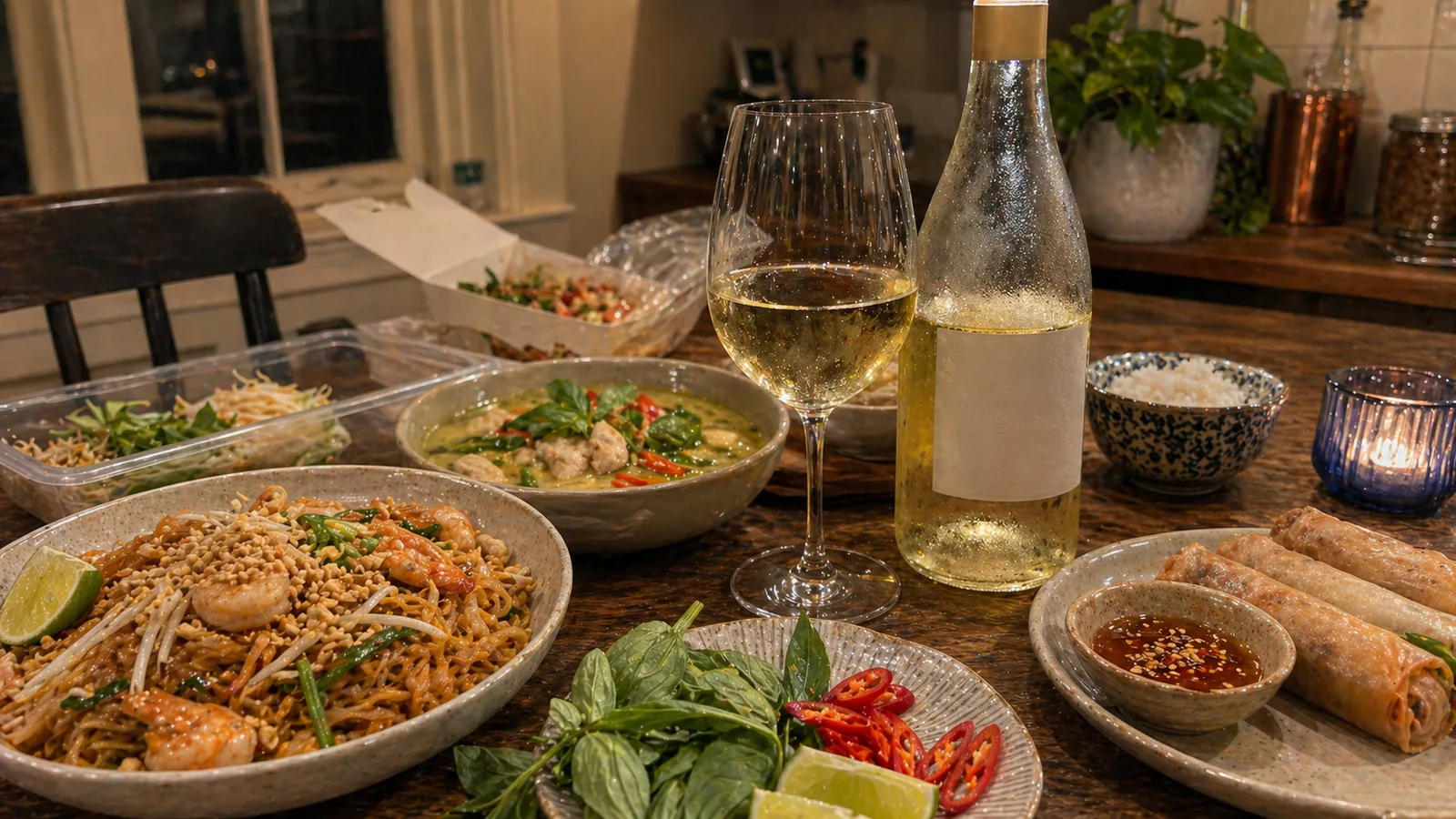
Thai Food Wine Pairing: What To Pour With Spicy Heat
The best wines for Thai food, from off-dry Riesling and Gewurztraminer with green curry and tom yum to dry rose with pad thai and larb.
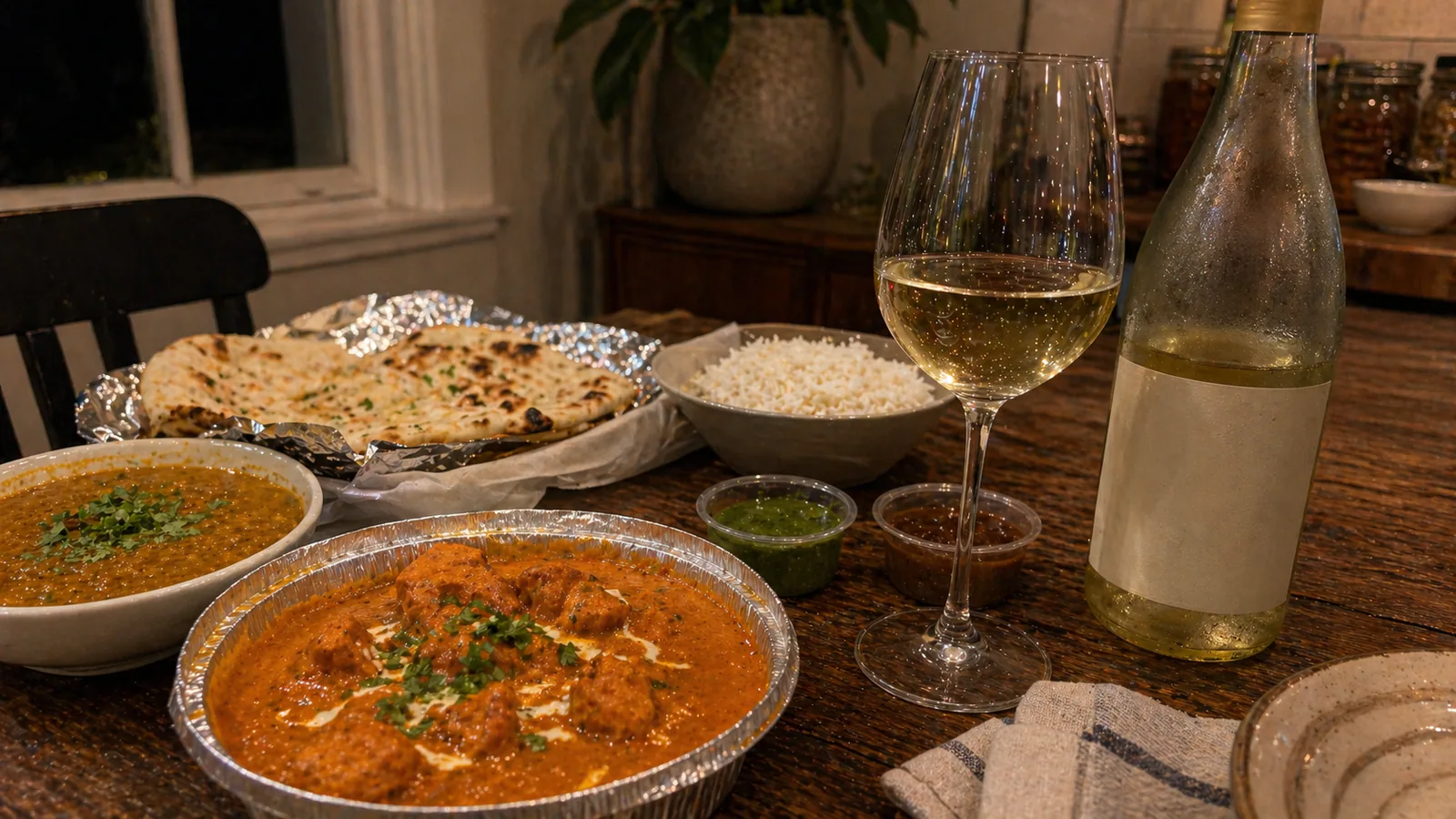
Indian Food Wine Pairing: What To Pour With Curry
The best wine with Indian food, from Riesling with butter chicken and tikka masala to rose with vindaloo, plus what to skip with chili heat.
Dessert Wine Guide: Sweet Styles Worth Trying
The major styles of dessert wine explained: how they're made, how sweet they actually are, and which bottle to open with what.