Claire Bennett
Wine Editor34 min read
Best Wine for Sangria: 12 Bottles That Actually Work
12 wines that make genuinely good sangria: reds, whites, and rosé. Grape variety matters more than price. Here's exactly what to buy and why.
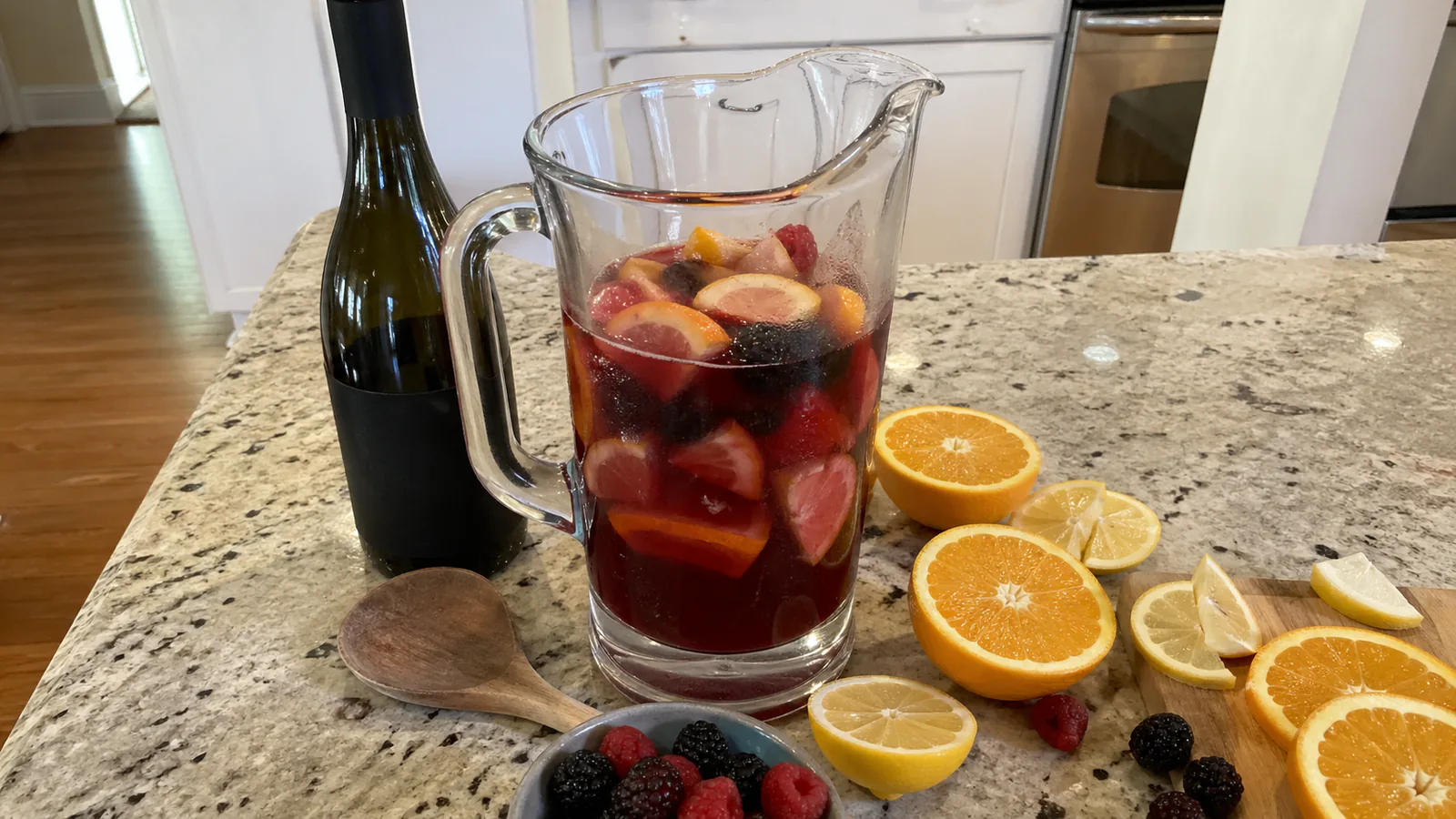
Price is almost completely irrelevant when it comes to sangria. The $40 bottle you’re hoarding for a special occasion won’t make your batch better. The whole thing goes into a pitcher with orange slices, a slug of brandy, and triple sec. Any subtle complexity in your wine disappears inside the first 20 minutes.
What does matter is grape character, and one mechanic that every bad-batch story traces back to: tannins intensify when chilled. A big Cabernet Sauvignon or heavily oaked Malbec that tastes fine at room temperature turns dry, grippy, and harsh in a cold pitcher. The chilling amplifies those tannins against the sweetness of fruit and liqueur. That’s why your last batch tasted off. The fix is a fruit-forward, low-to-medium tannin wine. Garnacha and young Tempranillo are the traditional answers, and both are under $20 everywhere.
These 12 bottles cover red, white, and rosé, all purpose-built for the pitcher. Each comes with a Wine Traits strip showing tannin, acidity, sweetness, alcohol, and body at a glance. Pick by occasion, pick by colour, pick by budget. Any of the 12 will hold up.
Our Top 3 Picks


Prices vary by state. Click through for your current price.
Best Red Wine for Sangria
Red is the most searched sangria style. The best wines for sangria in the red category are fruit-forward and low in tannin. When you add fruit and brandy to a pitcher, you want wines for sangria that carry their own red fruit into the mix, not wines that turn grippy when chilled. Spanish reds lead because Garnacha and Tempranillo were built for this job.
1. Matsu El Picaro Tempranillo 2024
Matsu El Picaro is the strongest customer-rated bottle in this lineup: 4.7 stars from 40 reviews, with a 91-point score from Wilfred Wong. It comes from Toro, a region in northwest Spain where Tempranillo grows hotter and riper than in Rioja, producing plummy, generous fruit without the drying tannins of older-style Spanish reds. That plum and dark berry character survives sangria dilution better than leaner styles. If you need one red that works for a big party and doesn’t require explaining, this is it.
2. CVNE Rioja Reserva 2020
Five critics scored this bottle between 90 and 92 points: James Suckling, Vinous, Robert Parker, Wine Spectator, and Decanter. That kind of consensus on a single bottle is rare at this price. CVNE is one of Rioja DOCa’s founding houses, and the Reserva 2020 is everything a traditional Spanish red should be: cherry, dried herbs, soft vanilla from oak ageing, and a structure that holds its shape in the pitcher. It’s currently on sale from $29, which gives it the strongest value story in the red lineup. Pick this one when you want the sangria to taste like it came from Spain.
3. Bardos Vinedos de Altura Tempranillo 2022
Bardos comes from Ribera del Duero, which sits at higher altitude than Rioja and produces Tempranillo with more concentration and darker fruit. This bottle has 52 customer reviews at 4.5 stars, the second-strongest customer signal in the red section. It scored 90 points from both James Suckling and Wilfred Wong. The darker berry character makes it the right pick for sangria you’re serving alongside grilled meats or heavier food. It’s currently on sale from $23.
4. Bodegas Breca El Nacido Garnacha 2023
Garnacha is the original sangria grape. The Breca El Nacido is the most score-laden Garnacha in the lineup: 91 James Suckling, 90 Robert Parker, 89 Wine Spectator, all at $17.97. It comes from Calatayud in Aragon, where old vines grow on poor soils and concentrate flavour without building tannin. The profile is bright red fruit with a hint of spice, low grip, and the kind of fruity flavors and natural fruit sweetness that pair with citrus and brandy in the pitcher. A clean Garnacha like this is exactly what longtime sangria makers reach for on instinct.
5. Borsao Tres Picos Garnacha 2021
Borsao Tres Picos is the Garnacha that turns up on restaurant lists and wine club recommendations year after year. It scored 91 from James Suckling and has picked up 90-point awards from Wine Spectator and Wine Enthusiast on past vintages. It has 30 customer reviews at 3.6 stars. The Campo de Borja style is riper and more approachable than Calatayud, with more generous red fruit and less acidity. If you want a soft, fruit-forward red that works for everyone at the table, including people who think they don’t like wine, this is the right pick.
6. BenMarco Malbec 2022
Malbec is the go-to international red for sangria, and BenMarco is the version backed by the biggest customer signal in the entire lineup: 104 reviews, 4.2 stars. Three critics weighed in at 93 James Suckling, 91 Vinous, 90 Wine Spectator. It comes from the Uco Valley in Mendoza, where high altitude produces dark cherry and plum with softer tannins than valley-floor Malbec. It’s on sale from $25, which makes it the best-value premium red pick here. Dark fruit, good body, easy to drink, and it holds up in the pitcher without going grippy.
7. Tapiz Alta Collection Malbec 2022
Tapiz Alta Collection is the value Malbec slot in this lineup: 93 Vinous and 90 Wine Enthusiast at $18.97, from the same Uco Valley growing region as BenMarco. There are no customer reviews on this vintage, so you’re going on critic scores and provenance. Both are strong. The Uco Valley concentration brings dark plum and cassis with enough fruit weight to survive sangria dilution. If BenMarco sells out, grab this one without hesitating.
8. Catena Malbec 2024
Catena is the most recognised Malbec name in the world, and that matters when you’re buying multiple bottles for a party. The 2024 vintage is a new release with no current critic scores yet. The pattern on prior vintages is consistent: the 2023 scored 90 Robert Parker and the 2022 scored 92 Vinous and 91 Robert Parker. Anyone at the table who knows wine will recognise the label. The prior-vintage track record tells the story.
Best White Wine for Sangria
White sangria is the warmer-months, brunch-and-citrus version of the drink. The wine for white sangria should have high acidity and zippy fruit, which cuts through the added sweetness and keeps the whole pitcher tasting fresh. Two picks, both around $19.
9. Astrolabe Marlborough Sauvignon Blanc 2024
Marlborough Sauvignon Blanc is the standard white sangria grape, and the Astrolabe carries the strongest critic profile of any white in this lineup: 93 James Suckling, 91 Robert Parker, 90 Vinous, 90 Wine Spectator. The Marlborough style brings gooseberry, citrus, and a zesty herbaceous zip that cuts right through fruit and sugar in the pitcher, keeping white sangria tasting fresh and bright rather than cloying. That high acidity is exactly what you want here. Spanish whites like Albariño and Verdejo are the other common white sangria picks in Spain, but Sauvignon Blanc’s fruitiness and lift make it the more accessible choice. If your white sangria has been turning flat and sweet, this is the fix.
10. Attems Pinot Grigio 2023
Pinot Grigio (also known as Pinot gris) is the mellow white sangria pick: softer acidity than Sauvignon Blanc, rounder texture, easier for people who find Marlborough Sauv Blanc too zingy. The Attems comes from Friuli-Venezia Giulia in northeastern Italy, where Pinot Grigio has genuine character rather than the neutral, thin profile that gives the grape a bad name. It scored 90 from James Suckling and is on sale from $24. The stone fruit fruitiness and gentle citrus notes make it ideal for a white sangria with peach, mango, or apple slices.
Best Rosé for Sangria
Rosé sangria is the year-round crowd-pleaser: lighter than red, more interesting than white, and the easiest sell to a mixed group where some people want wine and some don’t. Both picks here are Provence-style rosés with the dry, elegant profile that works better in a pitcher than heavier styles.
11. Miraval Rosé 2024
Miraval earns its spot as the editorial standard for rosé sangria. Three critics scored the 2024 vintage: 92 Decanter, 92 James Suckling, 90 Robert Parker. It’s on sale from $25. The Côtes de Provence blend of Grenache, Cinsault, and Syrah produces pale strawberry colour, citrus mineral freshness, and exactly the delicate fruit-forward profile that works in a pitcher without going heavy. This is the rosé sangria pick for the drinker who wants something that looks as good as it tastes.
12. Chateau d’Esclans Whispering Angel Rosé 2024
Whispering Angel is the most-searched rosé brand in the US. It scores 92 from James Suckling on the 2024 vintage and carries 41 customer reviews at 3.9 stars, the largest review pool among the rosés here. The Grenache-Vermentino-Cinsault blend from Côtes de Provence gives it a slightly more complex profile than Miraval: a touch more texture, a little more peach. At $22.97 it’s a slight stretch above the $25 ceiling for this lineup, but the brand recognition justifies it for a party where the label will be on the table. This is the rosé sangria pick for the host who wants people asking what’s in the pitcher.
Red vs White vs Rosé Sangria
The colour question is easier than it looks. Map it to occasion and you’ll know straight away which way to go.
Red sangria is the classic. Garnacha and Tempranillo produce the traditional version: dark fruit, a little spice, pairs with grilled meats and heavier food. Red sangria works year-round but belongs at a BBQ, a holiday gathering, or any cooler-weather occasion where you want something warming in the pitcher.
White wine sangria is the summer version. Sauvignon Blanc and Pinot Grigio keep the whole drink bright and refreshing, with citrus fruit, melon, and apple slices making more sense than the darker fruit in a red pitcher. White sangria is the brunch option, the warm-day option, and the easiest sell to anyone who doesn’t normally drink red wine.
Rosé sangria works across all seasons. It borrows the freshness of white sangria and the fruit depth of red sangria, lands somewhere in the middle, and converts non-wine-drinkers faster than either. If you’ve got a mixed group with uncertain preferences, rosé sangria is the right call.
Sparkling wine works in sangria too, but it’s a different drink. Adding Cava or Prosecco to a sangria pitcher gives you fizz, and the bubbles do something to the texture that still-wine versions can’t. The catch is that carbonation dissipates fast in a pitcher, so a sparkling sangria needs to be poured immediately after mixing. More on that in the FAQ below.
How to Make Sangria
The wine is the base, but sangria is a good party drink precisely because of everything else that goes in the pitcher. Here’s a classic sangria recipe that works for a batch of any size.
The ingredients in sangria are simple: one wine bottle, sugar, citrus, chopped fruit, and a measure of brandy or other liquor. Start with one bottle of wine. Add two tablespoons of sugar (or a splash of simple syrup) and stir until dissolved. Squeeze in the juice of one orange and one lemon, then drop in the squeezed halves along with extra slices. Any orange fruit works well: blood orange, navel orange, and clementine all add good citrus character. Peach, apple, and mango are also worth adding. Add a measure of brandy and a measure of triple sec or other orange liqueur.
Stir everything together, cover, and refrigerate for at least two hours. Overnight is better. The longer the fruit macerates, the more the flavours integrate.
Right before serving, pour over ice cubes and top with a splash of club soda or sparkling water (carbonated water works too) for a little fizz. Don’t add the fizz earlier: carbonation dissipates in the pitcher and you’ll lose the sparkle entirely. Serve cold, garnish with a cinnamon stick if you have one, and pour into glasses filled with ice.
For white sangria, swap to Sauvignon Blanc or Pinot Grigio, use white peach, melon, and cucumber instead of dark fruit, replace the brandy with elderflower liqueur or white rum, and finish with a splash of lemonade instead of soda.
Starting with a bone-dry wine is how you avoid the too-sweet problem. Cheap wine is often sweet, whereas the wines used for traditional sangria tend to be dry. If you start with a dry base and add sugar yourself, you control the sweetness. Start with a semi-sweet wine and you’ve got no way to correct it.
Sangria: Where It Comes From
Sangria originated in Spain, and the name comes from the Spanish word for blood, a reference to the drink’s deep red colour. The traditional base is a Spanish red wine, usually Garnacha or Tempranillo, mixed with fruit, sweetener, and sometimes brandy. The version most people know outside Spain developed as a tourist-facing product.
Spaniards largely don’t drink sangria. The drink they actually reach for in summer is tinto de verano: red wine mixed with lemon soda (usually a Spanish brand called La Casera), poured over ice in a tall glass. It’s lighter, cheaper, and easier to make in a glass rather than a pitcher. Tinto de verano is the authentic Spanish summer drink. Sangria is the version the rest of the world decided to make its own.
The wine base is still genuinely Iberian. Garnacha and Tempranillo are the right grapes, and making sangria with a Spanish wine from La Mancha or Rioja gives you the right backbone. The authenticity anxiety is mostly beside the point. Make it with a good Spanish red, go easy on the sugar, and it’ll taste like what it’s supposed to taste like.
More Sangria Styles Worth Knowing
Sangria is the ultimate make-ahead refreshing summer drink, and once you’ve made the standard red, the variations are worth exploring. These sangrias cover styles for every occasion and season.
Sparkling sangria uses Cava as the base. Cava is Spain’s traditional tank-method sparkler, made from Macabeo, Xarello, and Parellada grapes. It costs under $15 for a decent bottle and has the same Spanish provenance as a Garnacha-based red sangria. The dry, slightly yeasty character holds up well against fruit and brandy. Prosecco works too, and is easier to find. The rule with sparkling sangria is the same as any carbonated mixer: add it last and serve immediately.
Zinfandel is an underrated red sangria pick: its jammy, high-fruit flavors and relatively low tannin make it a solid choice when you want something a little sweeter and rounder in the pitcher. Sangiovese from Tuscany is a useful red blend alternative when Spanish wine isn’t available. It has similar tannin levels to young Tempranillo, with cherry fruit flavors and bright acidity. Torrontés from Argentina is the alternative for white sangria: highly aromatic, dry, with floral and stone fruit notes. Verdejo from Rueda in Spain and Chenin Blanc from the Loire Valley are two more whites worth trying, particularly if you want a Spanish white that brings real character to the pitcher. Both have the dry, zesty profile that keeps white sangria bright.
For a party where you need volume, box wine is a legitimate option. A 3-litre box of dry Sauvignon Blanc or dry Garnacha gives you four standard bottles at lower cost per glass. Buy a dry style rather than a sweet one, and the sangria will hold up. Some of the most experienced sangria makers use leftover red from previous nights for their batch, and it works just as well as a fresh bottle if the leftover wine was a dry, fruit-forward style. In Spain, the classic summer mixer for tinto de verano is lemon soda, which is a soft drink, but at home Orangina or any citrus soda works as a lighter alternative to brandy-and-triple-sec if you want something lower in alcohol.
Find Your Wine Match
Not sure which one? Take the 20-second quiz.
Three quick questions. One matched bottle.
What are you serving with the sangria?
What kind of gathering is this?
Which sangria colour are you making?
Let's find the right bottle for you.
Tell us a bit about the occasion and what you're after. We'll match you to one of the bottles on this page.
Photo by Skyler Ewing on PexelsReading your answers…
How We Chose These Wines
Frequently Asked Questions
Does it matter what wine I use for sangria?
Price matters very little. Grape character and flavor profile matter a lot. The prevailing advice that any cheap wine works is right, but it oversimplifies: the wines that ruin sangria do so because of grape character, not price. Big, tannic reds like Cabernet Sauvignon and heavily oaked Malbec turn dry and grippy in a cold pitcher because chilling intensifies tannins. Pick a wine that’s fruit-forward and easy to drink cold.
A cheap Garnacha or young Tempranillo will outperform a $40 Cabernet in sangria every single time. Think about the wine you use for its flavor profile first, not its price tag. Buy the right kind of wine for your sangria, not a more expensive one.
Is Merlot or Pinot Noir better for sangria?
Both work. Pinot Noir makes a lighter, more delicate sangria: brighter acidity, cherry fruit, less weight in the glass. It’s the right pick for a summer gathering where you want something fresh rather than bold. Merlot makes a richer, plush sangria with more dark plum and a softer texture on the finish.
If your group generally prefers fuller-bodied reds, go Merlot. If they prefer something lighter and more elegant, Pinot Noir is the better call. Of the two, Pinot Noir is more forgiving in a cold pitcher because its tannins are naturally lower.
What is the best Spanish wine for sangria?
Garnacha is the classic answer. It’s the original sangria grape, low in tannin, high in red fruit, with a natural brightness that pairs with the citrus and brandy in the pitcher. Our Grenache grape guide covers why this variety works so well chilled. A clean Garnacha from Calatayud, Campo de Borja, or La Mancha is under $20 everywhere and purpose-built for this job.
Young Tempranillo from Toro or Rioja is the structure pick: a little more body, more cherry and tobacco character, and the traditional backbone of a proper Spanish red sangria. The difference between the two is mostly body. Garnacha for the lighter, fruitier version; Tempranillo for the version that holds up against heavier food.
What is a good cheap wine for sangria?
Two picks under $18 from this list: the Breca El Nacido Garnacha at $17.97 and the Borsao Tres Picos Garnacha at $17.97. Both are Spanish Garnachas with 90-plus critic scores and the right fruit profile for a batch. For white sangria under $20, the Attems Pinot Grigio at $18.97 is the honest answer. These are the best sangria wines for the price.
Any of the three will hold up in a pitcher alongside fruit, brandy, and triple sec. The wine you use doesn’t need to be a fine wine or expensive bottle. A great wine won’t make it dramatically better, and a cheap wine in the right style won’t make it worse. The best for sangria is the one that has the right fruit character, not the highest price tag.
What wines should I avoid in sangria?
Big Cabernet Sauvignon, heavily oaked Malbec, Shiraz or Syrah, and anything that spends years in French oak. These wines turn dry and grippy when chilled, which is exactly the opposite of what you want in a sangria pitcher. The tannin-when-chilled mechanic is what separates a good batch from a bad one. In wine tasting descriptors, what you’re trying to avoid is high tannin and heavy oak wine treatment; the phenolic content in wine increases when chilled, which is why oaky or tannic reds taste so harsh in a cold pitcher.
For whites, avoid oaky Chardonnay for the same reason: the oak amplifies and the wine fights the fruit rather than complementing it. Cheap sweet wines (think anything labelled “semi-sweet” or “fruity”) are also a mistake. They make the sangria uncontrollably sweet before you’ve even added fruit or sugar.
Should I use red, white, or rosé wine for sangria?
The red or white question comes down to occasion and season. Red sangria suits autumn and winter gatherings, heavier food, and BBQ. White sangria is the summer and brunch version, lighter and citrus-forward, and our best wine for summer list covers more bottles built for the same hot-weather pitcher. Rosé sangria is the year-round crowd-pleaser that wins over non-wine-drinkers fastest. There’s no wrong pick, but there’s a best fit per occasion.
Mixed group with uncertain preferences, go rosé. Warm day with seafood on the menu, go white. Winter holiday party or BBQ, go red.
What is tinto de verano, and how is it different from sangria?
Tinto de verano is what Spaniards actually drink. It’s simply red wine mixed with lemon soda, usually a Spanish brand called La Casera, poured over ice in a tall glass. It’s lighter, faster to make, and less sweet than sangria. Sangria is a more elaborate pitcher drink that developed largely for the tourist market and isn’t common in Spanish homes or local bars.
The irony is that sangria is about as authentically Spanish as a margarita is authentically Mexican. The wine base should still be Spanish: a dry Garnacha or Tempranillo is the right instinct. But the authenticity pressure is mostly misplaced. Make it however you like.
Can you make sparkling sangria, and what wine do you use?
Cava is the best choice for sparkling sangria. It’s Spain’s traditional tank-method sparkler, dry, slightly yeasty, and under $15 for a decent bottle, giving it the same Spanish provenance as a Garnacha-based red sangria. Prosecco works too and is easier to find.
The only rule with sparkling sangria is to add the wine right before serving and pour it immediately. Carbonation dissipates fast once it hits the fruit and ice in the pitcher. Build the sangria base the night before, add the sparkling wine at serving time, and pour straight away.
Keep Reading
Grenache: The Warm-Climate Workhorse Red
Grenache (Garnacha) is the soul of Châteauneuf-du-Pape and Priorat. Strawberry, white pepper, herbs, and a knack for lifting any blend it joins.
Best Wine for Cooking: 15 Bottles That Work in the Pan
The best wines for cooking, organised by use case: braising reds, cream sauces, risotto, seafood, and fortified. All critic-scored and verified.
Best Wine for Summer: 12 Bottles for Hot Days
12 verified summer wines covering sparkling, rosé, crisp white, and chillable light red. Critic scores, screwcap flags, every bottle live.