
Claire Bennett
Wine Editor35 min read
Good Cheap Wine: 12 Bottles Worth Buying Under $25
12 good cheap wines across red, white, rosé, sweet, and sparkling. Every bottle critic-scored or customer-rated, every one between $13 and $25.
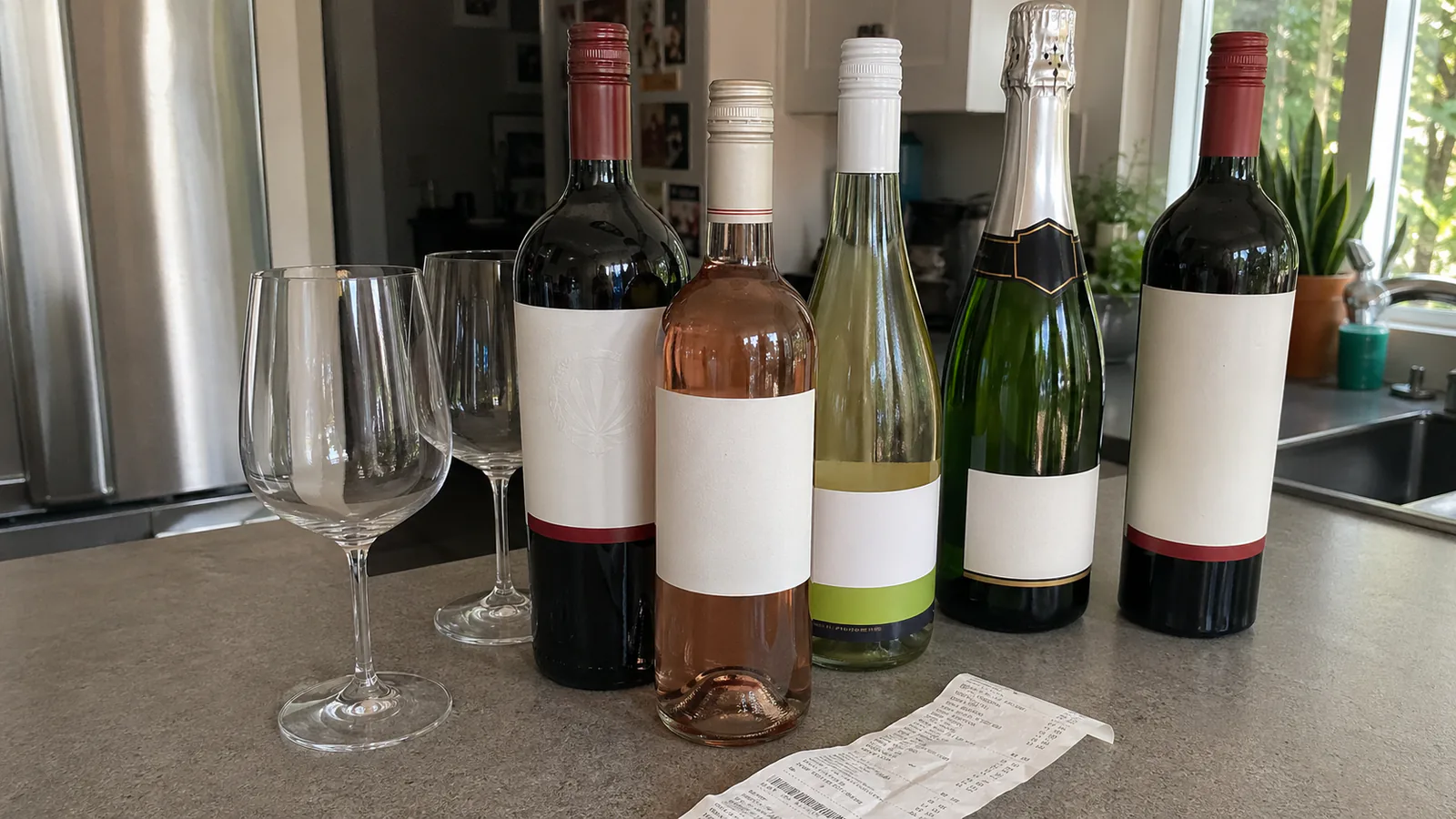
Cheap wine has a reputation problem. Most of what sits on the bottom shelf earns that reputation fairly: thin, overprocessed, bottled to hit a price rather than to taste good. But somewhere between $13 and $25, a different category exists. Bordeaux with real structure. Provençal rosé that drinks like the $30 bottle. Tuscan Sangiovese that goes with pasta the way Italians drink it at home. You have to know what to look for.
The twelve bottles below were picked from a major retailer’s current lineup, sorted first by critic score, then by verified customer rating. Red, white, rosé, a pair of Moscatos for the sweet side, and a Prosecco that punches well above $19. Six are under $15. Every one is live right now, with a real product page and a real reviewer behind the numbers.
These are the ones worth the shelf space.
Our Top 3 Picks

Sur de los Andes Reserva Malbec 2023
Mendoza, Argentina · Malbec
92 pts Wilfred Wong

Chateau Montaud Cotes de Provence Rose 2024
Cotes de Provence, France · Rosé blend
91 pts Wilfred Wong

Prices vary by state. Click through for your current price.
Quick price navigator: Under $15 reds and whites · $15 to $20 classics · $20 to $25 upgrades · Best sweet options
The Best Cheap Red Wines
Cheap red wine is where the search for value delivers the biggest return. A good $15 red can easily beat a lazy $30 bottle, because the $30 tier has too much headroom for padding. Five picks here, three under $15, all with at least one critic score of 90 or higher.
1. Sur de los Andes Reserva Malbec 2023 (Best Cheap Red Overall)
Mendoza Malbec at this price is usually fine, not exciting. The Reserva earns the 92 from Wilfred Wong and the 91 from James Suckling because it has something the entry bottles skip: genuine depth. Dark plum and violet on the nose, structure on the mid-palate, and tannins firm enough to handle a steak without needing food to enjoy.
Forty customers rated it 4.7 stars, which is the kind of consensus that only happens when buyers come back. At $14.97, it’s the standout on the list. If you do nothing else on this page, click through on this one.
2. Chateau Bourdieu No.1 2018 (Best Cheap Bordeaux)
Decanter gave this wine 97 points. It costs $19.99. That’s the whole pitch, but here’s the context: Bordeaux is the reference point for serious red, and structured Bordeaux blends are what collectors chase at auction. A 97-point bottle from that region for under $20 doesn’t come along often. When it does, you buy a few.
The 2018 is a blend of Cabernet Sauvignon and Merlot from Blaye Cotes de Bordeaux, a left-bank appellation across the Gironde from the famous estates but drawing from the same regional tradition. Dark fruit, leather, dried herbs. Four critics all scored it between 90 and 97. A 4.9 rating from 26 customers confirms they landed right. This is the cheap red wine you open when people need to ask what you brought.
3. Frescobaldi Nipozzano Chianti Rufina Riserva 2022 (Best Cheap Red for Food)
Frescobaldi has been making wine in Tuscany since 1308. The Nipozzano estate sits in Chianti Rufina, a cooler, higher subzone that produces Sangiovese with more structure than the warmer valleys. Riserva means at least three years before release with time in oak, and the 2022 shows the patience: red cherry, dried herbs, leather, a firm spine of acidity, and tannins soft enough to drink now but present enough to cellar for another decade.
James Suckling scored it 92. Wine Spectator and Vinous both added 90. Under $19, this is Tuscan wine at its classical best: a proper Chianti Riserva from a producer with seven centuries of practice. Open it with anything tomato-based and you’ll understand why Italians drink wine with food rather than instead of it.
4. Goldschmidt Stonemason Hill Cabernet Sauvignon 2023 (Best Cheap California Cab)
Alexander Valley is the appellation inside Sonoma where Cabernet Sauvignon gets serious. Deep alluvial soils, warm days, cool nights. The Cabs that come out look a lot like Napa. The prices don’t. Goldschmidt’s Stonemason Hill picked up 92 from Wine Enthusiast and 91 from James Suckling, with 96 customer reviews landing at 4.4 stars.
Dark cherry, juicy red fruit, blackberry, cedar, fine tannins, and a finish that lingers without grip. At $21.97, it’s a Cabernet that takes the table seriously without running up the cost.
5. Ziobaffa Organic Toscana 2020 (Best Cheap Organic Red)
Certified organic Sangiovese from Tuscany, scored 91 by James Suckling and 90 by Wilfred Wong. The organic certification isn’t a marketing tick here. No synthetic pesticides, third-party verified, and fruit purity that shows up in the glass as bright cherry and dried herbs rather than flat, overprocessed red. At $13.97, it’s the cheapest red on the list and one of the most versatile. The acidity cuts through tomato sauce better than almost anything.
Sixty-six customers gave it 4.2 stars. Keep a few bottles around for pasta nights.
The Best Cheap White Wines
Three picks. One under $15, two pushing the top end because cheap California white is genuinely rare and these two earn the stretch.
6. Chateau La Freynelle Blanc 2025 (Best Cheap White Overall)
A Bordeaux white blend: Sauvignon Blanc and Semillon, the classic combination the region has been perfecting longer than most wine regions have existed. Wilfred Wong scored it 90. The customer rating is a perfect 5.0 from 34 reviews, which is rare enough at any price to pay attention to.
At $14.97 (down from $17), it’s the best-value white on the list. The Sauvignon Blanc brings citrus and cut grass. The Semillon adds texture and a hint of honey. Pair it with white fish, steamed mussels, or a green salad. The kind of white that makes dinner feel considered without requiring any effort.
7. Grand Napa Vineyards Sauvignon Blanc 2025 (Best Cheap Napa White)
Napa Valley is better known for Cabernet, but the Sauvignon Blanc from the Spring Mountain District is its own thing. The elevation (up to 2,600 feet) keeps acidity high and ripening slow, and the wines that come out are precise in a way most lower-altitude Sauvignon Blanc rarely manages.
The Tasting Panel scored this 92. Wilfred Wong added 91. A 4.7 rating from 60 customers is among the highest on this list. Grapefruit, citrus zest, lemon curd, clean minerality from the hillside soil. Restaurants charge $60 a bottle for Napa Sauvignon Blanc at this quality. Here it’s $21.99.
8. Diatom Santa Barbara Chardonnay 2024 (Best Cheap Chardonnay)
Five critics reviewed this wine. Four gave it 92 or higher: Jeb Dunnuck 94, Wine Spectator and James Suckling 93, Wine Enthusiast 92. Robert Parker landed at 90. When scores cluster like that across different publications, the wine is actually good.
Diatom is a small Santa Barbara producer whose whole approach is minimal intervention: low yields, no heavy oak, letting the fruit and the place do the work. The 2024 tastes like it: white peach, nectarine, lemon curd, a hint of brioche, and a long finish. Rich without being thick, with a quiet elegance that comes from restraint in the cellar. The Chardonnay that makes people say they don’t usually like Chardonnay, then ask for another glass.
At $24.97, it’s the top of this list’s range. The wine belongs on a restaurant list at twice the price.
The Best Cheap Rosé
Provence rosé has a quality floor most regions can’t match at this price. Here’s the pick that proves it.
9. Chateau Montaud Cotes de Provence Rose 2024 (Best Cheap Rosé)
Pale colour, dry structure, mineral backbone: those aren’t accident, they’re a function of the appellation’s rules and climate. Chateau Montaud’s 2024 scored 91 from Wilfred Wong and 90 from Wine Enthusiast, and it’s currently marked down from $17 to $13.97. Strawberry, white peach, a saline edge that makes cold seafood taste even better.
Forty-nine customers rated it 4.5 stars. Pour it properly cold, around 45°F, with grilled prawns, a charcuterie board, or a goat cheese salad.
The Best Cheap Sweet Wines
Two Moscatos, because sweet wine done well at this price is one of the easiest ways to make a warm evening feel finished. Neither carries a critic score, which is normal for Moscato at this tier. Both are real bottles with real buyers behind them.
10. Damilano Moscato d’Asti 2024 (Best Cheap Sweet Wine)
Moscato d’Asti is the low-alcohol (5.5%), lightly sparkling, sweet white from Piedmont that shows up at every Italian Sunday lunch as the bottle with dessert. Damilano makes one of the cleaner versions: bright golden yellow, aromas of peach, lemon, honey, and apricot, with a palate that’s sweet and pleasantly acidic. You can drink a glass and still function.
At $19.97, it’s the right answer for dessert with friends, brunch with berries, or the quiet glass after dinner when nothing stronger is wanted. Serve it cold out of the fridge.
11. Caposaldo Moscato (Best Sweet Wine Under $15)
At $13.97, Caposaldo is the Moscato people keep buying. 302 verified customer reviews, 4.5-star average. that’s the kind of repeat-buyer consensus that means more than any critic score. From Lombardy, made in the same sweet, low-alcohol, lightly effervescent style as Moscato d’Asti, with peach, orange blossom, and honey on the palate.
It’s an inexpensive bottle that overdelivers at the end of a meal. The kind of sweet wine that introduces people to sweet wine without the cheap bubble-gum character that puts them off forever.
The Best Cheap Sparkling
One sparkling, and it’s the one the rest of the category has to measure against.
12. La Marca Prosecco (Best Cheap Sparkling Wine)
Two thousand and eighty-seven customers have rated this Prosecco, averaging 4.2 stars. That’s not a typo. Two thousand. James Suckling scored it 90. Wilfred Wong matched that with another 90. When a bottle reaches that kind of sample size with that kind of consensus, it’s because it’s consistently delivering.
La Marca comes from the Conegliano-Valdobbiadene zone in the heart of the Prosecco DOC, made from the Glera grape in the tank method. The result is the Prosecco that gets into every restaurant brunch menu: green apple, honeysuckle, citrus, clean finish, fine persistent bubbles. At $18.97, it’s the easy “yes” when someone says they brought pizza and you need the right pour. Chill it thoroughly (under 45°F) and pour generously.
How to Make Cheap Wine Taste Better
Three small moves make a visible difference to any bottle on this list, and most bottles you’ll buy in the future.
Serve it at the right temperature. Cheap red wine is especially sensitive to warm rooms, which dull the fruit and push the alcohol forward. The reds above all prefer 60 to 65°F, not room temperature. Fifteen minutes in the fridge before opening gets you there. Whites and rosé go the other way: most refrigerators over-chill them to the point where you can’t smell anything. Pull them out 10 minutes before serving, around 45 to 50°F.
Give the reds air. Pouring the bottle into a decanter (or just into big glasses and leaving them for 20 minutes) opens up the aroma and softens any tight tannins. Not every red needs it, but the Chianti Riserva, the Bordeaux, and the Cabernet all benefit. Even the $15 bottles reward the extra five minutes.
Pair thoughtfully, not precisely. The category of cheap wine rewards pairings that lean familiar rather than clever. The Malbec with grilled red meat, the Chianti with anything tomato-based, the Sauvignon Blanc with cold seafood, the Moscato with fruit desserts. You’re not trying to win a Michelin star. You’re trying to make both the food and the bottle of wine look good at the same table.
More Cheap Wine Styles Worth Knowing
The twelve picks above are the best affordable wines we’d grab today. But the broader map of good wine under $25 covers a wider set of styles, regions, and varietals, and knowing the categories makes you a better shopper at any shop, wine store, or grocery store.
Reds worth a second look. Beaujolais, made from the Gamay grape in eastern France, is the light, fruity red category that even Pinot Noir drinkers tend to under-rate. Look for Fleurie or Morgon labels in the $15 to $20 price range.
Syrah (called Shiraz in Australia) delivers peppery, structured reds from the northern Rhône to McLaren Vale, with plenty of quality wines at a low price point. Grenache is the third major southern Rhône variety (often blended with Syrah), and cheap Grenache-based reds from Côtes du Rhône or Spain’s Garnacha regions overdeliver at $12 to $18.
Argentine wine beyond the big-name Malbecs is also improving fast. The Malbec category gets the headlines, but Bonarda and Cabernet Franc from Mendoza regularly score well under $20. Wine from Portugal, especially the Douro reds, is one of the most underpriced red wine categories in the world.
Spanish wine from Rioja and Ribera del Duero remains the go-to reference for sensibly priced Tempranillo. Burgundy wine, famously expensive at its top end, has an entry tier (Bourgogne Rouge, Bourgogne Blanc) that puts real Burgundy at $20 to $25. California, Oregon, and Washington State also produce plenty of great value Pinot Noir, Syrah, and Cabernet under $25 in the better years. A dry wine with real complexity is findable in all these regions without breaking the bank.
Whites worth exploring. Pinot Grigio from northern Italy has a wide quality range. The best examples come from Alto Adige (South Tyrol wine region) and Friuli, where cooler hillsides produce whites with real floral notes rather than the thin, overprocessed style that made Pinot Grigio famous for the wrong reasons. Pinot Blanc is its more interesting sibling, also grown in Alto Adige and Alsace.
Riesling from the Mosel in Germany is the single best value in fine wine. World-class winemakers produce Kabinett and Spätlese wines for $15 to $25 that would cost three times as much in any other category.
Beyond Riesling, Sauvignon Blanc as an international variety shows up well from South Africa, Chile, Argentina, and New Zealand, all producing summer wine that runs well under $20.
The big-brand tier. Supermarket staples like Barefoot, Yellow Tail, Robert Mondavi Private Selection, Kendall Jackson Vintner’s Reserve (one of the more buttery California Chardonnays in the category), and similar widely-stocked labels all sit in the $8 to $14 zone and build cheap wine consistency at scale. They aren’t high price bottles and they won’t break the bank.
On any week with a party or a need for a case, this is where the grocery stores of America and the wider wine industry meet. They’re not the most exciting wines of the year, but they work as the default pour.
The $5.99 shelf tier (and under) gets more challenging. At that price, you’re usually buying brand volume rather than quality. Barefoot alone sells over 20 million cases a year in this zone, which explains both its availability and its consistent floor.
For a party budget, great value here means “no bottle is bad.” For a dinner table, stretching to $15 is almost always worth it. Professional tasting notes for this tier tend to be brief because the wines aim for inoffensive rather than distinctive, useful to know when you’re choosing between ten lookalike labels.
Sweet red and sweet white options. If you’ve enjoyed the Moscato on our list, a sweet red category is worth knowing about too. Lambrusco from Emilia-Romagna is a lightly sparkling, lightly sweet red that pairs with pizza and salumi the way cold Moscato does with fruit.
Moscato d’Asti from Piedmont wine country (the Damilano bottle above) and Moscato from other Piedmont hills give you the classic light-sparkle profile, while Asti Spumante cranks the sparkle up another notch. For unabashedly sweet white, late-harvest Riesling or Gewürztraminer (grapes sometimes written Gewurztraminer) delivers floral notes and a honeyed texture at $15 to $25.
Sweetness of wine is usually listed on the back label as “dry,” “off-dry,” “sweet,” or sometimes as a residual-sugar number in grams per litre. The higher the number, the sweeter the wine. We have a separate guide on sweet wine choices if you want to go deeper.
The bottle closure question. Screw cap or cork doesn’t affect quality: both preserve wine well for the typical one-to-three-year drinking window of cheap wine. Screw caps have become the norm for whites, rosé, and most reds at the under-$25 price point because they eliminate cork taint risk. A cork still signals “serious” to some drinkers, which is why a lot of $20 bottles use them, but it’s a marketing decision, not a quality one.
Find Your Wine Match
Not sure which one? Take the 20-second quiz.
Three quick questions. One matched bottle.
What are you eating with it?
What's the occasion?
What style are you after?
Let's find the right bottle for you.
Tell us a bit about the occasion and what you're after. We'll match you to one of the bottles on this page.
Photo by Skyler Ewing on PexelsReading your answers…
How We Chose These Wines
Frequently Asked Questions
What’s the best cheap wine under $10?
Wine under $10 is genuinely tough. At that tier, most bottles are mass-produced for shelf space rather than quality, and the retailer markups on imports make real $10 bottles harder to find online. If you’re shopping physical shelves, the reliable under-$10 picks are usually Bogle, Barefoot Bubbly, some Spanish bottles from Campo Viejo or Marqués de Cáceres, and Portuguese wine like Mateus Rosé. The honest answer for online buyers is to stretch to $13.97: the Ziobaffa Toscana, the Montaud rosé, and the Caposaldo Moscato on this list all sit in the upper cheap wine tier and deliver significantly better than any sub-$10 bottle.
What’s the best cheap wine under $5?
Cheap wine under $5 generally lives in box wine and large-format territory: Franzia, Carlo Rossi, Bota Box, and similar boxed wines. These can be fine for sangria or for cooking wine (more on that in a separate guide), but they aren’t the wines we’d recommend for a sit-down dinner or to pour for guests. If genuinely sub-$5 is the budget, prioritise the bottle style (dry white or rosé, never a red blend) and chill it thoroughly: cold temperatures mask rough edges. That said, if the occasion matters at all, spending another $8 to get to our $13.97 picks changes the experience completely.
What’s the best cheap red wine?
The best cheap red wine on this list is the Sur de los Andes Reserva Malbec 2023 ($14.97, 92 Wilfred Wong, 4.7 customer stars). For pasta nights, the Ziobaffa Organic Toscana ($13.97) is the better match. For impressing dinner guests, the Chateau Bourdieu 97-point Bordeaux at $19.99 is the standout. For a tighter focus on red specifically, our best cheap red wine round-up has the full lineup. Argentine Malbec, Spanish wine from Rioja or Bierzo, and Italian Chianti generally offer the best cheap red wine value, because each region has aggressive export pricing in the under-$20 band and a long winemaking tradition to back it up.
What’s the best cheap white wine?
For crisp whites, the Chateau La Freynelle Blanc from Bordeaux ($14.97, perfect 5.0 customer rating) is the best value. For richer whites, the Diatom Santa Barbara Chardonnay ($24.97) pushes the top of the cheap range but delivers multiple 93-plus critic scores. Our best cheap white wine round-up is the white-only deep dive. Beyond this list, some of the best cheap white wine categories to keep an eye on are New Zealand Sauvignon Blanc, Portuguese Vinho Verde (often $10 to $14), Spanish Albariño from Rías Baixas, and German Riesling from producers like Dr. Loosen or Selbach-Oster. Unoaked Chardonnay from Chile or southern France is also consistently under-priced for the quality.
What’s the best cheap sweet wine?
Moscato d’Asti and Asti Spumante from northwest Italy is the sweet wine category with the cleanest cheap options, led by Damilano at $19.97 and Caposaldo at $13.97. Both are low-alcohol (5.5 to 7%), lightly sparkling, and made for dessert or fruit. Beyond Moscato, cheap sweet wine worth buying includes Portuguese Ruby Port ($14 to $18), German Riesling Kabinett from reliable producers ($15 to $20), and late-harvest Zinfandel from California ($12 to $18). Avoid bottom-shelf dessert wines with heavy artificial sweetener character: cheap wine that tastes like candy doesn’t pair with anything and doesn’t age.
What’s the most reliable cheap wine brand?
Reliability at the cheap wine price tier is a different axis from quality, and it matters. Bogle (California), Ziobaffa (Italian organic), La Marca (Prosecco), and Chateau Montaud (Provence rosé) are all producers whose bottles land near the same quality level vintage after vintage. Barefoot, Yellow Tail, and Kendall-Jackson sit in a slightly different tier: extremely consistent, widely distributed, low floor. Reddit threads on the “most reliable cheap wine” question tend to repeat the same names because consistency is the property people actually value once they’ve been burned by a few hollow bottles. Stick with producers who bottle under $20 across multiple vintages in a row and you’re buying consistency, not just a price point.
How can I make cheap wine taste better?
Three quick things: pour it at the right temperature (reds at 60 to 65°F, whites and rosé at 45 to 50°F), give reds twenty minutes of air in a decanter or large glass, and take the bottle off the table once everyone has a pour. A fourth if you’re cooking: pair the style with the food (Italian food with Italian wine, red meat with red wine, cold seafood with crisp whites or dry rosé). Beyond that, cheap wine occasionally benefits from what sommeliers call the “aeration hack”: giving wine 30 seconds in a blender on low speed before serving. It looks absurd, but on a young red with tight tannins, it opens the aromas in a measurable way.
Are grocery store wines worth buying?
Grocery store wine is worth buying when the grocery stores in question have a genuine wine buyer and the shelf turns over quickly. Trader Joe’s, Costco’s Kirkland Signature range, and Whole Foods all fall in this category, along with high-end supermarkets that list producer-level wines rather than just volume brands.
The test for any grocery store wine section: look for multiple vintages of the same producer, look for real regional diversity (not just California and Argentina), and look for staff who can answer questions beyond “dry or sweet?” or point you to real tasting notes.
Grocery store wine at $12 to $15 from a good buyer often matches $20 bottles from online retailers, and it won’t break the bank at a mid-week stop. Grocery store wine at $5 to $8 is rarely what you want in a glass.
If you find a bottle you love at a good grocery store, it’s worth signing up for the store’s email list. The wine industry runs on regional allocations, and grocery stores often email subscribers before good-value shipments sell out.
What’s the difference between cheap wine and expensive wine?
Three things tend to separate a $15 bottle from a $50 bottle: the fruit quality (older vines, smaller yields, better sites cost more), the time spent in oak or on lees (ageing takes capital), and the winemaking care (lower-intervention methods need more attention). A lot of the cost difference in expensive wine is also brand: prestige appellations, producer reputation, and bottle design all carry a premium. That said, the gap between a $20 wine and a $60 wine is often smaller than the gap between a $7 wine and a $20 wine. The sweet spot for cheap wine value sits around $15 to $25, which is exactly where this list lives.
Which cheap wine has the highest alcohol?
Alcohol by volume is a weak signal for wine quality at any price, but if you’re specifically looking for cheap wine with higher ABV, California Zinfandel (often 14 to 15%), Argentine Malbec (13.5 to 14.5%), and Portuguese Port (19 to 20% for fortified wine) sit at the top of the range. The Sur de los Andes Reserva and Goldschmidt Cabernet on this list both sit around 14%. On the opposite end, Moscato d’Asti (5.5%) and Vinho Verde (8.5 to 10%) are low-alcohol options if you want to drink more slowly. ABV is printed on every bottle. Check before pouring rather than after.
Keep Reading
Best Wines Under $15: Good Bottles That Don't Cost Much
Eight wines under $15 that are genuinely good. Critic-scored, customer-rated, and priced for a regular Tuesday night.
Best Cheap Red Wine: 13 Bottles That Punch Above Their Price
The best cheap red wines under $25, organised by body weight and occasion. Critic-scored, crowd-verified, and nothing jammy in sight.
Best Cheap White Wine: 8 Bottles Worth Buying Under $20
The best cheap white wines under $20, from zippy Marlborough Sauvignon Blanc to rich Sonoma Chardonnay. Critic-scored and crowd-verified.